Basic Pastry and Baking Course

Why this course?

Learn the fundamentals of Basic Pastry and Baking 

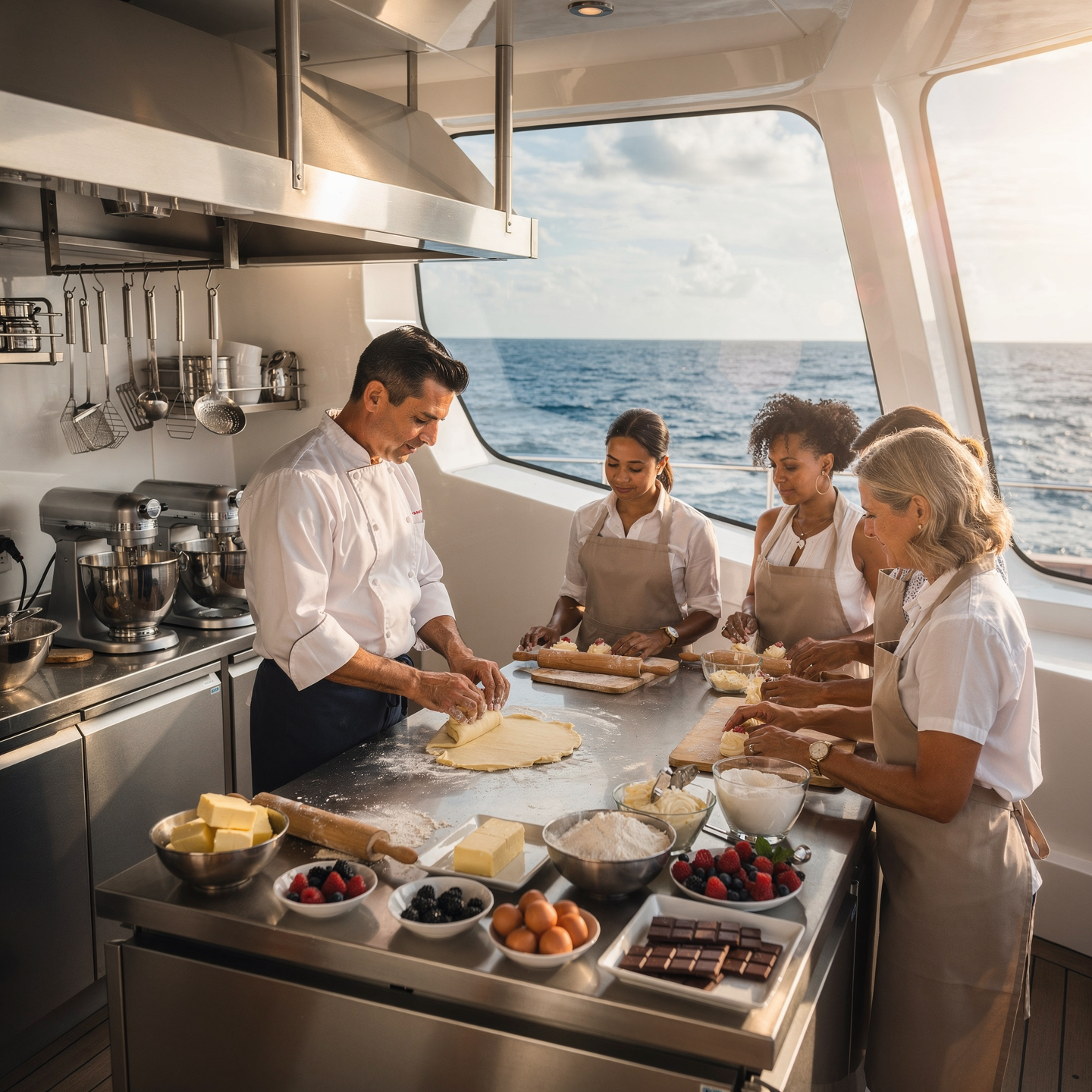
Master the essential techniques for creating delicious homemade desserts. This course will guide you step by step, from ingredient selection to final decoration, so you can surprise your friends and family with your creations. Discover the secrets of doughs, creams, fillings, and toppings, and turn your passion for baking into a culinary skill.

Differential Advantages

  • Classic Recipes: Learn to make cakes, cookies, tarts, cupcakes, and much more.
  • Professional Techniques: Master mixing, kneading, baking, and decorating desserts.
  • Key Ingredients: Learn about the properties and uses of flours, sugars, fats, and other essential ingredients.
  • Tips and Tricks: Discover the secrets to achieving perfect results with every recipe.
  • Flexibility: Online course with explanatory videos and downloadable materials to learn at your own pace.
Pastelería

Basic Pastry and Baking Course

Availability: 1 in stock

Who is it aimed at?

  • Cooking enthusiasts who want to learn the fundamental techniques of pastry and baking to create delicious desserts at home.
  • Culinary entrepreneurs looking to start their own home-based baking business or complement their current culinary offerings.
  • Culinary students who want to reinforce their basic knowledge in the world of sweets and acquire essential practical skills.
  • Food lovers who want to surprise their family and friends with irresistible and personalized sweet creations.
  • People with no prior cooking experience who want to delve into the art of pastry and baking in an easy and fun way.

Flexibility and learning at your own pace
Online learning materials accessible 24/7, detailed explanatory videos, recipes Downloadable resources and a questions forum to answer your questions.

Pastelería

Objectives and competencies

Master the fundamental techniques for making a variety of pastry and confectionery products.

“Execute classic and modern recipes, adapting techniques to different ingredients and equipment, ensuring quality and final presentation.”

Apply the principles of hygiene and food safety in the preparation of pastry and confectionery products:

“With rigor, implementing GMP, allergen control and traceability, and preventing cross-contamination.”

Understand and apply the basic principles of handling pastry ingredients and equipment:

“Mastering weighing, measuring and mixing techniques, ensuring the correct use of ovens, mixers and other utensils, adapting the procedures to the characteristics of each recipe and raw material.”

Selecting and using the right raw materials and ingredients in the production of cakes and desserts:

“Considering freshness, quality, proportions, and appropriate handling techniques for each type of preparation.”

Decorate and present pastry and confectionery products in an attractive way:

“Master glazing, piping, and assembly techniques, highlighting the freshness and quality of the ingredients.”

Calculate and adapt basic recipes to optimize costs and minimize waste:

“Analyze the performance of ingredients and culinary techniques to adjust proportions and reduce waste.”

Curriculum - Modules

  1. Comprehensive Maritime Incident Management: protocols, roles, and chain of command for coordinated response
  2. Operational Planning and Execution: briefing, routes, weather windows, and go/no-go criteria
  3. Rapid Risk Assessment: criticality matrix, scene control, and decision-making under pressure
  4. Operational Communication: VHF/GMDSS, standardized reports, and inter-agency liaison
  5. Tactical Mobility and Safe Boarding: RHIB maneuvers, approach, mooring, and recovery
  6. Equipment and Technologies: PPE, signaling, satellite tracking, and field data logging
  7. Immediate Care of the Affected: primary assessment, hypothermia, trauma, and stabilization for evacuation
  8. Adverse Environmental Conditions: swell, Visibility, flows, and operational mitigation

    Simulation and training: critical scenarios, use of VR/AR, and exercises with performance metrics

    Documentation and continuous improvement: lessons learned, indicators (MTTA/MTTR), and SOP updates

  1. Introduction to Pastry and Baking: History, evolution, and current trends.
  2. Food Hygiene and Safety: Good Manufacturing Practices (GMP), food handling, and risk prevention.
  3. Basic Utensils and Equipment: Use, maintenance, and calibration.
  4. Essential Ingredients: Flours, sugars, fats, eggs, dairy products, and yeasts.
  5. Basic Doughs: Shortcrust pastry, puff pastry, choux pastry, sponge cake, and brioche: Preparation and applications.
  6. Classic Creams: Pastry cream, chantilly cream, custard, and ganache: Preparation and uses.
  7. Meringues: French, Italian, and Swiss meringues: Techniques and applications.
  8. Fillings and Toppings: Jams, preserves, glazes, fondant.

    Basic Decoration: Piping bag, nozzles, stencils, sugar flowers.

    Making Simple Recipes: Cookies, cupcakes, brownies.

    “`

  1. Introduction to Pastry and Baking: History, Evolution, and Current Trends
  2. Food Hygiene: Basic rules for handling, cleaning, and disinfection in the kitchen.
  3. Basic Equipment: Utensils, machinery, and their correct use in pastry making.
  4. Essential Raw Materials: Flours, sugars, fats, eggs, dairy products, and other ingredients.
  5. Basic Cooking Processes: Baking, boiling, frying, and cooling techniques.
  6. Preparation of Basic Doughs: Shortcrust pastry, puff pastry, and other sweet doughs.
  7. Creams and Fillings: Pastry cream, Chantilly cream, ganache, mousses, and fruit fillings.
  8. Preparation of Sponge Cakes and Sponges: Genoise, sheet cake, brownie, and others Classics.
  9. Basic Decoration: icing, meringue, piping bag, and finishing techniques.
  10. Proper Preservation and Storage of Pastry and Baked Goods.

  1. Introduction to Pastry: History, evolution, and current trends.
  2. Food Hygiene and Safety: Good Manufacturing Practices (GMP), Hazard Analysis and Critical Control Points (HACCP), and current regulations.
  3. Basic Utensils and Equipment: Use, maintenance, and safety.
  4. Essential Raw Materials: Flours, sugars, fats, eggs, and dairy products.
  5. Measuring and Weighing Techniques: Precision and unit conversion.
  6. Preparation of Basic Doughs: Shortcrust pastry, sablé, puff pastry, and sponge cake.
  7. Basic Creams: Pastry cream, chantilly cream, ganache, and buttercream.
  8. Meringues: French, Italian, and Swiss.
  9. Preparation of Fillings and Toppings: Jams, candied fruits, glazes.
  10. Basic Decoration: Piping bag, stencils, transfers, and simple finishes.

  1. Introduction to Pastry and Baking: History, basic ingredients, and essential utensils.
  2. Mise en place: Preparation and organization of the workspace and ingredients.
  3. Basic Doughs: Preparation of shortcrust pastry, puff pastry, sponge cakes, and Genoise cake.
  4. Basic Creams: Preparation of pastry creams, Chantilly cream, ganache, and meringues.
  5. Fillings and Toppings: Preparation of fruit fillings, jams, glazes, and fondant.
  6. Baking Techniques: Control of time, temperature, and humidity in the oven.
  7. Basic Decoration: Use of piping bags, nozzles, and stencils.
  8. Pastry Regional: Preparation of typical desserts from different regions.

    Food hygiene and safety: Basic rules for food handling.

    Presentation and packaging: Techniques for visual presentation and preservation of products.

  1. System Architecture and Components: Structural design, materials, and subsystems (mechanical, electrical, electronic, and fluid) with selection and assembly criteria for marine environments
  2. Fundamentals and Principles of Operation: Physical and engineering foundations (thermodynamics, fluid mechanics, electricity, control, and materials) that explain performance and operating limits
  3. Safety and Environmental (SHE): Risk analysis, PPE, LOTO, hazardous atmospheres, spill and waste management, and emergency response plans
  4. Applicable Regulations and Standards: IMO/ISO/IEC requirements and local regulations;
  5. Conformance criteria, certification, and best practices for operation and maintenance
  6. Inspection, testing, and diagnostics: Visual/dimensional inspection, functional testing, data analysis, and predictive techniques (vibration, thermography, fluid analysis) to identify root causes
  7. Preventive and predictive maintenance: Hourly/cycle/seasonal plans, lubrication, adjustments, calibrations, consumable replacement, post-service verification, and operational reliability
  8. Instrumentation, tools, and metrology: Measuring and testing equipment, diagnostic software, calibration and traceability; selection criteria, safe use, and storage
  9. Onboard integration and interfaces: Mechanical, electrical, fluid, and data compatibility; Sealing and watertightness, EMC/EMI, corrosion protection, and interoperability testing.

    Quality, acceptance testing, and commissioning: process and materials control, FAT/SAT, bench and sea trials, go/no-go criteria, and evidence documentation.

    Technical documentation and integrated practice: logs, checklists, reports, and a complete case study (safety → diagnosis → intervention → verification → report) applicable to any system.

Plan de estudio - Módulos

  1. Comprehensive Maritime Incident Management: protocols, roles, and chain of command for coordinated response
  2. Operational Planning and Execution: briefing, routes, weather windows, and go/no-go criteria
  3. Rapid Risk Assessment: criticality matrix, scene control, and decision-making under pressure
  4. Operational Communication: VHF/GMDSS, standardized reports, and inter-agency liaison
  5. Tactical Mobility and Safe Boarding: RHIB maneuvers, approach, mooring, and recovery
  6. Equipment and Technologies: PPE, signaling, satellite tracking, and field data logging
  7. Immediate Care of the Affected: primary assessment, hypothermia, trauma, and stabilization for evacuation
  8. Adverse Environmental Conditions: swell, Visibility, flows, and operational mitigation

    Simulation and training: critical scenarios, use of VR/AR, and exercises with performance metrics

    Documentation and continuous improvement: lessons learned, indicators (MTTA/MTTR), and SOP updates

  1. Introduction to Pastry and Baking: History, evolution, and current trends.
  2. Food Hygiene and Safety: Good Manufacturing Practices (GMP), food handling, and risk prevention.
  3. Basic Utensils and Equipment: Use, maintenance, and calibration.
  4. Essential Ingredients: Flours, sugars, fats, eggs, dairy products, and yeasts.
  5. Basic Doughs: Shortcrust pastry, puff pastry, choux pastry, sponge cake, and brioche: Preparation and applications.
  6. Classic Creams: Pastry cream, chantilly cream, custard, and ganache: Preparation and uses.
  7. Meringues: French, Italian, and Swiss meringues: Techniques and applications.
  8. Fillings and Toppings: Jams, preserves, glazes, fondant.

    Basic Decoration: Piping bag, nozzles, stencils, sugar flowers.

    Making Simple Recipes: Cookies, cupcakes, brownies.

    “`

  1. Introduction to Pastry and Baking: History, Evolution, and Current Trends
  2. Food Hygiene: Basic rules for handling, cleaning, and disinfection in the kitchen.
  3. Basic Equipment: Utensils, machinery, and their correct use in pastry making.
  4. Essential Raw Materials: Flours, sugars, fats, eggs, dairy products, and other ingredients.
  5. Basic Cooking Processes: Baking, boiling, frying, and cooling techniques.
  6. Preparation of Basic Doughs: Shortcrust pastry, puff pastry, and other sweet doughs.
  7. Creams and Fillings: Pastry cream, Chantilly cream, ganache, mousses, and fruit fillings.
  8. Preparation of Sponge Cakes and Sponges: Genoise, sheet cake, brownie, and others Classics.
  9. Basic Decoration: icing, meringue, piping bag, and finishing techniques.
  10. Proper Preservation and Storage of Pastry and Baked Goods.

  1. Introduction to Pastry: History, evolution, and current trends.
  2. Food Hygiene and Safety: Good Manufacturing Practices (GMP), Hazard Analysis and Critical Control Points (HACCP), and current regulations.
  3. Basic Utensils and Equipment: Use, maintenance, and safety.
  4. Essential Raw Materials: Flours, sugars, fats, eggs, and dairy products.
  5. Measuring and Weighing Techniques: Precision and unit conversion.
  6. Preparation of Basic Doughs: Shortcrust pastry, sablé, puff pastry, and sponge cake.
  7. Basic Creams: Pastry cream, chantilly cream, ganache, and buttercream.
  8. Meringues: French, Italian, and Swiss.
  9. Preparation of Fillings and Toppings: Jams, candied fruits, glazes.
  10. Basic Decoration: Piping bag, stencils, transfers, and simple finishes.

  1. Introduction to Pastry and Baking: History, basic ingredients, and essential utensils.
  2. Mise en place: Preparation and organization of the workspace and ingredients.
  3. Basic Doughs: Preparation of shortcrust pastry, puff pastry, sponge cakes, and Genoise cake.
  4. Basic Creams: Preparation of pastry creams, Chantilly cream, ganache, and meringues.
  5. Fillings and Toppings: Preparation of fruit fillings, jams, glazes, and fondant.
  6. Baking Techniques: Control of time, temperature, and humidity in the oven.
  7. Basic Decoration: Use of piping bags, nozzles, and stencils.
  8. Pastry Regional: Preparation of typical desserts from different regions.

    Food hygiene and safety: Basic rules for food handling.

    Presentation and packaging: Techniques for visual presentation and preservation of products.

  1. System Architecture and Components: Structural design, materials, and subsystems (mechanical, electrical, electronic, and fluid) with selection and assembly criteria for marine environments
  2. Fundamentals and Principles of Operation: Physical and engineering foundations (thermodynamics, fluid mechanics, electricity, control, and materials) that explain performance and operating limits
  3. Safety and Environmental (SHE): Risk analysis, PPE, LOTO, hazardous atmospheres, spill and waste management, and emergency response plans
  4. Applicable Regulations and Standards: IMO/ISO/IEC requirements and local regulations;
  5. Conformance criteria, certification, and best practices for operation and maintenance
  6. Inspection, testing, and diagnostics: Visual/dimensional inspection, functional testing, data analysis, and predictive techniques (vibration, thermography, fluid analysis) to identify root causes
  7. Preventive and predictive maintenance: Hourly/cycle/seasonal plans, lubrication, adjustments, calibrations, consumable replacement, post-service verification, and operational reliability
  8. Instrumentation, tools, and metrology: Measuring and testing equipment, diagnostic software, calibration and traceability; selection criteria, safe use, and storage
  9. Onboard integration and interfaces: Mechanical, electrical, fluid, and data compatibility; Sealing and watertightness, EMC/EMI, corrosion protection, and interoperability testing.

    Quality, acceptance testing, and commissioning: process and materials control, FAT/SAT, bench and sea trials, go/no-go criteria, and evidence documentation.

    Technical documentation and integrated practice: logs, checklists, reports, and a complete case study (safety → diagnosis → intervention → verification → report) applicable to any system.

  1. Introduction to Pastry and Baking: History, Evolution, and Current Trends
  2. Basic Utensils and Equipment: Identification, Use, and Maintenance
  3. Essential Raw Materials: Flours, Sugars, Fats, Eggs, Dairy Products, Chocolate
  4. Measuring and Weighing Techniques: Precision in Recipes, Conversions, and Equivalencies
  5. Preparation of Basic Doughs: Shortcrust Pastry, Sablé, Puff Pastry, Choux Pastry, Sponge Cakes
  6. Classic Pastry Creams: Pastry Cream, English Cream, Chantilly Cream, Ganache
  7. Meringues: Italian, French, Swiss Techniques and applications.
  8. Preparation of fillings and toppings: jams, preserves, glazes.
  9. Basic decoration: piping bag, stenciling, nozzle handling.
  10. Food hygiene and safety in pastry making.

  1. Introduction to Professional Cooking: Food hygiene, kitchen safety, basic utensils, and mise en place.
  2. Fundamentals of Cooking: Moist cooking methods (boiling, steaming, poaching) and dry cooking methods (roasting, frying, baking).
  3. Mother Sauces and Derivative Sauces: Preparation and applications of béchamel, velouté, espagnole, tomato, and hollandaise.
  4. Stocks and Broths: Preparation of poultry, beef, fish, and vegetable stocks, and their use in cooking.
  5. Introduction to Pastry: Basic ingredients (flours, sugars, fats, eggs) and their functions.
  6. Basic Pastry Doughs: Preparation of shortcrust pastry, puff pastry, and choux pastry.
  7. Basic Pastry Creams: Preparation of pastry cream, crème anglaise, ganache, and meringue.
  8. Cakes and Batters: Techniques for making sponge cakes, Genoise sponges, and heavy batters.
  9. Basic Cake Decorating: Use of piping bags, icings, fruits, and chocolate.
  10. Basic Bread Making: Introduction to artisan breadmaking, types of flour, and fermentation.

  1. Introduction to Pastry and Baking: History, Evolution, and Current Trends
  2. Basic Equipment: Essential Tools, Utensils, and Machinery
  3. Fundamental Raw Materials: Flours, Sugars, Fats, Eggs, Dairy, and other ingredients
  4. Measuring and Weighing Techniques: Accuracy and Precision in Recipe Preparation
  5. Preparation of Basic Doughs: Shortcrust Pastry, Puff Pastry, Choux Pastry, Brioche, and Sponge Cake
  6. Classic Creams: Pastry Cream, Chantilly Cream, Buttercream, Ganache, and their applications
  7. Meringues: French, Swiss, Italian; Techniques and Uses
  8. Chocolate: Types, Tempering, Making Chocolates and Decorations

    Baking and Cooling: Controlling Times and Temperatures for Optimal Results

    Food Safety and Hygiene: Good Practices in Food Handling

  1. Introduction to Pastry and Baking: History, evolution, and trends.
  2. Basic Utensils and Equipment: Identification, use, and proper maintenance.
  3. Essential Raw Materials: Flours, sugars, fats, eggs, dairy products, and other ingredients.
  4. Measurement and Conversion Techniques: Accuracy in recipes and necessary adjustments.
  5. Shortcrust Pastry and Sablé Pastry: Making bases for tarts and cookies.
  6. Sponge Cakes and Sponges: Beating and baking methods for different textures.
  7. Basic Creams: Pastry cream, chantilly cream, buttercream, and their applications.
  8. Meringues: Italian, French, and Swiss; techniques and uses in pastry making.
  9. Ganaches and Toppings: Preparation and application for decoration and filling.
  10. Food Hygiene and Safety: Proper practices in the kitchen.

Career opportunities

  • Pastry/Baker’s Assistant in bakeries, pastry shops, hotels, and restaurants.
  • Pastry/Baker responsible for product preparation in small establishments.
  • Production Line Employee in food companies specializing in pastry and confectionery.
  • Salesperson in pastry shops and specialty stores, with product knowledge.
  • Catering and Events: preparation of desserts and sweets for celebrations.
  • Entrepreneurship: creation of your own artisanal bakery or pastry shop.
  • Demonstrator/Promoter of pastry products and ingredients in shops and at fairs.
  • Continuing Education: access to more advanced courses and specializations.

“`

Admission requirements

Academic/professional profile:

Degree/Bachelor's degree in Nautical Science/Maritime Transport, Naval/Marine Engineering, or a related field; or proven professional experience in bridge/operations.

Language proficiency:

Recommended functional maritime English (SMCP) for simulations and technical materials.

5. Induction

Updated resume, copy of degree or seaman's book, ID card/passport, letter of motivation.

Technical requirements (for online):

Equipment with camera/microphone, stable connection, ≥ 24” monitor recommended for ECDIS/Radar-ARPA.

Admission process and dates

1. Online
application

(form + documents).

2. Academic review and interview

(profile/objectives/schedule compatibility).

3. Admission decision

(+ scholarship proposal if applicable).

4. Reservation of place

(deposit) and registration.

5. Induction

(access to campus, calendars, simulator guides).

Scholarships and grants

  • Essential Fundamentals: Learn the basic techniques of pastry and baking, from preparing doughs to making fillings and toppings.
  • Classic and Modern Recipes: Master traditional recipes like cakes and cookies, and explore new trends in creative and innovative desserts.
  • Ingredients and Tools: Understand the properties of basic ingredients and learn how to use essential tools to achieve professional results.
  • Decoration and Presentation: Discover decorating techniques to enhance your creations and learn how to present your desserts attractively and deliciously.
  • Food Safety and Hygiene: Implement good food handling practices to ensure the safety and quality of your creations.
Ignite your passion for baking and create delicious desserts to share and enjoy.

Testimonials

Frequently asked questions

Although often used interchangeably, pastry focuses on savory and sweet doughs, such as breads, savory tarts, and cake bases, while confectionery specializes in sweet preparations, using more elaborate decoration and presentation techniques, such as desserts, cakes, cookies, and sweets.

Yes. The itinerary includes ECDIS/Radar-ARPA/BRM with harbor, ocean, fog, storm, and SAR scenarios.

Online with live sessions; hybrid option for simulator/practical placements through agreements.

Pastry focuses on savory and puff pastry doughs, while confectionery focuses on sweet preparations, using sugar as the main ingredient.

Recommended functional SMCP. We offer support materials for standard phraseology.

Yes, with a relevant degree or experience in maritime/port operations. The admissions interview will confirm suitability.

Optional (3–6 months) through Companies & Collaborations and the Alumni Network.

Simulator practice (rubrics), defeat plans, SOPs, checklists, micro-tests and applied TFM.

A degree from Navalis Magna University + operational portfolio (tracks, SOPs, reports and KPIs) useful for audits and employment.

  1. Introduction to Pastry and Baking: History, evolution, and trends.
  2. Basic Utensils and Equipment: Identification, use, and proper maintenance.
  3. Essential Raw Materials: Flours, sugars, fats, eggs, dairy products, and other ingredients.
  4. Measurement and Conversion Techniques: Accuracy in recipes and necessary adjustments.
  5. Shortcrust Pastry and Sablé Pastry: Making bases for tarts and cookies.
  6. Sponge Cakes and Sponges: Beating and baking methods for different textures.
  7. Basic Creams: Pastry cream, chantilly cream, buttercream, and their applications.
  8. Meringues: Italian, French, and Swiss; techniques and uses in pastry making.
  9. Ganaches and Toppings: Preparation and application for decoration and filling.
  10. Food Hygiene and Safety: Proper practices in the kitchen.

Request information

  1. Complete the Application Form
  2. Attach your CV/Qualifications (if you have them to hand).
  3. Indicate your preferred cohort (January/May/September) and whether you want the hybrid option with simulator sessions.
An academic advisor will contact you within 24–48 hours to guide you through the admission process, scholarships, and compatibility with your professional schedule. Translated with DeepL.com (free version)
Please enable JavaScript in your browser to complete this form.
Click or drag a file to this area to upload.

Teachers

0
    0
    Tu carrito
    Tu carrito esta vacíoRegresar a la tienda
    Scroll to Top