Diploma in Sustainable Aquaculture

Why this certificate program?

The Diploma in Sustainable Aquaculture

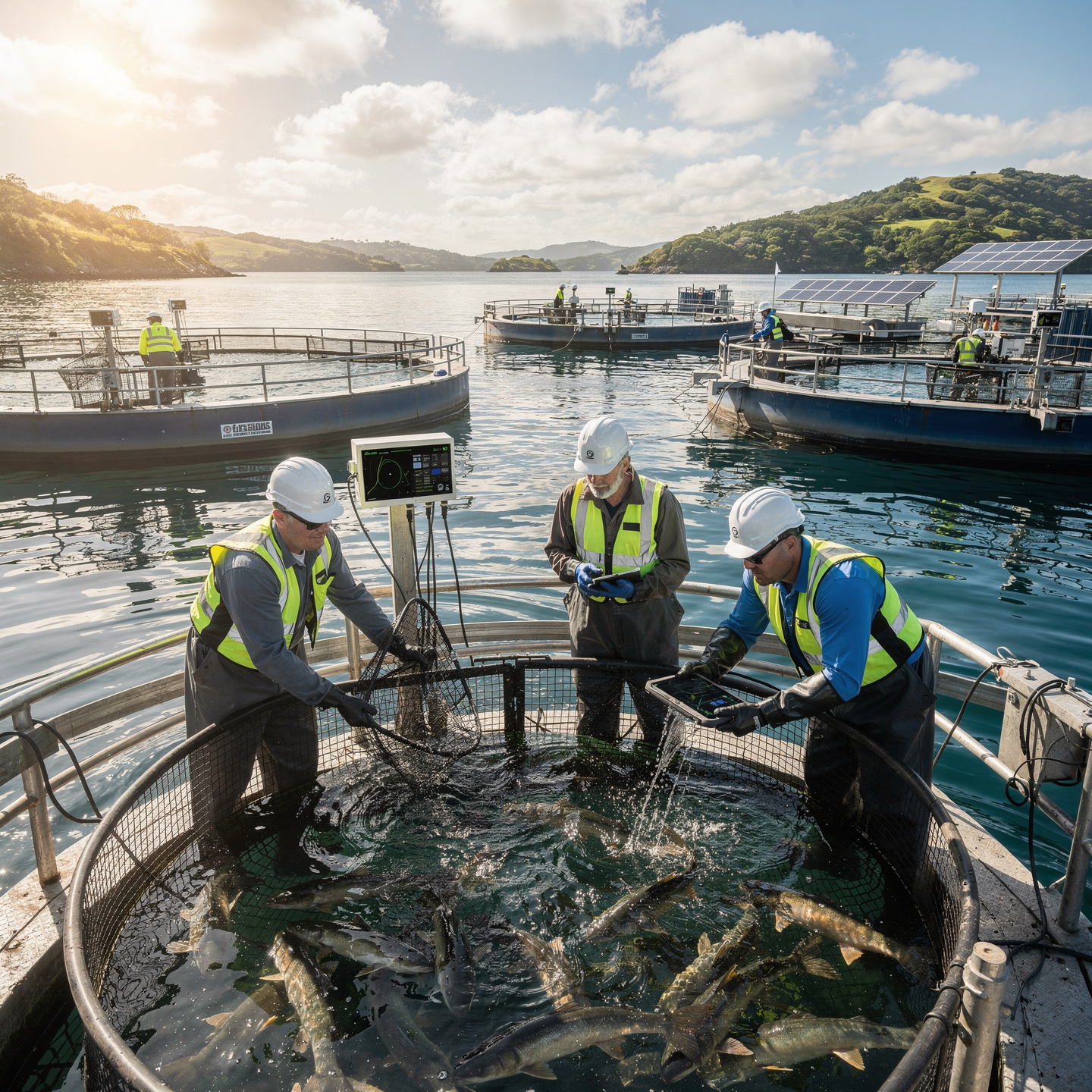
This program provides you with the tools and knowledge necessary to drive responsible and profitable aquaculture production. Learn to implement innovative practices that minimize environmental impact and maximize efficiency, contributing to food security and the conservation of natural resources. This program immerses you in the latest advances in nutrition, health, and aquaculture management, with a practical approach adapted to the realities of the sector.

Differential Advantages

  • Holistic Approach: from species selection to marketing, covering all key aspects.
  • Comprehensive Sustainability: waste management, energy efficiency, animal welfare, and social responsibility.
  • Emerging Technologies: recirculating systems, biotechnology, and smart monitoring to optimize production.
  • Success Stories: analysis of exemplary aquaculture projects and innovative business models.
  • Expert Network: interaction with leading professionals and networking opportunities in the sector.
Acuicultura

Diploma in Sustainable Aquaculture

Availability: 1 in stock

Who is it aimed at?

  • Aquaculture Engineers, Marine Biologists, and Aquaculture Technicians who wish to deepen their knowledge of the latest farming techniques, resource management, and environmental regulations.
  • Aquaculture Producers and Business Owners who seek to optimize their operations, improve profitability, and adopt sustainable practices.
  • Environmental Consultants and Advisors who need to expand their knowledge of sustainable aquaculture to offer innovative and responsible solutions.
  • Students and Recent Graduates interested in developing a professional career in aquaculture with a focus on sustainability and innovation.
  • Public Officials and Regulators who seek to better understand sustainable aquaculture practices for policymaking and management Resources.

Learning Flexibility:
Designed for professionals and students: online modality with 24/7 access, discussion forums, and downloadable material for self-paced learning.

Acuicultura

Objectives and competencies

Design and implement aquaculture production strategies that minimize environmental impact:

Implement aquaculture recirculation systems (RAS) and biofloc (BFT) to reduce water consumption and effluent discharge, monitoring key parameters and optimizing waste management.

Evaluate and optimize aquaculture recirculation systems to reduce water and energy consumption:

Implement biofiltration and denitrification strategies, monitoring key parameters such as ammonia and nitrites to maximize treatment efficiency and minimize the water footprint.

Manage and certify aquaculture operations under recognized sustainability standards:

Implement and maintain traceability, environmental monitoring and animal welfare systems, verifying compliance with regulations and promoting continuous improvement to obtain certifications such as ASC or BAP.

Applying circular economy principles to valorize by-products and reduce waste in aquaculture:

“Identifying material flows, assessing their potential for reuse/transformation, and adapting production processes to utilize them.”

Formulate nutritious and efficient aquaculture diets that reduce dependence on unsustainable ingredients:

“Optimize the inclusion of food industry by-products and alternative ingredients (insects, microalgae) to reduce the use of fishmeal and fish oil.”

Implement disease control and biosecurity strategies that limit the use of antibiotics and chemicals:

“Establish and monitor strict hygiene and animal handling protocols, prioritizing vaccination and early diagnosis to minimize the need for treatments.”

Curriculum - Modules

  1. Comprehensive Maritime Incident Management: protocols, roles, and chain of command for coordinated response
  2. Operational Planning and Execution: briefing, routes, weather windows, and go/no-go criteria
  3. Rapid Risk Assessment: criticality matrix, scene control, and decision-making under pressure
  4. Operational Communication: VHF/GMDSS, standardized reports, and inter-agency liaison
  5. Tactical Mobility and Safe Boarding: RHIB maneuvers, approach, mooring, and recovery
  6. Equipment and Technologies: PPE, signaling, satellite tracking, and field data logging
  7. Immediate Care of the Affected: primary assessment, hypothermia, trauma, and stabilization for evacuation
  8. Adverse Environmental Conditions: swell, Visibility, flows, and operational mitigation

    Simulation and training: critical scenarios, use of VR/AR, and exercises with performance metrics

    Documentation and continuous improvement: lessons learned, indicators (MTTA/MTTR), and SOP updates

  1. Introduction to Aquaculture Biotechnology: Fundamentals and Applications
  2. Aquaculture Microbiology: Relevant Bacteria, Viruses, and Fungi in Aquaculture
  3. Genetics and Genetic Improvement: Selection, Crossbreeding, and Reproductive Biotechnology
  4. Nutrition and Feeding: Diet Design and Biotechnological Additives
  5. Aquaculture Health: Diagnosis, Prevention, and Control of Diseases
  6. Bioremediation: Use of Microorganisms to Improve Water Quality
  7. Microalgae and Zooplankton Cultivation: Production of Live Feed and Biomass
  8. Aquaponics and Integrated Systems: Combining Aquaculture and Hydroponics
  9. Legislation and Regulations: Legal aspects and certification of aquaculture products

    Ethics and Sustainability: Social and environmental responsibility in aquaculture production

  1. Introduction to Biological Foundations: Levels of Organization, Genetics, and Evolution
  2. Plant Physiology: Photosynthesis, Respiration, Nutrition, and Transport
  3. Basic Ecology: Ecosystems, Populations, Communities, and Ecological Succession
  4. Principles of Cultivation: Soil Preparation, Sowing, Irrigation, and Fertilization
  5. Pest and Disease Control: Biological and Chemical Methods
  6. Water Management: Efficient Irrigation, Drainage, and Water Quality
  7. Environmental Sustainability: Principles, Indicators, and Best Practices
  8. Environmental Impact of Agriculture: Pollution, Deforestation, and Biodiversity Loss
  9. Environmental Legislation: National and International Regulations
  10. Environmental Impact Assessment (EIA) and environmental audits

  1. Introduction to Responsible Farming: Definition, Importance, and Benefits.
  2. Soil Analysis and Crop Selection: Soil types, analysis, and suitable crops.
  3. Water Management: Efficient irrigation, rainwater harvesting and storage.
  4. Pest and Disease Control (Integrated Pest Management – IPM): Identification, prevention, and biological control.
  5. Use of Fertilizers and Organic Composts: Types of fertilizers, composting, and vermicomposting.
  6. Soil Conservation Practices: Crop rotation, no-till farming, and terracing.
  7. Biodiversity and Pollination: Importance of biodiversity and promoting Pollinators.
  8. Environmental Legislation and Applicable Regulations: Environmental Standards, Certifications.

    Environmental Impact Assessment (EIA) in Agriculture: Methodologies and Mitigation Measures.

    Good Agricultural Practices (GAP) and Sustainability: Implementation and Benefits.

  1. Introduction to Aquaculture Biotechnology: Applications and Perspectives
  2. Nutrition and Feeding of Fish and Crustaceans: Requirements, Diet Formulation, Ingredients
  3. Aquaculture Health and Pathologies: Infectious, Parasitic, and Nutritional Diseases
  4. Aquaculture Microbiology: Relevant Bacteria, Viruses, and Fungi in Aquaculture
  5. Water Quality: Physicochemical Parameters, Monitoring, and Control
  6. Biotechnology Applied to Genetic Improvement: Marker-Assisted Selection, Transgenesis
  7. Probiotics and Prebiotics in Aquaculture: Mechanisms of Action and Impact on Health
  8. Aquaculture Immunology: Immune Response of Aquatic Organisms, Vaccination
  9. Diagnosis of Diseases: Molecular and serological techniques

    Legislation and biosafety: health regulations, prevention and control measures

  1. System Architecture and Components: Structural design, materials, and subsystems (mechanical, electrical, electronic, and fluid) with selection and assembly criteria for marine environments
  2. Fundamentals and Principles of Operation: Physical and engineering foundations (thermodynamics, fluid mechanics, electricity, control, and materials) that explain performance and operating limits
  3. Safety and Environmental (SHE): Risk analysis, PPE, LOTO, hazardous atmospheres, spill and waste management, and emergency response plans
  4. Applicable Regulations and Standards: IMO/ISO/IEC requirements and local regulations;
  5. Conformance criteria, certification, and best practices for operation and maintenance
  6. Inspection, testing, and diagnostics: Visual/dimensional inspection, functional testing, data analysis, and predictive techniques (vibration, thermography, fluid analysis) to identify root causes
  7. Preventive and predictive maintenance: Hourly/cycle/seasonal plans, lubrication, adjustments, calibrations, consumable replacement, post-service verification, and operational reliability
  8. Instrumentation, tools, and metrology: Measuring and testing equipment, diagnostic software, calibration and traceability; selection criteria, safe use, and storage
  9. Onboard integration and interfaces: Mechanical, electrical, fluid, and data compatibility; Sealing and watertightness, EMC/EMI, corrosion protection, and interoperability testing.

    Quality, acceptance testing, and commissioning: process and materials control, FAT/SAT, bench and sea trials, go/no-go criteria, and evidence documentation.

    Technical documentation and integrated practice: logs, checklists, reports, and a complete case study (safety → diagnosis → intervention → verification → report) applicable to any system.

  1. Introduction to Biotechnology Applied to Aquaculture: Basic Concepts and Applications
  2. Microbiology in Aquaculture: Identification, Culture, and Control of Beneficial and Pathogenic Microorganisms
  3. Nutrition and Feeding in Aquaculture: Nutritional Requirements of Aquatic Species and Diet Formulation
  4. Genetics and Genetic Improvement in Aquaculture: Artificial Selection, Molecular Markers, and Transgenic Organisms
  5. Biotechnology in Aquaculture Feed Production: Probiotic Feeds, Enzymes, and Nutritional Additives
  6. Diagnosis and Prevention of Diseases in Aquaculture: Molecular Diagnostic Techniques and Vaccine Development
  7. Water Treatment and Waste Management in Aquaculture: Bioremediation, Recirculating Systems, and Effluent Treatment
  8. Functional and nutraceutical foods in aquaculture: enrichment of aquaculture products with bioactive compounds.
  9. Legislation and biosecurity in aquaculture: health regulations, biological risk management, and traceability.
  10. Innovation and trends in biotechnology and nutrition in aquaculture: aquaponics, bioeconomy, and sustainability.

Career opportunities

  • Aquaculture Farm Production Technician: crop management, environmental parameter control, feeding, and health of aquatic species.
  • Aquaculture Project Manager: design, planning, and execution of sustainable aquaculture projects.
  • Sustainable Aquaculture Consultant: advising companies and institutions on environmentally friendly aquaculture practices.
  • Aquaculture Researcher: development of new technologies and methods for sustainable aquaculture production.
  • Quality Control Technician for Aquaculture Products: analysis and verification of the quality of aquaculture products throughout the value chain.
  • Sustainability Manager in Aquaculture Companies: implementation of sustainable practices and management of certifications.
  • Health Inspector
  • Aquaculture: Control and prevention of diseases in aquaculture facilities.

    Sales of products and services for aquaculture: Sales and technical advice on products and services for the aquaculture sector.

    “`

Admission requirements

Academic/professional profile:

Degree/Bachelor's degree in Nautical Science/Maritime Transport, Naval/Marine Engineering, or a related field; or proven professional experience in bridge/operations.

Language proficiency:

Recommended functional maritime English (SMCP) for simulations and technical materials.

Documentation:

Updated resume, copy of degree or seaman's book, ID card/passport, letter of motivation.

Technical requirements (for online):

Equipment with camera/microphone, stable connection, ≥ 24” monitor recommended for ECDIS/Radar-ARPA.

Admission process and dates

1. Online
application

(form + documents).

2. Academic review and interview

(profile/objectives/schedule compatibility).

3. Admission decision

(+ scholarship proposal if applicable).

4. Reservation of place

(deposit) and registration.

5. Induction

(access to campus, calendars, simulator guides).

Scholarships and grants

  • Aquaculture Fundamentals: Master the biological foundations, cultivation techniques, and essential regulations for responsible aquaculture production.
  • Sustainability and Environment: Learn to minimize environmental impact, optimize resources, and promote eco-efficient aquaculture practices.
  • Nutrition and Feeding: Design balanced diets, manage feed, and maximize the performance of your aquatic crops.
  • Aquaculture Health: Prevent, diagnose, and control diseases by implementing effective biosecurity programs.
  • Management and Marketing: Plan business strategies, optimize the value chain, and access sustainable markets.
Boost your career in the aquaculture sector with a focus on sustainable and profitable production.

Testimonials

Frequently asked questions

Yes. The itinerary includes ECDIS/Radar-ARPA/BRM with harbor, ocean, fog, storm, and SAR scenarios.

Online with live sessions; hybrid option for simulator/practical placements through agreements.

Minimize environmental impact by reducing waste, using water efficiently, and preventing disease, while ensuring the economic viability and social well-being of the communities involved.

Recommended functional SMCP. We offer support materials for standard phraseology.

Yes, with a relevant degree or experience in maritime/port operations. The admissions interview will confirm suitability.

Optional (3–6 months) through Companies & Collaborations and the Alumni Network.

Simulator practice (rubrics), defeat plans, SOPs, checklists, micro-tests and applied TFM.

A degree from Navalis Magna University + operational portfolio (tracks, SOPs, reports and KPIs) useful for audits and employment.

  1. Introduction to Aquaculture: History, importance, and global overview.
  2. Fundamentals of Aquaculture Biotechnology: Genetics, genomics, proteomics, and metabolomics applied to aquaculture.
  3. Aquaculture Microbiology: Bacteria, viruses, fungi, and parasites relevant to aquaculture health.
  4. Nutrition in Aquaculture: Nutritional requirements of the main farmed species.
  5. Formulation of Aquaculture Feeds: Ingredients, additives, processing, and quality control.
  6. Aquaculture Immunology: Innate and adaptive defense mechanisms in fish and crustaceans.
  7. Infectious Diseases in Aquaculture: Etiology, pathogenesis, Diagnosis and prevention.
  8. Non-Infectious Diseases in Aquaculture: Environmental, nutritional, and toxic factors.
  9. Bioremediation in Aquaculture: Use of microorganisms and plants for water quality control.
  10. Legislation and Regulations in Aquaculture: Health, animal welfare, and food safety.

Request information

  1. Complete the Application Form.

  2. Attach your CV/degree certificate (if you have it to hand).

  3. Indicate your preferred cohort (January/May/September) and whether you would like the hybrid option with simulator sessions.

    An academic advisor will contact you within 24–48 hours to guide you through the admission process, scholarships, and compatibility with your professional schedule.

Please enable JavaScript in your browser to complete this form.
Click or drag a file to this area to upload.

Faculty

0
    0
    Tu carrito
    Tu carrito esta vacíoRegresar a la tienda
    Scroll to Top


