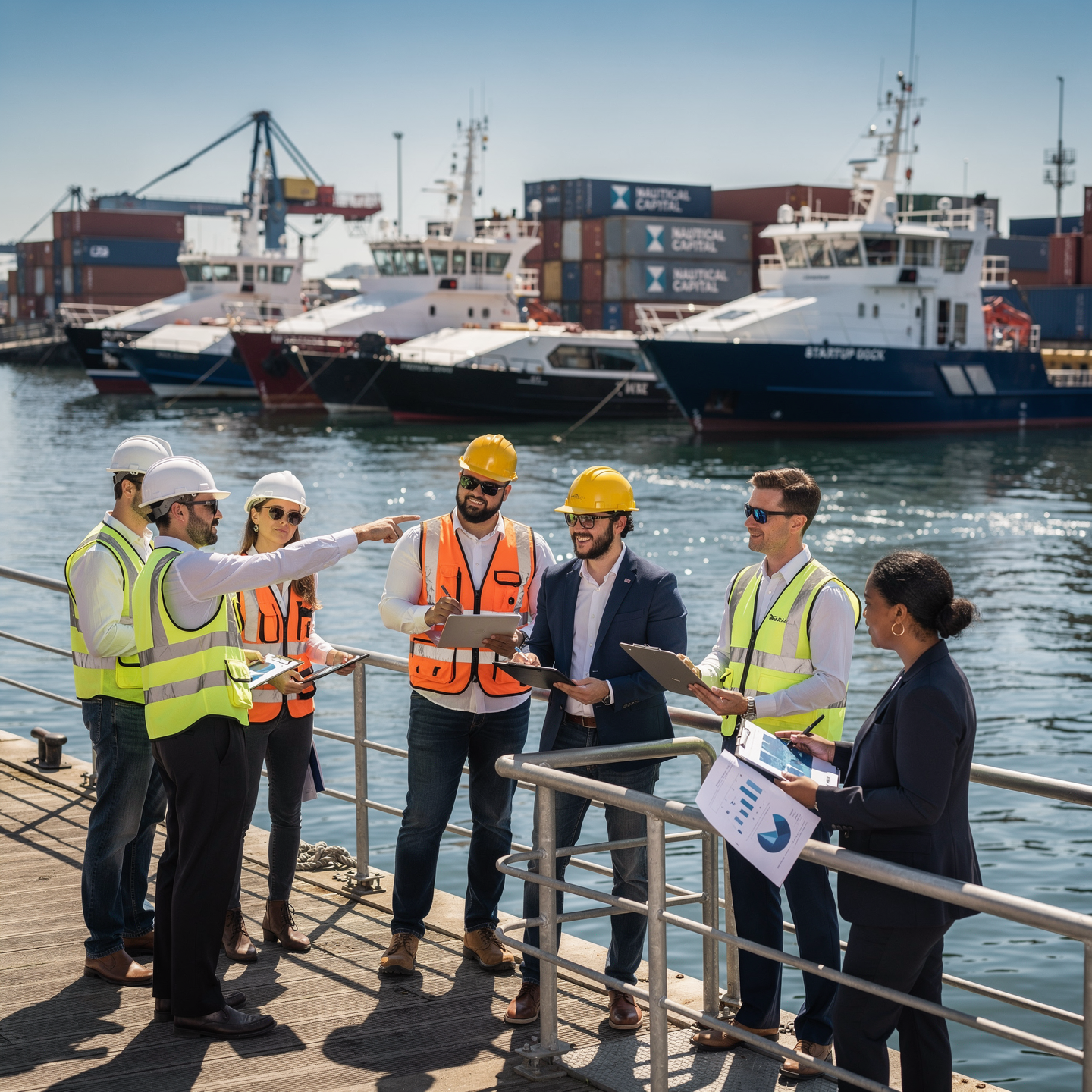
Master’s Degree in Venture Capital Funds and Nautical Startups

Why this master’s programme?

The Master in Capital Funds and Nautical Startups

This is your gateway to the vibrant world of innovation and investment in the maritime sector. Learn to identify, evaluate, and drive disruptive nautical startups and manage specialized capital funds. Master financial analysis, project valuation, and investment strategies specific to the nautical sector, from marine technology to tourism and logistics. Prepare to lead the next generation of nautical companies and make a real impact on the industry.

Differentiating Advantages

  • Specialized Focus: In-depth knowledge of the nautical startup and venture capital fund ecosystem.
  • Real-World Case Studies: Analysis of successful investments and projects in the maritime sector.
  • Strategic Networking: Connection with investors, entrepreneurs, and industry experts.
  • Skills Development: Business valuation, due diligence, portfolio management, and negotiation.
  • Career Opportunities: Access to key positions in investment funds, startups, and companies in the sector.
Fondos

Master’s Degree in Venture Capital Funds and Nautical Startups

Availability: 1 in stock

Who is it aimed at?

  • Investment professionals looking to specialize in the growth and financing of innovative nautical startups.
  • Nautical entrepreneurs with disruptive ideas who need to structure their fundraising strategy and scale their business.
  • Executives of established nautical companies interested in identifying investment opportunities and collaborating with promising startups.
  • Lawyers and consultants who want to expand their expertise in the venture capital ecosystem applied to the nautical sector.
  • Graduates in finance, business administration, or engineering seeking a high-value specialization in a sector with great growth potential.

Flexibility and Networking

Designed for professionals and entrepreneurs: flexible online format, access to a network of investors and startups, and real-world case studies from the nautical sector.

Fondos

Objectives and skills

Evaluate and select promising nautical investments:

Analyze the current nautical market, growth trends and potential profitability of different segments (e.g. boat rental, marinas, maintenance services).

Structuring and effectively managing capital funds:

“Optimize asset allocation, diversifying investments and mitigating risks through thorough analysis and well-defined exit strategies.”

Develop profitable exit strategies for nautical investments:

“Analyze the market, diversify the portfolio, optimize asset sales, and explore alternative financing options.”

Navigating the nautical and financial regulatory framework:

“Understanding regulations regarding ship registration, maritime registry and financing, optimizing insurance management and fulfilling tax obligations.”

Leading innovation in the nautical sector through venture capital:

Identify disruptive investment opportunities in emerging nautical technologies and innovative business models, assessing their scalability and return potential.

Mastering the valuation of startups and nautical assets:

“Model projected cash flows and apply industry-relevant valuation multiples, considering sector-specific risks.”

Study plan – Modules

  1. Structure and types of capital funds in the nautical sector: venture capital, private equity, specialized funds, and crowdequity
  2. Advanced quantitative analysis: financial models adapted to nautical startups, DCF valuation, comparative and multi-sector methods
  3. Inherent risk assessment: specific risk matrix for investments in nautical technology and development
  4. Technical due diligence: in-depth review of prototypes, intellectual property, patents, and onboard technology
  5. Specialized legal and regulatory study: maritime regulations, licenses, certifications, and compliance in international markets
  6. Governance and corporate structure: analysis of shareholder agreements, shareholding structures, and investor protection clauses
  7. Qualitative assessment of the founding team: skills, experience in the nautical industry, entrepreneurial track record and scalability

    Exit strategies: IPOs, mergers, strategic acquisitions, and secondary sales in the nautical startup sector

    Design and implementation of customized KPIs for maritime startups focused on growth and sustainability metrics

    Case studies and simulations: analysis of real investments, due diligence practices, and preparation of detailed reports for presentations to investment committees

  1. Overview of financing in the nautical sector: specific characteristics and inherent challenges
  2. Innovative financial instruments: nautical crowdfunding, green bonds, operating leases, and tailored mezzanine financing
  3. Evaluation and design of optimal capital structures for technology-based and nautical startups
  4. Technical and financial due diligence: critical aspects in nautical projects and smart vessels
  5. Advanced valuation models: discounted cash flow (DCF) with sector adjustments and probabilistic scenarios
  6. Valuation based on intangible assets: patents, know-how, commercial agreements, and intellectual property in nautical startups
  7. Comparative analysis of specific valuation methods: sector multiples, value in use, and options real-world scenarios
  8. Incorporating climate and sustainability factors as risk and value variables
  9. Structuring investment rounds: seed, Series A/B/C, and exit strategies in the nautical context
  10. Negotiation tools with specialized investors: venture capital funds, business angels, and family offices focused on the maritime sector
  11. Key metrics and KPIs for monitoring the financial and operational performance of nautical startups
  12. Specific regulatory and tax aspects affecting financing and valuation in the nautical industry
  13. Case studies and success stories: disruptive financing models and valuation applied to leading innovative nautical startups
  14. Developing financial models in Excel and specialized software for strategic decision-making
  15. Preparing professional reports and presentations for ecosystem investors nautical
  1. Dynamics and Segmentation of the Global Nautical Market: Analysis of Trends, Emerging Niches, and Growth Drivers Specific to the Maritime Sector
  2. Advanced Methodologies for the Quantitative and Qualitative Valuation of Opportunities in Nautical Startups: Financial, Technological, and Business Model Evaluation
  3. Tools and Techniques for Conducting Due Diligence in Nautical Investments: Legal, Regulatory, and Compliance Analysis in International Maritime Environments
  4. Predictive Models of Scalability and Inherent Risks in Nautical Startups: Analysis of Macroeconomic and Microeconomic Variables, Competition, and Barriers to Entry
  5. Strategic Design of Investment Portfolios Specialized in Capital Funds for Maritime Projects: Diversification, Asset Correlation, and Mitigation of Sectoral Risks
  6. Evaluation of Disruptive Technologies in the Nautical Industry: Autonomous Ships, Clean Energy, Digitalization, and Intelligent Management Systems for Decision Making Investors
  7. Growth and consolidation strategies for nautical startups: negotiation, strategic alliances, and operational optimization to maximize long-term value

    Planning and execution of exit strategies in maritime investments: sales, IPOs, mergers and acquisitions, and capitalization of intangible assets

    Key performance indicators (KPIs) and specific financial metrics for monitoring investments in the nautical sector: EBITDA, burn rate, runway, and valuation multiples

    Case studies and comparative analysis of successful and unsuccessful exits in the nautical startup ecosystem: lessons learned and best practices for professional investors

  1. Legal Foundations of Investment Vehicles in the Nautical Sector: Company Types, Bylaws, and Applicable Regulations in the Blue Economy
  2. Structuring and Incorporation of Special Purpose Vehicles (SPVs) for Nautical Projects: Advantages, Risks, and Regulatory Compliance
  3. Key Tax Aspects for Nautical Funds and SPVs: Direct and Indirect Taxation, Double Taxation, and International Tax Planning
  4. Design and Formalization of Strategic Joint Ventures in the Maritime Sector: Essential Clauses, Capital Contributions, and Profit Sharing
  5. Specific Contracts for Investment in Nautical Startups: Due Diligence, Investment Contracts, Shareholders’ Agreements, and Shareholders’ Agreements
  6. Advanced Corporate Governance Models Applied to Nautical Investment Vehicles: Control Bodies, Specialized Committees, and Decision-Making Protocols
  7. Financial Instruments and Structures of Capital: Equity, Mezzanine Debt, Convertibles, and Exit Mechanisms in Marine Capital Funds

    Maritime Regulation and its Impact on the Financial Operations of Investment Vehicles for the Blue Economy

    Comprehensive Management of Legal and Tax Risks: Compliance, Regulatory Reporting, and Mitigation in Marine Funds and SPVs

    Case Studies and Analysis of Successful Investment Structures in Nautical Startups and Projects with a Focus on Sustainability and Innovation

  1. Fundamentals of Technological Innovation in the Nautical Sector: principles, trends, and disruptive opportunities in the blue economy
  2. Emerging technologies applied to nautical startups: IoT, artificial intelligence, big data, and digital twins for optimizing marine operations
  3. Design and development of technological solutions for smart vessels: automation, hybrid propulsion systems, and marine renewable energies
  4. Integration of advanced sensors in vessels: real-time monitoring, predictive maintenance, and improved operational safety
  5. Digital platforms for nautical fleet management: management software, operational data analysis, and traceability across the value chain
  6. Blockchain and smart contracts in financing and fund management for nautical startups: transparency, legal security, and transaction efficiency
  7. Innovative business models and technological scalability: case studies and agile methodologies in startup creation
  8. High-impact nautical technologies

    Rapid prototyping and technology validation: simulation tools, CAD/CAE modeling, and testing in controlled environments

    Intellectual property strategies for nautical technology: patents, trade secrets, and confidentiality agreements

    Regulations and technical standards applicable to innovation in the nautical sector: certifications, approvals, and international standards for safe technology adoption

  1. Advanced Fundamentals in Capital Funds: Types, Legal Structures, and Investment Vehicles Specialized in the Nautical Sector
  2. Applied Financial Analysis: Discounted Cash Flow (DCF) Modeling, Valuation by Nautical Market-Specific Multiples, and Adjustments for Sector Risk
  3. Comprehensive Due Diligence: Financial, Technical, and Operational Aspects in Nautical Startups, Including Technology Validation and Maritime Regulatory Compliance
  4. Portfolio Diversification and Reallocation Strategies: Dynamic Portfolio Management in High-Volatility and Limited-Liquidity Environments
  5. Hybrid and Structured Instruments: Mezzanines, Convertible Debt, and Preemption Clauses to Optimize Investment in Emerging Nautical Projects
  6. Legal and Contractual Risk Analysis in Capital Funds and Startups, with an Emphasis on Investment Contracts, Intellectual Property, and Regulations International maritime investments

    Advanced compliance and corporate governance management: implementation of internal policies, codes of conduct, and audits for nautical funds and startups

    Quantitative return assessment: metrics such as IRR, MOIC, and TVPI specific to investments in nautical ecosystems and maritime innovation

    Strategic tax planning: optimal tax structures, internationalization of funds, and tax benefits associated with nautical innovation and development

    Negotiation and closing of investment agreements: key clauses, equity splits, preferential rights, and conflict mitigation in high-impact technological and regulatory environments

    Post-investment monitoring and follow-up: KPIs, periodic reporting, scalability, and sustainable profitability in startups in the nautical industry

    Exit models and liquidity strategies: IPOs, acquisitions, secondary sales, and buybacks adapted to the dynamics of the nautical market

  7. Case studies and analysis of global trends: investment in water mobility, green technologies, and smart boating with a focus on scalability and disruption

    Innovation and sustainability: technical and financial evaluation of startups integrating renewable energy, advanced materials, and maritime digitalization

    Networking and strategic alliances: building collaborative ecosystems among investors, incubators, and key players in the nautical sector to maximize value

  1. Investment Dynamics in the Nautical Sector: Global Market Analysis and Emerging Trends in the Blue Economy
  2. Advanced Financial Models for Valuing Nautical Startups: Relative Valuation, Discounted Cash Flow (DCF), and Real Options Methods
  3. Diversification Strategies for Capital Funds Focused on Maritime Innovation and Clean Technologies
  4. Structuring Investment Funds Specialized in Nautical Assets: Legal Vehicles, Compliance, and Corporate Governance
  5. Sector-Specific Risk Analysis: Asset Volatility, Environmental Impact, International Regulations, and Reputational Risks
  6. Comprehensive Due Diligence for Nautical Startups: Technology, Market, Intellectual Property, and Legal Compliance under National and International Regulatory Frameworks
  7. Legal Innovation in the Blue Economy: Smart Contracts, Tokenization of Maritime Assets, and the Use of Blockchain for Traceability and Financing
  8. Tax Optimization
  9. International tax structures and bilateral agreements applicable to funds and startups in nautical investment
  10. Scaling and exit strategies for maritime startups: mergers, acquisitions, SPACs, and initial public offerings (IPOs) in specialized markets
  11. Case studies and benchmarking of successful venture capital funds integrating technological innovation and sustainability into the blue economy
  1. Corporate Governance Fundamentals: Structure, Principles, and Best Practices Applied to Venture Capital Funds for Nautical Startups
  2. Ownership and Control Models: Analysis of Boards of Directors, Specialized Committees, and Executive Roles in Nautical Investment Contexts
  3. Regulation and Compliance: Specific Financial, Environmental, and Sectoral Regulations for Nautical Startups
  4. Advanced Risk Management Strategies: Identification, Assessment, and Mitigation of Financial, Operational, and Technological Risks in Nautical Investments
  5. Implementation of Internal Control Systems: Audits, Continuous Monitoring, and Reporting Mechanisms for Venture Capital Funds in Nautical Startup Ecosystems
  6. Comprehensive Due Diligence: Rigorous Legal, Financial, and Technical Analysis to Ensure the Viability and Scalability of Emerging Nautical Projects
  7. Reputational and Market Risk Management: Tools to Anticipate Crises and Strengthen Trust Specialized investors and stakeholders
  8. ESG (Environmental, Social, and Governance) Impact Assessment: Integrating sustainable criteria into the governance and decision-making of nautical innovation funds
  9. Designing policies for talent management and retention of key teams in funded nautical startups
  10. Case studies and simulations of corporate governance and risk management: Application in real-world scenarios of venture capital funds navigating the nautical industry
  1. Fundamentals of financial innovation in the nautical sector: historical evolution, disruptive trends, and their impact on venture capital funds and startups
  2. Advanced market assessment models for nautical startups: quantitative and qualitative analysis, segmentation, and sector benchmarking
  3. Methodologies for valuing intangible assets in nautical startups and technologies: intellectual property, know-how, and specialized human capital
  4. Analysis of the nautical investment ecosystem: identification of key players, capital flows, and governance structures in venture capital funds
  5. Frameworks for financial, legal, and technical due diligence applied to venture capital funds and startups in the nautical sector; Specific risks and mitigation

    Development of sustainable growth strategies: ESG metrics focused on innovation and responsibility in nautical entrepreneurship projects

    Design and optimization of diversified investment portfolios in venture capital funds focused on nautical technologies and marine sustainability

    Complex financial models for predicting returns and cash flows in nautical startups: Monte Carlo simulation techniques and scenario analysis

    Strategic exit planning (exit strategies): IPOs, strategic sales, mergers and acquisitions, and buyouts in the nautical and technological context

    Implementation of advanced metrics for post-exit impact assessment: social, environmental, and economic returns in innovative nautical investments

    Case studies of successful exits in venture capital funds and nautical startups, analyzing critical factors, negotiations, and regulatory processes

    Open innovation and collaboration Intersectoral: Strategic alliances between startups, funds, and key players to enhance scalability and sustainable growth

    Financial regulation and specific regulatory compliance for investments in nautical projects with a focus on sustainability and technological innovation

    Emerging technologies applied to nautical financing: blockchain, smart contracts, and specialized crowdfunding

    Digital tools for real-time monitoring and reporting of investments in nautical startups: dashboards, KPIs, and advanced analytics

  1. Conceptual framework and justification of the project: definition, objectives, and context of the sustainable nautical ecosystem
  2. Comprehensive analysis of the nautical market: current trends, investment opportunities, and sectoral competitive analysis
  3. Applicable technological and innovation assessment: integration of clean technologies, digitalization, and automation in nautical startups
  4. Strategic design of the business model: value propositions, customer segmentation, distribution channels, and cost structures
  5. Development of the advanced financial plan: projections, profitability analysis, investment scenarios, and venture capital fund structures
  6. Architecture and design of the strategic capital fund: selection, investor acquisition, due diligence, and co-investment strategies
  7. Implementation of ESG (Environmental, Social, and Governance) strategies specific to the nautical sector
  8. Scalability and expansion strategies International: Legal, tax, and operational analysis in global markets

    Advanced risk management models: Mitigation, sensitivity analysis, and financial stress applied to nautical startups

    Operations plan for sustainability: Green supply chain, eco-certifications, and environmental impact control

    Agile and open innovation methodologies for project management in dynamic nautical venture capital environments

    Design of key performance indicators (KPIs) for the effective management and monitoring of project and investment fund progress

    Exit and return on investment strategies: Sale of stakes, mergers, acquisitions, and profit distribution

    Final executive presentation: Development of a professional pitch deck geared towards investors and specialized stakeholders

    Practical simulation of negotiation and investment closing: Techniques, arguments, and objection handling in nautical contexts

    Preparation of a comprehensive final report: Academic dissertation, technical annexes and financial and legal audit documentation

Career prospects

“`html

  • Investment Analyst at Venture Capital Funds: Evaluation of nautical startups, risk and profitability analysis, due diligence.
  • Nautical Venture Capital Fund Manager: Identification and selection of investment opportunities, management of the investment portfolio, monitoring and support of startups.
  • Financial Consultant specializing in Nautical Startups: Advising nautical entrepreneurs on fundraising, business plan development, and company valuation.
  • Business Angel in the Nautical Sector: Direct investment in nautical startups, mentoring, and strategic support for entrepreneurs.
  • Business Development Manager for Nautical Startups: Identification of market opportunities, creation of strategic alliances, and company expansion.
  • Market Analyst specializing in the Nautical Sector: Market trend research, competitive analysis, and identification of market niches.
  • Entrepreneur in the Nautical Sector: Creation and management of innovative nautical startups, development of new products and services.
  • Innovation Manager in Traditional Nautical Companies: Identification and evaluation of new technologies and business models, and development of innovation projects.

“`

Entry requirements

Academic/professional profile:

Bachelor’s degree in Nautical Science/Maritime Transport, Naval/Marine Engineering or a related qualification; or proven professional experience on the bridge/in operations.

Language proficiency:

Functional Maritime English (SMCP) recommended for simulations and technical materials.

Documentation:

Updated CV, copy of qualification or seaman’s book, national ID/passport, motivation letter.

Technical requirements (for online):

Device with camera/microphone, stable internet connection, monitor ≥ 24” recommended for ECDIS/Radar-ARPA.

Admissions process and dates

Online
application

(form + documents).

Academic review and interview

Admissions decision

Admissions decision

(+ scholarship offer if applicable).

Place reservation

(deposit) and enrolment.

Induction

(access to the virtual campus, calendars, simulator guides).

Scholarships and financial support

  • In-depth Analysis: Master the financial and strategic evaluation of nautical startups to make informed investment decisions.
  • Smart Investing: Learn the keys to Venture Capital and how to identify high-growth opportunities in the nautical sector.
  • Networking: Connect with investors, entrepreneurs, and experts in the nautical sector to expand your professional network.
  • Case Studies: Apply your knowledge in real-world simulations of investment and fund management in the nautical field.
  • Nautical Specialization: Gain a competitive edge by combining finance and the dynamic world of startups. Nautical.
Boost your career in the investment sector with a specialized focus on the exciting world of sailing.

Testimonials

Frequently asked questions

Yes. The itinerary includes ECDIS/Radar-ARPA/BRM with harbor, ocean, fog, storm, and SAR scenarios.

Online with live sessions; hybrid option for simulator/practical placements through agreements.

Recommended functional SMCP. We offer support materials for standard phraseology.

Yes, with a relevant degree or experience in maritime/port operations. The admissions interview will confirm suitability.

Optional (3–6 months) through Companies & Collaborations and the Alumni Network.

Simulator practice (rubrics), defeat plans, SOPs, checklists, micro-tests and applied TFM.

A degree from Navalis Magna University + operational portfolio (tracks, SOPs, reports and KPIs) useful for audits and employment.

  1. Conceptual framework and justification of the project: definition, objectives, and context of the sustainable nautical ecosystem
  2. Comprehensive analysis of the nautical market: current trends, investment opportunities, and sectoral competitive analysis
  3. Applicable technological and innovation assessment: integration of clean technologies, digitalization, and automation in nautical startups
  4. Strategic design of the business model: value propositions, customer segmentation, distribution channels, and cost structures
  5. Development of the advanced financial plan: projections, profitability analysis, investment scenarios, and venture capital fund structures
  6. Architecture and design of the strategic capital fund: selection, investor acquisition, due diligence, and co-investment strategies
  7. Implementation of ESG (Environmental, Social, and Governance) strategies specific to the nautical sector
  8. Scalability and expansion strategies International: Legal, tax, and operational analysis in global markets

    Advanced risk management models: Mitigation, sensitivity analysis, and financial stress applied to nautical startups

    Operations plan for sustainability: Green supply chain, eco-certifications, and environmental impact control

    Agile and open innovation methodologies for project management in dynamic nautical venture capital environments

    Design of key performance indicators (KPIs) for the effective management and monitoring of project and investment fund progress

    Exit and return on investment strategies: Sale of stakes, mergers, acquisitions, and profit distribution

    Final executive presentation: Development of a professional pitch deck geared towards investors and specialized stakeholders

    Practical simulation of negotiation and investment closing: Techniques, arguments, and objection handling in nautical contexts

    Preparation of a comprehensive final report: Academic dissertation, technical annexes and financial and legal audit documentation

Request information

  1. Complete the Application Form.

  2. Attach your CV/degree certificate (if you have it to hand).

  3. Indicate your preferred cohort (January/May/September) and whether you would like the hybrid option with simulator sessions.

    An academic advisor will contact you within 24–48 hours to guide you through the admission process, scholarships, and compatibility with your professional schedule.

Please enable JavaScript in your browser to complete this form.
Click or drag a file to this area to upload.

Faculty

0
    0
    Tu carrito
    Tu carrito esta vacíoRegresar a la tienda
    Scroll to Top


