Master’s Degree in Circular Economy in Ocean Industries
Why this master’s programme?
The Master in Circular Economy in Ocean Industries
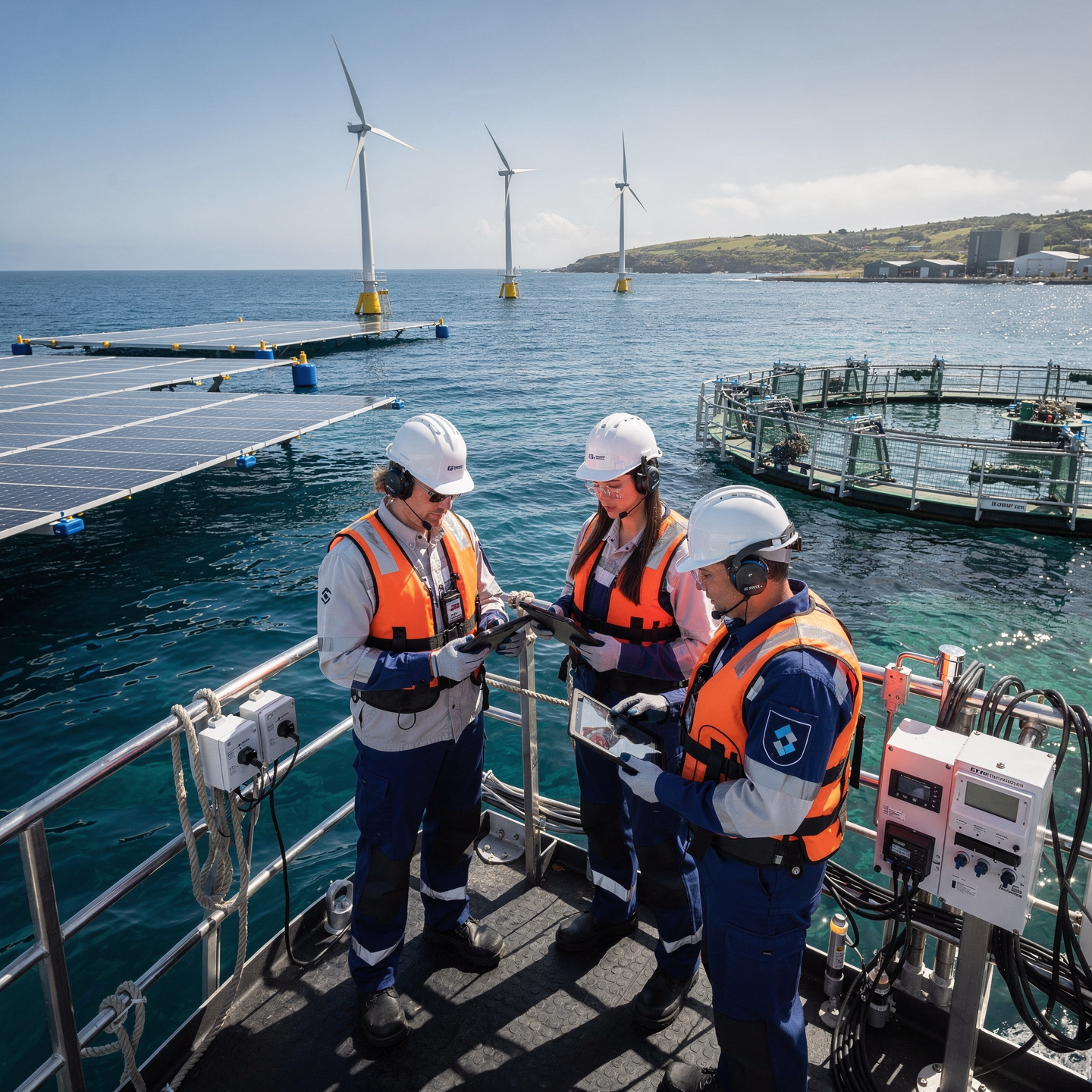
This program prepares you to lead the transition to sustainable business models in the maritime sector. Learn to reduce waste, reuse resources, and reduce the environmental impact of ocean activities. This program offers in-depth knowledge of the regulations, technologies, and strategies for implementing the circular economy in fishing, aquaculture, shipping, marine renewable energy, and coastal management.
This program prepares you to lead the transition to sustainable business models in the maritime sector.
Differential Advantages
- Practical Approach: Real-world case studies and applied projects in companies within the sector.
- Industry Experts: Faculty with experience in the circular economy and marine sustainability.
- Professional Networking: Access to a network of key contacts in the ocean industries.
- Management Tools: Master life cycle assessment methodologies, ecodesign, and sustainable finance.
- Global Perspective: Understand the challenges and opportunities of the circular economy at an international level.
- Modality: Online
- Level: Masters
- Hours: 1600 H
- Start date: 25-08-2026
Availability: 1 in stock
Who is it aimed at?
- Maritime and port professionals seeking to lead the transition towards sustainable and circular business models.
- Naval and environmental engineers interested in designing innovative solutions for waste management and resource optimization in the ocean industry.
- Sustainability and CSR managers who need to implement circular economy strategies in their organizations and comply with the most demanding environmental standards.
- Entrepreneurs and startups with a vision to develop projects for marine waste valorization, ecodesign, and reverse logistics in the ocean environment.
- Graduates in environmental science, economics, or engineering aspiring to a high-impact career in the field of the circular economy applied to the Ocean industries.
Flexibility and practical approach:
Program compatible with your professional development: adaptable online methodology, real-world case studies, and networking with industry experts.
Objectives and skills

Implement circular business models:
“Redesigning products to facilitate reuse, repair and recycling, minimizing waste and maximizing the value of materials.”

Design strategies for the valorization of marine waste:
“Identify market opportunities for recycled materials, considering environmental regulations and innovative processing technologies.”

Manage ecodesign projects for ocean products and services:
Integrate life cycle assessment (LCA) to optimize sustainability and reduce the environmental impact of marine products and services.

Analyze and optimize ocean supply chains:
“Implement risk mitigation strategies (hurricanes, piracy) and optimize routes considering climatic and geopolitical factors, coordinating with insurers and security agencies.”

Develop and implement circular economy policies in the maritime-fisheries sector:
Promote the reuse and recycling of materials from ships and fishing gear, minimizing waste and maximizing their value.

Assess and mitigate the environmental impact of ocean-based industrial activities:
Implement environmental management systems (ISO 14001), optimize resource consumption and manage waste responsibly, minimizing spills and emissions.
Study plan – Modules
- Fundamentals of Circular Economy in the marine context: principles, objectives, and international regulatory framework
- Technological innovation applied to the valorization of ocean waste: advances in biotechnology, nanotechnology, and electrochemical processes
- Sustainable design of industrial processes for waste minimization and resource recovery in the fishing, aquaculture, and naval sectors
- Integrated waste management models in ocean industries: classification, segregation, storage, and traceability
- Implementation of cleaner production systems and eco-efficiency in the transformation of ocean raw materials
- Life cycle assessment (LCA) and environmental impact analysis for circular economy processes in marine environments
- Environmental regulations and certifications applicable to waste management in the ocean industry and their impact on the value chain
- Innovation in the capture and reuse of microplastics and Residual biomass: advanced filtration and biological treatment techniques
Application of digital technologies and Industry 4.0 for optimizing logistics and real-time monitoring of ocean waste flows
Sustainable development and circular economy strategies adapted to marine biodiversity and coastal communities
Success stories and critical analysis of innovative projects in integrated marine waste management at a global level
Planning and control tools for circular processes: performance indicators, KPIs, and specific environmental audits
Professional roles and competencies in sustainable innovation: leadership, management of multidisciplinary teams, and strategic alliances
Current challenges and future perspectives in the application of the circular economy for the preservation of ocean ecosystems
- Fundamentals and principles of waste valorization in ocean industries: classification, characterization, and potential of marine waste
- Advanced biotechnological technologies: bioremediation, anaerobic digestion, and bioelectrogenesis applied to ocean waste
- Recovery and recycling systems for organic and inorganic materials: physicochemical processes, multiphase separation, and fractional distillation of byproducts
- Optimization of water and energy resources in treatment plants: integration of renewable energies and simulation models for energy efficiency
- Application of smart sensors and IoT technologies for real-time monitoring of recycling and valorization processes
- Innovations in the design of sustainable processes: closed-loop economics and waste minimization in marine production chains
- Advanced models for materials management and reverse logistics in the ocean context: traceability, digitalization, and blockchain
Environmental impact assessment and eco-efficiency: key metrics, life cycle assessment (LCA), and continuous improvement tools
International regulations and technological standards related to marine waste valorization and the circular economy
Case studies and successful implementation studies: critical analysis and lessons learned in the fishing, aquaculture, and marine renewable energy industries
- Fundamentals and principles of the circular economy applied to ocean industries: definition, conceptual framework, and strategic benefits.
- Disruptive technological innovations for the valorization and recovery of marine waste: marine biotechnology, nanotechnology, and advanced separation systems.
- Integrated management strategies for marine solid waste: design of collection, sorting, and processing systems adapted to marine environments.
- Predictive models and Big Data for optimizing resource management in coastal and marine ecosystems.
- Development and application of clean technologies for mitigating aquatic pollution and minimizing environmental impacts.
- Optimization of circular value chains in the fishing, aquaculture, and marine bioproduct industries: life cycle analysis and environmental performance evaluation.
- Remote monitoring systems and smart technologies (IoT, marine sensors) for real-time waste tracking and resources in ocean areas.
- International regulatory framework and public policies that promote the circular economy in marine and coastal environments.
- Success stories and best practices in the implementation of sustainable strategies for the circular economy in ocean sectors globally.
- Sustainability assessment methodologies and environmental certifications applied to circular economy projects in ocean industries.
- Fundamentals and principles of marine biorefinery design: integration of processes, typologies, and modular architectures for the sustainable valorization of ocean biomass.
- Advanced characterization of ocean waste: chemical composition, physicochemical properties, and analytical techniques for the identification of valorizable fractions.
- Biotechnological processes in marine biorefineries: fermentation, anaerobic digestion, enzymatic hydrolysis, and biocatalysis applied to marine byproducts.
- Thermochemical technologies: pyrolysis, gasification, and controlled combustion for the energy conversion of marine waste with optimized performance and reduced emissions.
- Integration of recovery and purification systems: membrane separation, green solvent extraction, and adsorption techniques for high value-added products.
- Process modeling and simulation: computational tools for the Industrial scaling and economic-environmental optimization of marine biorefineries.
Sustainability indicators and life cycle assessment (LCA): comprehensive evaluation of environmental, social, and economic impacts in biorefinery operations.
International certifications and regulations: ISO and Ecocert standards, and sustainability criteria applied to marine-derived bioproducts and bioenergy.
Risk management and industrial safety: protocols for handling hazardous materials, mitigating impacts on marine ecosystems, and contingency plans.
Business models for commercial scaling: financial feasibility analysis, co-product valorization, green incentive policies, and circular economy strategies in ocean industries.
Success stories and global benchmarking: comprehensive study of operational marine biorefineries, emerging technologies, and sustainable innovation opportunities.
Digital tools for real-time monitoring and control: Implementation of IoT, big data, and machine learning for the continuous optimization of biorefinery processes.
Social impact and community development: strategies for the inclusion of coastal communities, job creation, and the promotion of responsible practices in the ocean value chain.
Integrated projects and practical simulations: design, operation, and evaluation of pilot-scale biorefineries with a multidisciplinary approach and regulatory compliance.
- Fundamentals and advanced principles of the circular economy applied to ocean industries: conceptualization, key indicators, and international regulatory frameworks
- Life cycle assessment (LCA) and ecological footprint analysis for marine production systems: tools, methodologies, and case studies
- Technological innovations for the recovery and valorization of marine waste: biotechnology, microplastic capture, and remanufacturing processes
- Design and optimization of sustainable value chains: integration of circular business models, industrial symbiosis, and the collaborative economy in ocean contexts
- Efficient management of marine natural resources: responsible fishing, regenerative aquaculture, and sustainable use of ocean biomass
- Implementation of intelligent traceability and digitalization systems for monitoring and optimizing circular production processes
- Socioeconomic and environmental impact analysis of circular strategies in coastal communities
- Environmental and operational risk assessment and mitigation in the transition to circular models in ocean industries
- International regulations and public policies for integrating the circular economy in maritime sectors: governance, incentives, and green financing
- Development of circular business projects: planning, implementation, monitoring, and evaluation methodologies to ensure technical and economic viability
and related industrial sectors
- Fundamentals of Technological Innovation in the Circular Economy Applied to Ocean Industries: Principles, Trends, and Emerging Challenges
- Advanced Models for Marine and Coastal Resource Management: Assessment, Monitoring, and Data-Driven Optimization
- Application of Disruptive Technologies (IoT, Big Data, Artificial Intelligence) in the Valorization of Ocean Byproducts
- Design and Development of Sustainable Processes for Waste Reduction and Life Cycle Maximization in Marine Matrices
- Integrated Circular Economy Strategies for Fishing, Aquaculture, and Marine Biotechnology Industries
- Life Cycle Assessment (LCA) Methodologies and Environmental Footprint Assessment in Ocean Industrial Processes
- Implementation of Clean Production Systems and Eco-Innovation in the Blue Value Chain
- Energy Optimization and Water Resource Management on Platforms and Processing Plants marine
- International regulations and public policies for promoting the circular economy in ocean sectors
- Case studies and best practices in marine waste valorization: from biomass to high value-added products
- Digital tools for integrated resource management and traceability in sustainable ocean supply chains
- Financial models and socio-economic impact assessment for circular innovation projects in the blue industry
- Risk management and resilience to climate change in marine ecosystems and industrial activities
- Development of multidisciplinary strategic alliances for technology transfer and scalability of circular solutions
- Training methodologies and cultural change for the effective adoption of sustainable practices in ocean sector organizations
- Advanced Foundations of Circular Economy Applied to Ocean Industries: Principles, Life Cycles, and Delimitation of the Production System
- Emerging Technologies for Marine Waste Valorization: Marine Biotechnology, Enzymatic Processes, and Fermentation for Residual Biomass Valorization
- Open and Collaborative Innovation Models: Integration of Multiple Actors for the Development of Sustainable Solutions Aimed at the Reuse of Ocean Resources
- Design and Optimization of Circular Value Chains in the Fishing, Aquaculture, and Shipbuilding Sectors: Tools and Methodologies for Maximizing Added Value
- Implementation of Digital Technologies in Ocean Waste Management: IoT, Big Data, Blockchain, and Their Application for Traceability and Operational Efficiency
- Evaluation and Quantification of Environmental and Socioeconomic Impact: Life Cycle Assessment (LCA), Carbon Footprint, and Multi-Criteria Evaluation in Ocean Circular Economy Projects
- International regulations and technical protocols for the sustainable management of marine waste: regulatory compliance, certifications, and sectoral standardization
- Economics of materials and renewable resources in the ocean environment: utilization of byproducts, biochemicals, and recovered materials for new industrial uses
- Design and development of circular business models: financial analysis, risks, and opportunities in the sustainable valorization of marine resources
- Case studies and applied projects: critical analysis of real-world experiences, lessons learned, and replicable strategies for the sustainable oceanographic industry
- Conceptual framework and theoretical foundations of governance in the circular economy applied to ocean industries: principles, actors, and dynamics
- Comparative analysis of advanced governance models: hierarchical approaches, network hierarchies, multi-level and collaborative governance for sustainable ocean management
- Design and implementation of integrated public policies for the promotion of the circular economy in maritime and fisheries sectors: regulatory, economic, and voluntary instruments
- Evaluation of public policies: quantitative and qualitative methodologies for measuring environmental, social, and economic impact in ocean industries
- International and regional regulatory framework: MARPOL and OSPAR conventions, EU agreements, and their influence on maritime circular economies
- Financing mechanisms and incentives for circular investments: analysis of green funds, sustainable loans, grants, and public-private partnerships
- Citizen participation and Multi-level dialogue: designing collaborative platforms to enhance cooperation among governments, businesses, coastal communities, and NGOs
Data management and transparency: blockchain technologies and digital tools for monitoring, controlling, and reporting the implementation of circular practices in ocean industries
Success stories and best practices in circular governance: analysis of national and international experiences applied to the sustainable blue economy
Developing adaptive governance strategies: dynamic responses to environmental and social uncertainties in complex ocean environments
Capacity building and institutional strengthening: methodologies for building technical, administrative, and regulatory capacities in regulatory bodies and the private sector
Assessment and mitigation of regulatory and market risks associated with the transition to circular models in ocean industries
Interoperability between sectoral and territorial policies: coordination between marine resource management, sustainable tourism, and the circular economy
Promoting social and technological innovation through Public policies that promote circularity and resilience in industrial marine ecosystems
Ethical and social responsibility framework in governance: integrating environmental criteria, intergenerational equity, and the rights of coastal communities into policy formulation
- Fundamentals of the circular economy applied to ocean industries: principles, material life cycle, and closing the loop
- Advanced technologies for marine waste valorization: biotechnology, nanotechnology, and thermochemical processes
- Sustainable design strategies: ecodesign for marine products and processes with a focus on waste minimization
- Innovation in recovery and recycling systems: technologies for separating, treating, and reusing ocean materials
- Optimizing circular value chains: integrating collaborative models and reverse logistics in marine environments
- Implementing digital and IoT platforms for the intelligent monitoring and management of resources and waste in the ocean industry
- Environmental and economic impact assessment using life cycle assessment (LCA) and cost-benefit analysis tools in circular projects
- International regulations and technical standards for sustainable valorization Ocean waste and marine renewable resources
Circular business models for ocean industries: financial strategies, open innovation, and multi-sector collaboration
Case studies and successful pilot projects: integrating technological innovation and sustainable strategies for the comprehensive valorization of resources in ocean environments
- Fundamentals and conceptual framework of the circular economy applied to ocean industries: principles, systemic models, and life cycle analysis
- Comprehensive characterization of ocean waste: chemical composition, bioavailability, and potential for bioeconomic valorization
- Engineering of marine biorefineries: design of integrated processes for the extraction, transformation, and purification of biocompounds from residual ocean biomass
- Advanced technologies for the conversion of marine waste into high-value-added bioproducts: microalgae, chitin, biopolymers, and bioactives
- Scalable and sustainable models for the implementation of biorefineries: energy optimization, water resource management, and minimization of environmental footprint
- Integration of renewable energy systems in ocean biorefineries: harnessing tidal, offshore wind, and Residual biomass for clean energy generation
Economic and financial analysis for marine biorefinery projects: cost assessment, profitability, risks, and green financing mechanisms
International regulations and environmental certifications applicable to the valorization of ocean waste and the production of bioproducts
Strategies for industrial scaling and technology transfer: open innovation, public-private cooperation, and the development of ocean clusters
Methodologies for the final project: applied research, scientific writing, and presentation of results oriented toward knowledge transfer and practical application
Career prospects
“`html
- Circular Economy Consultant/Advisor: Implementation of circular economy strategies in companies in the ocean sector.
- Sustainability Project Manager: Design and management of projects focused on sustainability and reducing environmental impact in the ocean industry.
- Ecodesign Specialist: Development of innovative products and services using ecodesign criteria to minimize resource consumption and waste generation.
- Waste and Recycling Manager: Efficient management of waste generated by ocean industries, promoting recovery and recycling.
- Life Cycle Assessment (LCA) Analyst: Evaluation of the environmental impact of products and services throughout their life cycle, identifying opportunities for improvement.
- Circular Innovation Researcher/Developer: Research and development of new technologies and business models based on the circular economy for the ocean sector.
- Sustainability Auditor/Certifier: Auditing and certifying companies and institutions in compliance with sustainability and circular economy standards.
- Circular Economy Educator/Trainer: Providing training and raising awareness about the principles and practices of the circular economy in the ocean sector.
“`
Entry requirements

Academic/professional profile:
Bachelor’s degree in Nautical Science/Maritime Transport, Naval/Marine Engineering or a related qualification; or proven professional experience on the bridge/in operations.

Language proficiency:
Functional Maritime English (SMCP) recommended for simulations and technical materials.

Documentation:
Updated CV, copy of qualification or seaman’s book, national ID/passport, motivation letter.

Technical requirements (for online):
Device with camera/microphone, stable internet connection, monitor ≥ 24” recommended for ECDIS/Radar-ARPA.
Admissions process and dates

Online
application
(form + documents).

Academic review and interview
Admissions decision

Admissions decision
(+ scholarship offer if applicable).

Place reservation
(deposit) and enrolment.

Induction
(access to the virtual campus, calendars, simulator guides).
Scholarships and financial support
- Transform the maritime sector: Master the principles and strategies of the Circular Economy applied to ocean industries.
- Sustainability and Innovation: Learn to design circular business models, optimizing resources and minimizing environmental impact.
- Hands-on experience: Develop real-world projects and collaborate with industry experts to drive sustainable innovation.
- Global vision: Gain a comprehensive perspective of the ocean value chain, from resource extraction to waste valorization.
- Boost your career: Position yourself as a leader in the transition to a circular ocean economy and resilient. Prepare for a sustainable future: Sign up now and become a change agent in the ocean industries!
Testimonials
This master’s program provided me with the tools and knowledge necessary to lead a waste valorization project in the aquaculture industry. Thanks to the training I received, I was able to design and implement a circular system that transformed waste into biofertilizers, reducing the environmental impact by 30% and generating a new, profitable business line for the company.
Mastering the specific financial and economic tools of the Blue Economy sector during the master’s program allowed me to lead the development of a sustainable business model for an aquaculture company, achieving a 30% increase in its profitability in the first year.
This master’s program provided me with the tools and knowledge necessary to develop a circular business model for managing plastic waste in aquaculture. Thanks to the program, I secured funding for my project and am now successfully implementing it in a coastal community, generating local employment and reducing the industry’s environmental impact.
I applied the principles of the circular economy that I learned in my master’s program to optimize waste management at a fish processing plant. We reduced waste by 30%, transformed byproducts into biofertilizers, and increased the company’s profitability by 15% in the first year.

Frequently asked questions
Ocean industries, including fishing, aquaculture, shipping, coastal tourism, and marine biotechnology.
Yes. The itinerary includes ECDIS/Radar-ARPA/BRM with harbor, ocean, fog, storm, and SAR scenarios.
Online with live sessions; hybrid option for simulator/practical placements through agreements.
Ocean industries.
Recommended functional SMCP. We offer support materials for standard phraseology.
Yes, with a relevant degree or experience in maritime/port operations. The admissions interview will confirm suitability.
Optional (3–6 months) through Companies & Collaborations and the Alumni Network.
Simulator practice (rubrics), defeat plans, SOPs, checklists, micro-tests and applied TFM.
A degree from Navalis Magna University + operational portfolio (tracks, SOPs, reports and KPIs) useful for audits and employment.
- Fundamentals and conceptual framework of the circular economy applied to ocean industries: principles, systemic models, and life cycle analysis
- Comprehensive characterization of ocean waste: chemical composition, bioavailability, and potential for bioeconomic valorization
- Engineering of marine biorefineries: design of integrated processes for the extraction, transformation, and purification of biocompounds from residual ocean biomass
- Advanced technologies for the conversion of marine waste into high-value-added bioproducts: microalgae, chitin, biopolymers, and bioactives
- Scalable and sustainable models for the implementation of biorefineries: energy optimization, water resource management, and minimization of environmental footprint
- Integration of renewable energy systems in ocean biorefineries: harnessing tidal, offshore wind, and Residual biomass for clean energy generation
Economic and financial analysis for marine biorefinery projects: cost assessment, profitability, risks, and green financing mechanisms
International regulations and environmental certifications applicable to the valorization of ocean waste and the production of bioproducts
Strategies for industrial scaling and technology transfer: open innovation, public-private cooperation, and the development of ocean clusters
Methodologies for the final project: applied research, scientific writing, and presentation of results oriented toward knowledge transfer and practical application
Request information
Complete the Application Form.
Attach your CV/degree certificate (if you have it to hand).
Indicate your preferred cohort (January/May/September) and whether you would like the hybrid option with simulator sessions.
An academic advisor will contact you within 24–48 hours to guide you through the admission process, scholarships, and compatibility with your professional schedule.
Faculty
Eng. Tomás Riera
Full Professor
Eng. Tomás Riera
Full Professor
Eng. Sofía Marquina
Full Professor
Eng. Sofía Marquina
Full Professor
Eng. Javier Bañuls
Full Professor
Eng. Javier Bañuls
Full Professor
Dr. Nuria Llobregat
Full Professor
Dr. Nuria Llobregat
Full Professor
Dr. Pau Ferrer
Full Professor
Dr. Pau Ferrer
Full Professor
Cap. Javier Abaroa (MCA)
Full Professor
Cap. Javier Abaroa (MCA)
Full Professor

