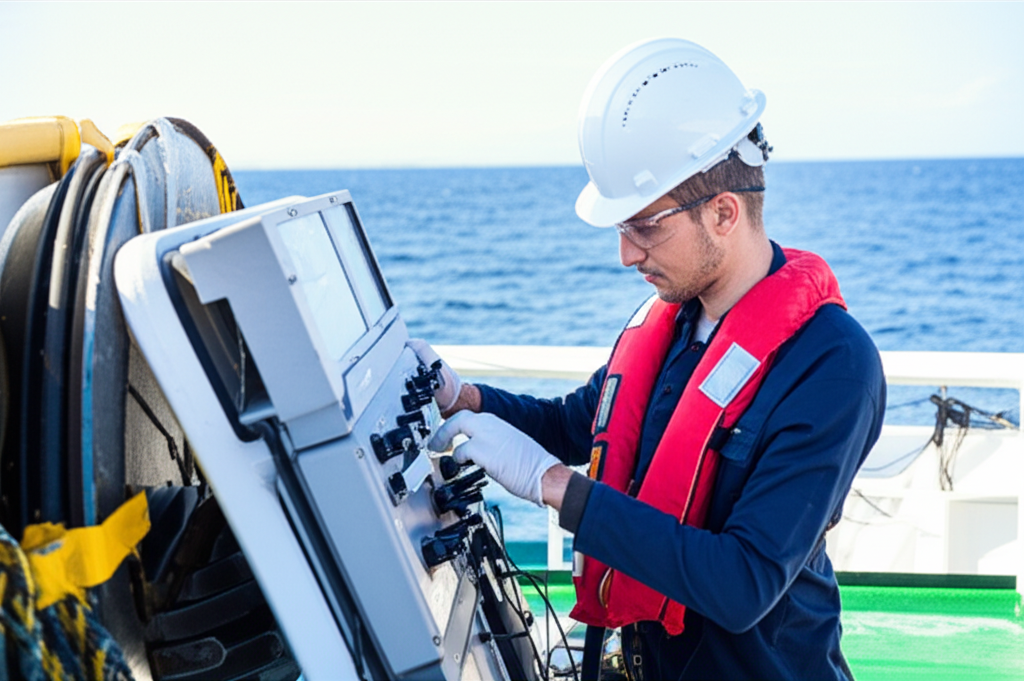
Master’s Degree in Marine Biotechnology and Oceanic Biological Resources
Why this master’s programme?
The Master’s Degree in Marine Biotechnology and Oceanic Biological Resources
Immers you in the exploration of the vast biotechnological potential of the ocean. Learn to discover, characterize, and utilize marine bioactive compounds for applications in pharmaceuticals, cosmetics, food, and energy. Delve into genomics, proteomics, and metabolomics applied to marine organisms, and master the cultivation, extraction, and bioprocessing techniques necessary for their sustainable use. This program prepares you to lead research and development in a constantly expanding sector.
Differentiating Advantages
- Multidisciplinary Specialization: biotechnology, marine biology, chemistry, engineering, and legislation.
- Practical Approach: research projects, internships in leading companies and institutions.
- Skills Development: innovation, entrepreneurship, and management of biotechnology projects.
- Networking: access to experts and companies in the sector at a national and international level.
- Sustainability: promoting the responsible use and conservation of marine resources.
- Modality: Online
- Level: Masters
- Hours: 1600 H
- Start date:
Availability: 1 in stock
Who is it aimed at?
- Marine biologists and biotechnologists seeking to specialize in the research and utilization of ocean resources.
- Chemical and environmental engineers interested in the development of innovative products and processes from marine biomass.
- Food and pharmaceutical industry professionals wishing to explore new sources of ingredients and bioactive compounds from the sea.
- Marine resource managers and environmental policymakers seeking a deep understanding of marine biotechnology for sustainability.
- Graduates in marine science, biology, chemistry, or related fields aspiring to a research or professional career in the biotechnology sector. marine.
Study Flexibility
Adapted for professionals: online modality with live and recorded classes, access to digital resources and personalized tutoring.
Objectives and skills

Develop and implement innovative bioprocesses for the valorization of marine resources:
“Design optimized biological reactors for the extraction and transformation of bioactive compounds, with an emphasis on scalability and sustainability.”

Assess and mitigate the environmental impact of biotechnological activities in marine ecosystems:
Implement continuous monitoring systems and ecological risk analysis, adjusting biotechnological strategies according to predefined impact thresholds and contingency response protocols.

Identify and characterize marine bioactive compounds with potential applications in biomedicine and cosmetics:
Extracting, purifying and analyzing bioactive compounds from marine organisms, evaluating their biological activity through in vitro and in vivo assays to determine their viability as pharmaceutical or cosmetic ingredients.

Manage marine biotechnology research and development projects, from conception to commercialization:
“Plan, execute and control R&D&I projects, optimizing resources and minimizing risks to achieve innovation and technology transfer objectives in the marine biotechnology sector.”

Advising on strategic decision-making related to the sustainable exploitation of oceanic biological resources:
Integrate environmental and socioeconomic risk analysis into the evaluation of ocean resource exploitation projects.

Design and apply advanced methodologies for the cultivation and use of marine organisms for biotechnological purposes:
“Develop optimized cultivation protocols (scaling up, environmental control, nutrition) and extraction/purification of bioactive biomolecules (enzymes, pigments, polysaccharides) for pharmaceutical, cosmetic or food applications.”
Study plan – Modules
1.1 Overview of marine biotechnology: applications, sectors, and the “blue biotech” value chain.
1.2 Marine ecosystems and biodiversity hotspots: implications for bioprospecting.
1.3 Main biological groups of interest: bacteria, archaea, microalgae, macroalgae, invertebrates.
1.4 Adaptations to the marine environment: salinity, pressure, temperature, UV radiation, and its value Biotechnology.
1.5 Blue bioeconomy concepts: sustainability, traceability, and scalability.
1.6 Data quality and reproducibility: sampling, metadata, and bias control.
1.7 Introduction to the chemistry of marine natural products: classes and functions.
1.8 Valorization routes: from Biological resource to ingredient, biomaterial, or drug.
1.9 Risks and ethics: environmental impact, access to resources, and equity.
1.10 Designing a project pipeline: objective → resource → method → validation → product.
2.1 Sampling strategies by habitat: coastal, pelagic, deep-sea, estuaries.
2.2 Campaign design: logistics, contamination control, and sample preservation.
2.3 Conservation protocols: cryopreservation, DNA/RNA stabilization, fixation.
2.4 Marine biobanks: traceability, coding, QA/QC, and chain of Custody.
2.5 Isolation and culture: techniques for difficult microorganisms and microalgae.
2.6 Strain collections: authentication, purity, and maintenance criteria.
2.7 Environmental metadata: oceanographic variables and their integration with results.
2.8 FAIR data management: repositories, Standards and governance.
2.9 Sampling impact assessment: minimization and good practices.
2.10 Applied biobank plan: operational design and documentation.
3.1 Marine microbial ecology: communities, niches, and functions.
3.2 Extremophilic microorganisms: value for enzymes and metabolites.
3.3 Traditional culture vs. “culturomics”: expansion of cultivable diversity.
3.4 Production of secondary metabolites: triggers, stress, and co-culture. data-start=”2409″ data-end=”2412″ />3.5 Marine enzymes: lipases, proteases, cellulases, chitinases; Stability in salt/temperature.
3.6 Biofilms and adhesives: biological bases and applications.
3.7 Marine bioremediation: hydrocarbons, metals, nutrients, and microplastics.
3.8 Strain engineering and optimization: non-advanced strategies and productivity control.
<strong data-start="2768" 3.9 Microbial biosensors: environmental detection and process control.
3.10 Applied case: strain selection and industrial valorization route.
4.1 Metagenomics: design, assembly, annotation, and biases.
4.2 Metatranscriptomics and proteomics: when they add value and how to interpret them.
4.3 Marine metabolomics: chemical profiles and biomarkers.
4.4 Strain genomics: identification, biosynthetic clusters, and bioproductive potential. 4.5 Diversity Analysis: Alpha/Beta Diversity, Networks, and Functional Ecology.
4.6 Data-Driven Discovery: Prioritizing Candidates by “Omics”.
4.7 Multi-Omics Integration: Hypothesis, Causality, and Experimental Validation.
4.8 Reproducible Pipelines: Version Control, Notebooks and documentation.
4.9 Interpretation for R&D: from bioinformatics results to laboratory decisions.
4.10 Bioinformatics laboratory: complete workflow and technical report.
5.1 Bioprospecting strategies: guided by taxonomy, ecology, omics, or phenotype.
5.2 Extract preparation: polarity, fractionation, and degradation control.
5.3 Biological assays: antimicrobial, anti-inflammatory, cytotoxic, antioxidant, and enzymatic.
5.4 Dereplication: Avoid rediscoveries and accelerate selection.
5.5 Isolation and purification: chromatography, purity criteria, and yields.
5.6 Structural elucidation: fundamentals and interpretation of results (applied view).
5.7 Hit-to-lead optimization: power, selectivity, and stability.
<strong data-start="4491" 5.8 Safety assessment: toxicity, allergenicity, and preliminary profiles.
5.9 Scale-up of production: cultivation, semichemical synthesis, or sustainable alternatives.
5.10 Candidate dossier: evidence, traceability, and development plan.
6.1 Bioprocess design: upstream vs downstream and productivity KPIs.
6.2 Fermentation under marine conditions: salinity, aeration, control, and contamination.
6.3 Microalgae cultivation: photobioreactors, raceways, harvesting, and stability.
6.4 Critical parameters: pH, DO, nutrients, light, temperature, Foam.
6.5 Process intensification: fed-batch, perfusion, co-culture (applied view).
6.6 Downstream: extraction, clarification, filtration, drying, and formulation.
6.7 Process economics: balances, yields, energy, and cost per kg.
<strong data-start="5418" 6.8 Quality control: specifications, impurities, traceability, and documentation.
6.9 Scaling up: from laboratory to pilot and industrial; transfer risks.
6.10 Plant/operation design: conceptual layout and validation plan.
7.1 Macroalgae: biology, cultivation, and supply chains.
7.2 Microalgae: strain selection, productivity, and robustness.
7.3 Biomolecules of interest: pigments, lipids, proteins, polysaccharides, functional compounds.
7.4 Applications: nutraceuticals, cosmetics, food, fertilizers, and materials. 7.5 Biomass processing: stabilization, green extraction, and fractionation.
7.6 Quality and safety: contaminants, metals, and standardization criteria.
7.7 Integrated farming (IMTA): synergies with aquaculture and sustainability.
7.8 Certification and claims: Typical requirements for ingredients and products.
7.9 Product design: formulation, stability, and shelf life.
7.10 Applied case: seaweed ingredient with a technical-commercial plan.
8.1 Foundations of modern aquaculture: species, systems, and risks.
8.2 Functional nutrition: marine ingredients, digestibility, and performance.
8.3 Probiotics and the microbiome: monitoring health and performance.
8.4 Diagnosis and surveillance: detection methods and health control.
<strong 8.5 Vaccines and biotechnological tools: applied vision and limitations.
8.6 Applied genetics: selection, traceability, and productivity improvement (conceptual approach).
8.7 Animal welfare and biosecurity: procedures and auditing.
8.8 Antimicrobial resistance: prevention and responsible management.
8.9 Environmental impact: effluents, leaks and mitigation.
8.10 Intervention plan: health-productivity improvement with metrics.
9.1 Marine biopolymers: alginates, carrageenans, chitin/chitosan.
9.2 Hydrogels and matrices: encapsulation, controlled release, and applications.
9.3 Marine adhesives and coatings: bio-inspired antifouling (applied vision).
9.4 Valorization of by-products: fish waste, shells, Collagen/gelatin.
9.5 Circular economy: design for recycling and footprint reduction.
9.6 Sustainability assessment: conceptual LCA, carbon and water footprint.
9.7 Quality standards: specifications, contaminants, and batch consistency.
9.8 Scaling and supply chain: stability of Supply and risks.
9.9 Market strategy: differentiation, claims and scientific evidence.
9.10 Applied case: marine biomaterial with roadmap.
10.1 Challenge selection: problem, target market, and candidate biological resource.
10.2 Sampling/biobank plan: origin, traceability, permits, preservation, and QA/QC.
10.3 Discovery strategy: “omics”/bioprospecting/assays and prioritization criteria.
10.4 Experimental validation: assay design, controls, Reproducibility and robustness.
10.5 Process path: cultivation/production, extraction, purification, and specifications.
10.6 Safety and quality assessment: risks, limits, stability, and analytical plan.
10.7 Scaling and economics: pilot, yields, CAPEX/OPEX, target cost, and technical risks.
<strong data-start="8978" 10.8 Compliance and IP: intellectual property strategy, documentation, and traceability.
10.9 Sustainability Plan: impact, circularity, supply, and waste management.
10.10 Delivery and defense: complete technical dossier, results, roadmap, and implementation proposal.
Career prospects
“`html
- Research Scientist: Development of research projects in marine biotechnology, from genomics to the production of bioactive compounds.
- Laboratory Technician: Handling of cell culture techniques, genetic analysis, extraction, and purification of compounds of marine origin.
- R&D&I Project Manager: Planning, coordination, and management of research and development projects in companies and institutions.
- Marine Biotechnology Consultant: Technical and scientific advice to companies and institutions in the field of marine biotechnology and ocean biological resources.
- Aquaculture Specialist: Development and optimization of marine species farming systems, from nutrition to disease control.
- Marine Bioprospecting Expert: Identification and evaluation of marine organisms with potential Biotechnology for the development of new drugs, cosmetics, or food ingredients.
Food Safety and Quality Control Technician: Analysis and quality control of products derived from marine organisms, ensuring their safety for human consumption.
Science Communicator: Communication and dissemination of advances in marine biotechnology and the importance of conserving ocean resources.
Marine Resource Manager: Participation in the sustainable management of ocean biological resources, collaborating with public administrations and non-governmental organizations.
“`
Entry requirements

Academic/professional profile:
Bachelor’s degree in Nautical Science/Maritime Transport, Naval/Marine Engineering or a related qualification; or proven professional experience on the bridge/in operations.

Language proficiency:
Functional Maritime English (SMCP) recommended for simulations and technical materials.

Documentation:
Updated CV, copy of qualification or seaman’s book, national ID/passport, motivation letter.

Technical requirements (for online):
Device with camera/microphone, stable internet connection, monitor ≥ 24” recommended for ECDIS/Radar-ARPA.
Admissions process and dates

Online
application
(form + documents).

Academic review and interview
Admissions decision

Admissions decision
(+ scholarship offer if applicable).

Place reservation
(deposit) and enrolment.

Induction
(access to the virtual campus, calendars, simulator guides).
Scholarships and financial support
- Explore the Deep Ocean: Master cutting-edge techniques in marine biotechnology and their application in the valorization of ocean resources.
- Applied Research: Participate in innovative projects that drive the development of new drugs, biomaterials, and sustainable products from marine organisms.
- Comprehensive Training: Gain a complete understanding of the legal framework, sustainable management, and business opportunities in the blue biotechnology sector.
- Strategic Networking: Connect with industry experts, leading companies, and research institutions to boost your career.
- Advanced Specialization: Delve deeper into key areas such as marine genomics, sustainable aquaculture, and ocean bioprospecting.
Testimonials
This master’s degree provided me with the tools and knowledge necessary to lead a research project on the sustainable cultivation of algae. Thanks to my solid training in marine biology and internships in companies within the sector, I developed an innovative system that increased production by 30% and reduced environmental impact by 15%. This success allowed me to secure funding to continue the research and establish a collaboration with a major biotechnology company.
During my Master’s degree in Exploration and Ocean Sciences, I developed a predictive model of microplastic distribution in the North Atlantic, integrating oceanographic and marine current data. This model, with 85% accuracy in validation with real data, was presented at an international conference and sparked the interest of a marine conservation organization, with which I am currently collaborating on its implementation for planning sampling campaigns.
During my Master’s degree in Marine Biotechnology and Oceanic Biological Resources, I developed an innovative method for cultivating microalgae with a high omega-3 fatty acid content using wastewater, reducing costs and generating a high-value product for the aquaculture industry. This project culminated in a scientific publication and sparked the interest of several companies in the sector, allowing me to secure a research position at a leading biotechnology company upon graduation.
This master’s degree provided me with the necessary tools to lead a research project on the sustainable cultivation of algae for biofuels. The knowledge I gained in marine molecular biology and the practical experience in the laboratory allowed me to optimize growth conditions and obtain promising results that were published in a high-impact scientific journal, opening new avenues for renewable energy production.

Frequently asked questions
The marine environment and its biological resources.
Yes. The itinerary includes ECDIS/Radar-ARPA/BRM with harbor, ocean, fog, storm, and SAR scenarios.
Online with live sessions; hybrid option for simulator/practical placements through agreements.
Marine biotechnology sector, including research, aquaculture, marine resource management and development of products derived from marine organisms.
Recommended functional SMCP. We offer support materials for standard phraseology.
Yes, with a relevant degree or experience in maritime/port operations. The admissions interview will confirm suitability.
Optional (3–6 months) through Companies & Collaborations and the Alumni Network.
Simulator practice (rubrics), defeat plans, SOPs, checklists, micro-tests and applied TFM.
A degree from Navalis Magna University + operational portfolio (tracks, SOPs, reports and KPIs) useful for audits and employment.
10.1 Challenge selection: problem, target market, and candidate biological resource.
10.2 Sampling/biobank plan: origin, traceability, permits, preservation, and QA/QC.
10.3 Discovery strategy: “omics”/bioprospecting/assays and prioritization criteria.
10.4 Experimental validation: assay design, controls, Reproducibility and robustness.
10.5 Process path: cultivation/production, extraction, purification, and specifications.
10.6 Safety and quality assessment: risks, limits, stability, and analytical plan.
10.7 Scaling and economics: pilot, yields, CAPEX/OPEX, target cost, and technical risks.
<strong data-start="8978" 10.8 Compliance and IP: intellectual property strategy, documentation, and traceability.
10.9 Sustainability Plan: impact, circularity, supply, and waste management.
10.10 Delivery and defense: complete technical dossier, results, roadmap, and implementation proposal.
Request information
Complete the Application Form.
Attach your CV/degree certificate (if you have it to hand).
Indicate your preferred cohort (January/May/September) and whether you would like the hybrid option with simulator sessions.
An academic advisor will contact you within 24–48 hours to guide you through the admission process, scholarships, and compatibility with your professional schedule.
Faculty
Eng. Tomás Riera
Full Professor
Eng. Tomás Riera
Full Professor
Eng. Sofía Marquina
Full Professor
Eng. Sofía Marquina
Full Professor
Eng. Javier Bañuls
Full Professor
Eng. Javier Bañuls
Full Professor
Dr. Nuria Llobregat
Full Professor
Dr. Nuria Llobregat
Full Professor
Dr. Pau Ferrer
Full Professor
Dr. Pau Ferrer
Full Professor
Cap. Javier Abaroa (MCA)
Full Professor
Cap. Javier Abaroa (MCA)
Full Professor

