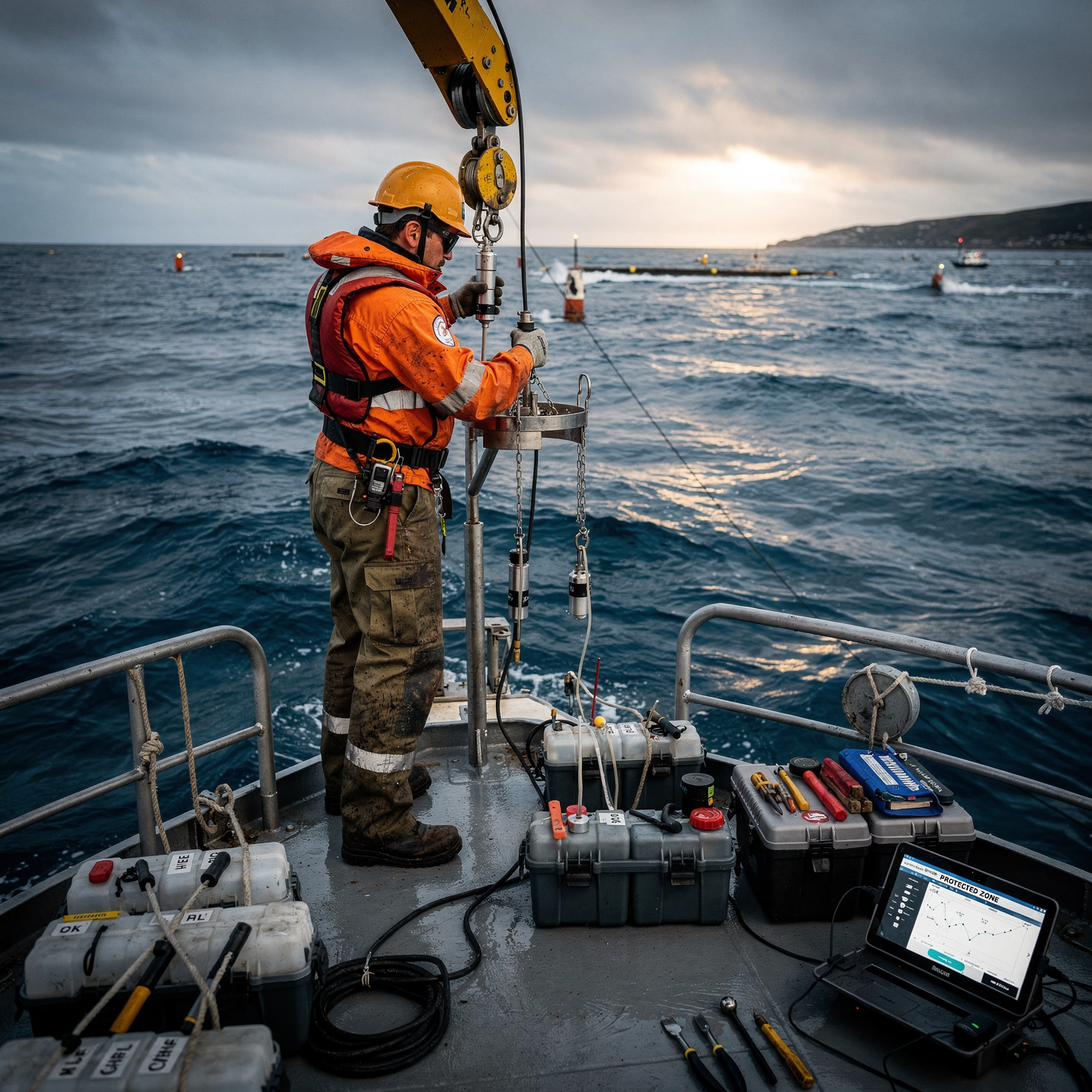
Master’s Degree in Marine Ecosystem Protection
Why this master’s programme?
The Master’s in Marine Ecosystem Protection
It provides you with the tools and specialized knowledge to lead the conservation of our oceans. You will learn about marine biodiversity, the impact of climate change, sustainable resource management, and environmental legislation. This program prepares you to design and implement effective protection strategies, with a focus on ecological restoration and the blue economy.
Differential Advantages
- Multidisciplinary Approach: integrates marine biology, oceanography, environmental law, and public policy.
- Practical Projects: participate in field studies, data analysis, and the development of management plans.
- Professional Networking: connect with industry experts, NGOs, companies, and public administrations.
- Specialized Certification: obtain an internationally recognized qualification in the field of marine conservation.
- Flexibility: online format with the option of in-person internships in marine reserves and research centers. research.
- Modality: Online
- Level: Masters
- Hours: 1600 H
- Start date:
Availability: 1 in stock
Who is it aimed at?
- Marine and environmental biologists seeking specialization in the conservation and management of marine ecosystems.
- Professionals in the fishing and aquaculture sector interested in implementing sustainable practices and reducing environmental impact.
- Environmental consultants and public administration technicians who need advanced tools for the assessment and protection of the marine environment.
- Graduates in marine sciences and related fields aspiring to a career in research, protected area management, or marine environmental consulting.
- Professionals from NGOs and foundations focused on the protection of marine biodiversity and the fight against pollution.
Flexibility and Applicability
Designed for professionals and recent graduates: flexible online methodology, real-world case studies, and a focus on applying knowledge in the workplace.
Objectives and skills

Develop and implement marine conservation strategies:
Establish and manage marine protected areas, promoting sustainable fishing and combating marine pollution.

Assess and mitigate the impact of human activities on marine ecosystems:
“Analyze maritime environmental legislation and propose measures to reduce pollution from spills, noise, and invasive species.”

Manage marine research and conservation projects:
“Plan and execute sampling campaigns, data analysis and preparation of technical reports to assess the state of marine ecosystems.”

Advising on policies for the protection and sustainable management of marine resources:
“To assess the environmental impact of coastal and marine activities, proposing mitigation measures and restoration of degraded ecosystems.”

Leading initiatives to restore degraded marine habitats:
“Implement effective communication strategies with local communities, NGOs, and government entities to ensure the long-term sustainability of restoration projects.”

Design and implement marine environmental education programs:
“To develop and deliver workshops, talks and practical activities on marine conservation, pollution, resource management and the importance of coastal ecosystems, adapted to different audiences (schools, local communities, NGOs).”
Study plan – Modules
- Key concepts of marine ecology
- Levels of ecological organization (population–community–ecosystem)
- Food webs and primary productivity
- Biogeochemical cycles in the ocean
- Marine habitats: coastal, pelagic, and deep-sea
- Resilience, ecological stability, and disturbances
- Ecological indicators and conservation status
- Ecological connectivity and larval dispersal
- Keystone, engineer, and umbrella species
- Scientific basis of marine ecological restoration
- Ocean Dynamics: Currents, Upwelling, and Global Circulation
- Temperature, Salinity, and Stratification
- Tides, Waves, and Sediment Transport
- Marine Chemistry: pH, Dissolved Oxygen, and Nutrients
- Ocean Acidification: Causes, Effects, and Scenarios
- Deoxygenation and Hypoxic Zones
- Coastal Oceanography and Estuaries
- Marine Climatology and Extreme Events
- Operational Oceanography: Models and Prediction
- Oceanographic Variables as a Basis for Management Plans
- Biodiversity: Richness, Abundance, and Equity
- Marine Ecological Sampling Methods
- Species Identification and Applied Taxonomy
- Endemism and Biodiversity Hotspots
- Population Genetics Applied to Conservation
- eDNA (Environmental DNA) and Modern Biomonitoring
- Threatened Species and Conservation Lists (IUCN)
- Invasive Species: Early Detection and Control
- Genetic Connectivity and Protected Area Design
- Prioritization of Species and Habitats: Technical Criteria
- Climate Change and Oceans: Fundamentals
- Coral Bleaching and Thermal Stress
- Changes in Species Distribution (Latitudinal Shifts)
- Sea Level Rise and Coastal Erosion
- Storms, Extreme Events, and Coastal Resilience
- Disruption of Food Webs by Warming
- Microplastics and Emerging Pollutants in a Climate Context
- Design of Ecosystem-based Adaptation (EbA) Strategies
- Assessment of Coastal Climate Vulnerability and Risk
- Long-Term Marine and Coastal Resilience Plans
- Types of pollution: chemical, physical, and biological
- Spills, hydrocarbons, and maritime accidents
- Eutrophication and harmful algal blooms
- Underwater noise and its impact on marine life
- Plastic and microplastic pollution
- Persistent pollutants (metals, POPs)
- Impact of shipping and coastal tourism
- Illegal, unreported, and unregulated (IUU) fishing
- Mitigation and response plans for environmental emergencies
- Design of reduction and control programs (ports, cities, marinas)
- Typology of Marine Protected Areas (MPAs)
- Zoning: permitted uses, buffer zones, and core areas
- Spatial design: connectivity and representativeness
- Sustainable fishing and adaptive management
- Co-management models with local communities
- Monitoring and enforcement plans
- Sustainable tourism in MPAs: carrying capacity
- Managing conflicts between uses (fishing, tourism, energy)
- Evaluating effectiveness (ecological and socioeconomic indicators)
- Governance systems and long-term financing
- Marine Sensors: Types, Calibration, and Limitations
- In-situ Monitoring Networks (Smart Buoys, Stations)
- Marine IoT: Telemetry and Real-Time Data
- Satellite Remote Sensing (Multispectral) Applied to the Sea
- SAR and LiDAR for Habitat Monitoring
- Use of AUVs and ROVs for Inspection and Restoration
- Underwater Photogrammetry and 3D Mapping
- Technological Protocols for Restoration (Reefs, Seagrass Meadows, Substrates)
- Data Integration and Operational Dashboards
- Design of Environmental Alert and Monitoring Systems
- Sampling Campaign Design and Data Quality
- Statistics Applied to Marine Ecology (Professional Level)
- Time Series and Trend Detection
- Predictive Models for Biodiversity and Habitats
- Machine Learning Applied to Environmental Data
- Marine GIS Systems and Cartography Applied to Management
- Marine Environmental Impact Assessment (EIA): Complete Methodology
- Integrated Indicators: Physicochemical, Biological, and Genetic
- Preparation of Technical Reports and Scientific Reporting
- Environmental Audits and Monitoring Plans
- Marine Environmental Legislation: Foundations and Regulatory Hierarchy
- Principles of the Law of the Sea and Ocean Governance
- Conservation Regulations (Habitats, Species, Protected Areas)
- Public Policies and Integrated Coastal Zone Management Plans (ICZM)
- Economic Instruments for Marine Conservation
- Blue Economy: Sustainable Models and Impact Metrics
- Project Financing: Funds, Grants, and International Cooperation
- Social Participation and Stakeholder Management (NGOs, Communities, Businesses)
- Environmental Communication and Awareness Campaigns
- Management of Conservation Projects: Planning, Risks, and Sustainability
Master’s Thesis in Marine Ecosystem Protection
Focus: Integrated technological innovation strategies for resilient conservation in the face of global challenges.
Final Master’s Thesis Components:
- Topic Selection and Problem Formulation (with tutor)
- Literature Review and State of the Art
- Methodological Design (sampling, technology, analysis, or management plan)
- Development of a real or simulated case study (AMP, restoration, EIA, monitoring)
- Analysis of Results and Technical Interpretation
- Proposed Measures and Implementation Plan
- Estimated Budget, Timeline, and Risk Management
- Final Draft in Professional Format (Technical/Scientific Report)
- Final Defense (Presentation + Questions)
- Submission of Appendices: GIS maps, datasets, indicators, dashboards, or models
Examples of Master’s Thesis:
- Seagrass Restoration Plan with Sensors and IoT
- Environmental Impact Assessment of a Coastal Tourist Area
- Marine Protected Area Design with Zoning and Connectivity Analysis
- Monitoring System with Satellite + Buoys + Predictive Models
- Microplastic Reduction Strategy in a Port Area
Career prospects
“`html
- Marine Conservation Project Manager: Design and implementation of projects for the protection and restoration of marine ecosystems.
- Marine Environmental Consultant: Environmental impact assessment, advice on conservation policies and marine resource management.
- Research Scientist: Development of research in marine ecology, oceanography, marine biology, and marine resource management.
- Marine Protected Area Management Technician: Planning and management of marine protected areas, development of management plans, and biodiversity monitoring.
- Marine Environmental Educator: Design and development of educational programs to raise awareness about the importance of marine conservation.
- Sustainability Manager in Marine Sector Companies: Implementation of sustainable practices in companies related to fishing, tourism, or energy marine.
- Marine Data Analyst: Collection, analysis, and interpretation of data related to marine ecosystems for decision-making in management and conservation.
- Sustainable Aquaculture Technician: Development and management of aquaculture projects that minimize environmental impact and promote sustainability.
“`
Entry requirements

Academic/professional profile:
Bachelor’s degree in Nautical Science/Maritime Transport, Naval/Marine Engineering or a related qualification; or proven professional experience on the bridge/in operations.

Language proficiency:
Functional Maritime English (SMCP) recommended for simulations and technical materials.

Documentation:
Updated CV, copy of qualification or seaman’s book, national ID/passport, motivation letter.

Technical requirements (for online):
Device with camera/microphone, stable internet connection, monitor ≥ 24” recommended for ECDIS/Radar-ARPA.
Admissions process and dates

Online
application
(form + documents).

Academic review and interview
Admissions decision

Admissions decision
(+ scholarship offer if applicable).

Place reservation
(deposit) and enrolment.

Induction
(access to the virtual campus, calendars, simulator guides).
Scholarships and financial support
- Comprehensive Knowledge: Master marine biology, environmental legislation, and conservation techniques.
- Practical Skills: Gain experience in ecosystem monitoring, environmental impact assessment, and resource management.
- Career Opportunities: Prepare to work in NGOs, public administrations, environmental consultancy, and scientific research.
- International Focus: Learn about the global challenges of marine protection and the strategies of cooperation.
- Networking: Connect with experts, researchers and professionals in the marine sector.
Testimonials
This master’s degree provided me with the tools and knowledge necessary to lead a coral restoration project in the Canary Islands. Thanks to my specialization in conservation genetics, we were able to identify coral genotypes resistant to climate change and use them to repopulate degraded areas, achieving a survival rate 30% higher than traditional methods. The success of this project has attracted international funding and has served as a model for other conservation initiatives in the Atlantic.
During my Master’s degree in Environment and Sustainability, I developed an energy optimization project for a local industry, reducing its carbon footprint by 15% and generating significant cost savings. This project was subsequently implemented by the company, demonstrating the practical applicability of the knowledge acquired during the program.
This master’s degree provided me with the tools and knowledge necessary to lead a coral restoration project in the Canary Islands. Through the techniques I learned and the network of contacts I established, we achieved a 30% increase in coral cover in the study area in just two years, exceeding initial expectations and laying the foundation for the long-term recovery of the ecosystem.

This master’s program provided me with the tools and knowledge necessary to lead a coral reef restoration project in the Caribbean. By applying the techniques I learned, we achieved a 30% increase in coral cover within a year, exceeding initial expectations and laying the foundation for the long-term recovery of the ecosystem.
Frequently asked questions
Marine ecosystems
Yes. The itinerary includes ECDIS/Radar-ARPA/BRM with harbor, ocean, fog, storm, and SAR scenarios.
Online with live sessions; hybrid option for simulator/practical placements through agreements.
To biologists, environmental scientists, oceanographers, environmental engineers, natural resource managers, environmental lawyers, and other professionals interested in the conservation of the marine environment.
Recommended functional SMCP. We offer support materials for standard phraseology.
Yes, with a relevant degree or experience in maritime/port operations. The admissions interview will confirm suitability.
Optional (3–6 months) through Companies & Collaborations and the Alumni Network.
Simulator practice (rubrics), defeat plans, SOPs, checklists, micro-tests and applied TFM.
A degree from Navalis Magna University + operational portfolio (tracks, SOPs, reports and KPIs) useful for audits and employment.
Master’s Thesis in Marine Ecosystem Protection
Focus: Integrated technological innovation strategies for resilient conservation in the face of global challenges.
Final Master’s Thesis Components:
- Topic Selection and Problem Formulation (with tutor)
- Literature Review and State of the Art
- Methodological Design (sampling, technology, analysis, or management plan)
- Development of a real or simulated case study (AMP, restoration, EIA, monitoring)
- Analysis of Results and Technical Interpretation
- Proposed Measures and Implementation Plan
- Estimated Budget, Timeline, and Risk Management
- Final Draft in Professional Format (Technical/Scientific Report)
- Final Defense (Presentation + Questions)
- Submission of Appendices: GIS maps, datasets, indicators, dashboards, or models
Examples of Master’s Thesis:
- Seagrass Restoration Plan with Sensors and IoT
- Environmental Impact Assessment of a Coastal Tourist Area
- Marine Protected Area Design with Zoning and Connectivity Analysis
- Monitoring System with Satellite + Buoys + Predictive Models
- Microplastic Reduction Strategy in a Port Area
Request information
Complete the Application Form.
Attach your CV/degree certificate (if you have it to hand).
Indicate your preferred cohort (January/May/September) and whether you would like the hybrid option with simulator sessions.
An academic advisor will contact you within 24–48 hours to guide you through the admission process, scholarships, and compatibility with your professional schedule.
Faculty
Eng. Tomás Riera
Full Professor
Eng. Tomás Riera
Full Professor
Eng. Sofía Marquina
Full Professor
Eng. Sofía Marquina
Full Professor
Eng. Javier Bañuls
Full Professor
Eng. Javier Bañuls
Full Professor
Dr. Nuria Llobregat
Full Professor
Dr. Nuria Llobregat
Full Professor
Dr. Pau Ferrer
Full Professor
Dr. Pau Ferrer
Full Professor
Cap. Javier Abaroa (MCA)
Full Professor
Cap. Javier Abaroa (MCA)
Full Professor

