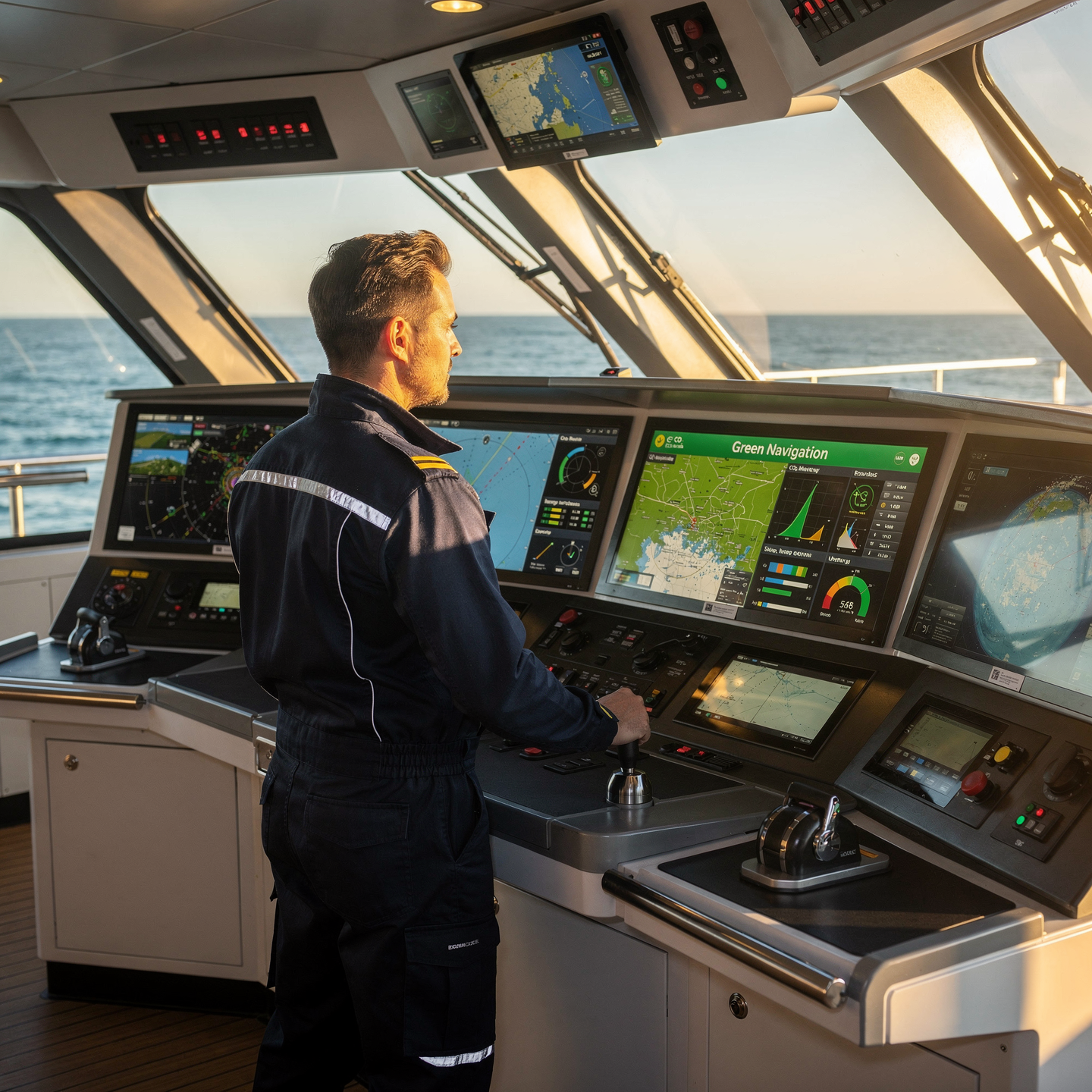
Master’s Degree in Green Navigation and Sustainable Ships

Why this master’s programme?

The Master’s in Green Navigation and Sustainable Ships

Prepares you to lead the transformation towards a greener and more efficient maritime industry. You will learn about the latest technologies in alternative propulsion, the design of eco-efficient ships, and strategies for emissions reduction. This program will provide you with the necessary tools to implement sustainable practices in navigation and fleet management, actively contributing to a more responsible maritime future.

Differentiating Advantages

  • Clean Technologies: Delve into the study of alternative fuels, hybrid and electric propulsion systems.
  • Sustainable Design: Learn to optimize ship design to reduce resistance and energy consumption.
  • Environmental Regulations: Master international regulations on emissions and waste management in the maritime industry.
  • Operational Efficiency: Implement strategies for route optimization, ballast management, and proactive maintenance.
  • Simulations and Case Studies: Apply your knowledge acquired in real-world scenarios through simulations and case studies.

Master’s Degree in Green Navigation and Sustainable Ships

Availability: 1 in stock

Who is it aimed at?

  • Naval and maritime engineers seeking to specialize in alternative propulsion technologies, energy efficiency, and environmental regulatory compliance.
  • Merchant marine officers and fleet managers interested in emissions reduction, fuel consumption optimization, and decarbonization strategies.
  • Port and logistics professionals wishing to understand the implications of sustainable navigation for port operations and infrastructure.
  • Environmental consultants and maritime regulators needing a solid technical foundation to advise on green policies and technologies in shipping.
  • Recent graduates in engineering, environmental science, or nautical studies aspiring to a career in maritime sustainability and technological innovation.

    Flexibility and specialization

    Adapted for active professionals: flexible online methodology, industry-specific projects, and a focus on the latest trends in sustainable vessels.

Objectives and skills

Optimizing the energy efficiency of ships:

“Plan the route optimizing fuel consumption, considering currents, wind and sea conditions, minimizing hydrodynamic resistance.”

Implement alternative technologies and fuels:

Evaluate technical and economic feasibility, considering environmental regulations and safety, to integrate hybrid propulsion systems or fuels such as LNG, methanol or hydrogen.

Assessing the environmental impact of naval operations:

“Identify and mitigate sources of noise pollution, spills and atmospheric emissions, complying with MARPOL regulations and best environmental practices.”

Managing projects for the construction and adaptation of environmentally friendly ships:

“Select innovative and sustainable materials, evaluating their life cycle and minimizing environmental impact.”

Design and implement strategies for reducing polluting emissions in navigation:

“Optimize routes and speed, considering currents and weather, to minimize fuel consumption and emissions.”

Leading the transition to sustainable and environmentally friendly shipping practices:

Implement emissions reduction strategies (SEEMP, EEOI, CII) and comply with regulations (MARPOL Annex VI), demonstrating commitment to the decarbonization of the sector.

Study plan – Modules

  1. Fundamentals of Energy Efficiency in Ships: Thermodynamic Principles Applied to Propulsion and Energy Consumption
  2. Design and Analysis of Hybrid and Electric Propulsion Systems: Integration, Control, and Maintenance
  3. Advanced Optimization of Marine Diesel Engines: Combustion Parameters, Emissions, and Predictive Diagnostics
  4. Implementation of Waste Heat Recovery Systems (WHRS) and Their Impact on Reducing Fuel Consumption
  5. Evaluation and Application of Exhaust Gas Treatment Technologies: Scrubbers, Selective Catalytic Reduction (SCR) Systems, and Nitrogen Oxide (NOx) Reduction
  6. Computational Modeling and Dynamic Simulation of Energy Consumption on Optimized Shipping Routes for Emission Reduction
  7. Big Data and Predictive Analytics for Onboard Energy Management: Real-Time Monitoring Systems and Condition-Based Maintenance
  8. Advanced Trim and Ballast Strategies
  9. to minimize drag and maximize efficiency

    Life Cycle Assessment (LCA) of sustainable ships: material selection and design for responsible decommissioning

    International standards and certifications applicable to energy efficiency and emissions reduction: EEDI, SEEMP, IMO 2020 and their technical and operational implications

    Integration of renewable energy sources on board: photovoltaic, wind, and advanced energy storage systems

    Advanced thermal management and efficient insulation for reducing energy losses in machinery and technical spaces

    Optimization of auxiliary and electrical systems: pumps, compressors, and air conditioning with intelligent control

    Implementation of energy management systems based on artificial intelligence and machine learning for real-time decision-making

    Case studies and analysis of energy improvement studies in next-generation ships: benchmarking and technology transfer

  1. Advanced technologies in clean propulsion: electric motors, hydrogen fuel cells, hybrid systems, and next-generation batteries
  2. Design and optimization of integrated propulsion systems for reducing CO2 emissions and air pollutants
  3. Evaluation of sustainable alternative fuels: marine biofuels, green ammonia, methanol, and liquefied natural gas (LNG)
  4. Computational modeling and simulation of flow dynamics and energy efficiency in marine propulsion systems
  5. Implementation of carbon capture and storage (CCS) technologies on ships for true decarbonization
  6. Integration of onboard energy management systems: real-time optimization and load balancing to minimize consumption
  7. Innovations in electric and electronic propulsion Power: Inverters, Converters, and Intelligent Motor Control

    Environmental Impact and Life Cycle Analysis of Clean Technologies in Maritime Navigation

    Monitoring and Predictive Diagnostic Systems for the Maintenance and Continuous Improvement of Sustainable Propulsion Systems

    International Regulations and Protocols: MARPOL, IMO, and Certification Systems for Vessels with Green Propulsion

  1. Fundamentals of Energy Efficiency in Naval Propulsion: Applied Thermodynamic Concepts, Energy Consumption Analysis, and Loss Reduction
  2. Advanced Hydrodynamic Design: Optimization of Hull and Resistance Systems to Minimize Friction and Fuel Consumption
  3. Innovative Technologies in Marine Engines: Dual-Fuel Engines, Selective Catalytic Reduction (SCR) Systems, and High-Efficiency Electric Motors
  4. Integration of Renewable Energies Onboard: Implementation of Hybrid Photovoltaic, Wind, and State-of-the-Art Battery Systems for Propulsion Backup and Support
  5. Electric and Azimuth Propulsion Systems: Advantages, Configuration, Electronic Control, and Efficient Real-Time Energy Management
  6. Optimization of Auxiliary and Generation Systems: Smart Pumps, Fans, Compressors, and Boilers with Automated Control for Minimal Consumption
  7. Advanced Software for Energy Modeling and Simulation: CFD Analysis and Digital Twins Applied to
  8. Efficiency and sustainability of the propulsion system
  9. Energy management strategies in maritime operations: route planning, optimal speeds, and adaptive use of propulsion systems according to environmental conditions
  10. Implementation of waste energy recovery systems: exhaust gas heat recovery technologies, regenerative braking, and energy storage
  11. Regulatory analysis and environmental certification: compliance with international standards (IMO Tier III, EEDI, CII) and energy audits for sustainable vessels
  1. Fundamentals and evolution of retrofitting in marine propulsion systems: environmental context, international regulations, and technological challenges associated with the energy transition
  2. Advanced design of hybrid and electric propulsion systems: configuration, integration of renewable sources, energy storage, and selection of key components for sustainable vessels
  3. Computational modeling and simulation of propulsion systems: use of specialized software for thermodynamic, hydraulic, and electrical analysis in variable operating scenarios
  4. Control and automation of propulsion and onboard energy systems: predictive control algorithms, real-time energy management, and adaptive optimization for efficiency improvement
  5. Evaluation and improvement of operational efficiency: analysis of energy consumption, reduction of pollutant emissions, and predictive maintenance strategies based on continuous monitoring
  6. Design and application of energy-efficient auxiliary systems: waste heat recovery, low-consumption ventilation and air conditioning systems, and comprehensive management of onboard electrical loads
  7. Certification methodologies and applicable regulations: compliance with IMO Tier III, EEXI, CII, and other international certifications aimed at reducing the environmental footprint of maritime navigation
  8. Integration of alternative propulsion technologies: dual-fuel engines, fuel cells, wind and solar energy applied to sustainable maritime mobility
  9. Structural retrofitting and technical adaptation for innovative systems: impact analysis, physical adaptation, and risk mitigation in the modification of existing vessels
  10. Practical case studies and comparative analyses: successful implementation of retrofits in commercial fleets, evaluation of operational results, and economic and environmental return on investment
  11. Multidisciplinary management of retrofit projects: comprehensive planning, coordination of technical teams, cost evaluation, and quality assurance in implementation
  12. Operational safety aspects and specific emergency protocols for new energy and propulsion systems
  13. Innovation and future trends
  14. in achieving ultra-low emission vessels: hydrogen, green ammonia, next-generation batteries, and digitalization of energy management in the shipbuilding industry.

  1. Design principles in marine hybrid systems: theoretical foundations and applicable regulations
  2. Types and characteristics of renewable energy sources for ships: solar, wind, hydrogen, and energy storage systems
  3. Mathematical and computational simulation of hybrid propulsion systems: dynamic modeling and performance analysis
  4. Optimization of energy configurations: multi-objective algorithms for emissions reduction and efficiency maximization
  5. Integration of next-generation batteries and supercapacitors in naval propulsion systems
  6. Advanced control and real-time energy management: SCADA systems and maritime communication protocols
  7. Modular and scalable design for fleet adaptability: strategies for maintenance and technological upgrades
  8. Implementation of green alternative fuels: evaluation of hydrogen, ammonia, and marine biofuels
  9. Environmental impact and life cycle assessment
  10. Life Cycle Assessment (LCA) in the selection and design of hybrid systems

    Practical cases and advanced simulations: integration and validation of models in specialized software (MATLAB/Simulink, HOMER Pro, ANSYS)

  1. Fundamentals of Energy Efficiency in Maritime Navigation: Thermodynamic Analysis and Comprehensive Energy Assessment
  2. Emerging Technologies in Clean Propulsion: Hybrid Systems, Dual-Fuel LNG Engines, Fuel Cells, and Advanced Electric Propulsion
  3. Aerodynamic and Hydrodynamic Optimization: Low-Drag Hull Design and Surface Friction Reducers
  4. Implementation of Energy Recovery Systems: Waste Heat Recovery (WHR), Energy Storage Systems, and Onboard Thermal Management
  5. Integration and Intelligent Management of Multiple Propulsion Systems: Real-Time Monitoring, Automation, and Advanced Predictive Control
  6. Analysis and Application of Onboard Renewable Energy Technologies: Marinized Solar Panels, Wind Turbines, and Wave Absorption Systems
  7. Advanced Strategies for Reducing Pollutant Emissions in Accordance with IMO Tier III Regulations and EEDI Targets: SCR, EGR, and Exhaust Gas Treatment Technologies escape
  8. Onboard Energy Management Systems (EMS): protocols, specialized software, and energy audits for next-generation green vessels
  9. Integration of Big Data and Machine Learning for operational and predictive optimization of energy consumption and proactive maintenance
  10. Case studies and analysis of successful implementation in commercial fleets: audits, KPIs, and return on investment in clean technologies
  1. Fundamentals of Clean Propulsion: Emerging Technologies and Thermodynamic Principles Applied to Advanced Marine Systems
  2. Integration of Electric Motors and Hybrid Systems: Performance Optimization and Intelligent Energy Management
  3. Design and Application of LNG and Biofuel Propulsion Systems: Comparative Analysis of Emissions and Operational Efficiency
  4. Aerodynamic and Hydrodynamic Optimization for Drag Reduction: CFD Methods and Digital Prototyping
  5. Implementation of Renewable Energy onboard: Solar Panels, Offshore Wind Turbines, and Waste Energy Recovery Systems
  6. Advanced Energy Storage Management: Solid-State Batteries, Supercapacitors, and Emerging Technologies for Naval Applications
  7. Real-Time Control and Monitoring: SCADA and IIoT Systems to Optimize Energy Efficiency and Minimize Environmental Footprint
  8. International Regulations and Environmental Certifications: Compliance with IMO Tier III, EEDI, and MARPOL Guidelines for sustainable propulsion
  9. Predictive models and advanced simulation for integrated energy consumption management in next-generation vessels
  10. Predictive maintenance strategies based on artificial intelligence for sustainable propulsion systems and reduction of operational downtime
  11. Practical implementation cases: techno-economic analysis of vessels powered by clean energy and their impact on reducing greenhouse gas emissions
  1. Fundamentals and classification of alternative energy technologies: solar, wind, hydrogen, advanced batteries, and bio-synthetic fuels applied to ships
  2. Integration of hybrid systems: design, management, and optimization to maximize efficiency and minimize emissions
  3. Digitalization in green navigation: IoT systems, Big Data, and predictive analytics for route optimization and energy consumption
  4. Advanced automation and adaptive control in autonomous navigation: system architectures, decision-making algorithms, and real-time monitoring
  5. Implementation of digital twins in sustainable ships: monitoring, predictive maintenance, and continuous improvement based on operational data
  6. International regulations and environmental certifications applicable to alternative technologies and autonomous navigation
  7. Integrated energy management strategies: load balancing, smart storage, and onboard energy recovery
  8. Electric propulsion systems and their digitalization: motors, inverters, and controllers and synchronization with naval automation systems

    Distributed control systems (DCS) and their role in the management and monitoring of green and autonomous vessels

    Advanced modeling and simulation for the design and optimization of energy systems and automation in sustainable navigation

    Impact of artificial intelligence and machine learning on the prediction and management of energy and operational performance

    Integration of autonomous navigation systems with cybersecurity protocols specific to sustainable vessels

    Case studies of real-world implementation and analysis of quantifiable results in emissions reduction and operational efficiency

    Development of strategic plans for the energy transition in commercial fleets: investment, return, and technological evolution

    Training in advanced digital management and automation tools for operators and technical managers of green vessels

  1. Fundamentals of Energy Efficiency in Ships: Thermodynamic Analysis of Propulsion Systems and Energy Losses
  2. Advanced Clean Propulsion Technologies: Dual-Fuel Engines, Fuel Cells, and Hybrid Electric Propulsion
  3. Integration and Optimization of Waste Energy Recovery of Inland Water (EROI) Systems for Fuel Consumption Reduction
  4. Sustainable Ship Design: Principles of Optimized Hydrodynamics, Low-Drag Hulls, and Eco-Efficient Composite Materials
  5. Comprehensive Management Strategies for GHG Emission Reduction: Compliance with MARPOL Annex VI and IMO 2030/2050 Targets
  6. Implementation of Intelligent Energy Management Systems (EMS) onboard: Real-Time Monitoring and Predictive Analytics
  7. Operational Optimization through Digital Modeling: Digital Twins for Simulation and Route Adjustment Based on Environmental Conditions
  8. Comprehensive Fuel Management: from the selection of alternative fuels (LNG, biofuels, hydrogen) to safe storage and handling
  9. Advanced Life Cycle Assessment (LCA) of vessels for environmental impact and sustainability assessment at all operational phases
  10. International standards and certifications for green ships: ISO 14001, EEDI, ICC, and emerging sustainability protocols
  11. Implementation of renewable energy-assisted propulsion systems: rigid sails, kite sails, and onboard wind turbines
  12. Innovations in water treatment and waste management systems to minimize environmental impact during navigation
  13. Energy performance monitoring and analysis with Big Data and artificial intelligence applications for strategic decision-making
  14. Risk and contingency assessment in clean propulsion systems and their Impact on operational safety

    Planning and management of predictive and corrective maintenance to optimize the availability and performance of sustainable systems

    Case studies and analysis of real-world projects implementing green strategies in commercial and cargo fleets

    Economic impact and return on investment of sustainable technologies applied to maritime navigation

    Role of human capital in the transition to green navigation: skills, training, and change management

    Future perspectives and technological trends in propulsion and sustainable management: advances, regulations, and emerging markets

  1. Definition and scope of the final project: objectives, deliverables, and success criteria in the design of green propulsion systems for sustainable ships
  2. Advanced analysis of green propulsion technologies: electric motors, hydrogen fuel cells, hybrid systems, and wind energy applied to marine propulsion
  3. Energy modeling and simulation: specialized tools and software for calculating consumption, emissions, and energy efficiency in different operating scenarios
  4. Life cycle assessment (LCA) of propulsion systems: environmental impact from manufacturing to scrapping, with a focus on reducing the carbon footprint
  5. Integration of auxiliary systems and energy storage: batteries, supercapacitors, and intelligent onboard energy management systems
  6. Applicable international regulations and certifications: MARPOL Annex VI, IMO GHG Strategy, environmentally relevant ISO certifications, and their application in design
  7. Design optimization Naval propulsion efficiency: advanced hydrodynamics, drag reduction, and selection of eco-efficient materials

    Simulation of operating conditions on specific routes: performance analysis and adaptation of the propulsion system in restricted and oceanic waters

    Methodologies for the economic and financial evaluation of the project: cost analysis, return on investment, green incentives, and sustainable financing

    Development of a testing and validation protocol: laboratory testing, test bench testing, and validation in real or virtual environments

    Management of risks associated with design and operation: identification, mitigation, and planning for failures of green propulsion systems

    Planning and presentation of the final report: document structure, success metrics, technical conclusions, and sustainability, with a proposal for practical implementation

    Oral defense and critical evaluation: professional presentation techniques, technical argumentation, and answering questions before an expert evaluation committee

Career prospects

“`html

  • Maritime Sustainability Consultant: Advising shipping and port companies on the implementation of eco-efficient practices and emissions reduction.
  • Green Technology Innovation Project Manager for Navigation: Developing and implementing technological solutions for sustainable vessels, such as alternative propulsion systems, renewable energy, and energy consumption optimization.
  • Energy Auditor of Ships: Evaluating the energy performance of ships and proposing measures to improve efficiency and reduce environmental impact.
  • Specialist in Maritime Environmental Regulations: Analyzing and applying national and international regulations on marine environmental protection, including waste management and pollution prevention.
  • R&D Manager in Shipyards and Naval Design Companies: Researching and developing new technologies and designs for the construction of more efficient and Environmentally friendly.
  • Marine Renewable Energy Technician: Installation and maintenance of renewable energy generation systems on ships, such as solar panels and wind turbines.
  • Ship Life Cycle Analyst: Assessment of a ship’s environmental impact throughout its lifespan, from construction to scrapping, with the aim of identifying opportunities for improvement and reducing its carbon footprint.
  • Communications and Marketing Manager in Maritime Companies: Promotion of sustainable products and services and raising awareness about the importance of green shipping.

“`

Entry requirements

Academic/professional profile:

Bachelor’s degree in Nautical Science/Maritime Transport, Naval/Marine Engineering or a related qualification; or proven professional experience on the bridge/in operations.

Language proficiency:

Functional Maritime English (SMCP) recommended for simulations and technical materials.

Documentation:

Updated CV, copy of qualification or seaman’s book, national ID/passport, motivation letter.

Technical requirements (for online):

Device with camera/microphone, stable internet connection, monitor ≥ 24” recommended for ECDIS/Radar-ARPA.

Admissions process and dates

Online
application

(form + documents).

Academic review and interview

Admissions decision

Admissions decision

(+ scholarship offer if applicable).

Place reservation

(deposit) and enrolment.

Induction

(access to the virtual campus, calendars, simulator guides).

Scholarships and financial support

  • Sustainable Design and Operation: Master the latest technologies for emission reduction and energy efficiency in ships.
  • Maritime Environmental Regulations: Gain a thorough understanding of international regulations (IMO) and their impact on green shipping.
  • Alternative Fuels: Explore the potential of LNG, methanol, ammonia, and hydrogen as fuels of the future.
  • Route and Operations Optimization: Learn to implement strategies to minimize the environmental impact of shipping.
  • Port Environmental Management: Acquire knowledge for the implementation of practices sustainable in ports and maritime terminals. Boost your career towards a greener and more efficient maritime future.

Testimonials

Frequently asked questions

Sustainability in maritime transport, including emissions reduction, energy efficiency and adaptation to new technologies and environmental regulations.

Yes. The itinerary includes ECDIS/Radar-ARPA/BRM with harbor, ocean, fog, storm, and SAR scenarios.

Online with live sessions; hybrid option for simulator/practical placements through agreements.

Recommended functional SMCP. We offer support materials for standard phraseology.

Yes, with a relevant degree or experience in maritime/port operations. The admissions interview will confirm suitability.

Optional (3–6 months) through Companies & Collaborations and the Alumni Network.

Simulator practice (rubrics), defeat plans, SOPs, checklists, micro-tests and applied TFM.

A degree from Navalis Magna University + operational portfolio (tracks, SOPs, reports and KPIs) useful for audits and employment.

  1. Definition and scope of the final project: objectives, deliverables, and success criteria in the design of green propulsion systems for sustainable ships
  2. Advanced analysis of green propulsion technologies: electric motors, hydrogen fuel cells, hybrid systems, and wind energy applied to marine propulsion
  3. Energy modeling and simulation: specialized tools and software for calculating consumption, emissions, and energy efficiency in different operating scenarios
  4. Life cycle assessment (LCA) of propulsion systems: environmental impact from manufacturing to scrapping, with a focus on reducing the carbon footprint
  5. Integration of auxiliary systems and energy storage: batteries, supercapacitors, and intelligent onboard energy management systems
  6. Applicable international regulations and certifications: MARPOL Annex VI, IMO GHG Strategy, environmentally relevant ISO certifications, and their application in design
  7. Design optimization Naval propulsion efficiency: advanced hydrodynamics, drag reduction, and selection of eco-efficient materials

    Simulation of operating conditions on specific routes: performance analysis and adaptation of the propulsion system in restricted and oceanic waters

    Methodologies for the economic and financial evaluation of the project: cost analysis, return on investment, green incentives, and sustainable financing

    Development of a testing and validation protocol: laboratory testing, test bench testing, and validation in real or virtual environments

    Management of risks associated with design and operation: identification, mitigation, and planning for failures of green propulsion systems

    Planning and presentation of the final report: document structure, success metrics, technical conclusions, and sustainability, with a proposal for practical implementation

    Oral defense and critical evaluation: professional presentation techniques, technical argumentation, and answering questions before an expert evaluation committee

Request information

  1. Complete the Application Form.

  2. Attach your CV/degree certificate (if you have it to hand).

  3. Indicate your preferred cohort (January/May/September) and whether you would like the hybrid option with simulator sessions.

    An academic advisor will contact you within 24–48 hours to guide you through the admission process, scholarships, and compatibility with your professional schedule.

Please enable JavaScript in your browser to complete this form.
Click or drag a file to this area to upload.

Faculty

0
    0
    Tu carrito
    Tu carrito esta vacíoRegresar a la tienda
    Scroll to Top


