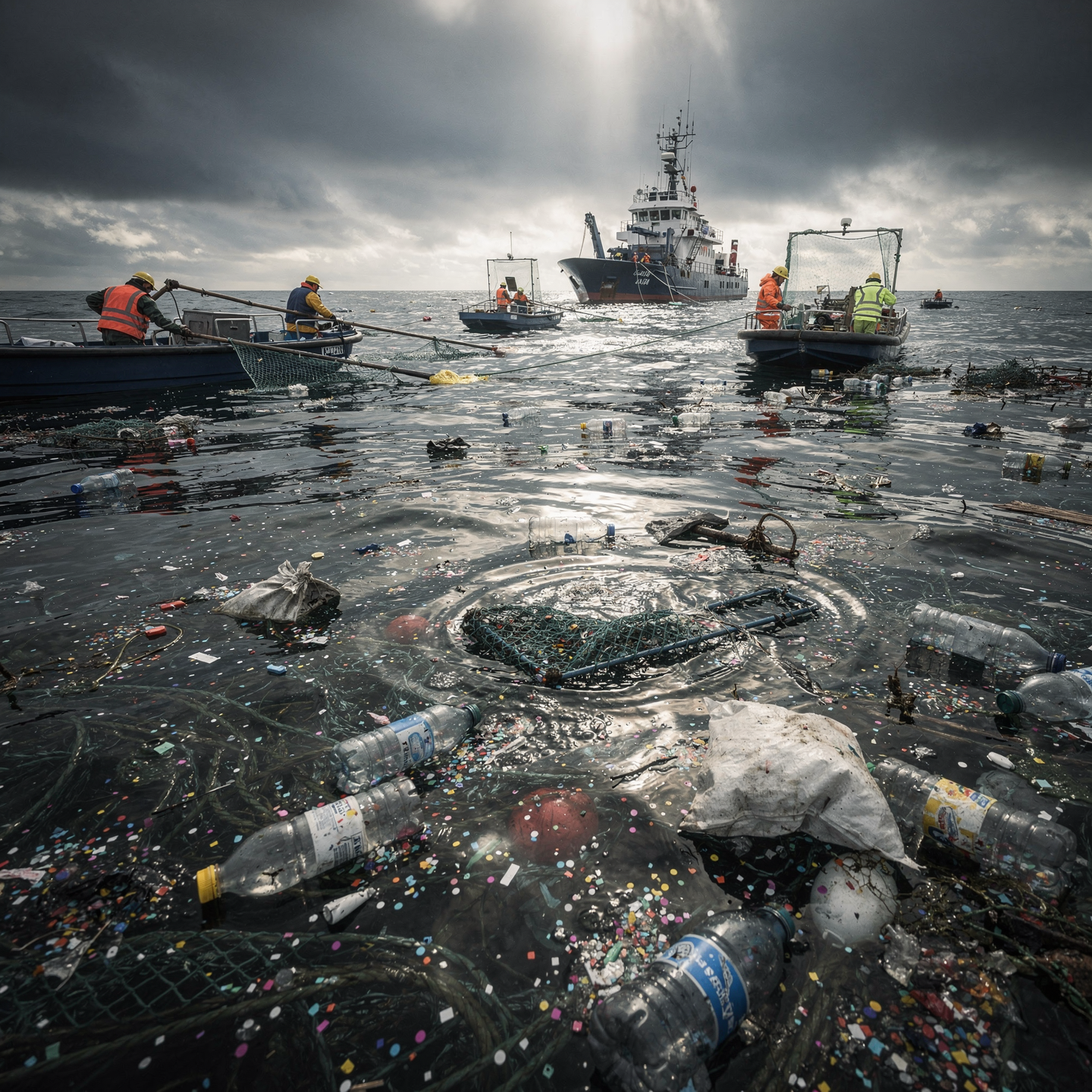
Master’s degree in Ocean Pollution and Microplastics

Why this master’s programme?

The Master’s in Ocean Pollution and Microplastics

This program offers comprehensive and up-to-date training on the critical challenges facing the health of our oceans. Immerse yourself in the study of the sources, transport, and fate of marine pollutants, with a special focus on the growing problem of microplastics. Learn to assess ecological and toxicological impacts and develop innovative strategies for the prevention and management of ocean pollution.

Differential Advantages

  • Multidisciplinary Approach: Integrates knowledge of marine biology, environmental chemistry, ocean engineering, and public policy.
  • Applied Research: Participates in cutting-edge research projects and contributes to the development of sustainable solutions.
  • Advanced Technologies: Learn to use modeling, remote sensing, and data analysis tools for pollution monitoring.
  • International Collaboration: Establishes contacts with leading experts and organizations in the fight against marine pollution.
  • Career Opportunities: Ample opportunities in the public and private sectors and in NGOs dedicated to marine conservation.
Contaminación

Master’s degree in Ocean Pollution and Microplastics

Availability: 1 in stock

Who is it aimed at?

  • Graduates in Environmental Science, Marine Biology, Chemistry, or related engineering fields seeking advanced specialization in marine pollution.
  • Professionals in the maritime, port management, and fisheries sectors interested in understanding and mitigating the impact of microplastics on the value chain.
  • Researchers and laboratory technicians wishing to deepen their knowledge of sampling, analysis, and modeling techniques for ocean pollution.
  • Environmental consultants and sustainability managers needing tools and strategies for regulatory compliance and the circular economy.
  • NGOs and environmental activists aspiring to lead awareness, cleanup, and pollution prevention projects. plastics.

Training flexibility
 Adapted for professionals and students: flexible online format, 24/7 access to resources and personalized tutoring.

Contaminación

Objectives and skills

Design and implement comprehensive marine pollution management strategies:

“To assess and mitigate risks associated with the maritime transport of harmful and hazardous substances, adapting contingency plans to specific scenarios.”

Assess and model the impact of microplastics on marine ecosystems:

Use biophysical models and controlled experiments to predict the accumulation, transport, and toxicological effects of microplastics in marine biota, considering key oceanographic and biological variables.

Develop and innovate in ocean pollution remediation technologies:

“Implement bio-inspired systems for the degradation of pollutants, optimizing efficiency and minimizing environmental impact.”

Advising government and private entities on ocean protection policies:

“Develop and implement marine environmental impact mitigation strategies based on the best scientific evidence and international regulations.”

Lead cutting-edge research projects on sources and destinations of ocean pollutants:

“To define innovative methodologies for the tracking and analysis of microplastics, heavy metals and chemical spills, prioritizing publication in high-impact scientific journals.”

Effectively communicate scientific findings to the community and the general public:

Adapt the language and format to the audience (visualizations, storytelling) to maximize understanding and impact.

Study plan – Modules

  1. Fundamentals of microplastics: definition, classification, sources, and distribution in marine environments
  2. Microplastic sampling techniques: methods for capturing microplastics from water columns, sediments, and marine biota using standardized protocols
  3. Equipment and technologies for in situ monitoring: advanced use of trawls, filtration pumps, and specialized optical sensors
  4. Sample preparation and treatment: chemical digestion, density separation, and purification processes for accurate analysis
  5. Spectroscopic analysis: application of microscopic FTIR, Raman, and mass spectrometry for polymer identification and characterization
  6. Detection and quantification using digital imaging techniques: electron microscopy, fluorescence, and AI-driven automated analysis
  7. Statistical methodologies and spatial modeling: interpretation of microplastic pollution data with GIS tools and multivariate analysis
  8. International protocols and current regulations for marine environmental monitoring and microplastic control
  9. Advanced case studies: monitoring using autonomous platforms, temporal analysis, and microplastic dispersion dynamics
  10. Current challenges and future technological trends in marine microplastic monitoring and analysis, including nanoanalytical techniques and integrated sensors
  1. Fundamentals of ocean pollution: types, sources, and dispersion dynamics of microplastics in marine environments
  2. Bioaccumulation and biomagnification mechanisms: chemical and biological interactions that facilitate accumulation in marine organisms
  3. Advanced methodologies for the detection and quantification of microplastics in biological tissues: spectroscopic, chromatographic, and high-resolution imaging techniques
  4. Ecological impact on marine communities: alterations in biodiversity, ecosystem functionality, and ecosystem services
  5. Assessment of toxic risks associated with microplastics and adsorbed pollutants: analysis of sublethal, reproductive, and population effects
  6. Transport and environmental fate models of microplastics: simulation of trajectories, sedimentary settlement, and coastal redistribution
  7. Integrated strategies for marine mitigation and restoration: project design Bioengineering-based remediation and ecological restoration

    International policies and environmental regulations for the regulation and management of microplastics in ocean ecosystems

    Continuous monitoring protocols and the use of innovative technologies: drones, remote sensors, and automated platforms for real-time monitoring

    Global case studies: detailed analysis of successful marine protection projects in different biomes and their practical application

  1. Fundamentals of sampling in marine environments: experimental design, representativeness, and scalability
  2. Advanced instrumentation in microplastic monitoring: use of drones, acoustic sensors, and laser technologies
  3. Physicochemical analysis methodologies: characterization by FTIR and Raman spectroscopy and electron microscopy
  4. Standardized protocols for separation and quantification: filtration, densitometry, and flotation techniques
  5. Applications of chromatography and mass spectrometry for the identification of specific polymers
  6. Evaluation of the spatial and temporal distribution of microplastics: multidimensional marine modeling
  7. Biomonitoring and bioaccumulation techniques: study of biological vectors in the marine food web
  8. Determination of ecotoxicological effects: in vitro and in vivo assays with marine indicator organisms
  9. GIS and remote sensing tools for pollution mapping and environmental risk analysis
  10. Quantitative and qualitative risk assessment: risk matrices, multi-criteria analysis, and probabilistic methodologies
  11. International regulations and technical standards for monitoring and reporting microplastics in oceans
  12. Data interpretation and scientific presentation: preparation of technical reports and communication with stakeholders
  13. Comprehensive case studies: analysis of pollution incidents and development of mitigation plans
  14. Implementation of integrated environmental monitoring and early response systems for microplastic pollution
  15. Innovations in remediation and control technologies in marine areas affected by microplastics
  1. Theoretical Foundations of Environmental Modeling Applied to Marine Pollutants: Physical, Chemical, and Biological Principles
  2. Advanced Methodologies for the Identification and Quantification of Microplastics in Oceanic and Sedimentary Matrices
  3. Microplastic Dispersion and Transport Models: Particle Dynamics, Oceanographic Flows, and Meteorological Factors
  4. Traceability of Point and Nonpoint Sources: Analysis of Contamination Routes from Origin to Marine and Coastal Settlements
  5. Integration of Geographic Information Systems (GIS) and Remote Sensing for Real-Time Monitoring and Spatial Prediction of Microplastics
  6. Development and Application of Numerical Modeling Techniques to Evaluate Future Scenarios Under Different Environmental Management Policies
  7. Integrated Strategies for Prevention Based on Source Reduction: Regulations, Industry, and Public Awareness
  8. Design and Optimization of Control Plans Using Emerging Technologies: Bioremediation, advanced filtration, and mechanical recovery

    Protocols for environmental impact assessment and continuous monitoring in vulnerable marine ecosystems

    International and regional regulatory framework applicable to microplastics management: conventions, guidelines, and technical standards

    Case studies and comparative analysis of successful mitigation programs in different coastal and oceanic contexts

    Implementation of predictive models for critical decision-making in integrated marine management: adaptation to climate change and ecosystem resilience

    Scientific communication and technology transfer tools for stakeholders, administrations, and coastal communities

    Training in the development of interdisciplinary protocols for applied research and effective public policies

    Simulations and practical exercises in adaptive management: response to emergencies and environmental contingencies caused by microplastics

  1. Fundamentals of microplastic pollution: definition, classification, and primary and secondary sources in ocean environments
  2. Technological advances in detection and quantification: sampling techniques in water, sediments, and biota; Spectroscopic methods (FTIR, Raman) and automated image analysis

    Nanotechnology applied to remediation: design and functionalization of nanomaterials for adsorption and degradation of plastic particles

    Molecular bioremediation: polymer-degrading microorganisms, genetic engineering, and metabolic optimization for environmental treatment

    Advanced filtration technologies: development and application of selective permeable membranes, micro- and ultrafiltration systems in marine treatment plants

    Implementation of autonomous robotic platforms and unmanned underwater vehicles (AUVs/ROVs) for real-time monitoring and mechanical removal of microplastics

    Computational modeling and intelligent systems: integration of artificial intelligence for prediction of distribution, pollutant sources, and long-term impact assessment

    Sustainable management systems: international regulations (MARPOL, Convention on Basel), ISO standards and marine environmental governance protocols

  3. Circular economy and valorization of plastic waste: technologies for the capture, chemical recycling and generation of bioproducts from recovered microplastics
  4. Global case studies: design, implementation and evaluation of successful pilot projects for remediation and integrated management in vulnerable ocean ecosystems
  1. Fundamentals and classification of microplastics: types, sizes, physicochemical properties, and primary and secondary sources of contamination
  2. Advanced sampling techniques in marine ecosystems: nets, in-situ filtration pumps, passive methods, and their optimization for different water columns and sediments
  3. Analytical methodologies for the identification and quantification of microplastics: Raman spectroscopy, attenuated total reflectance (ATR) FTIR spectroscopy, scanning electron microscopy (SEM), and hybrid techniques
  4. Geospatial modeling and mapping of microplastic dispersion and accumulation: use of geographic information systems (GIS), hydrodynamic modeling, and oceanographic variables
  5. Advanced ecotoxicological assessment: subcellular impacts, bioaccumulation, trophic transfer, and synergistic effects with associated chemical pollutants
  6. Bioremediation and Phytoextraction Technologies: The potential of marine microorganisms and macroalgae in the degradation and absorption of microplastics
  7. Innovations in physicochemical methods for removal: Use of nanomaterials, electromagnetic filtering systems, and biomimicry-based technologies for selective capture
  8. Continuous and automated monitoring protocols: Marine drones, remote sensing platforms, and artificial intelligence techniques for real-time detection
  9. International regulations and environmental policies on microplastics: Critical analysis of legal frameworks, multilateral agreements, and adaptive management strategies
  10. Design and evaluation of comprehensive marine remediation programs: Planning, implementation, effectiveness assessment, and environmental sustainability of technological solutions
  1. Advanced Foundations in the Physicochemical Characterization of Microplastics: Properties, Sizes, Shapes, and Chemical Composition
  2. Innovative Sampling Techniques in Marine Environments: Design of Protocols for the Representative Capture of Microplastics in Water Columns, Sediments, and Marine Biota
  3. State-of-the-Art Analytical Tools: Raman Spectroscopy, FTIR (Fourier Transform Infrared Spectroscopy), Electron Microscopy, and Thermal Analysis for the Precise Identification and Quantification of Microplastics
  4. Development and Application of Remote Sensing and Autonomous Technologies (Underwater Drones, Floats Equipped with Biosensors) for Real-Time Monitoring of Microplastic Pollution
  5. Dispersal Modeling and Dynamics: Algorithms and Computational Simulations to Predict the Trajectory, Accumulation, and Degradation of Microplastics in Marine Ecosystems with High Spatial Resolution and temporary
  6. Innovation in bioremediation techniques: cultivation and application of specific microorganisms and enzymes for the controlled biodegradation of microplastics
  7. Advanced physical and chemical remediation methodologies: use of adsorbent materials, nanomaterials, and electrochemical technologies for the efficient capture and decomposition of microplastics in water and sediments
  8. Comprehensive assessment of ecological and toxicokinetic impacts: multidisciplinary analysis of the interaction between microplastics, persistent pollutants, and key marine organisms
  9. Design and application of integrated environmental management systems based on big data and machine learning for sustainable decision-making in microplastic mitigation
  10. Emerging international policies and regulations for the regulation and sustainable management of microplastic pollution; practical application in case studies and effective implementation strategies in marine environments
  1. International regulatory framework on marine pollution: MARPOL Convention, Agenda 21, Sustainable Development Goals (SDGs), and specific regional agreements for microplastic mitigation
  2. Critical evaluation of global public policies: comparative analysis of national and regional programs, effectiveness, challenges, and lessons learned in marine debris management
  3. Integrated multidisciplinary management strategies: ecosystem approach, circular economy applied to microplastic reduction, and source prevention strategies
  4. Collaborative governance models: role of public, private, and civil society actors in the implementation and monitoring of marine environmental policies
  5. Economic and legal instruments for the regulation and control of microplastics: incentives, sanctions, and environmental financing mechanisms
  6. Development and application of innovative technologies for microplastic removal and monitoring: advanced sensors, bioremediation, and techniques of Marine cleanup
  7. International research and cooperation programs: global monitoring networks, open data portals, and collaborative platforms for managing environmentally critical data
  8. Impact of policies on the ecological restoration and resilience of marine ecosystems affected by microplastics: monitoring and evaluation indicators
  9. Strategic planning for microplastic mitigation in coastal and marine protected areas: integrating science, technology, and public policy
  10. Future challenges and trends in global policies: adaptation to climate change, emerging threats, and sustainable development in ocean environments
  1. Conceptual framework and key definitions: characterization and classification of microplastics in marine ecosystems
  2. Advanced sampling and analysis techniques: physicochemical methods for the identification and quantification of microplastics
  3. Modern instrumentation: Raman spectroscopy, FTIR (Fourier Transform Infrared) spectroscopy, and electron microscopy for precise detection
  4. Design and application of multidisciplinary oceanographic models for microplastic traceability and dispersion
  5. Ecotoxicological assessment: biological impacts and bioaccumulation in marine organisms and food webs
  6. Technological innovations: indigenous sensors, underwater drones, and remote platforms for real-time monitoring
  7. Integrated mitigation strategies: bioremediation, advanced filtration, and regulatory policies International
  8. Management and restoration of habitats affected by microplastics: projects and pilot programs based on scientific evidence
  9. Global regulations and conventions: critical analysis of MARPOL, the Basel Convention, and national microplastic control strategies
  10. Development of geographic information systems and databases for monitoring, modeling, and decision-making in marine environmental management
  1. Conceptual and regulatory framework for microplastics management: international conventions, regional protocols, and applicable environmental legislation
  2. Advanced sampling and physicochemical analysis techniques for the quantitative and qualitative detection of microplastics in different ocean matrices
  3. Development of integrated models of microplastics transport and dispersion: computational tools based on oceanographic dynamics and biogeochemistry
  4. Ecological impact assessment of microplastics: bioaccumulation, toxicological effects, and alterations in marine food webs
  5. Innovative methodologies for continuous monitoring using remote sensors and automated in-situ data collection systems
  6. Sustainable strategies and emerging technologies for microplastics remediation: bioremediation, advanced filtration, and nanotechnology-based technologies
  7. Design and validation of protocols for multidisciplinary data integration Environmental, socioeconomic, and public health considerations in decision-making

    Implementation of adaptive coastal and marine management systems to address microplastic pollution, incorporating scenario analysis and risk assessment

    Ecohydrodynamic modeling applied to predicting hotspots and dispersion trajectories with a focus on effective mitigation policies

    Preparation of technical and scientific reports: communication of results to stakeholders, recommendations for public policies, and scientific dissemination

Career prospects

“`html

  • Marine Environmental Project Manager: Design, implementation, and monitoring of projects for mitigating and preventing ocean pollution.
  • Environmental Consultant specializing in marine pollution: Environmental impact assessments, risk studies, and proposed solutions for companies and public administrations.
  • Scientific Researcher in marine and oceanographic research centers: Analysis of the presence, distribution, and effects of microplastics and other pollutants in the ocean.
  • Technician in marine environmental analysis laboratories: Sampling, analysis, and quality control of water, sediments, and marine biota for the detection of pollutants.
  • Environmental Educator/Science Communicator: Design and development of educational programs and outreach materials on ocean pollution and microplastics.
  • Sustainability Manager in companies in the maritime and fishing sector: Implementation of sustainable practices for pollution reduction and the responsible use of marine resources.
  • Technician in public administrations (municipalities, provincial councils, autonomous communities, national government): Development and application of public policies for marine pollution management and environmental protection.
  • Environmental Auditor specializing in marine pollution: Evaluation of compliance with environmental regulations and the implementation of environmental management systems in companies and institutions.

“`

Entry requirements

Academic/professional profile:

Bachelor’s degree in Nautical Science/Maritime Transport, Naval/Marine Engineering or a related qualification; or proven professional experience on the bridge/in operations.

Language proficiency:

Functional Maritime English (SMCP) recommended for simulations and technical materials.

Documentation:

Updated CV, copy of qualification or seaman’s book, national ID/passport, motivation letter.

Technical requirements (for online):

Device with camera/microphone, stable internet connection, monitor ≥ 24” recommended for ECDIS/Radar-ARPA.

Admissions process and dates

Online
application

(form + documents).

Academic review and interview

Admissions decision

Admissions decision

(+ scholarship offer if applicable).

Place reservation

(deposit) and enrolment.

Induction

(access to the virtual campus, calendars, simulator guides).

Scholarships and financial support

  • Comprehensive Analysis: Understand the sources, transport, and impact of ocean pollution, with a focus on microplastics.
  • Advanced Techniques: Master methodologies for sampling, identifying, and quantifying marine pollutants.
  • Innovative Solutions: Explore strategies for preventing, mitigating, and remediating plastic pollution in the ocean.
  • Regulatory Framework: Understand national and international legislation on waste management and marine environmental protection.
  • Hands-on Experience: Participate in research projects and collaborate with experts in the field.
Get ready to lead the change toward a cleaner, healthier ocean.

Testimonials

Frequently asked questions

Yes. The itinerary includes ECDIS/Radar-ARPA/BRM with harbor, ocean, fog, storm, and SAR scenarios.

Online with live sessions; hybrid option for simulator/practical placements through agreements.

Recommended functional SMCP. We offer support materials for standard phraseology.

Yes, with a relevant degree or experience in maritime/port operations. The admissions interview will confirm suitability.

Optional (3–6 months) through Companies & Collaborations and the Alumni Network.

Simulator practice (rubrics), defeat plans, SOPs, checklists, micro-tests and applied TFM.

A degree from Navalis Magna University + operational portfolio (tracks, SOPs, reports and KPIs) useful for audits and employment.

  1. Conceptual and regulatory framework for microplastics management: international conventions, regional protocols, and applicable environmental legislation
  2. Advanced sampling and physicochemical analysis techniques for the quantitative and qualitative detection of microplastics in different ocean matrices
  3. Development of integrated models of microplastics transport and dispersion: computational tools based on oceanographic dynamics and biogeochemistry
  4. Ecological impact assessment of microplastics: bioaccumulation, toxicological effects, and alterations in marine food webs
  5. Innovative methodologies for continuous monitoring using remote sensors and automated in-situ data collection systems
  6. Sustainable strategies and emerging technologies for microplastics remediation: bioremediation, advanced filtration, and nanotechnology-based technologies
  7. Design and validation of protocols for multidisciplinary data integration Environmental, socioeconomic, and public health considerations in decision-making

    Implementation of adaptive coastal and marine management systems to address microplastic pollution, incorporating scenario analysis and risk assessment

    Ecohydrodynamic modeling applied to predicting hotspots and dispersion trajectories with a focus on effective mitigation policies

    Preparation of technical and scientific reports: communication of results to stakeholders, recommendations for public policies, and scientific dissemination

Request information

  1. Complete the Application Form.

  2. Attach your CV/degree certificate (if you have it to hand).

  3. Indicate your preferred cohort (January/May/September) and whether you would like the hybrid option with simulator sessions.

    An academic advisor will contact you within 24–48 hours to guide you through the admission process, scholarships, and compatibility with your professional schedule.

Please enable JavaScript in your browser to complete this form.
Click or drag a file to this area to upload.

Faculty

0
    0
    Tu carrito
    Tu carrito esta vacíoRegresar a la tienda
    Scroll to Top


