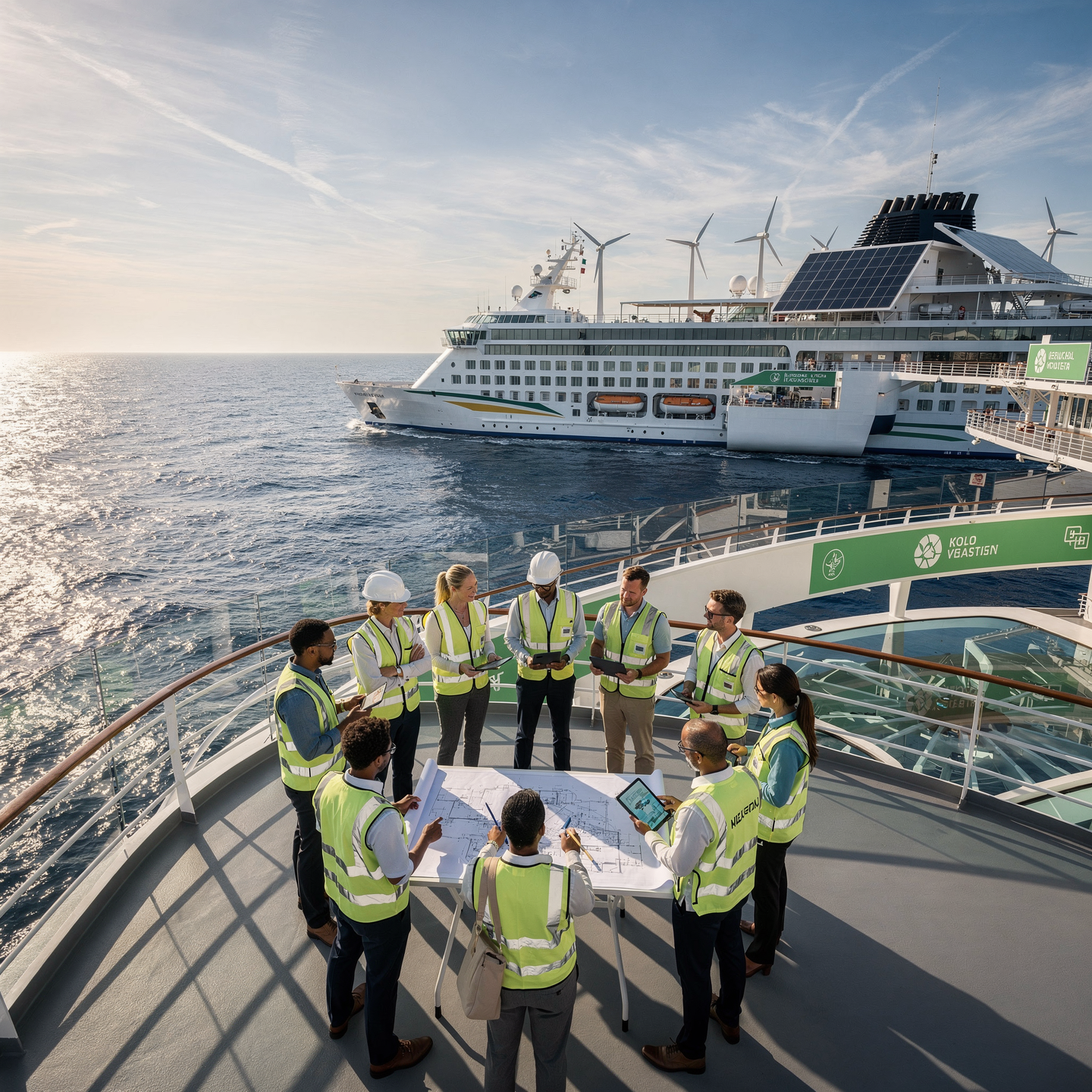
Master’s Degree in Innovation in Cruise Ship Sustainability
Why this masterās programme?
The Master in Innovation in Cruise Sustainability
Is designed to lead the transformation towards a greener and more responsible shipping industry. Faced with increasing environmental scrutiny and ever-stricter regulations, professionals need to master the innovative strategies and technologies that define the future of cruising. This program addresses sustainability from a holistic perspective, combining technical knowledge, strategic management, and business acumen to create effective and measurable solutions.
Differential Advantages
- Practical Approach: Analysis of real-world cases and projects to implement sustainable solutions on cruise ships.
- Emerging Technologies: Study of alternative fuels, waste management systems, and renewable energies.
- Regulations and Compliance: Mastery of national and international environmental regulations and compliance strategies.
- Social and Economic Impact: Assessment of the effects of sustainability on local communities and responsible tourism.
- Networking: Connection with experts and industry leaders to drive collaborative innovation.
- Modality: Online
- Level: Masters
- Hours: 1600 H
- Start date: 25-04-2026
Availability: 1 in stock
Who is it aimed at?
- Cruise industry professionals (operations, design, marketing) seeking to lead the industry’s sustainable transformation.
- Naval engineers, architects, and designers interested in applying eco-design, clean technologies, and sustainable materials to cruise ships.
- Sustainability and environmental managers from shipping companies and ports who need innovative strategies to reduce their environmental impact.
- Consultants and advisors who want to specialize in sustainability solutions for the cruise industry.
- Graduates in Tourism, Business Administration, Environmental Sciences, and related fields seeking a distinctive profile in the maritime tourism sector.
Flexibility Training
Adapted for working professionals: flexible online methodology, updated content, and networking with international sustainability experts.
Objectives and skills

Implement innovative environmental management strategies:
“Develop and implement an onboard waste minimization plan, including segregation, recycling and proper disposal, in compliance with MARPOL regulations and the company’s sustainability objectives.”

Develop eco-design projects in the construction and remodeling of cruise ships:
“Implement life cycle assessment (LCA) methodologies to select materials and construction processes with less environmental impact, prioritizing durability, reuse and recyclability in interior and exterior design.”

Leading the transition to sustainable fuels and propulsion technologies:
“Evaluate technical/economic feasibility and adapt safety protocols for new technologies (ammonia, hydrogen, batteries).”

Optimize waste management and water treatment on board:
“Implement standardized cleaning procedures (SCPs) and waste segregation, minimizing illegal dumping and optimizing the use of wastewater and ballast water treatment systems.”

Promote collaboration with local communities for responsible tourism:
“Design and implement effective communication strategies to raise awareness among tourists and residents about sustainable tourism practices that respect the local environment.”

Integrating sustainability into business strategy and decision-making:
“To assess the environmental, social and economic impact of operations, incorporating ESG indicators and promoting transparency in communication with stakeholders.”
Study plan ā Modules
- Fundamentals of atmospheric emissions in the cruise industry: primary sources, types of pollutants (NOx, SOx, CO2, particulate matter), and applicable international regulations (MARPOL Annex VI).
- Clean propulsion technologies: dual-fuel engines (LNG and diesel), hydrogen fuel cells, hybrid electric motors, and their integration into the naval architecture of large vessels.
- Advanced exhaust gas treatment systems (EGCS – scrubbers): design, operation, types (closed, open, and hybrid), and technical criteria for their implementation on cruise ships.
- Energy optimization: methods and analytical tools for improving onboard energy efficiency, including integrated energy management (EMS) and real-time monitoring.
- Innovations in aerodynamic propulsion and hydrodynamic drag: drag reduction systems (air lubrication,
- Optimized hulls, smart bow bulbs) and their impact on fuel consumption.
- Integration of renewable sources: high-efficiency solar panel technologies, auxiliary wind turbines, and waste heat recovery for use in hotel and propulsion systems.
- Implementation of Internet of Things (IoT) systems and digital twins for monitoring and optimizing operational parameters related to energy consumption and emissions.
- Energy management and storage: advances in high-density batteries, supercapacitors, and emerging technologies for energy stabilization and supply on hybrid cruise ships.
- Life cycle assessment and environmental impact analysis of implemented technologies, considering operating costs, environmental benefits, and regulatory compliance.
- Case studies and international benchmarking: implementation of pioneering technologies in leading fleets, operational results, and transition plans for the cruise industry towards carbon neutrality.
- Fundamentals of Green Propulsion Systems: Thermodynamic, Hydraulic, and Electromechanical Principles Applied to Cruise Ships
- Advanced Design of Hybrid and Electric Motors: Battery Technologies, Hydrogen Fuel Cells, and Supercapacitors
- Integration of Renewable Energy Sources in Cruise Ships: Solar Panels, Wind Turbines, and Waste Energy Recovery Systems
- Energy Optimization Through Intelligent Management Systems: Adaptive Control Algorithms, Predictive Modeling, and Real-Time Analysis
- Reduction of Pollutant Emissions: Advanced Aftertreatment Techniques, Selective Catalysts, and Carbon Capture and Storage (CCS) Systems
- Materials and Structural Design for Energy Efficiency: Study of Lightweight Alloys, Reinforced Composites, and Antifouling Coatings
- Computational Simulation and Modeling of Integrated Propulsion Systems: Computational Fluid Dynamics (CFD), Thermal Analysis, and Simulators Multiphysics
International standards and certifications applicable to sustainable propulsion in the naval industry
Predictive and preventive maintenance procedures based on IoT and digital twins to guarantee maximum operational efficiency
Case studies of next-generation cruise ships with integrated ecological systems: analysis of results, technical challenges, and opportunities for innovation
- International framework and regulations for emissions reduction in the cruise industry: MARPOL Annex VI, IMO Tier III, and International Maritime Organization agreements.
- Advanced analysis of emissions reduction technologies: Exhaust gas scrubbing systems (EGCS), SCR catalysts, particulate filters, and hybrid systems.
- Design and optimization of environmentally friendly engines: Clean combustion technologies, dual-fuel engines (LNG/HFO), and energy efficiency strategies in propulsion.
- Integration of renewable energy and onboard storage: Solar panels, high-capacity batteries, and advanced energy management systems (EMS).
- Disruptive innovations in propulsion system design: Electric thrusters, azimuth thrusters, and the use of green hydrogen as an alternative fuel.
- Computational modeling and simulation of flows and emissions in propulsion systems: CFD tools applied to sustainable design of cruise ships.
Life cycle assessment (LCA) and carbon footprint analysis in the selection of propulsion technologies and materials.
Practical implementation and operational challenges for the integration of hybrid and clean energy systems: predictive maintenance and real-time monitoring using IoT and Big Data.
Case studies and international benchmarking: high-environmental-impact cruise ships that have adopted emerging technologies to significantly reduce their ecological footprint.
Sustainable planning and development: strategic policies for technological innovation in cruise ships and their impact on reducing greenhouse gases and air pollutants.
- Fundamentals of the circular economy applied to the cruise industry: principles, strategies, and sustainable business models to optimize resources and minimize waste in maritime operations.
- Life Cycle Assessment (LCA) for cruise ships: advanced methodologies, environmental impact assessments, and specialized software tools to measure ecological footprint from construction to decommissioning.
- Selection and development of eco-efficient materials: innovation in sustainable, biocomposite, recyclable, and biodegradable materials specifically designed for marine environments and high corrosion resistance.
- Eco-efficient design in the construction and refurbishment of cruise ships: integration of sustainability criteria, energy efficiency, emissions reduction, and aerodynamic and hydrodynamic optimization.
- Advanced management of solid waste on board: sorting, reduction, reuse, and recycling, including emerging technologies for the treatment and recovery of organic and inorganic waste at sea.
- Sustainable treatment and management Wastewater and greywater treatment: purification systems, recycling technologies, and international standards, ensuring compliance with MARPOL and other regulations.
Environmental certification specific to cruise ships: detailed study of ISO 14001, Green Marine, LEED Marine, and other certifications that guarantee transparency and environmental commitment.
Financing models for the sustainable transition: analysis of financial mechanisms, public and private incentives, green funds, green bonds, and investment schemes for sustainable development in the cruise industry.
Integration of environmental management systems (EMS) in cruise operations: internal processes, audits, reporting, and continuous improvement to achieve operational excellence in sustainability.
Case studies and international benchmarking: critical analysis of best practices and technologies applied in leading cruise ships in sustainability around the world, with a focus on quantifiable results.
- International regulatory framework: IMO conventions, United Nations, and IMO guidelines for sustainability in cruises
- Sectoral environmental policies: MARPOL, Ballast Water Management Convention, and their impact on cruise operations
- Multi-level governance strategies: Integration of local, regional, and global policies for maritime sustainability
- Economic and regulatory instruments: Incentive models, green tariffs, and environmental penalties applied to the cruise industry
- Emerging regulations and future legislative trends: The role of the European Union and bilateral agreements in the environmental management of cruises
- Collaborative governance: Public-private partnerships, NGOs, and citizen participation in policy formulation and implementation
- Environmental impact assessment and monitoring tools: International standards and technologies for environmental traceability in cruises
- Compliance management and environmental audits: Protocols, ISO 14001 certifications and environmental management systems adapted to the cruise sector
Adaptation to climate change agreements: alignment with the Paris Agreement and strategies for reducing greenhouse gas emissions
Advanced case studies: critical analysis of policies implemented in ports and cruise routes to promote sustainability and mitigate impacts
- Advanced propulsion technologies: dual-fuel engines, fuel cells, and hybrid electric systems applied to cruise ships
- Hydrodynamic hull design and optimization to maximize energy efficiency and reduce drag
- Waste energy recovery and thermal management systems: integration and operational benefits
- Implementation of onboard renewable energy systems: solar panels, wind turbines, and energy storage
- Use of sustainable alternative fuels: biofuels, green ammonia, and e-methanol in the shipping industry
- Air emissions reduction technologies: SCR (Selective Catalytic Reduction), exhaust gas cleaning systems (EGCS), and particulate filters
- Intelligent energy consumption management through automated energy control and monitoring systems in onboard infrastructure
- Current and future international regulations
- On emissions and energy efficiency in cruise ships: analysis of MARPOL Annex VI and compliance strategies
- Integration of electric propulsion systems and their impact on reducing underwater noise and marine noise pollution
- Case studies and analysis of the successful application of clean technologies in current cruise ship fleets: benchmarking and best practices
- Fundamentals and current trends in clean propulsion technology: hybrid engines, fuel cells, and advanced electric power systems
- Hulh design and optimization for hydrodynamic drag reduction: advanced materials, antifriction coatings, and innovative hydrodynamic configurations
- Implementation of integrated energy management systems: real-time monitoring, predictive analytics, and automation for operational efficiency
- Application of artificial intelligence and machine learning in route management and fuel consumption optimization
- Advanced strategies for capturing and reducing pollutant emissions: scrubber technologies, selective catalytic reduction (SCR) systems, and effluent treatment
- Global and regional regulatory framework: continuous adaptation to IMO, MARPOL, and port environmental regulations
- Development of sustainable operating protocols on cruise ships: waste management, responsible resource consumption, and environmental mitigation plans
- Integration of renewable energy on board: implementation of solar panels, compact wind turbines, and energy storage systems
- Corporate sustainability management models: key environmental performance indicators (KPIs), sustainability reporting, and international certifications
- Innovations in logistics and green supply chain for the cruise industry: reducing the carbon footprint in provisioning and port operations
- Training and leadership for the energy transition: crew training in new technologies and organizational change strategies
- Case studies and analysis of pilot projects in sustainable cruises: implementation, results evaluation, and lessons learned
- Future trends and technological challenges in the decarbonization of the cruise sector
- Big Data Fundamentals in the Naval Industry: Sources, Volumes, and Veracity of Data on Cruise Ships
- Storage and Processing Architectures: Distributed Systems, Hadoop, Spark, and NoSQL Databases
- Predictive Models Applied to Energy Efficiency: Multivariable Regression, Decision Trees, and Neural Networks
- Machine Learning Algorithms for Predictive Maintenance: Early Detection of Failures in Engines and Auxiliary Systems
- IoT Integration on Cruise Ships: Smart Sensors, Telemetry, and Real-Time Communication for Operational Optimization
- Advanced Statistical Analysis and Visualization Tools for Interpreting Large Volumes of Data
- Simulation and Scenario Modeling for Reducing Pollutant Emissions and Fuel Consumption
- Route and Speed āāOptimization Based on Climatic, Oceanographic, and Operational Data Using Machine Learning
- Standards and international data management protocols for maritime sustainability: ISO 50001, IMO DCS, and EEDI
Real-world case studies: implementation of predictive systems in cruise ship fleets and results obtained
Regulatory and cybersecurity aspects in data management and automated operations
Development of customized dashboards for real-time monitoring and strategic decision-making
Return on investment (ROI) evaluation and cost-benefit analysis of predictive technologies and Big Data in cruise ships
Maintenance planning based on predictive analytics to maximize equipment lifespan and minimize environmental impact
Training and organizational change: integration of multidisciplinary teams for sustainable innovation in operations
- Fundamentals of technological innovation applied to the cruise industry: evolution, trends, and main environmental challenges
- Design and development of hybrid and electric propulsion systems: dual engines, high-capacity batteries, and fuel cells
- Advanced technologies in atmospheric emissions treatment and management: particulate filters, scrubbers, and selective catalytic reduction (SCR)
- Optimizing energy efficiency through integrated onboard energy management systems (EMS): monitoring, predictive analytics, and intelligent maintenance
- Application of big data and machine learning for improved operational efficiency and real-time energy consumption reduction
- Innovations in sustainable propulsion systems: green hydrogen, marine biofuels, and generation technologies Distributed
Advanced naval design for minimizing hydrodynamic drag and improving aerodynamics: active fairings and intelligent surfaces
Management strategies for reducing the carbon footprint: life cycle analysis, offsets, and internationally recognized environmental certifications
Integration of digital technologies for the automation and intelligent control of critical processes in cruise ship operations
Current international regulations (IMO, MARPOL, EEDI) and their impact on the implementation of technologies for sustainability on cruise ships
Advanced energy management models and operational planning for reducing fuel consumption and pollutant emissions
Environmental impact assessment and mitigation through intelligent systems for continuous monitoring of emissions and air quality on board
Case studies and analyses of pioneering innovative projects in emissions reduction and energy efficiency on high-tech cruise ships
- Sustainable Development and Circular Economy in the Cruise Industry: Waste Valorization, Resource Reuse, and Impact Minimization
- Leadership Training for Managing Multidisciplinary Teams in Technological Innovation and Sustainability Processes
- Advanced methodologies for identifying and analyzing environmental impacts in the cruise industry: life cycle assessment and carbon footprint analysis
- Disruptive technological innovations: hybrid propulsion systems, advanced energy storage, and COā capture and reuse technologies
- Design and development of integrated strategies for fleet electrification: planning, implementation, and scalability
- International standards and regulatory policies: comprehensive study of MARPOL, IMO 2020, and pioneering regulations for zero-emission cruises
- Economic models for sustainable transition: cost-benefit analysis, tax incentives, and financing mechanisms for green investments in cruises
- Real-time instrumentation and monitoring: integration of IoT and Big Data systems for efficient resource management and optimization of onboard energy consumption
- Assessment and mitigation of Operational risks in the adoption of sustainable technologies: safety protocols and contingency plans
Implementation of circular economy practices in the supply chain and waste management: from the port to the high seas
Proposal and formulation of innovative projects for the transition to carbon-neutral cruises: design methodologies, prototyping, and technical validation
Writing, presentation, and defense of the Master’s Thesis: multidisciplinary integration and practical application of sustainable solutions in the cruise industry
Career prospects
“`html
- Sustainability Manager in Cruise Lines: Implementation of sustainability strategies, measurement of environmental and social impact, GRI/ESG reporting.
- Sustainability Consultant for the Cruise Industry: Advising on eco-design of ships, energy efficiency, waste management, and the circular economy.
- Cruise Innovation Manager: Development of technological innovation projects and sustainable business models for the industry.
- Sustainability Auditor in Cruise Lines: Verification of compliance with environmental and social regulations, certification of sustainable practices.
- Sustainable Cruise Tourism Specialist: Design of responsible tourism experiences, collaboration with local communities, and promotion of heritage conservation.
- Researcher in Marine and Cruise Sustainability: Analysis of the environmental impacts of cruise ships, development of solutions for reducing emissions and protecting marine ecosystems.
- Sustainability Communications and Marketing Manager for Cruise Ships: Disseminating the company’s sustainable practices, raising awareness among passengers and stakeholders.
- Public Official in Tourism and Environment-Related Organizations: Developing public policies for the regulation and promotion of sustainability in the cruise industry.
“`
Entry requirements

Academic/professional profile:
Bachelorās degree in Nautical Science/Maritime Transport, Naval/Marine Engineering or a related qualification; or proven professional experience on the bridge/in operations.

Language proficiency:
Functional Maritime English (SMCP) recommended for simulations and technical materials.

Documentation:
Updated CV, copy of qualification or seamanās book, national ID/passport, motivation letter.

Technical requirements (for online):
Device with camera/microphone, stable internet connection, monitor ā„ 24ā recommended for ECDIS/Radar-ARPA.
Admissions process and dates

Online
application
(form + documents).

Academic review and interview
Admissions decision

Admissions decision
(+ scholarship offer if applicable).

Place reservation
(deposit) and enrolment.

Induction
(access to the virtual campus, calendars, simulator guides).
Scholarships and financial support
- Sustainability Strategies: Master the latest trends and regulations to reduce the environmental impact of cruises.
- Technological Innovation: Explore cutting-edge solutions in renewable energy, waste management, and eco-efficient design.
- Comprehensive Cruise Management: Acquire skills in optimizing operations, responsible marketing, and creating a sustainable passenger experience.
- Transformational Leadership: Develop a strategic vision to drive sustainability in the cruise industry.
- Global Networking: Connect with leading experts and companies to collaborate on innovative projects.
Testimonials
This master’s program provided me with the tools and network necessary to lead the transition to a more sustainable cruise model in my company. Thanks to the knowledge I gained in energy efficiency, waste management, and the circular economy, we reduced our carbon footprint by 15% in the last year and obtained the industry-leading sustainability certification. Furthermore, the program’s practical approach allowed me to implement concrete projects with measurable results and a real positive impact on the environment.
During the Master’s in Environment and Sustainability, I developed a predictive model for the dispersion of pollutants in aquatic ecosystems, which was successfully implemented by an environmental consultancy, reducing its monitoring costs by 15% and improving the accuracy of its impact assessments.
This master’s program provided me with the tools and network necessary to lead the transition to a more sustainable cruise model in my company. I successfully implemented an emissions reduction program, saving 15% on fuel and improving operational efficiency, which resulted in a positive environmental and economic impact.
This master’s program provided me with the tools and knowledge necessary to lead the transition to a more sustainable future in the cruise industry. Thanks to its practical approach and the network I established, I was able to implement an innovative waste management system in my company, reducing its environmental impact by 30% and generating a 15% savings in operating costs.

Frequently asked questions
Yes. The itinerary includes ECDIS/Radar-ARPA/BRM with harbor, ocean, fog, storm, and SAR scenarios.
Online with live sessions; hybrid option for simulator/practical placements through agreements.
Recommended functional SMCP. We offer support materials for standard phraseology.
Yes, with a relevant degree or experience in maritime/port operations. The admissions interview will confirm suitability.
Optional (3ā6 months) through Companies & Collaborations and the Alumni Network.
Simulator practice (rubrics), defeat plans, SOPs, checklists, micro-tests and applied TFM.
A degree from Navalis Magna University + operational portfolio (tracks, SOPs, reports and KPIs) useful for audits and employment.
- Advanced methodologies for identifying and analyzing environmental impacts in the cruise industry: life cycle assessment and carbon footprint analysis
- Disruptive technological innovations: hybrid propulsion systems, advanced energy storage, and COā capture and reuse technologies
- Design and development of integrated strategies for fleet electrification: planning, implementation, and scalability
- International standards and regulatory policies: comprehensive study of MARPOL, IMO 2020, and pioneering regulations for zero-emission cruises
- Economic models for sustainable transition: cost-benefit analysis, tax incentives, and financing mechanisms for green investments in cruises
- Real-time instrumentation and monitoring: integration of IoT and Big Data systems for efficient resource management and optimization of onboard energy consumption
- Assessment and mitigation of Operational risks in the adoption of sustainable technologies: safety protocols and contingency plans
Implementation of circular economy practices in the supply chain and waste management: from the port to the high seas
Proposal and formulation of innovative projects for the transition to carbon-neutral cruises: design methodologies, prototyping, and technical validation
Writing, presentation, and defense of the Master’s Thesis: multidisciplinary integration and practical application of sustainable solutions in the cruise industry
Request information
Complete the Application Form.
Attach your CV/degree certificate (if you have it to hand).
Indicate your preferred cohort (January/May/September) and whether you would like the hybrid option with simulator sessions.
An academic advisor will contact you within 24ā48 hours to guide you through the admission process, scholarships, and compatibility with your professional schedule.
Faculty
Eng. TomƔs Riera
Full Professor
Eng. TomƔs Riera
Full Professor
Eng. SofĆa Marquina
Full Professor
Eng. SofĆa Marquina
Full Professor
Eng. Javier BaƱuls
Full Professor
Eng. Javier BaƱuls
Full Professor
Dr. Nuria Llobregat
Full Professor
Dr. Nuria Llobregat
Full Professor
Dr. Pau Ferrer
Full Professor
Dr. Pau Ferrer
Full Professor
Cap. Javier Abaroa (MCA)
Full Professor
Cap. Javier Abaroa (MCA)
Full Professor

