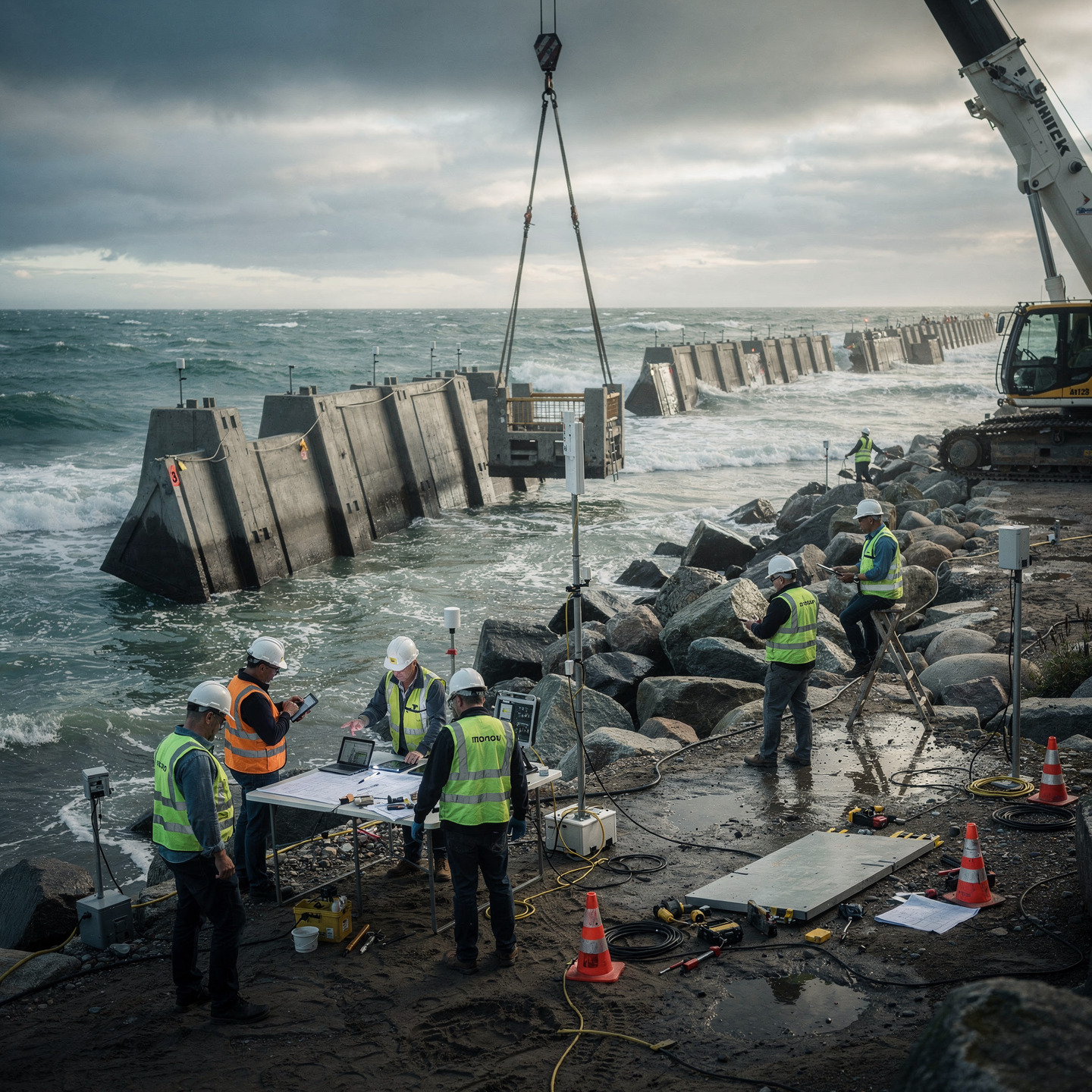
Master’s Degree in Climate Change and Coastal Adaptation
Why this master’s programme?
The Master in Climate Change and Coastal Adaptation
This program prepares you to lead the response to the environmental challenges facing our coasts. Learn to assess the vulnerability of coastal areas, design innovative adaptation strategies, and implement nature-based solutions. This program gives you the tools to understand the impacts of climate change, from sea-level rise to the intensification of extreme events, and to develop sustainable coastal management plans.
This program prepares you to lead the response to the environmental challenges facing our coasts. Learn to assess the vulnerability of coastal areas, design innovative adaptation strategies, and implement nature-based solutions.
Differential Advantages
- Multidisciplinary Approach: Integrates knowledge from environmental science, engineering, economics, and public policy.
- Real-World Case Studies: Analyzes concrete examples of coastal adaptation at a global level.
- Modeling Tools: Master the use of software to simulate climate scenarios and evaluate the impact of adaptation measures.
- Collaboration with Experts: Learn from leading professionals in the field of coastal adaptation.
- Project Development: Apply your knowledge to practical projects with real impact on coastal communities.
- Modality: Online
- Level: Masters
- Hours: 1600 H
- Start date: 25-08-2026
Availability: 1 in stock
Who is it aimed at?
- Maritime and coastal professionals seeking to understand and mitigate the impacts of climate change on their operations.
- Engineers, architects, and urban planners needing to develop adaptation and resilience strategies for coastal infrastructure.
- Environmental managers and public policy makers requiring tools for the sustainable planning and management of coastal areas.
- Consultants and engineering firms wishing to offer specialized services in climate change adaptation in the coastal sector.
- Graduates in environmental science, civil engineering, or related fields seeking cutting-edge specialization in a high-demand professional field.
Flexibility and Applicability
Designed for professionals with demanding schedules: flexible online methodology, practical case studies, and a focus on innovative solutions for coastal adaptation.
Objectives and skills

Leading the transition towards resilient coastal models:
“Promote cross-sector collaboration and community participation in the planning and implementation of nature-based adaptation strategies and green infrastructure solutions.”

Designing mitigation strategies for vulnerable ecosystems:
“Implement adaptive contingency plans, based on risk assessment and continuous monitoring, prioritizing ecological restoration and community participation.”

Assess and communicate the risks of coastal climate change:
“Analyze coastal vulnerabilities, model impact scenarios (floods, erosion) and disseminate information to relevant communities and authorities.”

Implement innovative solutions for coastal adaptation:
“Design and implement early warning systems for extreme weather events, combining coastal sensors, predictive models and community communication.”

Develop policies and regulations for the sustainable management of the coastline:
“Implement coastal planning instruments that balance socioeconomic development with ecosystem conservation and coastal risk mitigation.”

Efficiently manage threatened coastal natural resources:
Implement zoning and integrated management strategies that balance conservation, sustainable use and adaptation to climate change, involving local communities and applying monitoring and evaluation tools to ensure long-term effectiveness.
Study plan – Modules
- Fundamentals of climate change mitigation in coastal areas: specific vulnerabilities and risks
- Integrated adaptation strategies: ecosystem approach, nature-based solutions, and land-use planning
- Climate predictive models applied to coastal ecosystems: dynamics of atmospheric and oceanic processes
- Advanced technologies for monitoring: remote sensors, drones, LIDAR, and IoT systems for real-time environmental analysis
- GIS and remote sensing tools for climate impact assessment and coastal management
- Early warning systems and risk management in vulnerable coastal areas: design, implementation, and maintenance
- Resilient infrastructure: sustainable design and materials for coastal protection works and habitat restoration
- Public policies and regulatory frameworks International and local approaches for mitigation and adaptation in coastal areas
Multisectoral integration and community participation: environmental governance and collaborative management models
Advanced case studies: implementation of emerging technologies and effective strategies in coastal adaptation to climate change
- Fundamentals and principles of climate prediction models: types, temporal and spatial scales, and key parameters in coastal ecosystems
- Hydrodynamic and sedimentological models: simulation of currents, waves, sediment transport, and beach-delta dynamics
- Integration of geoenvironmental and oceanographic data into GIS platforms for coastal impact prediction
- Advanced remote sensing and remote sensor tools: acquisition, processing, and analysis of satellite and LiDAR imagery for coastal monitoring
- Application of machine learning and artificial intelligence techniques to improve the accuracy of climate change scenarios and ecological adaptability
- Modeling coastal flooding and sea-level rise: numerical methodologies and validation with global case studies
Simulation of extreme events: risk and impact analysis of storms, storm surges, and severe weather phenomena in coastal areas
Geographic Information Systems (GIS): design and application for the integrated and dynamic management of vulnerable coastal ecosystems
Development and implementation of collaborative digital platforms for real-time decision-making in coastal adaptation policies
Economic and social models linked to coastal ecosystems: assessment of the impact of climate change and sustainable adaptation strategies
Case studies and comparative analysis of predictive models applied in different coastal regions: strengths, limitations, and recommendations
International standards and technical guidelines for the monitoring and dynamic management of coastal areas in the face of climate risks
Design of strategic plans based on predictive models for the Restoration and conservation of coastal habitats and natural resources
Continuous evaluation and updating of models through the integration of new data sources and emerging technologies
Training in the use of specialized software and computational platforms for management and predictive analysis in coastal systems affected by climate change
- Fundamentals of coastal resilience: definition, ecological and social principles applied to vulnerable ecosystems
- Multidimensional assessment of climate risk in coastal areas: hazard, exposure, and vulnerability analysis
- Advanced predictive models of climate change and their application in coastal systems: hydrodynamic and thermal scenarios
- Innovative technologies for coastal monitoring: satellite remote sensing, LIDAR systems, and integrated IoT sensors
- Design and application of integrated mitigation strategies: green infrastructure, nature-based solutions, and mitigative geoengineering
- Ecosystem-based coastal adaptation (EbA): restoration of mangroves, coral reefs, and coastal dunes
- Implementation of early warning and rapid response systems for extreme weather events in coastal areas
- Impact assessment Socioeconomic factors and governance in coastal adaptation: legal frameworks, public policies, and community participation
Integration of Big Data and spatial analysis for adaptive planning and decision-making in coastal environments
International case studies and best practices: lessons learned in adaptive management in the face of coastal climate change
- Fundamentals of Integrated Planning in Coastal Resilience Management: Systems Analysis and a Multidisciplinary Approach to Climate Adaptation
- Coastal Protection Engineering: Design and Evaluation of Traditional Hard Structures (Groins, Breakwaters, Dikes), International Technical and Regulatory Criteria
- Nature-based Solutions (NbS): Restoration of Dunes, Wetlands, Mangroves, and Coral Reefs as Natural Strategies for Coastal Impact Mitigation
- Advanced Climate Risk Assessment: Hydrodynamic Modeling, Vulnerability Analysis, Sea Level Rise Scenarios, and Extreme Events
- Economic Valuation Tools and Cost-Benefit Analysis for Prioritizing Investments in Resilient Infrastructure
- Development of Regulatory Frameworks and Public Policies for Integrated Coastal Adaptation Management in the Face of Climate Change
- Financing
- Climate Adaptation: Innovative Financial Instruments, International Funds, Payment for Ecosystem Services Mechanisms, and Multilateral Cooperation
- Monitoring and Tracking Coastal Projects: Resilience Indicators, Remote Sensing Technologies, and Applied GIS Systems
- Participatory Management and Social Inclusion in Coastal Planning: Methodologies for Involving Local Communities and Key Stakeholders
- Case Studies and Successful Regional Projects in the Implementation of Comprehensive Coastal Adaptation Plans Based on Cutting-Edge Scientific and Technological Evidence
- Fundamentals of climate change in coastal areas: physical, chemical, and biological processes involved in environmental alteration
- Remote monitoring tools: satellite remote sensing techniques, LiDAR, coastal radar, and drones for continuous monitoring of coastal ecosystems
- In-situ instrumentation and networks: design, installation, and maintenance of meteorological stations, temperature, salinity, and wave sensors, as well as oceanographic buoys
- Regional and global climate models: calibration, validation, and application in coastal environments for projecting future scenarios
- Numerical simulation of coastal processes: sediment dynamics, erosion, subsidence, sea-level rise, and extreme events
- Advanced statistical analysis: techniques for interpreting time series, predictive modeling, and assessing uncertainty in climate and oceanographic data
- Integration of multidisciplinary data: frameworks for combining hydrodynamic, geomorphological, and biological information in integrated risk assessment systems
- Development of early warning systems: algorithms, critical parameters, and protocols for anticipating impacts associated with extreme weather events in coastal areas
- Application of geographic information systems (GIS) and remote sensing for territorial planning and adaptive management in vulnerable contexts
- Strategic decision-making: methodologies based on scientific evidence for the formulation of public policies and sustainable management tools in coastal adaptation
- Fundamentals of Technological Innovation in Coastal Management: A review of emerging technologies, their application in climate change mitigation and adaptation, and their impact on the resilience of coastal ecosystems.
- Integrated Environmental Monitoring Systems: Design and application of remote sensors, IoT technologies, and big data platforms for the continuous monitoring of physical, chemical, and biological parameters in vulnerable coastal areas.
- Numerical Modeling and Advanced Simulation: Tools for predicting climate impacts, coastal dynamics, erosion, and habitat changes, including machine learning techniques and spatial analysis for adaptive management.
- Integrated Adaptive Management Strategies: Development of holistic plans that combine green and gray infrastructure, public policies, participatory governance, and ecosystem-based management to increase coastal resilience.
- Innovation in Sustainable Coastal Infrastructure: Design and Evaluation Nature-based solutions (NbS), diffuse barriers, mangrove and reef restoration, along with engineering technologies for risk mitigation and coastal consolidation.
Climate risk and vulnerability assessment: advanced methods for identifying, quantifying, and mapping socio-environmental vulnerabilities, including multi-criteria analysis and modeling of future scenarios under different Representative Concentration Pathways (RCPs).
Public policies and regulatory frameworks for coastal adaptation: critical study of international, national, and local regulations; climate finance mechanisms; and strategies for the effective implementation of innovative projects in coastal environments.
- Evidence-based decision-making tools: use of geographic information systems (GIS), collaborative platforms, and multi-criteria decision-making for territorial planning and sustainable development in coastal regions affected by climate change.
- Global case studies and best practices: comprehensive analysis of successful experiences in technological innovation and sustainable management in coastal ecosystems, critical evaluation of results, and lessons learned that enable replicability and scalability.
- Capacities for implementation and technology transfer: strategies to strengthen technical skills, change management, and interdisciplinary collaboration among scientists, managers, local communities, and the private sector to ensure the sustainability and continuity of adaptive interventions.
- Scientific Foundations of Coastal Climate Change: Associated Atmospheric, Oceanic, and Geological Processes
- Climate Risk Assessment in Coastal Zones: Predictive Models, Impact Scenarios, and Vulnerability Analysis
- Emerging Technologies for Environmental Monitoring: Remote Sensors, Drones, Automated Weather Stations, and Advanced Remote Sensing Systems
- Implementation of Coastal Early Warning Systems: Design, Sensor Integration, Communication, and Community Response
- Innovations in Green and Blue Infrastructure: Bio-inspired Design for Erosion Mitigation, Habitat Restoration, and Enhanced Ecosystem Resilience
- Numerical Models for Swell, Storm Surge, and Sediment Dynamics Simulation: Principles, Calibration, and Practical Applications
- Smart Coastal Engineering Technologies: Adaptive Structures, Advanced Materials, and Distributed Infrastructure Solutions
- Big Data Integration and Machine Learning in coastal management: predictive analytics, resource optimization, and real-time decision-making
International regulatory framework and public policies for coastal sustainability: evaluation of legal instruments and strategies aligned with the SDGs
Participatory methodologies and adaptive governance: social cohesion, inter-institutional cooperation, and co-design of evidence-based solutions
- Foundations of climate governance: key definitions, stakeholders, and international and local institutional structures
- Legal and regulatory framework: analysis of legal instruments for climate change adaptation in vulnerable coastal areas, including international conventions, multilateral agreements, and national policies
- Coastal climate risk assessment: methodologies for identifying and quantifying socio-environmental and economic vulnerabilities in coastal contexts
- Public policy formulation processes: stages, stakeholders, and participatory mechanisms in the development of adaptation and mitigation strategies
- Economic and financial instruments for coastal adaptation: tax incentives, green funds, climate insurance, and innovative sustainable financing mechanisms
- Ecosystem-based adaptation (EbA) and integrated management: integrating natural and anthropogenic solutions into land-use planning and risk management
- Monitoring tools, Evaluation and reporting: indicators to measure the effectiveness of public policies and adaptation projects in coastal contexts
Citizen participation and multi-level governance: coordination among local, regional, and national governments; the role of local communities, NGOs, and the private sector
International and regional case studies: critical analysis of successful experiences and challenges in the implementation of policies for coastal adaptation
Future perspectives and trends in climate governance: technological innovation, dynamic adaptation, and scaling up solutions for coastal resilience in accelerated climate change scenarios
- Scientific foundations of climate change and its impact on coastal areas: analysis of climate variables, advanced atmospheric and oceanic modeling
- Emerging technologies for coastal monitoring: remote sensors, networks of meteorological and oceanographic stations, drones, and satellites
- Digital tools for coastal vulnerability and risk assessment: geographic information systems (GIS), 3D modeling, and spatial analysis
- Design and application of integrated adaptation strategies: ecosystem approaches, green infrastructure, and nature-based solutions
- Innovation in resilient infrastructure: advanced materials, adaptive systems, and sustainable construction technologies
- Planning and management of coastal resilience projects: life cycles, resource management, climate finance, and regulatory framework
- Evaluation of public policies and International regulations for coastal adaptation and climate change mitigation
Integrated Coastal Zone Management (ICZM): principles, participatory planning, multi-scale governance, and socioeconomic impact assessment
Advanced modeling and simulation of future scenarios: coastal dynamics, sea-level rise, and extreme weather events
Case studies and global best practices in technological innovation applied to coastal adaptation and marine ecosystem conservation
- Fundamentals and conceptual framework of climate change: physical principles, greenhouse gases, climate forcings and feedbacks
- Coastal dynamics under climate scenarios: geomorphological processes, hydrodynamic modeling, erosion, sedimentation, and sea-level rise
- Assessment of coastal vulnerability and risks: indicators, analysis methodologies, multiscale assessment, and socio-environmental integration
- Predictive models and simulations: numerical tools for climate projections and impact scenarios on coastal ecosystems and communities
- Design and evaluation of integrated coastal adaptation strategies: ecosystem approaches, green engineering, and nature-based solutions
- Innovative technologies and sustainable materials for impact mitigation, including resilient infrastructure and active restoration of marine habitats
- Public policies, governance, and international and national legal frameworks for coastal adaptation to climate change
Participatory management and environmental communication: community involvement, environmental education, and collaborative decision-making
Monitoring, follow-up, and evaluation of adaptation projects: performance indicators, early warning systems, and adaptive adjustment
Development and presentation of the Master’s Thesis: creation of a comprehensive plan that combines technical, social, and ecological solutions for coastal resilience to climate change
Career prospects
“`html
- Climate Change and Coastal Adaptation Consultant: Risk assessment, design, and implementation of adaptation strategies.
- Coastal Adaptation Project Manager: Planning, execution, and monitoring of projects related to climate change adaptation in coastal areas.
- Public Administration Technician (Local, Regional, National): Development of climate change adaptation policies and plans in coastal areas.
- Climate Change and Coastal Areas Researcher: Development of scientific research in academic institutions or research centers.
- Environmental Educator in Climate Change: Design and implementation of education and awareness programs on climate change and coastal adaptation.
- Sustainability and Corporate Social Responsibility Specialist: Advising companies on integrating climate change adaptation strategies into their operations coastal areas.
Climate Risk Analyst: Assessing the risks associated with climate change in coastal infrastructure and marine ecosystems.
Sustainability Auditor in Coastal Areas: Verifying compliance with sustainability regulations and standards in coastal projects.
“`
Entry requirements

Academic/professional profile:
Bachelor’s degree in Nautical Science/Maritime Transport, Naval/Marine Engineering or a related qualification; or proven professional experience on the bridge/in operations.

Language proficiency:
Functional Maritime English (SMCP) recommended for simulations and technical materials.

Documentation:
Updated CV, copy of qualification or seaman’s book, national ID/passport, motivation letter.

Technical requirements (for online):
Device with camera/microphone, stable internet connection, monitor ≥ 24” recommended for ECDIS/Radar-ARPA.
Admissions process and dates

Online
application
(form + documents).

Academic review and interview
Admissions decision

Admissions decision
(+ scholarship offer if applicable).

Place reservation
(deposit) and enrolment.

Induction
(access to the virtual campus, calendars, simulator guides).
Scholarships and financial support
- Advanced Climate Analysis: Master the tools and models to predict and understand the impacts of climate change on coastal areas.
- Innovative Adaptation Strategies: Design and implement effective and sustainable solutions for the protection of coastal infrastructure and ecosystems.
- Risk Management and Resilience: Learn to assess and mitigate the risks associated with sea-level rise, erosion, and extreme events.
- Legal Framework and Environmental Policies: Understand the key regulations and policies for integrated coastal zone management and climate change adaptation.
- Real-World Projects and Case Studies: Apply your knowledge to practical projects and analyze case studies of International success stories for immersive learning. Boost your career in coastal adaptation and become a leader in the fight against climate change.
Testimonials
This master’s program provided me with the tools and knowledge necessary to lead a mangrove restoration project in my community. Thanks to the in-depth study of coastal modeling and climate risk management, we were able to secure international funding, and today the project not only protects the coast from erosion but has also revitalized the local economy through sustainable ecotourism.
The Master’s in Environment and Sustainability provided me with the necessary tools and knowledge to lead the implementation of an environmental management system in my company, achieving a 30% reduction in our carbon footprint in just one year and opening up new business opportunities in the sustainable products market.
This master’s program provided me with the tools and knowledge necessary to lead a mangrove restoration project in my community. Thanks to the training I received, I was able to design an effective plan that not only increased coastal resilience to climate change but also generated new economic opportunities for local residents. The project’s results exceeded initial expectations, demonstrating the effectiveness of the strategies learned during the program.
Applying the knowledge I gained in the Master’s program in Climate Change and Coastal Adaptation allowed me to lead the development of a coastal resilience plan for my community. The plan, which integrated nature-based solutions and innovative adaptation strategies, was not only approved by local authorities but also secured international funding, ensuring the long-term protection of our coastline and the well-being of coastal populations.

Frequently asked questions
The main focus is the study of climate change and its impacts on coastal areas, along with the development of adaptation strategies for these areas.
Yes. The itinerary includes ECDIS/Radar-ARPA/BRM with harbor, ocean, fog, storm, and SAR scenarios.
Online with live sessions; hybrid option for simulator/practical placements through agreements.
Professionals with an interest in coastal management, urban and territorial planning, environmental engineering, marine sciences, biology, geography, environmental law, economics, or politics, who seek to specialize in climate change adaptation in coastal areas.
Recommended functional SMCP. We offer support materials for standard phraseology.
Yes, with a relevant degree or experience in maritime/port operations. The admissions interview will confirm suitability.
Optional (3–6 months) through Companies & Collaborations and the Alumni Network.
Simulator practice (rubrics), defeat plans, SOPs, checklists, micro-tests and applied TFM.
A degree from Navalis Magna University + operational portfolio (tracks, SOPs, reports and KPIs) useful for audits and employment.
- Fundamentals and conceptual framework of climate change: physical principles, greenhouse gases, climate forcings and feedbacks
- Coastal dynamics under climate scenarios: geomorphological processes, hydrodynamic modeling, erosion, sedimentation, and sea-level rise
- Assessment of coastal vulnerability and risks: indicators, analysis methodologies, multiscale assessment, and socio-environmental integration
- Predictive models and simulations: numerical tools for climate projections and impact scenarios on coastal ecosystems and communities
- Design and evaluation of integrated coastal adaptation strategies: ecosystem approaches, green engineering, and nature-based solutions
- Innovative technologies and sustainable materials for impact mitigation, including resilient infrastructure and active restoration of marine habitats
- Public policies, governance, and international and national legal frameworks for coastal adaptation to climate change
Participatory management and environmental communication: community involvement, environmental education, and collaborative decision-making
Monitoring, follow-up, and evaluation of adaptation projects: performance indicators, early warning systems, and adaptive adjustment
Development and presentation of the Master’s Thesis: creation of a comprehensive plan that combines technical, social, and ecological solutions for coastal resilience to climate change
Request information
Complete the Application Form.
Attach your CV/degree certificate (if you have it to hand).
Indicate your preferred cohort (January/May/September) and whether you would like the hybrid option with simulator sessions.
An academic advisor will contact you within 24–48 hours to guide you through the admission process, scholarships, and compatibility with your professional schedule.
Faculty
Eng. Tomás Riera
Full Professor
Eng. Tomás Riera
Full Professor
Eng. Sofía Marquina
Full Professor
Eng. Sofía Marquina
Full Professor
Eng. Javier Bañuls
Full Professor
Eng. Javier Bañuls
Full Professor
Dr. Nuria Llobregat
Full Professor
Dr. Nuria Llobregat
Full Professor
Dr. Pau Ferrer
Full Professor
Dr. Pau Ferrer
Full Professor
Cap. Javier Abaroa (MCA)
Full Professor
Cap. Javier Abaroa (MCA)
Full Professor

