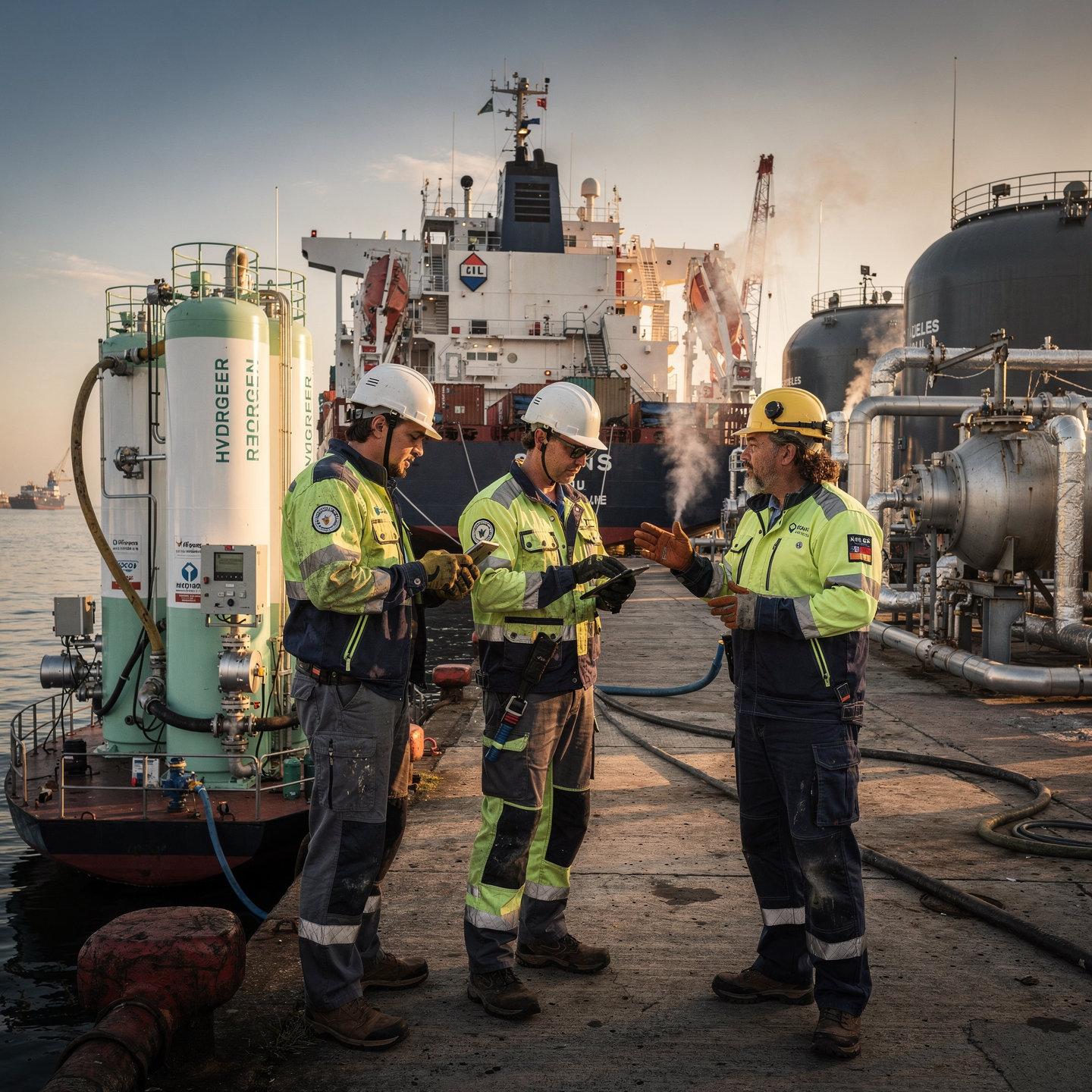
Master’s Degree in Green Hydrogen and Blue Fuels
Why this master’s programme?
The Master in Green Hydrogen and Blue Fuels
This program provides you with a comprehensive understanding of the production, storage, transport, and applications of hydrogen as a key energy carrier for decarbonization. You will learn about the different hydrogen production technologies (electrolysis, reforming with carbon capture), as well as the associated economic, environmental, and regulatory implications. This program prepares you to lead the energy transition towards a sustainable future.
Differential Advantages
- Practical Approach: real-world case studies and simulations of hydrogen projects.
- Comprehensive Vision: analysis of the entire value chain, from production to consumption.
- Emerging Technologies: in-depth exploration of the latest innovations in fuel cells, hydrogen storage, and synthetic fuels.
- Sustainability and Circular Economy: assessment of the environmental impact and economic viability of hydrogen projects.
- Networking: access to a network of experts and professionals in the energy sector.
- Modality: Online
- Level: Masters
- Hours: 1600 H
- Start date: 25-04-2026
Availability: 1 in stock
Who is it aimed at?
- Chemical, energy, and environmental engineers seeking to lead the transition to sustainable energy sources and decarbonization.
- Project managers and consultants interested in developing and implementing green hydrogen and blue fuels strategies.
- Researchers and scientists wishing to delve deeper into the latest technologies for hydrogen production, storage, and transport.
- Energy and sustainability policymakers who need to understand the regulatory framework and incentives for the development of this industry.
- Science, engineering, and economics graduates seeking a high-impact specialization in the renewable energy and hydrogen sector.
Flexibility Academic
Adapted for working professionals: online format with live and recorded classes, 24/7 access to digital resources, and personalized tutoring.
Objectives and skills

Leading the energy transition towards a sustainable future.
“Implement decarbonization strategies and optimize energy consumption, promoting technological innovation and intersectoral collaboration.”

Master the key technologies for the production, storage and distribution of green hydrogen and blue fuels.
Design and optimize electrochemical, thermochemical and hybrid processes for the sustainable production of hydrogen and derived fuels.

To promote innovation in the hydrogen and blue fuels sector through research and development.
Promote public-private collaboration in R&D&I projects, prioritizing the scalability and commercial viability of the solutions.

Develop viable business strategies and investment models in the green hydrogen and blue fuels market.
Evaluate the profitability of projects, considering the life cycle, regulations and subsidies, with sensitivity analysis to key variables (hydrogen price, renewable energy cost).

Evaluate and mitigate the risks associated with the implementation of green hydrogen and blue fuels projects:
“Develop and implement comprehensive risk matrices, considering technical, environmental, social and economic aspects, and incorporate proactive mitigation plans based on best practices and international standards.”

Design and implement effective policies and regulations to promote green hydrogen and blue fuels:
“Establish fiscal and financial incentive mechanisms, promoting private investment and public-private collaboration in projects for the production and consumption of green hydrogen and blue fuels.”
Study plan – Modules
- Electrochemical Fundamentals of Electrolysis: Thermodynamic Principles, Reaction Kinetics, and Energy Efficiency in Electrolytic Cells
- Advanced Electrolysis Technologies: Detailed Comparison of Alkaline Electrolysis, Proton Exchange Membrane (PEM) Electrolysis, and Solid Oxide Electrolysis (SOEC), Including Materials, Design, and Industrial Application
- Design of Integrated Systems for Green Hydrogen Production: Energy Balance Analysis, Flow Optimization, and Asset Sizing
- Renewable Energy Capture and Storage Systems for Optimal Electrolyzer Powering: Solar Photovoltaics, Wind Power, and Hybrid Systems
- Implementation of Carbon Capture and Sequestration (CCS) Technologies in Auxiliary Processes: Design of Chemical Absorption, Adsorption, and Exhaust Gas Venting Units
- Advanced Operation and Automated Control of Pilot and Industrial-scale: SCADA systems, predictive algorithms based on artificial intelligence, and predictive maintenance
Modeling and dynamic simulation of green hydrogen plants: MATLAB/Simulink simulation tools, Aspen Plus, and their application for optimization and reduction of operating costs
International regulations and safety standards applicable to the production, storage, and transportation of green hydrogen and blue fuels
Energy grid integration strategies: demand management, distributed storage, and their role in the energy transition to low-carbon economies
Economic analysis and life cycle assessment (LCA) of green hydrogen and blue fuel production projects, including CAPEX, OPEX, and carbon footprint
- Advanced Fundamentals of Green Hydrogen Storage: Physical and Chemical Properties and Behavior Under Supercritical and Cryogenic Conditions
- Compression and Liquefaction Technologies: Design, Energy Efficiency, and Operational Challenges at Industrial Scales
- Material Systems for Storage Tanks: Analysis of Metal Alloys, Composites, and Nanomaterial Solutions to Maximize Strength and Minimize Permeability
- Innovation in Solid and Chemical Storage Methods: Metal Hydrides, Carbon Nanotubes, and Functionalized Porous Materials
- Advanced Infrastructure for Secure Distribution: Hydrogen Pipelines, Cryogenic Trucks, and Modular Solutions for Multimodal Transport
- Monitoring and Leak Detection Systems: Application of IoT Sensors, Artificial Intelligence, and Spectrometry Techniques to Ensure System Integrity
- International Regulations and Technical Standards for the Handling and Transport of Green Hydrogen and Blue Fuels: Compliance and Certifications
- Risk assessment and occupational safety management: protocols for mitigating explosions, hydrogen-induced corrosion, and preventing environmental contamination
- Case studies of implementation in industrial plants and logistics ports: analysis of pioneering projects and lessons learned for commercial scalability
- Future perspectives in storage and distribution: integration with renewable energies, network digitization, and advances in the circular economy
Key
- Advanced Fundamentals of Green Hydrogen: Physicochemical Properties, Storage, and Safe Transport
- Comprehensive Electrolyzer Design: PEM, Alkaline, and Solid Oxide Technologies, Performance, and Scalability
- Optimization of Electrolysis Systems Under Variable Renewable Energy Conditions
- Integration of Green Hydrogen Plants with Renewable Sources: Solar Photovoltaics, Wind Power, and Their Energy Management
- Process Engineering for Efficient Production: Energy Balance, Byproduct Reuse, and Loss Minimization
- Advanced Carbon Capture, Utilization, and Storage (CCUS) Systems: Post-Combustion, Pre-Combustion, and Oxy-Combustion Technologies
- Design and Modeling of CO2 Capture Plants: Selection of Solvents, Adsorbents, and Membranes for Capture Optimization
- Integration Assessment Between Hydrogen production and carbon capture to minimize carbon footprint and emissions
Automatic control and digitalization in hydrogen plants: sensors, SCADA, IoT, and predictive analytics for safe and efficient operation
Advanced computational modeling for dynamic process simulation and operational risk management
Predictive maintenance and reliability strategies for critical production and capture equipment
International regulations and safety standards applied to hydrogen and CCUS facilities
Case studies: implementation and analysis of pilot and commercial green hydrogen plants with integrated CCUS
Innovation and emerging technological trends for the next generation of sustainable energy plants
Economic evaluation and financial modeling for the viability and scalability of green hydrogen and carbon capture projects
- International and national regulatory framework for hydrogen: comparative analysis of key regulations, EU directives, DOE, and global standards for blue and green hydrocarbons
- Industrial safety in hydrogen production and storage: risk assessment, materials handling, prevention and mitigation protocols based on ISO 19880 standards
- Hydrogen certification and traceability: advanced measurement methods, audits, and standards to guarantee fuel integrity and purity
- Life Cycle Assessment (LCA) applied to green hydrogen and blue fuels: methodological tools, environmental indicators, and comprehensive sustainability
- Guarantees of origin systems for hydrogen: technological infrastructure, registry interoperability, and mechanisms to foster market confidence
- Market strategies and business models for the integration of blue and green fuels: hydrogen in energy markets, trading, and incentive policies
- Risk management and regulations Transport and distribution: pipelines, cryogenic drums, metal hydrides, and road, rail, and maritime transport.
Implementation of emergency and incident response plans: drills, crisis management, and inter-institutional coordination at hydrogen facilities.
Technical audits and facility certifications: regulatory compliance, conformity assessment, and document validation for hydrogen projects.
Regulatory future and trends: anticipating legislative changes, international harmonization, and developing markets based on sustainable hydrogen.
- Thermodynamic and electrochemical foundations in the production of green hydrogen and blue fuels: analysis of energy efficiency and application sectors
- Process optimization: advanced modeling and simulation to maximize conversion and minimize energy losses in electrolyzers and reforming systems
- Implementation of adaptive and predictive control systems: integration of artificial intelligence and machine learning for the dynamic management of operational variables
- Advanced energy management: energy balance, storage, and thermal recovery strategies to ensure sustainability and reduce carbon footprint
- Analysis and design of hybrid systems combining variable renewable sources with green hydrogen and blue fuel conversion technologies
- Predictive maintenance and operational reliability: techniques based on big data and vibration analysis to optimize the lifespan and availability of industrial plants
- International regulations and standards applicable to sustainable production: requirements of Safety, quality, and certification of hydrogen and blue fuels
Sectoral integration and scalability: evaluation of business models, distribution infrastructures, and smart grids for mass deployment
Environmental impact assessment and energy life cycles: methodologies for quantifying emissions and environmental benefits in production and end use
Case studies and analysis of pioneering projects in energy optimization and advanced process management in the sustainable production of green hydrogen and blue fuels
- Advanced Fundamentals of Green Hydrogen and Blue Fuels: Production, Characteristics, and Industrial Applications
- Emerging Electrolyzer Technologies: PEM, Alkali, and Solid Oxide Electrolyzers; Efficiency, durability, and scalability
Integration of renewable sources for energy optimization: solar photovoltaics, wind power, and hybrid systems
Modeling and simulation of processes in production plants: systems dynamics, advanced control, and performance analysis
Optimization of the value chain through artificial intelligence and big data applied to energy management
Design and application of technological innovation strategies in sustainable production: continuous improvement and technology transfer
Thermal management and waste heat recovery: advanced techniques for increasing energy efficiency
Advanced automation and process control in green hydrogen and blue fuel plants: PLC, SCADA, and cyber-physical systems
Life cycle assessment (LCA) and environmental evaluation: methodologies and tools to minimize the carbon footprint
International regulations and technical standards for hydrogen and fuel plants: compliance, certification, and operational safety
Development of
- Technological innovation projects: agile methodologies, risk management, and economic evaluation
- Energy optimization through sectoral integration: synergies with the chemical, petrochemical, and mobility sectors
- Advanced studies on hydrogen storage and transport: materials, technologies, and logistical challenges
- Impact of digitalization and Industry 4.0 technologies on energy production and management: blockchain, IoT, and digital twins
- Case studies and global benchmark analysis: reference plants and best practices in technological innovation
- Electrochemical Fundamentals of Water Electrolysis: Thermodynamic Principles, Reaction Kinetics, and Energy Efficiency
- Advanced Electrolysis Cell Design: Electrode Configuration, Membranes, and Anti-Corrosive Materials to Maximize Green Hydrogen Production
- Emerging Technologies in Electrolysis: Comparative Analysis of PEM, Alkaline, and SOEC Electrolyzers, Their Advantages, Limitations, and Industrial Applications
- Integration of Renewable Energy Sources with Electrolysis Systems: Intermittency Management and Energy Storage to Optimize Plant Operation
- Configuration and Sizing of Industrial-Scale Electrolysis Plants: Hydraulic, Thermal, and Electrical Design Criteria
- Automation and Advanced Control in Electrolysis Plants: SCADA Systems, Communication Protocols, and Predictive Maintenance Strategies
- International Regulations and Safety Standards Applied to the Operation of Green Hydrogen Electrolyzers
- Carbon Capture, Utilization, and Storage (CCUS) Technologies in Blue Fuel Production: Physical, Chemical, and Biological Processes
- Design of Integrated Post-Combustion and Pre-Combustion CO2 Capture Systems: Parameterization and Optimization for Blue Hydrogen Plants
- Modeling and Simulation of Carbon Capture Processes: Advanced Tools for Performance Prediction and Economic Evaluation
- Environmental Impact Analysis and Life Cycle Assessment (LCA) for Green Hydrogen and Blue Fuel Plants with CCUS Technologies
- Integrated Management of Waste and Byproducts in Electrolysis and Carbon Capture Plants
- Case Studies and International Best Practices in the Design and Operation of Green Hydrogen and Blue Fuel Plants
- Pilot Testing, Technology Scale-Up, and Technology Transfer in the Hydrogen and CCUS Sector
- Strategies for Economic Sustainability and Industrial Profitability: Market Analysis,
- Operating costs and added value of clean fuels
- Implementation of predictive maintenance and asset management systems based on Artificial Intelligence and Big Data
- Development of operational safety protocols and risk management associated with the handling and storage of hydrogen and captured CO2
- Technological trends and future: innovation in materials, next-generation electrolysis, and advances in carbon capture for the low-carbon economy
- Fundamentals of Renewable Energy Systems Integration: Distributed Generation, Microgrids, and Technological Synergies
- Advanced Modeling and Simulation of Electrical Networks for Green Hydrogen Production: Tools, Algorithms, and Optimization
- Protocols and Standards for the Safe and Efficient Interconnection of Electrolysators with Fluctuating Renewable Energy Sources
- Design and Management of Hybrid Renewable Systems for Continuous Supply: Photovoltaics, Wind Power, Storage, and Grid Impact Management
- Real-Time Control and Automation of Green Hydrogen Production Plants: SCADA Systems, IoT, and Predictive Analytics
- Integration of Methanization and Carbon Capture for Blue Fuel Production: Processes, Technologies, and Life Cycle Analysis
- Energy Management and Power Balancing in Multi-Vector Networks: Strategies to Optimize Efficiency and Minimize Losses
- Impact of Hydrogen Injection into Electrical and Gas Networks:
- Security, stability, and regulatory challenges
- Energy storage and its role in system stability: batteries, hydrogen, blue fuels, and emerging technologies
- Economic and financial evaluation of integrated green hydrogen and blue fuel projects: models, risks, and market opportunities
- International regulations and integration policies for the efficient and sustainable production of hydrogen and blue fuels
- Case studies and analysis of real-world projects: from planning to implementation of integrated energy systems
- Fundamentals and technical characteristics of green hydrogen and blue fuels: relevant physical, chemical, and energy properties for their safe handling
- Technological innovation in production: advanced electrolysis, reforming with carbon capture, and emerging technologies for efficiency optimization and cost reduction
- Storage and transport systems: design, materials, and containment technologies for compressed, liquid, and chemical carrier hydrogen
- Industrial safety protocols: risk analysis, design of preventive systems, and application of international regulations in hydrogen and blue fuel plants
- Global and regional regulations: comprehensive review of legal frameworks, ISO standards, European directives, and key national regulations for production, distribution, and marketing
- Emergency and contingency management: operating procedures, leak detection, suppression systems, and incident response in facilities and transport
- Environmental and social assessment: environmental impact of the value chain, strategies for Mitigation and compliance with sustainability and corporate social responsibility criteria.
Innovation in distribution infrastructure: smart grid design, integration into energy systems, and solutions for adapting to variable demand.
Technical and legal aspects of the green hydrogen and blue fuels market: certification, traceability, financing mechanisms, and investment promotion.
Case studies and analysis of pioneering projects: risk assessment, innovative solutions, and lessons learned for replicability in diverse environments.
- Fundamentals and objectives of the Master’s Thesis: Definition of scope, identification of technological and commercial challenges in the green hydrogen and blue fuels value chain.
- Integrated analysis of emerging technologies: Comparative evaluation of PEM, alkaline, and SOEC electrolysers; advanced carbon capture and storage (CCS); and hybrid energy production and storage systems.
- Design and modeling of smart infrastructures:<strong architectures for distributed and centralized production plants, integration with renewable electricity grids, automation and control through SCADA systems and applied IoT.
- Innovative business models and economic viability:<strong analysis of local and global markets, green financing schemes, regulatory incentives, and monetization strategies in dynamic and volatile environments.
- Advanced logistics and distribution chain:<strong multimodal optimization for safe and efficient transport, critical point analysis, real-time monitoring technologies, and emissions reduction throughout the supply chain.
- Life cycle assessment and sustainability:<strong LCA methodology applied to green hydrogen and blue fuels, ESG criteria, total carbon footprint, and validation using specialized software.
- Regulation, standards and international policies: Detailed study of regulatory frameworks, green hydrogen certifications, international trade, and legal barriers to business expansion.
Marketing and market positioning strategies: Competitive analysis, segmentation of industrial and residential clients, trading platforms, and flexible contracts for integration into energy markets.
Risk management and mitigation plans: Identification of technical, financial, and market risks; industrial safety protocols and dynamic evaluation to ensure viability and social acceptance.
Presentation and defense of the final project: Preparation of detailed technical and financial documents, development of executive presentations, simulations of future scenarios, and preparation for pitching to investors and stakeholders.
Career prospects
“`html
- Green Hydrogen Project Engineer: Design, development, and management of hydrogen production, storage, and transportation projects.
- Renewable Energy and Sustainability Consultant: Advising companies and governments on the transition to an economy based on green hydrogen and blue fuels.
- Energy Regulation and Policy Specialist: Development of regulatory frameworks to promote green hydrogen and blue fuels.
- Researcher and Technology Developer: Participation in R&D&I projects to improve hydrogen production, storage, and use technologies.
- Hydrogen Production Plant Manager: Operation and maintenance of green hydrogen and blue fuel production facilities.
- Energy Market Analyst: Study of market trends in hydrogen and blue fuels, identification of opportunities. Business Development Manager: Identifying and acquiring new clients and projects in the green hydrogen and blue fuels sector.
Safety and Risk Specialist: Evaluating and managing the risks associated with the production, storage, and transport of hydrogen.
“`
Entry requirements

Academic/professional profile:
Bachelor’s degree in Nautical Science/Maritime Transport, Naval/Marine Engineering or a related qualification; or proven professional experience on the bridge/in operations.

Language proficiency:
Functional Maritime English (SMCP) recommended for simulations and technical materials.

Documentation:
Updated CV, copy of qualification or seaman’s book, national ID/passport, motivation letter.

Technical requirements (for online):
Device with camera/microphone, stable internet connection, monitor ≥ 24” recommended for ECDIS/Radar-ARPA.
Admissions process and dates

Online
application
(form + documents).

Academic review and interview
Admissions decision

Admissions decision
(+ scholarship offer if applicable).

Place reservation
(deposit) and enrolment.

Induction
(access to the virtual campus, calendars, simulator guides).
Scholarships and financial support
- Green Hydrogen Mastery: Learn how to produce, store, and distribute green hydrogen, a key pillar for decarbonization.
- Sustainable Blue Fuels: Delve into the production and application of blue fuels, a low-carbon alternative for various sectors.
- Innovative Technologies: Explore the latest technologies and trends in fuel cells, electrolysis, and carbon capture.
- Regulatory Framework and Economics: Analyze the international regulatory framework and economic aspects of the transition to hydrogen and blue fuels.
- Real-World Projects and Case Studies: Apply your knowledge to real-world projects and case studies for a practical and relevant learning experience.
Testimonials
This master’s program provided me with the tools and knowledge necessary to lead a green hydrogen production plant development project. Thanks to the training I received, I was able to optimize the electrolysis system design, reducing production costs by 15% and ensuring the project’s economic viability.
During the Master in Energy & Offshore, I exceeded my expectations by developing a predictive model for optimizing the performance of offshore wind turbines, which was recognized by the industry and allowed me to obtain a position in a major company in the sector before my graduation.
The Master’s in Green Hydrogen and Blue Fuels provided me with the tools and knowledge necessary to lead the development of a pilot project for the production of green hydrogen from solar energy. Thanks to the training I received, I was able to optimize the system design, secure funding, and oversee implementation, achieving stable and efficient production that exceeded the project’s initial expectations.
The Master’s in Green Hydrogen and Blue Fuels provided me with the tools and knowledge necessary to lead the development of a pilot project for the production of green hydrogen from solar energy. Thanks to the training I received, I was able to optimize the electrolysis process, reducing production costs by 15% and ensuring the economic viability of the project, which is now in the industrial scaling phase.

Frequently asked questions
It encompasses both green hydrogen and blue fuels.
Yes. The itinerary includes ECDIS/Radar-ARPA/BRM with harbor, ocean, fog, storm, and SAR scenarios.
Online with live sessions; hybrid option for simulator/practical placements through agreements.
Green hydrogen is produced by electrolysis of water using renewable energy, while blue fuels are produced from fossil fuels (usually natural gas) by steam reforming, where the resulting CO2 is captured and stored (CAC), preventing its release into the atmosphere.
Recommended functional SMCP. We offer support materials for standard phraseology.
Yes, with a relevant degree or experience in maritime/port operations. The admissions interview will confirm suitability.
Optional (3–6 months) through Companies & Collaborations and the Alumni Network.
Simulator practice (rubrics), defeat plans, SOPs, checklists, micro-tests and applied TFM.
A degree from Navalis Magna University + operational portfolio (tracks, SOPs, reports and KPIs) useful for audits and employment.
- Fundamentals and objectives of the Master’s Thesis: Definition of scope, identification of technological and commercial challenges in the green hydrogen and blue fuels value chain.
- Integrated analysis of emerging technologies: Comparative evaluation of PEM, alkaline, and SOEC electrolysers; advanced carbon capture and storage (CCS); and hybrid energy production and storage systems.
- Design and modeling of smart infrastructures:<strong architectures for distributed and centralized production plants, integration with renewable electricity grids, automation and control through SCADA systems and applied IoT.
- Innovative business models and economic viability:<strong analysis of local and global markets, green financing schemes, regulatory incentives, and monetization strategies in dynamic and volatile environments.
- Advanced logistics and distribution chain:<strong multimodal optimization for safe and efficient transport, critical point analysis, real-time monitoring technologies, and emissions reduction throughout the supply chain.
- Life cycle assessment and sustainability:<strong LCA methodology applied to green hydrogen and blue fuels, ESG criteria, total carbon footprint, and validation using specialized software.
- Regulation, standards and international policies: Detailed study of regulatory frameworks, green hydrogen certifications, international trade, and legal barriers to business expansion.
Marketing and market positioning strategies: Competitive analysis, segmentation of industrial and residential clients, trading platforms, and flexible contracts for integration into energy markets.
Risk management and mitigation plans: Identification of technical, financial, and market risks; industrial safety protocols and dynamic evaluation to ensure viability and social acceptance.
Presentation and defense of the final project: Preparation of detailed technical and financial documents, development of executive presentations, simulations of future scenarios, and preparation for pitching to investors and stakeholders.
Request information
Complete the Application Form.
Attach your CV/degree certificate (if you have it to hand).
Indicate your preferred cohort (January/May/September) and whether you would like the hybrid option with simulator sessions.
An academic advisor will contact you within 24–48 hours to guide you through the admission process, scholarships, and compatibility with your professional schedule.
Faculty
Eng. Tomás Riera
Full Professor
Eng. Tomás Riera
Full Professor
Eng. Sofía Marquina
Full Professor
Eng. Sofía Marquina
Full Professor
Eng. Javier Bañuls
Full Professor
Eng. Javier Bañuls
Full Professor
Dr. Nuria Llobregat
Full Professor
Dr. Nuria Llobregat
Full Professor
Dr. Pau Ferrer
Full Professor
Dr. Pau Ferrer
Full Professor
Cap. Javier Abaroa (MCA)
Full Professor
Cap. Javier Abaroa (MCA)
Full Professor

