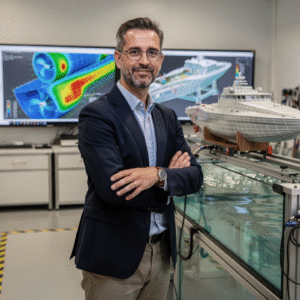
Diploma in Home Automation and Smart Yachts

Why this certificate program?

The Diploma in Home Automation and Smart Yachts

Immerse yourself in the future of sailing, merging comfort and efficiency on board. Learn to design, install, and program intelligent systems for yachts, from lighting and climate control to energy and security management, optimizing the nautical experience. This program gives you the tools to create connected, personalized, and sustainable vessels.

You will be immersed in the future of sailing, merging comfort and efficiency on board.

Differentiating Advantages

  • Systems Integration: Master communication between devices (sensors, actuators, displays).
  • Intuitive Programming: Learn to configure customized user interfaces for total control.
  • Energy Efficiency: Optimize onboard consumption through automation and monitoring.
  • Advanced Security: Implement surveillance and access control systems with remote notifications.
  • Innovative Trends: Explore the latest technologies in marine home automation and their practical applications.
Domótica

Diploma in Home Automation and Smart Yachts

Availability: 1 in stock

Who is it aimed at?

  • Naval architects and yacht interior designers looking to integrate cutting-edge technology and personalize the onboard experience.
  • Electronic engineers and systems technicians interested in specializing in the installation, configuration, and maintenance of home automation systems on vessels.
  • Yacht captains and crew wanting to optimize vessel management and enhance the customer experience through intelligent control.
  • Luxury yacht owners looking to modernize their vessels and enjoy greater comfort, security, and energy efficiency.
  • Shipbuilding and repair companies wanting to expand their service offerings with the implementation of home automation solutions. innovative.

Flexibility and applicability:
Adapted to your pace: 24/7 accessible online material, practical projects applicable to real-world cases, and expert guidance for integration into your work.

Domótica

Objectives and competencies

Integrating and configuring home automation systems on yachts:

“Select communication protocols (KNX, Modbus, etc.) and implement gateways for interoperability of subsystems (lighting, climate control, security, entertainment).”

Design and implement intelligent control solutions for vessels:

Integrate data from multiple sensors (GNSS, IMU, radar, sonar) for robust situational awareness and safe autonomous navigation.

Optimize energy consumption and resource efficiency on board:

“Implement fuel and freshwater management strategies, monitoring consumption and optimizing routes to minimize environmental impact and operating costs.”

Diagnosing and resolving technical problems in home automation systems on yachts:

Analyze electrical and network schematics, use specific diagnostic tools, and repair or replace defective components, minimizing system downtime.

Managing home automation projects on yachts, from conception to final delivery:

“Define scope, budget and timeline, selecting technologies and suppliers, supervising installation and ensuring integration with the yacht’s systems, guaranteeing customer satisfaction.”

Personalize the onboard user experience through automation and intelligent control:

Integrate infotainment, climate control, lighting and comfort systems adapted to individual preferences and user profiles, with remote monitoring and emergency response capability.

Curriculum - Modules

  1. Comprehensive Maritime Incident Management: protocols, roles, and chain of command for coordinated response
  2. Operational Planning and Execution: briefing, routes, weather windows, and go/no-go criteria
  3. Rapid Risk Assessment: criticality matrix, scene control, and decision-making under pressure
  4. Operational Communication: VHF/GMDSS, standardized reports, and inter-agency liaison
  5. Tactical Mobility and Safe Boarding: RHIB maneuvers, approach, mooring, and recovery
  6. Equipment and Technologies: PPE, signaling, satellite tracking, and field data logging
  7. Immediate Care of the Affected: primary assessment, hypothermia, trauma, and stabilization for evacuation
  8. Adverse Environmental Conditions: swell, Visibility, flows, and operational mitigation

    Simulation and training: critical scenarios, use of VR/AR, and exercises with performance metrics

    Documentation and continuous improvement: lessons learned, indicators (MTTA/MTTR), and SOP updates

  1. Introduction to Intelligent Systems on Yachts: Overview and Benefits
  2. Marine Communication Networks: NMEA 2000, Ethernet, Wi-Fi
  3. Sensors and Actuators: Types, Calibration, and Integration
  4. Monitoring and Control Systems: Power, Fluids, Safety
  5. Navigation Automation: Autopilot, Route Following
  6. Energy Management: Optimizing Consumption and Alternative Sources
  7. Integration of Entertainment and Communication Systems
  8. Cybersecurity in Yacht Systems: Threats and Protection
  9. Diagnostics and Maintenance of Intelligent Systems
  10. Regulations and Standards applicable to the systems integration

  1. Introduction to Control Systems: Types, Components, and Applications
  2. Sensors and Transducers: Characteristics, Selection, and Signal Conditioning
  3. Actuators: Types (electrical, hydraulic, pneumatic), Control, and Applications
  4. PLC (Programmable Logic Controller): Architecture, Programming (Ladder Logic, etc.), and Applications
  5. HMI (Human-Machine Interface): Design, Development, and Communication with Control Systems
  6. Industrial Communications: Protocols (Modbus, Ethernet/IP, etc.), Networks, and Security
  7. SCADA Systems: Architecture, Functions, Data Acquisition, and Monitoring
  8. PID Control: Principles, Parameter Tuning, Implementation, and Optimization
  9. Systems Integration: Architectures, Protocols, and Best Practices.
  10. Security in Control Systems: Protection Against Unauthorized Access and Failures.

  1. Introduction to Intelligent Systems on Yachts: Overview and Benefits
  2. Onboard Networks: CAN bus, NMEA 2000, Ethernet, WiFi – Standards and Protocols
  3. Sensors and Actuators: Types, Calibration, Preventive Maintenance
  4. Navigation Systems Integration: GPS, AIS, Radar, ECDIS
  5. Yacht Automation Systems: Lighting, Climate Control, Entertainment
  6. Energy Monitoring: Batteries, Generators, Solar Panels, Load Management
  7. Security Systems: Alarms, Fire Detection, CCTV, Access Control
  8. Remote Control and Marine Home Automation: Apps, Web Interfaces, Control by voice
  9. Diagnostics and troubleshooting: Tools, techniques, technical documentation
  10. Cybersecurity on yachts: Data protection, secure remote access, updates

  1. Introduction to Intelligent Systems: Definition, characteristics, and applications.
  2. Sensors and Actuators: Types, selection, calibration, and integration into systems.
  3. Data Acquisition and Processing: Sampling, filtering, and data analysis techniques.
  4. Industrial Communications: Communication protocols (Modbus, Ethernet/IP, OPC UA).
  5. Programmable Logic Controllers (PLCs): Architecture, programming, and configuration.
  6. Supervisory Control and Data Acquisition (SCADA) Systems: Design and implementation.
  7. Industrial Robotics: Fundamentals, programming, and applications in automation.
  8. Machine Vision: Image processing, pattern recognition, and Applications.
  9. Artificial Intelligence (AI) in Control Systems: Machine learning, neural networks, and fuzzy logic.
  10. Security in Control Systems: Cybersecurity, vulnerabilities, and protective measures.

  1. System Architecture and Components: Structural design, materials, and subsystems (mechanical, electrical, electronic, and fluid) with selection and assembly criteria for marine environments
  2. Fundamentals and Principles of Operation: Physical and engineering foundations (thermodynamics, fluid mechanics, electricity, control, and materials) that explain performance and operating limits
  3. Safety and Environmental (SHE): Risk analysis, PPE, LOTO, hazardous atmospheres, spill and waste management, and emergency response plans
  4. Applicable Regulations and Standards: IMO/ISO/IEC requirements and local regulations;
  5. Conformance criteria, certification, and best practices for operation and maintenance
  6. Inspection, testing, and diagnostics: Visual/dimensional inspection, functional testing, data analysis, and predictive techniques (vibration, thermography, fluid analysis) to identify root causes
  7. Preventive and predictive maintenance: Hourly/cycle/seasonal plans, lubrication, adjustments, calibrations, consumable replacement, post-service verification, and operational reliability
  8. Instrumentation, tools, and metrology: Measuring and testing equipment, diagnostic software, calibration and traceability; selection criteria, safe use, and storage
  9. Onboard integration and interfaces: Mechanical, electrical, fluid, and data compatibility; Sealing and watertightness, EMC/EMI, corrosion protection, and interoperability testing.

    Quality, acceptance testing, and commissioning: process and materials control, FAT/SAT, bench and sea trials, go/no-go criteria, and evidence documentation.

    Technical documentation and integrated practice: logs, checklists, reports, and a complete case study (safety → diagnosis → intervention → verification → report) applicable to any system.

  1. Introduction to integrated systems on yachts: Architecture and components.
  2. Onboard communication networks: CAN bus, Ethernet, NMEA 2000 and protocols.
  3. Control systems: Autopilot, stabilizers, flaps, and maneuvering thrusters.
  4. Energy management: Generators, batteries, inverters, and monitoring systems.
  5. Propulsion systems: Electronic engine control, fuel management, and efficiency.
  6. Automation of services: Lighting, climate control, pumps, and water treatment systems.
  7. Remote monitoring and control: Web access, mobile applications, and telemetry systems.
  8. Sensor integration: Meteorological, safety, Navigation and performance.
  9. Diagnostics and maintenance: Software tools, data interpretation, and troubleshooting.

    Cybersecurity on smart yachts: Intrusion protection, firewalls, and access management.

Career opportunities

  • Installer and Maintenance Technician of Home Automation Systems on Yachts: Configuration, programming, and troubleshooting of lighting, climate control, security, and entertainment systems.
  • Intelligent Systems Integrator for Vessels: Design and implementation of customized solutions for yacht automation and control, using various technologies and communication protocols.
  • Home Automation Consultant for the Nautical Sector: Advising shipowners, shipyards, and naval design companies on the selection and implementation of efficient home automation systems tailored to their needs.
  • Onboard Automation and Control Technician: Management and supervision of automated systems on yachts, including parameter monitoring, fault detection, and performance optimization.
  • User Interface Programmer for Home Automation Systems on Yachts: Development of intuitive interfaces and Customized solutions for controlling home automation systems via mobile devices, touchscreens, and other means.
  • Cybersecurity Specialist for Smart Yachts: Protecting home automation and onboard communication systems against cyber threats by implementing security measures and conducting vulnerability tests.

    Sales Representative and Distributor of Home Automation Products and Solutions for the Nautical Sector: Selling and promoting home automation systems to shipyards, shipowners, and companies in the sector, offering technical support and personalized advice.

    Home Automation Project Manager for Yachts: Planning, coordinating, and supervising the installation and commissioning of home automation systems on yachts, ensuring compliance with deadlines, budgets, and quality standards.

“`

Admission requirements

Academic/professional profile:

Degree/Bachelor's degree in Nautical Science/Maritime Transport, Naval/Marine Engineering, or a related field; or proven professional experience in bridge/operations.

Language proficiency:

Recommended functional maritime English (SMCP) for simulations and technical materials.

Documentation:

Updated resume, copy of degree or seaman's book, ID card/passport, letter of motivation.

Technical requirements (for online):

Equipment with camera/microphone, stable connection, ≥ 24” monitor recommended for ECDIS/Radar-ARPA.

Admission process and dates

1. Online
application

(form + documents).

2. Academic review and interview

(profile/objectives/schedule compatibility).

3. Admission decision

(+ scholarship proposal if applicable).

4. Reservation of place

(deposit) and registration.

5. Induction

(access to campus, calendars, simulator guides).

Scholarships and grants

  • Design and Automate: Learn to integrate smart systems into luxury yachts, from lighting control to energy management.
  • Cutting-Edge Technology: Master communication protocols (KNX, Modbus), intuitive user interfaces, and security in marine IoT networks.
  • Efficiency and Comfort: Optimize energy consumption, enhance the user experience, and increase the value of your vessel with customized home automation solutions.
  • Expert Instructors: Learn from leading professionals in the home automation and marine industries, with experience in real-world projects.
  • Final Project: Apply your knowledge in a practical project, designing and implementing a home automation system for a Smart Yacht.
Boost your career in the industry Nautical with the most in-demand specialization: intelligent automation of luxury yachts.

Testimonials

Frequently asked questions

Yes. The itinerary includes ECDIS/Radar-ARPA/BRM with harbor, ocean, fog, storm, and SAR scenarios.

Online with live sessions; hybrid option for simulator/practical placements through agreements.

Recommended functional SMCP. We offer support materials for standard phraseology.

Yes, with a relevant degree or experience in maritime/port operations. The admissions interview will confirm suitability.

Optional (3–6 months) through Companies & Collaborations and the Alumni Network.

Simulator practice (rubrics), defeat plans, SOPs, checklists, micro-tests and applied TFM.

A degree from Navalis Magna University + operational portfolio (tracks, SOPs, reports and KPIs) useful for audits and employment.

  1. Introduction to intelligent systems on yachts: definition, scope, and benefits.
  2. Integrated systems architecture: key components, communication, and protocols.
  3. Sensors and actuators: types, operation, calibration, and maintenance.
  4. Navigation systems: GPS, AIS, radar, sonar, and their integration.
  5. Propulsion control systems: engines, propellers, rudders, and their automation.
  6. Energy management: generators, batteries, solar panels, and control systems.
  7. Comfort automation: lighting, climate control, entertainment, and security.
  8. Security systems: fire detection, alarms, access control, and CCTV.
  9. Human-Machine Interfaces (HMI): Design, Usability, and Customization.
  10. Diagnostics and Predictive Maintenance: Monitoring, Data Analysis, and Optimization.

Request information

  1. Complete the Application Form.

  2. Attach your CV/degree certificate (if you have it to hand).

  3. Indicate your preferred cohort (January/May/September) and whether you would like the hybrid option with simulator sessions.

    An academic advisor will contact you within 24–48 hours to guide you through the admission process, scholarships, and compatibility with your professional schedule.

Please enable JavaScript in your browser to complete this form.
Click or drag a file to this area to upload.

Faculty

0
    0
    Tu carrito
    Tu carrito esta vacíoRegresar a la tienda
    Scroll to Top