Master’s Degree in Maritime Territorial Conflict Resolution
Why this masterās programme?
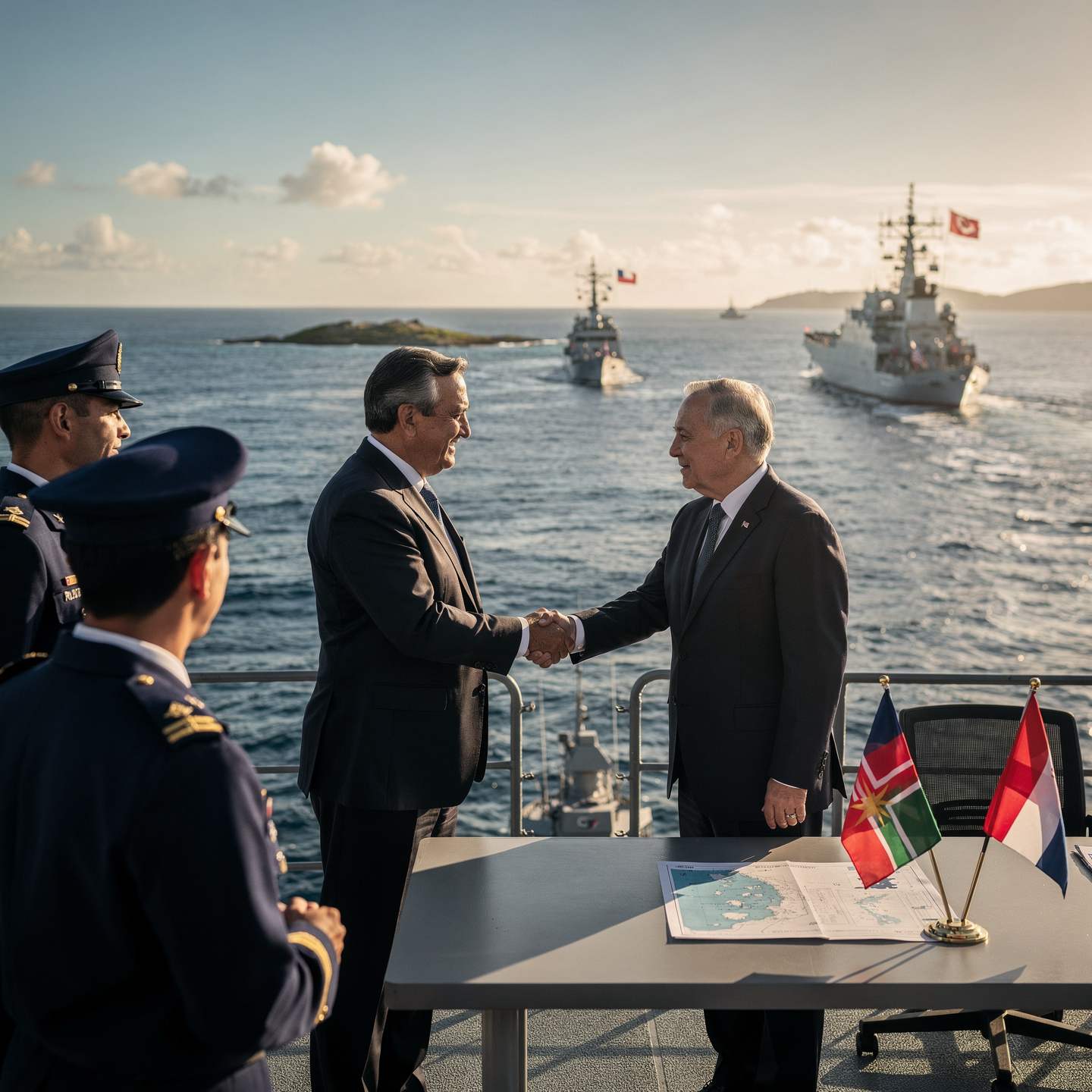
The Master’s in Maritime Territorial Dispute Resolution
This program provides you with the tools and specialized knowledge to navigate the complexities of maritime disputes. It delves into international law of the sea, diplomatic negotiations, and alternative dispute resolution (ADR) methods. You will learn to analyze and mediate disputes related to maritime boundaries, natural resources, and maritime security. This program prepares you for a career in international organizations, governments, private companies, and NGOs.
This program provides you with the tools and specialized knowledge to navigate the complexities of maritime disputes.
Differential Advantages
- Real-Case Analysis: Study historical and current maritime territorial disputes.
- Negotiation Simulations: Participate in practical exercises to develop your mediation and negotiation skills.
- International Experts: Learn from leading professors and professionals in the field of maritime law and conflict resolution.
- Multidisciplinary Approach: Integrate legal, political, economic, and social perspectives to understand the complexity of maritime disputes.
- Networking: Connect with professionals and students from around the world.
- Modality: Online
- Level: Masters
- Hours: 1600 H
- Start date: 25-08-2026
Availability: 1 in stock
Who is it aimed at?
- Lawyers specializing in maritime and border law seeking to deepen their knowledge of international law, jurisprudence, and negotiation tools in maritime territorial disputes.
- Diplomats and government officials involved in maritime border management and the resolution of international conflicts.
- Researchers and academics interested in the analysis of geopolitical challenges and the legal implications of maritime territorial disputes.
- Naval and Coast Guard officers responsible for the surveillance and protection of national maritime spaces.
- Consultants and experts in maritime security and risk management seeking to specialize in the resolution of territorial conflicts.
Flexibility of Study
Adapted for professionals: online format, 24/7 access to learning materials and personalized tutoring for learning at your own pace.
Objectives and skills

Designing intercultural mediation strategies:
Adapt communication to cultural differences, using clear language, active listening, and respect for the social norms and protocols of each culture.

Assessing the feasibility of maritime boundary agreements:
Analyze geographic, legal, and historical data to determine overlapping areas and potential equitable solutions, considering economic and security interests.

Analyze maritime geopolitical dynamics:
“Identify risks and opportunities in strategic maritime routes, considering state and non-state actors, and applying prospective analysis frameworks.”

Implement trilateral negotiation methodologies:
“Establish effective communication between the parties (buyer, seller, intermediary), identify common and divergent interests, and build mutually beneficial agreements through mediation and compromise.”
Managing communication in maritime crises:
“Establish a crisis center, assess the situation, communicate with authorities and those affected, and coordinate the emergency response while minimizing damage and reputational risks.”

Develop models for preventing ocean disputes:
Prioritize effective communication: Use the appropriate channel (VHF, acoustic/visual signals) to clarify intentions and anticipate maneuvers of other vessels, especially in areas of high traffic density or adverse weather conditions.
Study plan ā Modules
- International legal framework applicable to maritime disputes: UNCLOS, courts, and competent bodies
- Technical and geospatial analysis: delimitation of maritime zones, evaluation of cartographic and photogrammetric evidence
- Advanced mediation methodologies: interstate approaches, assisted negotiation, and facilitation in multilateral contexts
- Landmark cases and jurisprudence: detailed study of historical disputes and their resolutions
- Political and economic dynamics in maritime territorial conflicts: actors involved and underlying motivations
- Strategic crisis management and effective communication between conflicting parties
- Alternative dispute resolution (ADR) techniques: arbitration, conciliation, and mediation, applied to maritime contexts
- Integration of technical and Scientists in the mediation and data verification process
Practical mediation simulations: role-playing, negotiation of agreements, and drafting of binding documents
Post-agreement evaluation and monitoring: compliance mechanisms, international oversight, and resolution of emerging disputes
- Fundamentals of Maritime Geopolitics: History, Evolution, and Key Actors in the International Arena
- International Regulations Applicable to Maritime Territorial Disputes: UNCLOS, Montego Bay Convention, and Relevant Jurisprudence
- Maritime Geostrategy: Analysis of High-Tension Zones and Their Impact on Global Security
- Advanced Tools in the Assessment of Maritime Power: Naval Capacity, Port Infrastructure, and Control of Trade Routes
- Contemporary Theories of Negotiation in Multilateral Contexts: From Realism to Neoinstitutionalism
- Diplomatic Dynamics and Political Negotiation in Maritime Disputes: Tactics, Phases, and Techniques of International Pressure
- Paradigmatic Cases of International Maritime Dispute Resolution: Critical Analysis of Taiwan-China, the Falkland Islands, and the South China Sea
- Strategies of Mediation, Conciliation, and Arbitration: Procedures, Advantages, and Limitations in Maritime Conflict Scenarios
The Role of International Organizations and Specialized Tribunals: UN, NATO, Permanent Court of Arbitration, and International Court of Justice
Designing and Implementing Strategic Negotiation Plans: Risk Assessment, Stakeholder Management, and Building Lasting Agreements
- Legal Foundations of Maritime Dispute Resolution: Analysis of International Treaties, UN Conventions, and Regional Regulations
- Mediation Mechanisms: Conflict Diagnosis, Identification of Parties, and Establishment of Effective Communication Channels in Maritime Territorial Disputes
- Application of Advanced Negotiation Techniques: Integrative Negotiation, Multidimensional Analysis, and Interest Management in Highly Complex Scenarios
- Technological Tools for Conflict Resolution: Use of Geographic Information Systems (GIS), Digital Cartography, and Simulations in Maritime Boundary Delimitation
- Design and Execution of Maritime Arbitration Processes: Protocols, Selection of Tribunals, Presentation of Evidence, and Decision Criteria
- Cultural and Political Dynamics in Maritime Disputes: Strategies for Intercultural and Diplomatic Management in Multilateral Environments
- Risk Assessment and Management in Territorial Negotiations
- Studies of emblematic cases: in-depth analysis of historical and contemporary maritime territorial conflicts, with a focus on applied resolution methods
- Monitoring and compliance instruments: agreement monitoring, accountability mechanisms, and prevention of recurrence in disputes
- Development of advanced skills in strategic communication and leadership for mediators specializing in the international maritime field
Maritime: scenario analysis, crisis management, and impasse mitigation
- Fundamentals of the Law of the Sea: Key international conventions, especially the United Nations Convention on the Law of the Sea (UNCLOS), principles of maritime jurisdiction, legal regime of internal waters, territorial sea, contiguous zone, continental shelf, exclusive economic zone (EEZ), and high seas.
- Delimitation of maritime boundaries: Technical and legal criteria for the demarcation of maritime boundaries between coastal states; Application of the equidistant method and equitable solutions in territorial conflicts.
Forensic cartography applied to maritime disputes: Advanced techniques in cartographic analysis, georeferencing, interpretation of nautical and satellite charts, preparation of expert evidence for international litigation and arbitration.
Specialized hydrographic surveys: Methodologies for bathymetric surveys, analysis of submarine profiles, and geospatial determination of physical-environmental characteristics relevant to maritime delimitation and documentation before courts.
International marine resource litigation: Study of landmark cases in international courts (ICJ, ICTY, International Court of Arbitration), filing of claims, defenses and counterclaims, mechanisms for the peaceful resolution of disputes, mediation, and arbitration.
Sovereign rights and jurisdiction over natural resources: Legal approach to the exploitation, conservation, and distribution of Fisheries resources, hydrocarbons, minerals, and marine biodiversity within exclusive economic zones and continental shelves.
Impact of cartography and geospatial technology on maritime sovereignty: Use of Geographic Information Systems (GIS), multispectral satellite imagery, and LiDAR to strengthen territorial claims and verify maritime boundaries on-site.
Legal and technical instrumentation in international negotiations: Preparation of technical proposals, expert reports, negotiation of bilateral or multilateral treaties, and an interdisciplinary approach combining law, geography, and oceanography.
Analysis of current conflicts and future prospects: Detailed study of current maritime conflicts globally, strategies for resolution, prevention of escalation, and development of national capacities in maritime litigation and diplomacy.
Ethics and responsibility in professional practice: Code of conduct for experts and lawyers specializing in maritime disputes, transparent handling of information, and a commitment to international justice and respect for the sovereignty of nations.
- Foundations and nature of arbitration in international maritime law: legal framework and guiding principles
- Structure and characteristics of maritime arbitration systems: institutional and ad hoc modalities
- Applicable international regulations and treaties: New York Convention 1958, UNCLOS, and their impact on arbitral enforcement
- Arbitral procedures: essential phases from the filing of the claim to the issuance of the award
- Selection and role of arbitrators specializing in maritime disputes: technical and legal criteria
- Conciliation and mediation mechanisms within the maritime context: complementarity with arbitration
- Critical analysis of relevant case law: landmark cases and their doctrinal influence on the resolution of maritime territorial disputes
- Precautionary and provisional measures in maritime arbitration proceedings: strategies for the protection of interests in
- Dispute
- Implications of the enforcement and international recognition of arbitral awards: legal obstacles and effective practices
- Practical effectiveness of maritime arbitration compared to other dispute resolution methods: negotiation, litigation, and international tribunals
- Current challenges and emerging trends in maritime dispute resolution through arbitration
- Case studies and simulations for the advanced application of arbitral techniques in maritime territorial disputes
- Professional skills developed: strategic skills for the management and direction of international arbitrations
- Fundamentals of mediation in maritime disputes: principles, characteristics, and scope of application in international maritime law
- Advanced models of maritime arbitration: key regulations, international rules, and institutional mechanisms (LCIA, ICC, UNCITRAL)
- Theory and practice of collaborative negotiation in maritime territorial disputes: win-win strategies and management of conflicting interests
- Technological and digital tools in alternative dispute resolution: use of online platforms for mediation and arbitration in international maritime contexts
- The role of the neutral third party: selection, impartiality, professional ethics, and competencies in maritime mediation and arbitration
- Specific procedural procedures in maritime disputes: stages, presentation of evidence, and expert analysis in maritime territorial disputes
- Application of relevant international treaties and conventions (United Nations Convention on the Law of the Sea – UNCLOS, Geneva Convention, among others) in alternative dispute resolution methods
Comparative analysis of international and national jurisdictions: impact on the choice of dispute resolution mechanism in maritime matters
Integration of alternative dispute resolution (ADR) methodologies with diplomacy and international cooperation in maritime border management
Landmark cases and advanced jurisprudence in mediation and arbitration of maritime territorial disputes: interpretation and legal consequences
Design and implementation of specific contractual clauses for the prevention and resolution of disputes in international maritime contracts
Risk management and solutions for complex disputes related to sovereignty, maritime delimitation, and marine natural resources
Environmental and social impact on the resolution of maritime territorial disputes: incorporation of sustainability principles in mediation and arbitration processes
Integrated dispute resolution mechanisms in maritime matters: conciliation, mediation, arbitration, and tribunals Specialized training:
Development and application of communication and crisis management strategies in the negotiation and resolution of highly complex maritime disputes.
Critical evaluation and preparation of technical and legal reports to support resolutions in maritime mediation and arbitration processes.
Advanced training in skills for maritime mediators and arbitrators: effective communication techniques, emotional management, and intercultural conflict resolution.
Emerging regulatory framework and future trends in alternative methods for the resolution of international maritime disputes.
- International legal framework on maritime disputes: analysis of key treaties such as the United Nations Convention on the Law of the Sea (UNCLOS) and their practical application in territorial disputes
- Identification and assessment of actors involved: coastal states, international organizations, and non-state actors in the conflict dynamics
- Advanced maritime mediation techniques: protocols, phases, and essential tools for facilitating agreements between conflicting parties
- Integrative and distributive negotiation strategies applied to maritime disputes: preparation, influence tactics, and concession management
- Forensic analysis of landmark historical cases, such as the South China Sea dispute and the Palmas Reef case, to extract lessons and best practices
- Use of geospatial technology and mapping in conflict resolution: GIS systems, maritime boundary delimitation, and presentation of technical evidence in international forums
- Psychological and cultural dynamics in international mediation: managing perceptions, building trust, and constructing consensus in multicultural contexts
- Developing contingency plans for crisis management in maritime disputes: communication protocols, escalation, and de-escalation of tensions
- Arbitration models and alternative dispute resolution (ADR) mechanisms specializing in maritime matters
- The role of multilateral organizations, success stories, and challenges in implementing resolutions; case studies such as the International Court of Justice and the Commission on the Limits of the Continental Shelf
- Simulated practice and role-playing in complex negotiation and mediation scenarios: developing critical thinking skills and decision-making under pressure
- Post-resolution evaluation and follow-up: preparing technical reports and recommendations for the sustained implementation of agreements
- Fundamentals of Geoanalytics Applied to Oceanography and Maritime Cartography: Collection, Processing, and Analysis of Geospatial Data
- Emerging Technologies in Maritime Monitoring: SAR Satellites, Drones, and Remote Sensors in Territorial Surveillance and Maritime Zone Delimitation
- Big Data and its Integration into Geographic Information Systems (GIS) for Maritime Dispute Management and Resolution
- Predictive Modeling and Simulation of Territorial Dispute Scenarios Using Artificial Intelligence and Machine Learning
- Collaborative Platforms and Blockchain for Transparency, Traceability, and Security in International Maritime Dispute Negotiation and Arbitration
- Impact of Technology on Maritime Delimitation: Analysis of Bathymetric Data, Seismic and Topographic Profiles in Technical Expert Reports
- Advanced Use of GIS for the Preparation of Legal Cartography, Presentation of Evidence, and Development of Technical Reports in Maritime Litigation
- International regulations and technological protocols for the collection and validation of digital evidence in maritime courts
- Case studies and analysis of recent territorial disputes, highlighting the application of geoanalytical technologies and digital tools in their resolution
- Ethical and cybersecurity challenges in the management of sensitive geospatial data related to maritime territorial conflicts
International
- International Legal Framework of the Law of the Sea: United Nations Convention on the Law of the Sea (UNCLOS), Fundamental Principles and Application
- Maritime Delimitation: Technical and Legal Methods for Determining Territorial Boundaries and Exclusive Economic Zones (EEZs)
- Applied Forensic Cartography: Advanced Techniques for the Collection, Analysis, and Presentation of Cartographic Evidence in Maritime Disputes
- Geospatialization and GIS: Use of Geographic Information Systems for Territorial Management and Visualization in Litigation
- Alternative Dispute Resolution: Mediation, Arbitration, and Neutral Panels in International Maritime Disputes
- International Litigation: Proceedings Before International Tribunals, the International Court of Justice, and Specialized Tribunals for the Law of the Sea
- Analysis of Landmark Cases: Detailed Study of Precedent Maritime Territorial Disputes and Their Legal Resolutions
- Opinions Expert and technical reports: preparation, validation, and strategic use in conflict resolution processes
Environmental impact and sustainable development: incorporation of environmental criteria in the delimitation and management of maritime spaces
State powers in contiguous zones and territorial sea: sovereign rights and legal obligations
Technological instruments for maritime surveillance and control: remote sensors, drones, and satellites applied to maritime border monitoring
Regional and bilateral regulations: comparative analysis and their influence on boundary negotiations
Maritime negotiation and diplomacy strategies: legal and political tactics for the prevention and peaceful resolution of disputes
Interdisciplinary integration: cooperation among experts in law, geography, oceanography, and engineering to strengthen legal cases
Development of professional technical and legal reports for presentation before international conflict resolution bodies
- Conceptual and Methodological Framework of the Final Project: Objectives, Scope, and Evaluation Criteria Applied to Complex Maritime Territorial Conflicts
- Interdisciplinary Integration: Combining International Law of the Sea, Geopolitics, Environmental Sciences, and Forensic Technologies for Holistic Analysis
- Comprehensive Analysis of Emblematic Cases: Delimitation of Maritime Zones, Maritime Sovereignty, and the Management of Transboundary Natural Resources
- Advanced Law of the Sea: UNCLOS, Principles of Equity, Rules of Delimitation, and International Dispute Settlement Mechanisms
- Application of Forensic Technologies: Remote Sensing, Digital Mapping, Satellite Analysis, and Geographic Information Systems (GIS) for Irrefutable Evidence in Disputes
- Strategic Negotiation Design: Integrative Negotiation Models, Mediation Tactics, and Arbitration in International Maritime Conflicts
- Research Methodologies Applied: Collection, validation, and analysis of empirical data to support resolution proposals
Advanced simulation of resolution processes: role-playing, multinational negotiation scenarios, and drafting of binding agreements
Critical aspects of comparative law and relevant jurisprudence: study of international rulings, precedents, and their influence on decision-making
Drafting and presentation of technical and legal reports: structure, argumentation, and use of multidisciplinary evidence to defend proposals
Integration and feedback workshop: peer-to-peer review, expert advice, and refinement of the final project
Ethical practices and professional responsibility: codes of conduct, transparency in conflict management, and commitment to regional sustainability
Comprehensive final evaluation: oral defense, written defense, and validation of the project before a multidisciplinary academic panel
Career prospects
“`html
- Maritime Territorial Conflict Analyst: Research, evaluation, and proposal of solutions in border and resource disputes.
- International Mediator/Negotiator: Facilitation of dialogue between conflicting parties, search for agreements, and peaceful resolution of controversies.
- Consultant in Maritime and Territorial Law: Advising governments, companies, and organizations on border delimitation, resource exploitation, and maritime security.
- International Organization Officer: Participation in the development of policies and programs related to ocean management and maritime conflict resolution (UN, IMO, etc.).
- Academic Researcher: Development of studies on maritime territorial conflicts, analysis of causes and consequences, and proposal of prevention and resolution strategies.
- Cooperation Project Manager Cross-border: Design and implementation of initiatives to promote collaboration and sustainable development in shared maritime areas.
Maritime Security Specialist: Risk assessment, contingency plan design, and participation in response operations to threats in the maritime environment.
Maritime Journalist: News coverage of territorial disputes, maritime security, and ocean policies.
“`
Entry requirements

Academic/professional profile:
Bachelorās degree in Nautical Science/Maritime Transport, Naval/Marine Engineering or a related qualification; or proven professional experience on the bridge/in operations.

Language proficiency:
Functional Maritime English (SMCP) recommended for simulations and technical materials.

Documentation:
Updated CV, copy of qualification or seamanās book, national ID/passport, motivation letter.

Technical requirements (for online):
Device with camera/microphone, stable internet connection, monitor ā„ 24ā recommended for ECDIS/Radar-ARPA.
Admissions process and dates

Online
application
(form + documents).

Academic review and interview
Admissions decision

Admissions decision
(+ scholarship offer if applicable).

Place reservation
(deposit) and enrolment.

Induction
(access to the virtual campus, calendars, simulator guides).
Scholarships and financial support
- Strategic Analysis: Master the tools for the geopolitical and legal assessment of maritime disputes.
- Advanced Negotiation: Develop mediation and negotiation skills for the peaceful resolution of conflicts.
- International Maritime Law: Delve into current legislation and its application in the delimitation of maritime boundaries.
- Case Studies: Analyze real-world case studies and participate in conflict resolution simulations.
- Interdisciplinary Perspectives: Integrate knowledge of geography, history, economics, and political science for a comprehensive understanding.
Testimonials
Applying the mediation and negotiation tools learned in the Master’s program was crucial in resolving a complex fishing conflict between two coastal communities. We reached an agreement that not only demarcated fishing zones but also established a joint monitoring system and a sustainable development fund, guaranteeing peaceful coexistence and long-term prosperity for both parties.
Completing the Master’s in Diplomacy & International Maritime Relations provided me with the necessary theoretical and practical tools to understand the complexities of maritime geopolitics. Thanks to the program’s academic rigor and practical approach, I secured a position as an analyst at a leading international organization dedicated to maritime security, where I contribute directly to conflict resolution and international cooperation in the maritime sphere.
I applied the negotiation and mediation skills I learned during my Master’s program to resolve a cross-border fishing conflict in the Mediterranean. I achieved a mutually beneficial agreement for the parties involved, establishing sustainable fishing quotas and joint monitoring mechanisms, which prevented an escalation of the conflict and ensured the conservation of marine resources.
I applied the transformative mediation techniques I learned in my Master’s program to resolve a fishing conflict between two coastal communities. We reached an agreement that not only defined the fishing zones but also fostered cooperation in the sustainable management of resources, generating economic and environmental benefits for both parties.

Frequently asked questions
Disputes relating to maritime boundaries, marine resources, navigation and other issues of the law of the sea.
Yes. The itinerary includes ECDIS/Radar-ARPA/BRM with harbor, ocean, fog, storm, and SAR scenarios.
Online with live sessions; hybrid option for simulator/practical placements through agreements.
It addresses both international disputes and local/regional conflicts.
Recommended functional SMCP. We offer support materials for standard phraseology.
Yes, with a relevant degree or experience in maritime/port operations. The admissions interview will confirm suitability.
Optional (3ā6 months) through Companies & Collaborations and the Alumni Network.
Simulator practice (rubrics), defeat plans, SOPs, checklists, micro-tests and applied TFM.
A degree from Navalis Magna University + operational portfolio (tracks, SOPs, reports and KPIs) useful for audits and employment.
- Conceptual and Methodological Framework of the Final Project: Objectives, Scope, and Evaluation Criteria Applied to Complex Maritime Territorial Conflicts
- Interdisciplinary Integration: Combining International Law of the Sea, Geopolitics, Environmental Sciences, and Forensic Technologies for Holistic Analysis
- Comprehensive Analysis of Emblematic Cases: Delimitation of Maritime Zones, Maritime Sovereignty, and the Management of Transboundary Natural Resources
- Advanced Law of the Sea: UNCLOS, Principles of Equity, Rules of Delimitation, and International Dispute Settlement Mechanisms
- Application of Forensic Technologies: Remote Sensing, Digital Mapping, Satellite Analysis, and Geographic Information Systems (GIS) for Irrefutable Evidence in Disputes
- Strategic Negotiation Design: Integrative Negotiation Models, Mediation Tactics, and Arbitration in International Maritime Conflicts
- Research Methodologies Applied: Collection, validation, and analysis of empirical data to support resolution proposals
Advanced simulation of resolution processes: role-playing, multinational negotiation scenarios, and drafting of binding agreements
Critical aspects of comparative law and relevant jurisprudence: study of international rulings, precedents, and their influence on decision-making
Drafting and presentation of technical and legal reports: structure, argumentation, and use of multidisciplinary evidence to defend proposals
Integration and feedback workshop: peer-to-peer review, expert advice, and refinement of the final project
Ethical practices and professional responsibility: codes of conduct, transparency in conflict management, and commitment to regional sustainability
Comprehensive final evaluation: oral defense, written defense, and validation of the project before a multidisciplinary academic panel
Request information
Complete the Application Form.
Attach your CV/degree certificate (if you have it to hand).
Indicate your preferred cohort (January/May/September) and whether you would like the hybrid option with simulator sessions.
An academic advisor will contact you within 24ā48 hours to guide you through the admission process, scholarships, and compatibility with your professional schedule.
Faculty
Eng. TomƔs Riera
Full Professor
Eng. TomƔs Riera
Full Professor
Eng. SofĆa Marquina
Full Professor
Eng. SofĆa Marquina
Full Professor
Eng. Javier BaƱuls
Full Professor
Eng. Javier BaƱuls
Full Professor
Dr. Nuria Llobregat
Full Professor
Dr. Nuria Llobregat
Full Professor
Dr. Pau Ferrer
Full Professor
Dr. Pau Ferrer
Full Professor
Cap. Javier Abaroa (MCA)
Full Professor
Cap. Javier Abaroa (MCA)
Full Professor