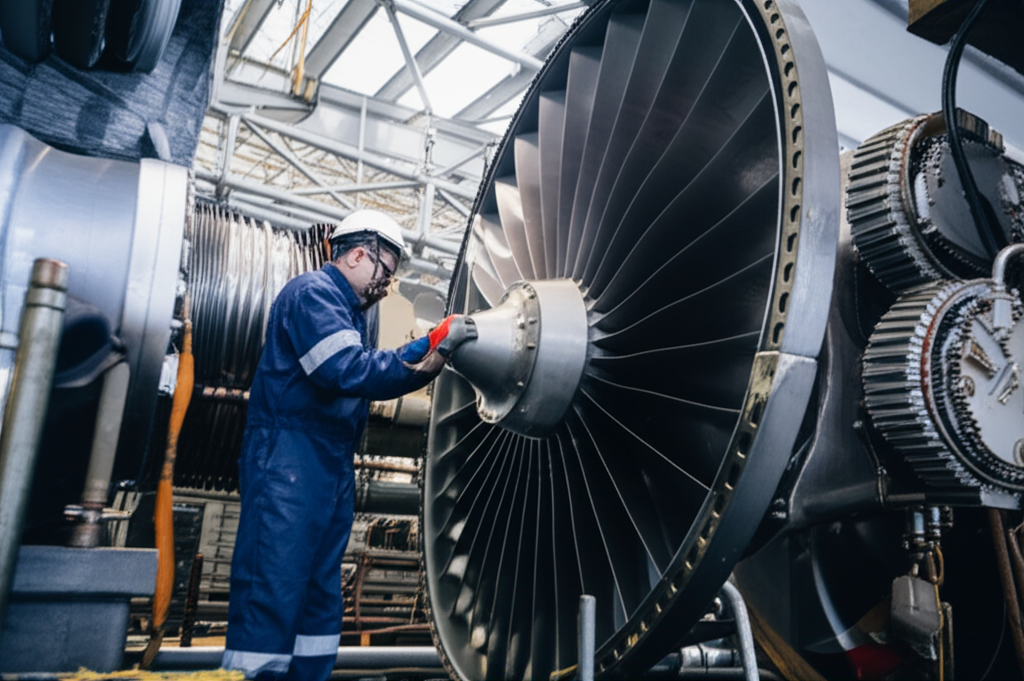
Diploma in Propulsion and Turbine Engineering

Why this certificate program?

The Diploma in Propulsion and Turbine Engineering

This program provides you with a comprehensive understanding of modern propulsion systems and turbines, from theoretical foundations to practical applications. Master the design, analysis, and maintenance of gas and steam turbines, as well as propulsion systems used in various industries. This program will equip you with the skills necessary to optimize energy efficiency, reduce costs, and ensure the reliability of these critical systems.

Key Benefits

  • Advanced Analysis: Learn to perform thermodynamic and fluid dynamic analyses of turbines and propulsion systems.
  • Design and Optimization: Develop skills to design and optimize turbine and propulsion system components.
  • Predictive Maintenance: Implement predictive maintenance strategies to extend equipment lifespan.
  • Energy Efficiency: Identify opportunities to improve energy efficiency and reduce emissions.
  • Industrial Applications: Explore the applications of turbines and propulsion systems in power generation, aviation, and the marine industry.
Diplomado

Diploma in Propulsion and Turbine Engineering

Availability: 1 in stock

Who is it aimed at?

  • Mechanical, naval, and aeronautical engineers seeking to specialize in the design, operation, and maintenance of advanced propulsion systems.
  • Energy industry professionals interested in the application of gas and steam turbines in power generation and cogeneration.
  • Maintenance technicians and supervisors requiring in-depth knowledge of failure diagnosis and optimization of turbomachinery performance.
  • Engineering students wishing to acquire theoretical and practical knowledge in thermodynamics, fluid mechanics, and heat transfer applied to propulsion.
  • Consultants and technical advisors needing to expand their expertise in the evaluation and selection of propulsion technologies for Various applications.

Study Flexibility
 Adapted for active professionals: live online classes, 24/7 access to learning materials, and personalized follow-up by industry experts.

Diplomado

Objectives and competencies

Design and optimize innovative propulsion systems:

Integrate energy efficiency principles and advanced materials to maximize performance and minimize environmental impact.

Evaluate and diagnose turbine failures to ensure their operability:

“Using predictive diagnostic tools and vibration analysis to minimize downtime and optimize performance.”

Manage propulsion and turbine projects with efficiency and sustainability criteria:

“Optimize the operation of the propulsion system and turbines considering load variables, environmental conditions and energy consumption, minimizing emissions and maximizing the useful life of the equipment.”

Lead engineering teams in the development and maintenance of propulsion systems and turbines:

“Manage the planning, execution and control of projects, optimizing resources and guaranteeing the safety, quality and efficiency of the systems.”

Implementing energy performance optimization strategies in turbine systems:

“Analyze operational data, adjust control parameters, and schedule predictive maintenance to maximize efficiency and minimize consumption.”

Apply advanced methodologies in the simulation and analysis of turbomachinery components:

“Using specialized software (ANSYS, CFX) and optimization techniques to improve the efficiency and durability of blades, rotors, and stators under various operating conditions.”

Curriculum - Modules

  1. Principles of Mechanical and Thermal Propulsion
  2. Classification of Propulsion Systems (Naval, Aeronautical, Industrial)
  3. Energy Conversion and Overall Efficiency
  4. Introduction to Turbomachinery
  5. Operating Parameters and Characteristic Curves
  6. Applicable International Standards and Regulations
  1. Advanced Review of Applied Thermodynamics
  2. Brayton Cycle (Gas Turbines)
  3. Rankine Cycle (Steam Turbines)
  4. Combined Cycles and Cogeneration
  5. Exergetic Analysis and Energy Losses
  6. Cycle Optimization and Thermal Efficiency
  1. Compressible and Incompressible Flow
  2. Aerodynamic Profile of Blades
  3. Friction and Turbulence Losses
  4. Design of Nozzles and Diffusers
  5. Flow Stability and Cavitation
  6. Basic CFD Modeling Applied to Turbines
  1. Rotor and stator design
  2. Shafts, bearings, and seals
  3. Internal cooling systems
  4. Turbine integration into propulsion systems
  5. Fatigue, vibrations, and mechanical stresses
  6. Design criteria for high reliability
  1. Metallic Materials and Superalloys
  2. Thermal and Anti-corrosion Coatings
  3. Combustion Phenomena in Turbines
  4. Combustion Chambers and Thermal Control
  5. Emissions, Environmental Regulations and Control
  6. New Fuels and Clean Technologies
  1. Naval propulsion systems with turbines
  2. Hybrid and electric propulsion
  3. Integration with auxiliary systems
  4. Control and automation systems
  5. Operation under variable load conditions
  6. Real-world industrial applications
  1. Preventive Maintenance Strategies
  2. Predictive Maintenance and Condition Monitoring
  3. Vibration Analysis
  4. Diagnosis of Common Failures
  5. Spare Parts Management and Technical Shutdowns
  6. Operational Safety and Risk Management

Career opportunities

  • Design and Development Engineer: Participation in the creation and improvement of propulsion systems and turbines.
  • Test and Validation Engineer: Execution of tests to ensure the performance and safety of equipment.
  • Maintenance and Repair Engineer: Supervision and execution of preventive and corrective maintenance tasks on turbines and propulsion systems.
  • Project Engineer: Management and coordination of projects related to the installation, improvement, or replacement of turbines and propulsion systems.
  • Technical Consultant: Advising companies on the selection, optimization, and maintenance of propulsion systems and turbines.
  • Researcher and Developer: Participation in research projects to improve the efficiency and sustainability of turbines and propulsion systems.
  • Technical Sales Engineer: Marketing products and services related to turbines and propulsion systems, providing technical support to clients.
  • Lecturer and Instructor: Delivering courses and training on topics related to propulsion and turbine engineering.

“`

Admission requirements

Academic/professional profile:

Degree/Bachelor's degree in Nautical Science/Maritime Transport, Naval/Marine Engineering, or a related field; or proven professional experience in bridge/operations.

Language proficiency:

Recommended functional maritime English (SMCP) for simulations and technical materials.

Documentation:

Updated resume, copy of degree or seaman's book, ID card/passport, letter of motivation.

Technical requirements (for online):

Equipment with camera/microphone, stable connection, ≥ 24” monitor recommended for ECDIS/Radar-ARPA.

Admission process and dates

1. Online
application

(form + documents).

2. Academic review and interview

(profile/objectives/schedule compatibility).

3. Admission decision

(+ scholarship proposal if applicable).

4. Reservation of place

(deposit) and registration.

5. Induction

(access to campus, calendars, simulator guides).

Scholarships and grants

  • Master Design: Delve into propulsion systems engineering and the analysis of advanced turbines.
  • Optimize Performance: Learn to improve energy efficiency and reduce emissions of propulsion systems.
  • Simulation and Modeling: Use specialized software for the design, analysis, and optimization of turbines and propulsion systems.
  • Predictive Maintenance: Implement strategies for the diagnosis and maintenance of turbines, ensuring their safe and efficient operation.
  • Apply Your Knowledge: Develop a final project applying the tools and concepts learned in a Real-world case study.
Boost your career and become an expert in Propulsion and Turbine Engineering.

Testimonials

Frequently asked questions

Yes. The itinerary includes ECDIS/Radar-ARPA/BRM with harbor, ocean, fog, storm, and SAR scenarios.

Online with live sessions; hybrid option for simulator/practical placements through agreements.

Recommended functional SMCP. We offer support materials for standard phraseology.

Yes, with a relevant degree or experience in maritime/port operations. The admissions interview will confirm suitability.

Optional (3–6 months) through Companies & Collaborations and the Alumni Network.

Simulator practice (rubrics), defeat plans, SOPs, checklists, micro-tests and applied TFM.

A degree from Navalis Magna University + operational portfolio (tracks, SOPs, reports and KPIs) useful for audits and employment.

The student will develop an applied technical project, based on a real or simulated case, where they must:

Analyze an existing propulsion system or turbine.

Evaluate its energy performance.

Detect inefficiencies or failures.

Propose technical and economic improvements.

Justify decisions with calculations and simulations.

Examples of projects:

Optimization of a naval gas turbine.

Combined cycle analysis for energy generation.

Predictive maintenance plan for an industrial turbine.

Energy efficiency improvement in a propulsion system.

Request information

  1. Complete the Application Form.

  2. Attach your CV/degree certificate (if you have it to hand).

  3. Indicate your preferred cohort (January/May/September) and whether you would like the hybrid option with simulator sessions.

    An academic advisor will contact you within 24–48 hours to guide you through the admission process, scholarships, and compatibility with your professional schedule.

Please enable JavaScript in your browser to complete this form.
Click or drag a file to this area to upload.

Faculty

0
    0
    Tu carrito
    Tu carrito esta vacíoRegresar a la tienda
    Scroll to Top


