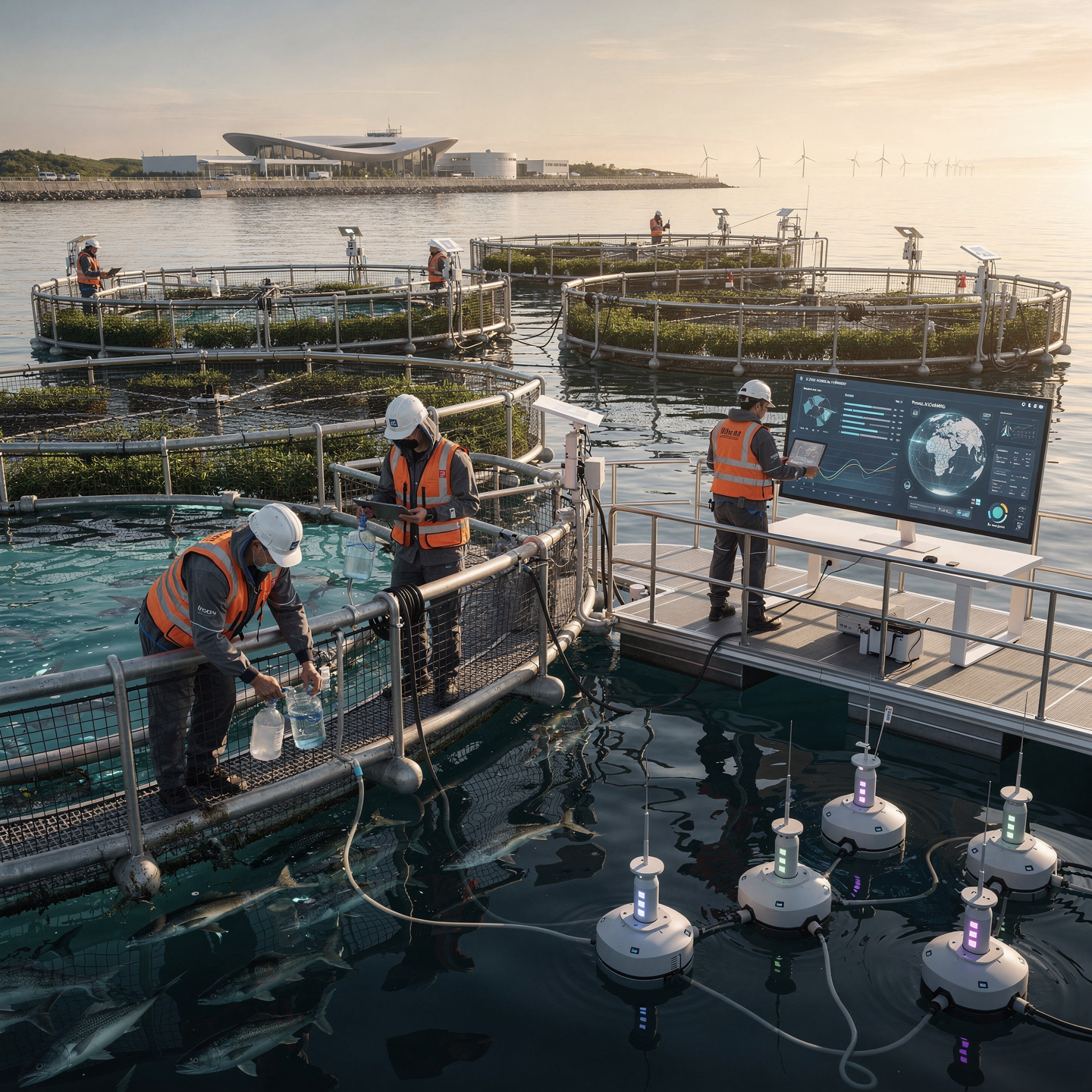
Master’s Degree in Sustainable Aquaculture and Biotechnology
Why this master’s programme?
The Master in Sustainable Aquaculture and Biotechnology
This program prepares you to lead the future of aquaculture production by integrating environmentally friendly practices and innovative biotechnological solutions. Learn to optimize production, minimize environmental impact, and develop new products and processes in a constantly growing sector. This program provides you with a solid scientific foundation combined with management and entrepreneurial skills to excel in the job market.
Differential Advantages
- Comprehensive Approach: Master everything from the biology and physiology of aquatic species to resource management and legislation.
- Applied Biotechnology: Learn to use genomic, proteomic, and microbiological tools to improve the health, nutrition, and growth of crops.
- Sustainability: Acquire the knowledge to implement circular aquaculture systems, reduce antibiotic use, and minimize the carbon footprint.
- Professional Internships: Participate in research projects and collaborate with leading companies in the sector.
- Networking: Connect with experts, researchers, and professionals in the aquaculture industry at the national and international levels.
- Modality: Online
- Level: Masters
- Hours: 1600 H
- Start date: 29-09-2026
Availability: 1 in stock
Who is it aimed at?
- Marine and environmental biologists seeking to specialize in responsible aquaculture production and cutting-edge techniques.
- Agricultural and fisheries engineers wishing to optimize the efficiency and sustainability of aquatic farming systems.
- Aquaculture professionals aspiring to lead innovation and development projects in applied biotechnology.
- Entrepreneurs and investors interested in new business opportunities in the aquaculture of the future and the blue economy.
- Graduates in related sciences seeking comprehensive training to boost their careers in a constantly growing sector.
Flexibility and a practical approach:
Master’s program designed to fit your life professional and personal: online methodology, real practical cases and expert teachers from the sector.
Objectives and skills

Develop and implement innovative biotechnological strategies for sustainable aquaculture:
“Designing optimized diets with alternative ingredients, probiotics and prebiotics, monitoring growth and health parameters to minimize environmental impact and maximize productive efficiency.”

Optimize aquaculture production through the application of sustainable practices and efficient resource management:
Implement recirculating aquaculture systems (RAS) and biofloc, minimizing water consumption and waste generation, through constant monitoring of key parameters such as dissolved oxygen, pH and temperature, adjusting feeding and stocking density to maximize productivity and reduce environmental impact.

Design and manage aquaculture systems that minimize environmental impact and promote the health of aquatic ecosystems:
Implement waste and effluent management protocols, optimizing the use of resources (water, food, energy) and monitoring water quality to prevent pollution and ensure long-term sustainability.

Leading research and development projects in aquaculture, promoting innovation and knowledge transfer to the sector:
“Define technological roadmaps, coordinate multidisciplinary teams, and seek funding for R&D&I in aquaculture.”

Evaluate and mitigate health risks in aquaculture, ensuring biosecurity and product quality:
Implement epidemiological surveillance and biosecurity programs, integrated disease management protocols, and rapid diagnostic techniques to minimize outbreaks and ensure food safety.

To market high value-added aquaculture products, complying with the quality and traceability standards required by the market:
“Implement certification systems (ASC, BAP) and differentiated marketing strategies to position premium products.”
Study plan – Modules
- Fundamentals and principles of sustainable aquaculture: definition, scope, and ecological criteria
- Emerging technologies in aquaculture: smart sensors, IoT, and real-time environmental monitoring systems
- Biofloc and recirculating aquaculture systems (RAS): design, operation, and environmental and economic benefits
- Application of biotechnology in aquaculture: genetic manipulation, immunization, and development of biofertilizers for aquatic crops
- Optimization of automated feeding systems: formulation of sustainable diets and strategies to minimize waste
- Integration of renewable energies in aquaculture facilities: solar, wind, and biomass for carbon footprint reduction
- Predictive models and big data for integrated aquaculture farm management and disease prevention
- Implementation of bioremediation and waste management: technologies for Recycling and valorization of aquaculture by-products
International standards and certifications applicable to sustainable aquaculture and clean technologies
Case studies and impact analysis: life cycle assessment, circular economy, and future trends in technological aquaculture
- Fundamentals of molecular biotechnology applied to aquaculture: recombinant DNA techniques, CRISPR-Cas9 gene editing, and their impact on the genetic improvement of aquaculture species
- Optimization of culture systems through bioengineering: use of bioreactors, recirculating aquaculture systems (RAS), and real-time monitoring technologies to improve water quality and organism health
- Application of genomics and transcriptomics in the selection of breeds resistant to diseases and adverse environmental conditions
- Development of vaccines and biological therapies for the efficient and sustainable control of pathogens in aquaculture, including recombinant vaccines and microbial biocontrol agents
- Implementation of omics technologies (proteomics, metabolomics) to assess welfare and nutritional performance in farmed species
- Production of biofloc and probiotics: Design and application of beneficial microbial communities to improve the immune system and feed efficiency in aquaculture.
Engineering of biosensors and intelligent systems for the early detection of contaminants, toxins, and diseases in controlled aquatic environments.
Environmental sustainability assessment through life cycle assessment (LCA) and ecosystem modeling to minimize the impact of aquaculture practices on the natural environment.
Integration of biotechnologies in the circular economy of aquaculture: valorization of waste, biogas production, and derived resources for self-sufficient systems.
Regulation, biosafety, and ethics in the application of advanced biotechnologies in aquaculture: international regulations, safe handling protocols, and socio-environmental considerations.
- Advanced Foundations of Bioengineering Applied to Aquaculture Systems: Molecular Basis, Genetic Engineering, and Cell Culture
- Emerging Technologies in Aquaculture: Use of IoT Sensors, Automated Monitoring Systems, and Environmental Control for Aquatic Habitat Optimization
- Design and Operation of Bioreactors for the Mass Production of Aquatic Organisms and Derived Biotechnological Products
- Construction of Recirculating Aquaculture Systems (RAS): Principles of Biological Filtration, Nitrogen Management, and Efficient Oxygenation
- Integration of Renewable Energies and Clean Technologies to Minimize Environmental Impact in Large-Scale Aquaculture Operations
- Applications of Gene Editing (CRISPR-Cas9) in the Improvement of Aquatic Species: Increased Resistance, Growth, and Nutritional Quality
- Computational Models and Simulation to Optimize Production and Predict Risks in Systems Sustainable Aquaculture Practices
- Bioprocesses for the production of biofloc and beneficial microbiota, promoting health and productive efficiency in controlled environments
- Advanced strategies for disease control through biosecurity, innovative vaccines, and the rational use of antibiotics
- Environmental impact studies and protocols for sustainability certification based on biotechnological and environmental indicators
- Design and architecture of RAS (Recirculating Aquaculture Systems): fundamental principles, key components, module integration, and selection of advanced materials for spatial and functional optimization.
- Automation and advanced control: implementation of smart sensors for real-time monitoring of physicochemical parameters (pH, dissolved oxygen, temperature, ammonia), adaptive control algorithms, and SCADA systems for remote and predictive management.
- Energy efficiency strategies: evaluation of emerging technologies in pumps, aeration systems, low-consumption LED lighting, and the use of renewable energies applied in RAS and aquaponic plants to minimize the energy footprint.
- Comprehensive biosecurity: prevention protocols, early detection of pathogens, management of biological and chemical waste, and hygienic-sanitary design of facilities to avoid health risks and promote animal and plant health.
- Aquaponic integration strategies: synergies between hydroponic cultivation and aquatic production, optimization Nutrient recycling, biological balancing, and efficient production cycles to maximize sustainability and profitability.
Life Cycle Assessment (LCA) applied to RAS and aquaponic systems: methodologies to quantify environmental impacts from construction, operation, and maintenance to final disposal, identifying opportunities to reduce the ecological footprint.
Computational modeling and simulation: use of specialized software for hydraulic design, computational fluid dynamics (CFD), water quality modeling, and optimization of critical operating parameters.
Predictive maintenance and operational cycle management: failure analysis, condition-based maintenance scheduling, and application of IoT technologies to ensure operational continuity and minimize downtime.
International standards and certifications in sustainable aquaculture: review of ISO standards, FAO recommendations, and regulatory frameworks to meet environmental, social, and final product quality requirements.
Advanced case studies and applied projects: detailed analysis of commercial and pilot facilities, implementation of improvements Technological aspects and critical analysis of results for technology transfer and scalability.
- Fundamentals and principles of integrated management in multifunctional aquaculture systems: definition, objectives, and environmental benefits
- Design and optimization of integrated multitrophic systems (IMTA): species selection, ecological compatibility, and maximization of resource use
- Population dynamics and demography of aquatic crops: mathematical models applied to sustainable production
- Feeding and nutrition strategies based on nutrimics and biotechnology to optimize the growth and health of farmed species
- Water quality control and management: physicochemical and biological parameters and their real-time monitoring using advanced sensors
- Application of bioremediation techniques and biofilters for contaminant mitigation and nutrient recycling in aquaculture systems
- Biosecurity systems: prevention, control, and Eradication of emerging diseases in multifunctional aquatic environments
Implementation of health management plans and epidemiological monitoring supported by molecular biotechnology for the early diagnosis of pathogens
Risk assessment and biosecurity in the face of biological, chemical, and physical threats in integrated aquaculture
Integration of emerging technologies: use of artificial intelligence, drones, and Big Data in the management and optimization of aquaculture systems
Computational modeling and simulation for the design of adaptive strategies that guarantee ecosystem resilience and productive sustainability
International regulations and certifications for sustainable production: standards, compliance, and commercial benefits
Case studies and analysis of successful multifunctional systems, identification of bottlenecks, and innovative proposals for continuous improvement
Integrated solid waste management and Liquids generated in aquaculture units, applying principles of circular economy and reduction of environmental impacts.
Development of sustainability and environmental performance indicators for strategic decision-making in multifunctional aquaculture.
- Fundamentals of Technological Innovation in Aquaculture: Analysis of Global Trends and Their Impact on Environmental and Productive Sustainability
- Advanced Design of Aquaculture Systems: Integration of Recirculating Aquaculture Systems (RAS), Biofloc, and Low-Energy Technologies
- Applied Bioengineering: Genetic Manipulation, Reproductive Improvement, and Molecular Biotechnology in Aquatic Species
- Implementation of Sensors and Automation: Real-Time Monitoring of Physicochemical Parameters (Dissolved Oxygen, pH, Temperature, Ammonia)
- Comprehensive Modeling and Simulation for System Optimization: Nutrient Balance, Water Flow, and Carrying Capacity
- Biological Control and Health Management: Use of Probiotics, Vaccination, and Disease Prevention Strategies in Intensive Farming
- Waste Management and the Circular Economy: Effluent Treatment, Byproduct Utilization, and Minimizing environmental impact
Integrating renewable energy and energy efficiency into advanced aquaculture infrastructure
International regulations and certifications: regulatory compliance, sustainability standards, and technological traceability
Case studies and practical application: design, implementation, and evaluation of innovative sustainable aquaculture projects with a multidisciplinary approach
- Fundamentals of biodynamics and bioengineering in aquaculture: physicochemical principles in closed and open systems for aquatic habitat optimization
- Innovation in structural design and advanced materials: nanotechnology applied to nets, biofiltration, and integrated culture systems
- Implementation of smart sensors and IoT systems for real-time monitoring of water quality, biological parameters, and environmental conditions
- Automation and robotics in aquaculture: development of aquatic drones, automatic feeders, and stress-free capture and handling technologies
- Advanced computational modeling: numerical simulation for flow optimization, oxygen distribution, and waste minimization in recirculating aquaculture systems (RAS)
- Integration of biofloc and bioremediation systems for the biological control of pathogens and sustainable improvement of
- Production
- Genetic analysis and genome editing techniques for the improvement of aquaculture species: CRISPR-Cas, assisted selection, and molecular biosecurity
- Biotechnological control of stress and diseases: application of probiotics, immunostimulants, and immersion vaccines in mass cultures
- Comprehensive data management: big data platforms and machine learning for prediction and strategic decision-making in aquaculture
- International regulations and certifications in sustainable aquaculture systems: compliance with environmental standards, traceability, and ecolabeling
- Planning and development of integrated multitrophic aquaculture (IMTA) projects using innovative technologies and modeling of complex systems
- Life cycle assessment and environmental footprint analysis in biotechnological aquaculture systems to optimize sustainability and minimize ecological impact
- Case studies and real-world applications: design, control, and management of advanced aquaculture systems in diverse environments
controlled and natural
- Fundamentals of molecular genetics in aquaculture: DNA and RNA structure, replication, transcription, and translation in aquatic organisms
- Gene editing tools: CRISPR-Cas9, TALENs, and ZFNs applied to the genetic improvement of farmed species
- Biotechnology applied to productivity improvement: molecular selection techniques, genetic markers, and functional genomics
- Genetic engineering and transgenesis: design and development of genetically modified organisms for resistance to diseases and adverse environmental conditions
- Application of PCR and qPCR in genetic monitoring and molecular diagnostics in aquaculture populations
- Bioinformatics in aquaculture: analysis of genomic, transcriptomic, and proteomic sequences for the identification of genes of interest
- Implementation of genotyping and phenotyping techniques for the sustained improvement of lines
- Managing Genetic Diversity: Strategies for Conserving Variability and Avoiding Inbreeding in Integrated Systems
- Reproductive Biotechnology: In Vitro Fertilization, Cloning, Cryopreservation, and Genetic Sexing in Aquatic Species
- Applications of Nanotechnology for Targeted Gene and Bioactive Delivery in Aquatic Organisms
- Integrating Biotechnologies with Sustainable Aquaculture Systems: Reducing Environmental Impact and Improving Productive Efficiency
- Ethical and Regulatory Considerations in the Genetic Manipulation and Release of Organisms in Aquaculture
- Case Studies and Practical Applications of Genetic Improvement in Fish, Molluscs, and Crustaceans
- Real-Time Molecular Monitoring: Emerging Technologies for Monitoring Health and Genetic Resistance in Aquaculture Farms
- Future Perspectives in Biotechnology Aquaculture: Epigenetic Editing, Molecular Optics, and Integrated Genetic Management Systems
[…]
Genetics
- Fundamentals of Bioengineering Applied to Aquaculture: Principles, Development, and Applications in Aquaculture Systems
- Design of Advanced Aquaculture Systems: Integration of Digital Technology, Automation, and Smart Sensors for Real-Time Monitoring
- Technological Innovation Techniques in Aquaculture: Nanobiotechnology, Gene Editing (CRISPR/Cas9), and Their Impact on the Sustainable Genetic Improvement of Aquatic Species
- Environmental Control and Water Quality: Biodegradable Sensors, Advanced Biofiltration, and Computational Modeling for the Optimal Management of Physicochemical Parameters
- Automation and Robotics in Aquaculture: Design, Implementation, and Maintenance of Robotic Systems for Feeding, Cleaning, and Monitoring the Health of Organisms
- Bioreactors and Recirculating Aquaculture Systems (RAS): Optimized Design to Maximize Productive Performance While Ensuring Environmental Sustainability and Reducing Impacts
- Application of artificial intelligence (AI) and machine learning in the prediction of growth, behavior, and early detection of diseases in aquatic crops
- Comprehensive and sustainable management of waste and effluents through biotechnological processes: bioremediation, use of bioindicators, and metagenomic analysis
- Life cycle assessment (LCA) and carbon footprint in innovative aquaculture systems: tools for decision-making in sustainability and environmental certifications
- Regulation, ethics, and biosafety in the implementation of advanced technologies: international regulations, biosafety protocols, and strategies for mitigating biotechnological risks
- Advanced Foundations of Sustainable Aquaculture: Ecological principles, biogeochemical cycles, and carrying capacities in aquatic systems.
- Design and modeling of integrated aquaculture systems: Application of bioengineering for environmental and productive optimization, computational simulation, and impact assessment.
- Bioengineering applied to aquaculture: Selection and genetic manipulation of aquatic species, biotechnologies for genetic improvement and disease resistance.
- Innovative technologies in aquaculture: Smart sensors, automated monitoring systems, biofloc, recirculation, and the use of renewable energies.
- Advanced management strategies: Applications of big data, artificial intelligence, and predictive analytics for real-time decision-making and sustainable management.
- Integrated water quality management: Advanced treatments, systematization of physicochemical and microbiological parameters, and flow modeling to optimize the health of the
- Farming.
- Implementation of responsible practices and international regulations: environmental certifications, animal welfare standards, and ecological risk assessment.
- Economic and financial models for sustainability in aquaculture: life cycle assessment, cost-benefit analysis, and environmentally responsible investment strategies.
- Development and presentation of the final project: construction of a comprehensive model that combines bioengineering, innovative technologies, and management strategies to optimize aquaculture systems.
- Critical analysis and discussion of real-world cases: evaluation of results, identification of areas for improvement, and proposals for technology transfer in sustainable aquaculture.
Career prospects
“`html
- Aquaculture Farm Manager: Planning, optimization, and supervision of production in marine and freshwater farms.
- Aquaculture Biotechnology Technician: Development and application of biotechnological techniques for genetic improvement, disease control, and feed optimization in aquaculture.
- Sustainable Aquaculture Consultant: Technical and strategic advice for companies and institutions on the implementation of sustainable and environmentally friendly aquaculture practices.
- Research Scientist: Participation in research and development projects in areas such as nutrition, health, genetics, and ecology of farmed aquatic species.
- Quality Control and Food Safety Technician: Implementation and supervision of quality control and food safety systems in aquaculture companies.
- Innovation and Development Manager
(R&D): Development of new products and processes in the aquaculture sector, including functional foods, bioactive ingredients, and innovative farming technologies.
Aquaculture Environmental Management Technician: Assessment and mitigation of the environmental impact of aquaculture activities, including the design and implementation of water treatment and waste management systems.
Trainer/Educator: Providing specialized training in sustainable aquaculture and biotechnology at vocational training centers, universities, and companies in the sector.
“`
Entry requirements

Academic/professional profile:
Bachelor’s degree in Nautical Science/Maritime Transport, Naval/Marine Engineering or a related qualification; or proven professional experience on the bridge/in operations.

Language proficiency:
Functional Maritime English (SMCP) recommended for simulations and technical materials.

Documentation:
Updated CV, copy of qualification or seaman’s book, national ID/passport, motivation letter.

Technical requirements (for online):
Device with camera/microphone, stable internet connection, monitor ≥ 24” recommended for ECDIS/Radar-ARPA.
Admissions process and dates

Online
application
(form + documents).

Academic review and interview
Admissions decision

Admissions decision
(+ scholarship offer if applicable).

Place reservation
(deposit) and enrolment.

Induction
(access to the virtual campus, calendars, simulator guides).
Scholarships and financial support
- Comprehensive Approach: Master sustainable farming techniques, from species selection to resource management.
- Applied Biotechnology: Learn to use biotechnological tools to improve production, organism health, and product quality.
- Innovation and Development: Participate in research projects and develop innovative solutions to the challenges of modern aquaculture.
- Certification: Obtain a qualification that will open doors to high-level jobs in the aquaculture and biotechnology sectors.
- Global Vision: Understand the economic, social, and environmental aspects of aquaculture to contribute to sustainable development. sustainable in the sector. Boost your career with an innovative master’s degree and become a leader in the aquaculture of the future.
Testimonials
This master’s degree provided me with the necessary tools to lead a project optimizing microalgae production for fish feed, reducing feed costs by 15% and improving the growth rate of fingerlings by 20% at a local fish farm. The combination of knowledge in sustainable aquaculture and biotechnology was key to achieving these results.
During my Master’s degree in Advanced Fisheries and Aquaculture, I developed a predictive model for optimizing gilthead seabream production in recirculating aquaculture systems. This model increased efficiency by 15% and reduced water consumption by 10% in a real-world case study. This project led to a research grant with a leading company in the sector.
This master’s program provided me with the necessary tools to lead a project optimizing microalgae production for fish larvae feed. I implemented a new cultivation system, based on the knowledge acquired during the program, which increased productivity by 30% and reduced water consumption by 15%—results that were key to securing funding for the project’s expansion.
This master’s degree provided me with the necessary tools to lead a project optimizing microalgae production for fish feed, reducing costs by 15% and increasing the fry growth rate by 20% within six months. The combination of knowledge in sustainable aquaculture and biotechnology was key to this achievement.

Frequently asked questions
Aquaculture sector.
Yes. The itinerary includes ECDIS/Radar-ARPA/BRM with harbor, ocean, fog, storm, and SAR scenarios.
Online with live sessions; hybrid option for simulator/practical placements through agreements.
Recommended functional SMCP. We offer support materials for standard phraseology.
Yes, with a relevant degree or experience in maritime/port operations. The admissions interview will confirm suitability.
Optional (3–6 months) through Companies & Collaborations and the Alumni Network.
Simulator practice (rubrics), defeat plans, SOPs, checklists, micro-tests and applied TFM.
A degree from Navalis Magna University + operational portfolio (tracks, SOPs, reports and KPIs) useful for audits and employment.
- Advanced Foundations of Sustainable Aquaculture: Ecological principles, biogeochemical cycles, and carrying capacities in aquatic systems.
- Design and modeling of integrated aquaculture systems: Application of bioengineering for environmental and productive optimization, computational simulation, and impact assessment.
- Bioengineering applied to aquaculture: Selection and genetic manipulation of aquatic species, biotechnologies for genetic improvement and disease resistance.
- Innovative technologies in aquaculture: Smart sensors, automated monitoring systems, biofloc, recirculation, and the use of renewable energies.
- Advanced management strategies: Applications of big data, artificial intelligence, and predictive analytics for real-time decision-making and sustainable management.
- Integrated water quality management: Advanced treatments, systematization of physicochemical and microbiological parameters, and flow modeling to optimize the health of the
- Farming.
- Implementation of responsible practices and international regulations: environmental certifications, animal welfare standards, and ecological risk assessment.
- Economic and financial models for sustainability in aquaculture: life cycle assessment, cost-benefit analysis, and environmentally responsible investment strategies.
- Development and presentation of the final project: construction of a comprehensive model that combines bioengineering, innovative technologies, and management strategies to optimize aquaculture systems.
- Critical analysis and discussion of real-world cases: evaluation of results, identification of areas for improvement, and proposals for technology transfer in sustainable aquaculture.
Request information
Complete the Application Form.
Attach your CV/degree certificate (if you have it to hand).
Indicate your preferred cohort (January/May/September) and whether you would like the hybrid option with simulator sessions.
An academic advisor will contact you within 24–48 hours to guide you through the admission process, scholarships, and compatibility with your professional schedule.
Faculty
Eng. Tomás Riera
Full Professor
Eng. Tomás Riera
Full Professor
Eng. Sofía Marquina
Full Professor
Eng. Sofía Marquina
Full Professor
Eng. Javier Bañuls
Full Professor
Eng. Javier Bañuls
Full Professor
Dr. Nuria Llobregat
Full Professor
Dr. Nuria Llobregat
Full Professor
Dr. Pau Ferrer
Full Professor
Dr. Pau Ferrer
Full Professor
Cap. Javier Abaroa (MCA)
Full Professor
Cap. Javier Abaroa (MCA)
Full Professor

