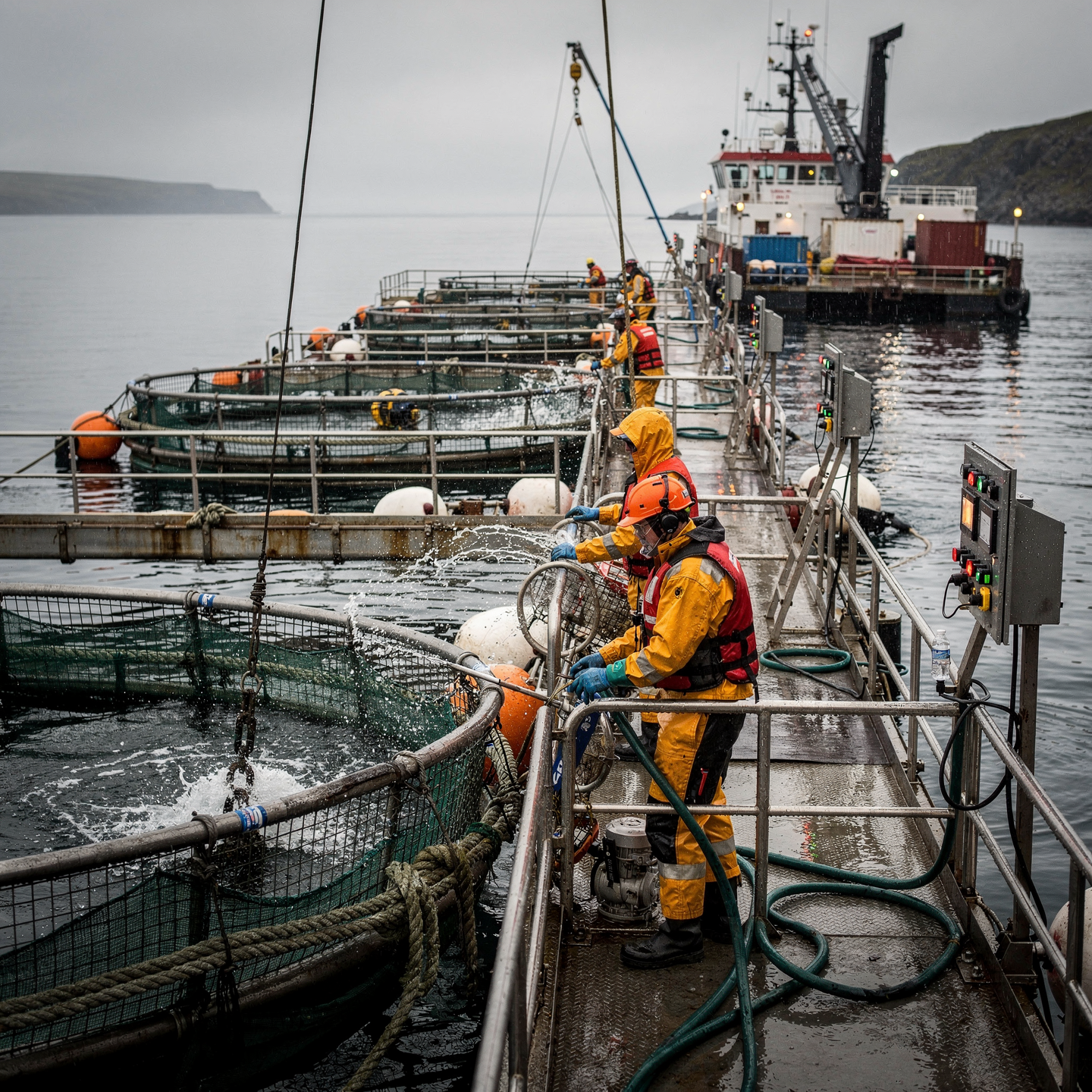
Master’s Degree in Industrial Marine Aquaculture

Why this master’s programme?

The Master in Industrial Marine Aquaculture

Offers comprehensive training to lead the future of sustainable seafood production. Prepare to design, manage, and optimize innovative aquaculture facilities, from species selection and nutrition management to the application of recirculating aquaculture systems (RAS) technologies and responsible environmental management. You will master the keys to efficient, profitable, and environmentally friendly aquaculture, responding to the growing global demand for high-quality seafood. This program provides you with the tools to drive innovation in a constantly evolving sector.

Differential Advantages

  • Specialization in RAS systems: design, operation, and optimization of cutting-edge recirculating aquaculture systems.
  • Focus on Sustainability: environmental management, circular economy, and minimizing ecological impact.
  • Industry Connections: professional internships, visits to leading companies, and collaborative projects.
  • Development of Management Skills: strategic planning, economic analysis, and team leadership.
  • Comprehensive View of the Sector: from species biology to the marketing of aquaculture products.
Acuicultura

Master’s Degree in Industrial Marine Aquaculture

Availability: 1 in stock

Who is it aimed at?

  • Marine biologists, fisheries engineers, and veterinarians seeking to specialize in the intensive production of high-value aquatic species.
  • Aquaculture professionals wishing to optimize their production processes, implement innovative technologies, and improve the profitability of their operations.
  • Entrepreneurs and investors interested in developing industrial marine aquaculture projects with a focus on sustainability and efficiency.
  • Food quality and safety managers needing to deepen their understanding of the regulations and standards applicable to aquaculture production.
  • Graduates in environmental and agri-food sciences seeking comprehensive training to lead the future of aquaculture Marina.

Flexibility and applicability
 Designed for professionals with responsibilities: online format with live and recorded classes, real-world case studies, and personalized tutoring.

Acuicultura

Objectives and skills

Optimizing aquaculture production with sustainability criteria:

Implement efficient feeding strategies and monitor water quality to reduce environmental impact and maximize the performance of aquatic crops.

Design and manage industrial marine aquaculture facilities:

“Optimize the design to maximize production, minimize environmental impact and ensure biosecurity, considering economic viability and current regulations.”

Implement feeding and health strategies for the well-being of aquatic species:

“Design balanced diets and disease prevention programs, considering environmental factors and life cycle.”

Develop and innovate in cultivation technologies for marine aquaculture:

“Implement optimized recirculating aquaculture systems (RAS), integrating advanced biofilters and predictive water quality monitoring to maximize efficiency and minimize environmental impact.”

Market aquaculture products while meeting quality and traceability standards:

Implement and maintain a quality management system (HACCP) that ensures the safety and traceability of the product from production to delivery to the customer, complying with current health regulations.

Evaluate the economic and environmental viability of aquaculture projects:

“Analyze the return on investment (ROI), net present value (NPV), and internal rate of return (IRR), considering operating costs, projected revenues, and environmental externalities, to determine the profitability and sustainability of the project.”

Study plan – Modules

  1. Design Fundamentals in Aquaculture Systems: Structural Analysis, Salinity-Resistant Materials, and Applied Biomechanics
  2. Integration of Technologies: Automation, Smart Sensors, and Real-Time Remote Monitoring
  3. Optimization of Physicochemical Parameters: Control of Dissolved Oxygen, Salinity, Temperature, and pH in Recirculation
  4. Fluid Dynamics Applied to Aquaculture: Computational Modeling of Water and Nutrient Exchange
  5. Design and Management of Biofilters: Nitrification, Ammonia Removal, and Reduction of Toxic Compounds
  6. Automated Feeding Systems: Evaluation of Feed Dosage and Delivery Times
  7. Operation of Recirculating Aquaculture Systems (RAS): Configuration, Hydraulic Balance, and Energy Efficiency
  8. Aquaculture Health Monitoring: Early Disease Detection and Biometric Evaluation Advanced Environmental Management Protocols: Waste Mitigation and Minimization of Ecological Impact

    Planning and Scalability in Industrial Facilities: Modular Design and Sustainable Production Projections

    Advanced Environmental Management Protocols: Waste Mitigation and Minimization of Ecological Impact
    Planning and Scalability in Industrial Facilities: Modular Design and Sustainable Production Projections

  1. Fundamentals and principles of biosecurity in industrial marine aquaculture systems: risk analysis and prevention protocols
  2. Design and planning of aquaculture facilities with a sustainable approach: site selection, effluent management, and minimizing environmental impact
  3. Advanced health management practices in marine aquaculture: disease control, rational use of antivirals and antibiotics, and microbiological monitoring
  4. Implementation of epidemiological surveillance systems and contingency protocols for the prevention of infectious outbreaks in marine farms
  5. Optimization of water quality management: physicochemical parameters, treatment and recycling techniques, and use of innovative technologies
  6. Integrated solid and liquid waste management: techniques for reduction, treatment, and disposal in industrial marine facilities
  7. International and national regulations applicable to biosecurity and sustainability in marine aquaculture: compliance, audits, and Certifications
  8. Application of digital technologies and intelligent systems for real-time monitoring of critical variables in marine aquaculture
  9. Optimization of feeding and nutritional management to improve the health and growth of farmed species, reducing health risks
  10. Strategies for environmental resilience and adaptation to climate change: ecosystem conservation and sustainable genetic improvement
  1. Fundamentals of Technological Innovation in Marine Aquaculture: Global Trends and Their Industrial Application
  2. Advanced Design of Culture Systems: Hydrodynamic Criteria, Modular Structures, and Optimization of Production Space
  3. Automation and Digitalization in the Operation of Aquaculture Facilities: IoT Sensors, SCADA Systems, and Remote Control
  4. Biosecurity Strategies for Disease Prevention and Control: Protocols, Continuous Monitoring, and Rapid Response
  5. Biodegradable and Eco-efficient Materials in the Construction of Cages and Floating Systems
  6. Implementation of Sustainable Production Models: Ecological Balance and Reduction of the Environmental Footprint
  7. Water Flow Management and Environmental Quality: Renewal Techniques, Natural Filtration, and Impact Mitigation
  8. Integrated Design of Multitrophic and Polyculture Systems to Maximize Productivity and Biodiversity
  9. International standards and sustainability certifications in industrial marine aquaculture
  10. Case studies and applied innovation studies: analysis of real cases and future perspectives in technological implementation
  1. Fundamentals of industrial automation applied to marine aquaculture: key concepts, benefits, and technological trends
  2. Architecture of distributed control systems (DCS) and programmable logic controllers (PLCs) in marine aquaculture environments
  3. Integration of specific sensors for monitoring environmental parameters: dissolved oxygen, pH, temperature, salinity, and turbidity
  4. Advanced multivariate sensing techniques for real-time detection of water quality and the health of marine organisms
  5. Industrial communication protocols (Modbus, Profibus, Ethernet/IP) and their application in data management in aquaculture systems
  6. Automation of key processes: feeding, oxygenation, water renewal, and flow control in intensive culture systems
  7. Design and implementation of PID control algorithms and adaptive control systems to maintain optimal conditions
  8. Remote monitoring and SCADA (Supervisory Control and Data Acquisition) systems: architecture, configuration, and data visualization in aquaculture
  9. Big Data and advanced information analysis: prediction of production patterns and early detection of anomalies in large-scale production systems
  10. Implementation of predictive and automated maintenance for industrial aquaculture equipment and infrastructure
  11. International regulations, standards, and certifications in automation for industrial marine aquaculture
  12. Case studies and advanced technological implementation studies in high-production and complex marine farms
  1. Fundamentals of Integrated Management in Marine Aquaculture: Principles, Models, and Applicable International Regulations
  2. Implementation of Quality Management Systems in Aquaculture Environments: ISO 9001, HACCP, and Specific Standards for Industrial Aquaculture
  3. Automation of Production Processes: Integration of Sensors, SCADA Systems, and Real-Time Control of Physicochemical and Biological Parameters
  4. Optimizing Productivity through Data Analysis: Big Data, Artificial Intelligence, and Machine Learning Applied to Monitoring and Control
  5. Design and Operation of Automated Feeding Systems: Techniques, Cycle Programming, and Feed Efficiency Ratio (FCR) Evaluation
  6. Water Quality Control and Management: Critical Parameters, Automated Control Algorithms, and Strategies for Mitigating Environmental Impacts
  7. Evaluation and Continuous Improvement in Production: Key Performance Indicators (KPIs), Internal and External Audits, and Lean and Six Sigma Methodologies Aquaculture

    Advanced biosecurity protocols and automated health management: early disease detection and rapid responses based on systems intelligence

    Energy management and sustainability in automated systems: consumption analysis, integrated renewable energies, and environmental footprint reduction

    Implementation of specialized software and digital tools: management platforms, simulators, and reporting systems for strategic decision-making

  1. Fundamental principles of aquaculture system design: engineering applied to floating and submerged structures for industrial marine environments
  2. Automation in marine aquaculture: selection, integration, and programming of advanced sensors for continuous monitoring of physicochemical and biological parameters (pH, dissolved oxygen, temperature, turbidity)
  3. Optimization of hydrodynamic systems: CFD computational modeling to improve flow and water quality in recirculating ponds and marine cages
  4. Implementation of biosecurity technologies: strategies for disease prevention, early detection, and control using automated disinfection and filtration systems
  5. Sustainable water resource and waste management: advanced effluent treatment and reuse techniques to minimize environmental impacts and comply with international regulations
  6. Intelligent feeding control: adaptive algorithms for precise dosing based on biomass, behavior, and environmental conditions
  7. Integration of SCADA systems for remote monitoring and real-time control of operational parameters and automatic contingency alerts
  8. Assessment and mitigation of operational and environmental risks: criticality analysis and contingency plans for extreme events and technological failures
  9. National and international regulations applicable to automation and biosecurity in marine aquaculture: compliance and certifications
  10. Advanced case studies and trends in sustainable design of industrial aquaculture systems: applications of artificial intelligence, machine learning, and blockchain for traceability and data management
  1. Fundamentals and advances in automated systems for industrial marine aquaculture: sensorization, remote control, and integrated digitization
  2. Design and optimization of biosecurity systems: physical barriers, advanced disinfection, and management of pathogen vectors in intensive aquaculture facilities
  3. Innovations in environmental monitoring technologies: bioindicators, multiparameter sensors, and IoT systems for water quality and marine crop health
  4. Intelligent automation in feeding: adaptive algorithms, nutrient deposition, and strategies to minimize waste and improve feed conversion
  5. Integrated management of waste and effluents in marine aquaculture: recycling technologies, biological treatment, and their impact on ecosystem sustainability
  6. Implementation of predictive models and Big Data in disease control: early detection, epidemiological analysis, and automated preventive measures
  7. Renewable energies and energy savings in automated systems: integration of photovoltaics, Offshore wind energy and energy efficiency systems to minimize environmental footprint

    International regulations and biosecurity standards applied to intensive marine aquaculture: compliance, certifications, and technological audits

    Development and application of robotic systems and underwater drones for the inspection, maintenance, and optimization of aquaculture cages and facilities

    Case studies and global trends in automation and sustainability: comparative analysis and future perspectives for industrial marine aquaculture

  1. Fundamentals of strategic management in industrial marine aquaculture: environmental analysis, mission, vision, objectives, and alignment with the SDGs
  2. Risk assessment and analysis of specific vulnerabilities in aquaculture systems: biological, environmental, and socioeconomic factors
  3. Advanced strategic planning models: Balanced Scorecard, SWOT analysis, and predictive scenarios for decision-making in aquaculture
  4. Emerging technologies in marine aquaculture: automation, IoT, Big Data, and real-time monitoring systems
  5. Implementation of intelligent systems for the control and optimization of environmental and production parameters in marine farming
  6. Integration of renewable energy and energy efficiency technologies applied to industrial aquaculture facilities
  7. Digital biosecurity: cybersecurity and data protection in automated aquaculture systems
  8. Optimization of
  9. Water resources and sustainable waste management through innovative technologies and circular models
  10. International regulatory framework for strategic and technological management in industrial marine aquaculture
  11. Key performance indicators (KPIs) for evaluating productive efficiency and sustainability in aquaculture systems
  12. Case studies: successful implementation of emerging technologies and management strategies in pioneering industrial aquaculture projects
  13. Design and implementation of continuous improvement plans based on technological integration and sustainable innovation
  14. Data analysis tools and specialized software for strategic decision-making in marine production
  15. Supply chain management and digital traceability in aquaculture: blockchain and smart contracts
  16. Strategies for mitigating environmental impact and adapting to climate change in industrial aquaculture
  17. Training and development of technological skills in multidisciplinary work teams in aquaculture
  18. Future projections and disruptive trends in management and technology applied to industrial marine aquaculture
  19. Development of innovative projects: from conceptualization to technical and economic validation
  20. Tools for the economic and financial evaluation of investments in emerging aquaculture technologies
  21. Ethics, corporate social responsibility, and strategic sustainability in the industrial aquaculture sector
  1. Fundamentals of Automated System Design in Marine Aquaculture: Components, Architecture, and Principles of Technological Integration
  2. Optimization of Production Processes Using Artificial Intelligence and Machine Learning in Controlled Aquatic Environments
  3. Evaluation and Control of Physical and Chemical Parameters: Dissolved Oxygen, pH, Temperature, and Salinity for Biosecure and Automated Systems
  4. Selection and Configuration of Advanced Sensors and IoT Devices for Real-Time Monitoring and Automated Decision-Making
  5. Implementation of Robotic Technologies and Intelligent Feeding Systems to Maximize Yield and Minimize Waste
  6. Comprehensive Biosecurity Design: Prevention, Control, and Mitigation of Diseases in Industrial Marine Aquaculture Systems
  7. Sustainable Water Resource Management Protocols and Control of Organic and Chemical Waste in Automated Production Units
  8. Simulation Models and Predictive Analysis Applied to the Efficient and Sustainable Management of High-Density Aquaculture Systems
  9. population
  10. Interoperability of digital platforms for data integration, remote diagnostics, and real-time predictive maintenance
  11. International regulations and environmental standards applied to the optimization and regulation of automated aquaculture systems
  12. Environmental impact assessment and mitigation strategies in automated systems under circular economy and ecological resilience criteria
  13. Risk and contingency management in automated processes: protocols to ensure operational continuity and biosecurity
  14. Training and development of technical skills for operators and managers in the use of advanced technologies in marine aquaculture
  15. Integration of automated systems with renewable energies for optimization of energy consumption and reduction of the environmental footprint
  16. Global case studies in the implementation of automated biosafety systems: comparative analysis and lessons learned
  1. Fundamentals and methodologies for the development of projects in industrial marine aquaculture: analysis of technical, economic, and environmental feasibility.
  2. Applied technological innovation: integration of automated systems for optimizing the culture cycle, including smart sensors, robotics, and real-time remote monitoring.
  3. Design and modeling of recirculating aquaculture systems (RAS): water quality control, biofilter management, and strategies for reducing energy consumption.
  4. Environmental sustainability: assessment of ecological impact, mitigation techniques, and application of circular aquaculture to minimize waste and promote resource efficiency.
  5. Advanced automation and process control: implementation of artificial intelligence and machine learning algorithms for the prediction and automatic adjustment of critical culture parameters.
  6. International standards and certifications in sustainable aquaculture: regulatory frameworks, traceability, and quality standards for automated systems.
  7. Integration of renewable energies and energy-efficient systems in industrial aquaculture facilities: design and implementation for carbon footprint reduction.
  8. Data management and big data analytics: collection, analysis, and interpretation of large volumes of data for strategic decision-making and continuous improvement of the production process.
  9. Final project planning: agile methodologies (Scrum, Kanban) applied to the execution and monitoring of innovative marine farming systems.
  10. Project defense and presentation: preparation of detailed technical reports, evaluation of results, and proposals for improvement with a focus on technological innovation and sustainability at an industrial scale.

Career prospects

“`html

  • Production Manager in marine aquaculture companies: production management, process optimization, quality control.
  • R&D Technician in research centers and companies: development of new cultivation techniques, improvement of marine organism nutrition and health.
  • Consultant/Technical Advisor in aquaculture projects: facility design and planning, environmental impact assessment, permit and license management.
  • Animal Health and Welfare Manager in aquaculture: disease prevention and control, organism health management, regulatory compliance.
  • Sales Manager in companies providing products and services for aquaculture: sales of feed, medications, equipment, and technical services.
  • Public Administration Technician in regulatory bodies of the Aquaculture: monitoring and control of activities, management of aid and subsidies, development of regulations.

    Educator/Trainer in Vocational Training Centers and Universities: delivery of courses and workshops on aquaculture, design of educational programs.

    Entrepreneur in the Aquaculture Sector: creation of a company for the production, processing, or marketing of aquaculture products.

    “`

Entry requirements

Academic/professional profile:

Bachelor’s degree in Nautical Science/Maritime Transport, Naval/Marine Engineering or a related qualification; or proven professional experience on the bridge/in operations.

Language proficiency:

Functional Maritime English (SMCP) recommended for simulations and technical materials.

Documentation:

Updated CV, copy of qualification or seaman’s book, national ID/passport, motivation letter.

Technical requirements (for online):

Device with camera/microphone, stable internet connection, monitor ≥ 24” recommended for ECDIS/Radar-ARPA.

Admissions process and dates

Online
application

(form + documents).

Academic review and interview

Admissions decision

Admissions decision

(+ scholarship offer if applicable).

Place reservation

(deposit) and enrolment.

Induction

(access to the virtual campus, calendars, simulator guides).

Scholarships and financial support

  • Comprehensive Knowledge: Master industrial aquaculture production from biology to economic management.
  • Innovative Technologies: Learn the latest techniques in recirculating aquaculture systems (RAS), applied genetics, and optimized nutrition.
  • Sustainability and Regulations: Delve into responsible aquaculture practices and compliance with environmental regulations.
  • Real-World Case Studies: Apply your knowledge through simulations and projects based on the current industry.
  • Professional Networking: Connect with industry experts and expand your career opportunities in marine aquaculture. Boost your career in a booming sector with a focus on innovation and sustainability.

Testimonials

Frequently asked questions

Aquaculture sector, specifically the industrial production of marine organisms.

Yes. The itinerary includes ECDIS/Radar-ARPA/BRM with harbor, ocean, fog, storm, and SAR scenarios.

Online with live sessions; hybrid option for simulator/practical placements through agreements.

Recommended functional SMCP. We offer support materials for standard phraseology.

Yes, with a relevant degree or experience in maritime/port operations. The admissions interview will confirm suitability.

Optional (3–6 months) through Companies & Collaborations and the Alumni Network.

Simulator practice (rubrics), defeat plans, SOPs, checklists, micro-tests and applied TFM.

A degree from Navalis Magna University + operational portfolio (tracks, SOPs, reports and KPIs) useful for audits and employment.

  1. Fundamentals and methodologies for the development of projects in industrial marine aquaculture: analysis of technical, economic, and environmental feasibility.
  2. Applied technological innovation: integration of automated systems for optimizing the culture cycle, including smart sensors, robotics, and real-time remote monitoring.
  3. Design and modeling of recirculating aquaculture systems (RAS): water quality control, biofilter management, and strategies for reducing energy consumption.
  4. Environmental sustainability: assessment of ecological impact, mitigation techniques, and application of circular aquaculture to minimize waste and promote resource efficiency.
  5. Advanced automation and process control: implementation of artificial intelligence and machine learning algorithms for the prediction and automatic adjustment of critical culture parameters.
  6. International standards and certifications in sustainable aquaculture: regulatory frameworks, traceability, and quality standards for automated systems.
  7. Integration of renewable energies and energy-efficient systems in industrial aquaculture facilities: design and implementation for carbon footprint reduction.
  8. Data management and big data analytics: collection, analysis, and interpretation of large volumes of data for strategic decision-making and continuous improvement of the production process.
  9. Final project planning: agile methodologies (Scrum, Kanban) applied to the execution and monitoring of innovative marine farming systems.
  10. Project defense and presentation: preparation of detailed technical reports, evaluation of results, and proposals for improvement with a focus on technological innovation and sustainability at an industrial scale.

Request information

  1. Complete the Application Form.

  2. Attach your CV/degree certificate (if you have it to hand).

  3. Indicate your preferred cohort (January/May/September) and whether you would like the hybrid option with simulator sessions.

    An academic advisor will contact you within 24–48 hours to guide you through the admission process, scholarships, and compatibility with your professional schedule.

Please enable JavaScript in your browser to complete this form.
Click or drag a file to this area to upload.

Faculty

0
    0
    Tu carrito
    Tu carrito esta vacíoRegresar a la tienda
    Scroll to Top


