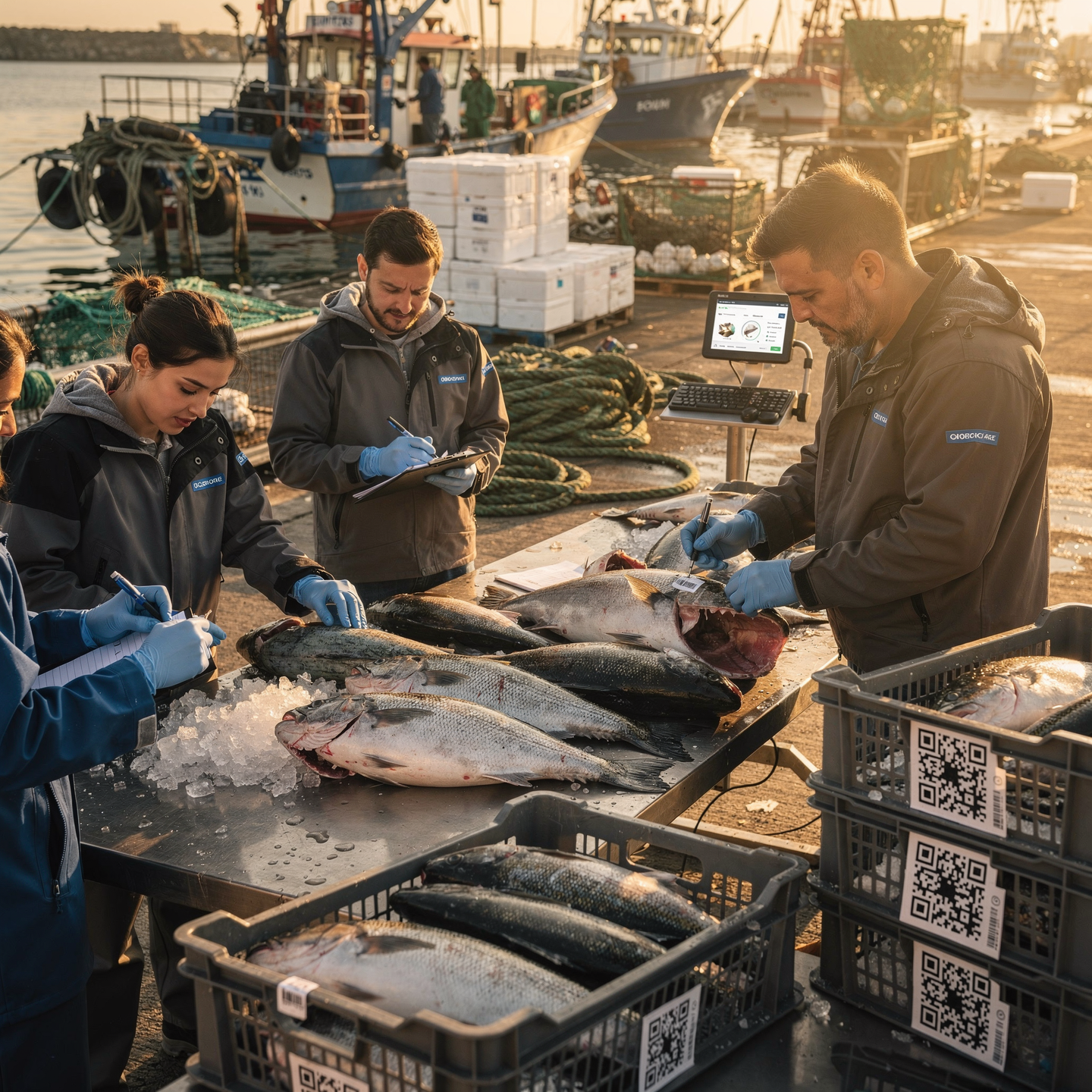
Master’s Degree in Food Safety and Traceability in Fisheries
Why this master’s programme?
The Master’s Degree in Food Safety and Traceability in Fisheries
This program offers comprehensive and up-to-date training in a sector that is key to public health and the global economy. You will learn to implement and manage quality and hygiene control systems throughout the entire value chain of fishery products, from capture to the end consumer. You will delve into current regulations, the latest traceability technologies, and the tools to guarantee the authenticity and safety of food. This program prepares you to lead food safety management in fishing companies, public administrations, and research centers.
Differentiating Advantages
- Practical Approach: real-world case studies and audit simulations.
- Cutting-edge Technologies: application of blockchain, IoT, and other traceability tools.
- Industry Experts: faculty with extensive experience in food safety and fisheries.
- Skills Certification: acquisition of industry-recognized skills.
- Networking: opportunities to connect with professionals and companies in the sector.
- Modality: Online
- Level: Masters
- Hours: 1600 H
- Start date: 29-09-2026
Availability: 1 in stock
Who is it aimed at?
- Fishing industry professionals (shipowners, processors, distributors) seeking to lead food safety management and comply with the most demanding regulations.
- Quality technicians and managers who wish to deepen their knowledge of traceability of fishery products from catch to consumer.
- Auditors and consultants who need a comprehensive understanding of food safety management systems in the fishing sector.
- Graduates in Food Science and Technology, Marine Biology, or Veterinary Medicine who aspire to high-level specialization in food safety and traceability in fisheries.
- Public administration officials (health, fisheries) requiring updating Stay up-to-date with the latest regulations and control technologies.
Flexibility for your career
Designed for working professionals: online format with live and recorded classes, discussion forums, and personalized follow-up.
Objectives and skills

Implement and manage fisheries traceability systems:
“Design and implement accurate tracking, recording and documentation plans for the chain of custody, from capture to the end consumer, using technologies such as labeling, satellite tracking and blockchain.”

Assess and mitigate microbiological and chemical risks in fishery products:
Implement a robust HACCP plan, including hazard analysis, critical control points, and effective contaminant monitoring.

Design and implement hygiene and quality control plans in the fishing industry:
“To guarantee product safety through the application of GMP, HACCP and sanitation programs, complying with current health regulations and market demands.”

Interpreting and applying food legislation in the fisheries sector:
“Identify and apply the specific hygiene, food safety and traceability regulations for fishing and aquaculture, guaranteeing the quality and safety of fishery products from capture/production to marketing.”

Auditing and certifying food safety systems in fishing companies:
“Evaluate compliance with GFSI standards (BRCGS, IFS, SQF), identifying non-conformities and proposing corrective actions.”

Efficiently manage resources and processes in the fisheries value chain, ensuring food security:
“Implement robust traceability systems, from capture to consumer, complying with health regulations and optimizing logistics to minimize losses and ensure product quality.”
Study plan – Modules
- Applicable international standards and frameworks: Codex Alimentarius, ISO 22000, BRC, IFS and their impact on the fishing industry
- Design and implementation of quality control systems: Hazard Analysis and Critical Control Points (HACCP) in the fishing and processing chain
- Sampling methodologies and microbiological and chemical analyses for the identification of contaminants in fishery products
- Internal and external audit procedures: planning, execution, recording, and follow-up of non-conformities
- Traceability assessment from catch to distribution: techniques, technologies, and documentation required to guarantee food safety
- Statistical Process Control (SPC) applied to the fishing industry: interpretation of control charts and continuous improvement
- Roles and responsibilities in multidisciplinary quality teams: lead auditor, technical auditors, and operational staff
- Document Management and Integrated Quality Systems: Implementation of Software for Traceability and Document Control
- Critical Analysis and Management of Specific Risks in Seafood Products: Marine Toxins, Contaminant Residues, and Allergens
- Emerging Technologies in Quality Control and Audits: Blockchain, IoT Sensors, and Automated Detection Systems
- Staff Training and Awareness in Good Production Practices and Audit Protocols
- Legal and Regulatory Aspects of Food Quality and Safety Certification for the International Market
- Case Study: Development and Simulation of a Comprehensive Audit in a Seafood Processing Plant
- Key Performance Indicators (KPIs) in Quality Systems and How to Optimize Them to Ensure Compliance and Customer Satisfaction
- Integration of Quality Control Systems with Sustainability and Corporate Responsibility Programs in the Fishing Industry
- Fundamentals of digital traceability: concepts, international regulations, and standards applicable to fishing
- Advanced traceability system architectures: blockchain, IoT, and Big Data in the fishery supply chain
- Integration of smart sensors and real-time data capture technologies: RFID, QR codes, and satellite devices
- Models and tools for comprehensive risk management: identification, assessment, and mitigation at all stages of the fishery production chain
- Digitalized food safety protocols: quality assurance, critical control points (digitalized HACCP), and contaminant traceability
- Collaborative management platforms: interoperability among key stakeholders, from fishers to distributors and regulatory authorities
- Automation and predictive analytics: application of artificial intelligence to anticipate safety risks and optimize resources in the chain
- International traceability standards
and certification: regulatory compliance, digital audits, and automated reporting
Success stories and challenges in implementing digital traceability in fisheries: lessons learned and global best practices
Legal and ethical aspects of digital fisheries data management: information protection, privacy, and document responsibility
Design and implementation of integrated traceability and risk management systems: technological roadmap and platform parameterization
Strategies for continuous adaptation to technological evolution: updating, maintenance, and scalability of digital solutions in the fisheries supply chain
Practical simulations and implementation workshops: using specialized software for traceability and risk monitoring in real-world scenarios
Impact of digital traceability on the environmental and economic sustainability of the fisheries sector
Data-driven strategic planning and control: dashboards, KPIs, and real-time decision-making for food safety
- Fundamentals of traceability in the fishing industry: definitions, strategic importance, and applicable international regulations (ISO 22005, Codex Alimentarius, EU Regulation 1379/2013)
- Design and architecture of integrated traceability systems: technological components, digital platforms, IoT sensors, and process automation in capture, processing, and distribution
- Advanced methodologies for quality control in the fishing sector: microbiological analysis, physicochemical control, detection of contaminants and residues, applying HACCP and GMP standards
- Implementation of electronic records and blockchain for immutable data validation: synchronization, interoperability, and cybersecurity in global supply chains
- Real-time monitoring of critical parameters: temperature, humidity, storage and transport conditions, using WSN technologies and satellite tracking devices
- Risk and incident management in traceability: protocols
- Audit, identification of critical control points (CCPs), deviation tracing, early warnings, and corrective actions
- Integration of traceability with ERP and SCM systems for logistics optimization, demand planning, and reduction of post-capture losses
- International certification and accreditation standards: ISO 22000, BRCGS, MSC, and their impact on marketing and access to global markets
- Staff training and organizational change management: leadership in food safety, quality culture, and regulatory compliance
- Case studies and analysis of successful implementation in leading companies: case studies, economic benefits, and improvements in consumer confidence and environmental sustainability
- Fundamentals of Good Practices on Board: International Standards (CODEX Alimentarius, HACCP, ISO 22000) and their application in the fishing industry
- Design and maintenance of cold chain control systems on vessels: refrigeration equipment, continuous monitoring, and early warning systems
- Comprehensive assessment of biological hazards in fishery products: pathogen identification, critical control parameters, and preventive techniques
- Management and control of chemical contaminants: analysis of heavy metal residues, marine biotoxins, and persistent organic pollutants
- Advanced post-harvest handling and storage protocols to minimize microbiological proliferation and preserve organoleptic quality
- Implementation of integrated digital traceability systems: RFID technologies, blockchain, and real-time data management platforms
- Standardized procedures for the rapid and safe withdrawal of compromised batches: Risk analysis, logistical coordination, and effective communication with authorities.
Development and management of trade and food safety certifications: BRC, IFS, MSC, and their impact on access to international markets.
Internal and external audits for the validation of good practices on board: checklist design, conformity assessment, and continuous improvement programs.
Training and education of the crew in food safety: teaching methods, practical simulations, and organizational culture of food safety.
- Microbiological Foundations in Seafood Products: Characteristics, Morphology, and Physiology of Common Pathogens in Marine and Processed Environments
- Advanced Risk Assessment: Qualitative and Quantitative Methodologies Applied to the Seafood Supply Chain to Identify Microbiological and Chemical Hazards
- Emerging Contaminants in Fisheries: Origin, Behavior, and Effects of Marine Biotoxins, Heavy Metals, Pharmaceutical Residues, and Microplastics in Seafood Products
- International Regulations and Global Standards: Comparative Analysis of Codex Alimentarius, FDA, EFSA, and Specific Regulations on Food Safety and Traceability in Seafood Products
- Control and Mitigation Techniques: Implementation of Robust Quality Systems, such as Advanced HACCP, HACCP, and GHP Adapted to the Seafood Industry
- Microbiological Monitoring: Sampling Protocols and Molecular Detection Methods (PCR, qPCR), selective cultures, and bacterial load analysis to ensure food safety.
Digital traceability systems: Integration of blockchain, IoT, and smart sensor technologies to guarantee transparency and real-time monitoring of the fishery supply chain.
Temperature control and logistics: Design and optimization of cold chains, active and passive packaging, and risk assessment associated with maritime transport and storage management.
Assessment of chemical and physical hazards: Advanced analytical methods for the detection of industrial contaminants, pesticides, and physical contaminants in fish and seafood.
Food safety training and culture: Design of specialized training programs for operators, auditors, and quality managers in the global fishing industry.
Crisis management and response protocols: Development of action plans for identified contamination, product recalls, and effective communication with regulatory stakeholders and consumers.
Case study analysis and audits. International: Detailed study of contamination incidents in seafood products and best practices for continuous improvement and regulatory audits
[…]
- Advanced Fundamentals of Quality Control in Fishery Products: International Regulations, ISO 22000 Standards, and Specific Certifications for the Fishery Sector
- Implementation of HACCP Systems in the Fishery Supply Chain: Analysis of Physical, Chemical, and Biological Hazards, and Effective Preventive Strategies
- Development and Optimization of Sampling and Sensory Analysis Protocols for the Objective Evaluation of Freshness and Quality in Seafood Products
- Technological Innovation in Digital Traceability: Blockchain, RFID, and IoT System Architectures Applied to Fishery Traceability from Catch to Final Distribution
- Design and Integration of Digital Platforms for Real-Time Management of the Fishery Logistics Chain, Ensuring Transparency, Security, and Regulatory Compliance
- Advanced Data Analysis and Big Data Tools Applied to Traceability and Quality Control: Artificial Intelligence for Risk Prediction and Strategic Decision-Making
- Comprehensive risk management in the fisheries supply chain: identification, assessment, and mitigation of operational, health, environmental, and commercial risks
- Internal and external audit protocols: methodologies for verifying compliance, detecting nonconformities, and establishing corrective action plans
- Food safety management systems adapted to the fisheries context: integration of ISO 22000 with BRC, IFS, and GFSI protocols
- Traceability models for sustainability: organic certifications, carbon footprint reduction, and responsible fishing practices
- Case studies and failure analysis in the fisheries supply chain: incident analysis, impact on food safety, and lessons learned
- National and international regulations applied to traceability and quality control in fisheries: FDA, EFSA, Codex Alimentarius, and bilateral agreements
- Training and professional skills development in teams Multidisciplinary approaches for advanced management of the fisheries supply chain
Innovation and continuous improvement strategies: adoption of disruptive technologies and Lean and Six Sigma methodologies in fisheries processing and logistics
Life cycle assessment and environmental impact analysis in integrated fisheries risk management: sustainability and eco-efficiency tools
- Advanced fundamentals of quality control in fishery products: international standards, HACCP regulations, ISO 22000, and the role of certification in global markets.
- Design and application of digital traceability systems: RFID technologies, blockchain, and IoT sensors for real-time monitoring from catch to end consumer.
- Implementation of integrated management platforms for the fishery supply chain: system interoperability, document management, and process automation.
- Comprehensive risk assessment and mitigation in the fishery logistics chain: analysis of physical-chemical and biological hazards, operational contingencies, and contingency plans.
- Advanced methodologies for auditing and verifying traceability systems: sampling techniques, internal and external audits, and use of specialized software for monitoring and reporting.
- Microbiological and chemical quality control applied to fisheries: analytical techniques for Detection of contaminants, marine biotoxins, and heavy metals.
International regulations for sustainable fishing and their impact on traceability systems: legal compliance, MSC and ASC certifications, and other voluntary initiatives.
Integration of Big Data and predictive analytics for risk management: early identification of failures, logistics optimization, and continuous improvement in traceability.
Information security and cybersecurity in digital traceability systems: data protection protocols, fraud prevention, and cyberattack prevention.
Case studies and development of customized projects to improve quality control and digital traceability in fishing companies, including benchmarking tools and specific KPIs.
- International food safety principles and regulations applicable to fishery products: Codex Alimentarius, HACCP, BRC, and IFS
- Design and implementation of advanced food safety protocols: microbiological control techniques, allergen control, and management of chemical contaminants
- Predictive models for microbiological risk assessment in fresh and processed fishery products: integration of environmental and operational data
- Advanced traceability systems: RFID, blockchain, and IoT technologies applied to the fishery supply chain
- Real-time monitoring and alert management: integrated platforms for traceability and their impact on food safety
- Hazard Analysis and Critical Control Points (HACCP) and Statistical Process Control (SPC) in the fishery production chain
- Evaluation and validation of cleaning and disinfection protocols in fishing facilities: standards and methodologies Advanced
Practical case studies: outbreak analysis, recalls, and crisis management in the seafood industry
Optimization of sampling plans and microbiological analysis based on predictive models and robust statistical analysis
Innovations in sensor technology for remote audits and automated verification of food safety and traceability in fishing
- Fundamental principles and international standards in food quality control applied to fishery products: HACCP, ISO 22000, BRC, and FSSC 22000
- Emerging technologies in digital traceability: blockchain, IoT, and RFID systems for the real-time identification and tracking of fishery resources
- Integration of Big Data and advanced analytics for monitoring and optimizing industrial processes in the global fishery supply chain
- Strategies for comprehensive risk management: quantitative and qualitative assessment of biological, chemical, and physical hazards in fishery production and distribution
- Design and application of automated quality control systems based on artificial intelligence and machine learning for the early detection of anomalies
- Advanced protocols for auditing and validating digital traceability processes: synchronization of distributed databases and certification of information integrity
- Impact of international regulations and trade policies on food safety and traceability: analysis of export and import requirements in key markets
- Implementation methodologies for risk management systems based on ISO 31000 standards in fishing operations and their benefits for sustainability
- Detailed study of real-world cases and practical simulations for identifying critical points and applying corrective measures in the fishing industry
- Technical and operational aspects of implementing integrated digital platforms for traceability from catch to end consumer, guaranteeing transparency and trust
- Introduction to the design and planning of the Master’s Thesis: objectives, scope, and applicable methodologies in food safety and traceability in fisheries
- In-depth analysis of applicable international regulations: Codex Alimentarius, HACCP, ISO 22000, BRCGS, and specific regulations for fishery products
- Advanced methodologies for the development of integrated traceability systems: identification, coding, and tracking of products from catch to end consumer
- Application of emerging technologies in traceability: RFID, blockchain, IoT, and smart sensors to ensure integrity and authenticity in the fisheries supply chain
- Implementation of quality control and food safety assurance protocols: microbiological, chemical, and physicochemical analyses in a global fisheries environment
- Risk management and internal audits: planning, execution, and continuous improvement of systems based on international standards and requirements of the market
- Optimization of logistics processes and the cold chain in fishing to maintain food safety and minimize post-capture losses
- Integration of digital tools for real-time monitoring and automated reporting of product safety and wholesomeness status
- Environmental impact and sustainability assessment of traceability systems, including responsible fishing and compliance with organic certifications
- Development of a communication and training plan for all stakeholders: fishers, processors, distributors, and consumers
- Study of real-world cases and practical application through simulations and data analysis to validate the effectiveness of the proposed integrated system
- Presentation, defense, and comprehensive documentation of the Master’s Thesis: preparation of technical reports, conclusions, and proposals for improvement for the global fishing supply chain
Career prospects
“`html
- Food Safety Technician in Fishing Companies: Quality control, HACCP, traceability.
- Food Safety Consultant/Auditor in the Fishing Industry: Implementation of standards, audits, consulting.
- Quality Control Manager in the Fishing Industry: Risk analysis, sampling plans, non-conformity management.
- Fisheries Traceability Technician: Design and implementation of traceability systems, product tracking.
- Food Safety Inspector in Public Bodies: Official control of fishery products, health surveillance.
- Fisheries Food Safety Researcher: Development of new analytical methods, risk studies, process improvement.
- Project Manager in Food Safety and Traceability Fishing industry: planning, coordination, and execution of projects.
Food safety and fisheries traceability trainer: delivery of courses and workshops, development of training materials.
“`
Entry requirements

Academic/professional profile:
Bachelor’s degree in Nautical Science/Maritime Transport, Naval/Marine Engineering or a related qualification; or proven professional experience on the bridge/in operations.

Language proficiency:
Functional Maritime English (SMCP) recommended for simulations and technical materials.

Documentation:
Updated CV, copy of qualification or seaman’s book, national ID/passport, motivation letter.

Technical requirements (for online):
Device with camera/microphone, stable internet connection, monitor ≥ 24” recommended for ECDIS/Radar-ARPA.
Admissions process and dates

Online
application
(form + documents).

Academic review and interview
Admissions decision

Admissions decision
(+ scholarship offer if applicable).

Place reservation
(deposit) and enrolment.

Induction
(access to the virtual campus, calendars, simulator guides).
Scholarships and financial support
- Comprehensive Knowledge: Master food legislation, safety management systems, and traceability technologies applied to the fishing sector.
- Practical Approach: Learn to identify food hazards, implement HACCP plans, and manage food crises in the fishing industry.
- Advanced Traceability: Delve into marking and tracking techniques, the use of blockchain, and tools for verifying the origin of seafood products.
- Expert Instructors: Learn from active professionals in the industry and Specialized researchers in food safety and traceability in fisheries.
- Career opportunities: Prepare to work in quality control, food auditing, consulting, and food safety management in fishing companies.
Testimonials
This master’s program provided me with the tools and knowledge necessary to lead the implementation of a traceability system in my fishing company. Thanks to the training I received, we were able to reduce food safety incidents by 30%, optimize supply chain management, and increase customer confidence.
I applied the knowledge I gained in the Master’s program in Advanced Fisheries & Aquaculture to optimize the performance of my fish farm. I implemented a recirculating aquaculture system (RAS) designed during the program, which reduced water consumption by 80% and increased rainbow trout production by 35% in the first year. This success allowed me to expand my business and secure a supply contract with a major supermarket chain.
After completing the Master’s in Food Safety and Traceability in Fisheries, I secured a position as Quality Manager at a major seafood importing company. I applied the knowledge gained in the Master’s program to implement a cutting-edge traceability system, which enabled us to obtain IFS certification and open new international markets, increasing the company’s revenue by 15% in the first year.
This master’s program provided me with the necessary tools to lead the implementation of a traceability system in my fishing company. Thanks to the knowledge I gained, we reduced food safety incidents by 30% and increased customer confidence, resulting in a 15% increase in sales over the past year.

Frequently asked questions
Yes. The itinerary includes ECDIS/Radar-ARPA/BRM with harbor, ocean, fog, storm, and SAR scenarios.
Online with live sessions; hybrid option for simulator/practical placements through agreements.
It focuses on the food safety of fishery products.
Recommended functional SMCP. We offer support materials for standard phraseology.
Yes, with a relevant degree or experience in maritime/port operations. The admissions interview will confirm suitability.
Optional (3–6 months) through Companies & Collaborations and the Alumni Network.
Simulator practice (rubrics), defeat plans, SOPs, checklists, micro-tests and applied TFM.
A degree from Navalis Magna University + operational portfolio (tracks, SOPs, reports and KPIs) useful for audits and employment.
- Introduction to the design and planning of the Master’s Thesis: objectives, scope, and applicable methodologies in food safety and traceability in fisheries
- In-depth analysis of applicable international regulations: Codex Alimentarius, HACCP, ISO 22000, BRCGS, and specific regulations for fishery products
- Advanced methodologies for the development of integrated traceability systems: identification, coding, and tracking of products from catch to end consumer
- Application of emerging technologies in traceability: RFID, blockchain, IoT, and smart sensors to ensure integrity and authenticity in the fisheries supply chain
- Implementation of quality control and food safety assurance protocols: microbiological, chemical, and physicochemical analyses in a global fisheries environment
- Risk management and internal audits: planning, execution, and continuous improvement of systems based on international standards and requirements of the market
- Optimization of logistics processes and the cold chain in fishing to maintain food safety and minimize post-capture losses
- Integration of digital tools for real-time monitoring and automated reporting of product safety and wholesomeness status
- Environmental impact and sustainability assessment of traceability systems, including responsible fishing and compliance with organic certifications
- Development of a communication and training plan for all stakeholders: fishers, processors, distributors, and consumers
- Study of real-world cases and practical application through simulations and data analysis to validate the effectiveness of the proposed integrated system
- Presentation, defense, and comprehensive documentation of the Master’s Thesis: preparation of technical reports, conclusions, and proposals for improvement for the global fishing supply chain
Request information
Complete the Application Form.
Attach your CV/degree certificate (if you have it to hand).
Indicate your preferred cohort (January/May/September) and whether you would like the hybrid option with simulator sessions.
An academic advisor will contact you within 24–48 hours to guide you through the admission process, scholarships, and compatibility with your professional schedule.
Faculty
Eng. Tomás Riera
Full Professor
Eng. Tomás Riera
Full Professor
Eng. Sofía Marquina
Full Professor
Eng. Sofía Marquina
Full Professor
Eng. Javier Bañuls
Full Professor
Eng. Javier Bañuls
Full Professor
Dr. Nuria Llobregat
Full Professor
Dr. Nuria Llobregat
Full Professor
Dr. Pau Ferrer
Full Professor
Dr. Pau Ferrer
Full Professor
Cap. Javier Abaroa (MCA)
Full Professor
Cap. Javier Abaroa (MCA)
Full Professor

