Master’s Degree in Nanotechnology for Naval Coatings

Why this master’s programme?

The Master in Nanotechnology for Naval Coatings

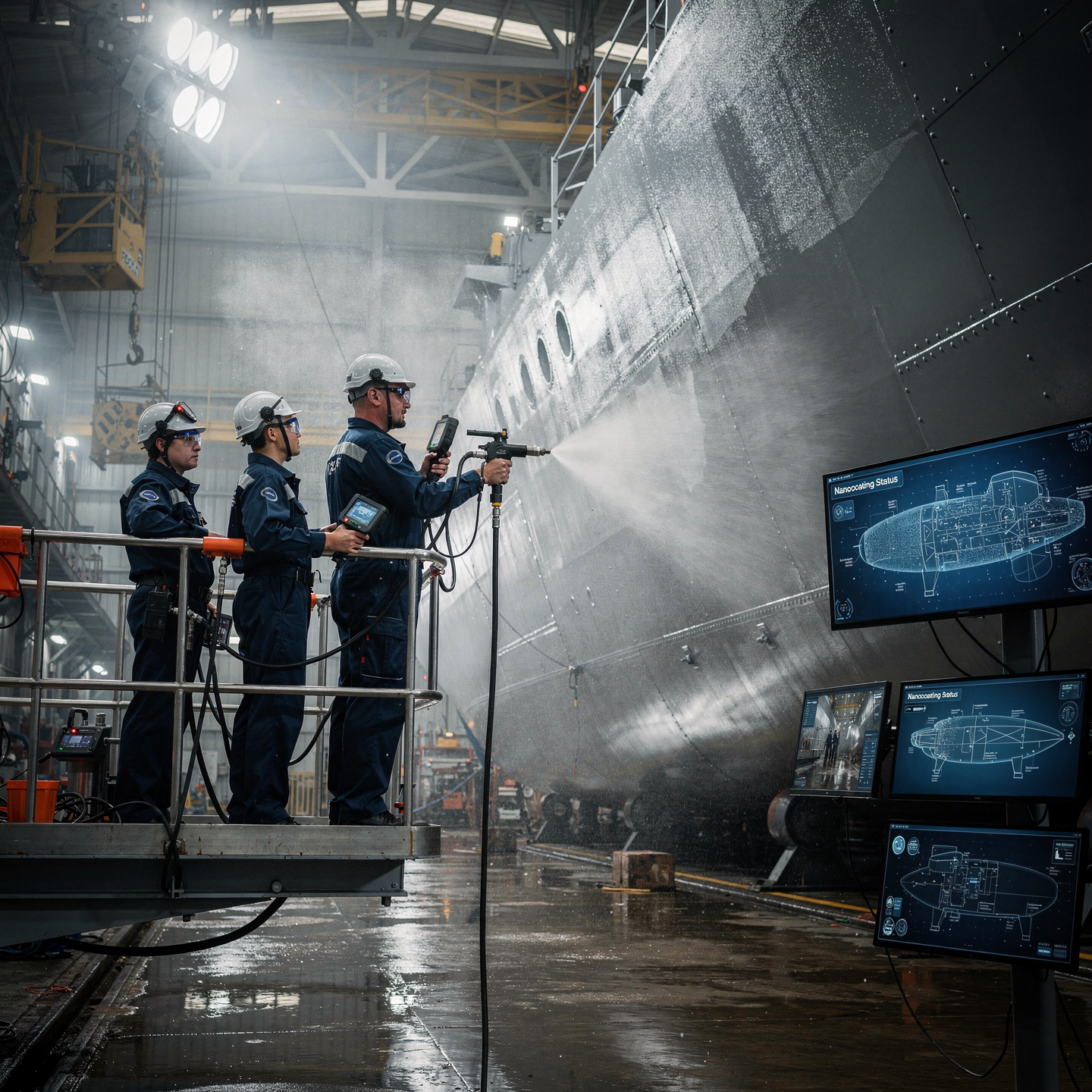
This program prepares you to lead innovation in vessel protection and efficiency. Master the application of nanomaterials to develop coatings with superior properties: antifouling, anticorrosive, self-healing, and low-friction. This program immerses you in the synthesis, characterization, and application of nanoparticles, as well as the associated regulations and safety. Become an expert in creating nanotechnology solutions that revolutionize the naval industry.

Differential Advantages

  • Specialized Laboratory: access to state-of-the-art equipment for the synthesis and characterization of nanomaterials.
  • Real-World Projects: collaboration with companies in the naval sector for the development of innovative coatings.
  • Simulation and Modeling: tools to predict the behavior of coatings at the nanoscale.
  • Comprehensive Training: from materials chemistry to project management and technology transfer.
  • Professional Networking: connection with experts and leading companies in nanotechnology and the naval industry.
Nanotecnología

Master’s Degree in Nanotechnology for Naval Coatings

Availability: 1 in stock

Who is it aimed at?

  • Naval and materials engineers seeking to innovate in the protection of maritime structures with nanotechnology solutions.
  • Professionals in the naval industry (shipyards, shipping companies) interested in optimizing the performance and durability of vessels.
  • Researchers and scientists wishing to explore the application of nanomaterials in corrosive marine environments.
  • R&D managers seeking to develop high-value-added coatings with advanced properties.
  • Graduates in chemistry, physics, or engineering seeking a cutting-edge specialization with high demand in the naval sector.

Flexibility to Professionals
 Online Master’s program designed to be compatible with professional activity: live and recorded virtual classes, personalized tutoring, and 24/7 access to the campus.

Nanotecnología

Objectives and skills

Develop and apply advanced nanotechnology coatings to optimize the performance and durability of vessels.

Evaluate the compatibility of the nanotechnology coating with different hull materials and apply optimal surface preparation techniques.

Leading innovation projects in nanotechnology applied to the protection and improvement of ships.

Evaluate the technical, economic and environmental feasibility of integrating nanomaterials into antifouling coatings, corrosion sensors and hull repair systems, considering applicable regulations and certifications.

Evaluate and select suitable nanomaterials to meet the specific challenges of the marine environment.

Analyze properties (size, charge, hydrophobicity) and toxicity of nanomaterials to marine organisms to mitigate environmental impacts.

Implementing corrosion and biofouling control strategies in naval structures using nanotechnology solutions.

“Select and apply anti-corrosive and anti-fouling nanotechnology coatings, evaluating their performance and durability in marine conditions.”

Adapting and optimizing manufacturing processes for nanotechnology coatings at an industrial naval scale:

Standardize the dispersion of nanoparticles and control the rheology of the formulation to ensure the homogeneity and stability of the coating applied to large naval surfaces.

Characterize and predict the long-term behavior of nanotechnology coatings under extreme marine conditions:

Through advanced computer simulation and accelerated testing, model the degradation, corrosion and biofouling of coatings, establishing predictive life models and optimizing their formulation for greater durability.

Study plan – Modules

  1. Fundamentals of Nanotechnology applied to anticorrosion systems: relevant physical, chemical, and mechanical properties
  2. Design and synthesis of functional nanomaterials for marine coatings: metallic nanoparticles, oxides, nanocomposites, and nanolayers
  3. Advanced methodologies for incorporating nanomaterials into polymeric and ceramic matrices for anticorrosion coatings
  4. Mechanisms of anticorrosion protection at the nanoscale: electrochemical inhibition, physical barriers, and controlled release of inhibitors
  5. Development and characterization of self-cleaning coatings: principles of superhydrophobic and superhydrophilic surfaces through nanotexturing
  6. Advanced deposition techniques for nanostructured coatings: layer-by-layer (LbL), chemical vapor deposition (CVD), sputtering, and electrochemistry
  7. Instrumentation for analysis Nanostructural and nanochemical analysis: scanning electron microscopy (SEM, TEM), photoelectron spectroscopy (XPS), and X-ray diffraction (XRD)

    Performance evaluation under severe marine conditions: accelerated corrosion, abrasion, and biofouling resistance testing

    Sustainable nanotechnology innovations for coatings: use of eco-friendly materials and low environmental impact techniques

    Integration of intelligent systems in nanostructured coatings: embedded sensors and stimulus-responsive feedback for predictive maintenance

  1. Fundamentals of nanotechnology applied to marine coatings: physical and chemical properties of nanomaterials in extreme marine environments
  2. Types and characteristics of multifunctional nanocomposites: polymeric, ceramic, and metallic matrices with nanometric additives for corrosion protection
  3. Corrosion mechanisms in highly aggressive marine environments: electrochemical analysis and key environmental factors
  4. Molecular and structural design of nanocomposites for enhanced strength: synthesis techniques and nanoscale morphology control
  5. Surface functionalization of nanoparticles to improve affinity and adhesion in marine coatings
  6. Advanced nanocomposite application processes: deposition, curing, and finishing techniques for property optimization
  7. Multifunctional properties: abrasion resistance, self-cleaning, electrochemical inhibition, and integrated antimicrobial properties
  8. Evaluation and characterization of coatings
  9. Nanocomposites: Spectroscopic and Microscopic Methods and Accelerated Corrosion Testing

    Durability and Longevity under Real-World Conditions: Environmental Simulations and Field Studies in Marine Ecosystems

    Environmental and Sustainability Considerations in Nanocoating Development: Toxicity, Biodegradability, and Applicable International Regulations

  1. Fundamentals of Nanoparticles: synthesis, physicochemical properties, and advanced characterization using TEM, SEM, and AFM
  2. Surface Chemistry and Functionalized Modification: silanization techniques, molecular self-assembly, and plasma treatment to optimize adhesion in marine coatings
  3. Design and Fabrication of Multifunctional Nanomaterials: development of metal oxides, graphene, and carbon nanotubes to increase mechanical strength and anti-corrosion capabilities
  4. Corrosion Protection Mechanisms in Marine Environments: study of physical barriers, controlled-release inhibitors, and self-regeneration at the nanoscale
  5. Incorporation and Controlled Dispersion of Nanoparticles in Polymer Matrices: sonomechanical methods and supramolecular chemistry for homogeneity and stability
  6. Evaluation of Durability and Behavior under Extreme Conditions: analysis using electrochemical techniques
  7. (EIS, polarization) and accelerated aging tests

    Intelligent Nano-coatings: development of systems responsive to external stimuli such as pH, temperature, and salinity for self-diagnosis and self-repair

    Advanced Application Techniques: sputtering, electrochemical, and atomic layer deposition (ALD) coatings for uniformity and nanometric thickness control

    Computational Modeling and Molecular Simulation: prediction of nanomechanical and thermodynamic behavior in marine surface-environment interactions

    International Standards and Regulations Applied to Nanotechnology in Naval Coatings: certification, risk assessment, and environmental considerations

  1. Fundamentals of industrial scaling in nanotechnology for marine coatings: differences between laboratory, pilot plant, and mass production, and critical factors in technology transfer
  2. Selection and optimization of functional nanoparticles: chemical and physical characteristics, dispersibility, colloidal stability, and compatibility with marine polymer matrices
  3. Advanced formulation design: interaction mechanisms between nanomaterials and antioxidants, biocides, and surface modifiers for marine resistance
  4. Industrial-scale mixing and homogenization techniques: control of rheology, viscosity, and nanocomposite properties to ensure batch uniformity and reproducibility
  5. Application processes in naval fleets: atomization, electrophoresis, immersion, and controlled spray technologies for nanostructured coatings
  6. Implementation of automated and robotic systems for application on complex surfaces and large hull dimensions
  7. Accelerated laboratory and field testing: tests of salt corrosion, mechanical wear, adhesion under dynamic stress, and biofouling resistance under simulated highly aggressive conditions
  8. Regulations and certification according to IMO international standards: specific technical requirements for nanocomposite coatings in the maritime sector and evaluation of technical documentation

    On-site and on-site quality control protocols: analysis by spectroscopy, electron microscopy, adhesion testing, and detection of microstructural defects

    In-service performance monitoring methodologies: integrated sensors, remote inspection, and predictive analytics for preventive maintenance in commercial and military fleets

    Sustainable management and industrial safety in manufacturing processes: handling of nanomaterials, toxicological risks, and environmental regulations applied to large naval operations

    Emerging innovations in nanocoatings: multifunctional, self-healing materials with advanced antifouling capabilities to extend the service life and energy efficiency of vessels

    Case studies and Critical analysis of real-world implementations in commercial fleets: cost-benefit and return on investment evaluation of nanotechnology programs applied to naval coatings.

    Planning and logistics for the production and supply of nanocoatings in maritime industrial environments: ensuring the value chain and coordinating with naval operations.

    Preparation of technical reports and documentation for international audits and certifications: formats, key metrics, and reliable scientific evidence for homologation.

  1. Surface preparation fundamentals: advanced mechanical, chemical, and physical cleaning techniques to ensure optimal adhesion of nanocoatings in aggressive marine environments
  2. Surface characterization and treatment: technical analysis of roughness, surface energy, profiling, and activation using plasma and corona discharge to improve coating cohesion
  3. Physicochemical properties of nanomaterials for marine coatings: dispersion, stability, interaction with substrates, and behavior under dynamic marine conditions
  4. Optimization of nanocomposite formulations: selection of polymer matrices, nano-additives, antimicrobial agents, and antioxidants to extend service life and corrosion resistance
  5. Industrial application processes: advanced techniques such as controlled atomization, electrostatic spraying, laminar flow immersion, and thin-film coating to ensure uniformity and functionality
  6. Online control and automation: integration of sensors and vision systems to guarantee quality and
  7. Coating homogeneity during production at the shipyard
  8. Non-destructive testing and technical evaluations: ultrasound, thermographic, and spectroscopy methods to monitor the integrity and adhesion of nanocoatings applied to naval structures
  9. Integration of nanocoatings into naval predictive maintenance programs: condition-based diagnostics, trend analysis, and data-driven planning to maximize operational efficiency
  10. Environmental impact and applicable regulations: compliance with international standards regarding nanostructured materials, industrial processes, and waste management in the shipbuilding industry
  11. Case studies and advanced implementation studies: detailed analysis of real-world nanocoating projects on commercial and military vessels, focusing on optimizing costs and application times
  1. Advanced Nanotechnology Foundations for Marine Coatings: Physicochemical properties of nanoparticles, interaction mechanisms with metallic substrates, and specific polymeric compounds for extreme marine environments.
  2. Molecular Design and Functionalization of Nano-Coatings: Chemical strategies for surface modification of nanoparticles, incorporation of antifouling and self-healing agents for prolonged resistance to biofouling and corrosion.
  3. Scalable Synthesis and Manufacturing Techniques: Bottom-up and top-down methods applied to the industrial production of nano-coatings, including sol-gel, chemical vapor deposition (CVD), and electrochemical methods adapted to large marine surfaces.
  4. Metrology and Characterization of Marine Nano-Coatings: Advanced application of scanning electron microscopy (SEM) and photoelectron spectroscopy (XPS), thermal analysis, and nanoindentation techniques to ensure optimal mechanical, thermal, and chemical properties.
  5. Application optimization in naval structures: control of critical parameters during application, on-site coating techniques (spray, dip, electrodeposition), and evaluation of uniformity and adhesion under real-world environmental conditions.
  6. Innovations in nanostructured formulations: nanoemulsions, hybrid nanocomposites, and multifunctional coatings with advanced hydraulic properties, ultraviolet resistance, and enhanced antifouling capabilities through nanotechnology.
  7. Comprehensive quality control and assurance in industrial processes: development and application of standardized protocols for online monitoring, analysis of nanostructural defects, and predictive modeling of long-term performance in harsh marine environments.
  8. Scalability and technology transfer for the naval industry: feasibility studies, techniques for scaling up from laboratory to pilot plant and industry, including analysis of Costs, environmental sustainability, and international regulatory compliance in the implementation of nano-coatings.
  9. Environmental impact and international regulations: assessment of toxicological risks, biodegradability of nano-coatings, and MARPOL and IMO regulations on surface treatments for commercial and military vessels.
  10. Case studies and technological benchmarking: detailed analysis of real-world projects, success in corrosion prevention, reduction of energy consumption due to friction, and improvements in the service life of ships through the incorporation of advanced nano-coatings.
  1. Fundamentals of Nanotechnology applied to naval coatings: structure, properties, and behavior of nanomaterials in marine environments
  2. Design and synthesis of multifunctional nanomaterials: metallic nanoparticles, metal oxides, carbon nanotubes, and graphene for anticorrosive and antimicrobial protection
  3. Advanced mechanisms of nanomaterial-naval structure interaction: adhesion, dispersion, and compatibility with polymeric and metallic matrices
  4. Functionalization and surface modification processes of nanocoatings to improve chemical, UV, and biofouling resistance under extreme salinity and temperature conditions
  5. Innovation in application techniques: electrochemical deposition, spray coating, and molecular self-assembly for coatings with self-healing and self-regulating properties
  6. Advanced characterization of nanomodified coatings: analysis by electron microscopy, Raman spectroscopy, X-ray diffraction, and
  7. Accelerating wear and corrosion testing
  8. Durability and performance evaluation in harsh marine environments: exposure simulations, impact tests, and continuous monitoring using sensors integrated into nanolayers
  9. Strategic applications in the preservation of hulls, propellers, and structures exposed to biofouling and galvanic corrosion using nanostructured anti-biofouling and anti-corrosion coatings
  10. International regulations and technical standards for the implementation of nanotechnology in naval coatings: environmental compliance and operational safety
  11. Innovative projects and success stories in the naval industry: development and implementation of multifunctional nanomaterials to optimize maintenance and extend the service life of structures in extreme marine environments
  1. Advanced principles of nanotechnology applied to coatings: physicochemical properties at the nanoscale and their impact on durability and resistance to extreme marine environments
  2. Design and synthesis of functionalized nanoparticles for marine coatings: production techniques, characterization, and surface functionalization to improve adhesion and corrosion protection
  3. Interaction mechanisms between nanoparticles and metallic substrates: optimization of molecular bonding to increase the mechanical and chemical resistance of marine coatings
  4. Innovations in coating application methods based on nanotechnology: sol-gel coatings, chemical vapor deposition (CVD), and advanced electrochemical techniques
  5. Comprehensive sustainability assessment in marine coatings: life cycle assessment (LCA) of nanostructured materials and their contribution to reducing environmental impact
  6. Energy optimization in coating processes: integration of energy-saving technologies using nanotechnologies to reduce consumption in the application and maintenance of coatings
  7. Self-cleaning and antifouling properties of nanotechnology coatings: nanostructural mechanisms of action to prevent the formation of biofouling and its impact on hull efficiency
  8. Advanced evaluation of abrasion, corrosion, and fatigue resistance using nanoanalytical methods: electron microscopy, spectroscopy, and nanometric mechanical testing techniques
  9. Integration of nanostructured sensors for in-situ monitoring of coating condition: development and application of nanotechnology-based smart devices for predictive maintenance
  10. International regulations, standards, and certifications applicable to nanotechnology coatings in the naval industry: implications for commercialization and safe application in class and port
  1. Advanced Nanotechnology Fundamentals Applied to Marine Coatings: Physicochemical Properties and Their Impact on Marine Durability
  2. Molecular Design and Synthesis of Functional Nanomaterials: Bottom-Up and Top-Down Methods for Smart Coatings
  3. Self-Assembling Nanoparticles and Their Interaction Mechanisms with Polymer Matrices for Extreme Marine Environments
  4. Development of Autonomous Coatings Through Controlled Release of Anticorrosive and Biocidal Agents at the Nanoscale
  5. Incorporation of Multifunctional Properties: Self-Cleaning, Self-Repair, and Early Detection of Structural Degradation
  6. Advanced Deposition and In-Situ Application Techniques: Electrospinning, Spray Coating, and Plasma Methods for Uniform Coverage and Optimal Adhesion
  7. Multidisciplinary Analysis for Performance Evaluation: Chromatography, Electron Spectroscopy, and Thermogravimetry Applied to Nanostructured Coatings
  8. Computational Modeling and simulation of nanomaterial-naval structure interactions under corrosion and mechanical stress conditions.

    Accelerated testing and international protocols for the certification of nanocomposite coatings in the naval industry.

    Innovations in real-time monitoring using integrated nanoelectronic sensors for the predictive protection of marine infrastructure.

    Case studies and industrial application: implementation, scalability, and return on investment in multifunctional nanocoatings.

  1. Fundamentals of nanomaterials applied to naval engineering: physicochemical properties, synthesis, and advanced characterization
  2. Design and functionalization of nanoparticles for anticorrosive coatings: electrochemical mechanisms and protection kinetics
  3. Nanolayer deposition and assembly technologies: physical and chemical methods for uniform and adherent coatings on naval metallic substrates
  4. Self-cleaning nanocoatings: principles of superhydrophobicity, surface nanotexturization, and applications in marine biofouling
  5. Evaluation and modeling of the durability and mechanical strength of coatings under extreme marine environmental conditions
  6. Interaction of nanomaterials with marine corrosive agents: electrochemical studies and simulation of high salinity and pressure environments
  7. Advanced methodologies for the in situ characterization of nanometric coatings: spectroscopy, electron microscopy, and other techniques Electrochemicals
  8. Integration of Multifunctional Nanocomposites: Synergistic Combination for Anti-Corrosion Protection and Self-Cleaning Properties in Naval Structures
  9. Experimental Design and Accelerated Testing Protocols for Coating Validation under International Maritime Industry Standards
  10. Environmental Aspects and International Standards in the Development of Nanomaterials for Coatings: Impact, Toxicity, and Sustainability Assessment
  11. Industrial Scalability and Manufacturing Techniques of Nanometric Coatings for Naval Use: Challenges, Solutions, and Technological Updates
  12. Design and Development of the Final Project: Integrated Formulation of Anti-Corrosion and Self-Cleaning Nanocoatings for Structures Exposed to Extreme Marine Environments
  13. Presentation, Defense, and Scientific Publication of the Final Project: Technical Communication Tools, Results Analysis, and Critical Discussion

Career prospects

“`html

  • Materials Researcher/Scientist: Development and application of nanomaterials in coatings.
  • Materials Engineer/Corrosion: Design and optimization of nanotechnology coatings for naval protection.
  • Nanotechnology Consultant: Technical advice on the selection and implementation of advanced coatings.
  • R&D Specialist: Innovation in the development of new coatings with improved properties.
  • Quality Control Technician: Evaluation and certification of nanotechnology coatings.
  • Production Manager: Supervision and optimization of manufacturing processes for naval coatings.
  • Sales/Technical Marketing: Promotion and sale of nanotechnology coatings in the Naval sector.
  • Expert in regulations and legislation: Compliance with environmental and safety regulations in the application of nanomaterials.

“`

Entry requirements

Academic/professional profile:

Bachelor’s degree in Nautical Science/Maritime Transport, Naval/Marine Engineering or a related qualification; or proven professional experience on the bridge/in operations.

Language proficiency:

Functional Maritime English (SMCP) recommended for simulations and technical materials.

Documentation:

Updated CV, copy of qualification or seaman’s book, national ID/passport, motivation letter.

Technical requirements (for online):

Device with camera/microphone, stable internet connection, monitor ≥ 24” recommended for ECDIS/Radar-ARPA.

Admissions process and dates

Online
application

(form + documents).

Academic review and interview

Admissions decision

Admissions decision

(+ scholarship offer if applicable).

Place reservation

(deposit) and enrolment.

Induction

(access to the virtual campus, calendars, simulator guides).

Scholarships and financial support

  • Mastering Nanotechnology: Learn to manipulate matter at the atomic scale to create innovative coatings.
  • Specialized Naval Applications: Focus on nanotechnology solutions for protection against corrosion, biofouling, and wear in marine environments.
  • Developing Advanced Materials: Research and formulate nanotechnology coatings with superior properties, such as self-cleaning, extreme durability, and energy efficiency.
  • Intensive Lab and Hands-on Practice: Experiment with state-of-the-art equipment and participate in real-world projects to gain practical skills.
  • Leading Experts in the Naval Industry: Learn from professionals with extensive experience applying nanotechnology to shipbuilding and maintenance.
Boost your career at the forefront of naval engineering with the Master’s Degree in Nanotechnology for Naval Coatings.

Testimonials

Frequently asked questions

Yes. The itinerary includes ECDIS/Radar-ARPA/BRM with harbor, ocean, fog, storm, and SAR scenarios.

Online with live sessions; hybrid option for simulator/practical placements through agreements.

Recommended functional SMCP. We offer support materials for standard phraseology.

Yes, with a relevant degree or experience in maritime/port operations. The admissions interview will confirm suitability.

Optional (3–6 months) through Companies & Collaborations and the Alumni Network.

Simulator practice (rubrics), defeat plans, SOPs, checklists, micro-tests and applied TFM.

A degree from Navalis Magna University + operational portfolio (tracks, SOPs, reports and KPIs) useful for audits and employment.

  1. Fundamentals of nanomaterials applied to naval engineering: physicochemical properties, synthesis, and advanced characterization
  2. Design and functionalization of nanoparticles for anticorrosive coatings: electrochemical mechanisms and protection kinetics
  3. Nanolayer deposition and assembly technologies: physical and chemical methods for uniform and adherent coatings on naval metallic substrates
  4. Self-cleaning nanocoatings: principles of superhydrophobicity, surface nanotexturization, and applications in marine biofouling
  5. Evaluation and modeling of the durability and mechanical strength of coatings under extreme marine environmental conditions
  6. Interaction of nanomaterials with marine corrosive agents: electrochemical studies and simulation of high salinity and pressure environments
  7. Advanced methodologies for the in situ characterization of nanometric coatings: spectroscopy, electron microscopy, and other techniques Electrochemicals
  8. Integration of Multifunctional Nanocomposites: Synergistic Combination for Anti-Corrosion Protection and Self-Cleaning Properties in Naval Structures
  9. Experimental Design and Accelerated Testing Protocols for Coating Validation under International Maritime Industry Standards
  10. Environmental Aspects and International Standards in the Development of Nanomaterials for Coatings: Impact, Toxicity, and Sustainability Assessment
  11. Industrial Scalability and Manufacturing Techniques of Nanometric Coatings for Naval Use: Challenges, Solutions, and Technological Updates
  12. Design and Development of the Final Project: Integrated Formulation of Anti-Corrosion and Self-Cleaning Nanocoatings for Structures Exposed to Extreme Marine Environments
  13. Presentation, Defense, and Scientific Publication of the Final Project: Technical Communication Tools, Results Analysis, and Critical Discussion

Request information

  1. Complete the Application Form.

  2. Attach your CV/degree certificate (if you have it to hand).

  3. Indicate your preferred cohort (January/May/September) and whether you would like the hybrid option with simulator sessions.

    An academic advisor will contact you within 24–48 hours to guide you through the admission process, scholarships, and compatibility with your professional schedule.

Please enable JavaScript in your browser to complete this form.
Click or drag a file to this area to upload.

Faculty

0
    0
    Tu carrito
    Tu carrito esta vacíoRegresar a la tienda
    Scroll to Top


