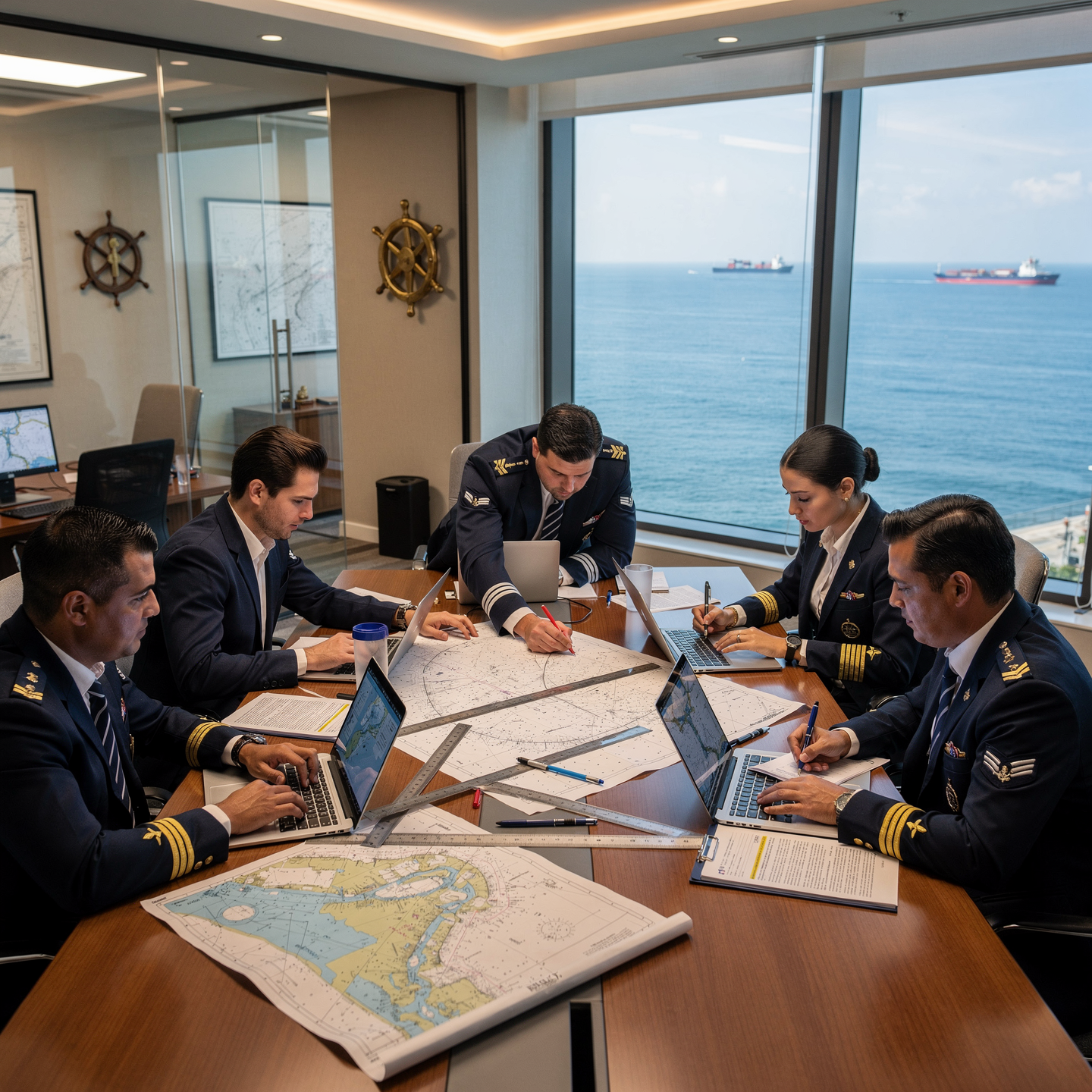
Master’s Degree in Arbitration and Naval Dispute Resolution

Why this master’s programme?

The Master’s in Naval Arbitration and Dispute Resolution

This program provides you with the tools and specialized knowledge to manage and resolve disputes in the complex maritime world. It immerses you in the international legal framework, the specific arbitration practices of the naval sector, and the negotiation and mediation skills essential for achieving efficient and fair solutions. Learn to analyze real-world cases, draft sound agreements, and lead conflict resolution processes with confidence and professionalism.

Differentiating Advantages

  • Practical Approach: resolution of simulated cases and analysis of relevant maritime jurisprudence.
  • Faculty of Experts: leading professionals in naval arbitration, maritime law, and dispute resolution.
  • Networking: networking opportunities with lawyers, shipowners, insurers, and industry experts.
  • Global Perspective: addressing the specificities of different legal systems and maritime cultures.
  • Key Skills: development of effective communication, critical thinking, and strategic decision-making.

Master’s Degree in Arbitration and Naval Dispute Resolution

Availability: 1 in stock

Who is it aimed at?

  • Maritime lawyers seeking to specialize in naval arbitration and dispute mediation.
  • Captains and officers of the merchant marine who wish to understand the legal aspects of naval operations.
  • Marine insurance professionals who need to deepen their knowledge of claims resolution and disputes.
  • Shipowners and ship managers interested in minimizing legal risks and optimizing negotiation strategies.
  • Law graduates and maritime professionals seeking comprehensive training in naval arbitration and dispute resolution.

Flexibility and Applicability

Adapted for working professionals: online format, practical cases based on real situations and expert teaching staff in the sector.

Objectives and skills

Managing and resolving maritime disputes:

“Analyze the legal framework (international conventions, national legislation) and relevant documentation (policies, charter contracts) to assess responsibilities and options.”

Advising on the application of maritime law:

“Manage maritime documentation (shipping documents, rosters, licenses) and resolve legal incidents (collisions, pollution) reporting to the Maritime Authority/Port Authority.”

Mediating in shipping commercial disputes:

“Analyze contractual documentation (charter agreements, bills of lading) and identify breaches.”

Designing maritime negotiation strategies:

Assess risks (weather, vessel condition, cargo) and prioritize safety to optimize the route and reduce costs.

Assessing and mitigating risks in naval operations:

Analyze meteorological and oceanographic information, adapting navigation and communications to optimize the safety and efficiency of the operation.

Implement efficient naval arbitration procedures:

Use standardized communications (VHF) and available means on board (lights, sound signals) to avoid collisions, documenting the actions taken.

Study plan – Modules

  1. Legal Foundations of International Maritime Arbitration: Key Conventions, Jurisdiction, and Arbitral Competence
  2. Structure and Dynamics of International Naval Disputes: Actors, Interests, and Common Typologies
  3. Advanced Mediation Techniques: Conflict Assessment, Agenda Setting, and Trust Building Between Parties
  4. Strategic Negotiation: BATNA and ZOPA Analysis and Integrative vs. Distributive Strategies in the Maritime Context
  5. Use of Nonverbal Communication and Active Listening Techniques for Detecting Hidden Interests and Emotional Management in Naval Negotiations
  6. Design and Application of Mediation Protocols Adapted to Maritime Disputes with Multiple Jurisdictions and Applicable Regulations
  7. Crisis and Complex Conflict Management: Impasse Resolution and Deadlock Management in Maritime Transport and Trade Arbitrations
  8. Inclusion of Technical Experts and Expert Witnesses in Mediation and Arbitration Processes Arbitration: Selection, Role, and Handling of Expert Reports

    Cultural and Diplomatic Aspects in International Maritime Negotiation: Intercultural Sensitivity and Adaptation of Strategies

    Implementation of Agreements and Arbitral Awards: Monitoring, Execution, and Preventive Mechanisms for Non-Compliance in the Naval Sector

  1. Fundamentals and evolution of maritime arbitration: international legal framework, institutions, and key treaties (New York Convention, UNCITRAL, CMI)
  2. Maritime contracts and arbitration clauses: detailed analysis of charter parties, insurance policies, and contracts for the sale and disposal of naval assets
  3. Advanced negotiation and mediation techniques in maritime disputes: communication tactics, emotional management, and collaborative resolution
  4. Procedures and protocols in maritime arbitration: filing claims, defense, expert evidence, and virtual hearings
  5. Jurisdiction and conflicts of laws: selection of applicable law, recognition and enforcement of arbitral awards in different countries
  6. Technological tools for comprehensive case management: digital platforms, document management, risk analysis, and monitoring of procedural timelines
  7. Strategic management of maritime disputes
  8. Complex cases: early identification, cost-benefit assessments, and defense strategy design

    Role of the maritime arbitrator: competencies, impartiality, declaration of conflicts of interest, and professional ethics

    Practical simulation of maritime arbitrations: case preparation, legal argumentation, and drafting of awards with a technical-legal approach

    Analysis of landmark cases and relevant jurisprudence: impact on global arbitration practice and emerging trends in maritime dispute resolution

  1. Theoretical Foundations of Arbitration in Maritime Disputes: Guiding Principles and Their Application in International Maritime Law
  2. Advanced Analysis of the Parties Involved: Shipowners, Insurers, Port Operators, and Maritime Authorities
  3. Contemporary Models and Specialized Mediation Techniques Applied to Complex Naval Disputes
  4. Strategic Negotiation in Multicultural and Multilateral Contexts within the International Maritime Sphere
  5. Evaluation and Management of Legal and Operational Risks During Alternative Dispute Resolution Processes
  6. Design and Structuring of Maritime Conciliation Agreements with Transnational Validity and Enforceability
  7. Use of Digital Technologies and Electronic Platforms for Remote Mediation and Arbitration in the Naval Sphere
  8. Effective Communication and Emotional Management Protocols for Conflict Resolution in High-Tension Environments
  9. Analysis of Landmark Cases and International Jurisprudence in Arbitration and Mediation Naval
  10. Integrated practices and simulations of mediation-negotiation processes for consolidating professional skills

  1. Fundamentals of maritime arbitration: basic concepts, applicable regulations, and differences with other dispute resolution methods
  2. Strategic design of evidence: selection, obtaining, and evaluation of evidence in maritime disputes
  3. Contractual and expert documentation: analysis of charter parties, marine insurance, and relevant international conventions
  4. Technical expert reports in maritime arbitration: the expert’s role, types of reports, and methodology of scientific and technical analysis
  5. Practical cases of expert evaluation: collisions, damage, pollution, and claims for delays
  6. Protocols for the presentation and defense of evidence in arbitration hearings
  7. Use of technology and digital tools for evidence management in maritime arbitration
  8. Advanced methods for evaluating and correlating technical and testimonial evidence
  9. Enforcement and international recognition of the arbitral award: procedures, common obstacles, and Mitigation strategies
  10. Analysis of the New York Convention and its impact on the effective enforcement of awards in the maritime field

    Responsibility and ethical aspects in arbitration practice: confidentiality, impartiality, and conflict of interest

    Comprehensive arbitration simulation: case preparation, evidence management, and mock hearings with a focus on naval arbitration

  1. Legal framework of international maritime law: sources, key treaties and conventions (UNCLOS, CLC, HNS, Salvage)
  2. Fundamental principles of maritime arbitration: party autonomy, jurisdiction, and enforceability of arbitral awards
  3. Relevant international institutions and organizations: CMI, ICSID, International Chamber of Commerce and their role in maritime arbitration
  4. Legal foundations of advanced maritime arbitration: UNCITRAL rules applied to maritime disputes and specific arbitration clauses
  5. Arbitral process in maritime disputes: admission of claims, appointment of specialized arbitrators, and critical procedural developments
  6. Jurisdiction and competence in maritime arbitration: comparative analysis of admissibility and arbitrability in different legal systems
  7. Means of proof in maritime arbitration: documentary evidence, technical expert evidence (ship inspection, cargo inspection), and Testimonials
  8. Early Resolution Mechanisms: Partial Agreements, Provisional Measures, and Emergencies in the Naval Context
  9. Enforceability and International Recognition of Naval Arbitral Awards under the New York Convention
  10. Resolution of Complex Disputes in Navigation and Maritime Transport: Collisions, General Average, Contracts, and Marine Insurance
  11. Advanced Analysis of Arbitration Clauses: Selection of Venue, Applicable Law, Language, and Scope of Jurisdiction
  12. Interaction between Naval Arbitration and State Courts: Annulment, Review, and Enforcement of Awards
  13. Practical Case Studies and Binding Jurisprudence from Recent International Naval Arbitrations
  14. Digital Tools and Document Management Techniques for Naval Arbitrations: Security of the Chain of Evidence and Electronic Communications
  15. Ethics, Confidentiality, and Conflicts of Interest in Advanced Maritime Arbitrations: International Standards and Professional codes
  16. Contemporary challenges and trends: arbitration in disputes related to offshore renewable energy, maritime security, and the environment

  1. Fundamentals and principles of international maritime arbitration: applicable regulations and conventions (UNCITRAL, ICSID, CMI)
  2. Design and structuring of arbitration clauses in maritime contracts: technical drafting and dispute prevention
  3. Comparative analysis of relevant legal systems in maritime arbitration: common law vs. civil law and their influence on dispute resolution
  4. Advanced naval mediation strategies: approach tactics, facilitation techniques, and emotion management in multicultural contexts
  5. Effective negotiation in the international maritime arena: application of the Harvard method and integrative and distributive negotiation techniques
  6. Specialized arbitration procedures in naval disputes: procedural stages, presentation of technical evidence, and sectoral expert reports
  7. Use of technologies and digital evidence in maritime arbitrations: electronic records, nautical charts, and electronic evidence
  8. Dispute resolution in Specialized sectors: marine insurance, environmental damage, collisions, and charter parties

    Ethics, impartiality, and confidentiality in maritime mediation and arbitration: professional standards and code of conduct

    Case studies and advanced simulation of maritime negotiation and arbitration: critical analysis and application of integrative solutions for complex disputes

  1. Legal Foundations of Maritime Arbitration: International Conventions, Applicable Law, and Competent Jurisdiction
  2. Dynamics and Particularities of Naval Disputes: Analysis of Landmark Cases and Global Trends
  3. Advanced Mediation and Negotiation Techniques Adapted to the Maritime Environment: Intercultural Communication, Emotional Management, and Persuasion Strategies
  4. Design and Application of Alternative Dispute Resolution (ADR) Protocols in International Naval Disputes
  5. Multidimensional Risk Assessment in Maritime Negotiations: Legal, Operational, Economic, and Environmental Aspects
  6. Strategic Management of Stakeholders: Identification, Motivations, Hidden Interests, and Power of Influence
  7. Implementation of Collaborative and Co-Creative Solution Models in Complex Naval Disputes
  8. Technological Tools to Optimize Mediation and Negotiation in Maritime Disputes: Digital Platforms, Artificial Intelligence, and Analytics
  9. Predictive

    Role of the arbitrator and mediator specializing in maritime law: obligations, professional ethics, and process administration

    Drafting final agreements, enforcement clauses, and monitoring mechanisms in international maritime arbitration

  1. Fundamentals of Naval Arbitration: Nature, Characteristics, and Advantages Compared to Other Dispute Resolution Mechanisms
  2. Applicable International Legal Framework: UN Conventions on the Law of the Sea, New York Convention on the Recognition and Enforcement of Arbitral Awards, and Specific Regulations for Maritime Arbitration
  3. Mediation in Naval Disputes: Principles, Phases, and Specialized Techniques for Maritime and Port Environments
  4. Strategic Negotiation: Advanced Negotiation Models Adapted to Complex and Multiparty Maritime Disputes
  5. Analysis and Management of Legal and Operational Risks in Naval Disputes: Identification, Assessment, and Mitigation
  6. International Arbitration Procedures and Protocols: Filing the Claim, Response, Hearings, Expert Evidence, and Issuance of the Award
  7. Documentation and Evidence in Naval Arbitration: Technical Requirements, Maritime Expert Evidence, and Evaluation of Technical Reports
  8. Role and Jurisdiction of Tribunals Specialized arbitration in maritime and port matters

    Practical application of ADR (Alternative Dispute Resolution) methods in real-world situations: case studies and simulations

    Ethical and professional considerations in maritime dispute resolution: confidentiality, impartiality, and independence

    Integration of new technologies in conflict management: digital platforms for arbitration, online mediation, and agreement monitoring

    Economic and operational impact of maritime disputes on international trade and maritime logistics

    Post-arbitration award management: enforcement, international recognition, and the role of port authorities

    Multidisciplinary coordination: lawyers, maritime experts, logistics and negotiation experts in comprehensive dispute resolution

    Advanced practical simulations: developing skills for arbitration, mediation, and negotiation in complex real-world scenarios

  1. International Foundations and Regulations of Maritime Arbitration: A Comprehensive Analysis of UNCITRAL, ICSID, and the CMI Rules Applied to Naval Disputes
  2. Advanced Models of Mediation and Negotiation in Maritime Law Disputes: Integrative, Distributive, and Transformative Techniques Adapted to the Shipping Context
  3. Dynamics and Particularities of Naval Disputes: Real Case Studies and Evaluation of the Technical, Legal, and Economic Factors Involved
  4. Specialized Arbitration Procedures for the Management of Maritime Claims, Breach of Charter Party Agreements, and Disputes in Marine Insurance
  5. Tools for the Strategic Design of Mediation Plans: Diagnosing the Parties, Setting Agendas, and Managing Expectations
  6. Evidentiary Strategies and Presentation of Expert Evidence in Naval Arbitrations: Technical Assessment of Reports from Experts in Naval Engineering, Damages, and cargo
  7. Technology-Assisted Negotiation: Use of Digital Platforms and Collaborative Systems for the Agile Resolution of International Disputes

    Impact of Local Legislation and Bilateral Treaties on the Configuration and Validity of Arbitration Agreements in Jurisdictions with High Port Complexity

    Management of Multinational and Multi-Rules Disputes: Coordination Between International and National Rules and Specific Contractual Clauses

    Ethics and Professional Responsibility in Maritime Mediation and Arbitration: Standards of Conduct, Confidentiality, and Duties of Arbitrators

    The Role of the Expert Naval Arbitrator: Technical Competencies, Leadership, and Resolution of Legal Ambiguities in Practice

    Alternative Dispute Resolution Methods in Maritime Matters: Conciliation, Mini-Trials, and Their Effective Integration into the Arbitration Process

    Advanced Drafting of Arbitral Awards: Structure, Legal and Technical Reasoning, and International recognition for enforcement

    Risk assessment and management in maritime arbitration proceedings: anticipating contingencies and mitigating impacts on award enforcement

    Practical workshop: comprehensive simulation of mediation and arbitration in naval disputes with a focus on strategic resolution and effective communication

  1. Conceptualization and design of the integrated arbitration system: legal foundations, legal architectures, and international regulatory framework applicable to maritime disputes
  2. Advanced alternative dispute resolution (ADR) methodologies: mediation, conciliation, arbitration, and their specialized application in the maritime sector
  3. Technological innovation in arbitration systems: digital platforms, blockchain for agreement traceability and ensuring procedural transparency
  4. Practical simulation of naval dispute scenarios: design of multidisciplinary case studies involving technical, legal, and operational aspects
  5. In-depth analysis of artificial intelligence implementation mechanisms for optimizing decision-making processes and predicting outcomes in maritime disputes
  6. Comprehensive stakeholder management: roles, responsibilities, and coordination among shipowners, port operators, insurers, and maritime authorities
  7. Environmental impact assessment and sustainability in dispute resolution: incorporation of ecological and regulatory compliance criteria in Arbitral decisions
  8. Development of cybersecurity and data protection protocols for the digitized management of arbitration, guaranteeing confidentiality and resilience against cyberattacks

    Simulation of hearings and arbitration proceedings in virtual environments: handling of evidence, technical testimony, and counterarguments using immersive technologies

    Final model of an integrated arbitration and resolution system: preparation of technical documentation, internal regulations, operating manuals, and a continuous improvement plan based on data intelligence

Career prospects

“`html

  • Naval Arbitrator: Resolution of commercial and technical disputes in the maritime sector.
  • Mediator in Maritime Disputes: Facilitating agreements between parties in maritime disputes.
  • Consultant in Maritime Dispute Resolution: Advising companies and organizations on the prevention and management of disputes.
  • Lawyer specializing in Maritime Arbitration: Legal representation in arbitration and judicial proceedings related to the maritime sector.
  • Marine Insurance Expert: Risk assessment and claims resolution in the field of marine insurance.
  • Naval Expert: Preparation of expert reports in maritime litigation.
  • Marine Claims Manager: Processing and resolution of claims arising from accidents and damage. Maritime.
  • Academic/Researcher: Development of research and teaching in the field of arbitration and naval dispute resolution.

“`

Entry requirements

Academic/professional profile:

Bachelor’s degree in Nautical Science/Maritime Transport, Naval/Marine Engineering or a related qualification; or proven professional experience on the bridge/in operations.

Language proficiency:

Functional Maritime English (SMCP) recommended for simulations and technical materials.

Documentation:

Updated CV, copy of qualification or seaman’s book, national ID/passport, motivation letter.

Technical requirements (for online):

Device with camera/microphone, stable internet connection, monitor ≥ 24” recommended for ECDIS/Radar-ARPA.

Admissions process and dates

Online
application

(form + documents).

Academic review and interview

Admissions decision

Admissions decision

(+ scholarship offer if applicable).

Place reservation

(deposit) and enrolment.

Induction

(access to the virtual campus, calendars, simulator guides).

Scholarships and financial support

  • Go Deeper: Master the most advanced strategies and techniques in naval arbitration and mediation.
  • Experts: Learn from leading professionals in maritime law and international dispute resolution.
  • Case Studies: Analyze real-life situations and develop your decision-making skills.
  • Networking: Expand your professional network with experts, arbitrators, and mediators in the maritime sector.
  • Certification: Obtain a recognized qualification that will boost your career in the field of law maritime.
Boost your career in the maritime legal field and become an expert in naval dispute resolution.

Testimonials

Frequently asked questions

Naval arbitration and dispute resolution.

Yes. The itinerary includes ECDIS/Radar-ARPA/BRM with harbor, ocean, fog, storm, and SAR scenarios.

Online with live sessions; hybrid option for simulator/practical placements through agreements.

Recommended functional SMCP. We offer support materials for standard phraseology.

Yes, with a relevant degree or experience in maritime/port operations. The admissions interview will confirm suitability.

Optional (3–6 months) through Companies & Collaborations and the Alumni Network.

Simulator practice (rubrics), defeat plans, SOPs, checklists, micro-tests and applied TFM.

A degree from Navalis Magna University + operational portfolio (tracks, SOPs, reports and KPIs) useful for audits and employment.

  1. Conceptualization and design of the integrated arbitration system: legal foundations, legal architectures, and international regulatory framework applicable to maritime disputes
  2. Advanced alternative dispute resolution (ADR) methodologies: mediation, conciliation, arbitration, and their specialized application in the maritime sector
  3. Technological innovation in arbitration systems: digital platforms, blockchain for agreement traceability and ensuring procedural transparency
  4. Practical simulation of naval dispute scenarios: design of multidisciplinary case studies involving technical, legal, and operational aspects
  5. In-depth analysis of artificial intelligence implementation mechanisms for optimizing decision-making processes and predicting outcomes in maritime disputes
  6. Comprehensive stakeholder management: roles, responsibilities, and coordination among shipowners, port operators, insurers, and maritime authorities
  7. Environmental impact assessment and sustainability in dispute resolution: incorporation of ecological and regulatory compliance criteria in Arbitral decisions
  8. Development of cybersecurity and data protection protocols for the digitized management of arbitration, guaranteeing confidentiality and resilience against cyberattacks

    Simulation of hearings and arbitration proceedings in virtual environments: handling of evidence, technical testimony, and counterarguments using immersive technologies

    Final model of an integrated arbitration and resolution system: preparation of technical documentation, internal regulations, operating manuals, and a continuous improvement plan based on data intelligence

Request information

  1. Complete the Application Form.

  2. Attach your CV/degree certificate (if you have it to hand).

  3. Indicate your preferred cohort (January/May/September) and whether you would like the hybrid option with simulator sessions.

    An academic advisor will contact you within 24–48 hours to guide you through the admission process, scholarships, and compatibility with your professional schedule.

Please enable JavaScript in your browser to complete this form.
Click or drag a file to this area to upload.

Faculty

0
    0
    Tu carrito
    Tu carrito esta vacíoRegresar a la tienda
    Scroll to Top


