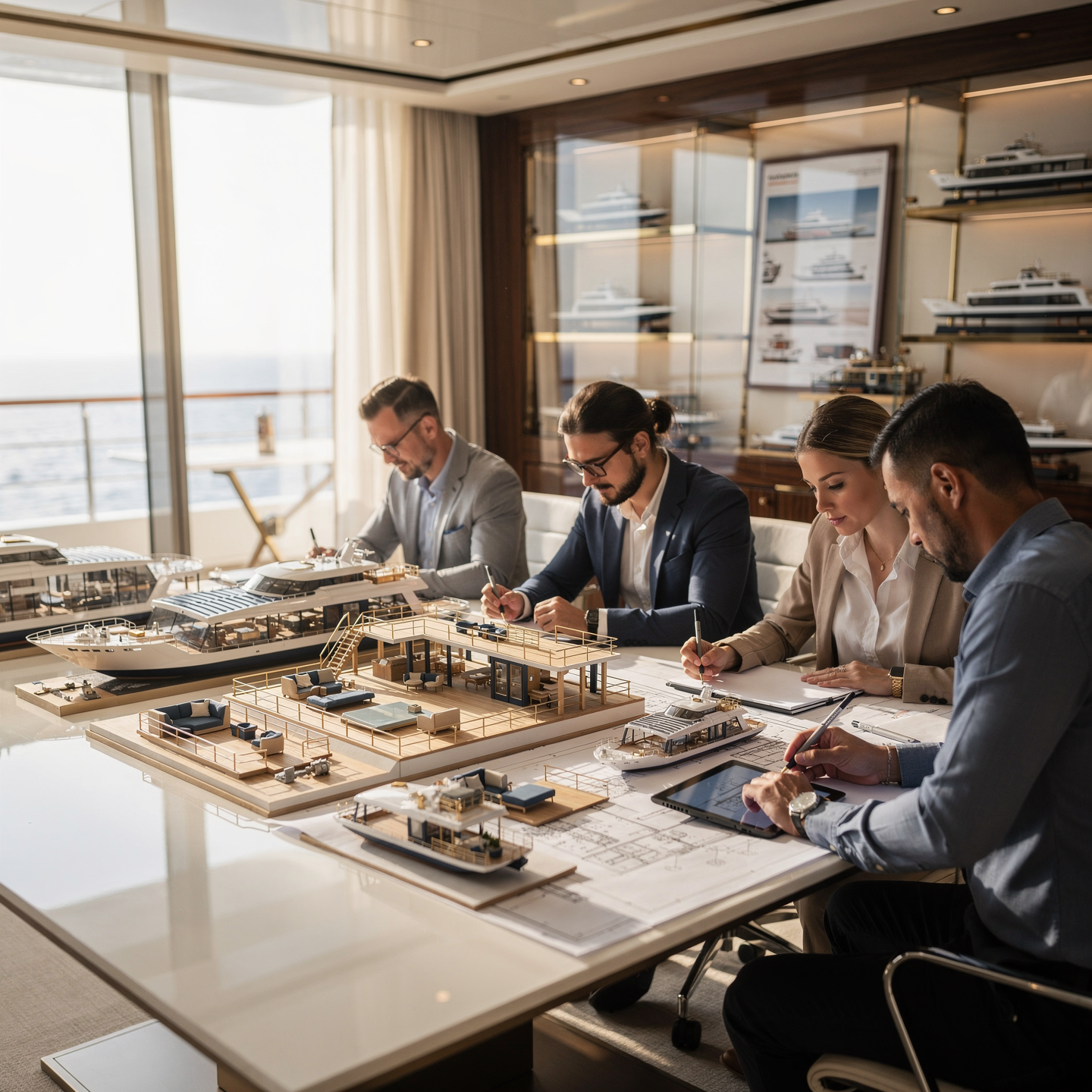
Master’s Degree in Interior Design for Luxury Yachts and Cruise Ships

Why this master’s programme?

The Master’s Degree in Interior Design for Luxury Yachts and Cruise Ships

This program prepares you to create exclusive nautical spaces, combining innovation, functionality, and sophistication. Learn to master the latest trends in interior design, high-end materials, and advanced technologies, adapting them to the specific needs of the naval sector. This program provides you with the necessary tools to manage complex projects, from conceptualization to final execution, guaranteeing unforgettable onboard experiences.

Differentiating Advantages

  • Specialization in the nautical sector: Specific focus on the needs and requirements of luxury yachts and cruise ships.
  • Cutting-edge software and tools: Mastery of 3D design, rendering, and project management software.
  • Collaboration with industry professionals: Direct contact with renowned shipyards, suppliers, and design studios.
  • Real-world projects: Development of practical projects that simulate professional commissions, enhancing your portfolio.
  • Visits to facilities and events Nautical: An immersive experience in the world of luxury naval design.

Master’s Degree in Interior Design for Luxury Yachts and Cruise Ships

Availability: 1 in stock

Who is it aimed at?

  • Experienced architects and interior designers who wish to specialize in the nautical sector, learning the particularities of design in confined and dynamic spaces.
  • Product and furniture designers who seek to expand their portfolio into a high-end market with a high demand for customization.
  • Naval engineers and designers interested in integrating aesthetics and functionality in the interior design of luxury vessels.
  • Nautical professionals (builders, shipyards, brokers) who want to expand their knowledge of the latest trends and materials in yacht and cruise ship interior design.
  • Architecture and design students who aspire to a career in design Luxury nautical training, providing comprehensive and practical experience in the sector.

    Flexibility and specialization

    Adapted to the needs of professionals: practical final project and personalized tutoring, access to specialized software and networking with leading companies in the sector.

Objectives and skills

To conceptualize and materialize exquisite nautical spaces:

Select high-end materials and finishes, integrating lighting and sound design to create luxurious and functional nautical environments.

Mastering the regulations and specific materials of luxury naval design:

“Select innovative materials that comply with IMO regulations and sustainability standards, optimizing weight and performance.”

Manage naval interior design projects from start to finish with excellence:

“Develop a comprehensive plan that includes design, material selection, regulatory compliance, budget management, and execution supervision, ensuring customer satisfaction and project viability.”

Leading innovation and trends in luxury nautical interior design:

“To research and apply sustainable materials and cutting-edge technologies, adapting them to the specific needs of each luxury nautical project.”

Creating unique sensory experiences aboard luxury vessels:

Design tasting menus with exclusive pairings, personalized soundscapes, and a selection of subtle fragrances to evoke memorable emotions on every journey.

Integrating sustainability and energy efficiency into the interior design of yachts and cruise ships:

Select eco-friendly materials, optimize LED lighting and energy management systems, and integrate renewable energy technologies (solar, wind) to reduce the carbon footprint and overall energy consumption.

Study plan – Modules

  1. Fundamentals of Nautical Interior Design: Specific Characteristics and Regulations Applicable to Luxury Yachts and Cruise Ships
  2. Advanced Space Analysis: Techniques for Maximizing Habitability and Functionality within Volumetric and Structural Constraints
  3. Nautical Ergonomics and Anthropometry: Adapting Furniture and Decorative Elements for Comfort and Safety in a Marine Environment
  4. High-Strength and Luxury Materials: Selection, Physical-Chemical Properties, Behavior in a Marine Environment, and IMO Certifications
  5. Integrated Spatial Planning: Use of Specialized Software for 3D Modeling, Circulation Simulation, and Interior Flow Optimization
  6. Modular and Adaptable Design: Solutions for Variable and Multifunctional Spaces that Maximize Efficiency without Aesthetic Sacrifice
  7. Integration of Smart Technology: Home Automation Systems and Automation for Controlling Lighting, Climate Control, and Multimedia Devices in Nautical Interiors
  8. Interior Lighting Luxury nautical spaces: efficient and aesthetic lighting design, considering factors such as movement, energy savings, and the creation of distinct environments.

    Premium color palettes and textures: selection based on trends, visual perception in enclosed spaces, and resistance to marine corrosion.

    Acoustic optimization: design for insulation and control of noise generated by machinery, propulsion systems, and adverse maritime conditions.

    Optimal distribution of fixed and movable equipment and furnishings: analysis of loads, anchor points, and dynamic displacements during navigation.

    High-level nautical aesthetics: incorporation of visual and artistic elements that reflect the style, culture, and exclusivity of the owner or brand.

    Applied sustainability: strategies to minimize environmental impact through eco-efficient materials and onboard resource management.

    International standards and certifications: compliance with SOLAS, IMO, and specific regulations for the interiors of recreational and service vessels.

    Studies of Case studies and benchmarking: detailed analysis of landmark yacht and cruise ship projects, identifying best practices and innovative solutions.

    Multidisciplinary planning: coordination between naval architecture, structural engineering, and interior design to ensure coherence and comprehensive safety.

    Advanced simulation and virtual prototyping: use of augmented reality and BIM to validate design before physical implementation.

  1. Introduction to nautical materials: specific characteristics for marine environments and their impact on the interior design of luxury yachts and cruise ships
  2. Sustainable materials: definition, classification, and their importance in reducing environmental impact in the nautical industry
  3. Advanced composite materials: carbon fiber, eco-friendly resins, and their application in furniture and interior finishes
  4. Innovations in marine coatings: anti-corrosion technologies, resistance to salinity, humidity, and UV rays
  5. Selection of sustainable hardwoods: traceability criteria, FSC and PEFC certifications, and adaptation to nautical conditions
  6. Technical textiles for nautical interiors: fire-retardant, antimicrobial, wear-resistant properties, and IMO FTP certifications
  7. Use of lightweight and recycled metals: anodized aluminum, high-strength stainless steel, and manufacturing processes Eco-efficient

    Software-aided design for the integration of sustainable materials: parametric modeling, environmental simulation, and life cycle assessment (LCA)

    Applicable international standards and certifications: REACH, IMO, LEED and BREEAM certifications adapted for the luxury nautical sector

    Case studies: interior design projects for yachts and cruise ships focusing on innovative and sustainable materials

    Performance evaluation methodologies: durability, mechanical resistance, fire behavior, and toxicity tests

    Maintenance and renovation processes: sustainable techniques to preserve materials and minimize the ecological footprint throughout the interior’s lifespan

    Economic and ecological impact: cost-benefit analysis of innovative materials and their contribution to energy efficiency in luxury vessels

    Future innovations and trends: biomaterials, applied nanotechnology, and smart materials for interior design nautical

  1. Fundamentals of spatial distribution in nautical environments: analysis of habitable space versus usable space in luxury yachts and cruise ships.
  2. Ergonomic principles applied to naval interior design: adaptation of the human body and biomechanics to compact and dynamic environments.
  3. International regulations and standards for interior design in high-end vessels: SOLAS, IMO, and specific regulations for comfort and safety zones.
  4. Optimization of circulation flow: techniques to maximize functionality and accessibility in corridors, cabins, and social areas, avoiding traffic disruptions.
  5. Modular and flexible design: implementation of convertible and multifunctional furniture to maximize the use of limited space without compromising aesthetics or comfort.
  6. Advanced selection of materials and finishes: technical criteria for resistance to corrosion, humidity, vibrations, and wear, maintaining luxury and exclusivity.
  7. Integration of concealed technological systems: solutions for lighting, climate control, Sound and home automation that do not compromise ergonomics or spatial perception.

    Study of the influence of sea movement on ergonomics: design of furniture and non-slip anchors, as well as a layout that minimizes the risk of accidents.

    User-centered design: analysis of passenger and crew profiles to personalize ergonomic and spatial solutions that guarantee an exceptional comfort experience.

    Case studies and benchmarking: evaluation of real and cutting-edge projects in nautical interior design to understand applicability and trends in the high-end market.

  1. Fundamentals of HVAC systems in luxury yachts and cruise ships: types, thermodynamic principles, and selection based on interior volumes and usage profiles
  2. Energy integration: efficient management of onboard energy sources, hybrid systems, renewable energies, and optimization of consumption in enclosed spaces
  3. Advanced design and calculation of marine lighting: lighting technology specific to marine environments, selection of LED sources, color codes, and SOLAS regulations relating to lighting systems
  4. Configuration of state-of-the-art audio-visual systems: applied acoustics, sound insulation, seamless integration, and centralized control via home automation
  5. Smart home automation: communication protocols, device integration, remote control systems, and automation for comprehensive management of onboard comfort and security
  6. International standards and mandatory certifications for onboard technical systems: Compliance with SOLAS, MED, ISO 1940, and specific regulations for the luxury marine industry.

    Advanced weight and balance management: structural analysis for the installation of technical systems, evaluation of the center of gravity and its impact on stability and comfort.

    Structural compatibility and isolation techniques: evaluation of vibrations, heat dissipation, and protection against electromagnetic interference in confined spaces.

    Multidisciplinary integration: coordination between naval architects, electrical engineers, designers, and technicians to ensure safe, efficient, and aesthetically coherent systems.

    Case studies and real-world simulations: design and implementation of technical systems in luxury yacht and cruise ship projects, failure analysis, and post-installation optimization.

  1. Fundamentals of nautical lighting: characteristics of light in confined spaces and its behavior on reflective and matte surfaces inside luxury yachts and cruise ships
  2. Applied sensory design: visual and emotional perception in high-end nautical environments to maximize comfort and user experience
  3. Types of advanced light sources: high-efficiency LEDs, OLEDs, fiber optics, and integrated luminaires with dynamic control
  4. Intelligent lighting management: automated systems based on presence, daylight, and color temperature sensors for energy and ambiance optimization
  5. Integration of IoT technologies in lighting: communication protocols (DMX, DALI, KNX) and centralized remote control via apps and touch consoles
  6. Specific regulations and certifications for lighting in maritime spaces: compliance with international standards and marine electrical safety criteria
  7. Comprehensive acoustic design: insulation, absorption, and reverberation control Adapted to nautical structures and materials

    Innovative acoustic materials: sound-absorbing panels, diffusers, and composite insulators adapted to marine and high-humidity environments

    Implementation of intelligent acoustic systems: active noise cancellation (ANC) and directional speaker systems for private and public spaces

    Synergy between lighting and acoustics: sensory harmonization to enhance well-being and exclusivity in lounges, cabins, and common areas

    Advanced simulation and modeling software: tools to predict lighting and acoustic behavior during design and virtual prototyping

    Biophilic design strategies: incorporation of natural effects through lighting and sound to create relaxing and sophisticated spaces

    Calibration and predictive maintenance of intelligent systems to ensure longevity and operational efficiency in maritime conditions

    Case studies and real-world projects: detailed analysis of iconic yachts and cruise ships that have implemented these technologies Cutting-edge lighting and acoustics

    Future trends: development of photonic and acoustic materials and multisensory systems applied to luxury nautical interior design

  1. Fundamentals of Project Management in Luxury Yachts and Cruise Ships: Scope, Costs, Quality, and Time
  2. Advanced Planning and Control Models: PMI, Agile, and Critical Chain Methodologies Applied to Nautical Design
  3. Customization and Customer Experience: Requirements Analysis, Detailed Briefing, and Development of Tailor-Made Proposals
  4. Interdisciplinary Coordination: Integration of Naval Architecture, Engineering, Interior Design, and Specialized Suppliers
  5. Quality Management Systems in Nautical Projects: ISO Standards, Certifications, and Assurance of Luxury Standards
  6. Workflow Optimization: Lean and Six Sigma Management Techniques for Reducing Time and Costs Without Compromising Design
  7. Software and Technological Tools for Comprehensive Management: BIM, 3D CAD, Document Management, and Real-Time Communication
  8. Management of Specific Risks in Marine Projects: Vulnerability Analysis, Contingencies and preventive protocols
  9. Selection and management of exclusive materials: technical criteria, marine durability, and sustainability in nautical design

    Strategies for advanced customization: modular solutions, handcrafted finishes, and integrated technology

    Effective communication with ultra-exclusive clients: negotiation techniques, project presentations, and expectation management

    Financial planning and budget control: development of financial schedules and variance control

    Managing a multidisciplinary team: leadership, motivation, and conflict resolution in high-pressure environments

    Supervision and control of onboard construction: auditing processes, technical inspection, and compliance with international regulations

    Post-delivery strategies: maintenance, upgrades, and personalized service for luxury yachts and cruise ships

  1. Fundamentals of 3D Modeling Applied to Nautical Interiors: Structures, Details, and Ergonomics
  2. Advanced Software: Deep dive into leading tools such as Rhino, Autodesk 3ds Max, and Blender for design and modeling of yachts and cruise ships
  3. Digital Sculpting and Parametric Modeling Techniques for Organic Surfaces in Nautical Interior Spaces
  4. BIM Integration in Nautical Projects: Optimizing the Workflow Between Design, Engineering, and Manufacturing
  5. Creation and Management of Photorealistic Textures Specific to Marine Environments: Fine Woods, Metals, Technical Fabrics, and Moisture-Resistant Finishes
  6. Advanced Lighting Configuration: Simulation of natural and artificial light sources, including refraction, reflection, and soft shadow effects in enclosed spaces
  7. Physically and Trace-Based Rendering
  8. Ray tracing for ultra-realistic finishes using engines like V-Ray, Corona Renderer, and Octane
  9. Post-production and color correction for nautical renders: specific techniques to highlight maritime materials and atmospheres
  10. Optimization of models for virtual reality (VR) and augmented reality (AR): creation of immersive experiences for clients and contextual design validation
  11. Collaborative workflow and digital project management: integration with multidisciplinary teams for effective delivery and quality control in highly complex projects
  1. Fundamentals of Marine Acoustics: Physical Principles of Sound in Confined Spaces and Marine Materials
  2. Acoustic Design for Yacht and Cruise Ship Interiors: Strategies to Minimize Reverberation, Echo, and Structural Noise
  3. Advanced Selection of Acoustic Materials: Insulators, Absorbers, and Diffusers Specifically Designed for Marine Environments and High Humidity
  4. Integration of Acoustic Insulation Systems into the Construction Process: Structural Considerations and Applicable International Standards
  5. Thermal Comfort Assessment: Key Parameters and Reference Standards for Premium Marine Environments
  6. Design of High-Energy-Efficiency HVAC Systems: HVAC Solutions Adapted to Confined Spaces and Navigation Conditions
  7. Innovations in Thermal Insulation Materials: Nanocomposites, Rigid Foams, and Reflective Coatings for Yachts and Cruise Ships
  8. Digital Acoustic and Thermal Simulation and Modeling: Use of Advanced Software for Predicting performance and optimizing integrated solutions

    Implementation of smart technologies for environmental control: IoT sensors, automation, and onboard energy management systems

    Optimizing acoustic and thermal insulation in critical areas: cabins, lounges, engines, and technical areas

    Evaluation and mitigation of mechanical noise and vibrations: analysis of sources, transmission, and specific technical solutions

    Impact of acoustics and thermal comfort on user experience and perceived value of luxury interior design

    Installation and maintenance protocols to ensure the durability and performance of acoustic and thermal systems in extreme marine environments

    Comparative study of traditional versus innovative technologies in the context of luxury yachts and cruise ships

    Case studies and analysis of real projects: multifunctional integration and holistic design for sustainability and energy efficiency

  1. Fundamentals and advances in sustainable materials: biocomposites, natural fibers, and recycled polymers applied to marine interiors
  2. Evaluation of technical properties: mechanical strength, durability, moisture resistance, and abrasion resistance in marine environments
  3. Innovation in eco-friendly finishes: low-environmental-impact processes and advanced manufacturing techniques for luxury yachts and cruise ships
  4. Incorporation of green technologies: thermal insulation, acoustic control, and energy efficiency systems integrated into interior design
  5. Key international standards and certifications: LEED, BREEAM, ISO 14001, and specific certifications for the marine sector
  6. Life cycle assessment (LCA) methodologies and their application in the selection of materials for marine interiors
  7. Marine compatibility and certification: compliance with IMO, RINA, and Bureau Veritas regulations for materials used in vessels
  8. Modular and sustainable design: techniques to optimize material use and minimize waste during manufacturing and installation
  9. Case studies: analysis of yacht and cruise ship interior projects that integrate sustainable innovation and international certification
  10. Inspection and quality control protocols: ensuring the luxury standard with environmental responsibility and document traceability
  1. Introduction to comprehensive nautical interior design: key concepts, space specificities, and applicable regulations for luxury vessels
  2. Analysis of advanced materials: selection and technical properties of fine woods, composites, marine fabrics, and metals resistant to marine corrosion
  3. Ergonomic design and functionality: space optimization for comfort, safety, and accessibility in accordance with international standards for yachts and cruise ships
  4. Technological integration and home automation: intelligent systems for lighting, climate control, audio, video, and environmental control in vessel interiors
  5. Innovation in nautical lighting: design of strategic LED systems, control of ambient and technical lighting to maximize energy efficiency and aesthetics
  6. Project management for luxury interiors: planning, multidisciplinary coordination, cost control, and schedule management in complex nautical environments
  7. Implementation of sustainability criteria: selection of eco-friendly materials, energy optimization, and management
  8. Waste management in the design and construction process
  9. Applicable regulations and certifications: compliance with SOLAS, MARPOL, and specific shipbuilding industry standards for habitable interiors
  10. Acoustics and insulation in interior spaces: advanced techniques for noise and vibration control in demanding yacht and cruise ship environments
  11. Final project development: integration of all learned elements to develop an innovative, sustainable, and fully executable comprehensive design with a professional presentation

Career prospects

“`html

  • Interior Designer for Luxury Yachts and Cruise Ships: Creation and development of design projects, from conceptualization to execution.
  • Nautical Interior Design Consultant: Advising shipyards, shipowners, and owners on material selection, space distribution, and innovative solutions.
  • Project Manager for Naval Interior Design Projects: Comprehensive project management, coordinating teams, budgets, and deadlines.
  • Designer of Furniture and Accessories for Luxury Vessels: Creation and development of exclusive and functional pieces adapted to the marine environment.
  • 3D Visualizer specializing in Nautical Interior Design: Creation of high-quality 3D renderings and animations for project presentations.
  • Design Manager in Shipyards or Equipment Companies
  • Naval: Leadership and coordination of design teams, ensuring quality and innovation.
  • Interior Decorator for Luxury Yachts and Cruise Ships: Selection of decorative elements, textiles, and finishes to create exclusive and personalized environments.
  • Teacher/Trainer in Nautical Interior Design: Transmission of knowledge and skills to future professionals in the sector.
  • Freelance/Entrepreneur: Development of own projects and interior design services for luxury yachts and cruise ships.

“`

Entry requirements

Academic/professional profile:

Bachelor’s degree in Nautical Science/Maritime Transport, Naval/Marine Engineering or a related qualification; or proven professional experience on the bridge/in operations.

Language proficiency:

Functional Maritime English (SMCP) recommended for simulations and technical materials.

Documentation:

Updated CV, copy of qualification or seaman’s book, national ID/passport, motivation letter.

Technical requirements (for online):

Device with camera/microphone, stable internet connection, monitor ≥ 24” recommended for ECDIS/Radar-ARPA.

Admissions process and dates

Online
application

(form + documents).

Academic review and interview

Admissions decision

Admissions decision

(+ scholarship offer if applicable).

Place reservation

(deposit) and enrolment.

Induction

(access to the virtual campus, calendars, simulator guides).

Scholarships and financial support

  • Master Naval Interior Design: Learn the latest trends and technologies to create unique and luxurious spaces on yachts and cruise ships.
  • Advanced Design Software: Intensive training in 3D CAD/CAM software specializing in naval interior design.
  • Innovative and Sustainable Materials: Discover the properties and applications of cutting-edge materials, prioritizing sustainability and comfort.
  • Real-World Projects: Develop practical projects from conception to execution, applying the knowledge acquired.
  • Networking with the Industry: Establish contacts with leading shipyards, suppliers, and designers in the luxury naval design sector.
Boost your career and become an expert in interior design for yachts and luxury cruises.

Testimonials

Frequently asked questions

Yes. The itinerary includes ECDIS/Radar-ARPA/BRM with harbor, ocean, fog, storm, and SAR scenarios.

Online with live sessions; hybrid option for simulator/practical placements through agreements.

To interior designers, architects and related professionals who wish to specialize in the design of luxury yachts and cruise ships for a high-net-worth clientele.

Recommended functional SMCP. We offer support materials for standard phraseology.

Yes, with a relevant degree or experience in maritime/port operations. The admissions interview will confirm suitability.

Optional (3–6 months) through Companies & Collaborations and the Alumni Network.

Simulator practice (rubrics), defeat plans, SOPs, checklists, micro-tests and applied TFM.

A degree from Navalis Magna University + operational portfolio (tracks, SOPs, reports and KPIs) useful for audits and employment.

  1. Introduction to comprehensive nautical interior design: key concepts, space specificities, and applicable regulations for luxury vessels
  2. Analysis of advanced materials: selection and technical properties of fine woods, composites, marine fabrics, and metals resistant to marine corrosion
  3. Ergonomic design and functionality: space optimization for comfort, safety, and accessibility in accordance with international standards for yachts and cruise ships
  4. Technological integration and home automation: intelligent systems for lighting, climate control, audio, video, and environmental control in vessel interiors
  5. Innovation in nautical lighting: design of strategic LED systems, control of ambient and technical lighting to maximize energy efficiency and aesthetics
  6. Project management for luxury interiors: planning, multidisciplinary coordination, cost control, and schedule management in complex nautical environments
  7. Implementation of sustainability criteria: selection of eco-friendly materials, energy optimization, and management
  8. Waste management in the design and construction process
  9. Applicable regulations and certifications: compliance with SOLAS, MARPOL, and specific shipbuilding industry standards for habitable interiors
  10. Acoustics and insulation in interior spaces: advanced techniques for noise and vibration control in demanding yacht and cruise ship environments
  11. Final project development: integration of all learned elements to develop an innovative, sustainable, and fully executable comprehensive design with a professional presentation

Request information

  1. Complete the Application Form.

  2. Attach your CV/degree certificate (if you have it to hand).

  3. Indicate your preferred cohort (January/May/September) and whether you would like the hybrid option with simulator sessions.

    An academic advisor will contact you within 24–48 hours to guide you through the admission process, scholarships, and compatibility with your professional schedule.

Please enable JavaScript in your browser to complete this form.
Click or drag a file to this area to upload.

Faculty

0
    0
    Tu carrito
    Tu carrito esta vacíoRegresar a la tienda
    Scroll to Top


