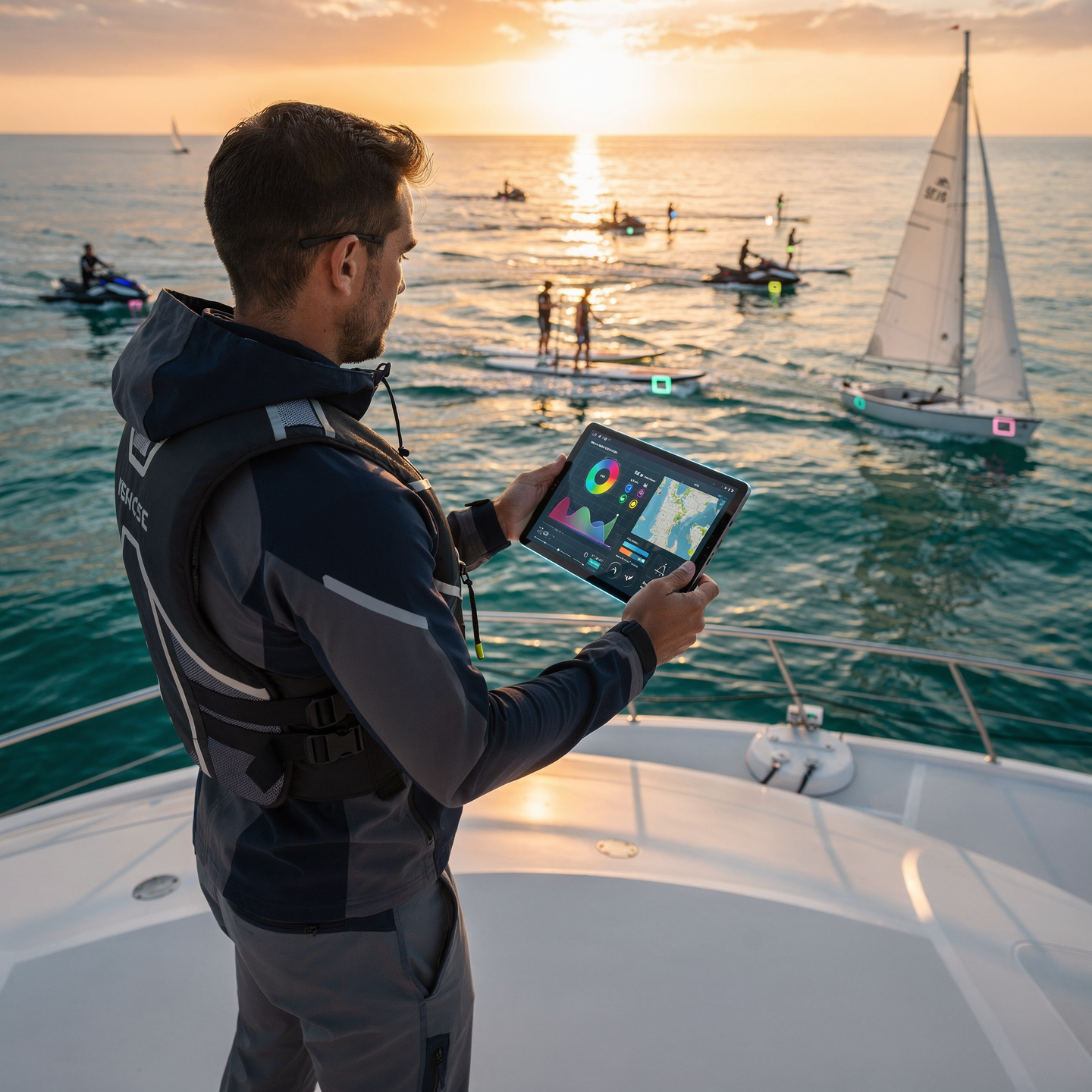
Master’s Degree in Innovation in Maritime Sports Tourism

Why this master’s programme?

The Master’s in Innovation in Maritime Sports Tourism

Prepares you to lead the transformation of a booming sector. Learn to design unique and sustainable tourism experiences, integrating the latest trends in water sports, technology, and resource management. Master specialized digital marketing strategies, current legislation, and financing for innovative projects.

Differential Advantages

  • Practical Approach: Development of real projects with companies in the sector.
  • Strategic Networking: Access to a network of top-level professionals and experts.
  • Innovative Methodology: Design thinking, lean startup, and agile management applied to sports tourism.
  • Sustainability and Responsibility: Learn to minimize environmental impact and maximize social benefit.
  • Global Vision: Analysis of international success stories and global market trends.

Master’s Degree in Innovation in Maritime Sports Tourism

Availability: 1 in stock

Who is it aimed at?

  • Tourism and sports professionals looking to specialize in a booming sector and lead innovative projects.
  • Entrepreneurs with a vision to develop distinctive and sustainable maritime sports tourism products and services.
  • Tourism destination managers who want to diversify their offerings and promote maritime sports tourism as an engine for local development.
  • Marketing and communications managers interested in creating effective strategies to promote unique maritime sports tourism experiences.
  • Graduates in tourism, sports science, or related fields who aspire to a professional career at the forefront of maritime sports tourism.

Career flexibility
Designed for working professionals: flexible online format, updated content, and networking with experts of the sector.

Objectives and skills

Develop innovative maritime sports tourism products:

“Identify niche opportunities in maritime sports tourism and adapt the offer to market demands.”

Manage and market high-value maritime sports tourism experiences:

“Design customized tour packages that integrate exclusive nautical activities, luxury accommodation and wellness services, aimed at high-income market segments.”

Leading innovation projects in the maritime sports tourism sector:

“To define the strategic vision of the project, mobilizing resources and talent to transform innovative ideas into tangible solutions that drive the sustainable growth of maritime sports tourism.”

Evaluate the economic viability of maritime sports tourism projects:

Analyze profitability, return on investment, and projected cash flow, considering optimistic, pessimistic, and most likely scenarios.

Design specialized digital marketing strategies for maritime sports tourism:

“Segment audiences with interests in water sports and travel, creating engaging content that highlights unique experiences and personalized packages.”

Implement emerging technologies to improve the customer experience:

“Integrating AI-powered chatbots for 24/7 customer service, personalizing responses based on customer history and escalating complex queries to human agents.”

Study plan – Modules

  1. Conceptual framework of maritime sports tourism: definition, characteristics, and scope of application in a global context
  2. Analysis of key factors for sustainable competitiveness: natural resources, infrastructure, and user experience
  3. Environmental and social impact assessment in maritime sports tourism destinations: advanced methodologies and tools
  4. Design of comprehensive strategies for sustainable management: territorial planning, multi-sectoral governance, and collaborative models
  5. Technological innovation applied to maritime sports tourism: intelligent systems, digitalization, and management platforms
  6. Circular economy models and their implementation in maritime sports activities for reducing ecological impact
  7. Methodologies for demand analysis and market segmentation specializing in nautical sports tourism
  8. The role of certification and international standards for sustainability and quality in maritime destinations
  9. Advanced sustainable marketing strategies: responsible communication, brand positioning, and customer loyalty of users
  10. Financial instruments and investment mechanisms for innovative projects in sustainable maritime sports tourism

    Risk management and resilience to climate change in maritime sports destinations

    Case studies of success and failure in the competitive and sustainable development of maritime sports tourism destinations

    Continuous evaluation and monitoring: key performance indicators (KPIs) for sustainability and competitiveness

    Training and capacity building in innovation and sustainability for public and private stakeholders in the maritime tourism sector

    Promoting community participation and responsible tourism in the preservation of maritime and cultural heritage

  1. Fundamentals of the nautical tourism experience: definition, characterization, and current trends in maritime sports tourism
  2. Designing innovative experiences: applied methodologies (design thinking, co-creation, and customer journey mapping) for creating memorable nautical activities
  3. Environmental analysis and territorial diagnosis: evaluation of natural resources, port infrastructure, and ecosystems for the sustainable planning of nautical tourism products
  4. Comprehensive management of nautical projects: strategic planning, inter-institutional coordination, and financing models for maritime sports tourism development
  5. Application of advanced technologies in nautical experiences: augmented reality, GNSS positioning systems, environmental monitoring, and digital platforms to optimize user interaction
  6. Safety and specific regulations: compliance with international standards, maritime safety protocols, and risk management in nautical sports activities
  7. Experiential marketing and strategic communication: techniques for promoting
  8. Innovative nautical experiences, segmentation of specialized markets, and customer loyalty
  9. Sustainability and environmental responsibility: implementation of eco-efficient practices and awareness programs in the field of maritime sports tourism
  10. Operation and human resource management: training, key competencies, and leadership in teams dedicated to the execution of innovative nautical activities
  11. Monitoring, evaluation, and continuous improvement: satisfaction metrics, performance indicators, and application of feedback for the constant optimization of nautical experiences
  1. Fundamental principles of sustainability applied to nautical sports tourism: environmental, economic, and sociocultural dimensions
  2. Life cycle analysis and environmental impact assessment of nautical infrastructure and activities
  3. Development and application of key sustainability indicators for maritime sports tourism destinations
  4. Implementation of certified environmental management systems in nautical tourism companies (ISO 14001, EMAS)
  5. Strategies for minimizing the ecological footprint in nautical operations: sustainable vessel design and use of renewable energy
  6. Models of collaborative governance and community participation in the sustainable management of maritime sports tourism
  7. Competitive analysis using benchmarking tools and market research in the sustainable nautical sports sector
  8. Technological innovation applied to operational efficiency and sustainable competitiveness: IoT, big data, and blockchain in management tourism
  9. Strategic planning integrating circular economy criteria in nautical sports destinations and events
  10. International, regional, and local regulatory framework for sustainability in maritime sports tourism: compliance and incentive opportunities
  11. Environmental and social risk management in nautical tourism projects: mitigation plans and emergency protocols
  12. Sustainable marketing strategies to position responsible nautical sports destinations and services
  13. Financing innovative projects for sustainability in nautical tourism: European funds, green investments, and disruptive business models
  14. Case studies: critical analysis of successful initiatives in sustainability and competitiveness in nautical sports tourism globally
  15. Digital tools for real-time monitoring of sustainable performance and user experience in maritime sports tourism
  1. Fundamentals of strategic management applied to maritime sports tourism projects: environmental analysis, competitive diagnosis, and establishing competitive advantages
  2. Advanced models of port governance: public-private management structures, inter-institutional cooperation mechanisms, and citizen participation
  3. Technological innovation in the sector: integration of IoT systems, maritime sensors, and digital platforms for operational optimization and user experience
  4. Agile methodologies for project planning and execution: SCRUM, Kanban, and results-based management in a maritime sports context
  5. Comprehensive management of nautical safety: international regulations (SOLAS, ISM), emergency prevention and response protocols in sports environments
  6. Risk analysis and mitigation in nautical activities: evaluation of meteorological conditions, technical and human aspects
  7. Advanced strategies
  8. International marketing of sports tourism services: market segmentation, positioning, and use of digital channels
  9. Financing and sustainability in maritime sports projects: investment sources, green financing, and ESG criteria applied to sports tourism
  10. Use of Big Data and predictive analytics for optimizing customer experience and strategic decision-making
  11. Implementation of integrated management systems (IMS) for operational control, quality, and continuous improvement in maritime sports tourism destinations
  12. Case studies and international best practices in innovation and management of maritime sports tourism projects
  13. Legal and regulatory aspects in the operation and management of maritime sports projects: contracts, licenses, and regulatory compliance
  14. Development of managerial skills: leadership, advanced negotiation, and talent management in multidisciplinary and multicultural teams
  15. Evaluation and monitoring of the environmental, social, and economic impact of maritime sports tourism projects using technology innovative
  16. Design of integrated strategic plans for resilience and adaptation to climate change in maritime sports tourism destinations
  1. Fundamentals of Digital Innovation: Key Concepts, Evolution, and Application in Maritime Sports Tourism
  2. Big Data in Tourism: Data Sources, Types (Structured, Unstructured), and Their Relevance for Analyzing Maritime Tourist Behavior
  3. Technologies for Capturing and Processing Massive Data: IoT, Maritime Sensors, Geolocation Platforms, and Wearable Sports Devices
  4. Predictive Analytics Models and Machine Learning Applied to Identifying Consumption Patterns and Preferences in Nautical Sports Tourism
  5. Advanced Data-Driven Customer Segmentation: User Profiles, Navigation Behavior, Sports Habits, and Destination Preferences
  6. Integration of Geographic Information Systems (GIS) for the Spatial Visualization of Trends and Behavior in Maritime Tourist Areas
  7. Big Data and Sustainability: Using Data to Optimize Natural Resources, Minimize Environmental Impacts, and Promote Responsible Maritime Sports Tourism
  8. Implementation of digital platforms for the real-time personalization of tourism experiences through streaming data analysis
  9. Advanced Business Intelligence (BI) tools and specific dashboards for management and decision-making in maritime sports tourism companies
  10. Case studies and benchmarking studies: successes and challenges in the application of digital innovation and Big Data in maritime sports tourism destinations and services
  1. Conceptual framework of sustainability in nautical sports tourism: principles, dimensions, and current challenges
  2. Environmental and social impact assessment in maritime sports destinations: advanced methodologies and measurement tools
  3. Strategies for the conservation and responsible management of coastal and marine ecosystems in tourism environments
  4. Technological innovation applied to energy efficiency and reduction of the ecological footprint in nautical infrastructure
  5. Economic and financial models for sustainable competitiveness: cost-benefit analysis and green financing in maritime tourism projects
  6. Public policies and international regulatory frameworks that promote sustainability in maritime sports tourism
  7. Design and management of nautical tourism products with a focus on sustainability and authentic user experiences
  8. Integration of the circular economy in the operation and maintenance of maritime sports facilities
  9. Sustainable marketing tools: destination positioning and a resilient tourism offering in the face of climate change

    Advanced stakeholder management: public-private partnerships, local communities, and NGOs in promoting sustainability and competitiveness

    Key performance indicators (KPIs) for the continuous monitoring of sustainability and competitiveness in nautical sports tourism projects

    International case studies: comparative analysis of best practices and lessons learned in leading destinations

    Open innovation and co-creation methodologies for sustainable development in maritime sports tourism

    Implementation of environmental and quality certification systems specifically for nautical sports activities

    Risk management and adaptation to climate change in maritime sports infrastructure and activities

  1. Fundamentals and principles of sustainable development applied to nautical sports tourism: analysis of the triple environmental, social, and economic impact
  2. Ecological footprint assessment in maritime sports infrastructure and activities: advanced techniques and tools
  3. Technological innovation in the efficient management of water and energy resources in marinas and yacht harbors
  4. Smart Ports and digitalization applied to nautical sports tourism: IoT, Big Data, and real-time monitoring systems
  5. Strategies for reducing pollutant emissions and managing solid and liquid waste in maritime sports environments
  6. Implementation of environmental certification systems and international standards (ISO 14001, EMAS) in nautical tourism operators
  7. Integration of renewable energies in nautical facilities: solar energy, offshore wind, and hydrogen generation for sustainable mobility
  8. Predictive models for the Conservation of marine and coastal ecosystems linked to sports tourism through artificial intelligence

    Design and development of innovative tourism products based on the circular economy and minimizing environmental impact

    Public policies and international regulatory frameworks for promoting sustainable technological innovation in the nautical sports sector

    Case studies and comparative analysis of pioneering destinations in sustainable nautical sports tourism worldwide

    Strategic planning for climate resilience and adaptation of maritime sports tourism infrastructure to climate change

    Tools for managing and evaluating technological innovation oriented towards sustainability: KPIs, audits, and sector benchmarking

    Development and implementation of digital platforms for user experience with a sustainable approach and universal accessibility

    Training and management of human talent in innovation and environmental sustainability within the maritime sports tourism industry

  1. Introduction to emerging technologies applied to maritime sports tourism: definition, areas of application, and current trends
  2. Advanced logistics optimization models for resource and fleet management in maritime sports activities using artificial intelligence and machine learning
  3. Integration of IoT (Internet of Things) systems for real-time monitoring of equipment, environmental conditions, and athlete status
  4. Applications of augmented reality (AR) and virtual reality (VR) for immersive training in safety and sports techniques in maritime environments
  5. Development and use of drones and autonomous vehicles for inspection, rescue, and logistical support in maritime sports tourism
  6. Implementation of blockchain for traceability and security in the management of reservations, payments, and certifications in maritime sports activities
  7. Big data analysis for predicting weather and sea conditions, optimizing safety and athletic performance
  8. Advanced satellite and 5G communication systems to ensure continuous connectivity in remote maritime activity areas
  9. International regulations and standards related to the incorporation of emerging technologies in maritime sports tourism: compliance and best practices
  10. Risk assessment and cybersecurity protocols specific to technological environments in maritime sports activities
  11. Implementation of integrated platforms for the multidisciplinary management of maritime sporting events, from planning to execution and monitoring
  12. Case studies and benchmarking of successful technological innovations in the optimization and safety of maritime sports tourism globally
  13. Future perspectives and sustainable development: green technologies and their impact on marine conservation and the promotion of responsible tourism
  14. Tools for evaluating the economic and social impact of technological adoption in maritime sports tourism
  15. Design and implementation of strategic technological innovation plans focused on improving the user experience and the competitiveness of sports destinations maritime
  1. Conceptual framework and global trends in innovation for nautical sports tourism: evolution, technological drivers, and disruptive models
  2. Design and management of open innovation strategies applied to maritime sports destinations: public-private cooperation, innovation hubs, and technology transfer
  3. Implementation of sustainable practices in nautical sports tourism: environmental impact assessment, circular economy, and international certifications (Green Key, Blue Flag)
  4. Analysis of territorial competitiveness in the nautical sports sector: performance indicators, benchmarking, and strategic positioning in relation to emerging markets
  5. Development of innovative maritime tourism products: integration of immersive technologies (VR/AR), personalized experiences, and smart destinations
  6. Intelligent management of nautical resources: optimization of port infrastructure, sustainable mobility, and real-time environmental monitoring systems
  7. Digital marketing and communication strategies for innovative maritime sports tourism: big Data, applied artificial intelligence, and online reputation management

    Public policies and regulatory frameworks for innovation and sustainability in nautical tourism: a comparative analysis of regulations and legal factors

    Collaborative governance models for the sustainable development of nautical sports tourism: citizen participation, stakeholders, and multi-sectoral alliances

    Evaluation and measurement of the economic, social, and environmental impact of innovative projects in nautical sports tourism: quantitative and qualitative methodologies

  1. Conceptualization and justification of the final project: criteria of innovation, sustainability, and competitive value in maritime sports tourism
  2. Contextual analysis and sectoral diagnosis: global trends in nautical tourism, digital skills, and emerging demands in the maritime sports market
  3. Advanced methodologies for applied research: experimental design, qualitative and quantitative analysis, big data techniques, and geostatistics for nautical tourism
  4. Comprehensive design of innovative strategies: integration of emerging technologies (IoT, augmented reality, artificial intelligence) for resource optimization and user experience
  5. Implementation of sustainability models: environmental impact assessment, efficient management of water and energy resources, circular economy policies, and adaptation to climate change
  6. Planning and management of nautical tourism projects: PMBOK, Agile, and Lean Startup tools applied to the development of maritime sports products and services
  7. International and regional regulations: legal compliance, sustainable certifications, and quality and safety standards in maritime sports tourism
  8. Innovation in marketing and specialized digital communication: omnichannel strategies, experiential storytelling, and advanced use of CRM platforms and data analysis for customer segmentation and loyalty
  9. Economic and financial analysis for viability and scalability: development of cost models, cost-benefit analysis, sustainable financing, and return on investment (ROI) evaluation in marine tourism projects
  10. Evaluation and monitoring of results: design of specific KPIs for innovation and sustainability, use of analytical dashboards and reporting for strategic decision-making
  11. Management of public-private partnerships and sectoral networking: design of collaborative ecosystems to boost the competitiveness of nautical sports tourism
  12. Professional presentation of the final project: advanced oral and written communication techniques, defense before a multidisciplinary jury, and preparation of scientific publications and techniques

Career prospects

“`html

  • Maritime Sports Tourism Product Manager: Design, development, and marketing of innovative experiences.
  • Maritime Sports Tourism Innovation Consultant: Advising companies and destinations to improve their offerings and sustainability.
  • Maritime Sports Tourism Marketing Manager: Promotion and positioning of products and destinations in national and international markets.
  • Maritime Sports Tourism Facility Manager: Efficient and sustainable management of marinas, water sports centers, etc.
  • Maritime Sports Tourism Entrepreneur: Creation of new companies and startups in the sector.
  • Maritime Sports Tourism Researcher: Development of research and development projects for innovation in the sector.
  • Maritime Sports Tourism Planning Technician: Development of strategic plans and projects Sustainable tourism development.
  • Maritime Sports Tourism Promoter: Promoting activities and events for the enjoyment of tourists.

“`

Entry requirements

Academic/professional profile:

Bachelor’s degree in Nautical Science/Maritime Transport, Naval/Marine Engineering or a related qualification; or proven professional experience on the bridge/in operations.

Language proficiency:

Functional Maritime English (SMCP) recommended for simulations and technical materials.

Documentation:

Updated CV, copy of qualification or seaman’s book, national ID/passport, motivation letter.

Technical requirements (for online):

Device with camera/microphone, stable internet connection, monitor ≥ 24” recommended for ECDIS/Radar-ARPA.

Admissions process and dates

Online
application

(form + documents).

Academic review and interview

Admissions decision

Admissions decision

(+ scholarship offer if applicable).

Place reservation

(deposit) and enrolment.

Induction

(access to the virtual campus, calendars, simulator guides).

Scholarships and financial support

  • Innovative Strategies: Master the latest trends in maritime sports tourism to create unique and profitable experiences.
  • Sustainable Management: Learn to minimize environmental impact and maximize the economic and social benefits of tourism.
  • Emerging Technologies: Apply digital tools and cutting-edge technologies to optimize the management and promotion of destinations and activities.
  • Product Development: Design and market innovative maritime sports tourism products tailored to market demands.
  • Professional Networking: Connect with industry experts and build a network to boost your career in maritime sports tourism.
Boost your career and become a leader in innovation in maritime sports tourism.

Testimonials

Frequently asked questions

Yes. The itinerary includes ECDIS/Radar-ARPA/BRM with harbor, ocean, fog, storm, and SAR scenarios.

Online with live sessions; hybrid option for simulator/practical placements through agreements.

Recommended functional SMCP. We offer support materials for standard phraseology.

Yes, with a relevant degree or experience in maritime/port operations. The admissions interview will confirm suitability.

Optional (3–6 months) through Companies & Collaborations and the Alumni Network.

Simulator practice (rubrics), defeat plans, SOPs, checklists, micro-tests and applied TFM.

A degree from Navalis Magna University + operational portfolio (tracks, SOPs, reports and KPIs) useful for audits and employment.

  1. Conceptualization and justification of the final project: criteria of innovation, sustainability, and competitive value in maritime sports tourism
  2. Contextual analysis and sectoral diagnosis: global trends in nautical tourism, digital skills, and emerging demands in the maritime sports market
  3. Advanced methodologies for applied research: experimental design, qualitative and quantitative analysis, big data techniques, and geostatistics for nautical tourism
  4. Comprehensive design of innovative strategies: integration of emerging technologies (IoT, augmented reality, artificial intelligence) for resource optimization and user experience
  5. Implementation of sustainability models: environmental impact assessment, efficient management of water and energy resources, circular economy policies, and adaptation to climate change
  6. Planning and management of nautical tourism projects: PMBOK, Agile, and Lean Startup tools applied to the development of maritime sports products and services
  7. International and regional regulations: legal compliance, sustainable certifications, and quality and safety standards in maritime sports tourism
  8. Innovation in marketing and specialized digital communication: omnichannel strategies, experiential storytelling, and advanced use of CRM platforms and data analysis for customer segmentation and loyalty
  9. Economic and financial analysis for viability and scalability: development of cost models, cost-benefit analysis, sustainable financing, and return on investment (ROI) evaluation in marine tourism projects
  10. Evaluation and monitoring of results: design of specific KPIs for innovation and sustainability, use of analytical dashboards and reporting for strategic decision-making
  11. Management of public-private partnerships and sectoral networking: design of collaborative ecosystems to boost the competitiveness of nautical sports tourism
  12. Professional presentation of the final project: advanced oral and written communication techniques, defense before a multidisciplinary jury, and preparation of scientific publications and techniques

Request information

  1. Complete the Application Form.

  2. Attach your CV/degree certificate (if you have it to hand).

  3. Indicate your preferred cohort (January/May/September) and whether you would like the hybrid option with simulator sessions.

    An academic advisor will contact you within 24–48 hours to guide you through the admission process, scholarships, and compatibility with your professional schedule.

Please enable JavaScript in your browser to complete this form.
Click or drag a file to this area to upload.

Faculty

0
    0
    Tu carrito
    Tu carrito esta vacíoRegresar a la tienda
    Scroll to Top


