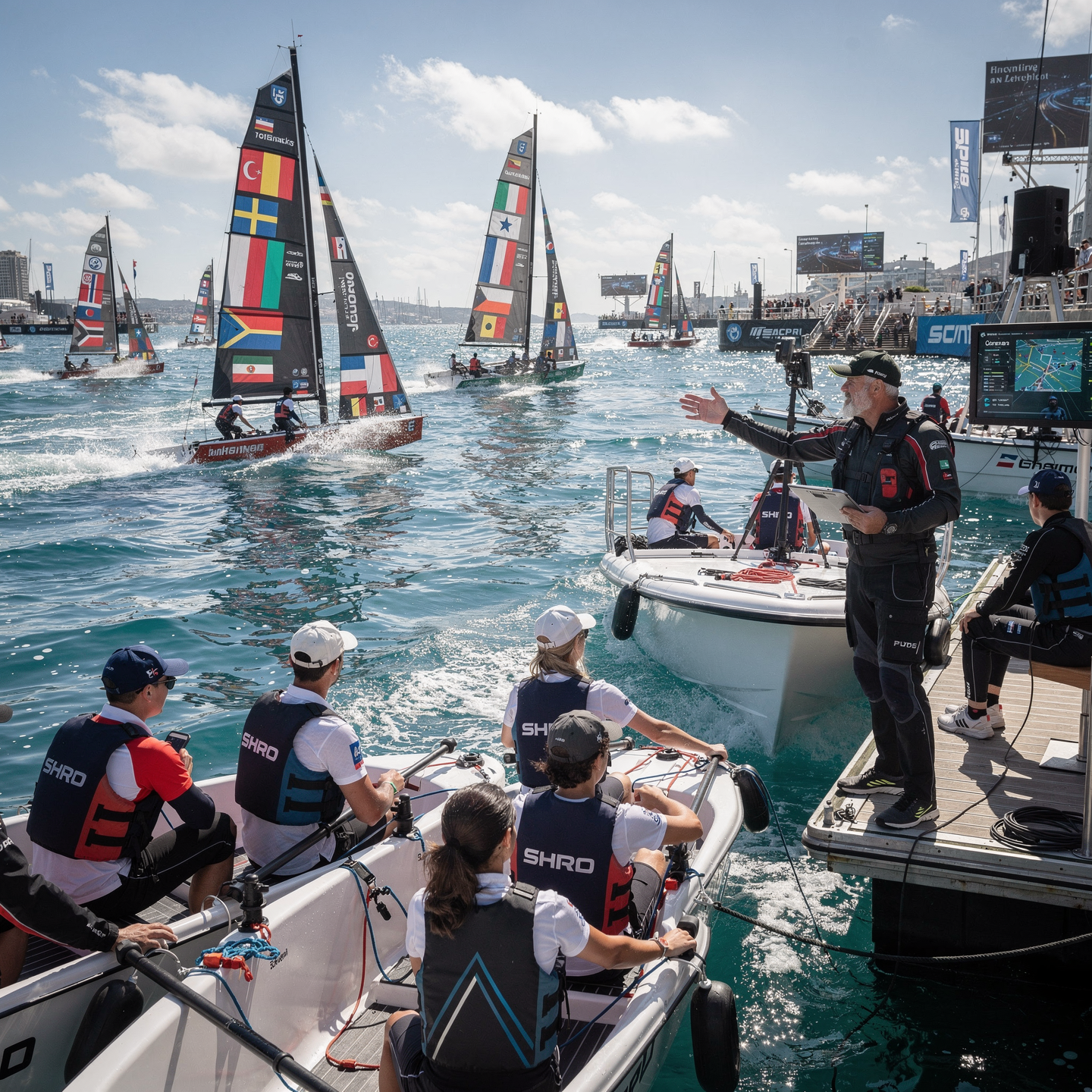
Master’s Degree in Nautical Esports and International Regattas
Why this master’s programme?
The Master in Nautical Esports and International Regattas
Immers you in the cutting-edge of virtual and real competition in the world of sailing. Learn to master the most advanced simulation platforms, high-level regatta strategies, and comprehensive team and event management. This program combines technical analysis, competitive tactics, and the latest trends in eSports to train professionals prepared to lead the new era of sailing.
Key Advantages
- State-of-the-art simulators: VR sailing, Virtual Regatta Inshore/Offshore, Sailaway.
- Data and performance analysis: meteorology, hydrodynamics, VPP, polar diagram.
- eSports team management: scouting, training, sports psychology, communication.
- Organization of virtual and in-person regattas: regulations, logistics, marketing, sponsorship.
- International networking: access to experts and professional sailors and companies in the sector.
- Modality: Online
- Level: Masters
- Hours: 1600 H
- Start date:
Availability: 1 in stock
Who is it aimed at?
- Professional sailors and coaches looking to optimize performance, strategy, and data analysis in high-level competition.
- Team and yacht club managers who want to lead nautical esports projects, digital marketing, and new technologies applied to sailing.
- Event and competition organizers who need to master the comprehensive management of virtual and in-person regattas, including regulations, safety, and broadcasting.
- Developers of nautical video games and simulators interested in delving deeper into the physics of sailing, AI, and user experience in virtual environments.
- Students and graduates in sports science, marketing, or communication seeking an innovative specialization in the emerging nautical esports sector.
Flexibility and networking
Online format with live classes and community access: learn at your own pace, connect with experts, and develop collaborative projects with global impact.
Objectives and skills

Manage and optimize resources:
“Prioritize preventive and corrective maintenance, anticipating spare parts needs and optimizing consumption (fuel, lubricants, water).”

Leading and coordinating multidisciplinary teams:
Promote open communication, effective delegation, and constructive conflict resolution, adapting the leadership style to the needs of the team and the project.

Develop innovative strategies in nautical eSports:
“To promote the creation of engaging competition formats and immersive broadcasts, leveraging technology to simulate real ocean conditions and tactical challenges.”

Analyze and predict industry trends:
“Identify drivers of change (technological, regulatory, socioeconomic) and model future scenarios with forecasting.”

Design and market digital nautical products:
Identify market niches, develop prototypes, and create effective digital marketing strategies.

Organize and manage nautical eSports events:
Plan the logistics, manage registration and refereeing, and ensure the broadcast of the event.
Study plan – Modules
- Fundamentals of sailing in regattas: hydrodynamic analysis, boat behavior, and route optimization
- Advanced interpretation of meteorological data: wind patterns, local atmospheric phenomena, and their impact on strategic decision-making
- Tactical planning prior to competition: identification of critical areas, use of satellite information, and predictive modeling of maritime conditions
- Dynamics of currents and tides applied to regattas: drift calculation, leeway analysis, and impact on the boat’s effective speed
- Study of differential GPS positioning and GNSS systems for accurate tracking and real-time control during races
- Design and execution of tactical maneuvers: tacks, jibes, and positioning strategies against wind and current
- Analysis of
- Competitors: Interpretation of rival tactics, reading behavior, and anticipation of movements in international regattas
- Advanced use of electronic navigation systems: sensor integration, ECDIS configuration for regattas, and handling of critical alerts
- Application of navigation simulators for tactical training in highly complex scenarios and changing conditions
- Post-regatta: data collection, performance analysis, preparation of technical reports, and development of continuous improvement plans
- Fundamentals of Physiology Applied to Nautical Performance: Energy Metabolism, Cardiovascular and Muscular Adaptation in High-Performance Athletes
- Biomechanics and Kinematic Analysis: Evaluation of Specific Movements in Regattas, Optimal Rowing, Sailing, and Powerboating Techniques to Maximize Efficiency and Power
- Advanced Methodologies for Personalized Training: Design and Periodization of Training Plans Based on Individual Profiles and Specific Crew Roles
- Implementation of Telemetry Systems and Integrated Sensors: Real-Time Data Capture on Speed, Angle of Attack, Wind Pressure, and Hydrodynamic Forces
- Big Data and Statistical Analysis: Interpretation of Large Datasets to Identify Performance Patterns and Opportunities for Improvement
- Advanced Software for Predictive Modeling: Simulation of Meteorological, Tactical, and Human Resource Scenarios in Nautical Competitions
- Aerodynamic and Hydrodynamic Optimization Applied: CFD Analysis Computational Fluid Dynamics (CFD) for the design and tuning of vessels and equipment.
Evaluation and mitigation of adverse environmental factors: impact of ocean currents, turbulence, and extreme weather conditions on navigation strategy.
Post-competition physical and mental recovery protocols: advanced physiotherapy techniques and competitive stress management.
Creation of customized dashboards and technical reports for real-time decision-making during international regattas.
- Advanced Fundamentals of Strategic Navigation: Meteorological and Marine Analysis, Interpretation of Hydrodynamic Models, and Use of Real-Time Electronic Charts
- Channel Optimization Techniques: Dynamic Course Selection, Use of Currents and Winds to Maximize Speed and Minimize Risks
- Integration of Nautical Sensors into Esports Platforms: GNSS Systems, Anemometers, Gyroscopes, and Their Interpretation for Competitive Decision-Making
- Tactical Planning for International Regattas: Study of Racecourses, Exclusion Zones, Wind and Wave Effects, and Adaptation to Changing Conditions in Competition
- Performance Prediction Models and Computational Simulation: Application in Nautical Esports to Anticipate Behavior and Optimize Maneuvers
- Advanced Risk Management in Competitive Navigation: Safety Protocols, Identification of Hazard Zones, and Incident Response in
- Regattas
- Digital tools for post-competition analysis: data collection, generation of technical reports, and evaluation of individual and team performance
- Team communication and coordination: use of radio systems, signaling tactics, and information flow management during live regattas and esports
- Dynamics of interaction between environmental variables, boat, and crew: fatigue, decision-making under pressure, and psychotechnical strategies applied to high performance
- Development of technological innovation strategies in nautical esports and regattas: augmented reality, Big Data analysis, and Artificial Intelligence applications for advanced competition
- Fundamentals of telemetry applied to nautical esports: types of sensors, transmission protocols, and international standards
- Advanced integration of IoT systems in regattas: real-time acquisition of hydrometeorological data, vessel telemetry, and predictive performance analysis
- Design and architecture of platforms for live streaming: low-latency infrastructure, advanced encoding (H.265, AV1), and global CDN distribution for nautical events
- Analysis and visualization of nautical data: telemetry interpretation, dynamic graphs, georeferenced overlays, and interactive dashboards for spectators and technical teams
- Audiovisual production in international regattas: onboard cameras, drones, stabilizers, and synchronized multi-camera setups to capture the nautical action with professional precision
- Innovation in spectator experience: augmented reality (AR), virtual reality (VR), and 3D visualization of
- Real-time fleets for total immersion during regattas
- Monetization strategies in nautical sports streaming: subscription models, programmatic advertising, digital sponsorships, and selling analytical data to stakeholders
- Security and data protection protocols in live broadcasts: encryption, multi-factor authentication, and international regulatory compliance (GDPR, CCPA)
- Optimizing technical understanding for global audiences: technical scripts, specialized narratives, and explanatory graphics to maximize viewer acquisition and retention
- Case studies and production simulations: comprehensive live event planning, technical incident resolution, and management of multidisciplinary teams in high-performance regattas
- Current and future landscape of technological innovation in Nautical Esports: hardware, software, and connectivity
- Advanced simulation applied to nautical training: physical engines, hydrodynamic and ballistic modeling
- Integration of virtual reality (VR) and augmented reality (AR) systems for immersion in regatta scenarios
- Development and calibration of professional sailboat and motorboat simulators for team training
- Big Data and performance analysis: key metrics, real-time data collection, and predictive analytics for continuous improvement
- Machine learning and adaptive algorithms in regatta strategy and tactics: dynamic optimization based on varying conditions
- Team management platforms and remote coordination: real-time communication, roles, and collaborative decision-making
- Implementation of IoT (Internet of Things) in boats and equipment Nautical for monitoring and structural analysis
Advanced meteorological and oceanographic simulation tools integrated with the training platform
Protocols and standards for interoperability between technical systems in national and international competitions
Technological and cybersecurity risk assessment in Nautical Esports environments
Successful case studies in technological innovation applied to regattas and Nautical Esports: analysis and lessons learned
Development of digital skills in sailors and managers: technical and strategic skills for the advanced use of technologies
Supervised practical training in the design and implementation of customized simulators and performance analysis systems
Methodologies for the objective evaluation of performance through simulation and digital metrics
- Fundamentals of nautical navigation applied to esports: hydrodynamic principles, vessel dynamics, and adaptation in virtual simulators
- Advanced integration of electronic navigation systems: differential GPS, inertial sensors, and real-time telemetry
- Design and optimization of race strategies: analysis of meteorological variables, tides, and currents for tactical decision-making
- Technological platforms for nautical esports: evaluation and configuration of professional simulators, augmented reality tools, and immersive visualization systems
- Data analysis and big data in nautical competitions: collection, processing, and predictive modeling to improve performance in virtual and in-person regattas
- Communication and coordination in high-performance teams: data link protocols, collaborative strategies, and the use of artificial intelligence for tactical support
- Regulatory aspects of international regattas: advanced study of RIPA, ISAF regulations and their application in nautical esports
Simulation and virtual training: methodologies for developing technical and psychological skills in immersive and competitive environments
Implementation of real-time evaluation and feedback systems: key performance metrics, telemetry, and post-competition analysis
Innovation and the future of nautical esports: technological trends, development of specific hardware, and opportunities in global markets
- Fundamentals of nautical telemetry: onboard sensors, real-time data acquisition, and maritime communication protocols
- Telemetry system architecture for regattas: hardware, software, and network structures integrated into racing vessels
- Advanced implementation of IoT technologies and smart sensors on sports vessels
- Live streaming for nautical esports: audiovisual production infrastructures, RTMP/RTSP protocols, and minimal latency
- Specialized streaming platforms and content customization for international regatta audiences
- Processing and visualization of nautical data: real-time dashboards, advanced telemetry, and predictive analytics for tactical decision-making
- Mathematical models applied to performance analysis: route optimization, hydrodynamic evaluation, and analysis of wind and current patterns
- Integration of big data and machine learning for The development of competitive strategies based on historical analysis and scenario simulation
Synchronization and security protocols in data transmission: encryption, redundancy, and interference mitigation in marine environments
Regulations and best practices in the digital management of nautical competitions: ethics, privacy, and compliance with international standards
- Fundamentals of managing multidisciplinary teams: roles, responsibilities, and specific competencies in nautical and esports environments
- Dynamics of adaptive leadership: models applied to the coordination of crews, technical analysts, coaches, and logistics personnel in international competitions
- Advanced tools for effective communication: collaborative software, real-time communication protocols, and crisis management during live events
- Strategic and tactical planning in regattas and nautical esports: scenario analysis, goal setting, and human resource management
- Advanced logistics applied to nautical competitions: fleet management, resource allocation, and transcontinental coordination of teams and specialized equipment
- Optimizing the transport and storage of technological and sporting equipment: international regulations, specialized packaging, and associated risk assessment
- Integration of real-time monitoring and tracking systems: telemetry, GPS tracking and data analysis for tactical and strategic decision-making
Event management and port operations: coordination with local authorities, regulatory compliance, and security protocols in international competitions
Use of logistics planning and project management software: MS Project, Primavera, and specific tools for esports and nautical events
Risk assessment and mitigation in team and logistics management: contingency protocols, emergency plans, and specialized insurance
Analysis of case studies and success stories in the integrated management of multidisciplinary teams for international regattas and esports
Legal and contractual aspects in the recruitment and coordination of human talent and specialized suppliers
Impact of technology and innovation on logistics management: automation, blockchain for traceability, and the use of artificial intelligence for operational optimization
Development of key performance indicators (KPIs) for continuous team evaluation and logistical operations during events
- Ethical and sustainable management of human and logistical resources within the ecosystem of nautical esports and international regattas
- Fundamentals of technological innovation applied to nautical esports: evolution, trends, and future scenarios
- Big Data and predictive analytics: collection, processing, and modeling of real-time regatta data
- Advanced use of telemetry in virtual boats: sensors, IoT platforms, and data transmission
- Simulation and augmented reality: tools for training and strategy development in international regattas
- Design and implementation of machine learning algorithms for optimizing maneuvers and competitive performance
- Integration of Geographic Information Systems (GIS) and spatial analysis for route planning and nautical tactics
- Strategic decision making: scenario modeling, risk management, and adaptability in virtual competitions
- Application of technologies Wearables and biometrics for psychological and physical monitoring of participants in nautical esports
Advanced platforms and frameworks for the development and management of international nautical esports tournaments
Evaluation of KPIs and performance metrics using customized dashboards: interpretation, benchmarking, and strategic feedback
Implementation of artificial intelligence systems for tactical support and real-time decision-making during regattas
Cybersecurity in nautical esports: data protection, fraud prevention, and competition integrity
Post-competition analysis: video analytics tools, advanced statistics, and machine learning for continuous improvement
The role of digital communication and streaming in the dissemination and professionalization of international nautical esports
International regulations and technical standards for the interoperability of platforms and devices Nautical esports
Real-world case studies: successful technological implementations and their impact on results and user experience
Final integrative projects: designing strategies based on advanced technical analysis for virtual regatta competitions
- Advanced methodology for the design and development of the final project, including the definition of strategic objectives and the establishment of key performance indicators (KPIs) for nautical esports
- Comprehensive analysis of applied technologies: real-time telemetry systems, nautical performance sensors, and data analysis platforms for tactical optimization
- Design of competition strategies based on hydrodynamic modeling and maritime simulations to maximize the efficiency and speed of vessels in international regattas
- Integration of artificial intelligence and machine learning for accurate weather forecasting and automatic adjustments to navigation patterns
- Advanced team management and logistical organization: crew coordination, preventive maintenance, and safety protocols during competitions
- Implementation of real-time communication and coordination systems between vessels, the control center, and judges, ensuring transparency and effective regulation at events
- Regulatory framework and international standards Applicable to nautical esports: detailed analysis of ISAF, World Sailing, and specific regulations for different boat classes.
Development of contingency plans for crisis management: response to adverse weather conditions, technical failures, and medical emergencies on board.
Methodology for evaluating and validating results: use of specialized software for post-race analysis, preparation of technical reports with strategic recommendations.
Professional presentation and oral defense of the final project: scientific communication techniques and narrative strategies aimed at the effective transmission of multidisciplinary knowledge.
Career prospects
“`html
- Nautical Esports Team Manager: direction, strategy, and coordination of regatta teams.
- Nautical Esports Event and Regatta Organizer: planning, logistics, and competition management.
- Nautical Esports Performance Analyst: data evaluation, strategy optimization, and team performance improvement.
- Nautical Esports Coach: development of athletes’ technical, tactical, and mental skills.
- Nautical Esports Marketing and Sponsorship Consultant: sponsor acquisition, advertising campaign management, and marketing strategy development.
- Nautical Esports Communications and Social Media Manager: Content creation, online community management, and event promotion.
- Developer of nautical video games and regatta simulators: design, programming, and testing of video games and simulators.
- Referee/judge in nautical eSports competitions and international regattas: application of rules, evaluation of penalties, and ensuring fair play.
“`
Entry requirements

Academic/professional profile:
Bachelor’s degree in Nautical Science/Maritime Transport, Naval/Marine Engineering or a related qualification; or proven professional experience on the bridge/in operations.

Language proficiency:
Functional Maritime English (SMCP) recommended for simulations and technical materials.

Documentation:
Updated CV, copy of qualification or seaman’s book, national ID/passport, motivation letter.

Technical requirements (for online):
Device with camera/microphone, stable internet connection, monitor ≥ 24” recommended for ECDIS/Radar-ARPA.
Admissions process and dates

Online
application
(form + documents).

Academic review and interview
Admissions decision

Admissions decision
(+ scholarship offer if applicable).

Place reservation
(deposit) and enrolment.

Induction
(access to the virtual campus, calendars, simulator guides).
Scholarships and financial support
- Master Strategy: Learn to analyze data, optimize tactics, and lead teams in the competitive world of nautical esports.
- High-Level Regattas: Delve into the rules, strategies, and technologies used in the most prestigious international regattas.
- Comprehensive Project Management: Acquire skills to organize events, manage budgets, and promote nautical esports teams.
- Exclusive Networking: Connect with leading professionals, athletes, and companies in the esports and regatta industry.
- Professional Certification: Earn a qualification that will set you apart and open doors to job opportunities in the nautical and sports sector.
Testimonials
This master’s program provided me with the tools and knowledge necessary to take a significant leap forward in my career. I applied the regatta and management strategies I learned to lead my team to victory in the National Championship, significantly improving our performance and coordination. The training in nautical esports also opened up new professional opportunities, allowing me to collaborate with international teams and access cutting-edge technologies in simulation and performance analysis.
During my Master’s degree in Nautical Sports & Marine Recreation, I gained in-depth theoretical and practical knowledge that enabled me to design, implement, and manage a successful nautical activities program for a luxury resort. I increased guest participation by 30% and received excellent feedback on the quality and safety of the experiences offered, which significantly contributed to increased overall customer satisfaction and the resort’s profitability.
This master’s program provided me with the tools and knowledge necessary to make the leap from amateur to professional sailor. Thanks to the specialization in nautical esports, I was able to understand the digital strategies and tactics that I now apply in real competition, significantly improving my performance and allowing me to secure a place on the national Olympic team.
After completing the Master’s in Esports Sailing and International Racing, I secured a position as a performance analyst for a professional SailGP team. My knowledge of strategy, meteorology, and data analysis, acquired during the Master’s program, proved crucial in optimizing the team’s performance and contributing to their victory in two of the final stages of the Grand Prix.

Frequently asked questions
Yes. The itinerary includes ECDIS/Radar-ARPA/BRM with harbor, ocean, fog, storm, and SAR scenarios.
Online with live sessions; hybrid option for simulator/practical placements through agreements.
It focuses on the competitive practice of real water sports, not esports.
Recommended functional SMCP. We offer support materials for standard phraseology.
Yes, with a relevant degree or experience in maritime/port operations. The admissions interview will confirm suitability.
Optional (3–6 months) through Companies & Collaborations and the Alumni Network.
Simulator practice (rubrics), defeat plans, SOPs, checklists, micro-tests and applied TFM.
A degree from Navalis Magna University + operational portfolio (tracks, SOPs, reports and KPIs) useful for audits and employment.
- Advanced methodology for the design and development of the final project, including the definition of strategic objectives and the establishment of key performance indicators (KPIs) for nautical esports
- Comprehensive analysis of applied technologies: real-time telemetry systems, nautical performance sensors, and data analysis platforms for tactical optimization
- Design of competition strategies based on hydrodynamic modeling and maritime simulations to maximize the efficiency and speed of vessels in international regattas
- Integration of artificial intelligence and machine learning for accurate weather forecasting and automatic adjustments to navigation patterns
- Advanced team management and logistical organization: crew coordination, preventive maintenance, and safety protocols during competitions
- Implementation of real-time communication and coordination systems between vessels, the control center, and judges, ensuring transparency and effective regulation at events
- Regulatory framework and international standards Applicable to nautical esports: detailed analysis of ISAF, World Sailing, and specific regulations for different boat classes.
Development of contingency plans for crisis management: response to adverse weather conditions, technical failures, and medical emergencies on board.
Methodology for evaluating and validating results: use of specialized software for post-race analysis, preparation of technical reports with strategic recommendations.
Professional presentation and oral defense of the final project: scientific communication techniques and narrative strategies aimed at the effective transmission of multidisciplinary knowledge.
Request information
Complete the Application Form.
Attach your CV/degree certificate (if you have it to hand).
Indicate your preferred cohort (January/May/September) and whether you would like the hybrid option with simulator sessions.
An academic advisor will contact you within 24–48 hours to guide you through the admission process, scholarships, and compatibility with your professional schedule.
Faculty
Eng. Tomás Riera
Full Professor
Eng. Tomás Riera
Full Professor
Eng. Sofía Marquina
Full Professor
Eng. Sofía Marquina
Full Professor
Eng. Javier Bañuls
Full Professor
Eng. Javier Bañuls
Full Professor
Dr. Nuria Llobregat
Full Professor
Dr. Nuria Llobregat
Full Professor
Dr. Pau Ferrer
Full Professor
Dr. Pau Ferrer
Full Professor
Cap. Javier Abaroa (MCA)
Full Professor
Cap. Javier Abaroa (MCA)
Full Professor

