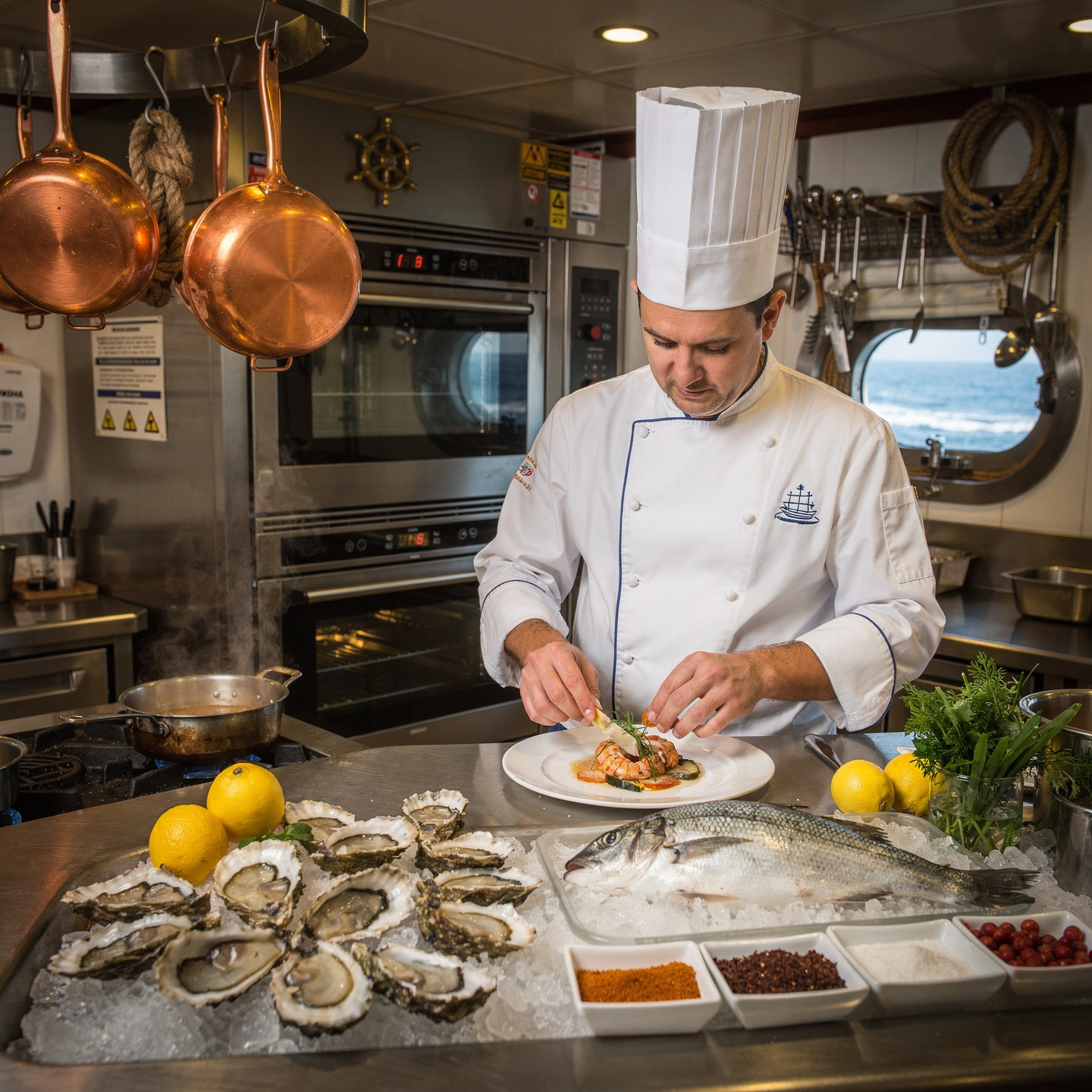
Master in Haute Cuisine for Nautical Use and Cruises

Why this master’s programme?

The Master’s in Haute Cuisine for Nautical Cruises

Immerses you in the world of luxurious onboard dining, fusing cutting-edge culinary techniques with the demands of sailing. You will learn to design innovative and sustainable menus, optimizing resource management and logistics in confined spaces. Master the impeccable presentation of haute cuisine dishes, adapting to the most discerning palates on unforgettable voyages. This program prepares you to lead kitchen teams on luxury cruise ships, private yachts, and at exclusive nautical events.

Differentiating Advantages

  • Cutting-edge culinary techniques: Spherification, airs, foams, and low-temperature cooking adapted to the nautical environment.
  • Resource management and optimized logistics: Inventory control, waste minimization, and utilization of local and seasonal products.
  • Customized menu design: Creation of unique gastronomic experiences, considering allergies, intolerances, and cultural preferences.
  • Food safety and regulations: Implementation of HACCP protocols and compliance with international health regulations in nautical environments Maritime.
  • Professional internships on board: Opportunity to apply your knowledge on luxury cruise ships and private yachts, establishing contacts in the industry.

Master in Haute Cuisine for Nautical Use and Cruises

Availability: 1 in stock

Who is it aimed at?

  • Professional chefs who wish to specialize in creating luxury culinary experiences on board.
  • Cruise ship and yacht kitchen staff seeking to advance to positions of greater responsibility and sophistication.
  • Food entrepreneurs aspiring to offer fine dining services at nautical events and boat charters.
  • Food stylists and culinary content creators interested in mastering the aesthetics and presentation of gourmet nautical dishes.
  • Food lovers with cooking experience who yearn to merge their passion for the sea and haute cuisine.

Flexibility for professionals
Designed for working professionals: flexible schedules, 24/7 online access, and mentoring customized to progress at your own pace.

Objectives and skills

Efficiently manage the provision and preservation of food on voyages:

“Plan balanced menus, calculate portions according to duration and participants, ensure proper storage and refrigeration, and prevent cross-contamination.”

Design innovative and haute cuisine menus adapted to the conditions and resources of navigation:

“Consider optimizing storage space, ingredient durability, and energy efficiency in preparation.”

Apply advanced culinary techniques and cutting-edge plating in small, fast-moving spaces:

“Maximize the efficiency of mise en place, optimize workflows, and create visually impactful presentations while prioritizing food safety.”

Leading onboard kitchen teams, optimizing human resource management and fostering a collaborative work environment:

Implement effective communication, conflict resolution, and motivation strategies to build a cohesive, high-performing team by delegating tasks and empowering members based on their skills and experience.

Comply with the most demanding hygiene and food safety standards in maritime environments:

Implement and maintain a robust HACCP (Hazard Analysis and Critical Control Points) system, adapted to the particularities of the maritime environment and verified regularly through internal and external audits.

Adapting the gastronomic offer to the needs and preferences of a demanding and diverse clientele:

“Design innovative and personalized menus, incorporating high-quality ingredients and cutting-edge culinary techniques, considering dietary restrictions, gastronomic trends, and specific cultural expectations.”

Study plan – Modules

  1. Fundamentals of Sustainable Cuisine in Nautical Environments: principles, objectives, and environmental and operational benefits
  2. Efficient ingredient management: selection, storage, and rotation to minimize waste in limited spaces
  3. Innovation in onboard culinary techniques: sous-vide, controlled fermentation, and vacuum cooking applied to haute cuisine aboard nautical vessels
  4. Optimization of food inventory: software and digital tools for managing supplies on cruise ships and luxury vessels
  5. Integration of local and seasonal products with coastal suppliers to guarantee freshness and sustainability
  6. Analysis and application of international regulations and food safety standards in maritime environments
  7. Advanced recycling and composting practices onboard: implementation and process control in organic waste management
  8. Precision cuisine and adaptations in high-end environments Sea: managing temperature, humidity, and preserving flavor in changing conditions

    Sustainable menu development: nutritional balance, gastronomic profile, and reducing ecological footprint

    Implementation of traceability systems to ensure the quality and origin of ingredients until final consumption

    Human team management: continuous training in sustainable techniques and motivation for a culture of culinary efficiency

    Design and planning of floating kitchens adapted to sustainability criteria and optimal performance

    Technological innovation applied to nautical gastronomy: low-consumption appliances, preservation techniques, and smart sensors

    Optimization of gastronomic processes through data analysis and continuous improvement on cruise ships and recreational vessels

    Case studies and success stories: implementation of sustainable cuisine on high-end ships and international cruises

  1. Fundamentals of Culinary Design for Nautical Environments: Analysis of Environmental Variables, Logistical Constraints, and Seasonality of Ingredients
  2. Nutritional and Sensory Optimization in Gourmet Menus: Balancing Nutritional Value, Palatability, and High-End Visual Presentation
  3. Selection and Management of Maritime Suppliers: Supply Chain, Quality Control, Traceability, and Sustainability on Luxury Cruise Ships
  4. Advanced Culinary Techniques Adapted to Limited Spaces and Specialized Equipment in Floating Kitchens
  5. Multidisciplinary Design of Themed Menus: Cultural, Seasonal, and Experiential Integration to Diversify the Onboard Culinary Offerings
  6. Planning and Execution of Customized Menus for Special Diets and Common Allergies in Nautical Guests: Protocols and Certifications
  7. Efficient Inventory Management and Waste Minimization: Storage, Preservation, and Rotation Strategies in Marine Environments
  8. Innovation in sous-vide, vacuum cooking, and molecular gastronomy techniques applied to maritime environments
  9. Implementation of technological systems for the design and control of digital menus, with cost tracking and customer acceptance analysis
  10. Continuous evaluation and adaptation of menus through qualitative and quantitative passenger feedback to refine the onboard culinary experience
  1. Fundamental concepts of sustainable cuisine: definition, ecological principles, and their impact on haute cuisine at sea
  2. Selection and efficient management of ingredients: traceability, seasonality, proximity, and quality criteria in maritime environments
  3. Advanced techniques for the preservation and optimization of fresh products in confined spaces and variable conditions
  4. Implementation of inventory control and waste reduction systems: technological tools applied to luxury ships and cruise liners
  5. Adaptation of gourmet menus with local and sustainable ingredients: integrating marine and terrestrial flavors with environmental responsibility criteria
  6. Optimization of culinary processes to minimize energy consumption and water resources on board
  7. Specific hygiene and food safety protocols for kitchens at sea, including international regulations and quality certifications
  8. Comprehensive management of organic and inorganic waste and its relationship to MARPOL regulations and ecolabeling

    Design of efficient and sustainable culinary spaces: ergonomics, eco-friendly materials, and green technologies applied to nautical kitchens

    Technological innovation in equipment and utensils for sustainable onboard cooking: cost-benefit analysis and adaptation to maritime operations

    Training and leadership in culinary teams: promoting a sustainable culture and best practices among the culinary crew

    Case studies and international benchmarking in sustainable haute cuisine applied to next-generation cruise ships and yachts

  1. Comprehensive logistics planning in luxury cruise ship kitchens: coordination of supplies, supply routes, and seasonal scheduling
  2. Optimization of procurement: supplier selection, contract negotiation, inventory control, and storage management in maritime environments
  3. Implementation of advanced food quality control systems: HACCP adapted to floating infrastructure, traceability, and internal audits
  4. Cold chain management and safe handling of perishable foods under varying temperature and humidity conditions at sea
  5. Design and supervision of culinary teams: roles, ongoing training, motivation, and leadership of multicultural teams on luxury cruise ships
  6. Application of innovative technologies in nautical kitchens: automation, food service management software, and performance analysis tools
  7. Planning and control of premium menus: integration of international culinary trends, special diets, and adaptations based on cruise duration and route Cruise Ships
  8. Food safety and biosecurity protocols on cruise ships: prevention of cross-contamination and management of health emergencies on board

    Operational efficiency management: waste reduction, resource optimization, and cost analysis to maximize profitability without compromising quality

    Evaluation and continuous improvement of the dining experience: key performance indicators, guest feedback, and benchmarking against international standards

  1. Fundamentals of Marine Cuisine: Specificities of the Maritime Environment, Space Limitations, and Adaptation of Traditional Equipment
  2. Technological Innovation Applied to Onboard Gastronomy: Trends in Smart Equipment and Automation of Culinary Processes
  3. Energy Optimization in Ship Kitchens: Consumption Analysis, Efficiency Systems, Renewable Sources, and Intelligent Resource Management
  4. Specialized Design and Materials: Corrosion Resistance, Weight, and Ergonomics in Environments with Constant Movement
  5. Advanced Refrigeration and Food Preservation Systems: Temperature Cycles, Thermal Insulation, and Remote Control in Extreme Maritime Conditions
  6. Cooking Technologies: Induction, Convection, Steam, and Ultra-Rapid Adapted to Marine Facilities
  7. Integration of IoT (Internet of Things) Devices in the Onboard Kitchen for Monitoring, Control, and Predictive Maintenance of Equipment
  8. Maritime Food Safety Protocols: International regulations, microbiological control, and anti-contamination procedures in confined spaces
  9. Waste Management and Sustainability: Eco-friendly techniques for handling and disposing of waste on cruise ships and high-end vessels
  10. Specialized Preventive and Corrective Maintenance: Planning, diagnostic tools, and training for the kitchen team on technical and safety aspects
  11. Case studies and failure analysis of energy and sanitary systems in state-of-the-art marine kitchens
  12. Applicable Regulations and Certifications: Compliance with SOLAS, HACCP, and other specific regulations for culinary operations at sea
  13. Advanced Training in the Safe and Efficient Use of Electronic and Mechanical Equipment: Emergency simulation and crisis management on board
  14. Sustainable Innovation: Implementation of green technologies and reduction
  15. Future perspectives in nautical and cruise ship cuisine: integrating artificial intelligence, robotics, and new energy models towards operational excellence
  1. Fundamentals of Sustainability in Haute Cuisine at Sea: Ecological Principles Applied to Gastronomy in Maritime Environments
  2. Selection and Evaluation of Responsible Marine Raw Materials: Advanced Techniques to Guarantee Quality, Freshness, and Reduced Environmental Footprint
  3. Comprehensive Design of Gourmet Menus for Luxury Cruises: Combining Culinary Innovation, Personalized Nutrition, and a Unique Sensory Experience
  4. Optimizing Logistics and Onboard Storage: Efficient Management of Perishable Inventories and Preservation Techniques in Limited Spaces
  5. Application of Emerging Technologies for Sustainable Cuisine: 3D Food Printing, Dehydration Methods, and Controlled Fermentation
  6. Implementation of Digital Product Traceability Systems: Blockchain and Smart Platforms to Ensure Transparency and Quality
  7. Development of Culinary Proposals Based on Marine and Terrestrial Superfoods Adapted to Discerning Palates
  8. Comprehensive Management of Allergens and Restrictions
  9. Dietary options in exclusive menus: safety protocols and extreme personalization

    Strategies for reducing and valorizing food waste on board: composting, creative reuse, and waste minimization

    Advanced sensory analysis and evaluation of gourmet trends: integrating multisensory experiences to elevate the perception of luxury

  1. Fundamentals of sustainable cooking: principles, environmental footprint, and selection of low-impact ingredients in nautical environments
  2. Advanced techniques for the conservation and use of marine resources; From sustainable fishing to the comprehensive use of local and seasonal products

    Innovation in menu design for high-end cruise ships: sensory analysis, nutritional balance, and adaptation to sailing conditions and seasonality

    Methodologies for strategic menu planning: intelligent rotation, inventory management, and waste minimization in onboard kitchens

    Application of cutting-edge culinary technologies: sous-vide, dehydration, fermentation, and vacuum cooking techniques to optimize texture and flavor in nautical dishes

    Design and management of dining spaces on cruise ships: ergonomics, team workflows, and specific food safety protocols in confined environments

    Integration of sustainability criteria into the comprehensive management of culinary operations: environmental certifications, responsible sourcing policies, and effective customer communication

    Optimization of onboard handling and storage processes: advanced refrigeration, contaminant control, and strategies for Extending freshness at sea

    Developing leadership and management skills in nautical culinary teams: motivation, continuous training, and crisis management in maritime settings

    International standards and best practices in food safety for fine dining on cruise ships: HACCP, ISO 22000, and specific regulations for the nautical sector

    Real-world case studies and applied projects for implementing sustainable and innovative menus in the luxury cruise industry

    Emerging trends in nautical gastronomy: functional foods, local culinary culture, and the impact of climate change on maritime cuisine

  1. Fundamentals of comprehensive food quality management in marine kitchens: structure, objectives, and specific scope for high-end cruise ships.
  2. Applicable international regulations: in-depth analysis of the CODEX Alimentarius, HACCP, ISO 22000, and GFSI standards and their operational implications in the maritime environment.
  3. Design and application of advanced HACCP systems: identification and rigorous analysis of biological, chemical, and physical hazards in marine kitchens, with a focus on prevention and control in variable and isolated contexts.
  4. Standard hygiene protocols for handling and storing food on board: preservation techniques in marine cold storage, management of critical temperatures, and control of cross-contamination.
  5. Rigorous management of suppliers and food supply chains: risk assessment, external audits, and certification in accordance with maritime and luxury cruise requirements.
  6. Implementation of specialized cleaning and disinfection programs for marine environments: selection of compatible chemical agents, frequency, methods, and continuous microbiological validation.
  7. Microbiological control and analytical analysis: advanced techniques for sampling, identification, and quantification of contaminants on surfaces, utensils, and food, adapted to nautical operations.
  8. Ongoing training and certification of culinary and service staff: pedagogical strategies to ensure technical competence, risk prevention, and regulatory compliance in demanding maritime conditions.
  9. Advanced protocols for managing allergens and special diets: segregation, labeling, and effective communication to guarantee the safety and satisfaction of high-end customers.
  10. Internal and external audits: planning, execution, and follow-up of quality and hygiene inspections, with a focus on continuous improvement and adaptation to the international regulatory environment for cruise ships.
  11. Specialized document management: development and maintenance of best practice manuals and records Digitized and official reports for regulatory compliance and full traceability.
  12. Technological innovations for food hygiene and quality: process automation, use of IoT sensors for real-time monitoring, and digital platforms for integrated onboard management.

    Crisis management and action protocols for food contamination outbreaks: isolation procedures, advanced disinfection, and internal and external communication in nautical environments.

    Case studies and analysis of relevant incidents in haute cuisine on ships and cruise ships: lessons learned, corrective procedures, and applicable regulations.

    Integration of food sustainability and efficient resource management in cruise ship kitchens: waste reduction, responsible handling of perishable goods, and certified eco-efficient policies.

  1. Fundamental principles of sustainability in haute cuisine at sea: responsible ingredient selection, waste reduction, and resource optimization in marine environments
  2. Culinary innovation applied to luxury cruise gastronomy: advanced molecular gastronomy techniques, sous-vide, and controlled fermentations adapted to limited spaces and specialized equipment
  3. Designing gourmet menus for nautical services: sensory analysis, nutritional balance, and adaptation to the multicultural preferences of the crew and high-end passengers
  4. Comprehensive kitchen management on yachts and cruise ships: purchasing planning and optimized storage to prevent losses and guarantee freshness through advanced cold chains and digital traceability systems
  5. Implementation of HACCP protocols specific to maritime environments: rigorous hygiene control in restricted areas, efficient waste management, and prevention of cross-contamination in confined spaces
  6. Automation and digitization of culinary processes: software for
  7. Gastronomic management, real-time inventory monitoring, and intelligent order and supply tracking systems
  8. Adaptation to international regulations and food safety standards for fine dining on cruise ships: detailed compliance with IMO, ISPS, and maritime health assessment requirements
  9. Advanced training in leadership and management of multinational culinary teams: motivation techniques, intercultural communication, and conflict resolution at sea
  10. Development of personalized gastronomic experiences: integration of exclusive pairings, international culinary trends, and narrative styles through themed menus for exclusive cruise passengers
  11. Case studies and current trends in sustainable gastronomic innovation: strategic analysis of leading companies, innovation in certified seafood products, and eco-efficient techniques in nautical culinary production
  1. Conceptualization and Theoretical Framework: Foundations of Sustainable Gastronomic Innovation Applied to Haute Cuisine on Sea and Cruise Ships
  2. Advanced Methodologies for the Design and Development of Customized Menus with a Focus on Nutrition, Seasonality, and Marine Sustainability
  3. Sensory Analysis and Evaluation of the Culinary Experience in Maritime Environments: Integration of Organoleptic Perception and Nautical Ambiance
  4. Application of Emerging Technologies in Menu Management: Intelligent Systems, Big Data, and Real-Time Personalization
  5. Optimization of Culinary Processes in Limited Spaces: Haute Cuisine Techniques Adapted to the Infrastructure of Vessels and Cruise Ships
  6. Sustainable Management Models for Suppliers and the Supply Chain: Selection, Certifications, and Reduction of Environmental Footprint in Marine Gastronomy
  7. Design and Implementation of Specific HACCP Protocols for Kitchens at Sea and Cruise Ships, Ensuring Food Safety and Consistent Quality
  8. Case studies: Gastronomic innovation applied to luxury cruise ships and high-end yachts
  9. Development of a comprehensive management model for personalized menus that consider dietary preferences, allergies, and international trends
  10. Final project: Creation and presentation of an innovative, sustainable model for the ultimate gastronomic experience, with practical application in haute cuisine on ships and cruises

Career prospects

“`html

  • Executive Chef on Luxury Cruise Ships: comprehensive kitchen management, innovative menu design, and exceptional onboard dining experiences.
  • Head Chef on Private Yachts: creation of personalized culinary experiences, procurement management, and logistics at sea.
  • Culinary Consultant for Shipping Companies: design of attractive culinary offerings, process optimization, and staff training.
  • Entrepreneur in Nautical Catering: development of innovative concepts for floating restaurants or catering services for nautical events.
  • Trainer in Hospitality Schools Specializing in Nautical Cuisine: transmission of culinary knowledge and techniques specific to maritime environments.
  • Food Product Developer for the Naval Industry: creation of practical and delicious solutions for onboard dining.
  • Expert in food safety and hygiene in maritime environments: Implementation of protocols and audits to guarantee the quality and safety of food on board.
  • Organizer of gastronomic events on board: Design and management of themed culinary experiences for cruise ships and yachts.

“`

Entry requirements

Academic/professional profile:

Bachelor’s degree in Nautical Science/Maritime Transport, Naval/Marine Engineering or a related qualification; or proven professional experience on the bridge/in operations.

Language proficiency:

Functional Maritime English (SMCP) recommended for simulations and technical materials.

Documentation:

Updated CV, copy of qualification or seaman’s book, national ID/passport, motivation letter.

Technical requirements (for online):

Device with camera/microphone, stable internet connection, monitor ≥ 24” recommended for ECDIS/Radar-ARPA.

Admissions process and dates

Online
application

(form + documents).

Academic review and interview

Admissions decision

Admissions decision

(+ scholarship offer if applicable).

Place reservation

(deposit) and enrolment.

Induction

(access to the virtual campus, calendars, simulator guides).

Scholarships and financial support

  • Culinary Cutting-Edge Techniques: Master the latest culinary trends and techniques applied to haute cuisine in nautical environments.
  • Kitchen Management on Cruise Ships: Learn to plan menus, manage resources, and lead teams in demanding environments such as luxury cruise ships.
  • Food Safety and Hygiene: Comply with the most rigorous food safety standards to guarantee service excellence.
  • Designing Gastronomic Experiences: Create themed menus and unforgettable culinary experiences tailored to different cultures and preferences.
  • Professional Internships: Access internship opportunities on prestigious cruise ships and yachts to boost your Career.
Boost your career to the top of nautical gastronomy and create unforgettable culinary experiences on board.

Testimonials

Frequently asked questions

Kitchen on board ships, especially cruise ships.

Yes. The itinerary includes ECDIS/Radar-ARPA/BRM with harbor, ocean, fog, storm, and SAR scenarios.

Online with live sessions; hybrid option for simulator/practical placements through agreements.

Hospitality industry, specifically the kitchen sector on cruise ships and vessels.

Recommended functional SMCP. We offer support materials for standard phraseology.

Yes, with a relevant degree or experience in maritime/port operations. The admissions interview will confirm suitability.

Optional (3–6 months) through Companies & Collaborations and the Alumni Network.

Simulator practice (rubrics), defeat plans, SOPs, checklists, micro-tests and applied TFM.

A degree from Navalis Magna University + operational portfolio (tracks, SOPs, reports and KPIs) useful for audits and employment.

  1. Conceptualization and Theoretical Framework: Foundations of Sustainable Gastronomic Innovation Applied to Haute Cuisine on Sea and Cruise Ships
  2. Advanced Methodologies for the Design and Development of Customized Menus with a Focus on Nutrition, Seasonality, and Marine Sustainability
  3. Sensory Analysis and Evaluation of the Culinary Experience in Maritime Environments: Integration of Organoleptic Perception and Nautical Ambiance
  4. Application of Emerging Technologies in Menu Management: Intelligent Systems, Big Data, and Real-Time Personalization
  5. Optimization of Culinary Processes in Limited Spaces: Haute Cuisine Techniques Adapted to the Infrastructure of Vessels and Cruise Ships
  6. Sustainable Management Models for Suppliers and the Supply Chain: Selection, Certifications, and Reduction of Environmental Footprint in Marine Gastronomy
  7. Design and Implementation of Specific HACCP Protocols for Kitchens at Sea and Cruise Ships, Ensuring Food Safety and Consistent Quality
  8. Case studies: Gastronomic innovation applied to luxury cruise ships and high-end yachts
  9. Development of a comprehensive management model for personalized menus that consider dietary preferences, allergies, and international trends
  10. Final project: Creation and presentation of an innovative, sustainable model for the ultimate gastronomic experience, with practical application in haute cuisine on ships and cruises

Request information

  1. Complete the Application Form.

  2. Attach your CV/degree certificate (if you have it to hand).

  3. Indicate your preferred cohort (January/May/September) and whether you would like the hybrid option with simulator sessions.

    An academic advisor will contact you within 24–48 hours to guide you through the admission process, scholarships, and compatibility with your professional schedule.

Please enable JavaScript in your browser to complete this form.
Click or drag a file to this area to upload.

Faculty

0
    0
    Tu carrito
    Tu carrito esta vacíoRegresar a la tienda
    Scroll to Top


