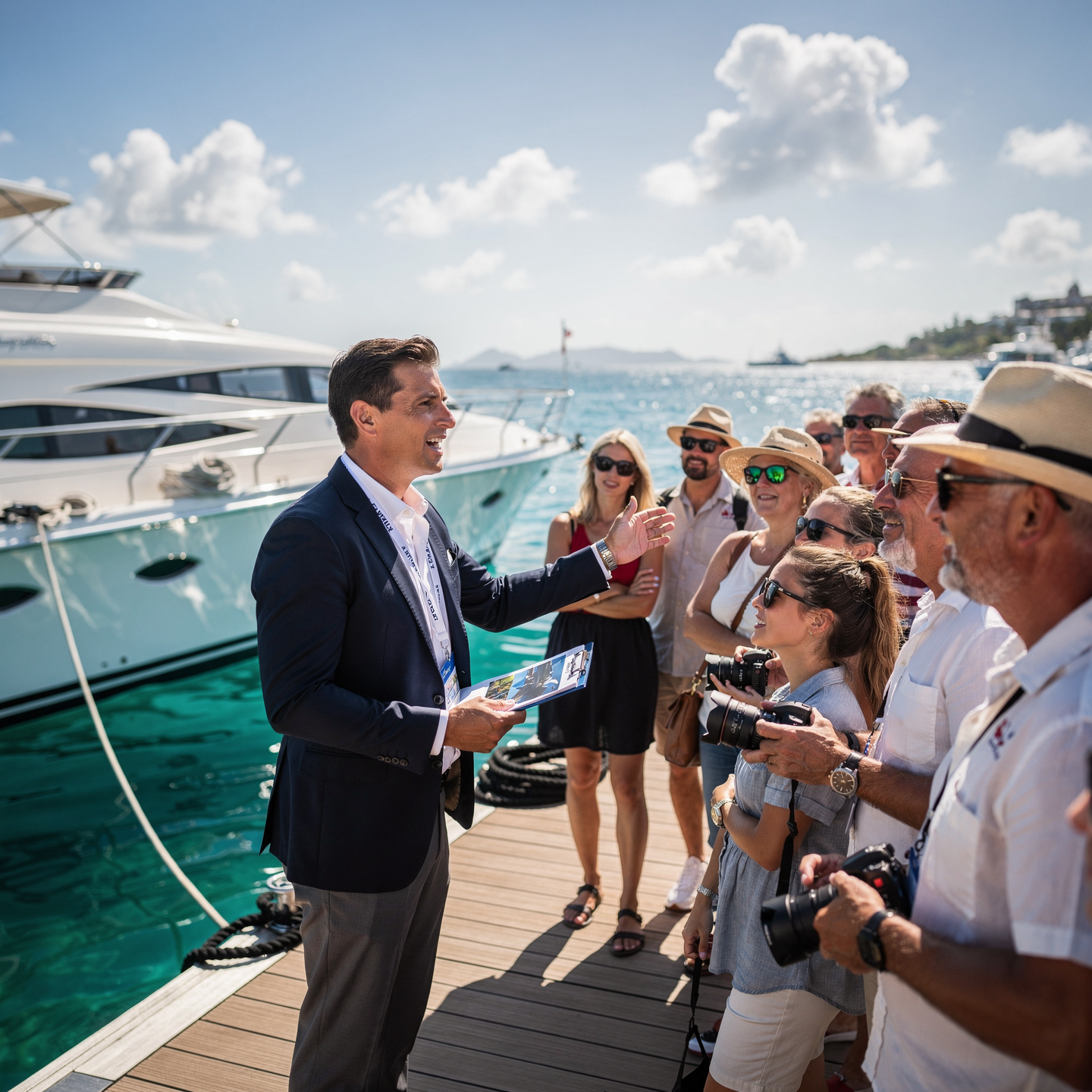
Master’s Degree in International Nautical Tourism

Why this master’s programme?

The Master’s in International Nautical Tourism

Prepares you to lead the growth of a booming sector. Learn to design innovative tourism products, manage sustainable nautical destinations, and master specialized digital marketing. Develop your skills in marina management, maritime legislation, and personalized tourism experiences for a demanding global market. This program will provide you with the tools and knowledge to become a key professional in the nautical tourism industry.

Differentiating Advantages

  • Practical Approach: Real-world case studies, simulations, and projects with companies in the sector.
  • International Networking: Direct contact with experts and professionals from around the world.
  • Specialization: Specific modules in nautical charters, sporting events, and cruise tourism.
  • Sustainability: Emphasis on the responsible management of marine resources and reducing environmental impact.
  • Flexibility: Online format with the option of in-person internships at top-tier nautical destinations.

Master’s Degree in International Nautical Tourism

Availability: 1 in stock

Who is it aimed at?

  • Tourism professionals looking to specialize in a booming, high-value-added segment.
  • Tourism, Business Administration, or Marketing graduates interested in developing an international career in the nautical field.
  • Business owners and entrepreneurs who want to lead innovative projects in nautical tourism globally.
  • Tourism product managers who need to diversify their offerings and attract a demanding and exclusive clientele.
  • Tourism consultants and advisors looking to expand their knowledge and offer specialized solutions in nautical tourism.

Flexibility and international focus
Online program with updated content, international case studies and networking with experts from around the world.

Objectives and skills

Efficiently managing nautical tourism companies:

“Optimize profitability through strategic planning, resource management, and effective marketing of nautical products and services.”

Develop innovative marketing strategies for the nautical sector:

Create engaging and personalized content (360° videos, augmented reality) to connect with potential customers and build loyalty with existing ones, highlighting unique experiences and sustainability values.

Leading nautical tourism projects at an international level:

“To assess the economic and environmental viability of a project, considering macro and microeconomic variables, as well as the impact on local communities.”

Assessing and mitigating risks in nautical tourism activities:

“Identify specific hazards (weather, tides, currents, fauna) and establish action protocols.”
Designing sustainable and responsible nautical tourism experiences:

Integrate eco-efficient practices into planning, minimizing environmental impact and maximizing social benefit for local communities.

Implement international maritime standards and regulations:

“Manage MARPOL compliance rigorously, documenting operations and preventing pollution, reporting incidents to the relevant authorities.”

Study plan – Modules

1.1 Prospective analysis of the international nautical market and the macro-trends shaping the future of the recreational sector.

1.2 Public-private governance models for the development of competitive nautical clusters in emerging coastal regions.

1.3 Strategic planning of maritime tourism destinations based on competitive advantage and smart specialization.

1.4 Comparative study of the world’s main nautical hubs: the Caribbean, the Mediterranean, and Southeast Asia.

1.5 Promotional policies and international regulatory frameworks for attracting foreign investment in marine infrastructure.

1.6 Resilience management in nautical destinations in the face of geopolitical and economic crises and natural disasters with global impact.

1.7 Business ethics and corporate social responsibility in the senior management of maritime leisure organizations.

1.8 Design of master plans for the integration of port cities and the sustainable urban development of the coastline.

1.9 Application of game theory in strategic negotiation with large operators and corporations in the nautical sector.

1.10 Transformational leadership and change management in complex organizational structures within the tourism industry.

2.1 Introduction to the Law of the Sea and the international conventions governing recreational navigation in territorial waters.

2.2 Legal framework for recreational craft: registration, flagging, and international taxation of yachts and mega-yachts.

2.3 International maritime contracts: analysis of standard clauses in charter, leasing, and naval sales contracts.

2.4 Civil and criminal liability of operating companies and captains in the event of accidents or incidents on the high seas.

2.5 International maritime safety regulations (SOLAS) and the International Convention for the Prevention of Pollution from Ships (MARPOL) as applied to recreational boating.

2.6 Legal management of marine insurance: coverage for hull, machinery, and protection and indemnity (P&I) for passengers.

2.7 Maritime labor legislation and the Maritime Labour Convention for the management of international crews.

2.8 Dispute resolution and international maritime arbitration in commercial disputes between operators and suppliers.

2.9 Data protection and privacy in digital nautical environments: GDPR compliance and cross-border regulations.

2.10 Customs procedures and immigration protocols for international navigation between different economic zones.

3.1 Analysis of consolidated financial statements for decision-making in global maritime tourism corporations.

3.2 Design and control of operating and capital expenditure (CAPEX and OPEX) budgets for marinas and charter fleets.

3.3 Financing strategies for fleet acquisition: marine loans, bank syndicates, and investment funds.

3.4 Valuation of nautical companies and naval assets using discounted cash flow and multiples methodologies.

3.5 International treasury management and hedging of financial risks arising from currency and fuel volatility.

3.6 Implementation of balanced scorecards for monitoring strategic nautical objectives.

3.7 Internal auditing and control systems for fraud prevention and optimization of financial resources.

3.8 International taxation applied to marine leisure activities: intra-community VAT, port fees, and tariffs.

3.9 Economic feasibility analysis of expansion projects: construction of marinas and nautical centers.

3.10 Recurring revenue models versus seasonal revenue models: optimizing the cash flow cycle in coastal businesses.

4.1 The Ultra-High-End (UHNWI) Market: Psychology of the Elite Consumer and Penetration Strategies in the Yacht Segment

4.2 Brand Architecture for Nautical Companies: Positioning Identity, Values, and Prestige in the Global Market

4.3 Emotional and Sensory Communication Strategies for Promoting Exclusive Experiences in the Marine Environment

4.4 Public Relations Management and Participation in International Boat Shows (Monaco, Cannes, Fort Lauderdale)

4.5 Influencer Marketing and High-Level Sponsorships at Classic Sailing Events and Prestigious International Regattas

4.6 Designing High-Quality Content Marketing Strategies for Digital Channels Targeting Premium Clients

4.7 The Use of Heritage and Tradition Storytelling in the Sale of Historic and Custom-Built Yachts

4.8 Managing Exclusivity and Restricted Access: The Role of Brokers and Representatives in the Sale

4.9 Analysis of brand equity metrics and perceived quality in premium nautical services.

4.10 Luxury protocols and service standards for owners and users of large vessels.

5.1 Digitization of processes in marinas and harbors: implementation of Smart Harbors and the Internet of Things (IoT).

5.2 Use of Big Data and predictive analytics for optimizing navigation routes and real-time fleet management.

5.3 Applications of Artificial Intelligence in personalizing the customer experience and 24/7 chatbot support.

5.4 Virtual and Augmented Reality for visualizing naval designs and immersive training for technical crews.

5.5 Blockchain applied to the traceability of maritime supplies, smart contracts, and transaction security.

5.6 E-commerce strategies for direct booking of nautical experiences and automation of the sales funnel.

5.7 Cybersecurity in critical navigation systems and protection of port infrastructure against digital attacks.

5.8 Transformation of the user experience (UX) on mobile platforms for passenger management of onboard services.

5.9 Integration of specialized ERP systems for the comprehensive management of shipyards, slipways, and nautical bases.

5.10 Trends in autonomous marine mobility and the impact of electric and smart ships on future tourism.

6.1 Advanced Revenue Management principles applied to the management of moorings and boat rental services.

6.2 Customer segmentation and management of elastic demand based on seasonality and international events.

6.3 Design of dynamic pricing algorithms to maximize RevPAM (Revenue Per Available Morning) in ports.

6.4 Management of digital distribution channels and optimization of third-party commissions in the sale of cruises and charters.

6.5 Controlled overbooking strategies and cancellation management to minimize the loss of perishable inventory.

6.6 Competitive analysis and market data collection for real-time pricing.

6.7 Implementation of cross-selling techniques to increase the average spend per customer at the marina.

6.8 Customer Lifetime Value (CLV) assessment to prioritize investments in customer loyalty over acquiring new leads.

6.9 Business Intelligence tools for visualizing profitability indicators by business unit.

6.10 Coordination between marketing, sales, and operations departments for the execution of the revenue strategy.

7.1 Comprehensive supply logistics (Hotel & Marine Provisioning) for long-distance voyages and expeditions.

7.2 Design of efficient operational flows for the management of docks, passenger terminals, and provisioning areas.

7.3 Management of preventive and corrective maintenance of critical onboard systems to ensure full operational readiness.

7.4 Operational safety planning and emergency management protocols in remote maritime environments.

7.5 Menu engineering and management of high-end catering in mobile and space-constrained environments.

7.6 Optimization of turnaround times in home ports to maximize vessel utilization.

7.7 Waste management and water treatment systems according to the strictest international quality standards.

7.8 Design of onboard activity programs that coherently integrate technology, local culture, and well-being.

7.9 Technical supervision of dry dock repairs and management of naval asset modernization (refit) projects.

7.10 Implementation of ISO quality and environmental management standards in all maritime operation processes.

8.1 Recruitment and selection of specialized nautical personnel: from captains and engineers to hospitality staff.

8.2 Managing cultural diversity and the work environment in crews living and working in confined spaces.

8.3 Continuous training programs and soft skills development for excellence in guest service.

8.4 Designing incentive systems and retaining key talent in a highly competitive global market.

8.5 Performance management and competency assessment based on safety and customer satisfaction standards.

8.6 International labor legislation and protection of the physical and mental well-being of workers in the nautical sector.

8.7 Mediation and internal conflict resolution techniques in high-pressure operational environments and social isolation.

8.8 Situational leadership applied to the naval hierarchy and critical decision-making in emergency situations.

8.9 Career planning and succession planning for management positions within large shipping companies and port authorities.

8.10 Ergonomics and occupational health in the design of onboard workstations for the prevention of workplace hazards.

9.1 Principles of the Blue Economy and their integration into the tourism business model for marine regeneration.

9.2 Design of strategies for the decarbonization of recreational maritime transport: hydrogen, solar, and electric propulsion.

9.3 Biodiversity management in nautical destinations and protocols for the responsible observation of marine fauna.

9.4 Implementation of the “Blue Flag” certification and other internationally recognized eco-labels in marinas.

9.5 Communication strategies for environmental commitment to improve brand reputation with the conscious traveler.

9.6 Mitigation of the noise and light impact of vessels on sensitive marine ecosystems.

9.7 Participation in citizen science projects and collaboration with NGOs for the protection of reefs and seagrass meadows.

9.8 Circular economy applied to asset management: recycling of naval materials and reduction of plastic waste.

9.9 Analysis of the impact of climate change on coastal infrastructure and adaptation plans to sea level rise.

9.10 Investment in clean technologies and search for green funds to finance sustainable nautical projects.

10.1 Research methodology applied to the nautical sector for identifying real problems and opportunities.

10.2 Defining the project scope: from launching a nautical startup to developing a corporate improvement plan.

10.3 Developing a detailed strategic and operational plan with a focus on technical and commercial feasibility.

10.4 In-depth market analysis with the collection of primary and secondary data on the selected target segment.

10.5 Developing the business model (Canvas) and projecting five-year financial statements with sensitivity analysis.

10.6 Comprehensive marketing and communication plan for launching or repositioning the nautical tourism product.

10.7 Environmental and social impact assessment of the project based on the sustainability criteria of the 2030 Agenda.

10.8 Preparing the necessary technical and legal documentation for international project implementation.

10.9 Training in public speaking and presentation techniques before expert panels for executive project presentations.

10.10 Personalized tutoring for the synthesis of all the knowledge acquired during the academic program.

Career prospects

“`html

  • Marina and Port Manager: Planning, management, and marketing of nautical services and facilities.
  • Nautical Tourism Consultant: Development of tourism products, market analysis, and promotional strategies.
  • Nautical Event Organizer: Design, planning, and execution of regattas, fairs, and festivals related to the sea.
  • Nautical Tourism Destination Promoter: Creation and management of marketing campaigns to attract tourists to regions with nautical potential.
  • Operations Director in Boat Rental Companies: Fleet management, customer service, and quality control.
  • Technician in Water Sports Companies: Instructor of sailing, diving, kayaking, and other related activities. mar.
  • Nautical Tourism Researcher: Development of studies on the economic, social, and environmental impact of nautical tourism.
  • Nautical Sector Entrepreneur: Creation of innovative companies in the field of nautical tourism, such as booking platforms, specialized travel agencies, or nautical service companies.

“`

Entry requirements

Academic/professional profile:

Bachelor’s degree in Nautical Science/Maritime Transport, Naval/Marine Engineering or a related qualification; or proven professional experience on the bridge/in operations.

Language proficiency:

Functional Maritime English (SMCP) recommended for simulations and technical materials.

Documentation:

Updated CV, copy of qualification or seaman’s book, national ID/passport, motivation letter.

Technical requirements (for online):

Device with camera/microphone, stable internet connection, monitor ≥ 24” recommended for ECDIS/Radar-ARPA.

Admissions process and dates

Online
application

(form + documents).

Academic review and interview

Admissions decision

Admissions decision

(+ scholarship offer if applicable).

Place reservation

(deposit) and enrolment.

Induction

(access to the virtual campus, calendars, simulator guides).

Scholarships and financial support

  • Specialization: Master the management and promotion of nautical tourism in a global context.
  • Internationalization: Learn to develop strategies for international markets and attract tourists from all over the world.
  • Innovation: Discover the latest trends and technologies applied to the nautical and tourism sector.
  • Networking: Connect with leading professionals and companies in the sector internationally.
  • Professional Development: Boost your career in nautical tourism with a highly sought-after profile.
Become an expert in the international nautical tourism sector.

Testimonials

Frequently asked questions

Yes. The itinerary includes ECDIS/Radar-ARPA/BRM with harbor, ocean, fog, storm, and SAR scenarios.

Online with live sessions; hybrid option for simulator/practical placements through agreements.

The nautical and maritime tourism sector.

Recommended functional SMCP. We offer support materials for standard phraseology.

Yes, with a relevant degree or experience in maritime/port operations. The admissions interview will confirm suitability.

Optional (3–6 months) through Companies & Collaborations and the Alumni Network.

Simulator practice (rubrics), defeat plans, SOPs, checklists, micro-tests and applied TFM.

A degree from Navalis Magna University + operational portfolio (tracks, SOPs, reports and KPIs) useful for audits and employment.

10.1 Research methodology applied to the nautical sector for identifying real problems and opportunities.

10.2 Defining the project scope: from launching a nautical startup to developing a corporate improvement plan.

10.3 Developing a detailed strategic and operational plan with a focus on technical and commercial feasibility.

10.4 In-depth market analysis with the collection of primary and secondary data on the selected target segment.

10.5 Developing the business model (Canvas) and projecting five-year financial statements with sensitivity analysis.

10.6 Comprehensive marketing and communication plan for launching or repositioning the nautical tourism product.

10.7 Environmental and social impact assessment of the project based on the sustainability criteria of the 2030 Agenda.

10.8 Preparing the necessary technical and legal documentation for international project implementation.

10.9 Training in public speaking and presentation techniques before expert panels for executive project presentations.

10.10 Personalized tutoring for the synthesis of all the knowledge acquired during the academic program.

Request information

  1. Complete the Application Form.

  2. Attach your CV/degree certificate (if you have it to hand).

  3. Indicate your preferred cohort (January/May/September) and whether you would like the hybrid option with simulator sessions.

    An academic advisor will contact you within 24–48 hours to guide you through the admission process, scholarships, and compatibility with your professional schedule.

Please enable JavaScript in your browser to complete this form.
Click or drag a file to this area to upload.

Faculty

0
    0
    Tu carrito
    Tu carrito esta vacíoRegresar a la tienda
    Scroll to Top