Master in Advanced Welding and Naval Assembly Techniques
Why this master’s programme?
The Master’s Degree in Advanced Welding and Naval Assembly Techniques
Offers comprehensive training in the latest technologies and methodologies applied to naval construction and repair. You will learn about advanced materials, specialized welding processes (SMAW, GMAW, GTAW, SAW), and non-destructive quality control. Master structural assembly techniques, the interpretation of plans and regulations, and project management in the naval sector. This program prepares you to lead naval welding and assembly projects with efficiency, safety, and precision.
Differentiating Advantages
- Intensive Simulation and Practice: Skills development with state-of-the-art equipment.
- Professional Certification: Preparation for obtaining recognized certifications in the naval industry.
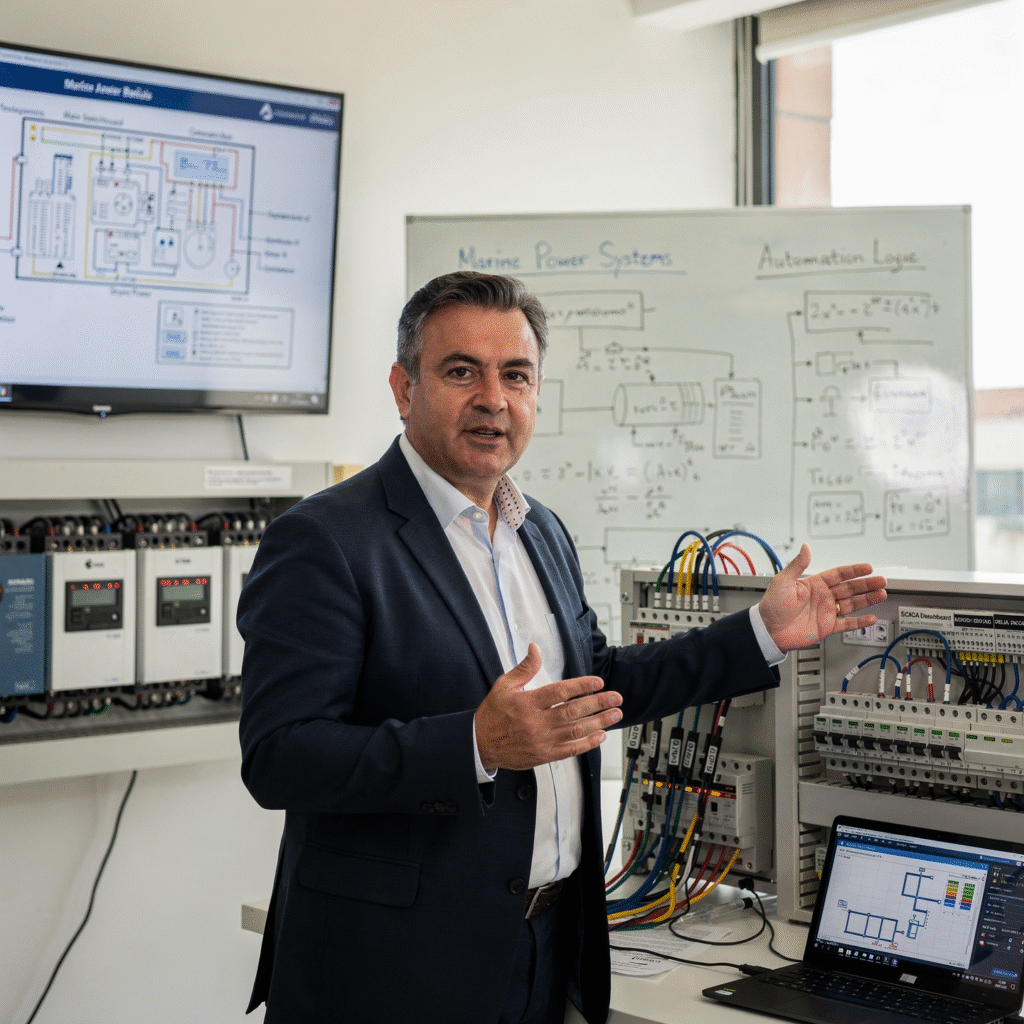
- Expert Faculty: Instruction by engineers and technicians with extensive experience in the sector.
- Technical Visits: Access to shipyards and leading companies in shipbuilding.
- Final Master’s Project: Practical application of acquired knowledge in a real-world project.
- Modality: Online
- Level: Masters
- Hours: 1600 H
- Start date:
Availability: 1 in stock
Who is it aimed at?
- Naval engineers, mechanical engineers, and senior technicians seeking to specialize in high-precision welding and advanced naval assembly techniques.
- Shipyard and shipbuilding industry professionals wishing to update their knowledge of the latest welding standards and technologies.
- Supervisors and workshop managers needing to lead teams on naval construction and repair projects with high technical demands.
- Welding and quality inspectors seeking certification and mastery of the specific standards and procedures of the naval sector.
- Students and recent graduates aspiring to a career in the naval sector with a highly specialized and in-demand profile.
Flexibility Schedule:
Adapted for active professionals: online format with recorded classes, discussion forums, and personalized tutoring.
Objectives and skills

Master the application of specialized welding techniques in shipbuilding.
“Perform GTAW and GMAW welding on high-strength steels and aluminum alloys, ensuring watertight and structurally sound joints, verified by NDT.”

Managing complex naval welding projects:
“Establish specific quality control procedures and ensure their rigorous compliance at every stage of the project.”

Optimizing naval assembly processes through innovative welding techniques:
Implement advanced robotic welding and non-destructive inspection techniques to reduce time and ensure structural integrity.

Ensuring the structural integrity of welded joints in marine environments:
“Select materials compatible with the marine environment and welding techniques that minimize corrosion.”
Implement rigorous quality control protocols in naval welding.
“Use NDT (Non-Destructive Testing) methods such as UT, RT, MT and PT to ensure the integrity of welds.”

Evaluate and select optimal welding materials for specific naval applications:
Consider marine corrosion resistance (salt water, humid environments), mechanical properties (strength, ductility, toughness), weldability of the base material, and classification society requirements (Lloyd’s, DNV, ABS).
Study plan – Modules
- Fundamentals of electric arc welding: physical principles, arc types, and metallurgical fusion mechanisms
- Advanced arc welding techniques: MIG, MAG, TIG, plasma, and pulsed welding
- Process parameterization and optimization: adjusting current, voltage, travel speed, and electrode type for critical naval applications
- Metals and alloys in shipbuilding: behavior under thermal processes and appropriate consumable selection
- Design and preparation of joints for naval structures: joint types, mechanical preparation, and cleaning to ensure structural integrity
- Control of thermal distortions and residual stresses using preheating, postheating, and weld sequencing techniques
- Visual inspection and non-destructive methods applied to welds: ultrasound, magnetic particle testing, penetrant testing, and radiography
- International standards and regulations (AWS, ISO) 3834, DNV-GL) for the certification of welds in the shipbuilding industry
Automation and robotics in shipbuilding welding: control systems, integrated sensors, and reduction of human error
Quality assessment and assurance: preparation of technical reports, material traceability, and acceptance/rejection protocols
Safety management in onboard welding operations: inherent risks, personal protective equipment, and emergency procedures
Failure analysis and repair techniques in shipbuilding structural welds: diagnosis, localized repair, and restoration of mechanical properties
Innovations in welding techniques for new materials and composite structures in modern shipbuilding
Computational simulation of welding processes: thermal, mechanical, and predictive modeling to minimize defects
Integrated case study: planning, execution, and quality control of a structural weld in a real-world shipbuilding assembly context
- Fundamentals and evolution of robotic welding applied to the naval sector: history, trends, and competitive advantages in the advanced manufacturing of naval structures.
- Detailed analysis of typical materials in shipbuilding: mechanical and thermal properties of high-strength steels, special alloys, and their behavior in automated welding processes.
- Advanced configuration and programming of robotic welding systems: robot kinematics, calibration, and CAD/CAM software for the precise definition of trajectories and optimal welding parameters.
- Optimization of robotic welding parameters: comprehensive control of variables such as temperature, travel speed, current, and material deposition to guarantee homogeneous penetration and optimal structural strength.
- Integration of intelligent sensors in robotic cells: use of 3D cameras, scanning lasers, and thermal sensors for real-time monitoring and automatic correction of geometric deviations or defects.
- Advanced techniques of
- Pretreatment and surface preparation for automated welding: cleaning, pre-machining, and dimensional control to maximize weld bead adhesion and quality.
- Strategies for the automated assembly of large naval structures: modular design, robotic alignment, and temporary fixturing techniques to ensure geometric accuracy and assembly robustness.
- Implementation of machine vision systems for online inspection: detection of pores, cracks, inclusions, and other critical defects using artificial intelligence and machine learning algorithms.
- Statistical Process Control (SPC) procedures in robotic naval production: sampling methods, variability analysis, and corrective action plans to reduce rejects and rework.
- International regulations and specific standards for welding and assembly in the naval industry: compliance with IACS, ASME, AWS certifications, and maritime requirements to guarantee structural integrity and safety.
- Comprehensive management of productivity and maintenance of robotic cells in shipyards: shutdown planning, monitoring Predictive component analysis and production cycle optimization.
Practical case studies and advanced simulations of robotic welding: analysis of real shipbuilding projects demonstrating improvements in time, cost, and final quality thanks to advanced techniques and technologies.
- Advanced Fundamentals of Arc Welding: Electromechanical Principles and Critical Operating Parameters in Naval Environments
- Emerging Technologies in Arc Welding: Pulsed Arc Welding, Alternating Pulse TIG, and Automatically Controlled Submerged Arc Welding
- Materials and Alloys Specific to Shipbuilding: Metallurgical Behavior and Selection of Appropriate Welding Processes
- Optimization of Welding Parameters: Statistical Methods and Modeling Techniques for Quality Control in Naval Production
- Automated and Robotic Systems in Arc Welding Processes: Integration, Programming, and Preventive Maintenance in Shipyards
- Non-Destructive Testing (NDT) Applied to Welding: Ultrasound, Digital Radiography, and Advanced AI-Based Inspection Techniques
- International Standards for Naval Welding: Stringent Compliance with ABS Standards, DNV-GL, Lloyd’s Register, and specific certifications
Comprehensive welding quality management: implementation of ISO 3834 systems and document control for welded joint traceability
Evaluation and mitigation of arc welding defects: cracks, porosity, inclusions, and thermal distortions in complex naval structures
Innovation in naval assembly techniques: modular methods and dimensional tolerance adjustments for assembly optimization
Digital simulation and digital twins applied to welding and assembly: predictive analysis of the behavior and lifespan of welded structures
Specialized training and certification of welding personnel: practical application of qualitative testing, procedure qualification, and competency validation
Implementation of augmented and virtual reality solutions for remote training and supervision of welding processes in Shipyards
- Sustainable Development in Naval Welding and Assembly: Techniques to Minimize Energy Consumption and Pollutant Emissions During Manufacturing
- Real-world case studies of the application of advanced technologies in welding and assembly for high-performance vessels, analyzing key results and lessons learned
- Advanced Fundamentals of Naval Structural Design: Load Analysis, Hydrodynamic and Seismic Stresses, Fatigue Criteria, and Damage Tolerance in Marine Construction
- Selection and Characterization of Metallic Materials for Marine Environments: High-Strength Steels, Special Alloys, Corrosion Resistance, and Applied Heat Treatments
- Specialized Welding Processes in Shipbuilding: MAG, Orbital TIG, Friction Stir Welding, and Their Impact on Structural Integrity
- Control and Optimization of Welding Parameters: Energy, Speed, Heat Input, and Their Effect on Microstructure and Mechanical Properties of the Weld Bead
- Implementation of Non-Destructive Testing (NDT) for Certification and Quality Control: Industrial Radiography, Phased Array Ultrasound, Liquid Penetrant Testing, Magnetic Particle Testing, and Infrared Thermography
- International Standards and Certification of Naval Structures: ISO 3834, ABS, DNV GL, and Their Application in quality audits and documentation
Robotization and automation in naval assembly processes: integration of robotic arms for welding, machine vision-assisted assembly, and computer numerical control (CNC)
Traceability management and digital documentation: production control systems, parameter recording, and real-time non-conformity management
Optimizing productivity in shipyards: modular design, pre-assembly techniques, and virtual simulation of the construction process for time and cost reduction
Advanced post-assembly structural integrity analysis: finite element simulations, in-service monitoring, and predictive maintenance protocols
- Fundamentals of composite materials in shipbuilding: types, mechanical and chemical properties, advantages over conventional materials
- Advanced manufacturing processes for composite materials: impregnation, curing, autoclave, resin infusion, and molding techniques
- Characterization and non-destructive testing (NDT) applied to composite materials in the naval environment: ultrasound, thermography, radiography, and magnetic resonance imaging
- Advanced structural design for composite components: loading criteria, fatigue behavior, delamination failure, and thermal deformations
- Integration and hybrid joining of composite materials with metals in naval structures: structural adhesives, laser welding, and interface mechanics
- Specialized welding techniques for hybrid assemblies: friction stir welding (FSW), TIG welding with composite fillers, and thermal control systems
- Automation and robotics applied to naval assembly: robotization in the handling and assembly of composite parts and metallic materials, quality control using machine vision.
Structural integrity testing in complex assemblies: load testing, dynamic analysis, and finite element analysis (FEA) simulations for failure prevention.
International standards and technical certifications applicable to composite materials and naval welding processes: DNV-GL, ABS, Lloyd’s Register, and ISO requirements.
Advanced management of complex naval assembly projects: integrated planning, quality control, risk management, and logistical optimization in the use of composite materials.
- Fundamental principles of electric arc welding in naval environments: arc characteristics, metal transfer, and welding types applied to shipbuilding.
- Advances in arc welding processes: TIG, MIG/MAG, FCAW, and SAW welding, with emphasis on the specific conditions of materials used in the naval industry.
- Advanced materials and their behavior in welding: high-strength steels, aluminum alloys, and non-ferrous metals used in naval hulls and structures.
- Non-destructive testing (NDT): ultrasound, digital radiography, magnetic particle, and penetrant techniques applied to ensure structural integrity in naval welding.
- International standards and regulations for naval welding processes: AWS D3.6, ISO 15614, DNV GL, and their specific application in assembly of ships.
- Automation and robotics in welding: integration of robotic systems for precision welding, advanced programming, and adaptation to complex geometries in naval assembly.
- Implementation of real-time monitoring systems: temperature sensors, arc parameter control, and defect detection during the welding process.
- Optimization of welding cycles to reduce thermal distortions and residual stresses in critical naval components.
- Digital simulation and computer-aided design: CAD/CAM tools for planning and controlling assembly and advanced welding in the manufacture of naval structures.
- Case studies: technological integration studies, process improvement, and quality assurance in real-world, high-precision shipbuilding projects.
- Advanced technologies in arc welding: fundamentals and types of processes applicable in the shipbuilding industry (SMAW, GMAW, FCAW, SAW)
- Innovations in power sources and arc generation: energy efficiency, digital control, and state-of-the-art inverter systems
- Automation and robotics in shipbuilding welding: integration of robotic arms and automated cells to improve repeatability and quality
- CNC programming and control for robotic welding: specialized software, parameterization, and configuration of welding paths and sequences
- Advanced metrology and non-destructive testing (NDT) techniques in welding: phased array ultrasound, eddy current testing, digital radiography, and infrared thermography
- International quality control and certification standards: AWS, ISO 3834, DNV GL, ABS applied to the shipbuilding sector
- Evaluation and management of welding defects: Types, causes, detection techniques, and repair strategies geared towards structural durability.
Optimization of multi-step processes in shipbuilding: joint preparation, dimensional adjustment, fastening sequences, and welding to minimize residual stresses.
Applications of advanced metal assembly techniques: riveting, spot welding, and friction welding in complex shipbuilding structures.
Numerical simulation and modeling of the welding process: thermal analysis, deformation analysis, and microstructure prediction to ensure mechanical integrity.
Implementation of online monitoring systems during welding: temperature, current, and arc sensors for real-time control and traceability.
Industrial safety practices and risk management in welding and shipbuilding workshops: preventive measures, advanced PPE, and fire safety protocols.
Design and manufacture of auxiliary equipment for shipbuilding: cranes, positioning systems, and clamping devices to maximize productivity.
Integration of Modular assembly techniques for high-performance shipbuilding: dimensional control, alignment, and assembly with tight tolerances.
Future trends in shipbuilding welding and assembly: laser welding, friction stir welding (FSW), metal 3D printing, and their impact on the shipbuilding industry.
- Fundamentals and conceptual framework of integrated project management in the naval sector: definition, objectives, and scope in welding and assembly
- Advanced methodologies for strategic project planning: feasibility analysis, detailed schedules, and accurate estimation of material and human resources
- Applicable international standards: interpretation and rigorous application of ISO 3834, AWS D1.1, IMO PSPC, and DNV GL standards for naval welding and the fabrication of marine structures
- Quality management and assurance in welding processes: document control, material traceability, non-destructive testing (NDT) procedures, and destructive testing applied in naval assembly
- Integration of innovative technologies: automation and robotics in welding, use of augmented reality systems for real-time monitoring, and specialized CAD/CAM systems for assembly design and simulation
- Risk assessment and mitigation in naval assembly projects: FMEA analysis, contingency plans, and application of HSE protocols for safety in welding environments.
Logistics planning and multidisciplinary coordination: integrated supplier management, synchronization of assembly, welding, and finishing operations in a shipyard environment.
Advanced project progress monitoring: use of specialized software (MS Project, Primavera, BIM) for milestone control, change management, and time optimization.
Human talent management and development of technical skills: selection, specific training in advanced underwater welding techniques, MIG/MAG, TIG, and shielded metal arc welding adapted to the naval context.
Implementation of continuous improvement systems based on key performance indicators (KPIs), internal audits, and failure analysis to ensure operational excellence.
Practical application of technological innovation in resource optimization: use of artificial intelligence for predicting the behavior of welded structures and assembly of naval components.
Real-world case studies.
- Naval Welding and Assembly Projects: Detailed Technical Analysis, Lessons Learned, and Benchmarking with International Best Practices
- Environmental Impact and Sustainability in Naval Projects: Strategies for Minimizing Waste, Responsible Use of Materials, and Compliance with MARPOL Regulations Regarding Emissions and Pollution During Welding Processes
- Effective Communication and Leadership in Multidisciplinary Teams: Advanced Techniques for Managing Technical Interaction, Conflict Resolution, and Motivation in Complex Projects
- Professional Preparation and Presentation of Technical Reports and Project Documentation: Guidelines for Progress Reports, Quality Reports, and Documentation in Accordance with International Standards
- Training in Specialized Software for Comprehensive Project Management: Applications for Welding Monitoring, Structural Integrity Analysis, and Naval Assembly Simulation
- ISO 9001 Certification and Quality Assurance Standards Applied to Welding and Assembly Projects in Modern Shipyards
- Economic Evaluation and Financial Control of Projects: Analysis of Direct and Indirect Costs, Control Budgeting and optimization of return on investment in naval projects
Development of preventive and predictive maintenance plans for welded structures and assembly equipment, ensuring durability and operational efficiency post-project
Professional ethics and social responsibility in naval project management: regulatory compliance, safety standards, and contribution to the sustainable development of the maritime sector
- Advanced Fundamentals of Arc Welding: Critical Variables, Transfer Modes, and Thermal Control
- Configuration and Programming of Welding Robots: Sensor Integration, Trajectory, and Cycle Optimization
- Metrology and Non-Destructive Testing (NDT): Ultrasonic, Radiographic, Magnetic, and Digital Techniques for Joint Evaluation
- Intelligent Automation in Naval Assembly Processes: Synchronization, Logistics, and Downtime Reduction
- Analysis of Common Defects in Naval Welding: Porosity, Cracks, Inclusions, and Effective Prevention Methods
- Statistical Process Control (SPC) Applied to Welding and Assembly Quality: Indicators, Charts, and Corrective Actions
- Design and Application of Welding Parameters for Marine Steels and Special Alloys: Selection of Consumables and Shielding Gases
- Implementation of Robot-Assisted Welding Systems (RAW) in shipbuilding: challenges, benefits, and case studies
International standards and certifications: ISO 15614, ASME Section IX, DNV GL, and their impact on process homologation
Computer modeling and simulation of welding and assembly processes: FEM, CFD, and thermal analysis for structural optimization
- Introduction to the final project: objectives, scope, and relevance in the modern shipbuilding industry.
- Comprehensive review of advanced welding technologies: MIG/MAG, TIG, submerged arc welding, laser welding, and hybrid techniques.
- Metrology and quality control applied to naval structures: non-destructive testing (NDT), ultrasonic methods, industrial radiography, and real-time monitoring techniques.
- Comprehensive analysis of materials: alloy selection, mechanical properties, marine corrosion, and specific heat treatments for marine environments.
- Structural design and symmetry in shipbuilding: naval engineering principles for optimizing loads, stress, and fatigue in the hull and superstructure.
- Integration of advanced assembly systems: robotics, automation, and numerical control for precision and efficiency in complex assemblies.
- Planning and management of complex projects in the shipbuilding sector: Schedules, resources, logistics, and risk mitigation on site.
- Digital simulation and modeling: Use of CAE/CFD software for the validation and optimization of the welding and structural assembly process.
- Applicable international standards and regulations: ABS, DNV-GL, ISO, and their impact on the certification and acceptance of marine structures.
- Integrated prototype development: Practical execution based on design, welding, and assembly, with performance review and resolution of technical issues.
- Critical evaluation and technical documentation: Preparation of final reports, test records, technical specifications, and recommendations for continuous improvement.
- Professional project presentation: Skills in technical communication, presentation before an evaluation panel, and argumentation based on experimental data and results analysis.
Career prospects
“`html
- Welding Engineer: Design, supervision, and quality control of welding processes in the shipbuilding industry.
- Shipbuilding Assembly Supervisor: Management and coordination of teams in shipbuilding construction and repair projects.
- NDT (Non-Destructive Testing) Specialist: Inspection and evaluation of welds to ensure structural integrity.
- Welding and Assembly Technical Consultant: Specialized consulting on shipbuilding projects, process optimization, and technical problem-solving.
- Quality Control Manager: Implementation and monitoring of quality standards in shipbuilding welding and assembly.
- Welding Researcher and Developer: Participation in innovation projects and improvement of welding techniques for the shipbuilding industry.
- Welding Instructor/Trainer: Delivery of courses and training programs in advanced welding and shipbuilding assembly.
- Shipbuilding Project Manager: Leadership and comprehensive management of shipbuilding and repair projects.
“`
Entry requirements

Academic/professional profile:
Bachelor’s degree in Nautical Science/Maritime Transport, Naval/Marine Engineering or a related qualification; or proven professional experience on the bridge/in operations.

Language proficiency:
Functional Maritime English (SMCP) recommended for simulations and technical materials.

Documentation:
Updated CV, copy of qualification or seaman’s book, national ID/passport, motivation letter.

Technical requirements (for online):
Device with camera/microphone, stable internet connection, monitor ≥ 24” recommended for ECDIS/Radar-ARPA.
Admissions process and dates

Online
application
(form + documents).

Academic review and interview
Admissions decision

Admissions decision
(+ scholarship offer if applicable).

Place reservation
(deposit) and enrolment.

Induction
(access to the virtual campus, calendars, simulator guides).
Scholarships and financial support
- State-of-the-art Welding: Master the most advanced welding techniques applied to the naval sector.
- Expert Naval Assembly: Learn best practices in the assembly and mounting of complex naval structures.
- Simulation and Modeling: Use state-of-the-art software to simulate welding and assembly processes, optimizing results.
- Innovative Materials: Explore the properties and applications of new materials used in modern shipbuilding.
- Professional Certification: Obtain a qualification that will open doors to leading companies in the naval sector.
Testimonials
This master’s program provided me with the skills and knowledge necessary to lead the welding team in the construction of a new cargo ship. Thanks to the advanced techniques I learned, we reduced welding time by 15% and increased joint strength by 12%, exceeding client expectations and establishing ourselves as leaders in the industry.
During the Master in Naval Maintenance & Services, I applied the knowledge acquired to optimize the maintenance management system of a fleet of merchant ships, achieving a 15% reduction in maintenance costs and an 8% increase in the operational availability of the fleet.
“I applied the knowledge I gained in the Master’s program in Advanced Welding and Naval Assembly Techniques to optimize welding procedures in my company, reducing production time by 15% and welding defects in naval structures by 10%. This resulted in a significant increase in efficiency and quality on our production line.”
“I applied the welding techniques I learned in the Master’s program to optimize the construction of a new type of oil platform. We reduced production times by 15% and increased structural strength by 8%, exceeding customer expectations and positioning ourselves as leaders in innovation within the sector.”

Frequently asked questions
Shipbuilding industry.
Yes. The itinerary includes ECDIS/Radar-ARPA/BRM with harbor, ocean, fog, storm, and SAR scenarios.
Online with live sessions; hybrid option for simulator/practical placements through agreements.
It focuses on both aspects, combining fundamental theory with intensive practice in welding and naval assembly techniques.
Recommended functional SMCP. We offer support materials for standard phraseology.
Yes, with a relevant degree or experience in maritime/port operations. The admissions interview will confirm suitability.
Optional (3–6 months) through Companies & Collaborations and the Alumni Network.
Simulator practice (rubrics), defeat plans, SOPs, checklists, micro-tests and applied TFM.
A degree from Navalis Magna University + operational portfolio (tracks, SOPs, reports and KPIs) useful for audits and employment.
- Introduction to the final project: objectives, scope, and relevance in the modern shipbuilding industry.
- Comprehensive review of advanced welding technologies: MIG/MAG, TIG, submerged arc welding, laser welding, and hybrid techniques.
- Metrology and quality control applied to naval structures: non-destructive testing (NDT), ultrasonic methods, industrial radiography, and real-time monitoring techniques.
- Comprehensive analysis of materials: alloy selection, mechanical properties, marine corrosion, and specific heat treatments for marine environments.
- Structural design and symmetry in shipbuilding: naval engineering principles for optimizing loads, stress, and fatigue in the hull and superstructure.
- Integration of advanced assembly systems: robotics, automation, and numerical control for precision and efficiency in complex assemblies.
- Planning and management of complex projects in the shipbuilding sector: Schedules, resources, logistics, and risk mitigation on site.
- Digital simulation and modeling: Use of CAE/CFD software for the validation and optimization of the welding and structural assembly process.
- Applicable international standards and regulations: ABS, DNV-GL, ISO, and their impact on the certification and acceptance of marine structures.
- Integrated prototype development: Practical execution based on design, welding, and assembly, with performance review and resolution of technical issues.
- Critical evaluation and technical documentation: Preparation of final reports, test records, technical specifications, and recommendations for continuous improvement.
- Professional project presentation: Skills in technical communication, presentation before an evaluation panel, and argumentation based on experimental data and results analysis.
Request information
Complete the Application Form.
Attach your CV/degree certificate (if you have it to hand).
Indicate your preferred cohort (January/May/September) and whether you would like the hybrid option with simulator sessions.
An academic advisor will contact you within 24–48 hours to guide you through the admission process, scholarships, and compatibility with your professional schedule.
Faculty
Eng. Tomás Riera
Full Professor
Eng. Tomás Riera
Full Professor
Eng. Sofía Marquina
Full Professor
Eng. Sofía Marquina
Full Professor
Eng. Javier Bañuls
Full Professor
Eng. Javier Bañuls
Full Professor
Dr. Nuria Llobregat
Full Professor
Dr. Nuria Llobregat
Full Professor
Dr. Pau Ferrer
Full Professor
Dr. Pau Ferrer
Full Professor
Cap. Javier Abaroa (MCA)
Full Professor
Cap. Javier Abaroa (MCA)
Full Professor