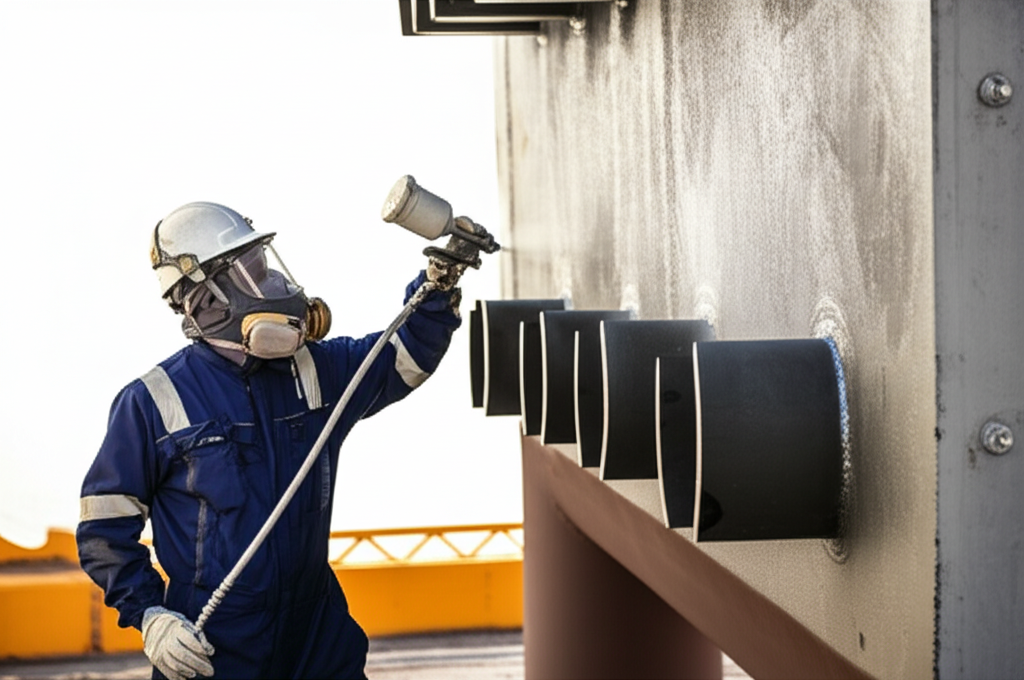
Master in Painting, Varnishes and Anti-corrosive Coatings

Why this master’s programme?

The Master’s Degree in Anti-Corrosive Paints, Varnishes, and Coatings

It provides you with comprehensive training in the protection and beautification of surfaces. Master the latest technologies and regulations in materials, application, and quality control, essential for corrosion prevention in various industrial sectors. This program trains you to select, apply, and maintain high-performance coating systems, maximizing durability and reducing maintenance costs.

Differentiating Advantages

  • Practical Approach: application workshops, real-world case studies, and process simulations.
  • Specialized Knowledge: paint formulation, inspection techniques, and fault diagnosis.
  • Professional Certification: preparation for NACE and SSPC certifications.
  • Networking: contact with experts and leading companies in the sector.
  • Flexibility: online format with the option of in-person practical training.

Master in Painting, Varnishes and Anti-corrosive Coatings

Availability: 1 in stock

Who is it aimed at?

  • Chemical engineers, materials engineers, and laboratory technicians seeking to deepen their knowledge of the formulation, application, and quality control of paints, varnishes, and coatings.
  • Professionals in the construction, shipbuilding, and industrial sectors who need to specialize in the selection and application of anti-corrosion systems for the protection of structures.
  • Technical consultants and auditors requiring an advanced understanding of regulations and standards for paints and coatings.
  • Maintenance and asset management professionals interested in optimizing the lifespan of facilities through the application of appropriate protection solutions.
  • Entrepreneurs and business managers wishing to innovate in the development and marketing of related products and services with corrosion protection.

Academic Flexibility
Designed for active professionals: online modality with live classes, learning materials accessible 24/7, and personalized tutoring.

Objectives and skills

Develop innovative formulations:

“Exploring novel ingredients and advanced processing techniques to create products with unique nutritional and sensory profiles.”

Mastering the expert application of anti-corrosion protection systems:

“Select, prepare and apply coating systems (paints, metallizations, etc.) according to technical and regulatory specifications, considering the type of corrosive environment and desired service life.”

Diagnosing and solving complex problems in coating applications:

“Analyze the root cause using systematic methodologies (Ishikawa, 5 Whys), implementing verifiable corrective and preventive actions, documenting the process and results.”

Lead R&D projects in the paints and coatings industry:

“Manage multidisciplinary teams, resources, and timelines, optimizing innovation and profitability in the development of new products and technologies.”

Provide technical advice on the selection of paints and coatings:

“Considering compatibility, durability, weather resistance, and environmental regulations.”

Managing quality in manufacturing and application processes:

“Implement statistical process control (SPC) and root cause analysis (RCA) methodologies to monitor and optimize the quality of the final product, adjusting process parameters and minimizing nonconformities.”

Study plan – Modules

  1. Chemical and physical fundamentals of anticorrosive paints: molecular structure, types of resins, and curing agents
  2. Advanced formulation: selection of anticorrosive pigments, inhibitors, and additives to optimize resistance and adhesion
  3. Evaluation and characterization of metallic substrates: surface preparation, profiling, and cleaning for maximum coating adhesion
  4. Application technologies: modern spray, immersion, electrophoresis, and thermal spray coating techniques
  5. Curing and drying: physical and chemical methods, influence of environmental conditions, and process parameters
  6. Testing and quality control: accelerated testing methods, evaluation of thickness, adhesion, and chemical and mechanical resistance
  7. Innovations in intelligent coatings: self-diagnostic, self-healing, and electrochemically protective paints
  8. Standards and international certifications: ISO, ASTM, NACE and their practical application in industrial projects

    Environmental impact and sustainability: formulations with low volatile organic compound (VOC) content and eco-friendly alternatives

    Comprehensive project management for anti-corrosion applications: planning, execution, monitoring, and preventive maintenance

  1. Advanced Fundamentals in Surface Preparation: Analysis of Metallic Substrate Types and Their Influence on the Adhesion of Anti-Corrosive Coatings
  2. Mechanical and Chemical Cleaning Technologies: Abrasion, Shot Blasting, Pickling, and Chemical Treatments for the Effective Removal of Contaminants and Oxides
  3. Applicable International Standards and Regulations: ISO 8501-1, NACE SP0108, SSPC VIS-1, Keys to Ensuring Quality in Surface Preparation
  4. Non-Destructive Testing (NDT) of Surfaces: Techniques for Measuring Roughness, Anchor Profile, and Surface Cleanliness Level
  5. Innovations in Application Techniques: Comparison Between Conventional, Airless, Electrostatic, and Multi-Component Paint Methods for Optimizing Coverage and Uniformity
  6. Advanced Formulation of Anti-Corrosive Varnishes and Paints: Chemical Properties, Resistance to Aggressive Environments, and Mechanical Properties to Ensure Durability extreme
  7. Role of additives and adhesion promoters: how to select and apply catalysts, wetting agents, and modifiers to improve performance

    Environmental conditions and their control during application: humidity, temperature, ventilation, and their impact on coating curing and adhesion

    Drying and curing protocols: UV, thermal, and catalytic technologies to accelerate processes and maximize corrosion resistance

    Post-application evaluation: advanced techniques for measuring thickness, cohesion, and chemical and mechanical resistance of the anticorrosive coating

  1. Introduction to innovations in the chemical formulation of anti-corrosion coatings: advanced polymer bases and next-generation inhibiting agents.
  2. Nanotechnology applied to paints and varnishes: incorporation of nanoparticles to improve mechanical resistance and impermeability to water and corrosive gases.
  3. Development and application of multifunctional coatings: combination of anti-corrosive, self-cleaning, and antifungal properties in a single protective layer.
  4. Advanced sustainable formulation techniques: bioresins, environmentally friendly solvents, and biodegradable additives to minimize environmental impact without compromising anti-corrosion efficacy.
  5. Innovative application methodologies: airless, electrostatic, and thermo-spray technologies to guarantee a homogeneous coating and optimal adhesion on metallic and composite surfaces.
  6. Detailed study of curing kinetics and its optimization using catalytic additives and control of environmental parameters to maximize coating durability.

    Integration of smart sensors into coatings for early detection of damage and active corrosion, enabling predictive maintenance and reduced operating costs.

    Advances in surface preparation techniques: abrasive mousses, cleaning with less aggressive abrasives, and chemical pretreatments that enhance coating adhesion.

    Computational modeling of the chemical interaction between paint and substrate: molecular simulation to predict anti-corrosive behavior and optimize customized formulations.

    Experimental analysis and evaluation using advanced techniques: Raman spectroscopy, scanning electron microscopy (SEM), and impact resistance testing to ensure superior industry standards.

    Implementation of international regulations and certifications for technological innovations: compliance with ISO 12944, NORSOK, and other industry standards.

    Real-world case studies: application of technological innovations in high-volume industrial projects. requirements, long-term results, and technical recommendations for replicability.

  1. Fundamentals of anticorrosive coatings: chemical composition, physicochemical properties, and corrosion protection mechanisms.
  2. Design and development of technical specifications: regulatory analysis, selection criteria according to operating environment and service conditions.
  3. Evaluation of interlayer compatibility: adhesion, curing, chemical and physical interaction between primers, intermediate coats, and topcoats.
  4. Advanced testing and characterization methodologies: laboratory techniques for determining thickness, abrasion resistance, adhesion, flexibility, and chemical resistance.
  5. International standards and certifications applicable to anticorrosive coatings: ISO, NACE, ASTM, and other industry-specific regulations.
  6. Implementation of quality control systems: field inspection procedures, specialized instrumentation, and sampling and reporting protocols.
  7. Analysis of failures and common causes of deterioration: evaluation of defects, degradation due to environmental factors and operations incorrect.
  8. Predictive maintenance strategies and on-site monitoring: use of non-destructive techniques, smart sensors, and data analysis to anticipate the need for touch-ups or complete recoating.
  9. Integration and optimization of multifunctional systems: combination of anti-corrosive, aesthetic, and functional properties for specific applications.
  10. Case studies and industrial application: specific designs for the offshore, petrochemical, and naval sectors, and metal structures exposed to aggressive environments.
  1. Scientific Foundations of Corrosion: Electrochemistry, Types of Corrosion, and Degradation Mechanisms of Metallic Surfaces
  2. Advanced Selection of Protective Materials: Physicochemical Properties, Substrate Compatibility, and Resistance to Aggressive Agents
  3. Formulation of Anti-Corrosive Paints and Varnishes: Resins, Pigments, Additives, and Thinners to Maximize Adhesion and Durability
  4. Optimization of Application Processes: Advanced Techniques such as Electrostatic Spraying, Dipping, and Roller Coating
  5. Metrological Control of Coatings: Thickness, Adhesion, Porosity, and Destructive and Non-Destructive Testing
  6. Automation and Robotics in Industrial Painting Lines to Ensure Repeatability and Minimize Defects
  7. Environmental Conditioning and its Influence on Curing and Final Finish: Temperature, Humidity, and Controlled Ventilation
  8. International Standards and Regulations Applicable to Coatings Anticorrosives (ISO, NORSOK, SSPC, ASTM)

    Life cycle analysis and predictive maintenance: integrity assessment and reapplication planning

    Technological innovations: smart coatings, nanotechnology, and self-healing materials for advanced corrosion protection

  1. Advanced fundamentals in the chemical formulation of anticorrosive coatings: selection of resins, pigments, and functional additives to optimize chemical and mechanical resistance
  2. Emerging technologies in resins and varnishes: polyurethanes, novel epoxies, silicones, and hybrid coatings with nanomaterials
  3. Advanced methodologies in surface preparation: mechanical and chemical cleaning, and plasma treatment to maximize adhesion and durability
  4. Application and industrial coating techniques: electrostatic spraying, immersion, laser, and coating in controlled atmospheres (HVLP, airless, electrophoresis)
  5. Thickness control and uniformity in coating application: use of ultrasound, laser gauges, and non-destructive techniques to ensure optimal protection
  6. Advanced curing and drying protocols: thermal, UV, infrared, and catalyst methods that promote the formation of resistant and homogeneous films
  7. Evaluation and certification of corrosion resistance: accelerated testing, environmental exposure, and electrochemical techniques such as EIS (Electrochemical Impedance Spectroscopy)
  8. Implementation of quality management systems specific to the coatings industry: ISO and ASTM standards and applied international certifications
  9. Innovations in sustainability and eco-friendly formulation: low-VOC coatings, water-based technologies, and development of biodegradable products
  10. Real-time monitoring and predictive maintenance: smart sensors and non-invasive inspection techniques for comprehensive coating control in critical industrial infrastructure
  1. Advanced Corrosion Fundamentals: Electrochemical Mechanisms, Corrosion Kinetics, and Aggressive Environments in Heavy Industry
  2. Innovations in Chemical Formulation: High-Performance Resins, Nanostructured Additives, and Corrosion-Inhibiting Pigments
  3. Surface Preparation Techniques: Mechanical, Chemical, and Combined Methods for Optimizing Coating Bonding
  4. Selection of Coating Systems: Technical Criteria for Applications in Marine, Petrochemical, and Industrial Plant Environments
  5. Evaluation of the Physicochemical Properties of Varnishes and Paints: Adhesion, Elasticity, UV and Chemical Resistance
  6. Advanced Applications: Field Application Technologies, Spraying Equipment, and In-Process Quality Controls
  7. Current International Standards and Certifications: ISO, NACE, and ASTM Applied to Industrial Anti-Corrosion Coatings
  8. Performance Testing: Accelerated methods, real-world exposure tests, and coating failure analysis
  9. Integration of Multilayer Systems: Epoxy Basecoats, Intermediates, and Topcoats for Long-Lasting and Sustainable Protection
  10. Predictive and Corrective Maintenance: Intervention Planning, Non-Destructive Inspection, and Repair of Deteriorated Coatings
  11. Environmental Impact and Safety: Waste Management, Compound Toxicity, and Eco-efficient Coating Strategies
  12. Case Studies and Field Studies: Detailed Analysis of Successful Industrial Projects and Solutions to Technical Challenges
  1. Fundamentals of nanotechnology applied to anticorrosive coatings: nanoscale structures, physical and chemical properties
  2. Types of nanoparticles used: metal oxides, carbon nanotubes, nanoclay, and functionalized silica
  3. Mechanisms of anticorrosive protection using nanotechnology: physical barriers, electrochemical inhibition, and controlled release of inhibitors
  4. Design and synthesis of advanced functional resins: epoxy, acrylic, urea, and polyurethane resins with nanostructural modifications
  5. Optimization of adhesion and compatibility between nanoparticles and polymer matrices: surface functionalization and encapsulation techniques
  6. Improved properties of coatings using functional resins: mechanical strength, durability, flexibility, and chemical resistance
  7. Evaluation of thermal stability and UV radiation resistance in nanostructured coatings
  8. Advanced methods of Application: Controlled deposition techniques, self-integrating coatings, and radiation-induced curing

    Tests and trials for the characterization of nanotechnology coatings: spectroscopy, electron microscopy, and accelerated corrosion testing

    Environmental impact and current regulations for the production and use of nanotechnology-based coatings

    Case studies and development of applied projects in the naval, automotive, and infrastructure industries

    Future trends in anticorrosive coating innovation: smart materials, self-healing materials, and multifunctional systems

  1. Fundamentals of corrosion in metallic materials: electrochemical mechanisms, types of corrosion, and environmental factors affecting degradation
  2. Advances in chemical formulations: resin, pigment, and additive technologies to improve adhesion, flexibility, and chemical resistance
  3. Design and application of multifunctional coatings: single-component, two-component, and state-of-the-art polymeric systems
  4. Innovative application technologies: electrostatic spraying, plasma coatings, and surface nanostructuring techniques
  5. Advanced tests for performance evaluation: accelerated aging, thermal shock resistance, and adhesion tests according to international standards
  6. Non-destructive testing (NDT) in coatings: ultrasound, spectroscopic techniques, and infrared thermography for early defect detection
  7. Metrology applied to coatings: thickness and porosity measurement, Roughness and particle distribution at the micrometer scale

    In-situ monitoring systems and AI-based predictive methods for predictive maintenance and asset management

    International regulations and quality standards: ISO, ASTM, NACE, and their integration into certification protocols and technical audits

    Practical cases and field failure analysis: comprehensive diagnosis, root cause identification, and corrective strategies to extend the service life of corrosion protection systems

  1. Introduction to the final project: problem formulation and specific objectives in advanced anticorrosion protection using nanotechnology
  2. Comprehensive review of the state of the art in anticorrosion paints, varnishes, and coatings: analysis of conventional versus innovative technologies based on nanostructures
  3. Scientific foundations of nanotechnology applied to anticorrosion protection: physicochemical properties, mechanisms of action, and behavior at the molecular level
  4. Experimental design and methodology for the development of nanotechnology coatings: selection of raw materials, synthesis of nanoparticles, and techniques for incorporation into polymer matrices
  5. Advanced characterization of the developed solutions: microscopic (SEM, TEM), spectroscopic (FTIR, Raman), and electrochemical (EIS, Tafel) analysis to evaluate anticorrosion efficacy
  6. Evaluation of additional functional properties: adhesion, mechanical resistance, durability under extreme environmental conditions, and self-healing through nanotechnology
  7. Formulation optimization: adjusting nanoparticle concentration, compatibility with varnish systems, and industrial application protocols
  8. Modeling and predictive simulation of long-term anticorrosive behavior using computational tools based on molecular dynamics and ion diffusion modeling
  9. Implementation of field and laboratory tests: standardized protocols for practical validation in different corrosive environments (marine, industrial, atmospheric)
  10. Critical analysis of results and technical-scientific discussion: comparison with existing commercial products and evaluation of disruptive potential in the market
  11. Applicable regulatory and normative aspects: compliance with international standards and considerations for the certification of anticorrosive nanotechnology products
  12. Environmental impact and sustainability: life cycle assessment, nanomaterial toxicity, and proposals to minimize ecological impact
  13. Professional writing of the final report: rigorous scientific structure, visual presentation of data, conclusions, and potential recommendations for the industry
  14. Oral presentation and defense of the final project: skills to communicate technical results to academic committees and industry stakeholders
  15. Future perspectives in R&D&I: identification of emerging trends and opportunities for continuous innovation in nanotechnology-based anticorrosive paints, varnishes, and coatings

Career prospects

“`html

  • Laboratory Technician: Analysis and quality control of paints, varnishes, and coatings.
  • Product Formulator: Development of new formulations and improvement of existing ones.
  • Technical Sales Advisor: Technical support to clients and product promotion.
  • Production Manager: Management and optimization of manufacturing processes.
  • Quality Control Inspector: Verification of compliance with standards and specifications.
  • Corrosion Protection Consultant: Advising on the selection and application of systems.
  • Court Expert: Evaluation of damage and pathologies in coatings.
  • Researcher and Developer: Participation in R&D&I projects in the sector.
  • Project Manager: Direction and management of anti-corrosion coating application projects

“`

Entry requirements

Academic/professional profile:

Bachelor’s degree in Nautical Science/Maritime Transport, Naval/Marine Engineering or a related qualification; or proven professional experience on the bridge/in operations.

Language proficiency:

Functional Maritime English (SMCP) recommended for simulations and technical materials.

Documentation:

Updated CV, copy of qualification or seaman’s book, national ID/passport, motivation letter.

Technical requirements (for online):

Device with camera/microphone, stable internet connection, monitor ≥ 24” recommended for ECDIS/Radar-ARPA.

Admissions process and dates

Online
application

(form + documents).

Academic review and interview

Admissions decision

Admissions decision

(+ scholarship offer if applicable).

Place reservation

(deposit) and enrolment.

Induction

(access to the virtual campus, calendars, simulator guides).

Scholarships and financial support

  • Expert Mastery: Delve into the materials science, advanced formulation, and professional application of paints and coatings.
  • Durable Protection: Learn to select, evaluate, and apply anti-corrosion coatings that ensure the structural integrity and service life of critical assets.
  • Innovation and Sustainability: Explore the latest R&D trends, including eco-friendly materials and efficient application technologies.
  • Professional Certification: Earn a A recognized qualification that will propel you in the sector, opening doors to leadership roles and large-scale projects. Strategic Networking: Connect with industry experts, leading researchers, and passionate colleagues, expanding your professional network and opportunities. Boost your career and become a specialist in surface protection and enhancement.

Testimonials

Frequently asked questions

Corrosion protection through the use of paints, varnishes and coatings.

Yes. The itinerary includes ECDIS/Radar-ARPA/BRM with harbor, ocean, fog, storm, and SAR scenarios.

Online with live sessions; hybrid option for simulator/practical placements through agreements.

It covers both aspects, both the practical application and the chemistry and formulation of anti-corrosive paints, varnishes and coatings.

Recommended functional SMCP. We offer support materials for standard phraseology.

Yes, with a relevant degree or experience in maritime/port operations. The admissions interview will confirm suitability.

Optional (3–6 months) through Companies & Collaborations and the Alumni Network.

Simulator practice (rubrics), defeat plans, SOPs, checklists, micro-tests and applied TFM.

A degree from Navalis Magna University + operational portfolio (tracks, SOPs, reports and KPIs) useful for audits and employment.

  1. Introduction to the final project: problem formulation and specific objectives in advanced anticorrosion protection using nanotechnology
  2. Comprehensive review of the state of the art in anticorrosion paints, varnishes, and coatings: analysis of conventional versus innovative technologies based on nanostructures
  3. Scientific foundations of nanotechnology applied to anticorrosion protection: physicochemical properties, mechanisms of action, and behavior at the molecular level
  4. Experimental design and methodology for the development of nanotechnology coatings: selection of raw materials, synthesis of nanoparticles, and techniques for incorporation into polymer matrices
  5. Advanced characterization of the developed solutions: microscopic (SEM, TEM), spectroscopic (FTIR, Raman), and electrochemical (EIS, Tafel) analysis to evaluate anticorrosion efficacy
  6. Evaluation of additional functional properties: adhesion, mechanical resistance, durability under extreme environmental conditions, and self-healing through nanotechnology
  7. Formulation optimization: adjusting nanoparticle concentration, compatibility with varnish systems, and industrial application protocols
  8. Modeling and predictive simulation of long-term anticorrosive behavior using computational tools based on molecular dynamics and ion diffusion modeling
  9. Implementation of field and laboratory tests: standardized protocols for practical validation in different corrosive environments (marine, industrial, atmospheric)
  10. Critical analysis of results and technical-scientific discussion: comparison with existing commercial products and evaluation of disruptive potential in the market
  11. Applicable regulatory and normative aspects: compliance with international standards and considerations for the certification of anticorrosive nanotechnology products
  12. Environmental impact and sustainability: life cycle assessment, nanomaterial toxicity, and proposals to minimize ecological impact
  13. Professional writing of the final report: rigorous scientific structure, visual presentation of data, conclusions, and potential recommendations for the industry
  14. Oral presentation and defense of the final project: skills to communicate technical results to academic committees and industry stakeholders
  15. Future perspectives in R&D&I: identification of emerging trends and opportunities for continuous innovation in nanotechnology-based anticorrosive paints, varnishes, and coatings

Request information

  1. Complete the Application Form.

  2. Attach your CV/degree certificate (if you have it to hand).

  3. Indicate your preferred cohort (January/May/September) and whether you would like the hybrid option with simulator sessions.

    An academic advisor will contact you within 24–48 hours to guide you through the admission process, scholarships, and compatibility with your professional schedule.

Please enable JavaScript in your browser to complete this form.
Click or drag a file to this area to upload.

Faculty

0
    0
    Tu carrito
    Tu carrito esta vacíoRegresar a la tienda
    Scroll to Top


