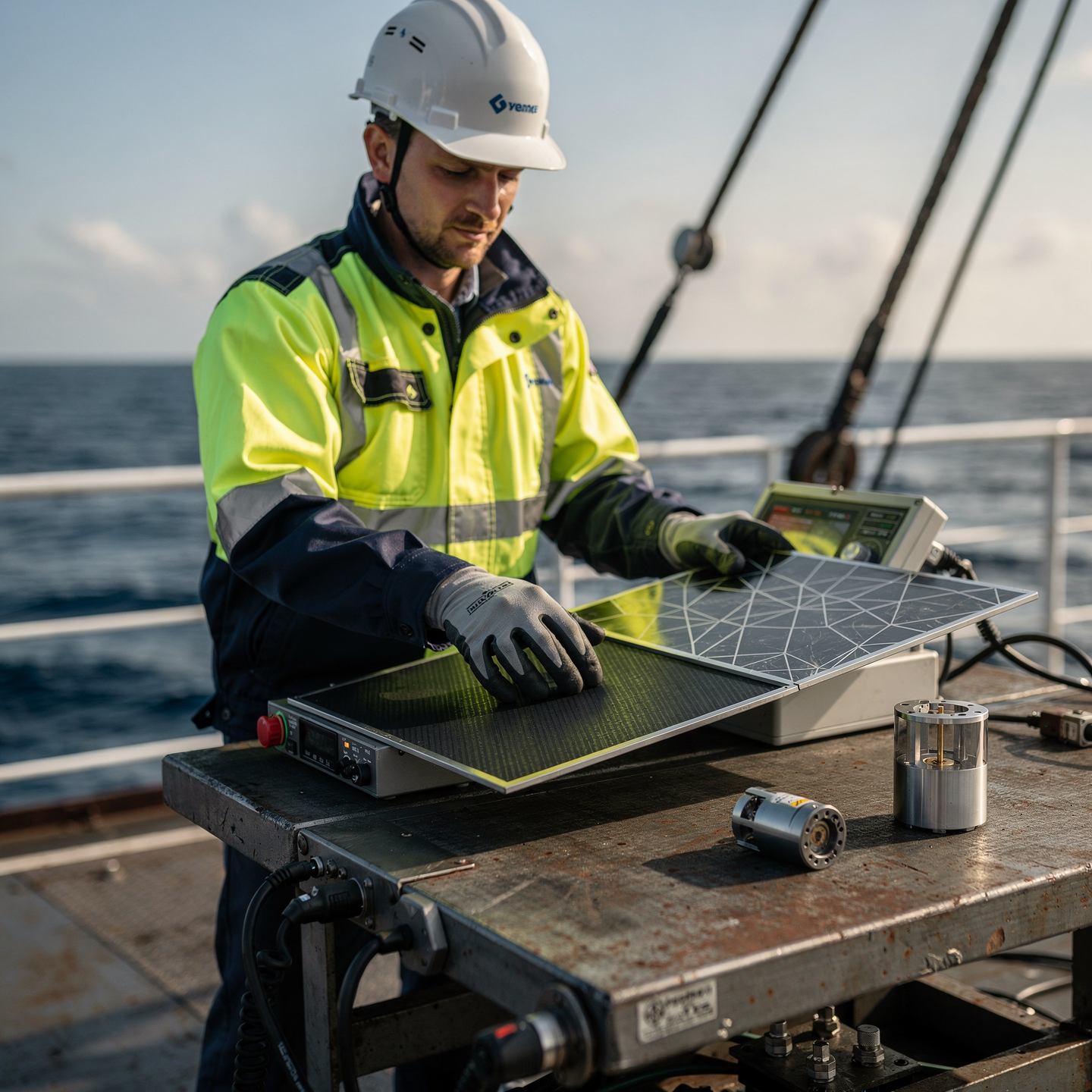
Master’s degree in Advanced Materials (composites, graphene, nanotechnology)
Why this master’s programme?
The Master in Advanced Materials
Immers you in the future of engineering, exploring the frontiers of high-performance composites, the revolutionary properties of graphene, and the infinite possibilities of nanotechnology. Master the science and application of materials that define innovation in sectors such as aerospace, energy, and biomedicine. This program provides you with in-depth, practical knowledge to lead the development of the next generation of materials.
Differentiating Advantages
- State-of-the-art Laboratory: Experimentation with cutting-edge equipment for the synthesis and characterization of materials.
- Real-world Research Projects: Participation in innovative projects in collaboration with leading companies in the sector.
- Multidisciplinary Approach: Integration of knowledge from chemistry, physics, engineering, and materials science.
- Professional Networking: Direct contact with experts and professional development opportunities in the industry.
- Sustainable Development: Emphasis on the creation of eco-friendly materials and environmentally responsible manufacturing processes.
- Modality: Online
- Level: Masters
- Hours: 1600 H
- Start date:
Availability: 1 in stock
Who is it aimed at?
- Materials, chemical, mechanical, and aeronautical engineers seeking to specialize in the design, manufacture, and characterization of next-generation materials.
- Researchers and developers interested in the application of composites, graphene, and nanotechnology in sectors such as automotive, energy, and biomedicine.
- Industry professionals wishing to update their knowledge of the trends and challenges in the field of advanced materials.
- Entrepreneurs with a vision to create innovative solutions based on the unique properties of these materials.
- Science and engineering graduates aspiring to a high-impact career in materials development future.
Study Flexibility
Adapted to working professionals: flexible online format, 24/7 access to digital resources and personalized tutoring.
Objectives and skills

Designing and optimizing materials with unprecedented properties:
“Implementing computational design methodologies and advanced simulation to predict and improve the behavior of materials at the micro and macroscopic levels.”

Leading R&D projects at the forefront of materials science:
“Managing multidisciplinary teams, from conception to implementation, optimizing resources and guaranteeing innovative results.”

Developing innovative solutions to industrial challenges using advanced materials:
“Design and prototype optimized components using advanced simulation and additive manufacturing techniques.”

Understand and apply the latest trends in the manufacture and characterization of advanced materials:
“Implement additive manufacturing techniques, analyze properties using electron microscopy and spectroscopy, and integrate smart materials into innovative designs.”

Transforming scientific discoveries into disruptive technological applications:
Develop functional prototypes, optimizing resources and validating their commercial viability through iterative proof-of-concept testing and strategic alliances.

Promoting the transition to a circular economy through sustainable materials:
Prioritize eco-design, reuse and recycling in the selection of materials, reducing dependence on virgin resources and minimizing waste generation.
Study plan – Modules
- Fundamentals of composite material design: matrix, reinforcement, and critical interfaces
- Advanced manufacturing processes: resin transfer molding (RTM), pultrusion, and automated lamination
- Microstructural characterization using scanning electron microscopy (SEM) and transmission electron microscopy (TEM) techniques
- Mechanical and thermal properties: analysis of anisotropy, fatigue strength, and viscoelastic behavior
- Surface engineering and chemical functionalization in nanomaterials to optimize adhesion and compatibility
- Applications of graphene and its derivatives in composites: improvement of electrical and thermal conductivity and mechanical properties
- Nanotechnology for the design of heterostructures: carbon nanotubes, nanoplatelets, and quantum dots
- Advanced spectroscopic characterization techniques: Raman, FTIR, and spectroscopy of Photoelectrons (XPS)
Multiscale simulation and modeling: from molecular mechanics to continuous solid mechanics applied to composite materials
Integration of composite materials and nanomaterials in strategic sectors: aerospace, automotive, biomedical, and energy
Evaluation of durability and performance in extreme environments: corrosion, temperature, and radiation
International standards and certifications for composite materials and nanotechnology-based devices
Sustainable development and recyclability of advanced materials: strategies for a circular economy in the composites industry
Case studies and innovative prototype design: CAD/CAM tools adapted to heterogeneous materials
Future perspectives: hybrid materials, metamaterials, and smart composites with integrated functionalities
- Fundamentals of nanomaterial synthesis: top-down and bottom-up methods, advantages and limitations applied to advanced materials.
- Surface functionalization chemistry: covalent and non-covalent techniques for modifying graphene, carbon nanotubes, and composite materials.
- Advanced chemical synthesis processes: sol-gel, precipitation, molecular self-assembly, and chemical vapor deposition (CVD) for high-purity nanomaterials.
- Industrial scalability: challenges and strategies for the mass production of nanomaterials while preserving functional properties.
- Control and characterization during synthesis: spectroscopic techniques (Raman, FTIR), microscopy (TEM, SEM), and diffraction to ensure quality and reproducibility.
- Optimization of reaction parameters: temperature, pH, reaction times, reducing agents, and surfactants for obtaining nanoparticles and nanosheets.
- Development of green and sustainable processes for the production of nanomaterials: use of environmentally friendly solvents and recyclability.
- Simulation and modeling of synthesis and functionalization processes to optimize industrial conditions and predict behavior at scale.
uniforms.
Process engineering for composite integration: compatibility of nanomaterials with polymeric, ceramic, and metallic matrices.
Online automation and quality control: implementation of monitoring and feedback systems for continuous processes in pilot plants and industrial plants.
Regulatory and normative aspects: safety, environmental impact, and handling of nanomaterials in the global industrial context.
Case studies: development and industrial production of functionalized graphene for applications in flexible electronics and energy storage.
Emerging functionalization technologies: cold plasma, pulsed laser, and electrochemical methods applied to nanostructures to improve specific properties.
Integration of nanotechnology and composite materials: challenges in adhesion, dispersion, and maintenance of mechanical and thermal properties at an industrial scale.
Scaling up synthesis: from laboratory to pilot plant and to industrial production under cost-efficiency criteria and Sustainability.
- Advanced Fundamentals of Composite Materials Design: Matrix and Reinforcement Selection, Micromechanical and Macromechanical Modeling, Failure Criteria, and Structural Optimization
- Physical and Chemical Characterization Techniques: Raman and FTIR Spectroscopy Applied to Nanomaterials, Thermogravimetric Analysis (TGA), and Differential Scanning Calorimetry (DSC) for Advanced Composites
- High-Precision Manufacturing Processes: Autoclave, Resin Infusion, Transfer Molding, and Emerging Additive Manufacturing Techniques for Composites and Graphene
- Mechanical Properties in Nanocomposite Materials: Residual Stresses, Fatigue Behavior, Crack Propagation, and Fracture Testing with Electron Microscopy
- Integration of Nanotechnology in Composites: Surface Functionalization of Nanotubes and Graphene for Improved Interface and Electrical Conductivity
- Control Systems of Non-destructive quality control: Ultrasound, computed tomography, and infrared thermography for online inspection and post-processing
Computational modeling and simulation: Finite elements applied to composite nanostructures, multiscale analysis, and optimization using genetic algorithms
Innovations in intelligent design: Materials with active response to physical stimuli (temperature, pressure, magnetic field) and their application in sensors and actuators
Industrial scaling and production challenges: Managing heterogeneities, process control in pilot plants, and certification for aerospace and automotive applications
Sustainable development and circularity in advanced materials: Recycling and reuse of composites and nanomaterials, life cycle assessment, and international regulations
- Fundamentals of multiscale engineering applied to composites, graphene, and nanomaterials: physical, mechanical, and chemical principles from the nano to the macro scale
- Structural and functional characterization at different scales: advanced techniques of electron microscopy, Raman spectroscopy, X-ray diffraction, and computed tomography for the evaluation of complex materials
- Multiscale computational modeling: abbreviated methods, molecular dynamics, finite elements, and couplings to predict the mechanical, thermal, and electrical properties of advanced materials
- Optimization and design of composite and nanocomposite systems with graphene: matrix selection, reinforcements, and surface treatment to achieve high industrial performance
- Advanced manufacturing processes and production scaling: additive manufacturing methods, infusion, lamination, and sintering for composites and nanomaterials
- Quality control and assurance in production: implementation of non-destructive testing techniques and statistical process control Process design and certification of international standards applied to advanced materials
Technology transfer and applied innovation: strategies for integrating advanced materials into industrial value chains and adapting to regulatory and sustainability requirements
Management of multidisciplinary projects and work teams in high-tech industries: leadership, risk analysis, and agile development in composites and nanotechnology production
Environmental assessment and life cycle assessment (LCA) of graphene- and nanomaterial-based products and processes: impact, recyclability, and current regulations
Real-world case studies and practical simulations: implementation and continuous improvement of high-performance prototypes and products for the aerospace, automotive, energy, and advanced electronics sectors
- Fundamentals of nanotechnology: nanoscales, unique physical and chemical properties, and their impact on advanced materials engineering
- Synthesis and characterization of nanomaterials: top-down and bottom-up methods, advanced techniques such as chemical vapor deposition (CVD), lithography, and molecular self-assembly
- Nano-macro interaction: transfer of properties from the nanoscale to composite materials and macroscopic structures
- Integration of graphene and carbon nanotubes into polymeric, metallic, and ceramic matrices for improved mechanical strength, electrical and thermal conductivity
- Mechanical and functional properties of nanocomposite materials: stress analysis, stiffness modulation, and resilience in critical environments
- Advanced physical and chemical characterization techniques: transmission electron microscopy (TEM), Raman spectroscopy, X-ray diffraction, and microscopy Atomic Force Mechanism (AFM)
Optimization strategies in the fabrication of advanced materials: control of nanometric morphology, nanotube alignment, and homogeneous dispersion
Nanotechnology for specific applications: flexible electronics, energy storage, biomaterials, and smart sensors
Modeling and simulation at the atomic and molecular level for the predictive design of properties and performance of next-generation materials
Scalability and industrial manufacturing considerations: challenges in mass production, costs, and quality control in applied nanotechnology
Regulatory and safety aspects: risk assessment, toxicity, and international regulations for handling nanomaterials
Case studies and critical analysis: implementation of nanotechnology in advanced composites for aerospace, automotive, and renewable energy
Future perspectives and emerging trends in nanotechnology applied to advanced materials: nanoarchitectures, smart materials, and Self-healing
Advanced experimental design and in situ characterization techniques for monitoring nanometric growth and functionalization processes
Computational optimization and machine learning algorithms for improving prediction and control in the synthesis and properties of nanomaterials
- Advanced Foundations in Nanomaterials: Atomic Structure, Quantum Properties, and Emergent Phenomena
- Molecular and Nanotechnology Design: Strategies for Controlling Self-Assembly and Surface Functionalization
- Advanced Synthesis Techniques: Chemical Deposition, Epitaxy, Nanoscale Lithography, and Bottom-Up vs. Top-Down Methods
- Multi-Scale Characterization: Transmission Electron Microscopy (TEM), Raman Spectroscopy, X-ray Diffraction, and Photoelectron Spectroscopy (XPS)
- Engineering and Optimization of Composite Materials: Integration of Polymeric, Ceramic, and Metallic Matrices with Nanostructured Reinforcements
- Interfacing and Compatibilization: Surface Treatments for Improving Adhesion and Mechanical Properties in Multilayer Composites
- Nanotechnology Applied to Graphene: Sheet preparation, doping, and defect manipulation for tailor-made properties
High-tech applications: Use in flexible electronics, energy storage, ultrasensitive sensors, and advanced structural materials
Evaluation of mechanical, thermal, and electrical properties in nanomaterials and composites using in situ techniques and computational simulations
Future perspectives: Integration of artificial intelligence in design, nanoscale 3D printing, and challenges in industrial scalability
- Advanced Fundamentals of Composite Materials: Structure, Mechanical and Thermal Properties, Anisotropy, and Multiphase Behavior
- Synthesis and Characterization of Nanomaterials: Production Techniques (CVD, PVD, sol-gel), Analysis by TEM, SEM, AFM, and Raman Spectroscopy
- Electronic and Mechanical Properties of Graphene: From Atomic Structure to Applications in Flexible Electronic Devices and High-Sensitivity Sensors
- Innovative Methodologies in the Fabrication of Graphene- and Carbon Nanotube-Reinforced Composites: Impregnation, Autoclave, Injection Molding, and Additive Technologies
- Computational Modeling in the Prediction of Advanced Materials Behavior: Multiscale Simulations, Molecular Dynamics, and Finite Elements for Structural Optimization
- Industrial Scaling and Quality Control Processes for Mass Production: Non-Destructive Testing Techniques, Online Characterization, and Quality Assurance
- Reproducibility
- Technology Transfer: Strategies for the Effective Integration of Advanced Materials in the Aerospace, Automotive, and Energy Industries
- Regulatory and Normative Aspects Applicable to Next-Generation Nanomaterials and Composites: Safety, Toxicology, and International Certifications
- Disruptive Case Studies: Real-World Applications of Advanced Materials in Technological Innovation, Including Improvement of Mechanical Properties and Surface Functionalization
- Management and Intellectual Property Tools for the Protection of Scientific Developments in Composite Materials and Nanomaterials
- Socioeconomic and Environmental Impact Assessment: Life Cycle, Recyclability, and Sustainability in the Production of Advanced Materials
- Seminars and Practical Workshops with Experts from Industry and Leading Research Centers in Nanotechnology and High-Performance Graphene
- Fundamentals of Advanced Materials: Atomic Structure, Chemical Bonding, and Fundamental Mechanical Properties of Composites, Graphene, and Nanomaterials
- Principles of Synthesis and Processing: Advanced Techniques for the Fabrication of Composite and Nanostructured Materials, Including Chemical Deposition, Self-Assembly, and Mechanical Exfoliation Processes of Graphene
- Advanced Characterization of Materials: Spectroscopic Techniques (Raman, FTIR), Electron Microscopy (SEM, TEM), and X-ray Diffraction Applied to the Evaluation of Nanocomposites and Graphene
- Multiscale Modeling and Computational Simulation: Numerical Methods for Predicting the Mechanical, Thermal, and Electrical Behavior of Composites and Nanomaterials from the Atomic to the Macroscopic Level
- Emergent Functional Properties: Detailed Study of the Electrical, Thermal, Piezoelectric, and Photonic Conductivity of Graphene-Based Materials and Nanotechnology
- Optimization of Interfaces in Composites and Nanocomposites: Techniques to improve adhesion, charge transfer, and thermal stability between matrix and reinforcements energized with nanotubes or graphene
Integration of nanotechnology in composite materials: Fabrication of hybrid structures for aerospace, automotive, and biomedical applications
Performance evaluation under extreme conditions: Analysis of fatigue resistance, thermal degradation, and mechanical behavior in aggressive environments
Innovation in recycling methods and sustainability for advanced materials: Strategies to minimize environmental impact and maximize the reuse of composites and nanomaterials
Case studies and future trends: Practical application of advanced materials in current industry and technological perspectives for the next decade
- Fundamentals of composite materials design: matrix and reinforcement selection, interface mechanics, and structural compatibility criteria
- Advanced manufacturing processes: autoclave techniques, resin transfer molding (RTM), pultrusion, and additive manufacturing applied to composites and nanomaterials
- Structural and mechanical characterization: non-destructive methods (ultrasound, X-rays, computed tomography), fracture analysis, and viscoelastic behavior
- Functional and multifunctional properties: thermal and electrical conductivity, piezoelectric and magnetostructural properties in nanostructured materials
- Nanotechnology applied to composites: incorporation and dispersion of nanoparticles, carbon nanotubes, and graphene for improved performance and durability
- Computational modeling and simulation: FEM techniques, molecular dynamics, and multiscale methodologies for predicting mechanical behavior and
- thermal
- Advanced chemical characterization: Raman spectroscopy, photoelectron spectroscopy (XPS), and transmission electron microscopy (TEM)
- Innovative applications in aerospace, automotive, biomedical, and flexible electronics: case studies and emerging trends
- International regulations and standards: certification, quality testing, and life cycle assessment of composite materials and nanomaterials
- Future perspectives and challenges in integrating advanced materials for disruptive technologies: sustainability, recyclability, and the circular economy
- Advanced Fundamentals of Composite Materials: Structure, Types, Matrix, and Reinforcements in Industrial and Aerospace Applications
- Nanostructural Characterization of Graphene: Synthesis Methods, Defects, Functionalization, and Electromechanical Properties
- Nanotechnology Applied to Advanced Materials: Carbon Nanotubes, Functionalized Nanoparticles, and Self-Assembly Techniques
- Multiscale Modeling of Composite Materials and Nanomaterials: Integration of Molecular Simulations, Finite Elements, and Hybrid Systems
- Advanced Manufacturing Methods: Pultrusion, Resin Infusion, Chemical Deposition, and 3D Printing Techniques with Nanocomposites
- Mechanical and Thermal Properties: Analysis of Toughness, Fatigue, Glass Transition, and Thermal Conductivity in Graphene-Composite Hybrid Systems
- Interfacial Interaction in Nanocomposites: Adhesion, Charge Transfer, and Reinforcement mechanisms at the nanoscale
Evaluation and characterization using spectroscopic and microscopic techniques: Raman, TEM, SEM, AFM, and X-ray diffraction applied to advanced materials
Study of degradation, aging, and durability in composites and nanostructured materials under extreme environmental and operating conditions
Design and optimization of innovative solutions: application in the automotive, aerospace, biomedical, and energy sectors through multiscale functional integration
Regulatory aspects, sustainability, and recycling: challenges and opportunities in the production and management of advanced materials at the industrial level
Methodologies for the development of the final project: hypothesis formulation, experimental design, results analysis, and scientific writing for the presentation of innovation projects in advanced materials
Career prospects
“`html
- Research and Development (R&D): Design, synthesis, characterization, and application of new advanced materials in research centers, universities, or companies.
- Materials Engineering: Selection, optimization, and application of advanced materials in various industries (aerospace, automotive, electronics, energy, biomedicine).
- Technical Consulting: Specialized advice on advanced materials for companies, covering everything from material selection to solving problems related to their performance and durability.
- Production and Manufacturing: Supervision and optimization of manufacturing processes involving advanced materials, guaranteeing quality and efficiency in production.
- Quality Control: Implementation and management of quality control systems for advanced materials, ensuring compliance with standards and specifications.
- Product Development: Participation in the design and development of new products incorporating advanced materials, leveraging their unique properties.
Technological Entrepreneurship: Creation and management of startups focused on the development and commercialization of advanced materials or products based on these materials.
Teaching and Academic Research: Teaching at universities and training centers, as well as conducting scientific research in the field of advanced materials.
“`
Entry requirements

Academic/professional profile:
Bachelor’s degree in Nautical Science/Maritime Transport, Naval/Marine Engineering or a related qualification; or proven professional experience on the bridge/in operations.

Language proficiency:
Functional Maritime English (SMCP) recommended for simulations and technical materials.

Documentation:
Updated CV, copy of qualification or seaman’s book, national ID/passport, motivation letter.

Technical requirements (for online):
Device with camera/microphone, stable internet connection, monitor ≥ 24” recommended for ECDIS/Radar-ARPA.
Admissions process and dates

Online
application
(form + documents).

Academic review and interview
Admissions decision

Admissions decision
(+ scholarship offer if applicable).

Place reservation
(deposit) and enrolment.

Induction
(access to the virtual campus, calendars, simulator guides).
Scholarships and financial support
- Next-generation composites: Master the manufacturing and characterization of innovative composite materials.
- Graphene and nanomaterials: Explore unique properties and revolutionary applications across diverse industries.
- Advanced design and simulation: Learn to model and optimize materials for superior performance.
- Industrial applications: Focus on practical cases in sectors such as aerospace, automotive, and energy.
- Cutting-edge research: Participate in innovative projects and collaborate with leading experts in the field.
Testimonials
During my Master’s in Advanced Materials, my final project focused on developing a new graphene composite for aerospace applications. I successfully synthesized a material with a tensile strength 30% higher than current standards and a significantly lower weight. This breakthrough, which resulted in a publication in a high-impact scientific journal, sparked the interest of a major company in the sector, allowing me to launch my professional career in a cutting-edge and exciting field.
During my Master’s degree in Naval Construction & Design, I exceeded my expectations by leading the development of an innovative hybrid propulsion system for cargo ships, which reduced fuel consumption by 15% in simulations. This project, subsequently published in a specialized scientific journal, secured me a position as lead design engineer at a major company in the sector.
During my Master’s degree in Advanced Materials, I developed a novel method for functionalizing graphene for use in solid-state batteries, increasing their conductivity by 30% and publishing the results in a high-impact scientific journal. This breakthrough enabled me to obtain a full doctoral scholarship at a prestigious university, where I continue to research innovative applications of nanomaterials for energy storage.
During my Master’s degree in Advanced Materials, I developed a novel method for functionalizing graphene for use in polymer composites, increasing the material’s tensile strength by 35% and publishing the results in a high-impact scientific journal. This achievement enabled me to obtain a doctoral scholarship to continue my research in nanomaterials.

Frequently asked questions
Composites, graphene, and nanomaterials.
Yes. The itinerary includes ECDIS/Radar-ARPA/BRM with harbor, ocean, fog, storm, and SAR scenarios.
Online with live sessions; hybrid option for simulator/practical placements through agreements.
Advanced materials such as composites, graphene, and nanomaterials.
Recommended functional SMCP. We offer support materials for standard phraseology.
Yes, with a relevant degree or experience in maritime/port operations. The admissions interview will confirm suitability.
Optional (3–6 months) through Companies & Collaborations and the Alumni Network.
Simulator practice (rubrics), defeat plans, SOPs, checklists, micro-tests and applied TFM.
A degree from Navalis Magna University + operational portfolio (tracks, SOPs, reports and KPIs) useful for audits and employment.
- Advanced Fundamentals of Composite Materials: Structure, Types, Matrix, and Reinforcements in Industrial and Aerospace Applications
- Nanostructural Characterization of Graphene: Synthesis Methods, Defects, Functionalization, and Electromechanical Properties
- Nanotechnology Applied to Advanced Materials: Carbon Nanotubes, Functionalized Nanoparticles, and Self-Assembly Techniques
- Multiscale Modeling of Composite Materials and Nanomaterials: Integration of Molecular Simulations, Finite Elements, and Hybrid Systems
- Advanced Manufacturing Methods: Pultrusion, Resin Infusion, Chemical Deposition, and 3D Printing Techniques with Nanocomposites
- Mechanical and Thermal Properties: Analysis of Toughness, Fatigue, Glass Transition, and Thermal Conductivity in Graphene-Composite Hybrid Systems
- Interfacial Interaction in Nanocomposites: Adhesion, Charge Transfer, and Reinforcement mechanisms at the nanoscale
Evaluation and characterization using spectroscopic and microscopic techniques: Raman, TEM, SEM, AFM, and X-ray diffraction applied to advanced materials
Study of degradation, aging, and durability in composites and nanostructured materials under extreme environmental and operating conditions
Design and optimization of innovative solutions: application in the automotive, aerospace, biomedical, and energy sectors through multiscale functional integration
Regulatory aspects, sustainability, and recycling: challenges and opportunities in the production and management of advanced materials at the industrial level
Methodologies for the development of the final project: hypothesis formulation, experimental design, results analysis, and scientific writing for the presentation of innovation projects in advanced materials
Request information
Complete the Application Form.
Attach your CV/degree certificate (if you have it to hand).
Indicate your preferred cohort (January/May/September) and whether you would like the hybrid option with simulator sessions.
An academic advisor will contact you within 24–48 hours to guide you through the admission process, scholarships, and compatibility with your professional schedule.
Faculty
Eng. Tomás Riera
Full Professor
Eng. Tomás Riera
Full Professor
Eng. Sofía Marquina
Full Professor
Eng. Sofía Marquina
Full Professor
Eng. Javier Bañuls
Full Professor
Eng. Javier Bañuls
Full Professor
Dr. Nuria Llobregat
Full Professor
Dr. Nuria Llobregat
Full Professor
Dr. Pau Ferrer
Full Professor
Dr. Pau Ferrer
Full Professor
Cap. Javier Abaroa (MCA)
Full Professor
Cap. Javier Abaroa (MCA)
Full Professor

