Master’s Degree in Marine Electronics and Ship Avionics

Why this master’s programme?

The Master’s Degree in Marine Electronics and Ship Avionics

Offers comprehensive training in the most advanced onboard electronic systems. Learn to diagnose, maintain, and repair critical equipment, from radars and navigation systems to propulsion and avionics controls. Master systems integration, maritime cybersecurity, and international regulations. This program prepares you to be an expert in cutting-edge naval and aeronautical technology, capable of optimizing vessel performance and safety.

Differentiating Advantages

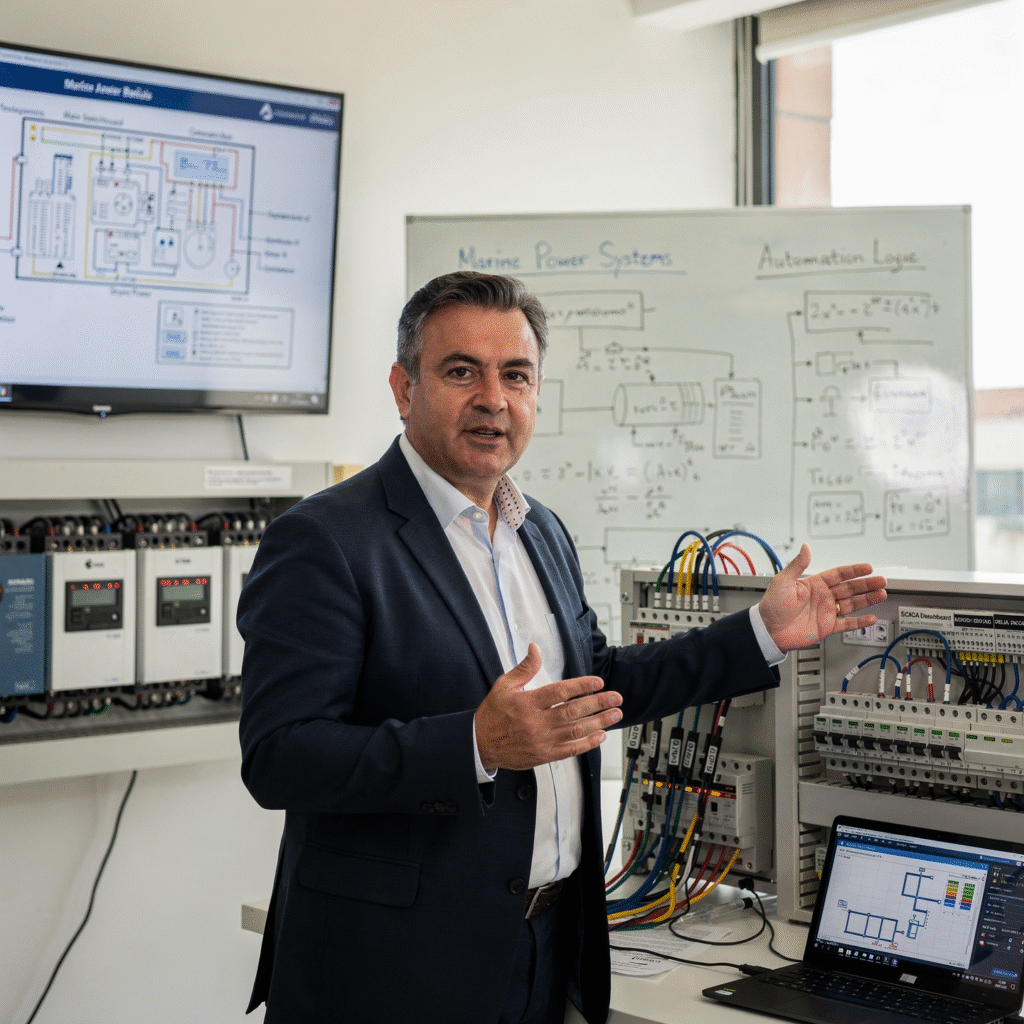
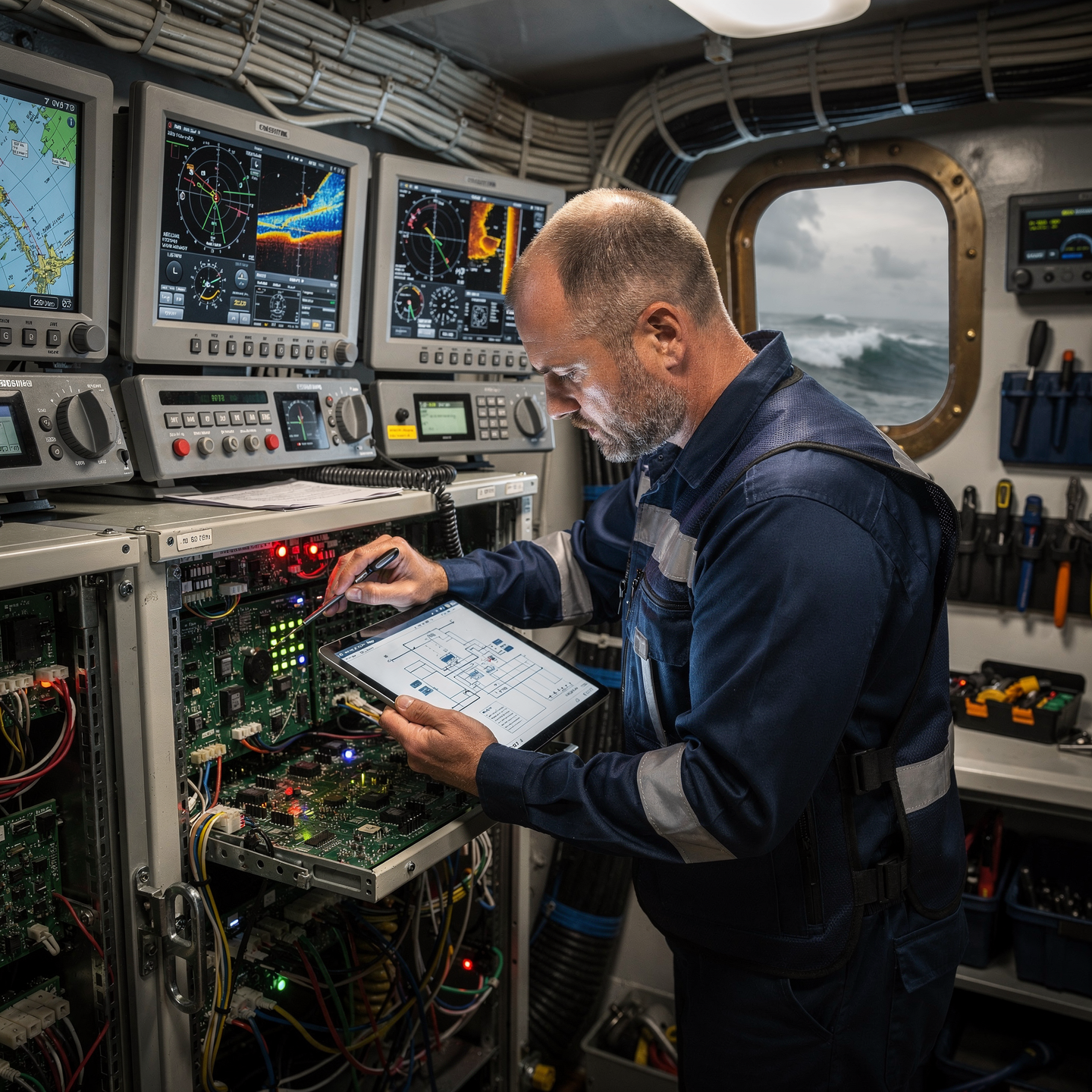
  • Intensive Hands-on Training: specialized laboratories and state-of-the-art simulations.
  • Expert Faculty: engineers and technicians with extensive experience in the naval and aeronautical sectors.
  • Industry Connections: collaborations with leading companies and professional internship opportunities.
  • Focus on Innovation: constant updates with the latest trends in marine electronics and avionics.
  • Professional Certification: international recognition of your skills and knowledge.

Master’s Degree in Marine Electronics and Ship Avionics

Availability: 1 in stock

Who is it aimed at?

  • Electronic engineers, naval engineers, and senior technicians seeking to specialize in the installation, maintenance, and repair of marine electronic systems and ship avionics.
  • Merchant marine officers and ship maintenance personnel wishing to expand their knowledge of advanced electronics for optimizing onboard operability and safety.
  • Marine and aerospace industry professionals interested in the adaptation of avionics technologies for marine applications, with a focus on innovation and efficiency.
  • Graduates in engineering and related fields seeking specialized, high-level training to enter the job market in the marine electronics and ship avionics sector.
  • Companies in the maritime and aerospace sector seeking Update and train your staff on the latest technologies and regulations in marine electronics and ship avionics.

Training flexibility
 Adapted to working professionals: online format with live classes, 24/7 access to resources, and personalized tutoring for learning at your own pace.

Objectives and skills

Diagnose and repair onboard electronic systems:

“Using diagnostic tools, identifying defective components and applying repair techniques according to technical manuals.”

Manage and maintain maritime and air communication systems:

“Use radio and satellite equipment to ensure effective communications in emergency and routine situations.”

Integrate and configure state-of-the-art navigation equipment:

Interpret technical manuals, connection diagrams and troubleshoot compatibility issues between equipment (radars, ECDIS, AIS, GPS) to optimize bridge performance.

Oversee projects involving the installation and upgrade of marine electronic and avionics systems:

Ensure proper execution, complying with technical regulations, deadlines and budget, documenting each phase and proactively resolving incidents.
Optimizing the performance and safety of electronic systems in ships and aircraft:

“Perform predictive and corrective maintenance, in accordance with current regulations, minimizing downtime and ensuring safe operation.”

Implement cybersecurity strategies to protect critical electronic systems:

“Configure firewalls and intrusion detection systems, applying hardening and continuous monitoring for a proactive response to incidents.”

Study plan – Modules

  1. Introduction to Embedded Systems: Fundamentals of Applied Electronics in Maritime and Aeronautical Environments
  2. Automation Topologies and Architectures: Field Networks, Industrial Buses, and Communication Protocols on Ships
  3. Instrumentation and Sensors: Types, Operating Principles, and Their Application in Ship Navigation and Control
  4. Integration of Electronic Systems: GNSS, INS, Radar, Sonar, and Surveillance and Monitoring Systems
  5. Control and Supervision in Naval Automation: SCADA, PLCs, and Embedded Systems
  6. Redundancy and Fault Tolerance in Critical Ship Navigation and Avionics Systems
  7. Communication Protocols and Data Security: NMEA, CAN Bus, Modbus, and Encryption in Marine Electronic Systems
  8. Data Processing and Fusion: Advanced Algorithms for Accuracy Improvement and reliability in navigation

    Diagnostics and predictive maintenance based on artificial intelligence and analysis of vibrations and electronic signals

    International standards applicable to electronics and automation in ships: SOLAS, IEC 61162, IMO, and ITU

    Implementation of automated control systems for maneuvering and stability in modern vessels

    Cybersecurity in integrated systems: threats, vulnerabilities, and protection protocols for marine electronics and avionics

    Advanced simulation and training: specialized software for the design, testing, and optimization of integrated systems in maritime environments

    Case studies and incident analysis: evaluation of failures in electronic systems and mitigation strategies in real-world operations

    Future of marine electronics: trends in automation, artificial intelligence, and autonomous systems for ships

  1. Fundamentals of Advanced Diagnostics: Theories and Methodologies Applied to Marine and Aeronautical Electronic and Control Systems
  2. Real-Time Monitoring Systems: Sensors, Data Acquisition, and Communication Protocols in Ships and Aircraft
  3. Predictive Maintenance Based on Condition Analysis: Vibration, Thermography, Ultrasound, and Lubricant Analysis
  4. Reliability and Asset Management Models (RAMS) in Maritime and Aeronautical Environments
  5. Implementation of Machine Learning and Artificial Intelligence Techniques for Predicting Electronic Failures
  6. Diagnosing Failures in Navigation and Avionics Control Systems: Fuzzy Logic, Root Cause Analysis, and Simulation
  7. Management and Integration of Maintenance Databases: Historical Data, Trends, and Automated Planning
  8. Specialized Tools and Software for Remote Diagnostics and Augmented Reality-Assisted Maintenance
  9. Regulations and International standards applicable to electronic and control systems in ships and aircraft (IEC, IMO, FAA)

    Cybersecurity strategies to protect critical electronic systems during diagnostics and predictive maintenance

    Experimental case studies of advanced diagnostics in radars, satellite communication systems, and marine and aerospace electric motor control

    Non-destructive testing (NDT) and inspection procedures applied to electronic components and embedded control systems

    Optimization of predictive maintenance programs through statistical analysis and technical-operational performance metrics

    Integration between predictive maintenance and preventive and corrective maintenance protocols in bridges and flight decks

    Training and continuing education for technicians and operators in the latest diagnostic and maintenance technologies and methodologies

  1. Fundamentals of Maritime and Aeronautical Electronics: Applicable Physical Principles and Regulations
  2. Advanced Design and Architecture of Electronic Systems for Ships: Modular Integration and Redundancy
  3. Diagnostics and Predictive Maintenance Using Vibration Analysis, Thermography, and Ultrasound Techniques
  4. Intelligent Automation in Maritime Navigation: Distributed Control and Specialized SCADA Systems
  5. CAN, NMEA 2000, and ARINC 429 Communication Protocols in the Interconnection of Onboard Systems
  6. Application of Artificial Intelligence and Machine Learning for the Optimization of Electronic and Aeronautical Systems Management
  7. Innovations in Sensors and Actuators: Inertial Systems, Laser Gyroscopes, and Differential Pressure Sensors
  8. Integration of Real-Time Monitoring Systems: IoT Platforms for Remote Monitoring and Data Analysis
  9. International Standards and Certifications: IEC 61162, IMO, MIL-STD to ensure technical and operational compliance

    Advanced strategies for fault detection and resolution: automated diagnostics and recovery of critical systems

    Implementation of redundant onboard systems to guarantee operational continuity in maritime and aeronautical environments

    Calibration and validation techniques for electronic equipment in extreme maritime and aeronautical conditions

    Development and simulation of systems using specialized software: MATLAB/Simulink, LabVIEW, and rapid prototyping tools

    Cybersecurity applied to naval and aeronautical automation systems: protection against threats and vulnerabilities

    Practical case studies of integration and optimization in electronic systems of bridges and avionics cabins of modern ships

  1. Fundamentals of Network Architecture in Marine Electronics and Avionics: physical and logical topologies, standard protocols (NMEA 2000, CAN bus, Maritime Ethernet)
  2. Integration of Multi-Source Sensors: synchronization of GNSS, radar, sonar, thermal camera data, and INS systems for visibility and advanced navigation
  3. Advanced Maritime Communication Protocols: detailed analysis of serial links, TCP/IP in confined environments, digital modulation, and real-time multiplexing
  4. Control and Automation Platforms: design of SCADA supervisory systems applied to power plants, propulsion, and CVC, with an emphasis on fieldbus interoperability
  5. Applied Cybersecurity: defense-in-depth architectures, network segmentation, multi-factor authentication, and protection against distributed denial-of-service (DDoS) attacks specific to shipboard environments
  6. Operational Resilience: active redundancy techniques, automatic failover, integrated diagnostic systems (MID), and strategies for rapid recovery after critical failures
  7. Performance Optimization: data traffic analysis, maritime quality of service (QoS), prioritization of critical signals, and latency reduction in communications
  8. Maritime Regulations and Standards: IMO, IEC 61162, and RTCA DO-178C certifications and their applicability to the homologation and integration of electronic and avionics systems
  9. Integration of Navigation and Control Systems on the Bridge: interoperability between ECDIS, AIS, autopilots, and early warning systems
  10. Testing and Validation Methodologies: integrated network simulation, penetration testing of marine systems, technical audits for certification, and quality assurance
  11. Remote Management and Monitoring: implementation of maritime IoT platforms for diagnostics Predictive and preventive maintenance from ground control centers

    Trends and Future of Marine Electronics and Avionics: integration with artificial intelligence, machine learning for route optimization, and advanced cybersecurity

  1. Advanced Fundamentals of Inertial Navigation: Physical Principles, MEMS Sensors, and Fiber Optic Laser Gyroscopes
  2. Design and Calibration of Inertial Navigation Systems (INS) for Ships: Integration of Accelerometers, Magnetometers, and Stabilized Platforms
  3. Sensor Fusion Algorithms: Extended Kalman, Neural Networks, and Adaptive Filters to Improve Accuracy in Dynamic Marine Environments
  4. Architecture and Configuration of Advanced Maritime Radars: SAR, Doppler, FMCW, and Their Application in Target and Obstacle Detection
  5. Digital Signal Processing in Radars: Filtering Techniques, Noise Reduction, and Image Enhancement for Safe Navigation in Adverse Conditions
  6. Integration of INS and Radar Systems: Communication Protocols, Data Synchronization, and Real-Time Navigation Aids
  7. Applied Marine Avionics: Air Navigation Systems Adapted to Operations in Ships, interconnection with sensors and human-machine interfaces (HMIs)

    Modeling and simulation of inertial navigation and radar systems: use of specialized software for optimization and virtual testing

    Implementation of CAN-bus networks, NMEA 2000, and other maritime standards for interoperability between navigation and avionics systems

    Diagnostic and predictive maintenance methodologies in integrated navigation systems: early fault detection and advanced repair techniques

    Cybersecurity in marine navigation and avionics systems: protection protocols, emerging threats, and defense strategies in maritime environments

    International standards and certifications applicable to the design and operation of inertial navigation systems and advanced radars on ships

    Case studies and incident analysis: study of integrated navigation systems on next-generation ships and lessons learned

    Future development and innovation: trends in sensors Quantum inertial, synthetic aperture radar (SAR), and hybrid solutions for maritime navigation

    [l]

  1. Fundamentals of Integrated Systems in Marine Electronics and Ship Avionics: Modular Architecture, Interoperability, and Standard Communication Protocols (CAN, NMEA 2000, Marine Ethernet)
  2. Advanced Principles of Automatic Control: Mathematical Modeling, Feedback Systems, PID Control, Predictive and Adaptive Control in Marine Applications
  3. Diagnostics and Continuous Monitoring of Onboard Electronic Systems: Data Acquisition Techniques, Real-Time Analysis, and Condition-Based Predictive Maintenance (CBM) Strategies
  4. Implementation of Integrated Sensor and Actuator Networks: Design, Configuration, and Synchronization to Ensure Reliability and Operational Safety
  5. Automation of Propulsion and Power Generation Systems: Control of Electric Motors, Variable Frequency Drives, Generator Synchronization, and Hybrid Power Management on Ships
  6. Standard Diagnostic Protocols in Marine Avionics and Electronics: Use of SCADA, CAN bus diagnostics, and management systems
  7. Fault Management Systems (FMS) for detailed incident analysis
  8. Software and hardware in onboard automated control systems: embedded development platforms, PLC-SCADA integration, and simulation tools (MATLAB/Simulink, LabVIEW)
  9. Advanced preventive and corrective maintenance: risk-based planning, modular repair strategies, and post-service validation through functional and integration testing
  10. Human-machine interaction (HMI) in integrated systems: ergonomic design, intelligent alarms, and adaptive graphical interfaces for operators in complex marine environments
  11. Applicable international regulations and standards: compliance with IEC 60092, IEEE 1613, IMO SOLAS Chapters V and IX, and certification of electronic and avionics systems on ships
  1. Fundamentals of sensor networks in marine environments: sensor typology, network topologies, and specific protocols for onboard monitoring
  2. Design and implementation of marine communication systems: satellite links, VHF/UHF radio, HF and fiber optic links, redundancy and security requirements
  3. Integration of avionics systems on ships: architecture, interfaces, and communication standards (ARINC 429/664, CAN bus)
  4. Optimizing data network performance: multiplexing techniques, traffic prioritization, interference and latency management in complex electromagnetic environments
  5. Advanced protocols for remote control and monitoring: Modbus, PROFIBUS, OPC-UA, and their application in marine electronic systems
  6. Development and implementation of distributed control systems: PLCs, RTUs, and architectures SCADA systems adapted to ship automation

    Reliability and fault tolerance analysis in maritime control systems: detection, correction, and automatic recovery mechanisms

    Real-time monitoring and predictive diagnostics using artificial intelligence and machine learning applied to data from maritime sensor networks

    Communications security and cybersecurity: secure network design, encryption, authentication, and protection against specific threats in the naval environment

    International regulations and applicable technical standards in the design and operation of electronic networks and systems on ships: IMO, IEC, ITU, and class recommendations

  1. Fundamentals of control systems in marine and aeronautical platforms: mathematical models and stability theories
  2. Advanced design of PID, adaptive, and predictive controllers applied to marine and aerospace environments
  3. Integration of sensors and actuators: communication protocols, redundancy, and synchronization in critical systems
  4. Distributed automation: SCADA architecture and integrated DCS systems for centralized and remote management
  5. Implementation of robust industrial networks (Ethernet/IP, PROFINET, Modbus TCP) in marine and aeronautical environments
  6. Energy optimization: intelligent load management strategies and hybrid propulsion systems in ships and aircraft
  7. Advanced diagnostics and predictive maintenance using vibration analysis, thermography, and machine learning algorithms
  8. Functional safety and cybersecurity in automated systems: IEC standards 61508, ISA/IEC 62443 and protection against cyberattacks
  9. Digital simulation and modeling: use of HIL and SIL platforms for validation of control systems in simulated environments
  10. Case studies and development of integrated projects: real-time optimization of HVAC, propulsion, and automatic navigation systems
  1. Fundamentals of Electronic Systems Integration: Modular architecture, industrial communication protocols (CAN bus, Maritime Ethernet, ARINC 429, MIL-STD-1553)
  2. Inertial Navigation Systems (INS): Operating principles, gyroscopic sensors and accelerometers, sensor fusion algorithms for precise positioning
  3. Advanced Diagnostics in Control Systems: Continuous monitoring techniques, fault detection through signal analysis and predictive modeling
  4. Optimizing Radar and Sensor Performance: Calibration, noise reduction, resolution and range enhancement in maritime and aerospace environments
  5. Integration and Synchronization of GNSS Systems with Electronic Platforms: Error mitigation, differential correction algorithms, and the use of multiple reference systems
  6. Automatic Control of Ships and Aircraft: Autopilot design and tuning, adaptive and robust control in Changing dynamic conditions of the operating environment

    Interoperability protocols between navigation and avionics systems: real-time data exchange, integration of ECDIS, AIS, VDR, and flight management systems

    Advanced troubleshooting methodologies: use of expert systems, forensic analysis of historical data, and failure simulation for preventive diagnostics

    Energy optimization and operational efficiency of electronic systems: intelligent management of electrical loads, thermal balance, and predictive maintenance planning

    International regulations and standards applied to the integration and certification of electronic systems in ships and aircraft: SOLAS, IEC 61162, RTCA DO-178 and DO-254

  1. Definition and Scope of the Master’s Thesis: Objectives, Methodology, and Evaluation Criteria
  2. Advanced Analysis of Electronic Systems in Naval Architecture: Integration of Sensors, Monitoring Systems, and Real-Time Control
  3. Structural Design of Marine Avionics Systems: Hardware Selection, Communication Protocols, and Electromagnetic Compatibility
  4. Modeling and Simulation of Onboard Electronic Systems: Use of Specialized Software for Validation and Optimization
  5. Implementation of Redundant and Fault-Tolerance Systems to Improve the Operational Resilience of Ships
  6. Integration of IoT Technologies and Advanced Sensors for the Capture and Analysis of Critical Operational Data
  7. Cybersecurity Protocols Applied to Marine Electronics and Avionics: Threat Detection and Mitigation Strategies
  8. Regulatory Assessment and Certification of Maritime Electronic Systems: Compliance with SOLAS, IEC, IEEE, and Specific Naval Industry Standards
  9. Methodologies for Functional and stress testing in laboratory and real-world environments: performance and safety validation

    Energy optimization and resource management in onboard electronic systems to maximize operational efficiency

    Human-machine interface (HMI) design for marine avionics systems: ergonomics, usability, and human error reduction

    Real-world case studies and critical analysis of incidents related to failures in marine electronics and avionics

    Planning and execution of the final project’s technical documentation: reports, user manuals, and maintenance protocols

    Presentation and technical defense of the project before multidisciplinary panels: effective communication and justification of solutions

    Future perspectives in marine electronics and avionics: technological trends, automation, and sustainability in the shipbuilding industry

Career prospects

“`html

  • Electronic Maintenance Technician on ships and aircraft, ensuring the proper functioning of navigation, communication, and control systems.
  • Design and Development Engineer of marine electronic and avionics equipment, participating in the creation of new technologies and improvements to existing systems.
  • Technical Inspector in certification and classification companies, verifying compliance with regulations and safety standards for onboard electronic installations.
  • Technical Consultant specializing in marine electronics and avionics, advising shipowners, shipyards, and airlines on the selection, installation, and maintenance of equipment.
  • Project Manager in engineering and naval/aeronautical construction companies, leading work teams in the implementation of complex electronic systems.
  • Support and Repair Technician in electronic equipment manufacturers Marine and avionics, providing technical assistance to clients and resolving technical problems.

    Researcher and developer at research centers and universities, working on the innovation of electronic technologies for the maritime and aeronautical sectors.

    Lecturer/Instructor at vocational training institutions and universities, imparting theoretical and practical knowledge on marine electronics and avionics.

    “`

Entry requirements

Academic/professional profile:

Bachelor’s degree in Nautical Science/Maritime Transport, Naval/Marine Engineering or a related qualification; or proven professional experience on the bridge/in operations.

Language proficiency:

Functional Maritime English (SMCP) recommended for simulations and technical materials.

Documentation:

Updated CV, copy of qualification or seaman’s book, national ID/passport, motivation letter.

Technical requirements (for online):

Device with camera/microphone, stable internet connection, monitor ≥ 24” recommended for ECDIS/Radar-ARPA.

Admissions process and dates

Online
application

(form + documents).

Academic review and interview

Admissions decision

Admissions decision

(+ scholarship offer if applicable).

Place reservation

(deposit) and enrolment.

Induction

(access to the virtual campus, calendars, simulator guides).

Scholarships and financial support

  • Advanced Naval Electronics: Master critical electronic systems on modern ships and carrier-based aircraft.
  • Integrated Avionics: Delve into the integration of avionics systems with marine electronics for safe and efficient operations.
  • Maintenance and Repair: Acquire hands-on skills in diagnosing and troubleshooting electronic and avionics equipment.
  • Professional Certification: Prepare to obtain recognized certifications in the naval and aeronautical industries.
  • Advanced Simulations: Experiment with state-of-the-art simulation technologies for immersive, hands-on learning.
Boost your career in the maritime and aviation sectors with cutting-edge training in electronics and avionics.

Testimonials

Frequently asked questions

In marine and aerial environments, specifically on ships, boats and aircraft.

Yes. The itinerary includes ECDIS/Radar-ARPA/BRM with harbor, ocean, fog, storm, and SAR scenarios.

Online with live sessions; hybrid option for simulator/practical placements through agreements.

It combines both areas, marine electronics for ships and avionics, although it may have some specialization depending on the specific program.

Recommended functional SMCP. We offer support materials for standard phraseology.

Yes, with a relevant degree or experience in maritime/port operations. The admissions interview will confirm suitability.

Optional (3–6 months) through Companies & Collaborations and the Alumni Network.

Simulator practice (rubrics), defeat plans, SOPs, checklists, micro-tests and applied TFM.

A degree from Navalis Magna University + operational portfolio (tracks, SOPs, reports and KPIs) useful for audits and employment.

  1. Definition and Scope of the Master’s Thesis: Objectives, Methodology, and Evaluation Criteria
  2. Advanced Analysis of Electronic Systems in Naval Architecture: Integration of Sensors, Monitoring Systems, and Real-Time Control
  3. Structural Design of Marine Avionics Systems: Hardware Selection, Communication Protocols, and Electromagnetic Compatibility
  4. Modeling and Simulation of Onboard Electronic Systems: Use of Specialized Software for Validation and Optimization
  5. Implementation of Redundant and Fault-Tolerance Systems to Improve the Operational Resilience of Ships
  6. Integration of IoT Technologies and Advanced Sensors for the Capture and Analysis of Critical Operational Data
  7. Cybersecurity Protocols Applied to Marine Electronics and Avionics: Threat Detection and Mitigation Strategies
  8. Regulatory Assessment and Certification of Maritime Electronic Systems: Compliance with SOLAS, IEC, IEEE, and Specific Naval Industry Standards
  9. Methodologies for Functional and stress testing in laboratory and real-world environments: performance and safety validation

    Energy optimization and resource management in onboard electronic systems to maximize operational efficiency

    Human-machine interface (HMI) design for marine avionics systems: ergonomics, usability, and human error reduction

    Real-world case studies and critical analysis of incidents related to failures in marine electronics and avionics

    Planning and execution of the final project’s technical documentation: reports, user manuals, and maintenance protocols

    Presentation and technical defense of the project before multidisciplinary panels: effective communication and justification of solutions

    Future perspectives in marine electronics and avionics: technological trends, automation, and sustainability in the shipbuilding industry

Request information

  1. Complete the Application Form.

  2. Attach your CV/degree certificate (if you have it to hand).

  3. Indicate your preferred cohort (January/May/September) and whether you would like the hybrid option with simulator sessions.

    An academic advisor will contact you within 24–48 hours to guide you through the admission process, scholarships, and compatibility with your professional schedule.

Please enable JavaScript in your browser to complete this form.
Click or drag a file to this area to upload.

Faculty

0
    0
    Tu carrito
    Tu carrito esta vacíoRegresar a la tienda
    Scroll to Top