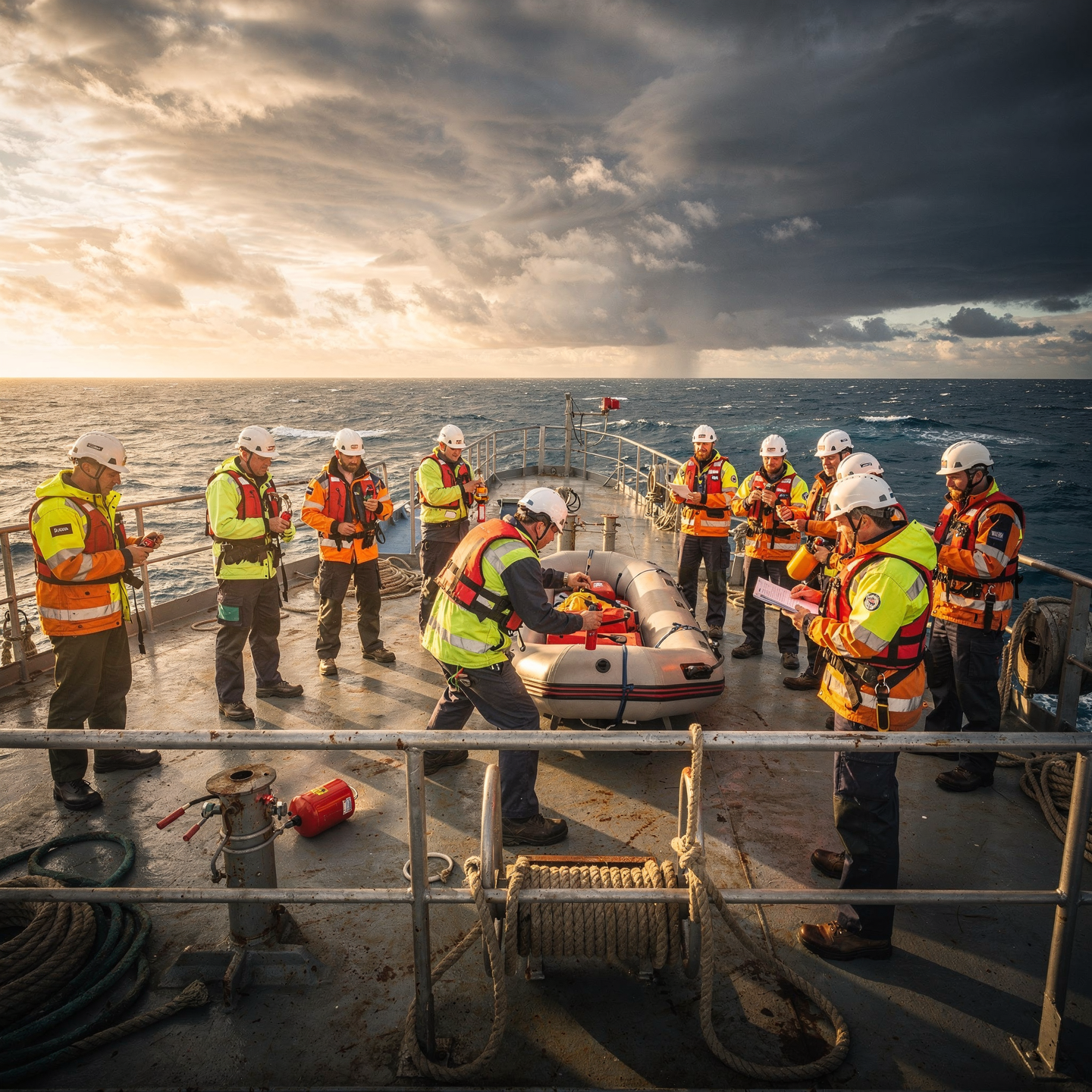
Master’s Degree in Maritime Safety and Rescue

Why this master’s programme?

The Master’s Degree in Maritime Safety and Rescue

Offers comprehensive training for professionals seeking to lead and optimize emergency response operations at sea. This program delves into the international regulatory framework, advanced rescue techniques, risk management, and resource coordination in critical situations. You will learn to implement effective disaster prevention and mitigation strategies, using the latest technologies and methodologies to ensure the safety of human lives and the protection of the marine environment.

Differential Advantages

  • Real-life scenario simulations: Participate in practical exercises that recreate complex emergency situations, such as shipwrecks, fires on board, and oil spills.
  • Specialization in crisis management: Acquire skills to make quick and effective decisions under pressure, coordinating teams and optimizing resources in real time.
  • In-depth knowledge of the legal framework: Master the international laws and regulations governing maritime safety and rescue, ensuring regulatory compliance in all operations.
  • Training in cutting-edge technologies: Use advanced tools such as Geographic Information Systems (GIS), drones, and satellite communication equipment to improve the efficiency of rescue operations.
  • Professional networking: Connect with industry experts, representatives of international organizations, and colleagues from around the world, expanding your network of contacts and job opportunities.

Master’s Degree in Maritime Safety and Rescue

Availability: 1 in stock

Who is it aimed at?

  • Merchant Navy officers, captains, and chief engineers seeking comprehensive specialization in emergency management, rescue, and onboard safety.
  • Maritime professionals (pilots, tugboat operators, VTS) interested in deepening their knowledge of legislation, rescue techniques, and inter-institutional coordination.
  • Safety managers in shipping companies, ports, and terminals who need to lead the prevention and response to maritime incidents.
  • Graduates in Nautical Studies, Naval Engineering, and Marine Sciences aspiring to advanced professional development in the field of maritime safety and rescue.
  • Members of rescue teams, firefighters, and security forces interested in Expand your knowledge and skills in maritime rescue operations.

    Flexibility for your career
    Online Master’s program with a practical and applied methodology, adapted to working professionals: live virtual classes and 24/7 access to resources.

Objectives and skills

Managing maritime emergencies effectively:

Prioritize the safety of human life at sea, the protection of the marine environment and the prevention of damage to property, by complying with established procedures and communicating effectively with all interested parties.

Implement safety and risk prevention measures on ships and in ports:

“Conduct safety inspections, identify hazards and assess risks on board and in port facilities, proposing corrective and preventive actions in accordance with national and international regulations (ISM, ISPS).”

Lead maritime search and rescue operations:

“Assess the situation, allocate resources efficiently (boats, aircraft), and maintain clear and effective communication with all participants, including survivors and family members.”

Inspect and certify compliance with maritime safety regulations:

“Verify the condition and operability of safety equipment (rescue, firefighting, navigation) and associated documentation, ensuring the correction of deficiencies according to established deadlines and procedures.”

Analyze and investigate maritime incidents to determine causes and propose improvements:

Use root cause analysis (RCA) methodologies to identify contributing factors and develop effective safety recommendations, considering technical, human, and organizational aspects.

To train highly qualified professionals in the maritime field.

To efficiently manage the safety, navigation and operations of the vessel, complying with regulations and optimizing resources.

Study plan – Modules

  1. Dynamics of offshore rescue operations: protocols, inter-institutional coordination, and real-time communication
  2. Boarding and recovery techniques: advanced use of RHIBs, mooring and extraction techniques in adverse conditions
  3. Comprehensive maritime emergency management: rapid risk assessment and decision-making under pressure
  4. SAR (Search and Rescue) procedures: planning, execution, and monitoring of multi-sector search and rescue missions
  5. Operations in hostile environments: extreme weather conditions, swells, limited visibility, and low temperatures
  6. Rescue equipment and technologies: flotation devices, thermal suits, signaling systems, and satellite communication
  7. Advanced management of hazardous materials incidents and maritime container rescue
  8. Maritime first aid
  9. Specialized: care for trauma, hypothermia, immersion, and marine-related illnesses.

    Logistics and coordination in multinational operations: interoperability, use of digital platforms, and international regulatory frameworks.

    Simulation and training in critical scenarios: use of virtual reality simulators and highly complex practical exercises.

  1. Identification and analysis of maritime risks: qualitative and quantitative methodologies applied to salvage
  2. Assessment of natural and anthropogenic threats: extreme weather conditions, pollution, accidents, and technical failures
  3. Development and application of maritime risk maps: zoning, threat levels, and critical points for operational planning
  4. International and national regulations on risk management in maritime operations: SOLAS, IMO, MARPOL, and local protocols
  5. Advanced monitoring and early detection systems: integration of sensors, satellites, radar, and artificial intelligence for incident prevention
  6. Design of emergency response protocols: definition of roles, inter-institutional communication, and interagency coordination
  7. Strategic planning of salvage interventions: scenario analysis, human and material resources, and operational logistics
  8. Management of critical resources: optimization of air, naval, and Land-based procedures depending on the type of incident and operating environment.

    Technical procedures for mitigating secondary risks: spill control, vessel stabilization, and victim rescue.

    Command and control systems in salvage operations: use of joint operations centers and geographic information technologies (GIS).

    Simulation and training in maritime crisis management: comprehensive exercises, performance evaluation, and continuous improvement.

    Post-incident evaluation: technical reports, root cause analysis, and development of safety improvement plans.

    Incorporating a safety culture and organizational resilience into operational salvage teams.

    Legal, ethical, and civil liability aspects in maritime risk management and emergency response.

  1. Risk assessment in critical maritime scenarios: identification, analysis, and prioritization of specific threats in search and rescue operations on the high seas and in coastal areas
  2. Design and development of advanced rescue protocols: integration of air, sea, and land tactics under adverse conditions and extreme weather
  3. Comprehensive crisis management: command and control (C2) systems, multichannel communication, and inter-agency coordination in hostile maritime environments
  4. Implementation of specialized techniques in the management of chemical-biological emergencies and oil spills during salvage operations
  5. Application of cutting-edge technologies: infrared sensors, underwater drones, real-time positioning systems, and diving and extraction equipment
  6. Strategic planning of search and rescue operations (SAR): Analysis of search areas, probabilistic patterns, and optimization of human and material resources

    Protocols for managing fatigue and operational stress in rescue teams, ensuring resilience and effective decision-making under pressure

    Comprehensive simulations and post-operational evaluation: Use of virtual environments and augmented reality for training and continuous improvement of multidisciplinary teams

    International regulations and technical standards applied in maritime risk management and rescue: SOLAS, IMO SAR, IAMSAR, and national guidelines

    Logistical models for the supply and maintenance of critical equipment, lifelines, evacuation systems, and medical assistance in remote areas

  1. Fundamentals of command and control in maritime operations: organizational structure, hierarchical levels, and essential roles in incidents.
  2. Operational tactics: dynamic scenario assessment, decision-making under pressure, and coordinated deployment of human and material resources.
  3. Advanced crisis logistics management models: advance planning, a supply chain specifically designed for maritime rescue, and real-time resource optimization.
  4. Secure maritime communications systems: VHF and satellite protocols, redundant links, and encryption for the transmission of critical data.
  5. Integration of life support systems on board: oxygen supply, emergency medical treatments, and maintenance of stable environmental conditions in rescue areas.
  6. Inter-agency coordination procedures between coast guards, forces Naval, emergency services, and international agencies in joint operations.

    Advanced use of C4ISR (Command, Control, Communications, Computers, Intelligence, Surveillance, and Reconnaissance) technologies for effective incident monitoring and management.

    Planning and implementation of exclusion and rescue zones: establishing safe perimeters, managing maritime traffic, and controlling access during emergencies.

    Simulation and analysis of real-life maritime incidents: evaluating responses, identifying best practices, and areas for continuous improvement.

    Legal and regulatory aspects of command and control: compliance with SOLAS, IMO, MARPOL, and applicable national legislation on maritime safety and rescue.

  1. Fundamentals and Advanced Principles of Electronic Navigation: Integrated Systems and Critical Redundancies
  2. Advanced GNSS Systems: Error, Differential Correction, Integrity, and Contingency Solutions in Complex Maritime Environments
  3. Use and Management of Electronic Navigational Charts (ENC): S-57 and S-63 Standards, Automatic Updating, and Discrepancy Management
  4. Advanced ECDIS Operation: Dynamic Route Planning, Waypoint Management, Proximity Alerts, and Inter-System Conflicts
  5. Integration and Calibration of Associated Sensors: ARPA Radar, Multibeam Echosounders, Anemometers, and Inertial Systems for Precision Navigation
  6. Accident Prevention Support Systems: AIS, VTS, and Their Correlation with Maritime Traffic Management Systems in Restricted Areas
  7. Techniques of Navigation in areas of high congestion: risk analysis, traffic management, and route optimization in dense maritime spaces

    Navigation in extreme conditions: reduced visibility, adverse weather, and night navigation with technological support

    Advanced real-time monitoring and management procedures: tracking potential victims, collision alerts, and evasive maneuvers

    Implementation of cybersecurity protocols applied to navigation systems to ensure the integrity and availability of critical data

    Failure analysis and operational recovery: managing degradation in electronic systems and transitioning to safe traditional navigation

    Case studies and practical simulations of avoidable accidents using advanced navigation technology

    International legislation and regulations applied to navigation and accident prevention in areas of high maritime complexity

    Impact of technological innovations on maritime safety: current and future trends in the field of electronic navigation

  8. Development of a comprehensive navigation plan adapted to highly complex operational scenarios, including risk and contingency assessment
  1. Fundamentals of maritime rescue: intervention principles, chain of survival, and international protocols (SOLAS, IMO)
  2. Crisis assessment and management in nautical environments: risk analysis, decision-making under pressure, and inter-institutional coordination
  3. Advanced search and rescue (SAR) techniques: applications of helicopter-borne methods, fast craft, and drones in complex operations
  4. Specialized equipment and devices: handling of buoyancy systems, immersion suits, and radio and satellite communication equipment in rescue operations
  5. Victim stabilization and evacuation procedures: pre-hospital care in a maritime environment, immobilization techniques, and safe extraction
  6. Innovative technologies for prevention: real-time monitoring systems, acoustic sensors, and predictive software for early incident identification
  7. Simulation and training in critical scenarios: use of virtual environments, Navigation simulators and coordination of multinational exercises.

    Integrated emergency management systems: digital platforms for operational coordination, cross-unit communication, and real-time monitoring.

    Current international regulations and standards for maritime safety and rescue: advanced interpretation and application in multicultural and multi-corporate contexts.

    Real-world case studies and lessons learned: detailed analysis of landmark incidents and development of continuous improvement plans.

  1. Fundamentals and principles of advanced maritime rescue: incident analysis, types of rescue, and international protocols (IMO, SOLAS)
  2. Evaluation and management of emergencies in hostile environments: extreme weather conditions, significant swells, reduced visibility, and chemical-hazardous environments
  3. Extraction and evacuation techniques under adverse conditions: boarding methods, use of specialized equipment (hydraulic cranes, fast boats, drones)
  4. Design and execution of comprehensive drills: inter-institutional integration (Coast Guard, Maritime Rescue, Civil Protection), roles, and emergency communications
  5. Management of maritime operational risks: hazard identification, quantitative and qualitative analysis, and establishment of preventive and corrective measures
  6. Decision-making under Pressure: Application of the Incident Command System (ICS) model and real-time resource coordination

    Advanced equipment for rescue and salvage: thermal suits, underwater location systems, self-contained breathing apparatus, and ROV (remotely operated vehicle) technology

    Application of first aid and medical care protocols at sea: basic and advanced life support, hypothermia and immersion management

    Integration of communication and navigation systems in rescue operations: use of VHF, SATCOM, AIS, radar, and GPS for coordination and positioning

    Planning and control of complex salvage operations: risk mapping, calculation of necessary resources, logistics, and support

    Maritime safety regulations and compliance: practical application of ISM, ISPS, and SOLAS in emergency management rescue

  7. Real-world case studies and lessons learned: detailed study of successful and failed operations for continuous procedure optimization
  1. Architecture and components of integrated maritime search and rescue communication systems: VHF, MF/HF, satellite (Inmarsat, Iridium), and digital links (DSC, GMDSS)
  2. Transmission and reception protocols: ITU standardization, encoding, and management of emergency and alarm frequencies
  3. Inter-institutional communication and coordination networks: integration between Maritime Rescue, Coast Guard, CAP, control centers, and international organizations
  4. Advanced location and tracking equipment and technologies: AIS, coastal radar, EPIRB beacons, SART, and GNSS systems for optimizing SAR operations
  5. Standard Operating Procedures (SOPs) for managing communications in maritime incidents: establishing chains of command and information flows in nautical emergencies
  6. Multi-channel and multi-agent coordination systems: use of integrated digital platforms and software Crisis management and real-time collaborative operations

    Technical considerations to ensure the redundancy and resilience of communication systems in the face of failures and adverse conditions

    Analysis and management of electromagnetic interference and prioritization protocols in saturated environments during rescue operations

    International standards and certifications applicable to communication systems in maritime rescue: SOLAS, GMDSS, IMO, and ITU recommendations

    Case studies and advanced simulations of communication coordination in real-world scenarios of maritime rescue and complex nautical emergencies

  1. Introduction to disruptive technologies applied to maritime rescue: drones, autonomous vehicles, and remote sensors
  2. Integrated emergency management systems: digital platforms and real-time coordination software
  3. Advanced search and rescue (SAR) strategies: sweep patterns, resource optimization, and predictive algorithms
  4. Use of artificial intelligence and machine learning for early incident detection and risk assessment in complex maritime environments
  5. International protocols and standards for maritime emergency response: SOLAS, IMO, and ICAO applied to rescue
  6. Telemetry and satellite communications: real-time link technologies for multidisciplinary coordination
  7. Advanced modeling and simulation for training in critical scenarios: virtual and augmented reality
  8. State-of-the-art rescue equipment and technologies: buoyancy devices Smart suits, thermal suits, and underwater robots
  9. Comprehensive Incident Management: Damage assessment, resource prioritization, and tactical deployment in adverse conditions
  10. Forensic analysis and post-emergency learning: Integrating big data and retrospectives for continuous improvement of procedures and protocols
  1. Comprehensive analysis of emerging technologies applied to maritime search and rescue: autonomous systems, underwater drones, and next-generation satellites
  2. Design and implementation of integrated rescue strategies in complex maritime scenarios: multilateral coordination and resource management
  3. Advanced risk assessment protocols and dynamic planning during emergency operations at sea
  4. Integration of artificial intelligence and machine learning systems for real-time optimization of critical decisions
  5. Advanced maritime communication techniques: interoperability between platforms, resilient networks, and early warning systems
  6. Multidisciplinary study of human factors in search and rescue operations: stress management, effective communication, and crisis leadership
  7. Hydraulic simulation and modeling applied to the analysis of rescue scenarios in adverse weather conditions
  8. Implementation of international protocols and regulations (SOLAS, IMO, and IAMSAR) within the framework of innovative and complex
  9. Detailed case studies: real-world experiences and lessons learned in technological and strategic integration

    Methodologies for developing and presenting the Master’s Thesis: technical approach, scientific rigor, and operational applicability

Career prospects

“`html

  • Maritime Occupational Risk Prevention Technician: Risk assessment and control on board ships and in port facilities.
  • Maritime Emergency Manager: Planning and coordination of response to incidents at sea.
  • Maritime Safety Inspector: Verification of compliance with safety regulations and standards on ships and in facilities.
  • Maritime Safety and Rescue Consultant: Technical advice to companies and organizations on maritime safety.
  • Maritime Accident Investigator: Analysis of causes and preparation of reports on maritime accidents.
  • Maritime Salvage Operations Coordinator: Direction and supervision of rescue and salvage operations at sea.
  • Maritime Safety and Rescue Trainer: Instructor in training courses and programs For maritime personnel.
  • Security Manager in companies in the maritime sector: Implementation and management of security systems in shipping companies, port authorities, etc.

“`

Entry requirements

Academic/professional profile:

Bachelor’s degree in Nautical Science/Maritime Transport, Naval/Marine Engineering or a related qualification; or proven professional experience on the bridge/in operations.

Language proficiency:

Functional Maritime English (SMCP) recommended for simulations and technical materials.

Documentation:

Updated CV, copy of qualification or seaman’s book, national ID/passport, motivation letter.

Technical requirements (for online):

Device with camera/microphone, stable internet connection, monitor ≥ 24” recommended for ECDIS/Radar-ARPA.

Admissions process and dates

Online
application

(form + documents).

Academic review and interview

Admissions decision

Admissions decision

(+ scholarship offer if applicable).

Place reservation

(deposit) and enrolment.

Induction

(access to the virtual campus, calendars, simulator guides).

Scholarships and financial support

  • Comprehensive Specialization: Master emergency management, maritime law, and the most advanced rescue techniques.
  • Realistic Simulations: Experience critical situations in state-of-the-art simulated environments for unparalleled practical preparation.
  • Professional Certification: Earn an internationally recognized qualification that will boost your career in the maritime sector.
  • Expert Teaching Team: Learn from active professionals with extensive experience in maritime safety and rescue.
  • Strategic Networking: Expand your network with industry leaders and colleagues from around the world.
Prepare to protect lives and the environment at sea.

Testimonials

Frequently asked questions

Maritime sector, specifically in safety and rescue.

Yes. The itinerary includes ECDIS/Radar-ARPA/BRM with harbor, ocean, fog, storm, and SAR scenarios.

Online with live sessions; hybrid option for simulator/practical placements through agreements.

It covers both aspects, both the prevention of maritime incidents and the response to emergencies at sea.

Recommended functional SMCP. We offer support materials for standard phraseology.

Yes, with a relevant degree or experience in maritime/port operations. The admissions interview will confirm suitability.

Optional (3–6 months) through Companies & Collaborations and the Alumni Network.

Simulator practice (rubrics), defeat plans, SOPs, checklists, micro-tests and applied TFM.

A degree from Navalis Magna University + operational portfolio (tracks, SOPs, reports and KPIs) useful for audits and employment.

  1. Comprehensive analysis of emerging technologies applied to maritime search and rescue: autonomous systems, underwater drones, and next-generation satellites
  2. Design and implementation of integrated rescue strategies in complex maritime scenarios: multilateral coordination and resource management
  3. Advanced risk assessment protocols and dynamic planning during emergency operations at sea
  4. Integration of artificial intelligence and machine learning systems for real-time optimization of critical decisions
  5. Advanced maritime communication techniques: interoperability between platforms, resilient networks, and early warning systems
  6. Multidisciplinary study of human factors in search and rescue operations: stress management, effective communication, and crisis leadership
  7. Hydraulic simulation and modeling applied to the analysis of rescue scenarios in adverse weather conditions
  8. Implementation of international protocols and regulations (SOLAS, IMO, and IAMSAR) within the framework of innovative and complex
  9. Detailed case studies: real-world experiences and lessons learned in technological and strategic integration

    Methodologies for developing and presenting the Master’s Thesis: technical approach, scientific rigor, and operational applicability

Request information

  1. Complete the Application Form.

  2. Attach your CV/degree certificate (if you have it to hand).

  3. Indicate your preferred cohort (January/May/September) and whether you would like the hybrid option with simulator sessions.

    An academic advisor will contact you within 24–48 hours to guide you through the admission process, scholarships, and compatibility with your professional schedule.

Please enable JavaScript in your browser to complete this form.
Click or drag a file to this area to upload.

Faculty

0
    0
    Tu carrito
    Tu carrito esta vacíoRegresar a la tienda
    Scroll to Top


