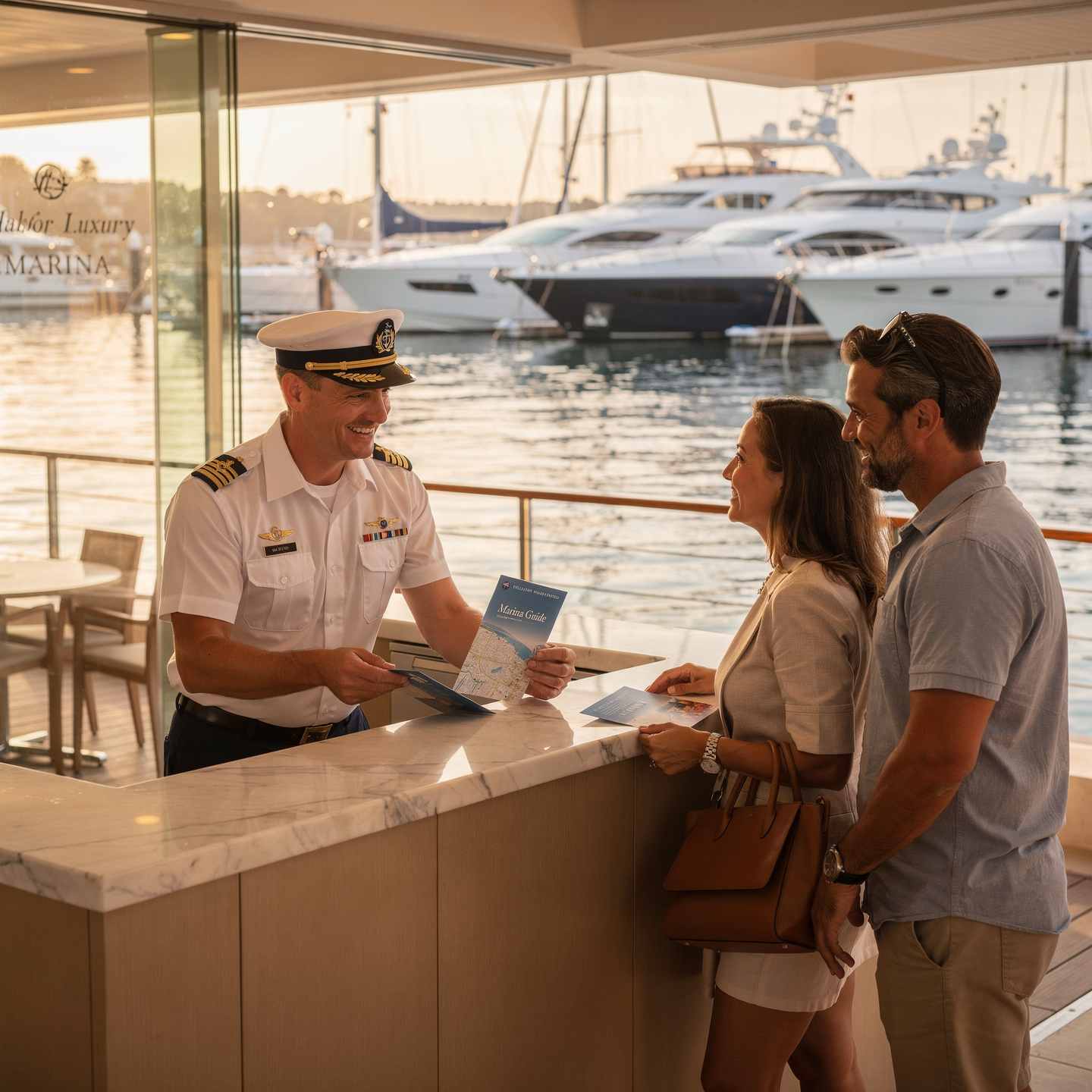
Course on Services to Mariners and Clients
Why this course?
Sailing and Customer Services
This course will provide you with the essential skills to excel in the maritime sector. Learn to offer exceptional customer service, mastering the tools and techniques for the effective management of inquiries and requests. Understand the key legal and regulatory aspects, as well as best practices in communication and problem-solving. Develop the ability to build strong and lasting relationships with mariners and customers, optimizing their experience and fostering loyalty.
Differentiating Advantages
- Practical Simulations: Tackle real-world scenarios and improve your response and problem-solving skills.
- Industry Experts: Learn from professionals with extensive experience in maritime services.
- Tools and Resources: Access templates, guides, and specialized software to optimize your work.
- Networking: Connect with other industry professionals and expand your network.
- Certification: Earn a recognized certificate that validates your knowledge and skills.
- Modality: Online
- Level: Cursos
- Hours: 150 H
- Start date: 24-07-2026
Availability: 1 in stock
Who is it aimed at?
- Recreational and professional sailors looking to optimize route planning, nautical chart interpretation, and the use of navigational tools.
- Boat owners interested in understanding available services, legal requirements, and best practices for maintenance and safety.
- Nautical charter companies wanting to improve customer service quality, offer personalized services, and optimize booking management.
- Marina and port staff needing to expand their knowledge of harbor assistance, emergency protocols, and local regulations.
- Sailing enthusiasts and nautical students seeking comprehensive training on service offerings, mariner support, and customer service.
client.
Learning Flexibility
Adapted to your needs: self-guided modules, interactive discussion forums, case studies and 24/7 access to content.
Objectives and competencies

Efficiently manage nautical documentation:
“Keep documentation up to date, including electronic nautical charts and publications, and integrate it into the voyage planning.”

To advise and provide comprehensive assistance to navigators and clients:
“Communicating the weather situation, optimizing the route and minimizing risks.”

Optimize maritime communication and information:
Use the SMCP effectively and proactively, adapting it to emergency situations and including communication with SAR aircraft.

Coordinate and provide support services in ports and marinas:
Manage the logistics of vessel entry and exit, optimizing the use of port resources and facilities.

Ensuring safety and regulatory compliance in navigation:
* “Interpret and apply national and international maritime regulations (SOLAS, MARPOL, etc.) during the planning and execution of navigation.”

Promoting sustainability and environmental responsibility in nautical activities:
Use efficient vessels and navigation techniques that minimize fuel consumption and water pollution.
Curriculum - Modules
- Comprehensive Maritime Incident Management: protocols, roles, and chain of command for coordinated response
- Operational Planning and Execution: briefing, routes, weather windows, and go/no-go criteria
- Rapid Risk Assessment: criticality matrix, scene control, and decision-making under pressure
- Operational Communication: VHF/GMDSS, standardized reports, and inter-agency liaison
- Tactical Mobility and Safe Boarding: RHIB maneuvers, approach, mooring, and recovery
- Equipment and Technologies: PPE, signaling, satellite tracking, and field data logging
- Immediate Care of the Affected: primary assessment, hypothermia, trauma, and stabilization for evacuation
- Adverse Environmental Conditions: swell, Visibility, flows, and operational mitigation
Simulation and training: critical scenarios, use of VR/AR, and exercises with performance metrics
Documentation and continuous improvement: lessons learned, indicators (MTTA/MTTR), and SOP updates
- Introduction to Mariner Service: Types of Mariners and Their Needs.
- Effective Communication: Active Listening, Empathy, and Assertiveness Techniques.
- Information Management: Sources of Nautical Information and Their Correct Interpretation.
- Administrative Procedures: Required Documentation for Mariners (Licenses, Permits, etc.).
- Basic Maritime Legislation: Regulations Applicable to Recreational and Professional Navigation.
- Administrative Management Tools: Customer Management Software, Databases, etc.
- Service Quality: Quality Standards, Indicators, and Continuous Improvement.
- Complaint and Claim Management: Procedures and Techniques for Conflict Resolution.
- Safety and Risk Prevention: Safety Protocols in Mariner Service public.
- Online Customer Service: Management of social media, email, and other digital tools.
‘
- Introduction to Customer Service in the Maritime Sector
- Effective Communication: Active Listening, Empathy, and Assertiveness
- Communication Protocols in Emergency Situations
- Crisis Management: Identification, Assessment, and Response
- Basic First Aid and Life Support
- Safety Equipment: Life Jackets, Life Rafts, EPIRBs, SARTs
- Evacuation Procedures and Drills
- Maritime Communication Systems: VHF, MF/HF, Inmarsat, GMDSS
- Legislation and Regulations in Maritime Communications
- Emergency Psychology: Stress and Panic Management
‘
- Maritime Communication: GMDSS, VHF, MF/HF, and NAVTEX systems
- Maritime Meteorology: Interpretation of bulletins, synoptic charts, and local forecasts
- Search and Rescue (SAR): Organization, procedures, and equipment
- Basic Maritime Legislation: International conventions and national regulations
- First Aid at Sea: Treatment of wounds, burns, hypothermia, and drowning
- Survival Techniques at Sea: Use of life jackets, life rafts, and immersion suits
- Firefighting on Board: Types of fires, firefighting equipment, and firefighting techniques
- Damage Control: Leak detection and repair, flood control
Personal Safety and Social Responsibilities: Accident prevention, teamwork
Onboard Crisis Management: Risk assessment, decision-making, communication with shore
‘
- Introduction to Mariner Assistance: Roles and Responsibilities
- Port Regulations: Regulations, Ordinances, and Current Legislation
- Types of Vessels: Characteristics and Specific Needs
- Effective Communication: Radio, Visual Signals, and Protocols
- Information Management: Meteorology, Notices to Mariners, and Safety
- Mooring Planning: Risk Assessment and Procedures
- Types of Moorings: Berths, Anchorages, Buoys, and Marinas
- Mooring Equipment: Ropes, Hawsers, Fenders, and Bitts
- Safety in Port Operations: Occupational Risk Prevention
- First Aid and Emergency Response in the Environment port.
‘
- System Architecture and Components: Structural design, materials, and subsystems (mechanical, electrical, electronic, and fluid) with selection and assembly criteria for marine environments
- Fundamentals and Principles of Operation: Physical and engineering foundations (thermodynamics, fluid mechanics, electricity, control, and materials) that explain performance and operating limits
- Safety and Environmental (SHE): Risk analysis, PPE, LOTO, hazardous atmospheres, spill and waste management, and emergency response plans
- Applicable Regulations and Standards: IMO/ISO/IEC requirements and local regulations;
- Conformance criteria, certification, and best practices for operation and maintenance
- Inspection, testing, and diagnostics: Visual/dimensional inspection, functional testing, data analysis, and predictive techniques (vibration, thermography, fluid analysis) to identify root causes
- Preventive and predictive maintenance: Hourly/cycle/seasonal plans, lubrication, adjustments, calibrations, consumable replacement, post-service verification, and operational reliability
- Instrumentation, tools, and metrology: Measuring and testing equipment, diagnostic software, calibration and traceability; selection criteria, safe use, and storage
- Onboard integration and interfaces: Mechanical, electrical, fluid, and data compatibility; Sealing and watertightness, EMC/EMI, corrosion protection, and interoperability testing.
Quality, acceptance testing, and commissioning: process and materials control, FAT/SAT, bench and sea trials, go/no-go criteria, and evidence documentation.
Technical documentation and integrated practice: logs, checklists, reports, and a complete case study (safety → diagnosis → intervention → verification → report) applicable to any system.
Plan de estudio - Módulos
- Comprehensive Maritime Incident Management: protocols, roles, and chain of command for coordinated response
- Operational Planning and Execution: briefing, routes, weather windows, and go/no-go criteria
- Rapid Risk Assessment: criticality matrix, scene control, and decision-making under pressure
- Operational Communication: VHF/GMDSS, standardized reports, and inter-agency liaison
- Tactical Mobility and Safe Boarding: RHIB maneuvers, approach, mooring, and recovery
- Equipment and Technologies: PPE, signaling, satellite tracking, and field data logging
- Immediate Care of the Affected: primary assessment, hypothermia, trauma, and stabilization for evacuation
- Adverse Environmental Conditions: swell, Visibility, flows, and operational mitigation
Simulation and training: critical scenarios, use of VR/AR, and exercises with performance metrics
Documentation and continuous improvement: lessons learned, indicators (MTTA/MTTR), and SOP updates
- Introduction to Mariner Service: Types of Mariners and Their Needs.
- Effective Communication: Active Listening, Empathy, and Assertiveness Techniques.
- Information Management: Sources of Nautical Information and Their Correct Interpretation.
- Administrative Procedures: Required Documentation for Mariners (Licenses, Permits, etc.).
- Basic Maritime Legislation: Regulations Applicable to Recreational and Professional Navigation.
- Administrative Management Tools: Customer Management Software, Databases, etc.
- Service Quality: Quality Standards, Indicators, and Continuous Improvement.
- Complaint and Claim Management: Procedures and Techniques for Conflict Resolution.
- Safety and Risk Prevention: Safety Protocols in Mariner Service public.
- Online Customer Service: Management of social media, email, and other digital tools.
‘
- Introduction to Customer Service in the Maritime Sector
- Effective Communication: Active Listening, Empathy, and Assertiveness
- Communication Protocols in Emergency Situations
- Crisis Management: Identification, Assessment, and Response
- Basic First Aid and Life Support
- Safety Equipment: Life Jackets, Life Rafts, EPIRBs, SARTs
- Evacuation Procedures and Drills
- Maritime Communication Systems: VHF, MF/HF, Inmarsat, GMDSS
- Legislation and Regulations in Maritime Communications
- Emergency Psychology: Stress and Panic Management
‘
- Maritime Communication: GMDSS, VHF, MF/HF, and NAVTEX systems
- Maritime Meteorology: Interpretation of bulletins, synoptic charts, and local forecasts
- Search and Rescue (SAR): Organization, procedures, and equipment
- Basic Maritime Legislation: International conventions and national regulations
- First Aid at Sea: Treatment of wounds, burns, hypothermia, and drowning
- Survival Techniques at Sea: Use of life jackets, life rafts, and immersion suits
- Firefighting on Board: Types of fires, firefighting equipment, and firefighting techniques
- Damage Control: Leak detection and repair, flood control
Personal Safety and Social Responsibilities: Accident prevention, teamwork
Onboard Crisis Management: Risk assessment, decision-making, communication with shore
‘
- Introduction to Mariner Assistance: Roles and Responsibilities
- Port Regulations: Regulations, Ordinances, and Current Legislation
- Types of Vessels: Characteristics and Specific Needs
- Effective Communication: Radio, Visual Signals, and Protocols
- Information Management: Meteorology, Notices to Mariners, and Safety
- Mooring Planning: Risk Assessment and Procedures
- Types of Moorings: Berths, Anchorages, Buoys, and Marinas
- Mooring Equipment: Ropes, Hawsers, Fenders, and Bitts
- Safety in Port Operations: Occupational Risk Prevention
- First Aid and Emergency Response in the Environment port.
‘
- System Architecture and Components: Structural design, materials, and subsystems (mechanical, electrical, electronic, and fluid) with selection and assembly criteria for marine environments
- Fundamentals and Principles of Operation: Physical and engineering foundations (thermodynamics, fluid mechanics, electricity, control, and materials) that explain performance and operating limits
- Safety and Environmental (SHE): Risk analysis, PPE, LOTO, hazardous atmospheres, spill and waste management, and emergency response plans
- Applicable Regulations and Standards: IMO/ISO/IEC requirements and local regulations;
- Conformance criteria, certification, and best practices for operation and maintenance
- Inspection, testing, and diagnostics: Visual/dimensional inspection, functional testing, data analysis, and predictive techniques (vibration, thermography, fluid analysis) to identify root causes
- Preventive and predictive maintenance: Hourly/cycle/seasonal plans, lubrication, adjustments, calibrations, consumable replacement, post-service verification, and operational reliability
- Instrumentation, tools, and metrology: Measuring and testing equipment, diagnostic software, calibration and traceability; selection criteria, safe use, and storage
- Onboard integration and interfaces: Mechanical, electrical, fluid, and data compatibility; Sealing and watertightness, EMC/EMI, corrosion protection, and interoperability testing.
Quality, acceptance testing, and commissioning: process and materials control, FAT/SAT, bench and sea trials, go/no-go criteria, and evidence documentation.
Technical documentation and integrated practice: logs, checklists, reports, and a complete case study (safety → diagnosis → intervention → verification → report) applicable to any system.
- Introduction to Customer Service in the Maritime Sector: Peculiarities and Regulations.
- Effective Communication: Listening, Empathy, and Assertiveness Skills.
- Complaint and Claim Management: Protocols, Conflict Resolution, and Continuous Improvement.
- Types of Maritime Procedures: Ship Documentation, Licenses, Permits, and Authorizations.
- Maritime Safety Regulations: SOLAS, MARPOL, ISM Code, ISPS.
- Onboard Emergency Procedures: Drills, Contingency Plans, and Incident Response.
- Basic First Aid and Life Support in the Maritime Environment.
- Safety Equipment: Life Jackets, Life Rafts, Immersion Suits and firefighting equipment.
- Protection of the marine environment: pollution prevention and waste management.
- Occupational safety on board: risk prevention, cargo handling, and use of personal protective equipment (PPE).
‘
- Introduction to Customer Service: types of seafarers, needs, and expectations.
- Effective Communication: active listening, empathy, and conflict resolution.
- Port Regulations: regulations, security, and access.
- Documentation required for port operations (national and international).
- Information Management: port information systems (PIS), vessel and cargo tracking.
- Loading and Unloading Processes: types of cargo, handling, and stowage.
- Marketing of Port Services: tariffs, contracts, and negotiation.
- Port Marketing: promotion strategies, customer acquisition, and loyalty.
- Customer Service Emergencies in the port sector: contingency plans, first aid, and safety.
- Service quality: management indicators, continuous improvement, and customer satisfaction.
‘
- Introduction to Seafarer Services: Needs and Expectations
- Effective Communication: Active Listening, Empathy, and Assertiveness
- Sales and Negotiation Techniques: Prospecting, Presentation, and Closing
- Complaint and Claim Management: Conflict Resolution and Customer Loyalty
- Basic First Aid: Assessment, CPR, and Life Support
- Fire Prevention and Extinguishing on Board: Equipment and Procedures
- Search and Rescue: Rescue and Survival Techniques
- Medical Emergency Management: Protocols and Communication with Shore
- Basic Maritime Legislation: Seafarers’ Rights and Obligations
- Social and Environmental Responsibility: Sustainability and Best Practices
‘
- Introduction to Mariner Services: Types of Mariners and Their Needs.
- Effective Communication: Active Listening, Empathy, and Conflict Resolution Techniques.
- Mariner Services: Tourist, Meteorological, Nautical, and Safety Information.
- Reservation and Mooring Management: Procedures and Management Systems.
- Sales Techniques and Promotion of Nautical Services.
- Negotiation and Closing Sales: Sales Strategies and Skills.
- Basic Maritime Legislation: Regulations on Safety, Navigation, and the Environment.
- Safety Equipment: Life Jackets, Life Rafts, Flares, EPIRBs.
- First Aid Basic first aid in the nautical environment.
Occupational risk prevention in nautical activities.
‘
Career opportunities
- Customer Service in Ports and Marinas: Information, assistance, and incident resolution for mariners.
- Port Services Management: Coordination of moorings, water and electricity supply, and waste collection.
- Nautical Services Provider: Sale and rental of equipment, vessel maintenance, and cleaning services.
- Shipping Agent: Processing of documentation, management of port calls, and contact with authorities.
- Maritime Rescue Technician: Assistance in emergency situations, towing, and vessel rescue.
- Maritime Safety Inspector: Verification of regulatory compliance and risk prevention.
- Nautical Activities Tour Leader: Organization of excursions, jet ski rentals, and lessons in Sailing.
Sales in companies within the nautical sector: Sales of boats, insurance, equipment, and services.
“`
Admission requirements

Academic/professional profile:
Degree/Bachelor's degree in Nautical Science/Maritime Transport, Naval/Marine Engineering, or a related field; or proven professional experience in bridge/operations.

Language proficiency:
Recommended functional maritime English (SMCP) for simulations and technical materials.

5. Induction
Updated resume, copy of degree or seaman's book, ID card/passport, letter of motivation.

Technical requirements (for online):
Equipment with camera/microphone, stable connection, ≥ 24” monitor recommended for ECDIS/Radar-ARPA.
Admission process and dates

1. Online
application
(form + documents).

2. Academic review and interview
(profile/objectives/schedule compatibility).

3. Admission decision
(+ scholarship proposal if applicable).

4. Reservation of place
(deposit) and registration.

5. Induction
(access to campus, calendars, simulator guides).
Scholarships and grants
- Safe Navigation: Learn best practices to ensure the safety of your vessel and crew.
- Effective Communication: Master the essential communication tools and protocols for smooth and trouble-free navigation.
- Exceptional Customer Service: Discover how to provide high-quality service that builds customer loyalty and enhances your reputation.
- Emergency Management: Prepare to respond effectively to unforeseen situations and protect your passengers.
- Up-to-date Regulations: Stay current with maritime regulations to avoid penalties and operate legally.
Testimonials
I implemented a customer service chatbot that reduced average response time by 60% and increased customer satisfaction by 25%, according to post-interaction surveys. This freed up our human agents to focus on more complex cases, improving the overall efficiency of the department.
My training in Port and Marina Management provided me with the necessary tools to optimize operations at my marina. I implemented a new mooring management system that increased occupancy by 15% and customer satisfaction by 20% in the first quarter.
I implemented a customer service chatbot that resolved 80% of common queries, freeing up our team to focus on more complex cases and increasing customer satisfaction by 25%.

Frequently asked questions
Navigators and customers.
Yes. The itinerary includes ECDIS/Radar-ARPA/BRM with harbor, ocean, fog, storm, and SAR scenarios.
Online with live sessions; hybrid option for simulator/practical placements through agreements.
Navigators and customers.
Recommended functional SMCP. We offer support materials for standard phraseology.
Yes, with a relevant degree or experience in maritime/port operations. The admissions interview will confirm suitability.
Optional (3–6 months) through Companies & Collaborations and the Alumni Network.
Simulator practice (rubrics), defeat plans, SOPs, checklists, micro-tests and applied TFM.
A degree from Navalis Magna University + operational portfolio (tracks, SOPs, reports and KPIs) useful for audits and employment.
- Introduction to Mariner Services: Types of Mariners and Their Needs.
- Effective Communication: Active Listening, Empathy, and Conflict Resolution Techniques.
- Mariner Services: Tourist, Meteorological, Nautical, and Safety Information.
- Reservation and Mooring Management: Procedures and Management Systems.
- Sales Techniques and Promotion of Nautical Services.
- Negotiation and Closing Sales: Sales Strategies and Skills.
- Basic Maritime Legislation: Regulations on Safety, Navigation, and the Environment.
- Safety Equipment: Life Jackets, Life Rafts, Flares, EPIRBs.
- First Aid Basic first aid in the nautical environment.
Occupational risk prevention in nautical activities.
‘
Request information
- Complete the Application Form
- Attach your CV/Qualifications (if you have them to hand).
- Indicate your preferred cohort (January/May/September) and whether you want the hybrid option with simulator sessions.
Teachers
Eng. Tomás Riera
Full Professor
Eng. Tomás Riera
Full Professor
Eng. Sofía Marquina
Full Professor
Eng. Sofía Marquina
Full Professor
Eng. Javier Bañuls
Full Professor
Eng. Javier Bañuls
Full Professor
Dr. Nuria Llobregat
Full Professor
Dr. Nuria Llobregat
Full Professor
Dr. Pau Ferrer
Full Professor
Dr. Pau Ferrer
Full Professor
Cap. Javier Abaroa (MCA)
Full Professor
Cap. Javier Abaroa (MCA)
Full Professor

