Coastal Survival Techniques Course

Why this course?

The Coastal Survival Techniques

course

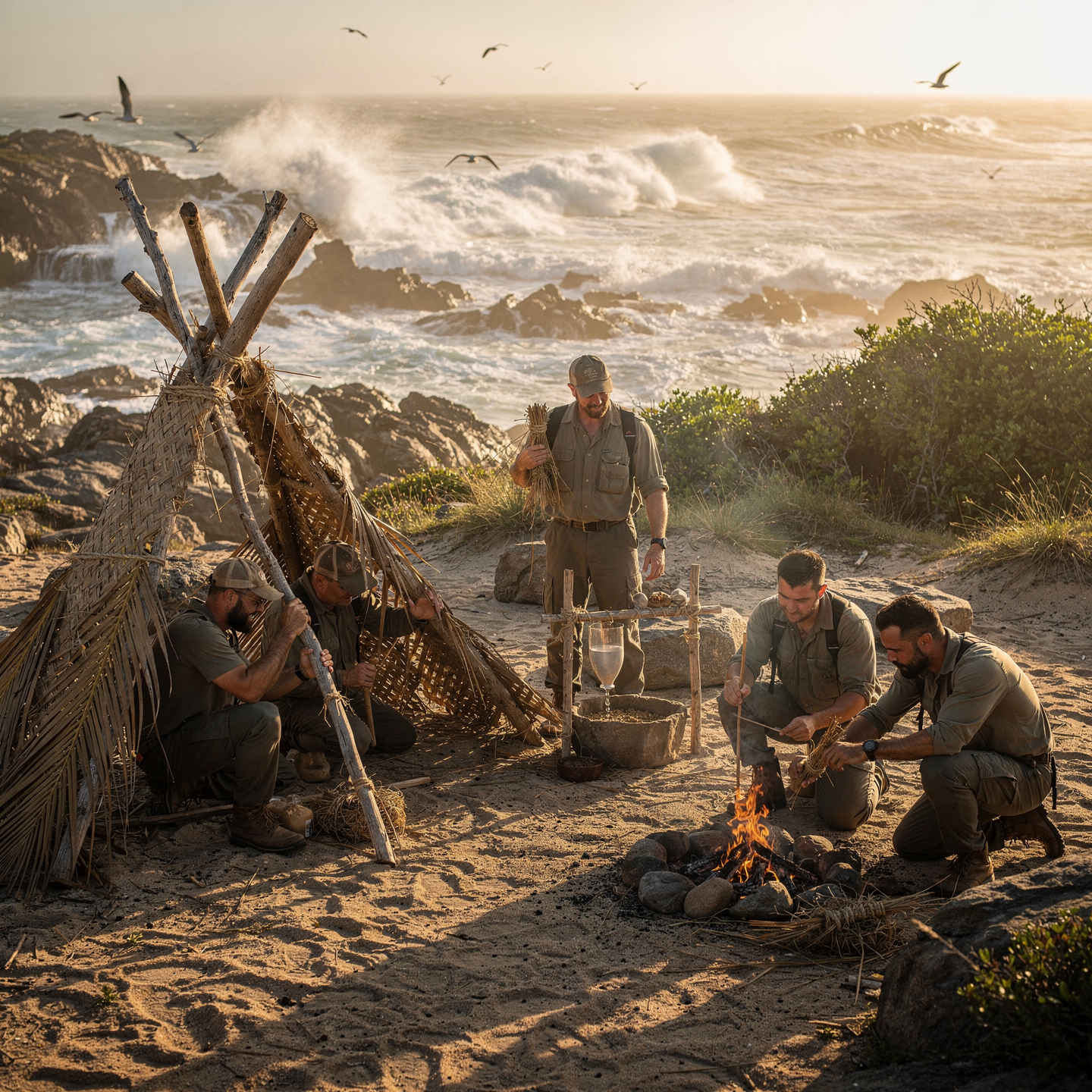
This course provides you with the essential skills to cope with emergency situations in coastal environments. You will learn to build shelters with natural materials, obtain drinking water, start a fire in adverse conditions, and signal your position for rescue. Master basic navigation techniques, identify food resources, and provide first aid specific to the coastal environment, significantly increasing your chances of survival.

Differential Advantages

  • Practical Training: Realistic simulations of survival scenarios on different types of coastlines.
  • Expert Instructors: Professionals with extensive experience in rescue and survival at sea.
  • Specialized Equipment: Use of tools and materials designed for emergency situations.
  • Adaptation to Diverse Environments: Techniques applicable to beaches, cliffs, mangroves, and other coastal areas.
  • Safety Protocols: Standardized procedures to minimize risks and maximize efficiency.
Técnicas

Coastal Survival Techniques Course

Availability: 1 in stock

Who is it aimed at?

  • Outdoor enthusiasts who enjoy activities like hiking, camping, and kayaking and want to acquire skills to cope with unexpected situations in coastal environments.
  • Tourism professionals and nature guides who seek to offer safer and more comprehensive experiences to their clients, including basic survival skills.
  • Maritime rescue and safety personnel who need to update their knowledge and techniques to act effectively in coastal emergencies.
  • Volunteers from humanitarian aid organizations who operate in coastal areas and require survival training to support vulnerable communities.
  • Anyone interested in learning how to protect themselves and survive in a coastal environment, from children to adults, regardless of their previous experience level.

Personal Adaptability
Designed for people with varying levels of experience: practical methodology and adaptable, exercises in simulated environments and personalized advice for each participant.

Técnicas

Objectives and competencies

Build makeshift shelters to protect yourself from the elements:

“With limited resources, prioritizing safety and minimizing environmental impact.”

Identify and obtain sources of drinking water in coastal environments:

“Analyze water salinity, the presence of contaminants, and the viability of desalination or rainwater harvesting methods, considering current environmental legislation and resource optimization.”

Navigate using natural references and rudimentary tools:

“Determine position using basic astronomical methods (sun, stars) and estimate course and distance using a hand compass and observation of waves/wind.”

Recognize and avoid marine hazards, such as currents and dangerous wildlife:

Visually identify hazards (buoys, markers) and use navigational aids (charts, GPS) to plan safe routes.

Procuring and preparing basic foodstuffs from coastal resources:

“Identify edible species, sustainable fishing gear, and rudimentary conservation techniques.”

Apply basic first aid in coastal emergency situations:

“Assess the scene, activate EMS, perform basic CPR and treat common injuries (sunburn, stings, cuts) adapting the techniques to the coastal environment (hypothermia, drowning).”

Curriculum - Modules

  1. Comprehensive Maritime Incident Management: protocols, roles, and chain of command for coordinated response
  2. Operational Planning and Execution: briefing, routes, weather windows, and go/no-go criteria
  3. Rapid Risk Assessment: criticality matrix, scene control, and decision-making under pressure
  4. Operational Communication: VHF/GMDSS, standardized reports, and inter-agency liaison
  5. Tactical Mobility and Safe Boarding: RHIB maneuvers, approach, mooring, and recovery
  6. Equipment and Technologies: PPE, signaling, satellite tracking, and field data logging
  7. Immediate Care of the Affected: primary assessment, hypothermia, trauma, and stabilization for evacuation
  8. Adverse Environmental Conditions: swell, Visibility, flows, and operational mitigation

    Simulation and training: critical scenarios, use of VR/AR, and exercises with performance metrics

    Documentation and continuous improvement: lessons learned, indicators (MTTA/MTTR), and SOP updates

  1. Introduction to Coastal Survival: Environmental Hazards and Challenges
  2. Basic Survival Equipment: Life Jackets, Rafts, Signals, First Aid Kit
  3. Orientation and Basic Navigation: Sun, Stars, Landmarks
  4. Signaling and Communication Techniques: Fire, Smoke, Mirrors, EPIRBs
  5. Basic First Aid in Coastal Environments: Hypothermia, Dehydration, Wounds
  6. Obtaining Drinking Water: Solar Desalination, Rainwater Harvesting
  7. Finding and Obtaining Food: Fishing, Shellfish Gathering, Edible Plants
  8. Building Improvised Shelters: Protection from the Elements
  9. Psychology of Survival: Maintaining Calmness, decision-making, teamwork

    Environmental and ethical considerations in coastal survival

  1. Introduction to Lifesaving and Rescue: History, Legislation, and Professional Ethics
  2. Pathophysiology of Drowning: Mechanisms, Phases, and Complications
  3. Swimming Techniques Adapted for Lifesaving: Styles, Efficiency, and Speed
  4. Entry into the Water and Approach to the Victim: Types of Entry, Assessment, and Safety
  5. Rescue Techniques in Different Scenarios: Swimming Pool, Beach, Open Water
  6. Towing the Victim: Towing Techniques, Rescuer Protection, and Safety
  7. Extracting the Victim from the Water: Exit Techniques, Stretcher Handling, and Transfer
  8. Basic and Advanced First Aid: CPR, Obstruction of Foreign Body Airway Obstruction (OBJECTION), Bleeding, Shock
  9. Use of Lifesaving Equipment: Lifebuoys, Buoys, Backboards Rescue equipment, defibrillator.
  10. Prevention of aquatic accidents: risk identification, signage, and active surveillance.

  1. Introduction to Maritime Survival: Coastal Challenges and Hazards
  2. Individual Survival Equipment: Life Jackets, Immersion Suits, Rafts
  3. Swimming and Rescue Techniques: Survival Swimming, Towing, Water Rescue
  4. Emergency Signaling and Communication: EPIRBs, Visual and Audible Signals
  5. First Aid at Sea: Treatment of Hypothermia, Dehydration, Sunburn
  6. Building Improvised Shelters: Utilizing Natural Resources
  7. Obtaining Drinking Water: Solar Distillation, Rainwater Harvesting, Purification
  8. Food in the Coastal Environment: Identifying and Gathering Marine Plants and Animals
  9. Basic Navigation Without Technology: Orientation Using the Sun, Stars, and Natural Signs
  10. Psychology of survival: maintaining morale and decision-making under stress

  1. Introduction to Coastal Adaptation: Challenges and Opportunities
  2. Types of Coastal Shelters: Natural and Artificial, Advantages and Disadvantages
  3. Materials and Construction Techniques for Sustainable Coastal Shelters
  4. Maritime Signaling: IALA Systems, Buoys, Beacons, and Lighthouses
  5. Coastal Signaling Planning: Location and Visibility Criteria
  6. Regulations and Legislation on Coastal Shelters and Signaling
  7. Environmental Impact of Coastal Structures and Mitigation Measures
  8. Risk Management in Coastal Areas: Erosion, Flooding, and Climate Change Climate Issues
  9. Local Communities and their Role in Coastal Adaptation and Protection
  10. Innovative Technologies for Monitoring and Maintaining Coastal Infrastructure

  1. System Architecture and Components: Structural design, materials, and subsystems (mechanical, electrical, electronic, and fluid) with selection and assembly criteria for marine environments
  2. Fundamentals and Principles of Operation: Physical and engineering foundations (thermodynamics, fluid mechanics, electricity, control, and materials) that explain performance and operating limits
  3. Safety and Environmental (SHE): Risk analysis, PPE, LOTO, hazardous atmospheres, spill and waste management, and emergency response plans
  4. Applicable Regulations and Standards: IMO/ISO/IEC requirements and local regulations;
  5. Conformance criteria, certification, and best practices for operation and maintenance
  6. Inspection, testing, and diagnostics: Visual/dimensional inspection, functional testing, data analysis, and predictive techniques (vibration, thermography, fluid analysis) to identify root causes
  7. Preventive and predictive maintenance: Hourly/cycle/seasonal plans, lubrication, adjustments, calibrations, consumable replacement, post-service verification, and operational reliability
  8. Instrumentation, tools, and metrology: Measuring and testing equipment, diagnostic software, calibration and traceability; selection criteria, safe use, and storage
  9. Onboard integration and interfaces: Mechanical, electrical, fluid, and data compatibility; Sealing and watertightness, EMC/EMI, corrosion protection, and interoperability testing.

    Quality, acceptance testing, and commissioning: process and materials control, FAT/SAT, bench and sea trials, go/no-go criteria, and evidence documentation.

    Technical documentation and integrated practice: logs, checklists, reports, and a complete case study (safety → diagnosis → intervention → verification → report) applicable to any system.

Plan de estudio - Módulos

  1. Comprehensive Maritime Incident Management: protocols, roles, and chain of command for coordinated response
  2. Operational Planning and Execution: briefing, routes, weather windows, and go/no-go criteria
  3. Rapid Risk Assessment: criticality matrix, scene control, and decision-making under pressure
  4. Operational Communication: VHF/GMDSS, standardized reports, and inter-agency liaison
  5. Tactical Mobility and Safe Boarding: RHIB maneuvers, approach, mooring, and recovery
  6. Equipment and Technologies: PPE, signaling, satellite tracking, and field data logging
  7. Immediate Care of the Affected: primary assessment, hypothermia, trauma, and stabilization for evacuation
  8. Adverse Environmental Conditions: swell, Visibility, flows, and operational mitigation

    Simulation and training: critical scenarios, use of VR/AR, and exercises with performance metrics

    Documentation and continuous improvement: lessons learned, indicators (MTTA/MTTR), and SOP updates

  1. Introduction to Coastal Survival: Environmental Hazards and Challenges
  2. Basic Survival Equipment: Life Jackets, Rafts, Signals, First Aid Kit
  3. Orientation and Basic Navigation: Sun, Stars, Landmarks
  4. Signaling and Communication Techniques: Fire, Smoke, Mirrors, EPIRBs
  5. Basic First Aid in Coastal Environments: Hypothermia, Dehydration, Wounds
  6. Obtaining Drinking Water: Solar Desalination, Rainwater Harvesting
  7. Finding and Obtaining Food: Fishing, Shellfish Gathering, Edible Plants
  8. Building Improvised Shelters: Protection from the Elements
  9. Psychology of Survival: Maintaining Calmness, decision-making, teamwork

    Environmental and ethical considerations in coastal survival

  1. Introduction to Lifesaving and Rescue: History, Legislation, and Professional Ethics
  2. Pathophysiology of Drowning: Mechanisms, Phases, and Complications
  3. Swimming Techniques Adapted for Lifesaving: Styles, Efficiency, and Speed
  4. Entry into the Water and Approach to the Victim: Types of Entry, Assessment, and Safety
  5. Rescue Techniques in Different Scenarios: Swimming Pool, Beach, Open Water
  6. Towing the Victim: Towing Techniques, Rescuer Protection, and Safety
  7. Extracting the Victim from the Water: Exit Techniques, Stretcher Handling, and Transfer
  8. Basic and Advanced First Aid: CPR, Obstruction of Foreign Body Airway Obstruction (OBJECTION), Bleeding, Shock
  9. Use of Lifesaving Equipment: Lifebuoys, Buoys, Backboards Rescue equipment, defibrillator.
  10. Prevention of aquatic accidents: risk identification, signage, and active surveillance.

  1. Introduction to Maritime Survival: Coastal Challenges and Hazards
  2. Individual Survival Equipment: Life Jackets, Immersion Suits, Rafts
  3. Swimming and Rescue Techniques: Survival Swimming, Towing, Water Rescue
  4. Emergency Signaling and Communication: EPIRBs, Visual and Audible Signals
  5. First Aid at Sea: Treatment of Hypothermia, Dehydration, Sunburn
  6. Building Improvised Shelters: Utilizing Natural Resources
  7. Obtaining Drinking Water: Solar Distillation, Rainwater Harvesting, Purification
  8. Food in the Coastal Environment: Identifying and Gathering Marine Plants and Animals
  9. Basic Navigation Without Technology: Orientation Using the Sun, Stars, and Natural Signs
  10. Psychology of survival: maintaining morale and decision-making under stress

  1. Introduction to Coastal Adaptation: Challenges and Opportunities
  2. Types of Coastal Shelters: Natural and Artificial, Advantages and Disadvantages
  3. Materials and Construction Techniques for Sustainable Coastal Shelters
  4. Maritime Signaling: IALA Systems, Buoys, Beacons, and Lighthouses
  5. Coastal Signaling Planning: Location and Visibility Criteria
  6. Regulations and Legislation on Coastal Shelters and Signaling
  7. Environmental Impact of Coastal Structures and Mitigation Measures
  8. Risk Management in Coastal Areas: Erosion, Flooding, and Climate Change Climate Issues
  9. Local Communities and their Role in Coastal Adaptation and Protection
  10. Innovative Technologies for Monitoring and Maintaining Coastal Infrastructure

  1. System Architecture and Components: Structural design, materials, and subsystems (mechanical, electrical, electronic, and fluid) with selection and assembly criteria for marine environments
  2. Fundamentals and Principles of Operation: Physical and engineering foundations (thermodynamics, fluid mechanics, electricity, control, and materials) that explain performance and operating limits
  3. Safety and Environmental (SHE): Risk analysis, PPE, LOTO, hazardous atmospheres, spill and waste management, and emergency response plans
  4. Applicable Regulations and Standards: IMO/ISO/IEC requirements and local regulations;
  5. Conformance criteria, certification, and best practices for operation and maintenance
  6. Inspection, testing, and diagnostics: Visual/dimensional inspection, functional testing, data analysis, and predictive techniques (vibration, thermography, fluid analysis) to identify root causes
  7. Preventive and predictive maintenance: Hourly/cycle/seasonal plans, lubrication, adjustments, calibrations, consumable replacement, post-service verification, and operational reliability
  8. Instrumentation, tools, and metrology: Measuring and testing equipment, diagnostic software, calibration and traceability; selection criteria, safe use, and storage
  9. Onboard integration and interfaces: Mechanical, electrical, fluid, and data compatibility; Sealing and watertightness, EMC/EMI, corrosion protection, and interoperability testing.

    Quality, acceptance testing, and commissioning: process and materials control, FAT/SAT, bench and sea trials, go/no-go criteria, and evidence documentation.

    Technical documentation and integrated practice: logs, checklists, reports, and a complete case study (safety → diagnosis → intervention → verification → report) applicable to any system.

  1. Introduction to coastal survival: hazards and challenges.
  2. Individual survival equipment: life jackets, immersion suits, first aid kit.
  3. Emergency signaling and communication: EPIRBs, VHF radio, visual signals.
  4. Floatation techniques and maintaining body temperature.
  5. Constructing improvised shelters on the coast: materials and techniques.
  6. Obtaining drinking water in coastal environments: filtration and desalination methods.
  7. Identifying edible foods on the coast: plants, seaweed, shellfish.
  8. First aid in coastal emergencies: hypothermia, burns, wounds.
  9. Rescue techniques in Water rescue: towing, rescue with and without equipment.

    Survival psychology: maintaining morale and decision-making under stress.

  1. Introduction to Maritime Rescue: Types of Incidents and Protocols.
  2. Basic Rescue Equipment: Survival Suits, Life Jackets, Rafts.
  3. Water Entry Techniques: From Boats, Docks, and Helicopters.
  4. Rescue Swimming: Approach, Restraint, and Towing Techniques.
  5. First Aid in the Water: CPR in the Water, Management of Hypothermia and Drowning.
  6. Use of Rescue Vessels: Types, Basic Maneuvers, and Rescue of Shipwrecked Persons.
  7. Communication in Emergency Situations: Use of VHF Radio and Distress Signals.
  8. Self-Protection in the Water: Self-Defense and Evasion Techniques.
  9. Survival at sea: obtaining water and food, building makeshift shelters.

    Psychological aspects of rescue: stress management and victim support.

  1. Introduction to hostile coasts: definition and classification
  2. Natural hazards: waves, currents, extreme tides, adverse weather
  3. Coastal geology and geomorphology: cliffs, beaches, estuaries, deltas
  4. Dangerous flora and fauna: identification, risks, and prevention
  5. Basic survival: shelter, fire, water, orientation in hostile terrain
  6. First aid in coastal environments: hypothermia, dehydration, injuries
  7. Maritime rescue: distress signals, rescue equipment, procedures
  8. Kayaking or rafting: techniques, safety, risks
  9. Psychology of survival: stress management, resilience, decision-making decisions
  10. Ethics and conservation of the coastal environment

  1. Introduction to Coastal Survival: Hazards and Preparation
  2. Basic Survival Equipment: Life Jackets, Rafts, Emergency Kits
  3. Swimming and Floating Techniques: Energy Conservation, HELP Position, Group Floating
  4. Signals and Communication at Sea: Flares, Mirrors, EPIRBs
  5. First Aid in Coastal Environments: Hypothermia, Dehydration, Sunburn
  6. Building Improvised Shelters: Making Use of Natural Resources
  7. Obtaining Drinking Water: Solar Distillation, Rainwater Harvesting
  8. Foraging: Identifying Edible Coastal Plants and Animals
  9. Basic Navigation Without Instruments: Using the Sun, Stars, and Terrestrial Landmarks
  10. Psychology of survival: maintaining morale and a positive attitude

Career opportunities

  • Coastal Ecotourism Guide: Group leadership, knowledge of local flora and fauna, risk management in the natural environment.
  • Lifeguard/Beach Watchman: Accident prevention, water rescue, first aid.
  • Water Activities Instructor: Instructor of kayaking, paddle surfing, snorkeling, etc., with an emphasis on safety.
  • Recreational Boat Crew: Seamanship, basic maintenance, customer service on cruises and excursions.
  • Aquaculture/Sustainable Fishing Worker: Knowledge of sea survival techniques, workplace safety in marine environments.
  • Volunteer in Maritime Rescue Organizations: Support in search and rescue operations, logistics, and communications.
  • Coastal Safety Consultant: Risk assessment on beaches and Coastal environments, emergency plan design.

    Security personnel in coastal facilities: Surveillance, access control, emergency response in ports and marinas.

    “`

Admission requirements

Academic/professional profile:

Degree/Bachelor's degree in Nautical Science/Maritime Transport, Naval/Marine Engineering, or a related field; or proven professional experience in bridge/operations.

Language proficiency:

Recommended functional maritime English (SMCP) for simulations and technical materials.

5. Induction

Updated resume, copy of degree or seaman's book, ID card/passport, letter of motivation.

Technical requirements (for online):

Equipment with camera/microphone, stable connection, ≥ 24” monitor recommended for ECDIS/Radar-ARPA.

Admission process and dates

1. Online
application

(form + documents).

2. Academic review and interview

(profile/objectives/schedule compatibility).

3. Admission decision

(+ scholarship proposal if applicable).

4. Reservation of place

(deposit) and registration.

5. Induction

(access to campus, calendars, simulator guides).

Scholarships and grants

  • Environmental Awareness: Learn to identify key resources and avoid hazards in coastal areas.
  • Essential Skills: Master compass-less navigation, shelter construction, and obtaining drinking water.
  • Marine First Aid: Learn the protocols for treating common injuries and emergencies at sea.
  • Survival Nutrition: Discover how to identify edible plants and fish sustainably.
  • Signaling and Rescue: Learn how to create effective signals and use Aid devices to maximize your chances of rescue.
Be prepared to face any challenge with confidence and safety in coastal environments.

Testimonials

Frequently asked questions

Yes. The itinerary includes ECDIS/Radar-ARPA/BRM with harbor, ocean, fog, storm, and SAR scenarios.

Online with live sessions; hybrid option for simulator/practical placements through agreements.

Recommended functional SMCP. We offer support materials for standard phraseology.

Yes, with a relevant degree or experience in maritime/port operations. The admissions interview will confirm suitability.

Optional (3–6 months) through Companies & Collaborations and the Alumni Network.

Simulator practice (rubrics), defeat plans, SOPs, checklists, micro-tests and applied TFM.

A degree from Navalis Magna University + operational portfolio (tracks, SOPs, reports and KPIs) useful for audits and employment.

  1. Introduction to Coastal Survival: Hazards and Preparation
  2. Basic Survival Equipment: Life Jackets, Rafts, Emergency Kits
  3. Swimming and Floating Techniques: Energy Conservation, HELP Position, Group Floating
  4. Signals and Communication at Sea: Flares, Mirrors, EPIRBs
  5. First Aid in Coastal Environments: Hypothermia, Dehydration, Sunburn
  6. Building Improvised Shelters: Making Use of Natural Resources
  7. Obtaining Drinking Water: Solar Distillation, Rainwater Harvesting
  8. Foraging: Identifying Edible Coastal Plants and Animals
  9. Basic Navigation Without Instruments: Using the Sun, Stars, and Terrestrial Landmarks
  10. Psychology of survival: maintaining morale and a positive attitude

Request information

  1. Complete the Application Form
  2. Attach your CV/Qualifications (if you have them to hand).
  3. Indicate your preferred cohort (January/May/September) and whether you want the hybrid option with simulator sessions.
An academic advisor will contact you within 24–48 hours to guide you through the admission process, scholarships, and compatibility with your professional schedule. Translated with DeepL.com (free version)
Please enable JavaScript in your browser to complete this form.
Click or drag a file to this area to upload.

Teachers

0
    0
    Tu carrito
    Tu carrito esta vacíoRegresar a la tienda
    Scroll to Top


