Course on Pollution and Plastic Waste
Why this course?
Our course on Plastic Pollution and Waste
This course offers you a comprehensive overview of the plastic life cycle and its impact on the environment. Learn to identify sources of pollution, understand degradation processes, and explore innovative solutions for sustainable waste management. This program will equip you with the knowledge and tools needed to implement effective reduction, reuse, and recycling strategies, contributing to a cleaner and more sustainable future.
Key Benefits
- Plastic Life Cycle Analysis: from production to final disposal.
- Identification of Plastic Pollutants: microplastics, macroplastics, and their effects on ecosystems.
- Waste Management Strategies: source reduction, advanced recycling, and energy recovery.
- Legal and Regulatory Framework: international and local regulations on plastic pollution.
- Innovative Solutions: bioplastics, chemical recycling technologies, and the circular economy.
- Modality: Online
- Level: Cursos
- Hours: 150 H
- Start date: 25-04-2026
Availability: 1 in stock
Who is it aimed at?
- Environmental management professionals seeking to deepen their understanding of the problem of plastic pollution and its solutions.
- Sustainability managers in companies who need to implement strategies for reducing and managing plastic waste.
- Public administration technicians interested in developing effective policies and regulations against plastic pollution.
- Environmental educators and communicators who need tools and resources to raise awareness about the problem.
- Students and recent graduates in environmental science, biology, or engineering seeking specialization in plastic waste management.
Learning flexibility
Adapted to your needs: content at your own pace, active discussion forums and unlimited access to course materials.
Objectives and competencies

Minimize the generation of plastic waste:
“Optimize material consumption, promote reuse, and ensure proper segregation for recycling.”

Promote the reuse and recycling of plastics:
“Implement selective collection systems and promote the eco-design of packaging to facilitate its recycling.”

Understanding the life cycle of plastic and its environmental impact:
“Identify the key stages (extraction, production, use, end of life) and assess the environmental consequences associated with each one.”

Promote the adoption of sustainable alternatives to plastic:
“To investigate, evaluate and communicate the economic and environmental benefits of biodegradable and reusable materials.”
Promoting innovation in recycling and biodegradation technologies:
“Through research and development of new materials, processes and management systems that allow waste to be transformed into valuable resources and reduce environmental pollution.”
Raising awareness about the harmful effects of plastic pollution:
Encourage the reduction, reuse and recycling of plastics, promoting sustainable practices in the personal and professional environment.
Curriculum - Modules
- Comprehensive Maritime Incident Management: protocols, roles, and chain of command for coordinated response
- Operational Planning and Execution: briefing, routes, weather windows, and go/no-go criteria
- Rapid Risk Assessment: criticality matrix, scene control, and decision-making under pressure
- Operational Communication: VHF/GMDSS, standardized reports, and inter-agency liaison
- Tactical Mobility and Safe Boarding: RHIB maneuvers, approach, mooring, and recovery
- Equipment and Technologies: PPE, signaling, satellite tracking, and field data logging
- Immediate Care of the Affected: primary assessment, hypothermia, trauma, and stabilization for evacuation
- Adverse Environmental Conditions: swell, Visibility, flows, and operational mitigation
Simulation and training: critical scenarios, use of VR/AR, and exercises with performance metrics
Documentation and continuous improvement: lessons learned, indicators (MTTA/MTTR), and SOP updates
- Introduction to Eco-Innovation and the Circular Economy
- Chemistry and Properties of Plastic: Types, Structures, and Degradation
- Life Cycle Assessment (LCA): Methodology and Standards
- LCA of Plastic: Extraction, Production, Use, and End-of-Life
- Ecodesign: Strategies for Reducing the Environmental Impact of Plastic
- Plastic Valorization: Mechanical, Chemical, and Energy Recycling
- Advanced Recycling Technologies: Depolymerization, Pyrolysis, and Gasification
- Bioplastics and Biodegradable Plastics: Types, Properties, and Applications
- Regulatory Framework and Environmental Policies: Extended Producer Responsibility (EPR)
- Success Stories and examples of eco-innovation in the plastics industry
“`
- Introduction to Eco-Innovation: Concepts, Principles, and Benefits.
- Plastics in the Circular Economy: Challenges and Opportunities.
- Life Cycle Assessment (LCA) of Plastics: Methodology and Tools.
- Eco-Efficient Design of Plastic Products: Reduction, Reuse, and Recyclability.
- Eco-Design and Selection of Sustainable Plastic Materials: Bioplastics and Alternatives.
- Advanced Plastic Recycling Technologies: Chemical, Mechanical, and Energy.
- Energy Recovery from Plastics: Incineration with Energy Recovery and Pyrolysis.
- Circular Business Models for Plastics: Deposit Return Systems, Reverse Logistics, and Industrial Symbiosis.
- Communication and Marketing Strategies for Products Eco-innovative plastics.
- Legal and regulatory framework for the management and recovery of plastic.
‘
- Introduction to the circular economy: principles, benefits, and challenges
- Life cycle assessment (LCA): methodology, stages, and interpretation
- Mitigation strategies: reduction, reuse, repair, and refurbishment
- Waste valorization: transformation into resources, composting, biogas
- Ecodesign: design for sustainability, material selection, durability
- Circular business models: product as a service, rental systems
- Technological innovation for the circular economy: new materials and processes
- Legal and regulatory aspects: extended producer responsibility (EPR)
- Financing for circular economy projects: impact investing and crowdfunding
- Success stories and best practices: application examples in different sectors
‘
- Introduction to Plastic: Types, Properties, and Applications
- The Plastic Life Cycle: From Production to Waste
- Environmental Impact of Plastic: Pollution, Microplastics, and Effects on Wildlife
- Legislation and Regulations on Plastics: Global and Local Regulations
- Collection and Sorting of Plastic Waste: Systems and Technologies
- Recycling Technologies: Mechanical, Chemical, and Energy
- Valorization of Recycled Plastic: Applications and Markets
- Design for Recyclability: Ecodesign and Material Selection
- Strategies for Reducing Plastic Consumption: Alternatives and Business Models
- Success Stories and Future trends in plastic management
‘
- System Architecture and Components: Structural design, materials, and subsystems (mechanical, electrical, electronic, and fluid) with selection and assembly criteria for marine environments
- Fundamentals and Principles of Operation: Physical and engineering foundations (thermodynamics, fluid mechanics, electricity, control, and materials) that explain performance and operating limits
- Safety and Environmental (SHE): Risk analysis, PPE, LOTO, hazardous atmospheres, spill and waste management, and emergency response plans
- Applicable Regulations and Standards: IMO/ISO/IEC requirements and local regulations;
- Conformance criteria, certification, and best practices for operation and maintenance
- Inspection, testing, and diagnostics: Visual/dimensional inspection, functional testing, data analysis, and predictive techniques (vibration, thermography, fluid analysis) to identify root causes
- Preventive and predictive maintenance: Hourly/cycle/seasonal plans, lubrication, adjustments, calibrations, consumable replacement, post-service verification, and operational reliability
- Instrumentation, tools, and metrology: Measuring and testing equipment, diagnostic software, calibration and traceability; selection criteria, safe use, and storage
- Onboard integration and interfaces: Mechanical, electrical, fluid, and data compatibility; Sealing and watertightness, EMC/EMI, corrosion protection, and interoperability testing.
Quality, acceptance testing, and commissioning: process and materials control, FAT/SAT, bench and sea trials, go/no-go criteria, and evidence documentation.
Technical documentation and integrated practice: logs, checklists, reports, and a complete case study (safety → diagnosis → intervention → verification → report) applicable to any system.
Plan de estudio - Módulos
- Comprehensive Maritime Incident Management: protocols, roles, and chain of command for coordinated response
- Operational Planning and Execution: briefing, routes, weather windows, and go/no-go criteria
- Rapid Risk Assessment: criticality matrix, scene control, and decision-making under pressure
- Operational Communication: VHF/GMDSS, standardized reports, and inter-agency liaison
- Tactical Mobility and Safe Boarding: RHIB maneuvers, approach, mooring, and recovery
- Equipment and Technologies: PPE, signaling, satellite tracking, and field data logging
- Immediate Care of the Affected: primary assessment, hypothermia, trauma, and stabilization for evacuation
- Adverse Environmental Conditions: swell, Visibility, flows, and operational mitigation
Simulation and training: critical scenarios, use of VR/AR, and exercises with performance metrics
Documentation and continuous improvement: lessons learned, indicators (MTTA/MTTR), and SOP updates
- Introduction to Eco-Innovation and the Circular Economy
- Chemistry and Properties of Plastic: Types, Structures, and Degradation
- Life Cycle Assessment (LCA): Methodology and Standards
- LCA of Plastic: Extraction, Production, Use, and End-of-Life
- Ecodesign: Strategies for Reducing the Environmental Impact of Plastic
- Plastic Valorization: Mechanical, Chemical, and Energy Recycling
- Advanced Recycling Technologies: Depolymerization, Pyrolysis, and Gasification
- Bioplastics and Biodegradable Plastics: Types, Properties, and Applications
- Regulatory Framework and Environmental Policies: Extended Producer Responsibility (EPR)
- Success Stories and examples of eco-innovation in the plastics industry
“`
- Introduction to Eco-Innovation: Concepts, Principles, and Benefits.
- Plastics in the Circular Economy: Challenges and Opportunities.
- Life Cycle Assessment (LCA) of Plastics: Methodology and Tools.
- Eco-Efficient Design of Plastic Products: Reduction, Reuse, and Recyclability.
- Eco-Design and Selection of Sustainable Plastic Materials: Bioplastics and Alternatives.
- Advanced Plastic Recycling Technologies: Chemical, Mechanical, and Energy.
- Energy Recovery from Plastics: Incineration with Energy Recovery and Pyrolysis.
- Circular Business Models for Plastics: Deposit Return Systems, Reverse Logistics, and Industrial Symbiosis.
- Communication and Marketing Strategies for Products Eco-innovative plastics.
- Legal and regulatory framework for the management and recovery of plastic.
‘
- Introduction to the circular economy: principles, benefits, and challenges
- Life cycle assessment (LCA): methodology, stages, and interpretation
- Mitigation strategies: reduction, reuse, repair, and refurbishment
- Waste valorization: transformation into resources, composting, biogas
- Ecodesign: design for sustainability, material selection, durability
- Circular business models: product as a service, rental systems
- Technological innovation for the circular economy: new materials and processes
- Legal and regulatory aspects: extended producer responsibility (EPR)
- Financing for circular economy projects: impact investing and crowdfunding
- Success stories and best practices: application examples in different sectors
‘
- Introduction to Plastic: Types, Properties, and Applications
- The Plastic Life Cycle: From Production to Waste
- Environmental Impact of Plastic: Pollution, Microplastics, and Effects on Wildlife
- Legislation and Regulations on Plastics: Global and Local Regulations
- Collection and Sorting of Plastic Waste: Systems and Technologies
- Recycling Technologies: Mechanical, Chemical, and Energy
- Valorization of Recycled Plastic: Applications and Markets
- Design for Recyclability: Ecodesign and Material Selection
- Strategies for Reducing Plastic Consumption: Alternatives and Business Models
- Success Stories and Future trends in plastic management
‘
- System Architecture and Components: Structural design, materials, and subsystems (mechanical, electrical, electronic, and fluid) with selection and assembly criteria for marine environments
- Fundamentals and Principles of Operation: Physical and engineering foundations (thermodynamics, fluid mechanics, electricity, control, and materials) that explain performance and operating limits
- Safety and Environmental (SHE): Risk analysis, PPE, LOTO, hazardous atmospheres, spill and waste management, and emergency response plans
- Applicable Regulations and Standards: IMO/ISO/IEC requirements and local regulations;
- Conformance criteria, certification, and best practices for operation and maintenance
- Inspection, testing, and diagnostics: Visual/dimensional inspection, functional testing, data analysis, and predictive techniques (vibration, thermography, fluid analysis) to identify root causes
- Preventive and predictive maintenance: Hourly/cycle/seasonal plans, lubrication, adjustments, calibrations, consumable replacement, post-service verification, and operational reliability
- Instrumentation, tools, and metrology: Measuring and testing equipment, diagnostic software, calibration and traceability; selection criteria, safe use, and storage
- Onboard integration and interfaces: Mechanical, electrical, fluid, and data compatibility; Sealing and watertightness, EMC/EMI, corrosion protection, and interoperability testing.
Quality, acceptance testing, and commissioning: process and materials control, FAT/SAT, bench and sea trials, go/no-go criteria, and evidence documentation.
Technical documentation and integrated practice: logs, checklists, reports, and a complete case study (safety → diagnosis → intervention → verification → report) applicable to any system.
- Introduction to the plastic problem: production, consumption, and accumulation.
- Environmental impact of plastic: marine, terrestrial, and atmospheric pollution.
- Types of plastics: characteristics, properties, and applications (PET, HDPE, PVC, LDPE, PP, PS, etc.).
- Plastic life cycle: from raw material extraction to waste management.
- Microplastics and nanoplastics: origin, distribution, and effects on human health and the environment.
- International legislation and policies related to plastic management.
- Strategies for reducing plastic consumption: alternatives and best practices.
- Plastic recycling: technologies, processes, and challenges.
- Biodegradation and composting of Plastics: Types of biodegradable plastics and conditions for their decomposition.
- Innovation in alternative materials to plastic: bioplastics, compostable materials, and others.
‘
- Introduction to Plastics: Types, Properties, and Applications.
- **Plastic Life Cycle**: From Production to End of Life.
- **Environmental Impact of Plastics**: Pollution, Microplastics, and Effects on Marine Life.
- **Plastic Valorization**: Mechanical, Chemical, and Energy Recycling.
- **Circular Economy of Plastics**: Principles, Business Models, and Strategies.
- Design for Circularity: Ecodesign, Alternative Materials, and Reducing Plastic Use.
- **Recycling Technologies**: Processes, Efficiency, and Limitations.
- **Regulatory Aspects**: National and International Legislation on Plastics and Waste.
- Success Stories: Innovative Companies and Projects in the Circular Economy of Plastics.
- Life Cycle Assessment (LCA) and environmental impact assessment of plastic products.
‘
- Introduction to Mitigation, Recycling, and the Circular Economy: Key Concepts and Benefits
- Life Cycle Assessment (LCA): Methodology, Stages, and Applications in Environmental Assessment
- Mitigation Strategies: Emission Reduction, Energy Efficiency, and Renewable Energy
- Design for Recycling: Ecodesign, Material Selection, and Dismantling
- Waste Collection and Management Systems: Models, Technologies, and Best Practices
- Recycling Processes: Technologies for Recycling Plastics, Metals, Paper, and Other Materials
- Circular Economy: Circular Business Models, Industrial Symbiosis, and Responsible Consumption
- Environmental Legislation and Policies: National and International Regulations for Waste Management and the Circular Economy circular.
- Sustainability Indicators: Metrics to evaluate the environmental and economic performance of mitigation and recycling strategies.
- Case Studies: Examples of successful implementation of mitigation, recycling, and circular economy strategies.
‘
- Introduction to the plastics problem: production, consumption, and accumulation.
- Types of plastics: characteristics, uses, and biodegradability.
- Environmental impact: marine pollution, microplastics, and effects on wildlife.
- Recycling: current technologies, limitations, and challenges.
- Circular economy: design, reuse, and new business models.
- Biodegradation and composting: alternatives to conventional plastics.
- Regulations and policies: national and international legislation on plastics.
- Innovation in materials: bioplastics, compostable materials, and other alternatives.
- Awareness and education: change of Consumer habits and responsibility.
Success stories and innovative solutions in plastic lifecycle management.
‘
Career opportunities
- Plastic Waste Management Technician: sorting, treatment, and recovery of plastic waste in recycling plants.
- Environmental Consultant specializing in plastics: advising companies and public administrations on reducing and managing plastic pollution.
- Researcher in marine ecology and pollution: studying the impact of plastics on aquatic ecosystems and developing innovative solutions.
- Sustainability Manager in companies: implementing strategies to reduce plastic consumption and promote the circular economy.
- Environmental Educator: raising awareness about the problem of plastics in schools, communities, and organizations.
- Laboratory Technician in plastics analysis: identifying, characterizing, and analyzing the composition of plastics in different environmental matrices.
- Developer of new biodegradable plastic materials: research and creation of sustainable alternatives to conventional plastics.
- Environmental auditor specializing in plastic waste: verification of compliance with environmental regulations regarding plastic waste management.
“`
Admission requirements

Academic/professional profile:
Degree/Bachelor's degree in Nautical Science/Maritime Transport, Naval/Marine Engineering, or a related field; or proven professional experience in bridge/operations.

Language proficiency:
Recommended functional maritime English (SMCP) for simulations and technical materials.

5. Induction
Updated resume, copy of degree or seaman's book, ID card/passport, letter of motivation.

Technical requirements (for online):
Equipment with camera/microphone, stable connection, ≥ 24” monitor recommended for ECDIS/Radar-ARPA.
Admission process and dates

1. Online
application
(form + documents).

2. Academic review and interview
(profile/objectives/schedule compatibility).

3. Admission decision
(+ scholarship proposal if applicable).
4. Reservation of place
(deposit) and registration.

5. Induction
(access to campus, calendars, simulator guides).
Scholarships and grants
- Understand the problem: Delve into the causes, scope, and devastating impact of plastic pollution on our planet.
- Identify the types of plastics: Learn to differentiate between the various types of plastics and their properties, understanding their life cycle and recycling potential.
- Reduction and management strategies: Discover practical solutions and innovative strategies to reduce plastic waste generation and improve its management.
- Legal and regulatory framework: Learn about the national and international laws and regulations governing plastic waste management and the fight against pollution.
- Circular economy opportunities: Explore the potential of the circular economy in transforming plastic waste into valuable resources.
Testimonials
During the training on Plastic Pollution and Waste, I developed an efficient waste sorting system for my community, which increased recycling by 35% in the first three months and reduced the amount of plastic reaching the local landfill by 20%. This system, based on the information acquired in the course, includes clear signage, accessible collection points, and an educational program to raise awareness among residents.
I applied the knowledge I acquired about coral reef ecology to develop a predictive model of coral bleaching, which was published in a scientific journal and is currently used for the management of marine protected areas.
I implemented a plastic recycling program in my community that reduced plastic waste by 60% in six months through community education and the installation of separate collection points. Furthermore, partnerships were established with local businesses for the recycling and reuse of the collected plastics, generating new economic opportunities.
I managed to reduce my plastic footprint by 70% in three months after the training. I implemented waste separation at home, replaced plastic bags with reusable ones, and avoided products with excessive packaging. This change not only positively impacted my household but also inspired my family and friends to adopt similar practices.
Frequently asked questions
Polyethylene (PE)
Yes. The itinerary includes ECDIS/Radar-ARPA/BRM with harbor, ocean, fog, storm, and SAR scenarios.
Online with live sessions; hybrid option for simulator/practical placements through agreements.
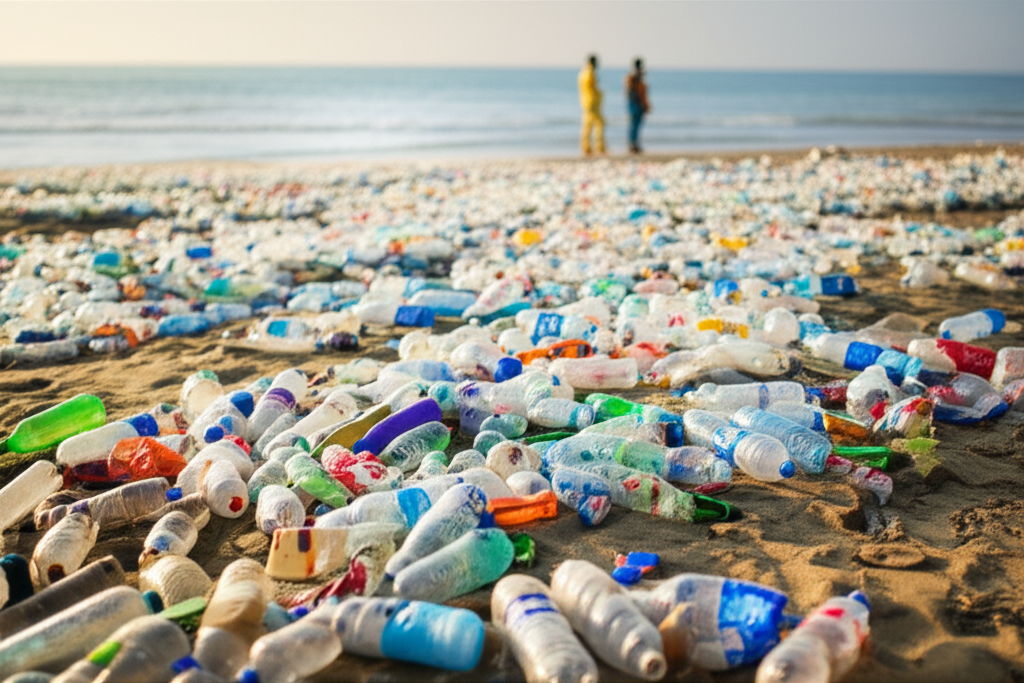
Plastic bottles
Recommended functional SMCP. We offer support materials for standard phraseology.
Yes, with a relevant degree or experience in maritime/port operations. The admissions interview will confirm suitability.
Optional (3–6 months) through Companies & Collaborations and the Alumni Network.
Simulator practice (rubrics), defeat plans, SOPs, checklists, micro-tests and applied TFM.
A degree from Navalis Magna University + operational portfolio (tracks, SOPs, reports and KPIs) useful for audits and employment.
- Introduction to the plastics problem: production, consumption, and accumulation.
- Types of plastics: characteristics, uses, and biodegradability.
- Environmental impact: marine pollution, microplastics, and effects on wildlife.
- Recycling: current technologies, limitations, and challenges.
- Circular economy: design, reuse, and new business models.
- Biodegradation and composting: alternatives to conventional plastics.
- Regulations and policies: national and international legislation on plastics.
- Innovation in materials: bioplastics, compostable materials, and other alternatives.
- Awareness and education: change of Consumer habits and responsibility.
Success stories and innovative solutions in plastic lifecycle management.
‘
Request information
- Complete the Application Form
- Attach your CV/Qualifications (if you have them to hand).
- Indicate your preferred cohort (January/May/September) and whether you want the hybrid option with simulator sessions.
Teachers
Eng. Tomás Riera
Full Professor
Eng. Tomás Riera
Full Professor
Eng. Sofía Marquina
Full Professor
Eng. Sofía Marquina
Full Professor
Eng. Javier Bañuls
Full Professor
Eng. Javier Bañuls
Full Professor
Dr. Nuria Llobregat
Full Professor
Dr. Nuria Llobregat
Full Professor
Dr. Pau Ferrer
Full Professor
Dr. Pau Ferrer
Full Professor
Cap. Javier Abaroa (MCA)
Full Professor
Cap. Javier Abaroa (MCA)
Full Professor