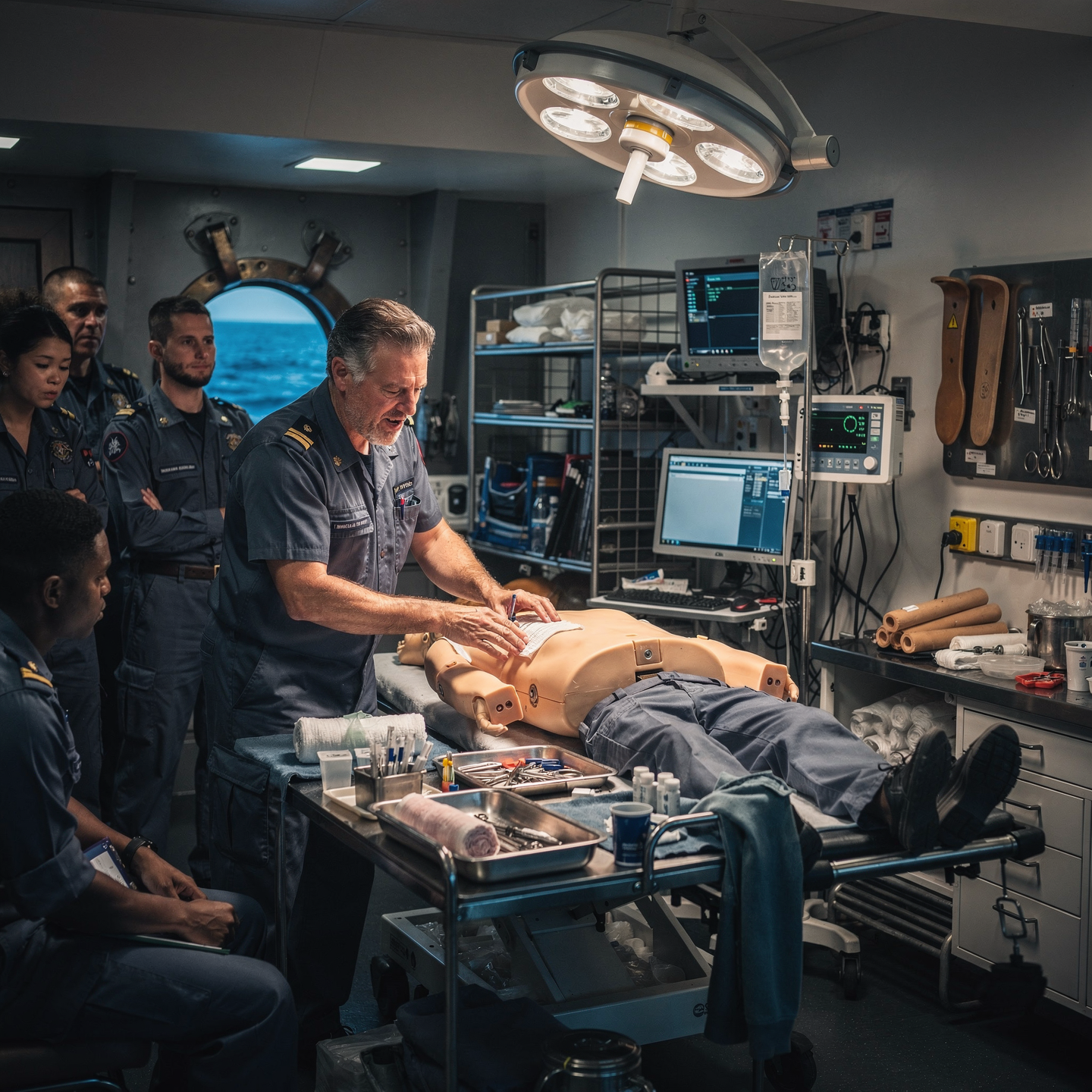
Wound and Fracture Care Course
Why this course?
The Wound and Fracture First Aid course
This course provides you with the essential skills to act confidently and effectively in emergency situations. Learn to assess and prioritize injuries, control bleeding, immobilize fractures, and prevent complications. This program will give you the theoretical and practical knowledge necessary to save lives and minimize harm until professional help arrives.
Wound and Fracture First Aid
Differential Advantages
- Realistic Simulations: Practice with practical scenarios that simulate real-life emergency situations.
- Advanced Bandaging Techniques: Master a variety of techniques to secure wounds and support injured limbs.
- Effective Fracture Immobilization: Learn to use splints and other devices to stabilize fractures and prevent further injury.
- Pain Management: Discover non-pharmacological strategies to relieve pain and provide patient comfort.
- Recognized Certification: Earn a certification that validates your skills and knowledge in wound and fracture care.
- Modality: Online
- Level: Cursos
- Hours: 150 H
- Start date: 26-07-2026
Availability: 1 in stock
Who is it aimed at?
- Healthcare professionals seeking to update their knowledge and skills in the initial management of wounds and fractures.
- Emergency professionals (firefighters, paramedics, rescue workers) requiring practical and effective training in pre-hospital care.
- Security and first aid personnel in companies, events, or institutions who need to be prepared to respond to traumatic incidents.
- Health sciences students who wish to complement their academic training with a practical and clinically oriented approach.
- Athletes and coaches interested in understanding and preventing injuries, as well as providing appropriate first aid when needed.
Flexibility of Learning
Adapted to your pace: 24/7 online access, discussion forums, and personalized tutoring to answer your questions.
Objectives and competencies

Apply correct immobilization and bandaging techniques:
“Prioritize patient safety, ensuring proper alignment and support of the affected area, using appropriate materials, and verifying distal circulation.”

Properly identify and prioritize injuries according to their severity:
“Perform a rapid primary assessment (ABCDE) and a detailed secondary assessment, using severity rating scales and standardized triage protocols.”

To quickly assess the patient's condition and determine the need for professional medical assistance:
“Use assessment scales (Glasgow, AVDI) and prioritize care according to the ABCDE to identify compromised vital signs and activate the emergency medical protocol.”

Provide effective initial care to minimize damage and stabilize the injured person:
Prioritize personal safety, assess the scene, activate EMS, control bleeding, secure the airway, and maintain body temperature.

Prevent infectious complications by applying hygiene and asepsis protocols:
“Implement and monitor Standard and Specific Precautions, including hand hygiene, use of PPE and disinfection/sterilization of the environment and equipment.”

Administer pain medication and offer basic psychological support:
“With empathy and knowledge of protocols, relieving pain and reducing patient anxiety.”
Curriculum - Modules
- Comprehensive Maritime Incident Management: protocols, roles, and chain of command for coordinated response
- Operational Planning and Execution: briefing, routes, weather windows, and go/no-go criteria
- Rapid Risk Assessment: criticality matrix, scene control, and decision-making under pressure
- Operational Communication: VHF/GMDSS, standardized reports, and inter-agency liaison
- Tactical Mobility and Safe Boarding: RHIB maneuvers, approach, mooring, and recovery
- Equipment and Technologies: PPE, signaling, satellite tracking, and field data logging
- Immediate Care of the Affected: primary assessment, hypothermia, trauma, and stabilization for evacuation
- Adverse Environmental Conditions: swell, Visibility, flows, and operational mitigation
Simulation and training: critical scenarios, use of VR/AR, and exercises with performance metrics
Documentation and continuous improvement: lessons learned, indicators (MTTA/MTTR), and SOP updates
- Introduction to First Aid: Basic principles, scene assessment, biosafety.
- Bandaging: Types of bandages (elastic, triangular, gauze), bandaging techniques (circular, spiral, sling).
- Immobilization: Splints (rigid, malleable, improvised), immobilization of upper and lower extremities.
- Bone and Joint Injuries: Sprains, dislocations, fractures (types, signs, symptoms), specific immobilization.
- Transporting the Injured: Lifting techniques (one, two, three people), stretchers (types, use), safety considerations.
- Head and Spinal Injuries: Assessment, immobilization Cervical spine injury, appropriate transport.
- Hemorrhage and Shock: Hemorrhage control (direct pressure, elevation, pressure points), signs and treatment of shock.
- Burns: Classification, initial treatment (cooling, protection), appropriate bandaging.
- Asphyxiation and Airway Obstruction: Heimlich maneuver (adults, children, infants), basic CPR.
- Legal and Ethical Considerations: Informed consent, legal responsibility, limits of first aid intervention.
‘
- Introduction to First Aid: Basic principles and legal considerations.
- Basic Anatomy and Physiology: Bones, muscles, and the circulatory system related to fractures and wounds.
- Scene and Patient Assessment: Priorities and safety in prehospital care.
- Wound Management: Cleaning, hemorrhage control (tourniquets, compression bandages), and dressings.
- Types of Fractures: Classification, signs, and symptoms.
- Fracture Immobilization: Use of splints, slings, and other devices.
- Common Musculoskeletal Injuries: Sprains, dislocations, and contusions.
- Bandaging: Basic techniques for support, compression, and immobilization.
- Shock Hypovolemic: Causes, signs, symptoms, and initial management.
Patient Transport: Safe techniques and special considerations.
‘
- Initial Assessment of the Trauma Patient: ABCDE, Pediatric Assessment Triangle
- Airway Management: Opening, Suctioning, Devices (OPA, NPA, I-Gel), Intubation (considerations)
- Hemorrhage Control: Direct Pressure, Tourniquets, Hemostatic Agents
- Spinal Immobilization: Indications, Techniques (Cervical Collar, Spinal Board, Lateral Positioning Devices)
- Extremity Injuries: Fractures, Sprains, Dislocations (Splints, Bandages, Slings)
- Compartment Syndrome: Etiology, Diagnosis, Initial Treatment
- Traumatic Brain Injury (TBI): Glasgow Coma Scale (GCS), Intracranial Pressure (ICP) Management
- Thoracic Trauma: Tension Pneumothorax, Hemothorax, Pulmonary Contusion
- Abdominal Trauma: Assessment, Specific Considerations (Organ Injuries)
- Patient Transfer and Handover: Effective Communication, Documentation
‘
- Initial Trauma Assessment: ABCDE (airway, breathing, circulation, neurological deficit, exposure), identification of priorities.
- Airway Management in Trauma: Opening, clearing, use of devices (oropharyngeal and nasopharyngeal airways), basic intubation (if applicable according to level).
- Hemorrhage Control: Direct pressure, tourniquets, hemostatic agents, management of internal bleeding.
- Circulatory Support: Vascular access, fluid administration, recognition of hypovolemic shock.
- Traumatic Brain Injury (TBI): Glasgow Coma Scale assessment, intracranial pressure management, cervical spine stabilization.
- Spinal Injuries: Immobilization Spinal cord (cervical collar, spinal board), prevention of secondary injuries.
Thoracic Trauma: Pneumothorax, hemothorax, flail chest, initial management and decompression (if applicable according to level).
Abdominal Trauma: Assessment, recognition of signs of internal bleeding, preparation for transfer.
Bone Injuries: Fractures (closed and open), dislocations, sprains, immobilization with splints and bandages.
Compartment Syndrome: Recognition, initial management, and preparation for referral.
- System Architecture and Components: Structural design, materials, and subsystems (mechanical, electrical, electronic, and fluid) with selection and assembly criteria for marine environments
- Fundamentals and Principles of Operation: Physical and engineering foundations (thermodynamics, fluid mechanics, electricity, control, and materials) that explain performance and operating limits
- Safety and Environmental (SHE): Risk analysis, PPE, LOTO, hazardous atmospheres, spill and waste management, and emergency response plans
- Applicable Regulations and Standards: IMO/ISO/IEC requirements and local regulations;
- Conformance criteria, certification, and best practices for operation and maintenance
- Inspection, testing, and diagnostics: Visual/dimensional inspection, functional testing, data analysis, and predictive techniques (vibration, thermography, fluid analysis) to identify root causes
- Preventive and predictive maintenance: Hourly/cycle/seasonal plans, lubrication, adjustments, calibrations, consumable replacement, post-service verification, and operational reliability
- Instrumentation, tools, and metrology: Measuring and testing equipment, diagnostic software, calibration and traceability; selection criteria, safe use, and storage
- Onboard integration and interfaces: Mechanical, electrical, fluid, and data compatibility; Sealing and watertightness, EMC/EMI, corrosion protection, and interoperability testing.
Quality, acceptance testing, and commissioning: process and materials control, FAT/SAT, bench and sea trials, go/no-go criteria, and evidence documentation.
Technical documentation and integrated practice: logs, checklists, reports, and a complete case study (safety ā diagnosis ā intervention ā verification ā report) applicable to any system.
Plan de estudio - Módulos
- Comprehensive Maritime Incident Management: protocols, roles, and chain of command for coordinated response
- Operational Planning and Execution: briefing, routes, weather windows, and go/no-go criteria
- Rapid Risk Assessment: criticality matrix, scene control, and decision-making under pressure
- Operational Communication: VHF/GMDSS, standardized reports, and inter-agency liaison
- Tactical Mobility and Safe Boarding: RHIB maneuvers, approach, mooring, and recovery
- Equipment and Technologies: PPE, signaling, satellite tracking, and field data logging
- Immediate Care of the Affected: primary assessment, hypothermia, trauma, and stabilization for evacuation
- Adverse Environmental Conditions: swell, Visibility, flows, and operational mitigation
Simulation and training: critical scenarios, use of VR/AR, and exercises with performance metrics
Documentation and continuous improvement: lessons learned, indicators (MTTA/MTTR), and SOP updates
- Introduction to First Aid: Basic principles, scene assessment, biosafety.
- Bandaging: Types of bandages (elastic, triangular, gauze), bandaging techniques (circular, spiral, sling).
- Immobilization: Splints (rigid, malleable, improvised), immobilization of upper and lower extremities.
- Bone and Joint Injuries: Sprains, dislocations, fractures (types, signs, symptoms), specific immobilization.
- Transporting the Injured: Lifting techniques (one, two, three people), stretchers (types, use), safety considerations.
- Head and Spinal Injuries: Assessment, immobilization Cervical spine injury, appropriate transport.
- Hemorrhage and Shock: Hemorrhage control (direct pressure, elevation, pressure points), signs and treatment of shock.
- Burns: Classification, initial treatment (cooling, protection), appropriate bandaging.
- Asphyxiation and Airway Obstruction: Heimlich maneuver (adults, children, infants), basic CPR.
- Legal and Ethical Considerations: Informed consent, legal responsibility, limits of first aid intervention.
‘
- Introduction to First Aid: Basic principles and legal considerations.
- Basic Anatomy and Physiology: Bones, muscles, and the circulatory system related to fractures and wounds.
- Scene and Patient Assessment: Priorities and safety in prehospital care.
- Wound Management: Cleaning, hemorrhage control (tourniquets, compression bandages), and dressings.
- Types of Fractures: Classification, signs, and symptoms.
- Fracture Immobilization: Use of splints, slings, and other devices.
- Common Musculoskeletal Injuries: Sprains, dislocations, and contusions.
- Bandaging: Basic techniques for support, compression, and immobilization.
- Shock Hypovolemic: Causes, signs, symptoms, and initial management.
Patient Transport: Safe techniques and special considerations.
‘
- Initial Assessment of the Trauma Patient: ABCDE, Pediatric Assessment Triangle
- Airway Management: Opening, Suctioning, Devices (OPA, NPA, I-Gel), Intubation (considerations)
- Hemorrhage Control: Direct Pressure, Tourniquets, Hemostatic Agents
- Spinal Immobilization: Indications, Techniques (Cervical Collar, Spinal Board, Lateral Positioning Devices)
- Extremity Injuries: Fractures, Sprains, Dislocations (Splints, Bandages, Slings)
- Compartment Syndrome: Etiology, Diagnosis, Initial Treatment
- Traumatic Brain Injury (TBI): Glasgow Coma Scale (GCS), Intracranial Pressure (ICP) Management
- Thoracic Trauma: Tension Pneumothorax, Hemothorax, Pulmonary Contusion
- Abdominal Trauma: Assessment, Specific Considerations (Organ Injuries)
- Patient Transfer and Handover: Effective Communication, Documentation
‘
- Initial Trauma Assessment: ABCDE (airway, breathing, circulation, neurological deficit, exposure), identification of priorities.
- Airway Management in Trauma: Opening, clearing, use of devices (oropharyngeal and nasopharyngeal airways), basic intubation (if applicable according to level).
- Hemorrhage Control: Direct pressure, tourniquets, hemostatic agents, management of internal bleeding.
- Circulatory Support: Vascular access, fluid administration, recognition of hypovolemic shock.
- Traumatic Brain Injury (TBI): Glasgow Coma Scale assessment, intracranial pressure management, cervical spine stabilization.
- Spinal Injuries: Immobilization Spinal cord (cervical collar, spinal board), prevention of secondary injuries.
Thoracic Trauma: Pneumothorax, hemothorax, flail chest, initial management and decompression (if applicable according to level).
Abdominal Trauma: Assessment, recognition of signs of internal bleeding, preparation for transfer.
Bone Injuries: Fractures (closed and open), dislocations, sprains, immobilization with splints and bandages.
Compartment Syndrome: Recognition, initial management, and preparation for referral.
- System Architecture and Components: Structural design, materials, and subsystems (mechanical, electrical, electronic, and fluid) with selection and assembly criteria for marine environments
- Fundamentals and Principles of Operation: Physical and engineering foundations (thermodynamics, fluid mechanics, electricity, control, and materials) that explain performance and operating limits
- Safety and Environmental (SHE): Risk analysis, PPE, LOTO, hazardous atmospheres, spill and waste management, and emergency response plans
- Applicable Regulations and Standards: IMO/ISO/IEC requirements and local regulations;
- Conformance criteria, certification, and best practices for operation and maintenance
- Inspection, testing, and diagnostics: Visual/dimensional inspection, functional testing, data analysis, and predictive techniques (vibration, thermography, fluid analysis) to identify root causes
- Preventive and predictive maintenance: Hourly/cycle/seasonal plans, lubrication, adjustments, calibrations, consumable replacement, post-service verification, and operational reliability
- Instrumentation, tools, and metrology: Measuring and testing equipment, diagnostic software, calibration and traceability; selection criteria, safe use, and storage
- Onboard integration and interfaces: Mechanical, electrical, fluid, and data compatibility; Sealing and watertightness, EMC/EMI, corrosion protection, and interoperability testing.
Quality, acceptance testing, and commissioning: process and materials control, FAT/SAT, bench and sea trials, go/no-go criteria, and evidence documentation.
Technical documentation and integrated practice: logs, checklists, reports, and a complete case study (safety ā diagnosis ā intervention ā verification ā report) applicable to any system.
- Introduction to Advanced First Aid: Scope and Responsibilities
- Assessment of the Patient with Wounds and Fractures: ABCDE and Secondary Examination
- Management of Severe Bleeding: Tourniquets, Hemostatic Agents, and Pressure Bandages
- Wounds: Classification, Cleaning, Disinfection, and Suturing (Basic)
- Burns: Assessment of Extent and Depth, Initial Treatment, and Transport
- Bandaging and Immobilization: Advanced Techniques for Different Types of Wounds
- Bone Fractures: Types, Signs and Symptoms, Immobilization with Splints and Slings
- Muscle and Joint Injuries: Sprains, Strains, and Dislocations
- Compartment Syndrome: Recognition and Urgent Management
- Special Considerations: Wounds and Fractures in Children, the Elderly, and Patients with Preexisting Conditions
‘
- Introduction to First Aid: Basic principles, initial assessment, and scene safety.
- Wounds: Types, cleaning, bleeding control (direct pressure, tourniquets), bandages, and dressings.
- Burns: Classification, treatment according to severity, cooling, and protection.
- Soft Tissue Injuries: Bruises, sprains, and dislocations.
- Fractures: Types of fractures, immobilization with splints and slings, safe transport.
- Traumatic Brain Injury (TBI): Recognition of warning signs, management, and stabilization.
- Spinal Injuries: Suspected injury, spinal immobilization, and transport with a spinal board (if available).
- Safe Transport of Injured Persons: Mobilization techniques, improvised stretchers, assessment of injuries.
- The First Aid Kit: Essential contents, maintenance, and replenishment.
- Legal and Ethical Aspects: Informed consent, liability, and limits of action.
Initial Recognition and Treatment.
‘
- Basic Anatomy and Physiology: Cardiovascular, respiratory, and nervous systems.
- Patient Assessment: Primary (ABCDE) and secondary assessment.
- Basic CPR in Adults: Chest compressions, ventilation, and AED use.
- Basic CPR in Children and Infants: Adaptations and special considerations.
- Airway Obstruction: Heimlich maneuver in adults, children, and infants.
- Bleeding: Direct control, compression bandages, and tourniquets.
- Wounds and Burns: Cleaning, disinfection, dressings, and initial treatment.
- Sprains and Fractures: Immobilization with splints and bandages.
Patient Transfer: Mobilization and safe transport techniques.
Medical-Legal Considerations: Informed consent, liability, and documentation.
‘
- Introduction to bone and soft tissue injuries: epidemiology and classification.
- Anatomy and physiology of the musculoskeletal system: bones, muscles, tendons, and ligaments.
- Clinical evaluation: history, physical examination, and complementary tests (X-ray, ultrasound, MRI).
- Principles of immobilization: splints, casts, and bandages.
- Pain management: pharmacology and non-pharmacological therapies.
- Common bone injuries: fractures (types, treatment, and complications).
- Common soft tissue injuries: sprains, strains, and contusions (treatment and rehabilitation).
- Syndrome Compartmental injury: diagnosis, treatment, and complications.
Rehabilitation: general and specific principles according to the injury.
Complications of bone and soft tissue injuries: prevention and management.
‘
Career opportunities
- Emergency Medical Technician: Pre-hospital emergency and urgent care, patient transport.
- Nursing Assistant: Support in wound care and management of patients with fractures in health centers and hospitals.
- Lifeguard: First aid at beaches, swimming pools, sporting events, and other locations where immediate assistance is required.
- Nursing Home Staff: Care and treatment of wounds and fractures in elderly people.
- Sports Center Staff: Assistance to athletes with minor or moderate injuries.
- Volunteer in Humanitarian Aid Organizations: Participation in rescue and healthcare teams in emergency situations.
- First Aid Kit in Companies: Responsible for basic first aid care on the job site. Job.
- Outdoor Activities Monitor: Knowledge to treat common injuries in activities such as hiking, climbing, etc.
“`
Admission requirements

Academic/professional profile:
Degree/Bachelor's degree in Nautical Science/Maritime Transport, Naval/Marine Engineering, or a related field; or proven professional experience in bridge/operations.

Language proficiency:
Recommended functional maritime English (SMCP) for simulations and technical materials.

5. Induction
Updated resume, copy of degree or seaman's book, ID card/passport, letter of motivation.

Technical requirements (for online):
Equipment with camera/microphone, stable connection, ā„ 24ā monitor recommended for ECDIS/Radar-ARPA.
Admission process and dates

1. Online
application
(form + documents).

2. Academic review and interview
(profile/objectives/schedule compatibility).

3. Admission decision
(+ scholarship proposal if applicable).

4. Reservation of place
(deposit) and registration.

5. Induction
(access to campus, calendars, simulator guides).
Scholarships and grants
- Essential First Aid: Learn to assess and treat common wounds, from minor cuts to deep lacerations.
- Fracture Management: Immobilization and stabilization of bone fractures to prevent complications and facilitate recovery.
- Updated Protocols: Master the latest techniques and procedures in prehospital emergency care.
- Hands-On Practice: Realistic simulations and practical exercises to build confidence and skill in critical situations.
- Recognized Certification: Earn a certificate that validates your knowledge and prepares you to act safely and effectively.
Testimonials
During my training in wound and fracture care, I successfully immobilized an open tibia and fibula fracture in a simulated accident scenario, correctly applying a splint and controlling the bleeding, receiving praise from the instructor for my speed, accuracy and calmness under pressure.
I successfully completed the Marine Health and First Aid course, gaining knowledge and practical skills to respond to medical emergencies in the maritime environment. I am confident in my ability to provide first aid, from treating minor injuries to handling life-threatening situations, and to contribute to the safety of my colleagues at sea.
During my rotation in traumatology, I successfully applied the techniques learned in the Wound and Fracture Care course to stabilize an open tibia and fibula fracture in a polytrauma patient. My correct application of the compression bandage, immobilization, and neurovascular monitoring helped minimize complications and facilitate subsequent surgery, which the attending surgeon acknowledged and praised.
During my training in wound and fracture care, I successfully immobilized an open tibia fracture in a simulated accident scenario, controlling the bleeding and preventing further complications, receiving praise from the instructor for my speed, accuracy, and composure under pressure.

Frequently asked questions
Control the bleeding by applying direct pressure to the wound.
Yes. The itinerary includes ECDIS/Radar-ARPA/BRM with harbor, ocean, fog, storm, and SAR scenarios.
Online with live sessions; hybrid option for simulator/practical placements through agreements.
Control the bleeding by applying direct pressure to the wound.
Recommended functional SMCP. We offer support materials for standard phraseology.
Yes, with a relevant degree or experience in maritime/port operations. The admissions interview will confirm suitability.
Optional (3ā6 months) through Companies & Collaborations and the Alumni Network.
Simulator practice (rubrics), defeat plans, SOPs, checklists, micro-tests and applied TFM.
A degree from Navalis Magna University + operational portfolio (tracks, SOPs, reports and KPIs) useful for audits and employment.
- Introduction to bone and soft tissue injuries: epidemiology and classification.
- Anatomy and physiology of the musculoskeletal system: bones, muscles, tendons, and ligaments.
- Clinical evaluation: history, physical examination, and complementary tests (X-ray, ultrasound, MRI).
- Principles of immobilization: splints, casts, and bandages.
- Pain management: pharmacology and non-pharmacological therapies.
- Common bone injuries: fractures (types, treatment, and complications).
- Common soft tissue injuries: sprains, strains, and contusions (treatment and rehabilitation).
- Syndrome Compartmental injury: diagnosis, treatment, and complications.
Rehabilitation: general and specific principles according to the injury.
Complications of bone and soft tissue injuries: prevention and management.
‘
Request information
- Complete the Application Form
- Attach your CV/Qualifications (if you have them to hand).
- Indicate your preferred cohort (January/May/September) and whether you want the hybrid option with simulator sessions.
Teachers
Eng. TomƔs Riera
Full Professor
Eng. TomƔs Riera
Full Professor
Eng. SofĆa Marquina
Full Professor
Eng. SofĆa Marquina
Full Professor
Eng. Javier BaƱuls
Full Professor
Eng. Javier BaƱuls
Full Professor
Dr. Nuria Llobregat
Full Professor
Dr. Nuria Llobregat
Full Professor
Dr. Pau Ferrer
Full Professor
Dr. Pau Ferrer
Full Professor
Cap. Javier Abaroa (MCA)
Full Professor
Cap. Javier Abaroa (MCA)
Full Professor

