Hypothermia and Burn Treatment Course

Why this course?

The Hypothermia and Burn Treatment

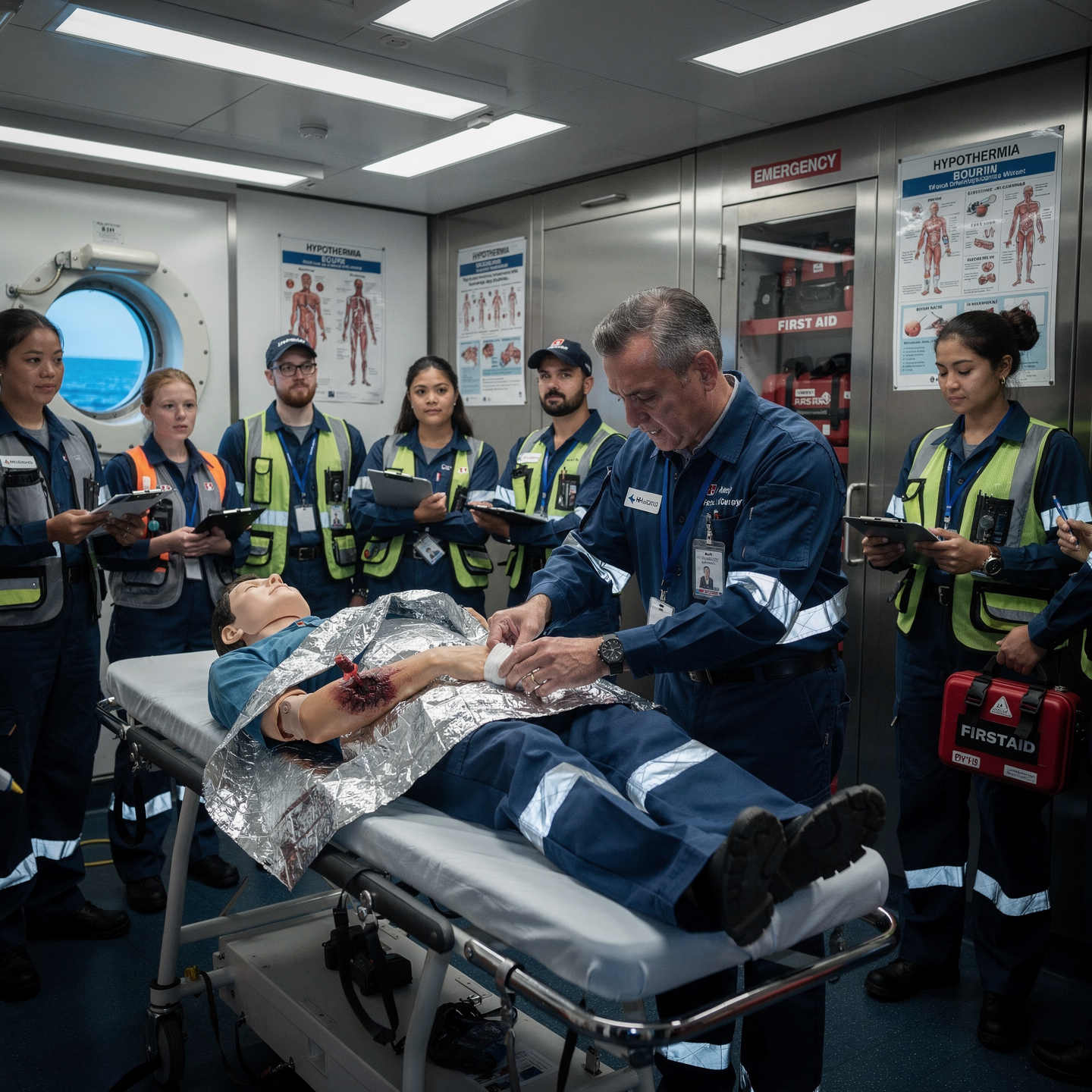
This course will provide you with the essential tools to act quickly and effectively in emergency situations. You will learn to identify the signs and symptoms of these conditions, apply the most advanced first aid techniques, and stabilize the patient until professional medical assistance arrives. This program combines up-to-date theoretical knowledge with simulated practice to ensure a safe and effective response.

Key Benefits

  • Accurate Identification: Quickly recognize the different degrees of hypothermia and burns.
  • Immediate Intervention: Apply the correct action protocols to minimize damage.
  • Advanced Techniques: Master specialized bandaging, fluid management, and temperature control.
  • Realistic Simulations: Practice in simulated environments to gain confidence and skill.
  • Safety and Prevention: Learn how to prevent these incidents and protect yourself and others.
Tratamiento

Hypothermia and Burn Treatment Course

Availability: 1 in stock

Who is it aimed at?

  • Emergency medical personnel, firefighters, and rescue workers seeking to update and improve their protocols for treating hypothermia and burns.
  • Healthcare professionals, nurses, and emergency medical technicians who need to deepen their knowledge of patient treatment and stabilization techniques.
  • First responders, volunteers, and security personnel who need to acquire essential knowledge for initial response to thermal emergencies.
  • Outdoor activity instructors, mountain guides, and adventure tourism professionals interested in preventing and managing thermal risk situations in natural environments.
  • Medical, nursing, and related students seeking a practical and up-to-date complement to their academic training in the management of Hypothermia and burns.

    Learning flexibility

    Access the content at your own pace: downloadable material, active discussion forums, and certification upon completion of the course.

Tratamiento

Objectives and competencies

Apply stabilization and transfer protocols:

“Following updated clinical guidelines, prioritizing patient safety and effective communication with the team.”

Assess severity and prioritize initial care:

Communicate the emergency (MAYDAY/PANPAN), activate the ship’s emergency plan and coordinate available resources (crew, equipment, communications).

Implement appropriate reheating and cooling measures:

“Consider the vessel’s inertia, environmental conditions, and engine limitations when changing speed or course, and anticipate the consequences.”

Preventing short- and long-term complications and consequences:

“Implement contingency plans for emergencies (fire, flood, engine failure) prioritizing the safety of the crew, the ship and the environment.”

Identify the early signs and symptoms of hypothermia and burns:

“Recognize pale/blue skin, uncontrollable tremors, confusion and difficulty speaking in hypothermia; pain, redness, blisters and charred skin in burns.”

Adapt the treatment to the specific needs of the patient:

Evaluate the patient comprehensively (biopsychosocial), adjust interventions according to response, and consider individual preferences and family/social context.

Curriculum - Modules

  1. Comprehensive Maritime Incident Management: protocols, roles, and chain of command for coordinated response
  2. Operational Planning and Execution: briefing, routes, weather windows, and go/no-go criteria
  3. Rapid Risk Assessment: criticality matrix, scene control, and decision-making under pressure
  4. Operational Communication: VHF/GMDSS, standardized reports, and inter-agency liaison
  5. Tactical Mobility and Safe Boarding: RHIB maneuvers, approach, mooring, and recovery
  6. Equipment and Technologies: PPE, signaling, satellite tracking, and field data logging
  7. Immediate Care of the Affected: primary assessment, hypothermia, trauma, and stabilization for evacuation
  8. Adverse Environmental Conditions: swell, Visibility, flows, and operational mitigation

    Simulation and training: critical scenarios, use of VR/AR, and exercises with performance metrics

    Documentation and continuous improvement: lessons learned, indicators (MTTA/MTTR), and SOP updates

  1. Introduction to Hypothermia: Definition, Causes, and Risk Factors.
  2. Pathophysiology of Hypothermia: Effects on Body Systems.
  3. Classification of Hypothermia: Mild, Moderate, and Severe.
  4. Recognizing Hypothermia: Signs and Symptoms at Different Stages.
  5. First Aid for Mild Hypothermia: Passive Warming Measures.
  6. Treatment of Moderate Hypothermia: Active External Warming.
  7. Management of Severe Hypothermia: Active Internal Warming and Advanced Life Support.
  8. Introduction to Burns: Types, Causes, and Severity Assessment.
  9. First Aid for Burns: Cooling, Protection, and Transport.
  10. Stabilizing the Burn Patient: Pain, Fluid, and Airway Management.

  1. Introduction to Prehospital Care: Basic principles, biosafety, and initial patient assessment.
  2. Pathophysiology of Hypothermia: Mechanisms of heat loss, classification of hypothermia, and systemic effects.
  3. Assessment and Diagnosis of Hypothermia: Signs and symptoms, assessment scales, and differential diagnosis.
  4. Prehospital Management of Hypothermia: Insulation, passive and active warming, arrhythmia management, and special considerations.
  5. Pathophysiology of Burns: Classification according to depth and extent, inflammatory response, and hemodynamic alterations.
  6. Assessment and Diagnosis of Burns: Rule of Nines, airway assessment, and signs of inhalation smoke.
  7. Prehospital Burn Management: Cooling, covering, pain management, and transport.
  8. Special Burns: Electrical, chemical, inhalation, and critical area burns.
  9. Complications and Special Considerations: Burn-associated hypothermia, pediatric patients, and the elderly.
  10. Documentation and Communication: Data recording, prehospital report, and coordination with the hospital team.

  1. Introduction to Hypothermia and Burns: Epidemiology and Relevance.
  2. Pathophysiology of Hypothermia: Mechanisms of Heat Loss, Body Response, Degrees of Hypothermia.
  3. Assessment of Hypothermia: Signs and Symptoms, Rating Scales, Differential Diagnosis.
  4. Prehospital Management of Hypothermia: Priorities, Passive and Active Warming, Special Considerations (Drowning, Trauma).
  5. Pathophysiology of Burns: Depth, Extent, Systemic Inflammatory Response.
  6. Assessment of Burns: Rule of Nines, Classification by Depth, Airway and Circulation.
  7. Prehospital Management of Burns: Cooling, Covering, Analgesia, Transfer.
  8. Special Burns: Electrical, chemical, inhalation burns, in children and the elderly.
  9. Complications of hypothermia and burns: Arrhythmias, organ failure, sepsis.
  10. Ethical and legal considerations in prehospital care.

  1. Introduction to Hypothermia and Burns: Definitions, Epidemiology, and Mechanisms of Injury.
  2. Hypothermia: Pathophysiology, classification according to severity, risk factors, and prevention.
  3. Burns: Types of burns (thermal, chemical, electrical), assessment of depth and extent (rule of nines).
  4. First Aid in Hypothermia: Isolation, active and passive warming, monitoring, and safe transport.
  5. First Aid in Burns: Cooling, cleansing, sterile dressing, pain management, and appropriate transport.
  6. Initial Management of Airway, Breathing, and Circulation (ABCs) in Patients with Hypothermia and Burns.
  7. Recognition and Management of Complications: Cardiac arrhythmias in hypothermia, hypovolemic shock in Burns.
  8. Special considerations in vulnerable populations: Children, the elderly, and people with comorbidities.
  9. Legal and ethical aspects: Informed consent, first responder responsibility, and notification to authorities.
  10. Prevention of hypothermia and burns: Education, safety measures at home and at work.

  1. System Architecture and Components: Structural design, materials, and subsystems (mechanical, electrical, electronic, and fluid) with selection and assembly criteria for marine environments
  2. Fundamentals and Principles of Operation: Physical and engineering foundations (thermodynamics, fluid mechanics, electricity, control, and materials) that explain performance and operating limits
  3. Safety and Environmental (SHE): Risk analysis, PPE, LOTO, hazardous atmospheres, spill and waste management, and emergency response plans
  4. Applicable Regulations and Standards: IMO/ISO/IEC requirements and local regulations;
  5. Conformance criteria, certification, and best practices for operation and maintenance
  6. Inspection, testing, and diagnostics: Visual/dimensional inspection, functional testing, data analysis, and predictive techniques (vibration, thermography, fluid analysis) to identify root causes
  7. Preventive and predictive maintenance: Hourly/cycle/seasonal plans, lubrication, adjustments, calibrations, consumable replacement, post-service verification, and operational reliability
  8. Instrumentation, tools, and metrology: Measuring and testing equipment, diagnostic software, calibration and traceability; selection criteria, safe use, and storage
  9. Onboard integration and interfaces: Mechanical, electrical, fluid, and data compatibility; Sealing and watertightness, EMC/EMI, corrosion protection, and interoperability testing.

    Quality, acceptance testing, and commissioning: process and materials control, FAT/SAT, bench and sea trials, go/no-go criteria, and evidence documentation.

    Technical documentation and integrated practice: logs, checklists, reports, and a complete case study (safety → diagnosis → intervention → verification → report) applicable to any system.

Plan de estudio - Módulos

  1. Comprehensive Maritime Incident Management: protocols, roles, and chain of command for coordinated response
  2. Operational Planning and Execution: briefing, routes, weather windows, and go/no-go criteria
  3. Rapid Risk Assessment: criticality matrix, scene control, and decision-making under pressure
  4. Operational Communication: VHF/GMDSS, standardized reports, and inter-agency liaison
  5. Tactical Mobility and Safe Boarding: RHIB maneuvers, approach, mooring, and recovery
  6. Equipment and Technologies: PPE, signaling, satellite tracking, and field data logging
  7. Immediate Care of the Affected: primary assessment, hypothermia, trauma, and stabilization for evacuation
  8. Adverse Environmental Conditions: swell, Visibility, flows, and operational mitigation

    Simulation and training: critical scenarios, use of VR/AR, and exercises with performance metrics

    Documentation and continuous improvement: lessons learned, indicators (MTTA/MTTR), and SOP updates

  1. Introduction to Hypothermia: Definition, Causes, and Risk Factors.
  2. Pathophysiology of Hypothermia: Effects on Body Systems.
  3. Classification of Hypothermia: Mild, Moderate, and Severe.
  4. Recognizing Hypothermia: Signs and Symptoms at Different Stages.
  5. First Aid for Mild Hypothermia: Passive Warming Measures.
  6. Treatment of Moderate Hypothermia: Active External Warming.
  7. Management of Severe Hypothermia: Active Internal Warming and Advanced Life Support.
  8. Introduction to Burns: Types, Causes, and Severity Assessment.
  9. First Aid for Burns: Cooling, Protection, and Transport.
  10. Stabilizing the Burn Patient: Pain, Fluid, and Airway Management.

  1. Introduction to Prehospital Care: Basic principles, biosafety, and initial patient assessment.
  2. Pathophysiology of Hypothermia: Mechanisms of heat loss, classification of hypothermia, and systemic effects.
  3. Assessment and Diagnosis of Hypothermia: Signs and symptoms, assessment scales, and differential diagnosis.
  4. Prehospital Management of Hypothermia: Insulation, passive and active warming, arrhythmia management, and special considerations.
  5. Pathophysiology of Burns: Classification according to depth and extent, inflammatory response, and hemodynamic alterations.
  6. Assessment and Diagnosis of Burns: Rule of Nines, airway assessment, and signs of inhalation smoke.
  7. Prehospital Burn Management: Cooling, covering, pain management, and transport.
  8. Special Burns: Electrical, chemical, inhalation, and critical area burns.
  9. Complications and Special Considerations: Burn-associated hypothermia, pediatric patients, and the elderly.
  10. Documentation and Communication: Data recording, prehospital report, and coordination with the hospital team.

  1. Introduction to Hypothermia and Burns: Epidemiology and Relevance.
  2. Pathophysiology of Hypothermia: Mechanisms of Heat Loss, Body Response, Degrees of Hypothermia.
  3. Assessment of Hypothermia: Signs and Symptoms, Rating Scales, Differential Diagnosis.
  4. Prehospital Management of Hypothermia: Priorities, Passive and Active Warming, Special Considerations (Drowning, Trauma).
  5. Pathophysiology of Burns: Depth, Extent, Systemic Inflammatory Response.
  6. Assessment of Burns: Rule of Nines, Classification by Depth, Airway and Circulation.
  7. Prehospital Management of Burns: Cooling, Covering, Analgesia, Transfer.
  8. Special Burns: Electrical, chemical, inhalation burns, in children and the elderly.
  9. Complications of hypothermia and burns: Arrhythmias, organ failure, sepsis.
  10. Ethical and legal considerations in prehospital care.

  1. Introduction to Hypothermia and Burns: Definitions, Epidemiology, and Mechanisms of Injury.
  2. Hypothermia: Pathophysiology, classification according to severity, risk factors, and prevention.
  3. Burns: Types of burns (thermal, chemical, electrical), assessment of depth and extent (rule of nines).
  4. First Aid in Hypothermia: Isolation, active and passive warming, monitoring, and safe transport.
  5. First Aid in Burns: Cooling, cleansing, sterile dressing, pain management, and appropriate transport.
  6. Initial Management of Airway, Breathing, and Circulation (ABCs) in Patients with Hypothermia and Burns.
  7. Recognition and Management of Complications: Cardiac arrhythmias in hypothermia, hypovolemic shock in Burns.
  8. Special considerations in vulnerable populations: Children, the elderly, and people with comorbidities.
  9. Legal and ethical aspects: Informed consent, first responder responsibility, and notification to authorities.
  10. Prevention of hypothermia and burns: Education, safety measures at home and at work.

  1. System Architecture and Components: Structural design, materials, and subsystems (mechanical, electrical, electronic, and fluid) with selection and assembly criteria for marine environments
  2. Fundamentals and Principles of Operation: Physical and engineering foundations (thermodynamics, fluid mechanics, electricity, control, and materials) that explain performance and operating limits
  3. Safety and Environmental (SHE): Risk analysis, PPE, LOTO, hazardous atmospheres, spill and waste management, and emergency response plans
  4. Applicable Regulations and Standards: IMO/ISO/IEC requirements and local regulations;
  5. Conformance criteria, certification, and best practices for operation and maintenance
  6. Inspection, testing, and diagnostics: Visual/dimensional inspection, functional testing, data analysis, and predictive techniques (vibration, thermography, fluid analysis) to identify root causes
  7. Preventive and predictive maintenance: Hourly/cycle/seasonal plans, lubrication, adjustments, calibrations, consumable replacement, post-service verification, and operational reliability
  8. Instrumentation, tools, and metrology: Measuring and testing equipment, diagnostic software, calibration and traceability; selection criteria, safe use, and storage
  9. Onboard integration and interfaces: Mechanical, electrical, fluid, and data compatibility; Sealing and watertightness, EMC/EMI, corrosion protection, and interoperability testing.

    Quality, acceptance testing, and commissioning: process and materials control, FAT/SAT, bench and sea trials, go/no-go criteria, and evidence documentation.

    Technical documentation and integrated practice: logs, checklists, reports, and a complete case study (safety → diagnosis → intervention → verification → report) applicable to any system.

  1. Introduction to Hypothermia and Burns: Definition and Classification
  2. Pathophysiology of Hypothermia: Mechanisms of heat loss, phases, and body responses
  3. Pathophysiology of Burns: Depth, extent, burn zones, and inflammatory response
  4. Initial Assessment of the Victim: Assessment triangle, vital signs, and medical history
  5. Initial Management of Hypothermia: Isolation, passive and active warming, and transport
  6. Initial Management of Burns: Cooling, sterile covering, pain control, and transport
  7. Complications of Hypothermia: Arrhythmias, frostbite, rhabdomyolysis, and acidosis
  8. Complications of Burns: Infection, hypovolemic shock, respiratory failure, and scarring
  9. Special Considerations: Pediatric population, elderly, comorbidities, and environment
  10. Prevention of Hypothermia and Burns: Education, safety measures, and equipment

  1. Introduction to Thermoregulation: Physiology and Defense Mechanisms
  2. Hypothermia: Definition, Classification, and Etiology: Risk Factors and Vulnerable Populations
  3. Pathophysiology of Hypothermia: Impact on Organ Systems (Cardiovascular, Respiratory, Neurological)
  4. Recognition and Evaluation of Hypothermia: Signs and Symptoms According to Severity
  5. Prehospital Management of Mild to Moderate Hypothermia: Insulation, External Heat Sources, Hydration
  6. Prehospital Management of Severe Hypothermia: Precautions, Careful Mobilization, Management of Arrhythmias
  7. Burns: Definition, Classification, and Depth: Causative Agents and Mechanisms of Injury
  8. Assessment of the Extent and Severity of Burns: Rule of Nines, Lund-Browder Diagram
  9. Initial Prehospital Management of Burns: Cooling, Pain Control, Airway Protection
  10. Special Considerations in Patients with Hypothermia and Burns: Priorities and Challenges

  1. Introduction to Hypothermia and Burns: Definitions, epidemiology, ethical and legal considerations.
  2. Pathophysiology of Hypothermia: Mechanisms of heat loss, phases of hypothermia, effects on organs and systems.
  3. Evaluation of the Patient with Hypothermia: Signs and symptoms according to severity, differential diagnosis, assessment scales.
  4. Initial Management of Hypothermia: Insulation, passive and active warming, fluid therapy, monitoring.
  5. Pathophysiology of Burns: Classification according to depth and extent, inflammatory response, burn shock.
  6. Evaluation of the Burn Patient: Rule of nines, estimation of total body surface area (TBSA), airway and lung function assessment Breathing.
  7. Initial Burn Management: Cooling, cleansing, covering, analgesia, fluid therapy (Parkland formula).
  8. Complications of Hypothermia and Burns: Arrhythmias, frostbite, rhabdomyolysis, compartment syndrome, infections.
  9. Special Considerations: Hypothermia and burns in children, the elderly, pregnant women, and patients with comorbidities.
  10. Prevention and Education: Preventive measures, community education, available resources, first aid kit.

  1. Introduction to Hypothermia and Burns: Epidemiology and Impact
  2. Pathophysiology of Hypothermia: Mechanisms of Heat Loss, Physiological Responses
  3. Pathophysiology of Burns: Areas of Injury, Systemic Inflammatory Response
  4. Initial Assessment of the Patient with Hypothermia: Signs and Symptoms, Severity Scales
  5. Initial Assessment of the Burn Patient: Rule of Nines, Classification by Depth
  6. Prehospital Management of Mild to Moderate Hypothermia: Insulation, External Active Heat
  7. Prehospital Management of Severe Hypothermia: Priorities, Precautions, Transfer

    Prehospital Burn Management: Cooling, Covering, Pain Control

    Potential Complications of Hypothermia and Burns: Arrhythmias, Respiratory Failure, Infections

    Special Considerations: Pediatric Population, Older Adults, Comorbidities

Career opportunities

  • Emergency Medical Technician: Pre-hospital care in cases of hypothermia and burns.
  • Firefighter: Intervention in fires and rescues, applying burn treatment protocols.
  • Lifeguard: Surveillance and care at beaches, swimming pools, and other aquatic environments, treating hypothermia and sunburn.
  • Nursing Staff: Assistance in health centers and hospitals, specializing in the treatment of patients with burns and hypothermia.
  • Civil Protection Technician: Participation in emergency plans and incident management, applying knowledge in the treatment of hypothermia and burns.
  • Outdoor Activities Instructor: Guiding groups in natural environments, preventing and treating cases of hypothermia and sunburn.
  • Ambulance Personnel: Transporting and stabilizing patients with hypothermia and burns, applying established protocols.
  • Volunteering in Humanitarian Aid Organizations: Assisting people affected by natural disasters or emergency situations, providing first aid in cases of hypothermia and burns.

“`

Admission requirements

Academic/professional profile:

Degree/Bachelor's degree in Nautical Science/Maritime Transport, Naval/Marine Engineering, or a related field; or proven professional experience in bridge/operations.

Language proficiency:

Recommended functional maritime English (SMCP) for simulations and technical materials.

5. Induction

Updated resume, copy of degree or seaman's book, ID card/passport, letter of motivation.

Technical requirements (for online):

Equipment with camera/microphone, stable connection, ≥ 24” monitor recommended for ECDIS/Radar-ARPA.

Admission process and dates

1. Online
application

(form + documents).

2. Academic review and interview

(profile/objectives/schedule compatibility).

3. Admission decision

(+ scholarship proposal if applicable).

4. Reservation of place

(deposit) and registration.

5. Induction

(access to campus, calendars, simulator guides).

Scholarships and grants

  • Rapid Identification: Learn to recognize the early signs of hypothermia and burns to act quickly.
  • Up-to-date Protocols: Master first aid techniques according to the latest guidelines for each condition.
  • Management in Extreme Situations: Acquire skills to stabilize the victim in challenging environments until medical help arrives.
  • Prevention: Discover key strategies to reduce the risk of hypothermia and burns in various contexts.
  • Practical Simulations: Participate in realistic exercises to solidify your knowledge and gain confidence in your skills.
Prepare to respond effectively in the event of emergencies due to extreme cold or heat and to save lives.

Testimonials

Frequently asked questions

Yes. The itinerary includes ECDIS/Radar-ARPA/BRM with harbor, ocean, fog, storm, and SAR scenarios.

Online with live sessions; hybrid option for simulator/practical placements through agreements.

Remove the person from the source of the injury (cold or heat).

Recommended functional SMCP. We offer support materials for standard phraseology.

Yes, with a relevant degree or experience in maritime/port operations. The admissions interview will confirm suitability.

Optional (3–6 months) through Companies & Collaborations and the Alumni Network.

Simulator practice (rubrics), defeat plans, SOPs, checklists, micro-tests and applied TFM.

A degree from Navalis Magna University + operational portfolio (tracks, SOPs, reports and KPIs) useful for audits and employment.

  1. Introduction to Hypothermia and Burns: Epidemiology and Impact
  2. Pathophysiology of Hypothermia: Mechanisms of Heat Loss, Physiological Responses
  3. Pathophysiology of Burns: Areas of Injury, Systemic Inflammatory Response
  4. Initial Assessment of the Patient with Hypothermia: Signs and Symptoms, Severity Scales
  5. Initial Assessment of the Burn Patient: Rule of Nines, Classification by Depth
  6. Prehospital Management of Mild to Moderate Hypothermia: Insulation, External Active Heat
  7. Prehospital Management of Severe Hypothermia: Priorities, Precautions, Transfer

    Prehospital Burn Management: Cooling, Covering, Pain Control

    Potential Complications of Hypothermia and Burns: Arrhythmias, Respiratory Failure, Infections

    Special Considerations: Pediatric Population, Older Adults, Comorbidities

Request information

  1. Complete the Application Form
  2. Attach your CV/Qualifications (if you have them to hand).
  3. Indicate your preferred cohort (January/May/September) and whether you want the hybrid option with simulator sessions.
An academic advisor will contact you within 24–48 hours to guide you through the admission process, scholarships, and compatibility with your professional schedule. Translated with DeepL.com (free version)
Please enable JavaScript in your browser to complete this form.
Click or drag a file to this area to upload.

Teachers

0
    0
    Tu carrito
    Tu carrito esta vacíoRegresar a la tienda
    Scroll to Top