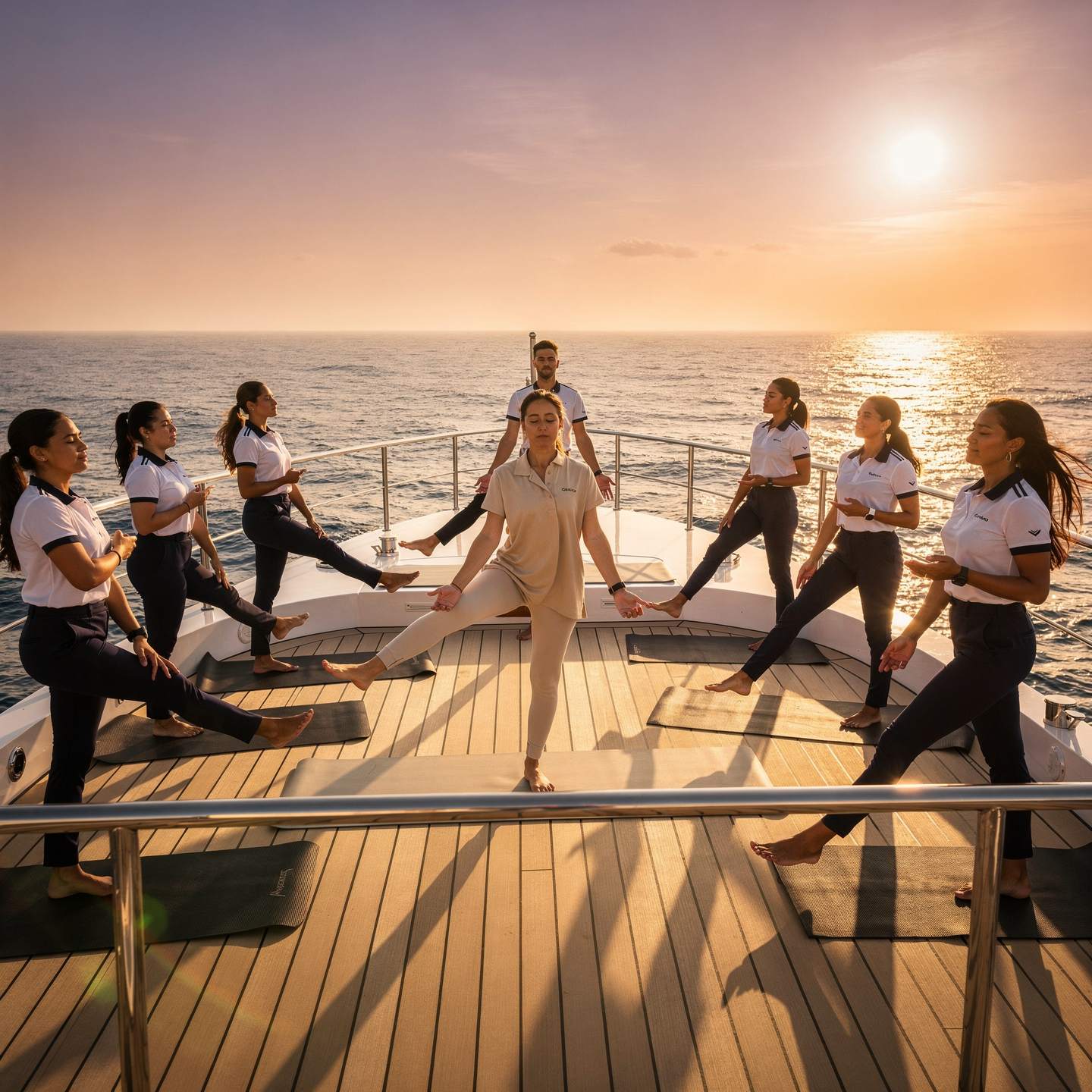
Mindfulness and well-being course on board
Why this course?
The Mindfulness and Wellbeing Onboard Course
This course has been created to provide practical and effective tools that will allow you to manage stress and improve your emotional well-being in the demanding maritime environment. You will learn to cultivate mindfulness, resilience, and self-care to face daily challenges with greater calm and clarity. This program will equip you with relaxation, meditation, and emotional management techniques, specifically designed for the needs of maritime professionals, promoting a healthier and more productive work environment.
Differential Advantages
- Applied Mindfulness Techniques: practical exercises to reduce stress and increase concentration at work.
- Stress and Anxiety Management: effective strategies for coping with high-pressure situations and staying calm.
- Self-Care and Emotional Well-being: tools to prioritize your mental and physical health in the maritime environment.
- Improved Communication and Interpersonal Relationships: skills to foster a collaborative and harmonious work environment.
- Flexibility: online format with downloadable resources and practical exercises to integrate mindfulness into your daily routine.
- Modality: Online
- Level: Cursos
- Hours: 150 H
- Start date: 25-04-2026
Availability: 1 in stock
Who is it aimed at?
- Merchant mariners, cruise ship passengers, and yacht crew members looking to reduce stress, improve focus, and cultivate resilience at sea.
- Captains, officers, and department heads who want to lead calmly, foster a positive work environment, and optimize decision-making under pressure.
- Shoreside support staff, HR professionals, and wellbeing managers looking to implement effective programs for crew mental health and wellbeing.
- Nautical students and recent graduates who want to develop essential skills to manage the emotional and physical challenges of life on board.
- Any maritime professional interested in integrating mindfulness practices to improve their quality of life, interpersonal relationships, and Work performance.
Adaptability to your routine
Flexible training: practical exercises applicable to everyday situations, downloadable resources for consultation at any time, and strategies to maintain practice even on long trips.
Objectives and competencies

Cultivating mindfulness to manage stress and improve well-being while sailing:
“Practicing breathing and meditation techniques to maintain calm and mental clarity in high-pressure situations, optimizing decision-making and emergency response.”

Develop emotional resilience to cope with challenges and stay calm in demanding situations:
“Identify and manage stress triggers, apply mindfulness techniques, and develop a growth mindset in the face of adversity.”

Encourage self-compassion and self-care to promote a healthy balance between the demands of sailing and personal well-being:
“Implement mindfulness and stress management routines to optimize performance and prevent burnout.”

Integrate mindfulness practices into your daily onboard routine to optimize performance and concentration:
“Taking scheduled mindful breaks and using waiting times to practice breathing and body scanning, improving mindfulness during critical tasks.”

Establish restorative sleep habits and mindful eating to optimize energy and physical well-being:
“Integrating sleep hygiene and mindful eating techniques, monitoring energy indicators and adapting personalized strategies.”

Practice mindful communication and active listening to strengthen interpersonal relationships on board and foster a harmonious working environment:
“Implementing non-violent communication techniques, empathy, and emotional validation in daily interactions, addressing conflicts with assertiveness and mutual respect.”
Curriculum - Modules
- Comprehensive Maritime Incident Management: protocols, roles, and chain of command for coordinated response
- Operational Planning and Execution: briefing, routes, weather windows, and go/no-go criteria
- Rapid Risk Assessment: criticality matrix, scene control, and decision-making under pressure
- Operational Communication: VHF/GMDSS, standardized reports, and inter-agency liaison
- Tactical Mobility and Safe Boarding: RHIB maneuvers, approach, mooring, and recovery
- Equipment and Technologies: PPE, signaling, satellite tracking, and field data logging
- Immediate Care of the Affected: primary assessment, hypothermia, trauma, and stabilization for evacuation
- Adverse Environmental Conditions: swell, Visibility, flows, and operational mitigation
Simulation and training: critical scenarios, use of VR/AR, and exercises with performance metrics
Documentation and continuous improvement: lessons learned, indicators (MTTA/MTTR), and SOP updates
- Introduction to Mindfulness: Definition, Origins, and Benefits.
- Neuroscience of Mindfulness: Impact on the Brain and Nervous System.
- Basic Meditation Practices: Conscious Breathing, Body Scan, Mindfulness.
- Identifying Stressors in Navigation: Environmental, Operational, and Personal Factors.
- Stress Response: Physiology, Psychology, and Behavior.
- Emotional Regulation Tools: Recognizing, Accepting, and Managing Difficult Emotions.
- Resilience: Definition, Protective Factors, and Coping Strategies.
- Effective Communication and Assertiveness: Setting Boundaries and Expressing Needs.
- Time Management and Task Prioritization: Techniques for Reducing stress and improve efficiency.
- Developing a personal wellness plan: integrating mindfulness, resilience, and stress management into daily life.
‘
- Introduction to Mindfulness: Origins, principles, and benefits in the maritime environment.
- Mindfulness and Body Awareness: Body scan, gentle yoga, and mindful movement on board.
- Stress and Anxiety Management: Breathing techniques, meditation, and guided visualization for high-pressure situations.
- Mindfulness at Navigation: Observing sea conditions, instruments, and the environment with focus and clarity.
- Conscious Communication: Active listening, empathy, and assertiveness in interactions with the crew and other maritime stakeholders.
- Cultivating Resilience: Adaptive coping with challenges, unexpected changes, and adverse conditions.
- Compassion and Self-Care: Recognizing one’s own needs and practices for Personal well-being.
- Mindfulness and Decision Making: Mental clarity, intuition, and sound judgment in critical situations.
- Integrating Mindfulness into Daily Routine: Establishing habits and practices to maintain calm and balance on board.
- Long-Term Mental Well-being: Strategies to maintain mental health, prevent burnout, and promote a positive maritime environment.
‘
- Introduction to Mindfulness: Origins, benefits, and applications in modern and maritime life.
- The Science of Mindfulness: Neuroscience and emotional regulation.
- Conscious Breathing: Basic techniques for calm and focus on the present.
- Sensory Awareness: Exploring the body and senses to reduce stress and anxiety.
- Mindfulness in Movement: Gentle yoga and mindful walking practices adapted to life on board.
- Stress and Anxiety Management: Mindfulness strategies for coping with challenges in the maritime environment.
- Conscious Communication: Active listening and compassionate expression in interpersonal relationships.
- Mindfulness and Resilience: Cultivating mental strength to overcome adversity.
- Integrating Mindfulness into Daily Routine: Habits and practices to maintain calm and balance on board.
- Mindfulness and Well-being: Self-care and compassion for a full and meaningful life at sea.
‘
- Introduction to Mindfulness: Basic Concepts and Benefits in the Maritime Environment.
- Neuroscience of Stress: How Stress Affects the Brain and Body in High-Pressure Situations.
- Breathing Techniques: Practical Exercises to Reduce Anxiety and Improve Immediate Concentration.
- Mindfulness Meditation: Guided Practices to Develop Awareness of the Present Moment.
- Emotional Management: Identifying and Regulating Emotions in Crisis Situations on Board.
- Mindful Communication: Active Listening and Assertiveness in Interactions with Crew and Authority.
- Ergonomics and Physical Well-being: Correct Postures and Exercises to Relieve Muscle Tension at Work.
- Sleep and Rest: Strategies to Improve Sleep Quality and Combat Chronic Fatigue.
- Resilience: Tools for coping with adversity and recovering from stressful situations.
- Planning a mindful lifestyle on board: Integrating mindfulness practices into your daily routine.
‘
- System Architecture and Components: Structural design, materials, and subsystems (mechanical, electrical, electronic, and fluid) with selection and assembly criteria for marine environments
- Fundamentals and Principles of Operation: Physical and engineering foundations (thermodynamics, fluid mechanics, electricity, control, and materials) that explain performance and operating limits
- Safety and Environmental (SHE): Risk analysis, PPE, LOTO, hazardous atmospheres, spill and waste management, and emergency response plans
- Applicable Regulations and Standards: IMO/ISO/IEC requirements and local regulations;
- Conformance criteria, certification, and best practices for operation and maintenance
- Inspection, testing, and diagnostics: Visual/dimensional inspection, functional testing, data analysis, and predictive techniques (vibration, thermography, fluid analysis) to identify root causes
- Preventive and predictive maintenance: Hourly/cycle/seasonal plans, lubrication, adjustments, calibrations, consumable replacement, post-service verification, and operational reliability
- Instrumentation, tools, and metrology: Measuring and testing equipment, diagnostic software, calibration and traceability; selection criteria, safe use, and storage
- Onboard integration and interfaces: Mechanical, electrical, fluid, and data compatibility; Sealing and watertightness, EMC/EMI, corrosion protection, and interoperability testing.
Quality, acceptance testing, and commissioning: process and materials control, FAT/SAT, bench and sea trials, go/no-go criteria, and evidence documentation.
Technical documentation and integrated practice: logs, checklists, reports, and a complete case study (safety → diagnosis → intervention → verification → report) applicable to any system.
Plan de estudio - Módulos
- Comprehensive Maritime Incident Management: protocols, roles, and chain of command for coordinated response
- Operational Planning and Execution: briefing, routes, weather windows, and go/no-go criteria
- Rapid Risk Assessment: criticality matrix, scene control, and decision-making under pressure
- Operational Communication: VHF/GMDSS, standardized reports, and inter-agency liaison
- Tactical Mobility and Safe Boarding: RHIB maneuvers, approach, mooring, and recovery
- Equipment and Technologies: PPE, signaling, satellite tracking, and field data logging
- Immediate Care of the Affected: primary assessment, hypothermia, trauma, and stabilization for evacuation
- Adverse Environmental Conditions: swell, Visibility, flows, and operational mitigation
Simulation and training: critical scenarios, use of VR/AR, and exercises with performance metrics
Documentation and continuous improvement: lessons learned, indicators (MTTA/MTTR), and SOP updates
- Introduction to Mindfulness: Definition, Origins, and Benefits.
- Neuroscience of Mindfulness: Impact on the Brain and Nervous System.
- Basic Meditation Practices: Conscious Breathing, Body Scan, Mindfulness.
- Identifying Stressors in Navigation: Environmental, Operational, and Personal Factors.
- Stress Response: Physiology, Psychology, and Behavior.
- Emotional Regulation Tools: Recognizing, Accepting, and Managing Difficult Emotions.
- Resilience: Definition, Protective Factors, and Coping Strategies.
- Effective Communication and Assertiveness: Setting Boundaries and Expressing Needs.
- Time Management and Task Prioritization: Techniques for Reducing stress and improve efficiency.
- Developing a personal wellness plan: integrating mindfulness, resilience, and stress management into daily life.
‘
- Introduction to Mindfulness: Origins, principles, and benefits in the maritime environment.
- Mindfulness and Body Awareness: Body scan, gentle yoga, and mindful movement on board.
- Stress and Anxiety Management: Breathing techniques, meditation, and guided visualization for high-pressure situations.
- Mindfulness at Navigation: Observing sea conditions, instruments, and the environment with focus and clarity.
- Conscious Communication: Active listening, empathy, and assertiveness in interactions with the crew and other maritime stakeholders.
- Cultivating Resilience: Adaptive coping with challenges, unexpected changes, and adverse conditions.
- Compassion and Self-Care: Recognizing one’s own needs and practices for Personal well-being.
- Mindfulness and Decision Making: Mental clarity, intuition, and sound judgment in critical situations.
- Integrating Mindfulness into Daily Routine: Establishing habits and practices to maintain calm and balance on board.
- Long-Term Mental Well-being: Strategies to maintain mental health, prevent burnout, and promote a positive maritime environment.
‘
- Introduction to Mindfulness: Origins, benefits, and applications in modern and maritime life.
- The Science of Mindfulness: Neuroscience and emotional regulation.
- Conscious Breathing: Basic techniques for calm and focus on the present.
- Sensory Awareness: Exploring the body and senses to reduce stress and anxiety.
- Mindfulness in Movement: Gentle yoga and mindful walking practices adapted to life on board.
- Stress and Anxiety Management: Mindfulness strategies for coping with challenges in the maritime environment.
- Conscious Communication: Active listening and compassionate expression in interpersonal relationships.
- Mindfulness and Resilience: Cultivating mental strength to overcome adversity.
- Integrating Mindfulness into Daily Routine: Habits and practices to maintain calm and balance on board.
- Mindfulness and Well-being: Self-care and compassion for a full and meaningful life at sea.
‘
- Introduction to Mindfulness: Basic Concepts and Benefits in the Maritime Environment.
- Neuroscience of Stress: How Stress Affects the Brain and Body in High-Pressure Situations.
- Breathing Techniques: Practical Exercises to Reduce Anxiety and Improve Immediate Concentration.
- Mindfulness Meditation: Guided Practices to Develop Awareness of the Present Moment.
- Emotional Management: Identifying and Regulating Emotions in Crisis Situations on Board.
- Mindful Communication: Active Listening and Assertiveness in Interactions with Crew and Authority.
- Ergonomics and Physical Well-being: Correct Postures and Exercises to Relieve Muscle Tension at Work.
- Sleep and Rest: Strategies to Improve Sleep Quality and Combat Chronic Fatigue.
- Resilience: Tools for coping with adversity and recovering from stressful situations.
- Planning a mindful lifestyle on board: Integrating mindfulness practices into your daily routine.
‘
- System Architecture and Components: Structural design, materials, and subsystems (mechanical, electrical, electronic, and fluid) with selection and assembly criteria for marine environments
- Fundamentals and Principles of Operation: Physical and engineering foundations (thermodynamics, fluid mechanics, electricity, control, and materials) that explain performance and operating limits
- Safety and Environmental (SHE): Risk analysis, PPE, LOTO, hazardous atmospheres, spill and waste management, and emergency response plans
- Applicable Regulations and Standards: IMO/ISO/IEC requirements and local regulations;
- Conformance criteria, certification, and best practices for operation and maintenance
- Inspection, testing, and diagnostics: Visual/dimensional inspection, functional testing, data analysis, and predictive techniques (vibration, thermography, fluid analysis) to identify root causes
- Preventive and predictive maintenance: Hourly/cycle/seasonal plans, lubrication, adjustments, calibrations, consumable replacement, post-service verification, and operational reliability
- Instrumentation, tools, and metrology: Measuring and testing equipment, diagnostic software, calibration and traceability; selection criteria, safe use, and storage
- Onboard integration and interfaces: Mechanical, electrical, fluid, and data compatibility; Sealing and watertightness, EMC/EMI, corrosion protection, and interoperability testing.
Quality, acceptance testing, and commissioning: process and materials control, FAT/SAT, bench and sea trials, go/no-go criteria, and evidence documentation.
Technical documentation and integrated practice: logs, checklists, reports, and a complete case study (safety → diagnosis → intervention → verification → report) applicable to any system.
- Introduction to Mindfulness: Definition, origins, and benefits in daily and professional life.
- **Neuroscience of Mindfulness:** Impact on the brain, stress reduction, and improved concentration.
- **Conscious Breathing:** Breathing techniques to calm the mind and body in high-pressure situations.
- Mindfulness in **Full Attention:** Observing thoughts, emotions, and sensations without judgment.
- **Stress Management** with Mindfulness: Identifying triggers and coping strategies.
- Mindfulness in **Communication:** Active listening, empathy, and conscious conflict resolution.
- Mindfulness and **Emotional Regulation:** Recognizing and managing difficult emotions.
- Mindfulness in **Decision Making:** Mental clarity, intuition, and wisdom interior.
- Mindfulness Practice in the **Workplace:** Integration into daily routines and meetings.
- **Self-Compassion and Well-being:** Cultivating kindness towards oneself and others.
‘
- Introduction to mindfulness: mindfulness and its benefits in the maritime environment.
- Neuroscience of mindfulness: how mindfulness affects the brain and decision-making.
- Resilience: definition, components, and its importance for adaptation in adverse situations.
- Identifying and managing stress in maritime life: causes, symptoms, and coping strategies.
- Mindfulness techniques for stress management and improved concentration: meditation, conscious breathing.
- Effective communication and empathy: key skills for conflict resolution and teamwork.
- Maritime safety: basic principles, regulations, and procedures for accident prevention.
- Human factors in maritime safety: Influence of attention, stress, and fatigue on performance.
Safety culture: Promoting a safe and mindful work environment on board.
Applying mindfulness and resilience in maritime emergency situations: Simulation and case studies.
‘
- Introduction to Mindfulness: Basic concepts and benefits in the maritime environment.
- Neuroscience of Stress: Understanding the stress response and its impact on performance.
- Breathing Techniques: Practical exercises for emotional regulation and stress reduction in high-pressure situations.
- Mindfulness Meditation: Guided practices to cultivate mindfulness and concentration at sea.
- Time Management and Prioritization: Strategies to optimize time and reduce feelings of overload while sailing.
- Conscious Communication: Skills for effective and empathetic communication with the crew and other stakeholders.
- Psychological Resilience: Developing the capacity to adapt and recover from adversity in maritime environments.
- Self-compassion and self-care: practices to foster kindness towards oneself and prevent burnout.
- Mindfulness in decision-making: applying mindfulness to improve clarity and objectivity in critical situations.
- Integrating mindfulness into daily life on board: strategies for maintaining a continuous and sustainable practice.
‘
- Introduction to Mindfulness: Foundations and benefits in the maritime environment.
- Resilience at Sea: Strategies for coping with stress and adversity.
- Self-Awareness: Identifying strengths, weaknesses, and thought patterns.
- Emotional Management in High-Pressure Situations: Regulation and Control Techniques.
- Conscious Communication: Active listening, empathy, and assertiveness within the team.
- Resilient Leadership: Inspiration, motivation, and managing teams in crisis.
- Relaxation and Stress Reduction Techniques: Meditation, breathing, and mindfulness.
- Performance Optimization: Focus, concentration, and time management at work.
- Preventing Burnout and Maintaining Long-Term Well-being term.
- Integrating mindfulness, resilience, and performance into maritime culture.
‘
Career opportunities
- Mindfulness Instructor on Cruise Ships and Airlines: Individual and group sessions for passengers and crew, promoting relaxation and stress management.
- Wellness Consultant for Transportation Companies: Design and implementation of onboard wellness programs to improve the mental and physical health of employees.
- Mindfulness Coach for Stress Management in High-Pressure Environments: Individualized support for pilots, flight attendants, captains, and cabin crew.
- Resilience and Emotional Wellbeing Workshop Facilitator: Development of coping skills for challenging situations onboard and on land.
- Mindfulness Content Creator for In-Flight Entertainment Platforms: Production of audio, video, and practical guides for mental wellbeing during travel.
- Researcher on the Impact of Mindfulness on Safety and Performance Workplace: Studies on reducing human error and increasing productivity through mindfulness practice.
Wellness Program Coordinator in Onboard Spas and Relaxation Centers: Integration of mindfulness practices into wellness treatments and activities.
Mental Health Promoter in the Transportation Industry: Creation of awareness campaigns and resources to combat the stigma associated with mental health issues in the sector.
Admission requirements

Academic/professional profile:
Degree/Bachelor's degree in Nautical Science/Maritime Transport, Naval/Marine Engineering, or a related field; or proven professional experience in bridge/operations.

Language proficiency:
Recommended functional maritime English (SMCP) for simulations and technical materials.

5. Induction
Updated resume, copy of degree or seaman's book, ID card/passport, letter of motivation.

Technical requirements (for online):
Equipment with camera/microphone, stable connection, ≥ 24” monitor recommended for ECDIS/Radar-ARPA.
Admission process and dates

1. Online
application
(form + documents).

2. Academic review and interview
(profile/objectives/schedule compatibility).

3. Admission decision
(+ scholarship proposal if applicable).

4. Reservation of place
(deposit) and registration.

5. Induction
(access to campus, calendars, simulator guides).
Scholarships and grants
- Reduce stress: Learn mindfulness techniques to manage pressure and stress in maritime environments.
- Improve concentration: Increase your focus and awareness for safer and more efficient navigation.
- Emotional well-being: Develop tools to cultivate resilience and emotional well-being at sea.
- Interpersonal relationships: Strengthen communication and relationships with the crew through mindfulness practice.
- Practical application: Integrate mindfulness into your daily routine on board for improved performance and quality of life.
Testimonials
This Mindfulness and Wellbeing on Board training provided me with practical tools to manage the stress and fatigue inherent in my profession. I learned breathing, meditation, and mindfulness techniques that help me stay calm and focused, even in high-pressure situations. As a result, I’ve improved my concentration, the quality of my sleep, and my ability to connect with passengers in a more empathetic and positive way. I’ve noticed a significant change in my overall well-being and work performance.
This Psychology, Leadership, and Wellbeing course provided me with practical tools to manage teams more effectively. I learned to identify and leverage the individual strengths of each member, improving communication and collaboration. As a result, my team has increased its productivity and satisfaction, exceeding its goals for the last quarter.
Implementing “Mindfulness and well-being on board” significantly reduced the stress reported by our crew by 30%, improving communication and responsiveness to high-pressure situations, which resulted in a 15% increase in customer satisfaction according to post-flight surveys.
This Mindfulness and Wellbeing training on board provided me with practical tools to manage the stress and fatigue inherent in my profession. I learned to incorporate mindfulness into my daily routine, which has significantly improved my concentration, sleep quality, and ability to handle challenging situations with greater calm and mental clarity. As a result, I feel more present, resilient, and experience greater overall well-being, which translates into better job performance and more positive interpersonal relationships on board.

Frequently asked questions
Mindfulness and well-being
Yes. The itinerary includes ECDIS/Radar-ARPA/BRM with harbor, ocean, fog, storm, and SAR scenarios.
Online with live sessions; hybrid option for simulator/practical placements through agreements.
Mindfulness, by promoting full attention to the present moment without judgment, helps manage stress, anxiety, and difficult emotions that can arise during a journey, thus contributing to a calmer and more comfortable experience on board.
Recommended functional SMCP. We offer support materials for standard phraseology.
Yes, with a relevant degree or experience in maritime/port operations. The admissions interview will confirm suitability.
Optional (3–6 months) through Companies & Collaborations and the Alumni Network.
Simulator practice (rubrics), defeat plans, SOPs, checklists, micro-tests and applied TFM.
A degree from Navalis Magna University + operational portfolio (tracks, SOPs, reports and KPIs) useful for audits and employment.
- Introduction to Mindfulness: Foundations and benefits in the maritime environment.
- Resilience at Sea: Strategies for coping with stress and adversity.
- Self-Awareness: Identifying strengths, weaknesses, and thought patterns.
- Emotional Management in High-Pressure Situations: Regulation and Control Techniques.
- Conscious Communication: Active listening, empathy, and assertiveness within the team.
- Resilient Leadership: Inspiration, motivation, and managing teams in crisis.
- Relaxation and Stress Reduction Techniques: Meditation, breathing, and mindfulness.
- Performance Optimization: Focus, concentration, and time management at work.
- Preventing Burnout and Maintaining Long-Term Well-being term.
- Integrating mindfulness, resilience, and performance into maritime culture.
‘
Request information
- Complete the Application Form
- Attach your CV/Qualifications (if you have them to hand).
- Indicate your preferred cohort (January/May/September) and whether you want the hybrid option with simulator sessions.
Teachers
Eng. Tomás Riera
Full Professor
Eng. Tomás Riera
Full Professor
Eng. Sofía Marquina
Full Professor
Eng. Sofía Marquina
Full Professor
Eng. Javier Bañuls
Full Professor
Eng. Javier Bañuls
Full Professor
Dr. Nuria Llobregat
Full Professor
Dr. Nuria Llobregat
Full Professor
Dr. Pau Ferrer
Full Professor
Dr. Pau Ferrer
Full Professor
Cap. Javier Abaroa (MCA)
Full Professor
Cap. Javier Abaroa (MCA)
Full Professor

