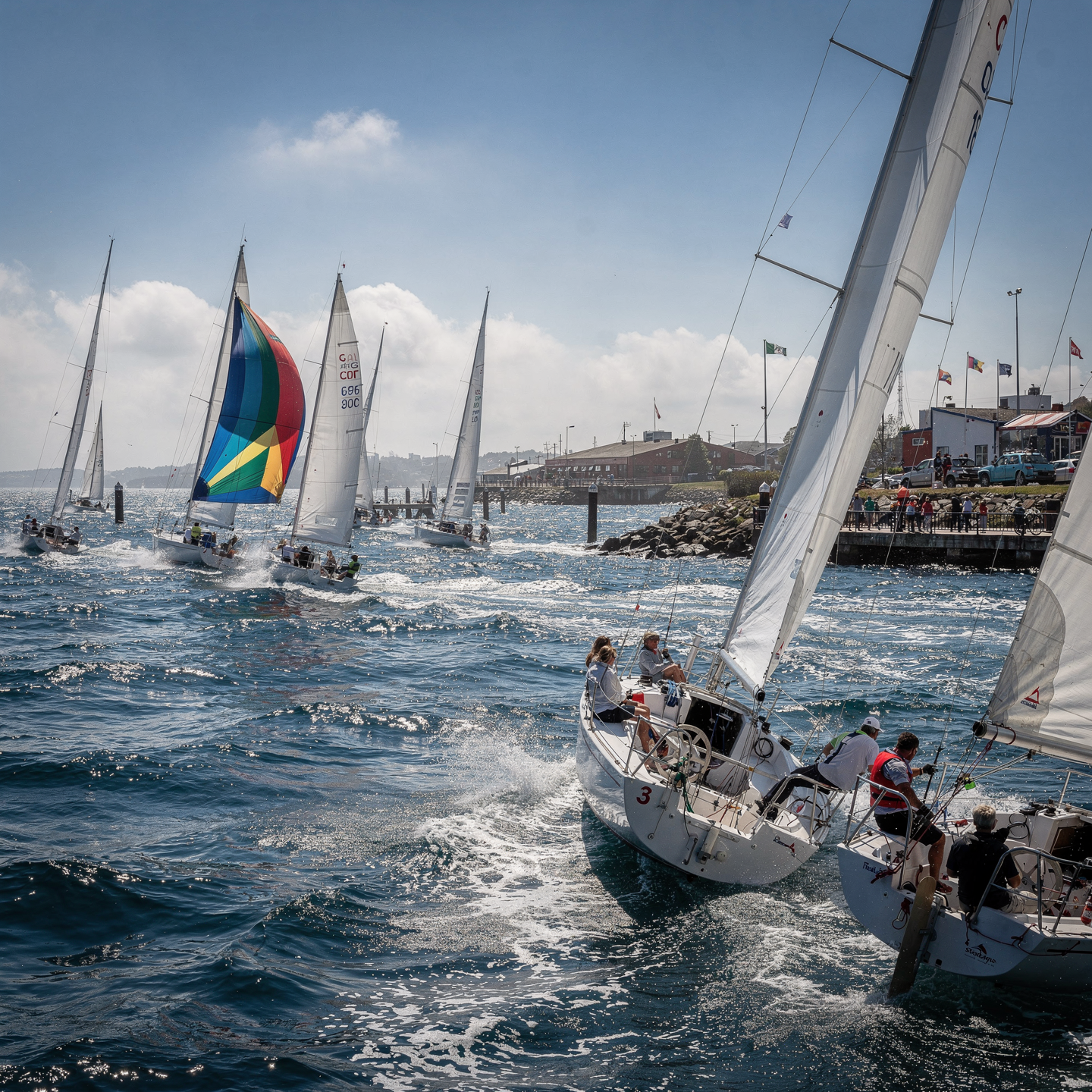
Local Regatta Organization Course
Why this course?
The Local Regatta Organization Course
This course provides you with the essential tools to run successful sailing events. Learn everything from strategic planning to regatta-day management, including crucial aspects such as safety on the water, effective communication, and securing sponsorships. Master the regatta rules, creating optimal courses, and managing results and rankings to deliver a memorable experience for all participants.
Differential Advantages
- Practical Approach: Learn by doing with exercises and simulations of real-life situations.
- Subject Matter Experts: Instructors with extensive experience in organizing regattas at all levels.
- Networking: Connect with other organizers, clubs, and sponsors in the local nautical sector.
- Up-to-Date Materials: Access to guides, templates, and digital resources to facilitate your work.
- Certification: Obtain a certificate that validates your knowledge and skills in regatta organization.
- Modality: Online
- Level: Cursos
- Hours: 150 H
- Start date: 25-04-2026
Availability: 1 in stock
Who is it aimed at?
- Sailing clubs and schools seeking to professionalize their offerings and train their members in comprehensive event management.
- Sports event organizers wishing to expand their portfolio with local regattas and nautical events.
- Volunteers and sailing enthusiasts interested in acquiring practical skills for regatta planning and execution.
- Local authorities and sponsors wishing to promote nautical tourism and boost the local economy through sporting events.
- Sports management students and sports marketing professionals seeking to specialize in the nautical sector and expand their Knowledge.
Flexibility and applicability:
Designed to adapt to your pace: modular and accessible online content, practical exercises to apply immediately, and downloadable templates to facilitate your work.
Objectives and competencies

Coordinate effective regattas:
Know and apply the specific regulations of regattas (IRR, racing instructions) and coordinate communication between participants, committee and maritime authorities.

Encourage participation and enjoyment:
“Create a positive, inclusive and collaborative learning environment, encouraging curiosity and individual expression.”

Ensuring regulatory compliance:
“Implement SMS”
“Effectively, by documenting and assessing risks, and fostering a safety culture.”
“Diligently, by ensuring continuous improvement, incident investigation, and audit compliance.”

Promote the sport of sailing:
“Organizing inclusive and accessible nautical events for diverse demographic groups.”

Optimize resource management:
“Prioritize preventive maintenance, optimize fuel consumption, and efficiently manage equipment and supply inventory.”

Ensuring the safety of participants:
“Monitor the physical and emotional state of the participants, adapting the activity to their individual needs and abilities.”
Curriculum - Modules
- Comprehensive Maritime Incident Management: protocols, roles, and chain of command for coordinated response
- Operational Planning and Execution: briefing, routes, weather windows, and go/no-go criteria
- Rapid Risk Assessment: criticality matrix, scene control, and decision-making under pressure
- Operational Communication: VHF/GMDSS, standardized reports, and inter-agency liaison
- Tactical Mobility and Safe Boarding: RHIB maneuvers, approach, mooring, and recovery
- Equipment and Technologies: PPE, signaling, satellite tracking, and field data logging
- Immediate Care of the Affected: primary assessment, hypothermia, trauma, and stabilization for evacuation
- Adverse Environmental Conditions: swell, Visibility, flows, and operational mitigation
Simulation and training: critical scenarios, use of VR/AR, and exercises with performance metrics
Documentation and continuous improvement: lessons learned, indicators (MTTA/MTTR), and SOP updates
- Introduction to Regattas: Types, Formats, and Calendars
- Regions of Sailing (RSS): Fundamentals, Definitions, and Principles
- Boat Classification: IRC, ORC, One-Designs, and Rating Formulas
- Mandatory Documentation: Class, Rating, and Safety Certificates
- Event Organization: Roles, Committees, and Responsibilities
- Notice of Race (NoR) and Sailing Instructions (SI): Interpretation and Compliance
- Starting Procedures: Signals, Times, and Recalls
- Marks and Courses: Types, Tacks, and Gybes
- Protests and claims: Procedures and hearings
Ethics and sportsmanship: Fair play and respect for the rules
‘
- Legal Framework for Nautical Events: National and International Regulations
- Responsibilities of the Organizer and the Race Director
- Civil Liability Insurance and Risk Coverage
- Development of Clear and Concise Race Regulations
- Safety on the Water: Mandatory Equipment and Recommendations
- Communication: VHF, Tracking Systems, and Weather Alerts
- Risk Management: Identification, Assessment, and Mitigation
- Search and Rescue: Procedures and Available Resources
- First Aid in the Nautical Environment: Training and Protocol
- Waste management and protection of the marine environment
‘
- Regatta Regulations: Racing Rules of Sailing (RRS), classes and events
- Measurement and Rating: Handicap systems (ORC, IRC, etc.) and certificates
- Regatta Safety: Mandatory equipment, roles and responsibilities
- Pre-Regatta Logistics: Transportation, accommodation, supplies and permits
- Regatta Planning: Study of meteorology, currents and tides
- Strategy and Tactics: Course selection, risk management and positioning
- Applied Meteorology: Interpretation of weather reports, forecasting and adaptation
- Communications: VHF, GPS tracking and safety notifications
- Management of Crew: roles, responsibilities, training, and morale
Post-race analysis: performance evaluation, identifying areas for improvement, and debriefing
‘
- Legal Framework for Nautical Events: National and International Regulations
- Responsibilities of the Organizer, Participants, and Authorities
- Insurance: Types, Coverage, and Obligations in Nautical Events
- Safety: Risk Assessment, Emergency and Contingency Plans
- Communication: Protocols, Frequencies, and Alert Systems
- Human Resources Management: Volunteers, Medical Personnel, and Security
- Material Resources Management: Vessels, Buoys, and Signage
- Permits and Authorizations: Procedures and Requirements According to Jurisdiction
- Environmental Impact: Prevention and Mitigation Measures in Events
- Post-event analysis: security assessment, management, and continuous improvement
‘
- System Architecture and Components: Structural design, materials, and subsystems (mechanical, electrical, electronic, and fluid) with selection and assembly criteria for marine environments
- Fundamentals and Principles of Operation: Physical and engineering foundations (thermodynamics, fluid mechanics, electricity, control, and materials) that explain performance and operating limits
- Safety and Environmental (SHE): Risk analysis, PPE, LOTO, hazardous atmospheres, spill and waste management, and emergency response plans
- Applicable Regulations and Standards: IMO/ISO/IEC requirements and local regulations;
- Conformance criteria, certification, and best practices for operation and maintenance
- Inspection, testing, and diagnostics: Visual/dimensional inspection, functional testing, data analysis, and predictive techniques (vibration, thermography, fluid analysis) to identify root causes
- Preventive and predictive maintenance: Hourly/cycle/seasonal plans, lubrication, adjustments, calibrations, consumable replacement, post-service verification, and operational reliability
- Instrumentation, tools, and metrology: Measuring and testing equipment, diagnostic software, calibration and traceability; selection criteria, safe use, and storage
- Onboard integration and interfaces: Mechanical, electrical, fluid, and data compatibility; Sealing and watertightness, EMC/EMI, corrosion protection, and interoperability testing.
Quality, acceptance testing, and commissioning: process and materials control, FAT/SAT, bench and sea trials, go/no-go criteria, and evidence documentation.
Technical documentation and integrated practice: logs, checklists, reports, and a complete case study (safety ā diagnosis ā intervention ā verification ā report) applicable to any system.
Plan de estudio - Módulos
- Comprehensive Maritime Incident Management: protocols, roles, and chain of command for coordinated response
- Operational Planning and Execution: briefing, routes, weather windows, and go/no-go criteria
- Rapid Risk Assessment: criticality matrix, scene control, and decision-making under pressure
- Operational Communication: VHF/GMDSS, standardized reports, and inter-agency liaison
- Tactical Mobility and Safe Boarding: RHIB maneuvers, approach, mooring, and recovery
- Equipment and Technologies: PPE, signaling, satellite tracking, and field data logging
- Immediate Care of the Affected: primary assessment, hypothermia, trauma, and stabilization for evacuation
- Adverse Environmental Conditions: swell, Visibility, flows, and operational mitigation
Simulation and training: critical scenarios, use of VR/AR, and exercises with performance metrics
Documentation and continuous improvement: lessons learned, indicators (MTTA/MTTR), and SOP updates
- Introduction to Regattas: Types, Formats, and Calendars
- Regions of Sailing (RSS): Fundamentals, Definitions, and Principles
- Boat Classification: IRC, ORC, One-Designs, and Rating Formulas
- Mandatory Documentation: Class, Rating, and Safety Certificates
- Event Organization: Roles, Committees, and Responsibilities
- Notice of Race (NoR) and Sailing Instructions (SI): Interpretation and Compliance
- Starting Procedures: Signals, Times, and Recalls
- Marks and Courses: Types, Tacks, and Gybes
- Protests and claims: Procedures and hearings
Ethics and sportsmanship: Fair play and respect for the rules
‘
- Legal Framework for Nautical Events: National and International Regulations
- Responsibilities of the Organizer and the Race Director
- Civil Liability Insurance and Risk Coverage
- Development of Clear and Concise Race Regulations
- Safety on the Water: Mandatory Equipment and Recommendations
- Communication: VHF, Tracking Systems, and Weather Alerts
- Risk Management: Identification, Assessment, and Mitigation
- Search and Rescue: Procedures and Available Resources
- First Aid in the Nautical Environment: Training and Protocol
- Waste management and protection of the marine environment
‘
- Regatta Regulations: Racing Rules of Sailing (RRS), classes and events
- Measurement and Rating: Handicap systems (ORC, IRC, etc.) and certificates
- Regatta Safety: Mandatory equipment, roles and responsibilities
- Pre-Regatta Logistics: Transportation, accommodation, supplies and permits
- Regatta Planning: Study of meteorology, currents and tides
- Strategy and Tactics: Course selection, risk management and positioning
- Applied Meteorology: Interpretation of weather reports, forecasting and adaptation
- Communications: VHF, GPS tracking and safety notifications
- Management of Crew: roles, responsibilities, training, and morale
Post-race analysis: performance evaluation, identifying areas for improvement, and debriefing
‘
- Legal Framework for Nautical Events: National and International Regulations
- Responsibilities of the Organizer, Participants, and Authorities
- Insurance: Types, Coverage, and Obligations in Nautical Events
- Safety: Risk Assessment, Emergency and Contingency Plans
- Communication: Protocols, Frequencies, and Alert Systems
- Human Resources Management: Volunteers, Medical Personnel, and Security
- Material Resources Management: Vessels, Buoys, and Signage
- Permits and Authorizations: Procedures and Requirements According to Jurisdiction
- Environmental Impact: Prevention and Mitigation Measures in Events
- Post-event analysis: security assessment, management, and continuous improvement
‘
- System Architecture and Components: Structural design, materials, and subsystems (mechanical, electrical, electronic, and fluid) with selection and assembly criteria for marine environments
- Fundamentals and Principles of Operation: Physical and engineering foundations (thermodynamics, fluid mechanics, electricity, control, and materials) that explain performance and operating limits
- Safety and Environmental (SHE): Risk analysis, PPE, LOTO, hazardous atmospheres, spill and waste management, and emergency response plans
- Applicable Regulations and Standards: IMO/ISO/IEC requirements and local regulations;
- Conformance criteria, certification, and best practices for operation and maintenance
- Inspection, testing, and diagnostics: Visual/dimensional inspection, functional testing, data analysis, and predictive techniques (vibration, thermography, fluid analysis) to identify root causes
- Preventive and predictive maintenance: Hourly/cycle/seasonal plans, lubrication, adjustments, calibrations, consumable replacement, post-service verification, and operational reliability
- Instrumentation, tools, and metrology: Measuring and testing equipment, diagnostic software, calibration and traceability; selection criteria, safe use, and storage
- Onboard integration and interfaces: Mechanical, electrical, fluid, and data compatibility; Sealing and watertightness, EMC/EMI, corrosion protection, and interoperability testing.
Quality, acceptance testing, and commissioning: process and materials control, FAT/SAT, bench and sea trials, go/no-go criteria, and evidence documentation.
Technical documentation and integrated practice: logs, checklists, reports, and a complete case study (safety ā diagnosis ā intervention ā verification ā report) applicable to any system.
- Introduction to the Racing Rules of Sailing (RRS): Structure and Principles.
- RRS Definitions: Understanding and Practical Application.
- Fundamental Rules: Safety, Fair Play, and Sportsmanship.
- Rules of Passage: Encounter Situations and Responsibilities.
- Marks and Obstacles: How to Sail Correctly Around Them.
- Protest Actions: Procedure and Required Documentation.
- The Role of the Race Committee: Functions and Responsibilities.
- Race Officers: Appointment, Training, and Decision-Making.
- Race Management: Planning, Execution, and Post-Race Analysis.
- Regatta Safety: Emergency Procedures and Risk Management.
‘
- Introduction to Regatta Logistics: Types of Regattas, Boats, and Equipment.
- Maritime Safety: Regulations, Mandatory Safety Equipment, and Best Practices.
- Nautical Protocol and Etiquette: Hierarchy, Communication, and Respect in the Regatta Environment.
- Pre-Regatta Logistics Planning: Transportation, Accommodation, Permits, and Insurance.
- Equipment and Materials Management: Inventory, Maintenance, and Storage.
- Regatta Communication: VHF, Visual Signals, Amateur Radio, and Communication Codes.
- Meteorology and Oceanography: Interpreting Bulletins, Weather Forecasts, and Currents.
- First Aid and Medical Care in Regattas: First aid kit, action and evacuation protocols.
- Waste management and protection of the marine environment: Regulations, best practices, and awareness.
- Post-regatta analysis: Logistical evaluation, identification of improvements, and feedback.
‘
- Introduction to the Racing Rules: Fundamentals and sportsmanship.
- Key Definitions: Essential nautical terms and their application in racing.
- Rights of Way: Rules of course and priority in different situations.
- Maneuvers and Penalties: Correct procedures and consequences of infringements.
- Safety on the Water: Mandatory equipment, emergency procedures, and communication.
- Basic Meteorology: Wind, waves, currents, and their influence on navigation.
- Navigation and Nautical Charts: Use of instruments and techniques for determining position.
- Basic First Aid: Initial care in case of accidents and injuries.
- Rescue Operations: Procedures and techniques for water rescue.
- Basic Maritime Legislation: Regulations applicable to recreational and racing craft.
‘
- Introduction to nautical events: typology, economic and social impact
- Legal framework: permits, licenses, maritime and environmental safety regulations
- Strategic planning: defining objectives, target audience, feasibility analysis
- Event design: venue selection, activities, services, program
- Budget management: preparation, control, and cost optimization
- Marketing and communication: promotion, advertising, public relations, social media
- Risk management: identification, assessment, mitigation, and contingency plans
- Volunteer management: recruitment, training, coordination, and recognition
- Logistics: transportation, accommodation, catering, setup, and Dismantling
- Post-event evaluation: results analysis, customer satisfaction, and continuous improvement
‘
Career opportunities
- Nautical Event Organizer: Planning and execution of local regattas.
- Regatta Officer: Judge or timekeeper in nautical competitions.
- Nautical Club Manager: Coordination of activities and events for members.
- Sailing Instructor: Teaching sailing and racing techniques.
- Boat Technician: Preparation and maintenance of boats for regattas.
- Nautical Tourism Promoter: Design of tour packages related to regattas.
- Sports Event Consultant: Advising on the organization of regattas.
- Volunteer in Nautical Organizations: Logistical and organizational support in regattas.
“`
Admission requirements

Academic/professional profile:
Degree/Bachelor's degree in Nautical Science/Maritime Transport, Naval/Marine Engineering, or a related field; or proven professional experience in bridge/operations.

Language proficiency:
Recommended functional maritime English (SMCP) for simulations and technical materials.

5. Induction
Updated resume, copy of degree or seaman's book, ID card/passport, letter of motivation.

Technical requirements (for online):
Equipment with camera/microphone, stable connection, ā„ 24ā monitor recommended for ECDIS/Radar-ARPA.
Admission process and dates

1. Online
application
(form + documents).

2. Academic review and interview
(profile/objectives/schedule compatibility).

3. Admission decision
(+ scholarship proposal if applicable).

4. Reservation of place
(deposit) and registration.

5. Induction
(access to campus, calendars, simulator guides).
Scholarships and grants
- Master Management: Learn to plan and execute successful local regattas, from conception to awards ceremony.
- Rules Up-to-Date: Deepen your knowledge of the rules of sailing and their correct application in local events.
- Safety and Logistics: Acquire crucial skills to ensure the safety of participants and optimize event logistics.
- Resource Management: Learn to efficiently manage available resources, including volunteers, sponsors, and equipment.
- Marketing and Promotion: Develop effective strategies to promote your regatta and attract participants and spectators.
Testimonials
I successfully coordinated the “Velas del Sur” regatta, including managing 30 participating vessels, obtaining the necessary permits from the port authority, and organizing a team of 20 volunteers for logistics on land and sea, resulting in an event without incident and with high satisfaction from participants, sponsors, and the local community.
During the Sports, Recreation, and Aquatic Activities course, I overcame my fear of water and became a certified lifeguard, successfully applying the rescue techniques I learned in an emergency simulation. Furthermore, I developed skills in planning and leading inclusive recreational activities for different age groups, which enabled me to successfully lead a water play program for children with special needs.
I successfully organized the “Velas del Sur” regatta with a record-breaking 50 boats participating, exceeding the initial goal by 25%. Coordination with the marina, sponsors, and volunteers was flawless, resulting in a smooth and safe event, praised by both participants and spectators. We secured local and regional media coverage, generating a positive impact on the community and attracting new sponsors for future editions.
I successfully organized the “Sun Cup” regatta with the participation of 50 boats and more than 200 people, exceeding the expected attendance by 20% and receiving congratulations for the impeccable logistics and the attractive social program of the event.

Frequently asked questions
To organize and conduct sailing regattas in a specific geographical area.
Yes. The itinerary includes ECDIS/Radar-ARPA/BRM with harbor, ocean, fog, storm, and SAR scenarios.
Online with live sessions; hybrid option for simulator/practical placements through agreements.
The local regatta organizing committee.
Recommended functional SMCP. We offer support materials for standard phraseology.
Yes, with a relevant degree or experience in maritime/port operations. The admissions interview will confirm suitability.
Optional (3ā6 months) through Companies & Collaborations and the Alumni Network.
Simulator practice (rubrics), defeat plans, SOPs, checklists, micro-tests and applied TFM.
A degree from Navalis Magna University + operational portfolio (tracks, SOPs, reports and KPIs) useful for audits and employment.
- Introduction to nautical events: typology, economic and social impact
- Legal framework: permits, licenses, maritime and environmental safety regulations
- Strategic planning: defining objectives, target audience, feasibility analysis
- Event design: venue selection, activities, services, program
- Budget management: preparation, control, and cost optimization
- Marketing and communication: promotion, advertising, public relations, social media
- Risk management: identification, assessment, mitigation, and contingency plans
- Volunteer management: recruitment, training, coordination, and recognition
- Logistics: transportation, accommodation, catering, setup, and Dismantling
- Post-event evaluation: results analysis, customer satisfaction, and continuous improvement
‘
Request information
- Complete the Application Form
- Attach your CV/Qualifications (if you have them to hand).
- Indicate your preferred cohort (January/May/September) and whether you want the hybrid option with simulator sessions.
Teachers
Eng. TomƔs Riera
Full Professor
Eng. TomƔs Riera
Full Professor
Eng. SofĆa Marquina
Full Professor
Eng. SofĆa Marquina
Full Professor
Eng. Javier BaƱuls
Full Professor
Eng. Javier BaƱuls
Full Professor
Dr. Nuria Llobregat
Full Professor
Dr. Nuria Llobregat
Full Professor
Dr. Pau Ferrer
Full Professor
Dr. Pau Ferrer
Full Professor
Cap. Javier Abaroa (MCA)
Full Professor
Cap. Javier Abaroa (MCA)
Full Professor

