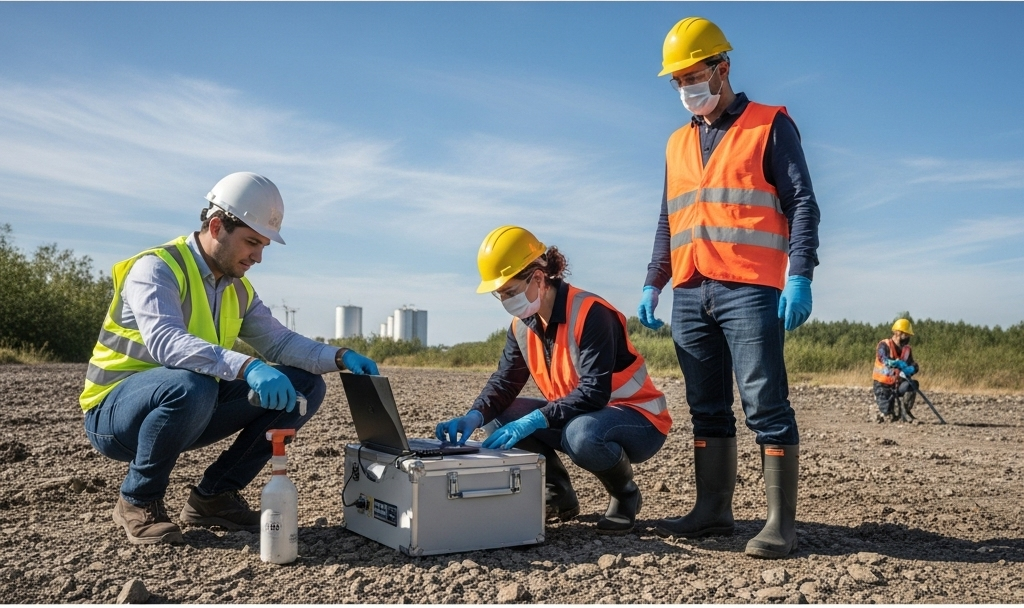
Environmental Impact Assessment Course
Why this course?
The Environmental Impact Assessment course
This course will provide you with the tools and knowledge necessary to become an expert in environmental protection. You will learn to identify, predict, and mitigate the environmental impacts of development projects, ensuring sustainability and regulatory compliance. This program prepares you to lead environmental impact studies, design effective environmental management plans, and contribute to a greener future.
Differential Advantages
- Advanced Methodologies: Impact identification, risk assessment, and alternatives analysis.
- Real-World Case Studies: Analysis of environmental impact studies for diverse projects.
- Up-to-date Legal Framework: Compliance with national and international environmental regulations.
- Environmental Management Tools: Software and techniques for environmental monitoring and control.
- Professional Networking: Connection with experts and professionals in the environmental sector.
- Modality: Online
- Level: Cursos
- Hours: 150 H
- Start date: 25-04-2026
Availability: 1 in stock
Who is it aimed at?
- Environmental consultants looking to update their knowledge of the latest environmental impact assessment methodologies and regulations.
- Project managers in sectors such as construction, mining, or energy who need to integrate sustainability from the planning phase.
- Corporate sustainability managers who want to strengthen their environmental management and results communication strategies.
- Public administration technicians responsible for the evaluation and monitoring of projects with environmental impact.
- Students and recent graduates in environmental science, engineering, or related fields seeking a practical specialization in demand in the job market.
Learning flexibility Adapted to your pace: Downloadable materials, discussion forums, and online tutorials to answer your questions whenever you need them.
Objectives and competencies

Identify and analyze the potential environmental impacts of projects and activities:
“Considering life cycle, emissions, waste, resource consumption and ecosystem alteration, using environmental impact assessment (EIA) methodologies and modeling tools.”

Develop and implement mitigation and compensation measures to minimize adverse effects:
“Implement environmental and social management plans, continuously monitoring their effectiveness and adapting them as needed, involving local communities and other stakeholders.”

Prepare environmental impact assessment (EIA) reports in accordance with current regulations:
Identify and apply environmental impact assessment methodologies (qualitative and quantitative) to analyze the effects of projects on the environment, considering relevant legislation and technical guidelines.

Integrating sustainability into decision-making through strategic environmental assessment:
“Analyze the life cycle of projects, identify key environmental impacts and prioritize options that minimize the ecological footprint, involving relevant stakeholders in the process.”

Monitor and control compliance with environmental measures during project execution:
Implement environmental management plans, conduct inspections, audit regulatory compliance, and manage waste, emissions, and spills.

Promote citizen participation and transparency in environmental assessment processes:
“Design and implement mechanisms for access to information, public consultation and participation in environmental decision-making.”
Curriculum - Modules
- Comprehensive Maritime Incident Management: protocols, roles, and chain of command for coordinated response
- Operational Planning and Execution: briefing, routes, weather windows, and go/no-go criteria
- Rapid Risk Assessment: criticality matrix, scene control, and decision-making under pressure
- Operational Communication: VHF/GMDSS, standardized reports, and inter-agency liaison
- Tactical Mobility and Safe Boarding: RHIB maneuvers, approach, mooring, and recovery
- Equipment and Technologies: PPE, signaling, satellite tracking, and field data logging
- Immediate Care of the Affected: primary assessment, hypothermia, trauma, and stabilization for evacuation
- Adverse Environmental Conditions: swell, Visibility, flows, and operational mitigation
Simulation and training: critical scenarios, use of VR/AR, and exercises with performance metrics
Documentation and continuous improvement: lessons learned, indicators (MTTA/MTTR), and SOP updates
- Introduction to Environmental Impact Assessment (EIA): Key Concepts and Legal Framework
- Identification and Selection of Alternatives: Methodologies and Criteria
- Environmental Characterization: Environmental Components, Baseline, and Sensitivity Analysis
- Impact Prediction and Evaluation: Methodologies, Impact Scales, and Significance Criteria
- Mitigation and Compensation Measures: Mitigation Hierarchy, Design, and Implementation
- Citizen Participation and Public Consultation: Processes, Techniques, and Information Management
- Preparation of the Environmental Impact Study (EIS): Structure, Content, and Legal Requirements
- Environmental Monitoring and Surveillance: Monitoring Plans, Indicators, and Audits
- Strategic Environmental Assessment (SEA): Integrating Sustainability into Planning
AVIA Case Studies in Different Sectors: Energy, Transport, Industry, etc.
‘
- Introduction to Strategic Environmental Assessment (SEA): Concepts, objectives, and principles.
- Legal and regulatory framework for SEA: European directives, national and international legislation.
- Stages of SEA: Screening, scoping, environmental analysis, alternatives, environmental report, public consultation, decision-making, and follow-up.
- Assessment methodologies: Multi-criteria analysis, cost-benefit analysis, and risk analysis.
- Environmental indicators: Selection, definition, and monitoring of key sustainability indicators.
- Public participation: Consultation and citizen participation techniques in SEA.
- Preparation of the Strategic Environmental Report: Structure, content, and technical requirements.
- Integration of the SEA in planning: Coordination with other planning instruments.
Environmental monitoring and control: Design of monitoring plans, performance indicators, and corrective measures.
Case studies: Analysis of SEA examples in different sectors and territories.
‘
- Introduction to Environmental Management: Key Concepts and Principles
- Environmental Legal Framework: Applicable National and International Regulations
- Environmental Impact Assessment (EIA): Methodologies and Scope
- Environmental Planning Instruments: Management Plans, Land Use Planning
- Environmental Management Systems (EMS): ISO 14001 and EMAS
- Environmental Audits: Types, Procedures, and Results
- Environmental Indicators: Selection, Monitoring, and Analysis
- Life Cycle Assessment (LCA): Methodology and Applications
- Environmental Communication Tools: Sustainability Reports, Ecolabeling
- Citizen Participation in the Environmental Management: Mechanisms and Best Practices.
‘
- Introduction to Environmental Management Systems: ISO 14001, EMAS, and other standards.
- Environmental Policy: Establishment, implementation, and maintenance.
- Environmental aspects and impacts: Identification, assessment, and control.
- Legal and other requirements: Compliance and updating.
- Environmental objectives, targets, and programs: Planning and monitoring.
- Resources, roles, responsibility, and authority: Allocation and communication.
- Competence, training, and awareness: Staff development.
- Internal and external communication: Transparency and participation.
- Operational control: Processes, procedures, and instructions.
- Emergency preparedness and response: Plans and drills.
- Monitoring, measurement, analysis, and evaluation: Indicators and Performance.
- Internal Audit: planning, execution, reporting, and follow-up.
- Management Review: continual improvement of the environmental management system.
‘
- System Architecture and Components: Structural design, materials, and subsystems (mechanical, electrical, electronic, and fluid) with selection and assembly criteria for marine environments
- Fundamentals and Principles of Operation: Physical and engineering foundations (thermodynamics, fluid mechanics, electricity, control, and materials) that explain performance and operating limits
- Safety and Environmental (SHE): Risk analysis, PPE, LOTO, hazardous atmospheres, spill and waste management, and emergency response plans
- Applicable Regulations and Standards: IMO/ISO/IEC requirements and local regulations;
- Conformance criteria, certification, and best practices for operation and maintenance
- Inspection, testing, and diagnostics: Visual/dimensional inspection, functional testing, data analysis, and predictive techniques (vibration, thermography, fluid analysis) to identify root causes
- Preventive and predictive maintenance: Hourly/cycle/seasonal plans, lubrication, adjustments, calibrations, consumable replacement, post-service verification, and operational reliability
- Instrumentation, tools, and metrology: Measuring and testing equipment, diagnostic software, calibration and traceability; selection criteria, safe use, and storage
- Onboard integration and interfaces: Mechanical, electrical, fluid, and data compatibility; Sealing and watertightness, EMC/EMI, corrosion protection, and interoperability testing.
Quality, acceptance testing, and commissioning: process and materials control, FAT/SAT, bench and sea trials, go/no-go criteria, and evidence documentation.
Technical documentation and integrated practice: logs, checklists, reports, and a complete case study (safety ā diagnosis ā intervention ā verification ā report) applicable to any system.
Plan de estudio - Módulos
- Comprehensive Maritime Incident Management: protocols, roles, and chain of command for coordinated response
- Operational Planning and Execution: briefing, routes, weather windows, and go/no-go criteria
- Rapid Risk Assessment: criticality matrix, scene control, and decision-making under pressure
- Operational Communication: VHF/GMDSS, standardized reports, and inter-agency liaison
- Tactical Mobility and Safe Boarding: RHIB maneuvers, approach, mooring, and recovery
- Equipment and Technologies: PPE, signaling, satellite tracking, and field data logging
- Immediate Care of the Affected: primary assessment, hypothermia, trauma, and stabilization for evacuation
- Adverse Environmental Conditions: swell, Visibility, flows, and operational mitigation
Simulation and training: critical scenarios, use of VR/AR, and exercises with performance metrics
Documentation and continuous improvement: lessons learned, indicators (MTTA/MTTR), and SOP updates
- Introduction to Environmental Impact Assessment (EIA): Key Concepts and Legal Framework
- Identification and Selection of Alternatives: Methodologies and Criteria
- Environmental Characterization: Environmental Components, Baseline, and Sensitivity Analysis
- Impact Prediction and Evaluation: Methodologies, Impact Scales, and Significance Criteria
- Mitigation and Compensation Measures: Mitigation Hierarchy, Design, and Implementation
- Citizen Participation and Public Consultation: Processes, Techniques, and Information Management
- Preparation of the Environmental Impact Study (EIS): Structure, Content, and Legal Requirements
- Environmental Monitoring and Surveillance: Monitoring Plans, Indicators, and Audits
- Strategic Environmental Assessment (SEA): Integrating Sustainability into Planning
AVIA Case Studies in Different Sectors: Energy, Transport, Industry, etc.
‘
- Introduction to Strategic Environmental Assessment (SEA): Concepts, objectives, and principles.
- Legal and regulatory framework for SEA: European directives, national and international legislation.
- Stages of SEA: Screening, scoping, environmental analysis, alternatives, environmental report, public consultation, decision-making, and follow-up.
- Assessment methodologies: Multi-criteria analysis, cost-benefit analysis, and risk analysis.
- Environmental indicators: Selection, definition, and monitoring of key sustainability indicators.
- Public participation: Consultation and citizen participation techniques in SEA.
- Preparation of the Strategic Environmental Report: Structure, content, and technical requirements.
- Integration of the SEA in planning: Coordination with other planning instruments.
Environmental monitoring and control: Design of monitoring plans, performance indicators, and corrective measures.
Case studies: Analysis of SEA examples in different sectors and territories.
‘
- Introduction to Environmental Management: Key Concepts and Principles
- Environmental Legal Framework: Applicable National and International Regulations
- Environmental Impact Assessment (EIA): Methodologies and Scope
- Environmental Planning Instruments: Management Plans, Land Use Planning
- Environmental Management Systems (EMS): ISO 14001 and EMAS
- Environmental Audits: Types, Procedures, and Results
- Environmental Indicators: Selection, Monitoring, and Analysis
- Life Cycle Assessment (LCA): Methodology and Applications
- Environmental Communication Tools: Sustainability Reports, Ecolabeling
- Citizen Participation in the Environmental Management: Mechanisms and Best Practices.
‘
- Introduction to Environmental Management Systems: ISO 14001, EMAS, and other standards.
- Environmental Policy: Establishment, implementation, and maintenance.
- Environmental aspects and impacts: Identification, assessment, and control.
- Legal and other requirements: Compliance and updating.
- Environmental objectives, targets, and programs: Planning and monitoring.
- Resources, roles, responsibility, and authority: Allocation and communication.
- Competence, training, and awareness: Staff development.
- Internal and external communication: Transparency and participation.
- Operational control: Processes, procedures, and instructions.
- Emergency preparedness and response: Plans and drills.
- Monitoring, measurement, analysis, and evaluation: Indicators and Performance.
- Internal Audit: planning, execution, reporting, and follow-up.
- Management Review: continual improvement of the environmental management system.
‘
- System Architecture and Components: Structural design, materials, and subsystems (mechanical, electrical, electronic, and fluid) with selection and assembly criteria for marine environments
- Fundamentals and Principles of Operation: Physical and engineering foundations (thermodynamics, fluid mechanics, electricity, control, and materials) that explain performance and operating limits
- Safety and Environmental (SHE): Risk analysis, PPE, LOTO, hazardous atmospheres, spill and waste management, and emergency response plans
- Applicable Regulations and Standards: IMO/ISO/IEC requirements and local regulations;
- Conformance criteria, certification, and best practices for operation and maintenance
- Inspection, testing, and diagnostics: Visual/dimensional inspection, functional testing, data analysis, and predictive techniques (vibration, thermography, fluid analysis) to identify root causes
- Preventive and predictive maintenance: Hourly/cycle/seasonal plans, lubrication, adjustments, calibrations, consumable replacement, post-service verification, and operational reliability
- Instrumentation, tools, and metrology: Measuring and testing equipment, diagnostic software, calibration and traceability; selection criteria, safe use, and storage
- Onboard integration and interfaces: Mechanical, electrical, fluid, and data compatibility; Sealing and watertightness, EMC/EMI, corrosion protection, and interoperability testing.
Quality, acceptance testing, and commissioning: process and materials control, FAT/SAT, bench and sea trials, go/no-go criteria, and evidence documentation.
Technical documentation and integrated practice: logs, checklists, reports, and a complete case study (safety ā diagnosis ā intervention ā verification ā report) applicable to any system.
- Introduction to Environmental Impact Assessment (EIA): Foundations and evolution.
- Legal and regulatory framework of EIA: International, national, and local instruments.
- Methodologies for identifying and assessing impacts: Checklists, matrices, interaction networks.
- Analysis of alternatives and mitigation measures: Mitigation hierarchy, best practices.
- Public participation in EIA: Stakeholder consultation, public hearings, conflict resolution mechanisms.
- Preparation of the Environmental Impact Assessment (EIA): Structure, content, and quality.
- Environmental monitoring and control: Indicators, monitoring, audits.
- Integration of sustainability in the EIA: Life cycle approach, cost-benefit analysis.
Strategic EIA (SEA): Application to policies, plans, and programs.
Case studies: Critical analysis of EIA in different sectors and contexts.
‘
- Introduction to Environmental Valuation: Key Concepts and Objectives
- Legal and Regulatory Frameworks: Environmental Directives, Laws, and Standards
- Identification and Assessment of Impacts: Methodologies and Tools
- Life Cycle Assessment (LCA) and Environmental Footprint
- Environmental Risk Assessment: Identification, Analysis, and Management
- Environmental Predictive Modeling: Air, Water, and Soil Quality
- Sustainability Indicators and Environmental Performance Evaluation
- Cost-Benefit Analysis of Mitigation and Adaptation Measures
- Communication and Public Participation in Environmental Valuation
- Case Studies: Practical Applications of Environmental Valuation and Predictability
‘
- Introduction to Environmental Impact Assessments (EIAs): Key concepts and historical evolution.
- Legal and Regulatory Framework: National and international environmental legislation applicable to EIAs.
- Environmental Impact Assessment Methodologies: Impact matrices, interaction networks, multi-criteria analysis.
- Identification and Evaluation of Impacts: Impacts on the physical, biological, and socioeconomic environment.
- Citizen Participation and Public Consultation: Design and implementation of effective participatory processes.
- Mitigation and Compensation Measures: Mitigation hierarchy, environmental management plans.
- Preparation of the Environmental Impact Statement (EIS): Structure, content, and technical requirements.
- Environmental Monitoring and Control: Environmental indicators, audits, environmental management systems.
- Territorial Resilience: Concepts, indicators, and adaptation strategies to climate change.
- Case Studies on EIA and Resilience: Analysis of real projects and lessons learned.
‘
- Introduction to Environmental Impact Assessments (EIAs): Key concepts and regulations.
- Environmental Legal Framework: National and international legislation applicable to EIAs.
- Impact Assessment Methodologies: Identification, prediction, and evaluation of impacts.
- Scope of the Environmental Impact Assessment: Definition of the area of āāinfluence and environmental components.
- Citizen Participation: Public consultation, participation mechanisms, and conflict management.
- Mitigation and Compensation Measures: Design and implementation of environmental management plans.
- Environmental Monitoring and Follow-up: Environmental indicators, quality control, and early warning systems.
- Introduction to Environmental Audits: Types of audits, Objectives and scope.
- Environmental Audit Process: Planning, execution, reporting, and follow-up of recommendations.
- Standards and Frameworks for Audits: ISO 14001, EMAS, and other environmental certifications.
‘
Career opportunities
- Environmental Consultant: Preparation of Environmental Impact Assessments (EIAs), Environmental Impact Statements (EISs), and Strategic Environmental Assessments (SEAs).
- Public Administration Technician: Project evaluation, management of environmental permits, and monitoring of compliance with environmental legislation.
- Environmental Specialist: Development of environmental management systems (ISO 14001), environmental audits, and design of mitigation and compensation measures.
- Researcher: Development of assessment methodologies, analysis of environmental data, and impact modeling.
- Environmental Educator: Design and delivery of environmental training and awareness programs.
- NGOs and Environmental Organizations: Participation in conservation projects, environmental protection, and promotion of sustainability.
- Environmental Auditor: Verification of regulatory compliance and Good environmental practices in different sectors.
- Waste Manager: planning and management of waste collection, treatment, and disposal systems.
“`
Admission requirements

Academic/professional profile:
Degree/Bachelor's degree in Nautical Science/Maritime Transport, Naval/Marine Engineering, or a related field; or proven professional experience in bridge/operations.

Language proficiency:
Recommended functional maritime English (SMCP) for simulations and technical materials.

5. Induction
Updated resume, copy of degree or seaman's book, ID card/passport, letter of motivation.

Technical requirements (for online):
Equipment with camera/microphone, stable connection, ā„ 24ā monitor recommended for ECDIS/Radar-ARPA.
Admission process and dates

1. Online
application
(form + documents).

2. Academic review and interview
(profile/objectives/schedule compatibility).

3. Admission decision
(+ scholarship proposal if applicable).

4. Reservation of place
(deposit) and registration.

5. Induction
(access to campus, calendars, simulator guides).
Scholarships and grants
- EIA Fundamentals: Master the key legislation, regulations, and methodologies in environmental impact assessment.
- Identification and Prediction: Learn to identify and predict significant environmental impacts using advanced tools and models.
- Mitigation and Compensation Measures: Develop effective strategies to minimize and compensate for the negative environmental impacts of projects.
- Citizen Participation: Incorporate public participation into the EIA process, fostering transparency and social responsibility.
- Environmental Management: Implement environmental management systems to ensure compliance and continuous improvement in environmental performance.
Testimonials
I led the environmental impact assessment for a road infrastructure project in an ecologically sensitive area. I proactively identified a potential negative impact on a migratory bird species that had not been initially considered. I proposed and implemented mitigation measures, including relocating their nests and creating an alternative biological corridor, which resulted in the project’s approval without objection from environmental authorities and with the support of the local community.
The Marine Energy and Environment course provided me with a solid understanding of the complex interactions between energy generation and marine ecosystems. I gained practical knowledge of marine renewable energy technologies, environmental impact assessment, and mitigation strategies, which enabled me to develop an innovative final project on integrating wave energy into a coastal community. This specialized knowledge has opened doors to professional opportunities in the renewable energy sector.
I led the environmental impact assessment for a road infrastructure project in an ecologically sensitive area. My comprehensive analysis identified potential risks to biodiversity, and I proposed effective mitigation measures, securing project approval from environmental authorities and ensuring its long-term sustainability. The project was completed with minimal environmental impact, even contributing to the recovery of some local species through the implemented conservation strategies.
I led the environmental impact assessment for a wind energy project in a sensitive coastal area. I proactively identified the risk of impact on migratory birds, designed a specific monitoring plan, and proposed adjustments to the turbine locations. This allowed us to obtain project approval, minimizing the environmental impact and ensuring its viability.

Frequently asked questions
Identify, predict, assess, and mitigate the potential environmental impacts of a proposed project.
Yes. The itinerary includes ECDIS/Radar-ARPA/BRM with harbor, ocean, fog, storm, and SAR scenarios.
Online with live sessions; hybrid option for simulator/practical placements through agreements.
Identify, predict, assess, and mitigate the potential environmental impacts of a proposed project.
Recommended functional SMCP. We offer support materials for standard phraseology.
Yes, with a relevant degree or experience in maritime/port operations. The admissions interview will confirm suitability.
Optional (3ā6 months) through Companies & Collaborations and the Alumni Network.
Simulator practice (rubrics), defeat plans, SOPs, checklists, micro-tests and applied TFM.
A degree from Navalis Magna University + operational portfolio (tracks, SOPs, reports and KPIs) useful for audits and employment.
- Introduction to Environmental Impact Assessments (EIAs): Key concepts and regulations.
- Environmental Legal Framework: National and international legislation applicable to EIAs.
- Impact Assessment Methodologies: Identification, prediction, and evaluation of impacts.
- Scope of the Environmental Impact Assessment: Definition of the area of āāinfluence and environmental components.
- Citizen Participation: Public consultation, participation mechanisms, and conflict management.
- Mitigation and Compensation Measures: Design and implementation of environmental management plans.
- Environmental Monitoring and Follow-up: Environmental indicators, quality control, and early warning systems.
- Introduction to Environmental Audits: Types of audits, Objectives and scope.
- Environmental Audit Process: Planning, execution, reporting, and follow-up of recommendations.
- Standards and Frameworks for Audits: ISO 14001, EMAS, and other environmental certifications.
‘
Request information
- Complete the Application Form
- Attach your CV/Qualifications (if you have them to hand).
- Indicate your preferred cohort (January/May/September) and whether you want the hybrid option with simulator sessions.
Teachers
Eng. TomƔs Riera
Full Professor
Eng. TomƔs Riera
Full Professor
Eng. SofĆa Marquina
Full Professor
Eng. SofĆa Marquina
Full Professor
Eng. Javier BaƱuls
Full Professor
Eng. Javier BaƱuls
Full Professor
Dr. Nuria Llobregat
Full Professor
Dr. Nuria Llobregat
Full Professor
Dr. Pau Ferrer
Full Professor
Dr. Pau Ferrer
Full Professor
Cap. Javier Abaroa (MCA)
Full Professor
Cap. Javier Abaroa (MCA)
Full Professor

