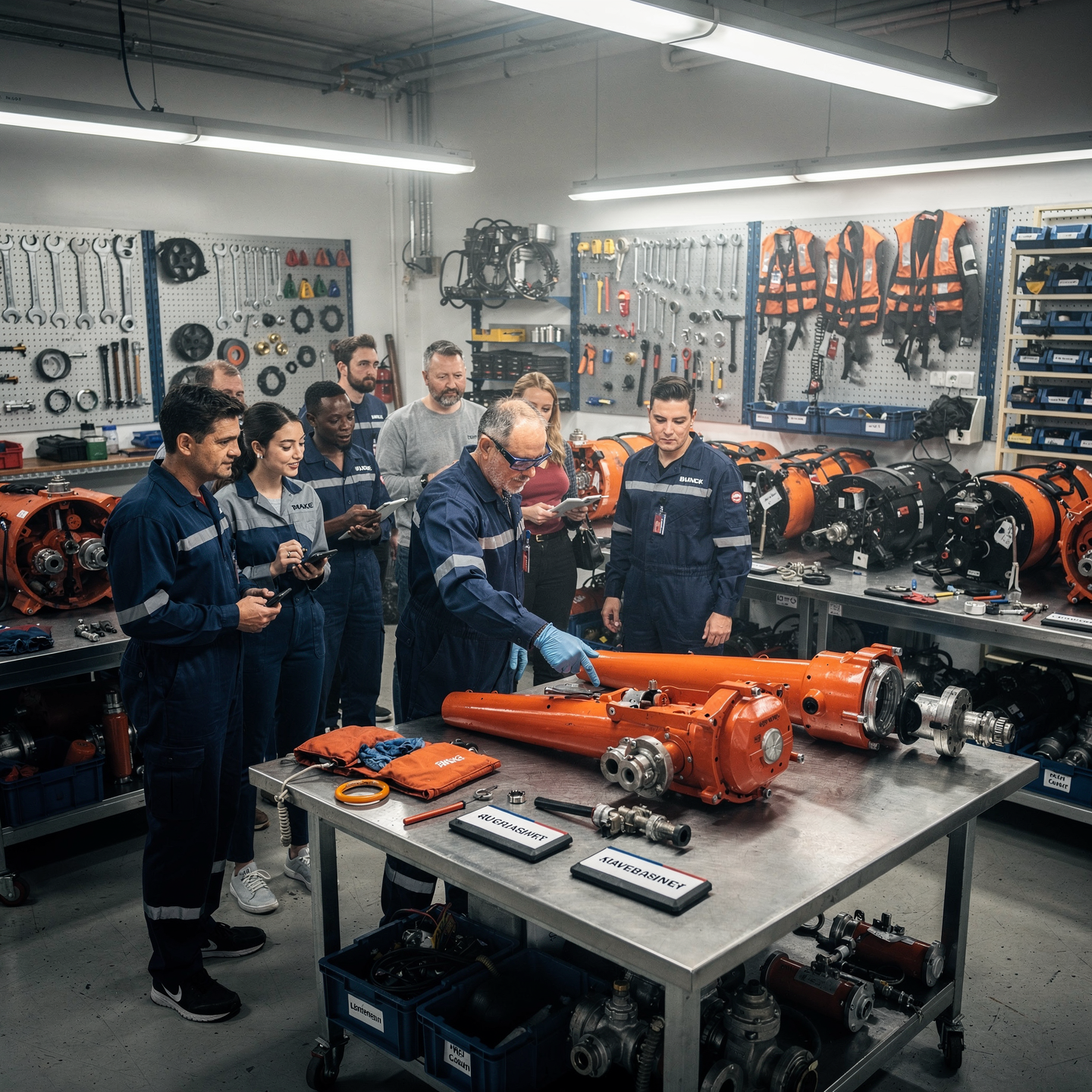
Diploma in Diving Equipment Maintenance
Why this certificate program?
The Diploma in Diving Equipment Maintenance
This course provides you with the essential tools and knowledge to ensure the safety and optimal performance of equipment used in underwater activities. Master the techniques for inspection, repair, and adjustment of regulators, buoyancy compensators, cylinders, and other critical components. Learn to identify faults, perform pressure tests, and apply current safety standards.
Key Benefits
- Preventive and Corrective Maintenance: Extends the lifespan of equipment and minimizes risks.
- Specialized Technical Knowledge: Master the operating principles and specifications of each component.
- Regulatory Compliance: Applies industry regulations and standards to ensure safety.
- Hands-on Skills: Conducts guided practice sessions on real equipment to develop your skills.
- Career Opportunities: Expands your job options in dive centers, repair shops, and companies in the sector.
- Modality: Online
- Level: Diplomado
- Hours: 800 H
- Start date: 29-09-2026
Availability: 1 in stock
Who is it aimed at?
- Professional divers, instructors, and dive technicians seeking certification and refresher in the maintenance of diving equipment.
- Staff of dive shops and dive centers who wish to offer high-quality repair and maintenance services to their customers.
- Engineers and technicians interested in the mechanics and operation of diving equipment to expand their knowledge and skills.
- Members of rescue and water safety teams who require specialized knowledge for the maintenance of their diving equipment.
- Recreational divers who aspire to thoroughly understand the operation and maintenance of their own equipment, ensuring safety and durability.
Flexibility of Learning
Tailored to your needs: Live online classes, 24/7 access to study materials, and personalized tutoring to answer your questions.
Objectives and competencies

Ensure the operability and safety of the equipment:
“Perform preventive and corrective maintenance according to manufacturer specifications and current regulations, documenting each intervention.”

Diagnosing and repairing faults in diving equipment:
Use technical manuals, diagnostic tools, and safety procedures to identify and troubleshoot electrical, mechanical, and hydraulic problems, ensuring optimal equipment operation and safety.

Manage inventory and preventive maintenance:
“Establish control procedures, optimizing stocks, critical spare parts, and scheduling inspections according to technical and regulatory specifications.”

Adapting equipment to specific needs:
“Configure parameters (sensitivity, range, filters) and customize interfaces (palettes, visualization) to optimize performance in different operating scenarios.”

Comply with current safety regulations:
“Use safety and personal protective equipment (PPE) correctly according to the specific risk of each task.”

Evaluate the lifespan and certify immersion equipment:
“Inspect components, perform pressure and functional tests, and document results according to regulations.”
Curriculum - Modules
- Comprehensive Maritime Incident Management: protocols, roles, and chain of command for coordinated response
- Operational Planning and Execution: briefing, routes, weather windows, and go/no-go criteria
- Rapid Risk Assessment: criticality matrix, scene control, and decision-making under pressure
- Operational Communication: VHF/GMDSS, standardized reports, and inter-agency liaison
- Tactical Mobility and Safe Boarding: RHIB maneuvers, approach, mooring, and recovery
- Equipment and Technologies: PPE, signaling, satellite tracking, and field data logging
- Immediate Care of the Affected: primary assessment, hypothermia, trauma, and stabilization for evacuation
- Adverse Environmental Conditions: swell, Visibility, flows, and operational mitigation
Simulation and training: critical scenarios, use of VR/AR, and exercises with performance metrics
Documentation and continuous improvement: lessons learned, indicators (MTTA/MTTR), and SOP updates
- Introduction to Diving Equipment: Types and Applications
- Physics of Diving: Pressure, Volume, Density, and Effects on the Body
- Physiology of Diving: Respiratory, Circulatory, and Nervous Systems Under Pressure
- Self-Contained Breathing Apparatus (SCUBA): Components, Operation, and Maintenance
- Surface-Supplied Breathing Apparatus (SUP): Components, Operation, and Maintenance
- Diving Suits: Wet, Semi-Dry, and Dry; Materials, Characteristics, and Use
- Buoyancy Control: BCDs and Weights; Fitting and Techniques
- Breathing Gases: Compressed Air, Nitrox, Trimix; Advantages, disadvantages, and limitations
- Instrumentation: Pressure gauges, depth gauges, dive computers, compasses
- Accessories: Knives, flashlights, slates, reels, and signaling buoys
‘
- Introduction to Diving Equipment: Types, Components, and Applications
- Regulations and Standards: EN, ISO, OSHA, and Local Regulations
- Pre-Dive Inspection Protocols: Checklist, Visual and Functional Inspection
- Equipment Logbook: Record of Use, Maintenance, and Repairs
- Storage and Transportation: Optimal Conditions and Secure Packaging
- Preventive Maintenance: Lubrication, Cleaning, and Component Adjustment
- Minor Repairs: Parts Replacement, Sealing, and Calibration
- Hydrostatic and Functional Testing: Procedures and Records
- Risk Identification and Management: Failure Assessment and Mitigation
- Procedures for Disinfection and cleaning: prevention of contamination and corrosion
‘
- Introduction to Professional Diving: Roles, Responsibilities, and Standards
- Diving Physiology: Effects of Pressure, Gases, and Associated Risks
- Professional Diving Equipment: Selection, Maintenance, and Protocols
- Dive Planning: Risk Assessment, Objectives, and Contingencies
- Diving Techniques: Buoyancy Control, Communication, and Procedures
- Diving Safety: Emergency Protocols, First Aid, and Rescue
- Diving Operations Logistics: Transportation, Support, and Communications
- Environmental Considerations: Impact of Diving, Conservation, and Regulations
- Legal and Regulatory Aspects of Professional Diving: Permits, Insurance, and Liability
- Professional Ethics and Best Practices in Diving
‘
- Introduction to Pneumatics: Physical principles, advantages, and disadvantages.
- Pneumatic Components: Compressors, filters, regulators, lubricators, valves, and actuators.
- Pneumatic Symbols: Interpretation of diagrams, ISO standards, and industry standards.
- Design of Basic Pneumatic Circuits: Direct and indirect cylinder control, pneumatic logic.
- Electropneumatic Control Systems: Sensors, relays, PLCs, and their integration into pneumatic circuits.
- Safety in Pneumatic Systems: Safety devices, regulations, and best practices.
- Introduction to Hyperbaric Medicine: Fundamentals of hyperbaric medicine and its application.
- Hyperbaric Chamber Equipment: Design and components and control systems.
- Safety in hyperbaric chambers: Emergency protocols, associated risks, and preventive measures.
- Maintenance and repair of pneumatic and hyperbaric systems: Troubleshooting, procedures, and tools.
‘
- System Architecture and Components: Structural design, materials, and subsystems (mechanical, electrical, electronic, and fluid) with selection and assembly criteria for marine environments
- Fundamentals and Principles of Operation: Physical and engineering foundations (thermodynamics, fluid mechanics, electricity, control, and materials) that explain performance and operating limits
- Safety and Environmental (SHE): Risk analysis, PPE, LOTO, hazardous atmospheres, spill and waste management, and emergency response plans
- Applicable Regulations and Standards: IMO/ISO/IEC requirements and local regulations;
- Conformance criteria, certification, and best practices for operation and maintenance
- Inspection, testing, and diagnostics: Visual/dimensional inspection, functional testing, data analysis, and predictive techniques (vibration, thermography, fluid analysis) to identify root causes
- Preventive and predictive maintenance: Hourly/cycle/seasonal plans, lubrication, adjustments, calibrations, consumable replacement, post-service verification, and operational reliability
- Instrumentation, tools, and metrology: Measuring and testing equipment, diagnostic software, calibration and traceability; selection criteria, safe use, and storage
- Onboard integration and interfaces: Mechanical, electrical, fluid, and data compatibility; Sealing and watertightness, EMC/EMI, corrosion protection, and interoperability testing.
Quality, acceptance testing, and commissioning: process and materials control, FAT/SAT, bench and sea trials, go/no-go criteria, and evidence documentation.
Technical documentation and integrated practice: logs, checklists, reports, and a complete case study (safety → diagnosis → intervention → verification → report) applicable to any system.
- Introduction to Diving Equipment: Types, Components, and Regulations
- Physics of Diving: Pressure, Volume, Density, Gas Laws and Their Effects
- Visual Inspection: Protocols, Checklists, and Rejection Criteria
- Hydrostatic Testing: Procedure, Safety, and Recording of Results
- Pneumatic Testing: Procedure, Safety, and Recording of Results
- Identification and Evaluation of Damage and Defects: Corrosion, Dents, Cracks
- Repairing Wetsuits: Gluing Techniques, Patching, and Zipper Replacement
- Regulator Repairs: Diagnosis, Part Replacement, and Adjustment
- Maintenance Preventive maintenance: Lubrication, cleaning, and proper storage
Documentation and record keeping: Creation of inspection and repair histories
‘
Career opportunities
- Diving Equipment Maintenance Technician: Repair, overhaul, and adjustment of regulators, buoyancy compensators, cylinders, and other equipment.
- Diving Instructor (with additional training): Teaching students the correct use and basic maintenance of equipment.
- Sales and Technical Advice in Dive Shops: Recommending equipment suitable for customer needs and resolving technical problems.
- Technician in Dive Centers and Resorts: Preventive and corrective maintenance of diving equipment to ensure its safety and functionality.
- Diving Equipment Rental Companies: Preparing and checking equipment before and after each rental, as well as minor repairs.
- Diving Equipment Testing and Certification Laboratories: Participating in performance and safety testing of new equipment.
- Security and rescue organizations: Maintenance of equipment used by professional divers in search and rescue operations.
- Underwater engineering companies: Technical support in the maintenance of equipment used in underwater construction and repair projects.
“`
Admission requirements

Academic/professional profile:
Degree/Bachelor's degree in Nautical Science/Maritime Transport, Naval/Marine Engineering, or a related field; or proven professional experience in bridge/operations.

Language proficiency:
Recommended functional maritime English (SMCP) for simulations and technical materials.

Documentation:
Updated resume, copy of degree or seaman's book, ID card/passport, letter of motivation.

Technical requirements (for online):
Equipment with camera/microphone, stable connection, ≥ 24” monitor recommended for ECDIS/Radar-ARPA.
Admission process and dates

1. Online
application
(form + documents).

2. Academic review and interview
(profile/objectives/schedule compatibility).

3. Admission decision
(+ scholarship proposal if applicable).

4. Reservation of place
(deposit) and registration.

5. Induction
(access to campus, calendars, simulator guides).
Scholarships and grants
- Master the latest techniques: Learn to diagnose, repair, and maintain diving equipment to professional standards.
- Professional certification: Earn a recognized diploma that will open doors for you in the diving and underwater maintenance industry.
- Specialized hands-on training: Develop practical skills in state-of-the-art laboratories with real diving equipment.
- Expert instructors: Learn from professionals with extensive experience in equipment maintenance and diving safety.
- Expand your career opportunities: Become a highly sought-after technician at dive centers, equipment companies, and underwater projects.
Testimonials
The Diving Equipment Maintenance Diploma exceeded my expectations. I gained practical and theoretical knowledge that allowed me to optimize the maintenance of our equipment, reducing failures by 30% and extending its lifespan. Thanks to the training, I identified and solved a recurring problem with our regulators, saving us costly repairs and downtime. Now I feel much more confident and competent in handling and caring for diving equipment.
The Diploma in Underwater Technology exceeded my expectations. I gained solid knowledge in ROV design and operation, as well as a deep understanding of the principles of underwater acoustics and oceanography. The practical component, with simulators and hands-on experience at sea, allowed me to apply what I had learned and prepared me to face the challenges of the offshore industry. Thanks to this training, I secured a position as an ROV pilot at a leading company in the sector.
This diploma program exceeded my expectations. I gained solid theoretical and practical knowledge about the maintenance of various diving equipment, from regulators to dry suits. The hands-on workshop experience was essential to solidify my learning, and now I feel capable of performing preventive and corrective maintenance safely and efficiently. Thanks to this training, I have significantly improved my professional performance.
This diploma course exceeded my expectations. I gained solid theoretical and practical knowledge about the maintenance of various diving equipment, from regulators to dry suits. The hands-on workshop sessions were essential to solidify my learning, and I feel much more confident and competent in performing preventive and corrective maintenance, which translates into greater safety for myself and my diving partners.

Frequently asked questions
To ensure the safety and proper functioning of the equipment to protect the diver’s life and the efficiency of underwater operations.
Yes. The itinerary includes ECDIS/Radar-ARPA/BRM with harbor, ocean, fog, storm, and SAR scenarios.
Online with live sessions; hybrid option for simulator/practical placements through agreements.
Diving equipment, such as regulators, tanks, buoyancy compensators (BCDs), dry suits, dive computers, and other related accessories.
Recommended functional SMCP. We offer support materials for standard phraseology.
Yes, with a relevant degree or experience in maritime/port operations. The admissions interview will confirm suitability.
Optional (3–6 months) through Companies & Collaborations and the Alumni Network.
Simulator practice (rubrics), defeat plans, SOPs, checklists, micro-tests and applied TFM.
A degree from Navalis Magna University + operational portfolio (tracks, SOPs, reports and KPIs) useful for audits and employment.
- Introduction to Diving Safety: Risks and Preventive Measures
- Essential Safety Equipment: BCDs, Buoys, Communication Systems
- Pre-Dive Checklist: Equipment Review, Environmental Conditions, and Dive Plan
- Underwater Communication Protocols: Hand Signals, Verbal Signals, and Emergency Signals
- Risk Management in the Water: Currents, Visibility, and Marine Life
- Emergency Procedures: Loss of Contact, Rapid Ascent, and Equipment Failure
- Diving First Aid: Injury Management, Decompression, and Drowning
- Underwater Rescue Techniques: Diver Recovery and Surface Assistance
- Checklist Post-dive evaluation: dive assessment, equipment cleaning and maintenance
Incident analysis and lessons learned: continuous safety improvement
‘
Request information
Complete the Application Form.
Attach your CV/degree certificate (if you have it to hand).
Indicate your preferred cohort (January/May/September) and whether you would like the hybrid option with simulator sessions.
An academic advisor will contact you within 24–48 hours to guide you through the admission process, scholarships, and compatibility with your professional schedule.
Faculty
Eng. Tomás Riera
Full Professor
Eng. Tomás Riera
Full Professor
Eng. Sofía Marquina
Full Professor
Eng. Sofía Marquina
Full Professor
Eng. Javier Bañuls
Full Professor
Eng. Javier Bañuls
Full Professor
Dr. Nuria Llobregat
Full Professor
Dr. Nuria Llobregat
Full Professor
Dr. Pau Ferrer
Full Professor
Dr. Pau Ferrer
Full Professor
Cap. Javier Abaroa (MCA)
Full Professor
Cap. Javier Abaroa (MCA)
Full Professor

