Diploma in Tourist Experiences in Ports and Nautical Destinations
Why this certificate program?
The Diploma in Tourism Experiences in Ports and Nautical Destinations
This program provides you with the tools to design and manage memorable experiences that boost tourism in coastal environments. Learn to identify opportunities, create innovative tourism products, and market nautical destinations effectively. Master strategies for tourism sustainability and value creation in local communities.
This program provides you with the tools to design and manage memorable experiences that boost tourism in coastal environments.
Differential Advantages
- Experience Design: Methodologies for creating unique and attractive experiences for different tourist segments.
- Tourist Port Management: Optimization of services and spaces to maximize visitor satisfaction.
- Digital Marketing and Promotion: Online marketing strategies specialized in the nautical and tourism sector.
- Sustainability and Local Development: Focus on responsible tourism practices that benefit the community and the environment.
- Networking and Collaboration: Connection with industry professionals to promote projects and business opportunities.
- Modality: Online
- Level: Diplomado
- Hours: 800 H
- Start date: 01-10-2026
Availability: 1 in stock
Who is it aimed at?
- Tourism professionals seeking to specialize in the design and management of innovative experiences in port and nautical environments.
- Port and nautical destination managers who wish to optimize their tourism offerings and diversify their revenue streams by creating attractive products.
- Tourism entrepreneurs interested in developing businesses related to nautical and port tourism, identifying market opportunities.
- Tourism marketing and promotion managers who need effective strategies to position ports and nautical destinations as national and international tourism leaders.
- Students and recent graduates in tourism, marketing, or related fields seeking a differentiating value and specialization in a booming sector.
Flexibility and Practical Application
Designed to adapt to your pace: accessible online content, real-world case studies, and practical tools to implement in your professional environment.
Objectives and competencies

Design and market innovative tourism products:
Identify emerging market niches and develop personalized and sustainable tourism experiences, using digital technologies for promotion and distribution.

Managing the quality and sustainability of nautical tourism services:
“Implement environmental management systems (ISO 14001, EMAS) and sustainability certifications (Biosphere, Blue Flag) adapted to nautical operations.”

Boosting the competitiveness of ports and destinations through nautical tourism:
“Analyze the existing port infrastructure and propose improvements for the reception of recreational vessels, optimizing moorings, services and accessibility.”

Develop digital marketing strategies specialized in nautical tourism:
“Segment niche markets (diving, sailing, sport fishing) and design customized campaigns for each one.”
Apply safety regulations and protocols in nautical tourism activities:
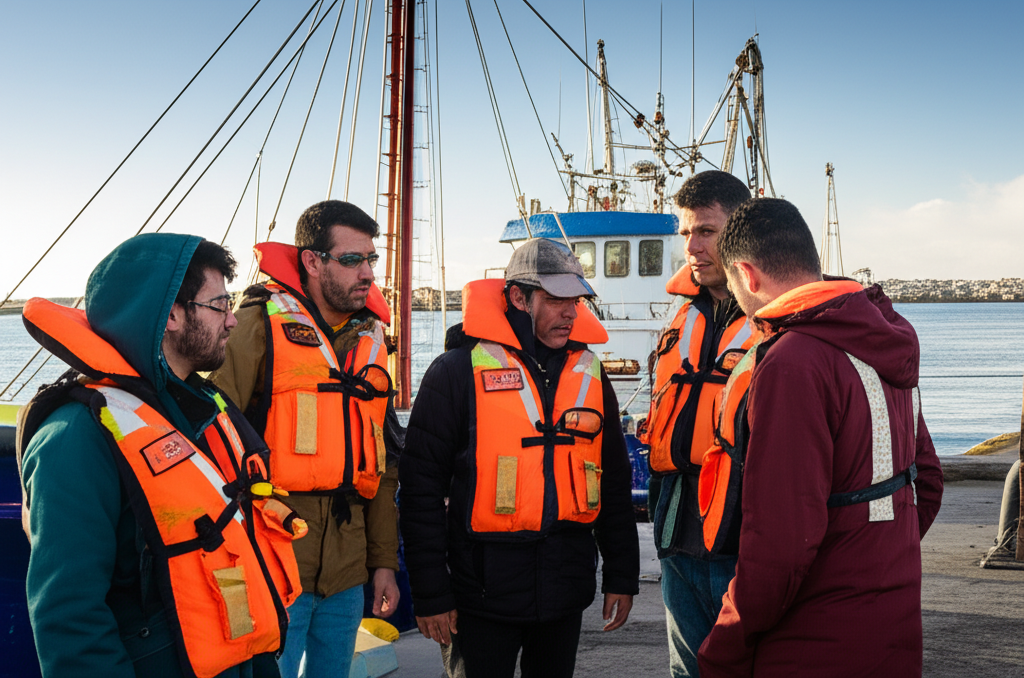
“Comply with the specific regulations of the activity (diving, sailing, kayaking, etc.), assessing risks, using PPE and managing emergencies.”
Efficiently coordinate the logistics of nautical tourism events and activities:
“Establish clear and concise communication protocols between all participants (suppliers, staff, clients) and monitor compliance with contingency plans in the event of unforeseen circumstances.”
Curriculum - Modules
- Comprehensive Maritime Incident Management: protocols, roles, and chain of command for coordinated response
- Operational Planning and Execution: briefing, routes, weather windows, and go/no-go criteria
- Rapid Risk Assessment: criticality matrix, scene control, and decision-making under pressure
- Operational Communication: VHF/GMDSS, standardized reports, and inter-agency liaison
- Tactical Mobility and Safe Boarding: RHIB maneuvers, approach, mooring, and recovery
- Equipment and Technologies: PPE, signaling, satellite tracking, and field data logging
- Immediate Care of the Affected: primary assessment, hypothermia, trauma, and stabilization for evacuation
- Adverse Environmental Conditions: swell, Visibility, flows, and operational mitigation
Simulation and training: critical scenarios, use of VR/AR, and exercises with performance metrics
Documentation and continuous improvement: lessons learned, indicators (MTTA/MTTR), and SOP updates
- Introduction to Port Tourism: History, Typology, and Trends
- Analysis of the Port Tourism Market: Segmentation, Demand, and Supply
- Design of Port Tourism Products: Experiences, Routes, and Activities
- Development of Narrative and Storytelling in Port Tourism
- Marketing and Promotion of Port Tourism Experiences: Channels, Strategies, and Tools
- Pricing and Revenue Management in Port Tourism
- Quality and Sustainability in Port Tourism: Best Practices and Certifications
- Legal and Regulatory Framework of Port Tourism
- Customer Experience Management in Port Tourism
- Innovation and New Technologies Applied to Port Tourism
‘
- Introduction to Port Tourism: Typology, Trends, and Challenges
- Market Analysis: Segmentation, Demand, Competition, and Opportunities
- Design of Tourism Products: Experiences, Activities, Routes, and Packages
- Port Tourism Resources: Heritage, Gastronomy, Nature, and Culture
- Online and Offline Marketing: Channels, Strategies, Promotion, and Sales
- Digital Marketing for Port Tourism: SEO, SEM, Social Media, and Email Marketing
- Quality and Sustainability Management in Port Tourism
- Legislation and Regulations Applicable to Port Tourism
- Brand Creation and Branding for Port Tourism Experiences
- Economic and Financial Evaluation of Tourism Projects port
‘
- Introduction to Port Tourism: Key Concepts and Port Types.
- Tourism Market Analysis: Segmentation, Trends, and Demand.
- Designing Tourism Experiences: Creativity, Innovation, and Storytelling.
- Port Infrastructure: Cruise Terminals, Marinas, and Sports Docks.
- Port Tourism Services: Excursions, Transportation, Restaurants, and Shopping.
- Economic Viability and Financing of Port Tourism Projects.
- Tourism and Port Regulations and Legislation: Environmental Impact and Sustainability.
- Marketing and Promotion of Port Tourism Products: Channels and Strategies.
- Management quality in port tourism services: Standards and certifications.
Case studies and benchmarking: Best practices in port tourism.
‘
- Introduction to nautical-port tourism: typologies and trends
- Nautical and port resources: inventory and characterization
- Tourism product design: conceptualization and segmentation
- Nautical experiences: sailing, kayaking, diving, sport fishing
- Port experiences: guided tours, gastronomy, events
- Experience packages: itineraries, duration, and price
- Online marketing: platforms and social networks
- Content marketing: storytelling and engagement
- Reservation management: systems and customer service
- Regulations and safety in nautical and port activities
‘
- System Architecture and Components: Structural design, materials, and subsystems (mechanical, electrical, electronic, and fluid) with selection and assembly criteria for marine environments
- Fundamentals and Principles of Operation: Physical and engineering foundations (thermodynamics, fluid mechanics, electricity, control, and materials) that explain performance and operating limits
- Safety and Environmental (SHE): Risk analysis, PPE, LOTO, hazardous atmospheres, spill and waste management, and emergency response plans
- Applicable Regulations and Standards: IMO/ISO/IEC requirements and local regulations;
- Conformance criteria, certification, and best practices for operation and maintenance
- Inspection, testing, and diagnostics: Visual/dimensional inspection, functional testing, data analysis, and predictive techniques (vibration, thermography, fluid analysis) to identify root causes
- Preventive and predictive maintenance: Hourly/cycle/seasonal plans, lubrication, adjustments, calibrations, consumable replacement, post-service verification, and operational reliability
- Instrumentation, tools, and metrology: Measuring and testing equipment, diagnostic software, calibration and traceability; selection criteria, safe use, and storage
- Onboard integration and interfaces: Mechanical, electrical, fluid, and data compatibility; Sealing and watertightness, EMC/EMI, corrosion protection, and interoperability testing.
Quality, acceptance testing, and commissioning: process and materials control, FAT/SAT, bench and sea trials, go/no-go criteria, and evidence documentation.
Technical documentation and integrated practice: logs, checklists, reports, and a complete case study (safety → diagnosis → intervention → verification → report) applicable to any system.
- Introduction to Sustainable Nautical Tourism: Concepts and Principles
- Market Analysis: Trends, Segments, and Demand
- Identification of Nautical Resources: Inventory and Evaluation
- Design of Nautical Tourism Products: Itineraries and Experiences
- Sustainability Criteria: Environmental, Social, and Economic Impact
- Regulations and Legislation: Licenses, Permits, and Regulations
- Marketing and Promotion: Marketing and Sales Strategies
- Quality Management: Customer Satisfaction and Continuous Improvement
- Financing and Subsidies: Investment Sources and Public Aid
- Success Stories: Examples of sustainable nautical itineraries.
‘
Career opportunities
- Tourism Experience Manager: Design and marketing of innovative tourism products in port and nautical environments.
- Specialized Tourism Promoter: Promotion and dissemination of nautical destinations, attracting visitors and generating economic impact.
- Nautical Tourism Consultant: Advising companies and administrations on the development of sustainable and profitable tourism strategies.
- Nautical Event Organizer: Planning and execution of sporting, cultural, and leisure events related to the sea.
- Cruise Ship and Port Entertainment: Creation of entertainment and leisure activities for tourists on cruise ships and in port destinations.
- Specialized Tour Guide: Conducting guided tours and themed experiences in maritime and port environments.
- Tourism Marketing Manager: Development of advertising and promotional campaigns targeting the nautical tourism market.
- Tourism Project Manager: Leadership and coordination of tourism development projects in ports and nautical destinations.
“`
Admission requirements

Academic/professional profile:
Degree/Bachelor's degree in Nautical Science/Maritime Transport, Naval/Marine Engineering, or a related field; or proven professional experience in bridge/operations.

Language proficiency:
Recommended functional maritime English (SMCP) for simulations and technical materials.

Documentation:
Updated resume, copy of degree or seaman's book, ID card/passport, letter of motivation.

Technical requirements (for online):
Equipment with camera/microphone, stable connection, ≥ 24” monitor recommended for ECDIS/Radar-ARPA.
Admission process and dates

1. Online
application
(form + documents).

2. Academic review and interview
(profile/objectives/schedule compatibility).

3. Admission decision
(+ scholarship proposal if applicable).

4. Reservation of place
(deposit) and registration.

5. Induction
(access to campus, calendars, simulator guides).
Scholarships and grants
- Design Unique Experiences: Master the tools to create innovative tourism products in port and nautical environments.
- Connect with the Market: Learn to identify the needs of today’s tourist and develop effective marketing strategies.
- Boost Local Development: Discover how nautical tourism can generate economic and social value in your community.
- Real-World Success Stories: Analyze practical examples from leading destinations and gain inspiration for your own projects.
- Strategic Networking: Connect with industry professionals and expand your network.
Testimonials
This diploma program exceeded my expectations. I gained in-depth knowledge of managing tourism experiences in the nautical sector, from product planning and design to marketing and customer service. The tools and methodologies I learned allowed me to successfully implement a new tourism product at my marina, increasing customer satisfaction and business profitability. I highly recommend this training to any professional in the sector looking to specialize in nautical tourism.
The Diploma in Maritime Entertainment & Experiences exceeded my expectations. I gained in-depth knowledge of managing and designing memorable experiences in the maritime sector, which allowed me to successfully implement a new onboard activities program, increasing customer satisfaction by 15% and generating a 12% increase in excursion revenue.
This diploma program provided me with the necessary tools to design and manage innovative tourism experiences in the nautical sector. I applied the knowledge I gained to the development of a new tourist route in my town, which has increased visitor numbers by 30% in the last six months, generating a positive impact on the local economy and creating new jobs.
This diploma program provided me with the necessary tools to design and manage innovative tourism experiences in the nautical sector. I applied the knowledge I gained to the development of a new tourist route in my town, which has increased visitor numbers by 30% in the last quarter and has generated new employment opportunities for the local community.

Frequently asked questions
Nautical or maritime tourism.
Yes. The itinerary includes ECDIS/Radar-ARPA/BRM with harbor, ocean, fog, storm, and SAR scenarios.
Online with live sessions; hybrid option for simulator/practical placements through agreements.
Nautical or maritime tourism.
Recommended functional SMCP. We offer support materials for standard phraseology.
Yes, with a relevant degree or experience in maritime/port operations. The admissions interview will confirm suitability.
Optional (3–6 months) through Companies & Collaborations and the Alumni Network.
Simulator practice (rubrics), defeat plans, SOPs, checklists, micro-tests and applied TFM.
A degree from Navalis Magna University + operational portfolio (tracks, SOPs, reports and KPIs) useful for audits and employment.
- Introduction to nautical tourism: evolution, typologies, and trends
- Design of nautical tourism products: segmentation, customer needs, and expectations
- Analysis of the nautical environment: resources, infrastructure, regulations, and sustainability
- Nautical tourism experiences: sailing, diving, sport fishing, whale watching, kayaking, stand-up paddleboarding
- Digital marketing for nautical tourism: SEO, SEM, social media, email marketing
- Distribution channels: travel agencies, tour operators, online platforms
- Pricing and revenue management strategies for nautical products
- Quality and safety management in nautical tourism experiences
- Tourism legislation and Nautical activities: licenses, insurance, permits, and regulations
Creating innovative and personalized nautical tourism experiences
‘
Request information
Complete the Application Form.
Attach your CV/degree certificate (if you have it to hand).
Indicate your preferred cohort (January/May/September) and whether you would like the hybrid option with simulator sessions.
An academic advisor will contact you within 24–48 hours to guide you through the admission process, scholarships, and compatibility with your professional schedule.
Faculty
Eng. Tomás Riera
Full Professor
Eng. Tomás Riera
Full Professor
Eng. Sofía Marquina
Full Professor
Eng. Sofía Marquina
Full Professor
Eng. Javier Bañuls
Full Professor
Eng. Javier Bañuls
Full Professor
Dr. Nuria Llobregat
Full Professor
Dr. Nuria Llobregat
Full Professor
Dr. Pau Ferrer
Full Professor
Dr. Pau Ferrer
Full Professor
Cap. Javier Abaroa (MCA)
Full Professor
Cap. Javier Abaroa (MCA)
Full Professor