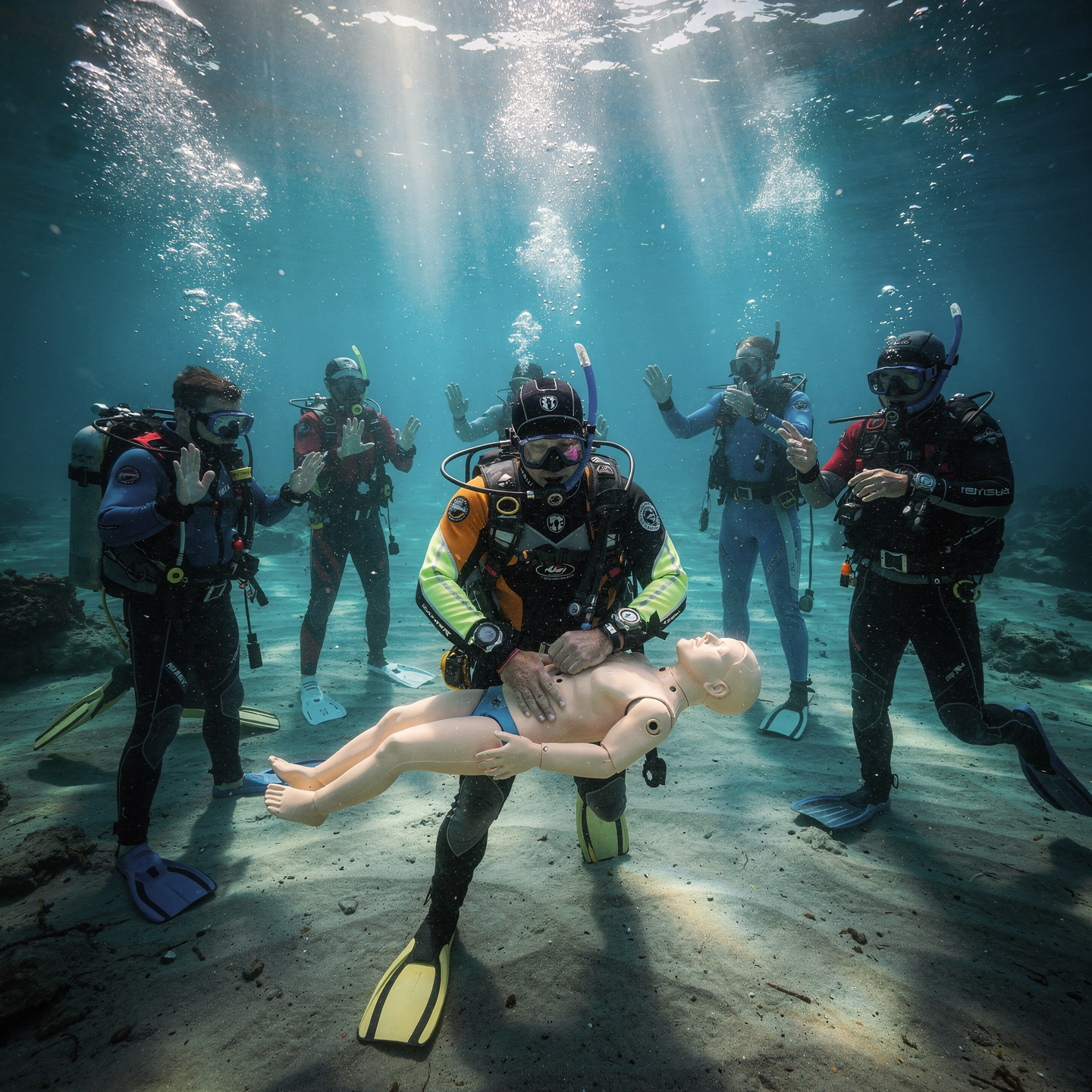
Diploma in Underwater Salvage and Rescue

Why this certificate program?

The Diploma in Underwater Salvage and Rescue

This program provides you with the essential skills and knowledge to become a highly trained professional in complex underwater operations. Learn the most advanced search and recovery techniques, operation of specialized equipment, risk assessment, and effective strategy planning in challenging environments. This intensive program prepares you to respond safely and efficiently in emergency situations, ensuring the protection of lives and property in the aquatic environment.

Differential Advantages

  • Realistic Simulations: Experience practical rescue scenarios in extreme conditions.
  • Professional Certification: Earn a recognized diploma that will boost your career in the sector.
  • Expert Instructors: Learn from professionals with extensive experience in search and rescue.
  • State-of-the-art Equipment: Familiarize yourself with the most advanced tools and technologies.
  • Networking: Connect with other professionals in the sector and expand your job opportunities.
Salvamento

Diploma in Underwater Salvage and Rescue

Availability: 1 in stock

Who is it aimed at?

  • Professional divers seeking specialization in salvage techniques, advanced equipment operation, and safety protocols.
  • Members of aquatic rescue teams requiring intensive training in emergency scenarios, victim recovery, and risk management.
  • Naval engineers and technicians needing to understand underwater salvage operations for damage assessment, repair, and refloating of vessels.
  • Maritime and port security professionals interested in optimizing response plans for underwater incidents and crisis management.
  • Ocean/naval engineering students and offshore industry professionals seeking comprehensive training in salvage and rescue with certification recognized.

Study Flexibility
 Adapted for active professionals: 100% online modality, 24/7 access to materials and personalized tutoring for answering questions.

Salvamento

Objectives and competencies

Master advanced underwater search and recovery techniques:

“Using side-scan sonar, ROVs, and specialized diving techniques to identify, locate, and recover submerged objects in diverse environmental conditions.”

Apply safety and first aid protocols in underwater emergency situations:

“Identify risks, activate the chain of rescue, and perform CPR and basic life support following updated guidelines.”

Operate and maintain specialized underwater salvage and rescue equipment:

“Inspect, maintain and repair diving equipment and hyperbaric life support systems according to manufacturer protocols and safety regulations.”

Assessing risks and making critical decisions in hostile underwater environments:

“Prioritize team safety by applying risk mitigation techniques and emergency protocols with adaptability and effective communication under stress.”

Leading and coordinating underwater rescue teams in complex operations:

“Plan missions considering risks, resources, and safety procedures, optimizing communication and team performance under pressure.”

Perform underwater inspections and repairs on critical infrastructure:

“Identify and mitigate risks associated with depth, visibility, and currents, using specialized diving equipment and ROVs safely and efficiently.”

Curriculum - Modules

  1. Comprehensive Maritime Incident Management: protocols, roles, and chain of command for coordinated response
  2. Operational Planning and Execution: briefing, routes, weather windows, and go/no-go criteria
  3. Rapid Risk Assessment: criticality matrix, scene control, and decision-making under pressure
  4. Operational Communication: VHF/GMDSS, standardized reports, and inter-agency liaison
  5. Tactical Mobility and Safe Boarding: RHIB maneuvers, approach, mooring, and recovery
  6. Equipment and Technologies: PPE, signaling, satellite tracking, and field data logging
  7. Immediate Care of the Affected: primary assessment, hypothermia, trauma, and stabilization for evacuation
  8. Adverse Environmental Conditions: swell, Visibility, flows, and operational mitigation

    Simulation and training: critical scenarios, use of VR/AR, and exercises with performance metrics

    Documentation and continuous improvement: lessons learned, indicators (MTTA/MTTR), and SOP updates

  1. Physics of Diving: pressure, gases, buoyancy, temperature, and light underwater.
  2. Diving Equipment: regulators, buoyancy compensators, tanks, masks, fins, wetsuits, and accessories.
  3. Physiology of Diving: effects of diving on the human body, risks, and injury prevention.
  4. Entry and Exit Techniques: from boats, docks, and beaches.
  5. Buoyancy Control: neutral buoyancy and trim techniques at different depths.
  6. Underwater Communication: hand signals, rope communication, and communication equipment.
  7. Underwater Navigation: use of compasses, maps, and landmarks.
  8. Visual Searching: patterns of Search, tracking techniques, and object identification.

    Safety considerations: dive planning, risk management, and emergency procedures.

    Diving ethics: conservation of the marine environment and respect for aquatic life.

  1. Diving Physiology: Effects of Pressure, Gases, Hypoxia, Hypercapnia
  2. Underwater Rescue Equipment: Masks, Regulators, Wetsuits, Umbilicals, ROVs
  3. Search and Location Techniques: Search Patterns, Sonar, Markers
  4. Scene Assessment: Hazards, Environmental Conditions, Available Resources
  5. Access and Extraction of Victims: Medical and Safety Considerations
  6. First Aid in Aquatic Environments: CPR, Hemorrhage Control, Hypothermia
  7. Diving Injuries: Decompression Sickness, Barotrauma, Initial Treatment
  8. Underwater Communications: Hand Signals, Communication Systems
  9. Safety in rescue operations: protocols, risk management, support team
  10. Legal and ethical considerations: chain of custody, reporting, team well-being

  1. Physics of Diving: pressure, volume, density, gas laws and their application in diving.
  2. Respiratory Physiology in Diving: gas exchange, oxygen consumption, CO2 production, effects of partial pressure.
  3. Cardiovascular System and Diving: the body’s response to immersion, heart rhythm disturbances, immersion pulmonary edema (IPE).
  4. Barotrauma: etiology, pathophysiology, prevention and treatment of barotrauma of the ear, paranasal sinuses, lungs, and teeth.
  5. Decompression Sickness (DS): bubble formation, risk factors, types of DS, differential diagnosis and treatment.
  6. Gas Narcotics: nitrogen, oxygen, and CO2; Mechanisms, effects, and prevention.
  7. Oxygen toxicity: Pulmonary and neurological effects, risk factors, and management.
  8. Hypothermia and hyperthermia in diving: Pathophysiology, prevention, and treatment.
  9. Drowning and near-drowning: Pathophysiology, prehospital and hospital management.
  10. Principles of aquatic rescue: Risk assessment, rescuer safety, approach techniques, and contact with the victim.
  11. Surface diver rescue techniques: Towing, extraction, basic life support.
  12. Submerged diver rescue techniques: Emergency controlled ascent (ECA), free ascent, rescue with diving equipment.
  13. Management of medical emergencies in the water: Oxygen administration, advanced life support, hypothermia, and CPR in the water.

    Advanced rescue equipment: rescue buoys, rescue boards, underwater communication equipment.

    Organizing a rescue team: roles, responsibilities, communication, and coordination.

  1. Introduction to Diving: Physics, Physiology, and Psychology of Diving.
  2. Dive Equipment: Selection, Maintenance, and Operation (SCUBA, Surface).
  3. Underwater Search Techniques: Search Patterns, Navigation, and Communication.
  4. First Aid and Life Support: CPR, AED, Hypothermia and Hyperthermia Management.
  5. Trauma and Victim Stabilization: Extraction, Airway Management, and Hemorrhage Control in the Water.
  6. Safety Protocols in Diving and Rescue Operations: Risk Assessment, Emergency Plans, and Communication.
  7. Legislation and Legal Aspects: Chain of Custody, Preservation of the Underwater Crime Scene, and Incident Reporting.
  8. Recovery Techniques
  9. Handling, packaging, and respectful transport of human remains
  10. Special considerations: immersion in contaminated water, confined spaces, and adverse weather conditions.
  11. Psychological support and stress management: self-care and support for colleagues in traumatic situations.

  1. System Architecture and Components: Structural design, materials, and subsystems (mechanical, electrical, electronic, and fluid) with selection and assembly criteria for marine environments
  2. Fundamentals and Principles of Operation: Physical and engineering foundations (thermodynamics, fluid mechanics, electricity, control, and materials) that explain performance and operating limits
  3. Safety and Environmental (SHE): Risk analysis, PPE, LOTO, hazardous atmospheres, spill and waste management, and emergency response plans
  4. Applicable Regulations and Standards: IMO/ISO/IEC requirements and local regulations;
  5. Conformance criteria, certification, and best practices for operation and maintenance
  6. Inspection, testing, and diagnostics: Visual/dimensional inspection, functional testing, data analysis, and predictive techniques (vibration, thermography, fluid analysis) to identify root causes
  7. Preventive and predictive maintenance: Hourly/cycle/seasonal plans, lubrication, adjustments, calibrations, consumable replacement, post-service verification, and operational reliability
  8. Instrumentation, tools, and metrology: Measuring and testing equipment, diagnostic software, calibration and traceability; selection criteria, safe use, and storage
  9. Onboard integration and interfaces: Mechanical, electrical, fluid, and data compatibility; Sealing and watertightness, EMC/EMI, corrosion protection, and interoperability testing.

    Quality, acceptance testing, and commissioning: process and materials control, FAT/SAT, bench and sea trials, go/no-go criteria, and evidence documentation.

    Technical documentation and integrated practice: logs, checklists, reports, and a complete case study (safety → diagnosis → intervention → verification → report) applicable to any system.

  1. Physiology of deep diving: effects of pressure, narcosis, oxygen toxicity.
  2. Gas mixtures: Nitrox, Trimix, Heliox. Gas planning and management.
  3. Advanced decompression: Decompression models, algorithms, tables, and dive computers.

    Technical diving equipment: Rebreathers (CCR), twin cylinders, stages, high-performance regulators.

    Cave and wreck diving techniques: Navigation, line placement, risk management.

    Underwater search and recovery: Search patterns, use of sonar and ROVs.

    Advanced first aid for divers: Treatment of decompression sickness, gas embolism, and hypothermia.

    Underwater rescue operations: Scene assessment, extraction techniques, communication with surface teams.

    Incident management and Emergencies: Protocols, communication, coordination with emergency services.

    Legal and ethical aspects of technical diving and rescue: Responsibility, informed consent, documentation.

Career opportunities

  • Salvage Diver: Recovery of submerged objects, rescue of people in aquatic environments.
  • Underwater Rescue Technician: Search and rescue operations, underwater inspection and repair.
  • Emergency Team Member: Intervention in floods, natural disasters, and maritime accidents.
  • Diving and Salvage Instructor: Training of new divers and underwater rescue specialists.
  • Aquatic Safety Consultant: Advising on accident prevention and risk management in aquatic environments.
  • Oil and Pipeline Platform Work: Inspection, maintenance, and repair of underwater structures.
  • Underwater Archaeology: Participation in research and conservation projects of underwater heritage.
  • Maritime engineering and construction companies: Installation and repair work on port and coastal infrastructure.
  • State security forces and agencies: Units specializing in underwater operations and rescue.

“`

Admission requirements

Academic/professional profile:

Degree/Bachelor's degree in Nautical Science/Maritime Transport, Naval/Marine Engineering, or a related field; or proven professional experience in bridge/operations.

Language proficiency:

Recommended functional maritime English (SMCP) for simulations and technical materials.

Documentation:

Updated resume, copy of degree or seaman's book, ID card/passport, letter of motivation.

Technical requirements (for online):

Equipment with camera/microphone, stable connection, ≥ 24” monitor recommended for ECDIS/Radar-ARPA.

Admission process and dates

1. Online
application

(form + documents).

2. Academic review and interview

(profile/objectives/schedule compatibility).

3. Admission decision

(+ scholarship proposal if applicable).

4. Reservation of place

(deposit) and registration.

5. Induction

(access to campus, calendars, simulator guides).

Scholarships and grants

  • Advanced Techniques: Master the latest methodologies in extraction, search, and recovery in complex underwater environments.
  • Specialized Equipment: Learn the operation and maintenance of ROVs, side-scan sonar, and underwater communication systems.
  • Safety and First Aid: Essential protocols for accident prevention and emergency medical care in rescue operations.
  • Strategic Planning: Develop skills in resource management, risk assessment, and team coordination.
  • Professional Certification: Earn a diploma This recognized qualification will open doors to job opportunities in the maritime and security sectors. Prepare to lead rescue operations effectively and safely, safeguarding lives and protecting the marine environment.

Testimonials

Frequently asked questions

Specialized training in rescue and salvage techniques in underwater environments.

Yes. The itinerary includes ECDIS/Radar-ARPA/BRM with harbor, ocean, fog, storm, and SAR scenarios.

Online with live sessions; hybrid option for simulator/practical placements through agreements.

It depends on the specific diploma program, but it generally does cover rescue techniques in both open and closed water.

Recommended functional SMCP. We offer support materials for standard phraseology.

Yes, with a relevant degree or experience in maritime/port operations. The admissions interview will confirm suitability.

Optional (3–6 months) through Companies & Collaborations and the Alumni Network.

Simulator practice (rubrics), defeat plans, SOPs, checklists, micro-tests and applied TFM.

A degree from Navalis Magna University + operational portfolio (tracks, SOPs, reports and KPIs) useful for audits and employment.

  1. Diving Physiology: Effects of pressure, gases, and the human body.
  2. Dive Equipment: Types, maintenance, and operation of SCUBA and surface equipment.
  3. Water Entry and Exit Techniques: From boats, shore, and platforms.
  4. Underwater Navigation: Use of compass, maps, and visual references.
  5. Underwater Search: Search patterns, signaling, and communication.
  6. Underwater Extraction: Lifting, packing, and handling techniques.
  7. Underwater Communication: Hand signals, communication systems, and protocols.
  8. Dive Safety: Accident prevention, emergency management, and first aid. First aid.
  9. Legislation and Regulations: Laws applicable to underwater diving, search and rescue.
  10. Dive Planning: Risk assessment, environmental conditions, and necessary resources.

Request information

  1. Complete the Application Form.

  2. Attach your CV/degree certificate (if you have it to hand).

  3. Indicate your preferred cohort (January/May/September) and whether you would like the hybrid option with simulator sessions.

    An academic advisor will contact you within 24–48 hours to guide you through the admission process, scholarships, and compatibility with your professional schedule.

Please enable JavaScript in your browser to complete this form.
Click or drag a file to this area to upload.

Faculty

0
    0
    Tu carrito
    Tu carrito esta vacíoRegresar a la tienda
    Scroll to Top


