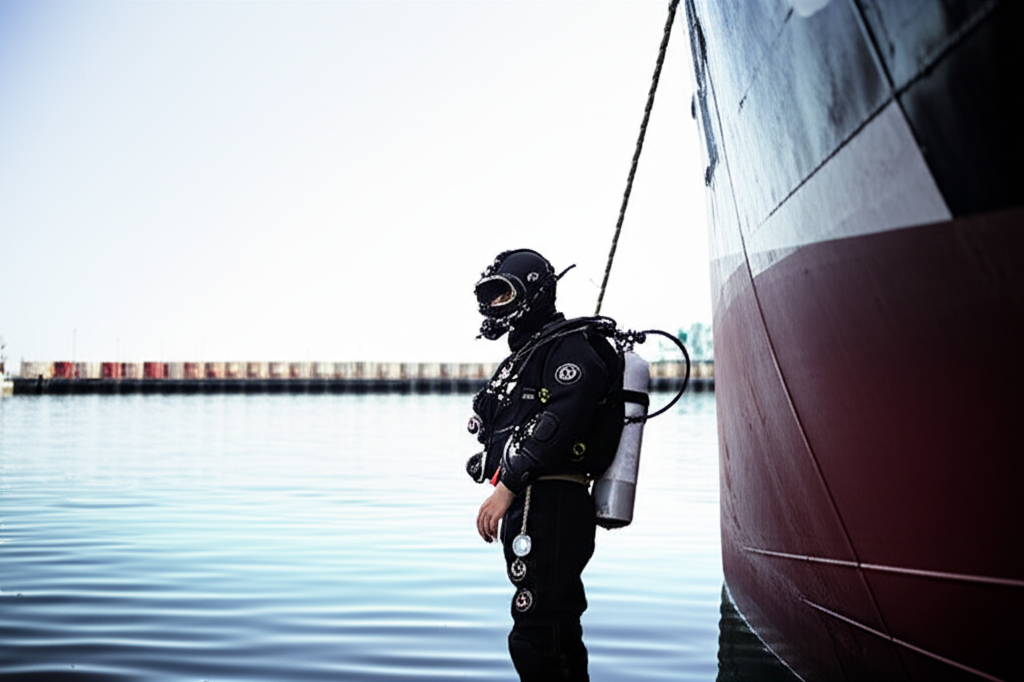
Diploma in Technical and Professional Diving
Why this certificate program?
The Diploma in Technical and Professional Diving
Immerse yourself in the most advanced techniques and knowledge for diving in demanding environments. Master accelerated decompression, the use of complex gas mixtures (trimix, heliox), and the operation of closed-circuit equipment (rebreathers). Develop skills in deep dive planning, underwater problem-solving, and risk management in technical environments. This program is designed to take you to the next level in your career as a professional diver.
Differential Advantages
- Intensive Practical Training: Simulated dives in controlled and realistic environments.
- Expert Instructors: Learn from professionals with extensive experience in technical and commercial diving.
- Internationally Recognized Certification: Expand your career opportunities globally.
- State-of-the-art Equipment: Familiarize yourself with the latest technology in technical diving equipment.
- Focus on Safety: We prioritize safety at every stage of learning.
- Modality: Online
- Level: Diplomado
- Hours: 800 H
- Start date: 01-10-2026
Availability: 1 in stock
Who is it aimed at?
- Certified recreational divers looking to take the lead to technical diving and expand their exploration limits.
- Diving professionals (instructors, guides) who want to diversify their skills and offer specialized services.
- Water rescue and safety personnel who need advanced training for operations in complex environments.
- Marine biologists, underwater archaeologists, and technicians who require specialized tools and techniques for their work.
- Underwater maintenance engineers and technicians seeking certification and updates in safe and efficient procedures.
Career flexibility:
Designed for professionals and enthusiasts: online format with intensive face-to-face training, access to multimedia resources and networking with industry experts.
Objectives and competencies

Manage and mitigate inherent risks:
“Implement safety procedures (SMS) and act proactively in the face of potential hazards, communicating effectively to the crew.”

Mastering advanced decompression techniques:
“Identify and mitigate risks associated with emergency shutdowns, rapid decompressions, and gas leaks.”

Use specialized technical diving equipment:
“Configure and verify the correct operation of rebreathers, twin cylinders, high-performance regulators and advanced dive computers, ensuring safety and efficiency in deep and prolonged dives.”

Solving problems and adapting to unforeseen events:
“Prioritize safety, assessing risks and acting proactively in the face of abnormal situations, communicating effectively to the team and adjusting plans according to the evolution of the event.”

Lead and supervise technical diving operations:
“Manage complex equipment (rebreathers, trimix) ensuring its correct maintenance and pre-dive configuration.”

Apply rigorous security protocols:
“Implement access control procedures, cybersecurity, and emergency contingency plans.”
Curriculum - Modules
- Comprehensive Maritime Incident Management: protocols, roles, and chain of command for coordinated response
- Operational Planning and Execution: briefing, routes, weather windows, and go/no-go criteria
- Rapid Risk Assessment: criticality matrix, scene control, and decision-making under pressure
- Operational Communication: VHF/GMDSS, standardized reports, and inter-agency liaison
- Tactical Mobility and Safe Boarding: RHIB maneuvers, approach, mooring, and recovery
- Equipment and Technologies: PPE, signaling, satellite tracking, and field data logging
- Immediate Care of the Affected: primary assessment, hypothermia, trauma, and stabilization for evacuation
- Adverse Environmental Conditions: swell, Visibility, flows, and operational mitigation
Simulation and training: critical scenarios, use of VR/AR, and exercises with performance metrics
Documentation and continuous improvement: lessons learned, indicators (MTTA/MTTR), and SOP updates
- Introduction to Respiratory Gases: Oxygen, Nitrogen, Helium, and Argon.
- Physiology of Respiration: Oxygen Consumption, CO2 Production, Dead Space.
- Gas Toxicity: Oxygen, Nitrogen (Narcosis), CO2.
- Decompression Sickness (DCS): Causes, Types, Symptoms, and Treatment.
- Decompression Models: Haldane, Bühlmann, VPM, RGBM.
- Dive Planning: Depth, Bottom Time, Gases, Ascent Rates.
- Decompression Tables and Dive Computers: Use and Limitations.
- Gas Mixtures: Nitrox, Trimix, Heliox: Advantages, disadvantages, and mixing procedures.
Life support systems: regulators, cylinders, buoyancy compensators.
Emergency procedures: equipment failure management, diver assistance.
‘
- Introduction to Diving Physiology: Gas Laws and Their Application.
- Respiratory System: Adaptation to Increased Pressure, Oxygen and Nitrogen Toxicity.
- Cardiovascular System: Effects of Immersion, Diving Reflex, Pulmonary Edema.
- Barotrauma: Prevention and Management in the Middle Ear, Paranasal Sinuses, and Lungs.
- Decompression Sickness: Bubble Formation, Risk Factors, Decompression Tables.
- Nitrogen Narcotics and High Pressure Nervous Syndrome (HPNS).
- Hypothermia and Hyperthermia: Prevention, Symptoms, and Treatment in Diving.
- Drowning and Near Drowning: Pathophysiology and Resuscitation Protocols.
- First aid in diving incidents: oxygen, fluid therapy, evacuation.
- Legal and ethical aspects of diving emergency care.
‘
- Introduction to Diving Physiology: Pressure, Gases, and the Human Body
- Advanced Respiratory Physiology: Gas Exchange, Lung Volumes, and Breath Control
- Cardiovascular Physiology in Diving: The Heart and Circulation’s Response to Immersion and Exercise
- Nervous System Physiology in Diving: Effects of Pressure and Gases on the Brain and Spinal Cord
- Thermoregulation in Diving: Heat Loss, Hypothermia, and Hyperthermia
- Etiology and Pathophysiology of Decompression Sickness (DCS)
- Oxygen Toxicity: Effects and Prevention
- Nitrogen Narcosis: Theories, risk factors, and management.
- Hypercapnia and hypoxia: Causes, consequences, and prevention in diving.
- New frontiers in research on the physiology of diving and extended decompression.
‘
- Introduction to the physiology of technical diving: differences with recreational diving.
- Oxygen physiology: toxicity, windows of opportunity, and monitoring.
- Carbon dioxide physiology: retention, narcosis, and closed-loop management.
- Nitrogen physiology: narcosis, decompression sickness, and advanced decompression models.
- Helium physiology: HPNS, trimix, and considerations at great depths.
- Management of hypothermia and hyperthermia in technical diving.
- Drowning and immersion in fresh/salt water: pathophysiology and rescue protocols.
- Dive pharmacology: drug interactions with diving technical.
- Pre-dive assessment: individual and environmental risk factors.
- Advanced first aid specific to technical diving incidents.
‘
- System Architecture and Components: Structural design, materials, and subsystems (mechanical, electrical, electronic, and fluid) with selection and assembly criteria for marine environments
- Fundamentals and Principles of Operation: Physical and engineering foundations (thermodynamics, fluid mechanics, electricity, control, and materials) that explain performance and operating limits
- Safety and Environmental (SHE): Risk analysis, PPE, LOTO, hazardous atmospheres, spill and waste management, and emergency response plans
- Applicable Regulations and Standards: IMO/ISO/IEC requirements and local regulations;
- Conformance criteria, certification, and best practices for operation and maintenance
- Inspection, testing, and diagnostics: Visual/dimensional inspection, functional testing, data analysis, and predictive techniques (vibration, thermography, fluid analysis) to identify root causes
- Preventive and predictive maintenance: Hourly/cycle/seasonal plans, lubrication, adjustments, calibrations, consumable replacement, post-service verification, and operational reliability
- Instrumentation, tools, and metrology: Measuring and testing equipment, diagnostic software, calibration and traceability; selection criteria, safe use, and storage
- Onboard integration and interfaces: Mechanical, electrical, fluid, and data compatibility; Sealing and watertightness, EMC/EMI, corrosion protection, and interoperability testing.
Quality, acceptance testing, and commissioning: process and materials control, FAT/SAT, bench and sea trials, go/no-go criteria, and evidence documentation.
Technical documentation and integrated practice: logs, checklists, reports, and a complete case study (safety → diagnosis → intervention → verification → report) applicable to any system.
- Introduction to Diving Physiology: Gas Laws and Their Implications
- Effects of Pressure: Barotrauma, Decompression Sickness (DCS)
- Oxygen Toxicity: Effects on the CNS and Lungs, PO2 Management
- Nitrogen Toxicity: Nitrogen Narcosis, Mechanisms, and Prevention
- Hypercapnia and Hypoxia: Causes, Symptoms, and Management in Technical Diving
- Physiology of Cold Immersion: Hypothermia, Response to Cold Shock
- Exercise Physiology in Diving: Oxygen Consumption, CO2 Production
- Dehydration and Diving: Effects on Decompression and Performance
- Physiological monitoring in technical diving: Use of sensors and alarms
- Research and advances in the physiology of diving and decompression
‘
Career opportunities
- Professional Diver in Underwater Engineering Projects: Construction, inspection, and repair of submerged structures.
- Search and Rescue Specialist Diver: Search, recovery, and assistance operations in hazardous aquatic environments.
- Technical Diving Instructor: Training and certification of divers in advanced techniques and the use of specialized equipment.
- Scientific Diver: Research and data collection in marine environments for underwater biology, geology, and archaeology projects.
- Aquaculture Diver: Maintenance, inspection, and repair of aquaculture facilities, as well as species management.
- Oil and Gas Industry Diver: Inspection, maintenance, and repair of platforms, pipelines, and other underwater infrastructure.
- Consultant in Technical and Professional Diving Operations: Advising on safety, planning, and Underwater project management.
ROV (Remotely Operated Vehicle) Operator: Operation of remotely operated vehicles for inspection, exploration, and manipulation in underwater environments.
“`
Admission requirements

Academic/professional profile:
Degree/Bachelor's degree in Nautical Science/Maritime Transport, Naval/Marine Engineering, or a related field; or proven professional experience in bridge/operations.

Language proficiency:
Recommended functional maritime English (SMCP) for simulations and technical materials.

Documentation:
Updated resume, copy of degree or seaman's book, ID card/passport, letter of motivation.

Technical requirements (for online):
Equipment with camera/microphone, stable connection, ≥ 24” monitor recommended for ECDIS/Radar-ARPA.
Admission process and dates

1. Online
application
(form + documents).

2. Academic review and interview
(profile/objectives/schedule compatibility).

3. Admission decision
(+ scholarship proposal if applicable).

4. Reservation of place
(deposit) and registration.

5. Induction
(access to campus, calendars, simulator guides).
Scholarships and grants
- Deep Diving: Master the techniques and equipment to dive beyond recreational limits.
- Advanced Decompression: Learn to plan and execute safe decompressions with mixed gases.
- Specialized Equipment: Become familiar with rebreathers, sidemounts, and other technical diving systems.
- Professional Certification: Obtain the necessary accreditation to work in technical and industrial diving.
- Safety and Emergency: Develop crucial skills for risk management and incident response.
Testimonials
The Diploma in Technical and Professional Diving exceeded my expectations. I acquired solid theoretical and practical knowledge, from planning complex dives to handling specialized equipment. The expert instruction and focus on safety allowed me to develop the confidence and skills necessary to explore challenging underwater environments professionally. Today, I feel prepared to assume leadership roles in technical diving projects and contribute significantly to marine research and conservation.
The Diploma in Underwater Operations exceeded my expectations. I acquired solid theoretical and practical knowledge in navigation, life support systems, emergency procedures, and ROV operation, which allowed me to obtain a position as an ROV pilot at a major offshore exploration company.
This diploma program exceeded my expectations. I acquired solid theoretical and practical knowledge, from the physics of diving to the handling of complex equipment. The personalized instruction and practical experience in challenging environments allowed me to develop the confidence and skills to become a competent and safe technical diver, ready to face new challenges in underwater exploration.
This diploma program exceeded my expectations. I gained solid theoretical and practical knowledge, from the physics of diving to the handling of complex equipment and emergency procedures. The personalized instruction and focus on safety allowed me to develop confidence and skills to perform professionally in challenging underwater environments. I now feel prepared to take on technical diving projects and explore new depths responsibly.

Frequently asked questions
Technical and professional diving.
Yes. The itinerary includes ECDIS/Radar-ARPA/BRM with harbor, ocean, fog, storm, and SAR scenarios.
Online with live sessions; hybrid option for simulator/practical placements through agreements.
It focuses on technical and professional diving, although it may review some fundamentals of recreational diving as a basis.
Recommended functional SMCP. We offer support materials for standard phraseology.
Yes, with a relevant degree or experience in maritime/port operations. The admissions interview will confirm suitability.
Optional (3–6 months) through Companies & Collaborations and the Alumni Network.
Simulator practice (rubrics), defeat plans, SOPs, checklists, micro-tests and applied TFM.
A degree from Navalis Magna University + operational portfolio (tracks, SOPs, reports and KPIs) useful for audits and employment.
- Introduction to Diving Physiology: Gas Laws and Their Implications
- Physiology of Partial Pressure of Oxygen (PO2): Oxygen Toxicity in Deep Diving
- Nitrogen Physiology: Narcosis and Decompression Sickness
- Physiological Considerations When Using Helium in Trimix Mixtures
- Effects of CO2: Retention, Toxicity, and Control in Deep Diving
- Thermoregulation in Cold and Warm Environments During Diving
- Physiology of the Cardiovascular System during Deep Diving
- Effects of Deep Diving on the Central Nervous System
- Decompression: Models and Algorithms, Factors of Risk.
- Physiological monitoring and safety in deep dives with Trimix.
‘
Request information
Complete the Application Form.
Attach your CV/degree certificate (if you have it to hand).
Indicate your preferred cohort (January/May/September) and whether you would like the hybrid option with simulator sessions.
An academic advisor will contact you within 24–48 hours to guide you through the admission process, scholarships, and compatibility with your professional schedule.
Faculty
Eng. Tomás Riera
Full Professor
Eng. Tomás Riera
Full Professor
Eng. Sofía Marquina
Full Professor
Eng. Sofía Marquina
Full Professor
Eng. Javier Bañuls
Full Professor
Eng. Javier Bañuls
Full Professor
Dr. Nuria Llobregat
Full Professor
Dr. Nuria Llobregat
Full Professor
Dr. Pau Ferrer
Full Professor
Dr. Pau Ferrer
Full Professor
Cap. Javier Abaroa (MCA)
Full Professor
Cap. Javier Abaroa (MCA)
Full Professor

