Master’s Degree in International Scientific Expeditions

Why this master’s programme?

The Master in International Scientific Expeditions

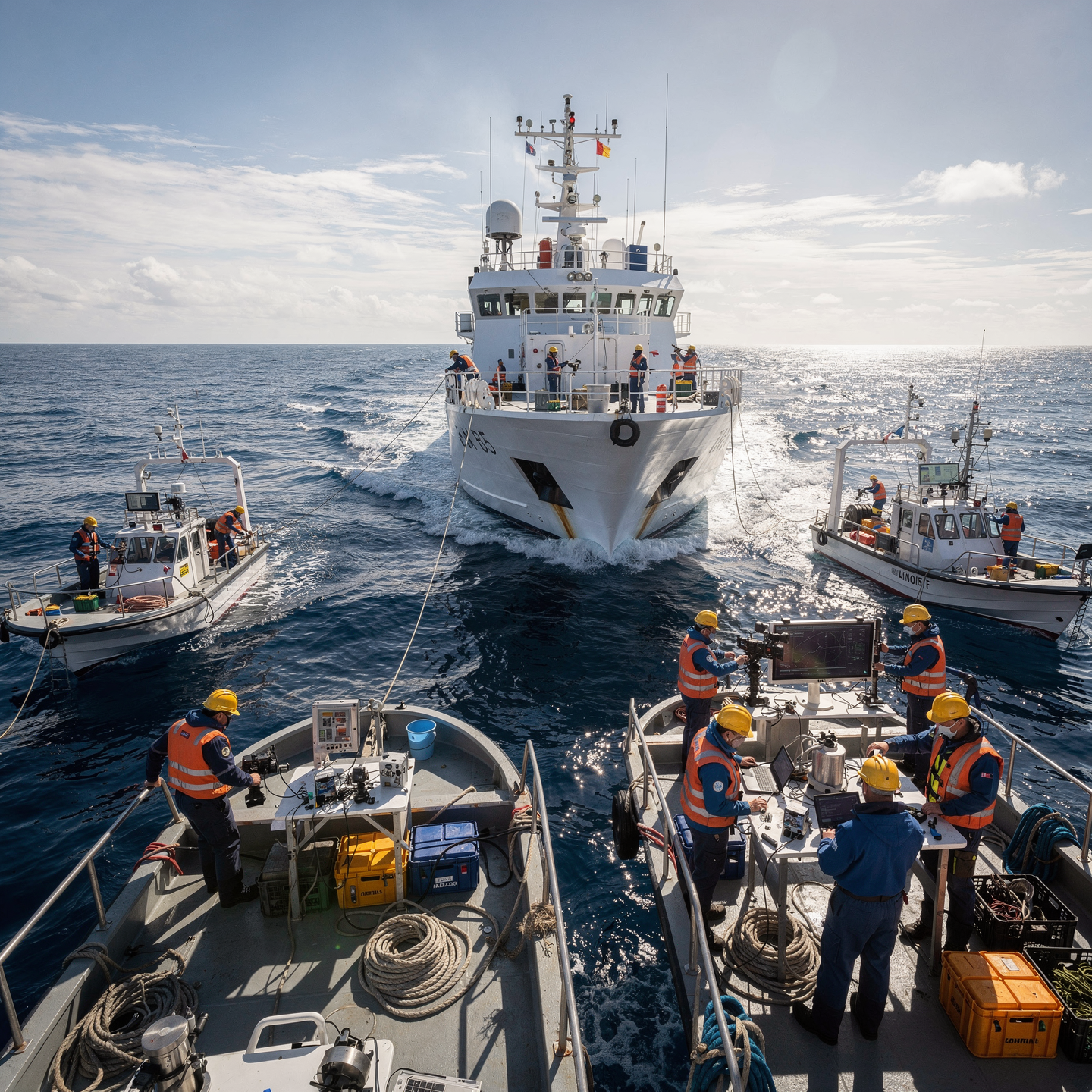
This program prepares you to lead and participate in cutting-edge research in remote and challenging environments. You will learn to design innovative projects, manage the complex logistics of expeditions, and apply field research techniques in various scientific disciplines. This program provides you with the skills necessary to contribute to the advancement of knowledge and the conservation of the planet.

This program prepares you to lead and participate in cutting-edge research in remote and challenging environments.

Differential Advantages

  • Comprehensive Expedition Planning: from risk management to permitting.
  • Field Research Methodologies: sampling techniques, data analysis, and scientific documentation.
  • Leadership and Teamwork: developing skills to manage multidisciplinary teams in demanding environments.
  • Effective Scientific Communication: presenting results to academic audiences and the general public.
  • Ethics and Sustainability: commitment to responsible research and environmental conservation.
Expediciones

Master’s Degree in International Scientific Expeditions

Availability: 1 in stock

Who is it aimed at?

  • Graduates in Biology, Geology, Oceanography, Anthropology, Archaeology, and other scientific disciplines who are looking to lead or participate in research expeditions in remote environments.
  • Conservation professionals, environmental educators, and science communicators interested in acquiring practical skills for planning, managing, and disseminating field projects.
  • Adventurers and explorers with a scientific background who want to deepen their knowledge of research methodologies and ensure the sustainability of their projects.
  • Expedition organizers and specialized travel agencies who need advanced training in logistics, safety, and risk management in extreme environments.
  • Researchers and academics looking to expand their experience in multidisciplinary fieldwork and collaboration International.

Flexibility for your career
 Designed for professionals and students: part-time and full-time study options, adaptable research projects, and connections with a global network of experts.

Expediciones

Objectives and skills

Leading and coordinating multidisciplinary teams in extreme environments:

“Implement adapted agile methodologies, fostering situational communication and decentralized decision-making under pressure.”

Managing and mitigating risks inherent in expeditions to remote locations:

“Implement emergency communication protocols, including medical evacuation and rescue plans, adapted to the characteristics of the remote environment and available resources.”

Collect and analyze high-quality scientific data under challenging conditions:

“Validate, process and correlate data from multiple sources (sensors, samples, observations) in real time, minimizing uncertainty and applying quality control methods.”

Develop and implement innovative research protocols in the field:

Implement agile methodologies and data analysis tools to optimize the collection, processing, and validation of information in complex environments with limited resources.

Effectively communicate scientific findings to diverse audiences:

Adapt the language and format according to the audience (experts, general public, media) using clear visualizations and avoiding unnecessary jargon.

To contribute to the advancement of scientific knowledge in unexplored geographical areas:

“Implement innovative sampling methodologies adapted to extreme environments, guaranteeing data integrity and minimizing environmental impact.”

Study plan – Modules

  1. Fundamentals and advanced methodologies for exploration in extreme environments: from site selection to preliminary environmental and logistical risk assessment
  2. Biological, geological, and atmospheric sampling techniques in remote ecosystems: standard protocols to ensure sample representativeness and preservation
  3. Application of geographic information systems (GIS) for spatial analysis: digital terrain modeling, ecological pattern analysis, and multisensor data management
  4. Integration of satellite and drone remote sensing technologies for high-resolution mapping: processing and calibration of multispectral and LiDAR images
  5. Advanced spatial statistics: interpolation techniques, autocorrelation analysis, and multivariate methods applied to geospatial data
  6. Protocols for the secure management and storage of data in international expeditions: metadata, interoperability standards, and relational databases
  7. Analysis of ecosystem dynamics through geospatial time series: detection of changes and assessment of anthropogenic and climate impact
  8. Specialized software for geospatial analysis and predictive modeling: open-source and proprietary GIS, Python and R programming applied to large volumes of data
  9. Design and execution of field campaigns: logistics, international permits, biosafety protocols, and ethical considerations in scientific research
  10. Multidisciplinary interpretation of results: integration of geospatial data with biological, chemical, and physical indicators for technical reports and scientific publications
  1. Analysis and evaluation of scientific objectives and multidisciplinary requirements for defining precise operational goals in international expeditions
  2. Advanced strategic planning: development of detailed schedules with appraisal phases, logistical design, execution, and continuous monitoring of field operations
  3. Selection and training of the interdisciplinary team: criteria of competence, cultural adaptability, and team management in extreme environments
  4. Comprehensive contingency plan design: risk protocols, management of medical emergencies, evacuation, and responses to adverse environmental conditions in remote settings
  5. Multimodal logistics management: coordination of land, sea, and air transport; ensuring the cold chain for biological samples and handling of sensitive scientific equipment
  6. Supply optimization: detailed calculation of consumables, technical equipment, and critical spare parts to guarantee autonomy in the field for extended periods
  7. Implementation of support technologies and satellite communication: link planning, data security, and real-time transmission protocols for decision-making.

    Real-time monitoring and control of material and human resources through integrated logistics management systems (ERP and specialized expedition logistics software).

    Environmental assessment and international permits: regulatory compliance, authorizations for sampling, and cross-border biosecurity protocols.

    Post-operational analysis: preparation of detailed reports, evaluation of key indicators, identification of bottlenecks, and feedback for continuous improvement in future expeditions.

  1. Fundamentals of remote sensing applied to remote ecosystems: physical principles and techniques for acquiring satellite and aerial data
  2. Advanced field sampling methodologies: statistical design and protocols for the accurate capture of environmental and biological variables in extreme environments
  3. Integration of Geographic Information Systems (GIS) and remote sensing for the multiscale and temporal analysis of remote habitats
  4. Processing and analysis of geospatial data: advanced algorithms for supervised and unsupervised classification, change detection, and predictive modeling
  5. Application of artificial intelligence and machine learning techniques in the interpretation of satellite images for the identification of ecological and phenological patterns
  6. High-precision georeferencing tools: differential GNSS and RTK technologies for the accurate delimitation of study areas under adverse conditions
  7. In-situ data capture and analysis methodologies: remote sensors, drones, and mobile platforms for real-time environmental monitoring
  8. Protocols for the management, storage, and standardization of large volumes of geospatial data in international expeditions
  9. Environmental impact assessment and advanced spatial modeling for planning and mitigation during expeditions
  10. Development of detailed technical reports and 3D visualizations for the effective communication of scientific results to multiple audiences
  1. International legal and regulatory framework: detailed analysis of conventions, treaties, and protocols relevant to operational safety in international scientific expeditions (UNCLOS, CITES, CBD, Nagoya Protocol).
  2. Assessment and mitigation of operational risks: identification of physical, environmental, and logistical threats; Development of comprehensive contingency plans and emergency response protocols in the field.

    Management of international permits and authorizations: procedures for obtaining permits for research, biological sampling, transport of materials, and access to protected areas or areas under exclusive jurisdiction, including coordination with local authorities and international organizations.

    Advanced field safety protocols: use of technology for real-time monitoring, satellite communication systems, management of personal protective equipment, and specialized training in survival and first aid adapted to remote and hostile environments.

    Ethics and best practices in field scientific research: guidelines for the protection of ecosystems and indigenous communities, responsible handling of sensitive data, and compliance with international bioethical standards in the collection and handling of samples.

    Rigorous quality control in the collection, preservation, and transport of samples: advanced sampling techniques, approved preservatives and packaging, documentary traceability, and ensuring the biochemical and genetic integrity of samples throughout the entire chain. Custodial services.

  3. Integrated management systems for expeditions: implementation of specialized software for the planning, execution, monitoring, and documentation of scientific activities, including Lean and Six Sigma methodologies applied to logistical and operational optimization.

    Training and leadership in managing multidisciplinary teams: development of skills in effective communication, conflict resolution, decision-making under pressure, and a shared safety culture to maximize efficiency and minimize human risks.

    Post-expedition audits, reports, and lessons learned: preparation of detailed technical reports, analysis of deviations and failures, and generation of improved protocols for future research.

    International legal and insurance aspects for expeditions: specialized insurance coverage, management of legal liabilities, indemnity clauses, and critical contractual aspects for projects in international and multi-jurisdictional environments.

  1. Fundamentals of advanced scientific instrumentation: physical principles, types of sensors and transducers applied to environmental and biological research
  2. Integration of telemetry and remote sensing systems: design, calibration, and real-time data synchronization for monitoring critical environmental variables
  3. Development and application of autonomous and robotic devices for data collection in hard-to-reach areas: drones, ROVs, and floating platforms
  4. Implementation of high-precision satellite and GNSS technologies for geolocation and scientific navigation in maritime, terrestrial, and aerial environments
  5. Advanced protocols for data acquisition, processing, and storage: filtering techniques, error correction, and Big Data management in international expeditions
  6. Innovations in optical instrumentation and spectrometry for in-situ analysis: design of portable systems and adaptations for extreme conditions
  7. Energy optimization and sustainable management of scientific equipment in the field: low-energy solutions Consumption, renewable sources, and operational autonomy

    Practical applications of artificial intelligence and machine learning for automated interpretation of instrumental data in scientific expeditions

    International regulations and technical standards for certification and homologation of instruments in cross-border scientific expeditions

    Case studies and real-world experiences: successful implementation of advanced technologies in multidisciplinary international scientific expeditions

  1. Fundamentals of strategic planning in scientific expeditions: objectives, scope, and situational analysis
  2. Design and structuring of multidisciplinary teams: selection, roles, and specific responsibilities
  3. Assessment of operational risks and safety protocols in international contexts and remote environments
  4. Advanced methodologies for inter-team coordination and communication: digital tools, protocols, and conflict management
  5. Comprehensive logistics planning: transportation, supplies, technical equipment, and adaptation to different ecosystems
  6. Management of permits, international regulations, and diplomatic agreements for conducting scientific research
  7. Implementation of monitoring systems, real-time control, and performance analysis during the expedition
  8. Optimization of schedules and dynamic adaptation to contingencies and unpredictable environmental factors
  9. Development of strategies for integrating emerging technologies and innovative techniques in the field
  10. Preparation of post-expedition executive and scientific reports: data analysis, results evaluation, and planning of future stages
  1. Comprehensive logistics chain design for international shipments: resource analysis, supplier management, and multimodal route optimization
  2. Advanced contingency plans and risk management in remote and changing environments: assessment of natural, political, and cultural threats
  3. Specialized personal and group security protocols in high-risk areas: crisis situation training, advanced first aid, and tactical equipment handling
  4. Technological innovation applied to logistics: integration of IoT systems for resource tracking, drones for reconnaissance and resupply, and real-time collaborative platforms
  5. AI-based predictive models to anticipate logistical variables: weather conditions, resource availability, and changes in international regulations
  6. Permit management and coordination with government entities and local organizations: legal and regulatory aspects affecting shipment logistics and security
  7. Optimization of transport and storage in extreme conditions: advanced packaging techniques, preservation Scientific sample handling and hazardous materials management

    Secure and redundant communication systems: satellite networks, tactical radio links, and encrypted protocols for critical operations

    Evaluation and updating of international safety standards for scientific expeditions: compliance with ISO, OSHA, and environmental safety regulations

    Methodologies for continuous innovation in logistics and safety: applied research, incorporation of field feedback, and development of adaptive solutions for future projects

  1. Fundamentals and principles of scientific sampling: experimental design, representativeness, and avoiding bias in international settings
  2. Biological sampling techniques: capture, handling, and labeling of marine and terrestrial organisms with minimal environmental disturbance
  3. Advanced geological sampling: selection of standards, auger techniques, direct sampling, and core sampling in extreme environments
  4. Preservation and conservation: chemical and physical methods to ensure the integrity of biological and geological samples during long expeditions
  5. International biosafety protocols and sample handling at borders: regulatory compliance and ethical management in host countries
  6. Preliminary in situ analysis: use of portable equipment for rapid characterization and adaptive decision-making in the field
  7. Advanced sample processing in mobile laboratories: instrumentation, quality control, and standardization of results to the highest scientific level
  8. Molecular and geochemical techniques applied: DNA/RNA extraction, gas chromatography, spectroscopy, and microscopy in expeditions
  9. Implementation of digital systems for traceability and document management: specialized software for international expeditions
  10. Environmental impact assessment and data analysis: multiscale integration for scientific reports and international publications
  1. Strategic Expedition Design: Analysis of scientific objectives, identification of areas of interest, and formulation of exploratory hypotheses
  2. Advanced Logistics for International Operations: Comprehensive resource management, remote field supply chain, and multinational coordination
  3. Risk Assessment and Mitigation: Security protocols, contingency management in hostile environments, and application of international regulations
  4. Transportation and Mobility Optimization: Selection of specialized land, sea, and air vehicles, and multimodal route planning
  5. Application of Emerging Technologies: Use of drones for mapping and surveillance, remote sensors, satellite communication systems, and IoT platforms for real-time monitoring
  6. Management of the Multidisciplinary Team: Leadership training, inter-institutional coordination, and conflict resolution during the expedition
  7. Innovations in Global Navigation Systems: Integration of GNSS, INS systems, and positioning algorithms for maximum accuracy in remote locations
  8. Biological and environmental safety protocols: sample handling, protection of sensitive ecosystems, and compliance with CITES regulations and biosafety protocols
  9. Critical communications planning: design of redundant networks, use of VSAT satellite technology, HF/VHF radios, and early warning systems
  10. Documentation, analysis, and reporting: electronic document management systems, data collection tools, and international standards for scientific dissemination
  1. Conceptualization and scope of the final project: definition of the scientific objective, interdisciplinarity, and international relevance
  2. Advanced methodologies for expedition design: integration of qualitative, quantitative, and mixed approaches in field research contexts
  3. Applied technological innovation: selection, adaptation, and deployment of emerging technologies for data collection, storage, and transmission in remote environments
  4. Comprehensive logistical planning: resource assessment, supply management, specialized transport, international permits, and inter-institutional coordination
  5. International security protocols: regulatory analysis (WHO, ILO, IMO), multidimensional risk assessment, and design of specific contingency plans for diverse geographic and climatic zones
  6. Design of organizational structures and chains of command: leadership, multidisciplinary roles, effective communication, and conflict management during the expedition
  7. Implementation of ethical and environmental responsibility protocols: international standards, Research permits, interaction with local communities, and sustainable resource management.

    Development of detailed operational schedules: preparation, execution, real-time monitoring, and post-expedition closure phases with results analysis.

    Document management tools and technical reports: standardized formats, evidence collection, metadata, and digital systems for scientific recording and dissemination.

    Critical evaluation and self-evaluation: identification of strengths, anticipated challenges, lessons learned, and recommendations for future expeditions.

    Incorporation of geolocation and telemetry technologies: use of drones, satellites, and remote sensors to optimize data collection and operational safety.

    Simulation and modeling of logistical and scientific scenarios: application of specialized software to anticipate contingencies and optimize resources.

    Integration of satellite communication systems and data encryption: ensuring the integrity, confidentiality, and availability of information during the expedition. Mission:

    Advanced scientific writing: preparing proposals, technical reports, articles for indexed journals, and presentations for international conferences.

    Preparation for oral defense and evaluation before a multidisciplinary committee: strategies, evidence-based argumentation, and peer-to-peer feedback management.

Career prospects

“`html

  • Scientific Expedition Project Manager: Planning, logistics, and coordination of expeditions in remote environments.
  • Field Research Scientist: Data collection, analysis, and participation in international research projects.
  • Environmental Consultant specializing in expeditions: Environmental impact assessment and development of sustainability strategies.
  • Science Educator and Communicator: Design of educational programs and communication of scientific results to diverse audiences.
  • Protected Area Resource Manager: Planning and management of scientific activities in national parks and nature reserves.
  • Scientific Equipment Technician for Expeditions: Maintenance, repair, and adaptation of equipment under extreme conditions.
  • Cartography and Geographic Information Systems (GIS) Specialist: Mapmaking and spatial analysis for expedition planning.

    Scientific and technical report writer: Preparation of detailed documentation of expedition results and findings.

    Expedition safety and emergency coordinator: Implementation of safety protocols and management of risk situations in remote environments.

    “`

Entry requirements

Academic/professional profile:

Bachelor’s degree in Nautical Science/Maritime Transport, Naval/Marine Engineering or a related qualification; or proven professional experience on the bridge/in operations.

Language proficiency:

Functional Maritime English (SMCP) recommended for simulations and technical materials.

Documentation:

Updated CV, copy of qualification or seaman’s book, national ID/passport, motivation letter.

Technical requirements (for online):

Device with camera/microphone, stable internet connection, monitor ≥ 24” recommended for ECDIS/Radar-ARPA.

Admissions process and dates

Online
application

(form + documents).

Academic review and interview

Admissions decision

Admissions decision

(+ scholarship offer if applicable).

Place reservation

(deposit) and enrolment.

Induction

(access to the virtual campus, calendars, simulator guides).

Scholarships and financial support

  • Plan cutting-edge expeditions: Master the logistics, risk management, and financing of international scientific projects.
  • Lead multidisciplinary teams: Develop intercultural communication, negotiation, and conflict resolution skills in challenging environments.
  • Impact global research: Participate in real-world projects, applying innovative methodologies and contributing to the advancement of knowledge across diverse disciplines.
  • Explore unique destinations: Gain hands-on experience in the field, from the Amazon to the Arctic, with access to state-of-the-art resources and technologies.
  • Build your professional network: Connect with international experts, leading institutions, and organizations that drive exploration and conservation.
Prepare for an exciting career, designing and leading expeditions that will make a difference.

Testimonials

Frequently asked questions

To provide students with a deep understanding of the planning, execution and management of international scientific expeditions.

Yes. The itinerary includes ECDIS/Radar-ARPA/BRM with harbor, ocean, fog, storm, and SAR scenarios.

Online with live sessions; hybrid option for simulator/practical placements through agreements.

Recommended functional SMCP. We offer support materials for standard phraseology.

Yes, with a relevant degree or experience in maritime/port operations. The admissions interview will confirm suitability.

Optional (3–6 months) through Companies & Collaborations and the Alumni Network.

Simulator practice (rubrics), defeat plans, SOPs, checklists, micro-tests and applied TFM.

A degree from Navalis Magna University + operational portfolio (tracks, SOPs, reports and KPIs) useful for audits and employment.

  1. Conceptualization and scope of the final project: definition of the scientific objective, interdisciplinarity, and international relevance
  2. Advanced methodologies for expedition design: integration of qualitative, quantitative, and mixed approaches in field research contexts
  3. Applied technological innovation: selection, adaptation, and deployment of emerging technologies for data collection, storage, and transmission in remote environments
  4. Comprehensive logistical planning: resource assessment, supply management, specialized transport, international permits, and inter-institutional coordination
  5. International security protocols: regulatory analysis (WHO, ILO, IMO), multidimensional risk assessment, and design of specific contingency plans for diverse geographic and climatic zones
  6. Design of organizational structures and chains of command: leadership, multidisciplinary roles, effective communication, and conflict management during the expedition
  7. Implementation of ethical and environmental responsibility protocols: international standards, Research permits, interaction with local communities, and sustainable resource management.

    Development of detailed operational schedules: preparation, execution, real-time monitoring, and post-expedition closure phases with results analysis.

    Document management tools and technical reports: standardized formats, evidence collection, metadata, and digital systems for scientific recording and dissemination.

    Critical evaluation and self-evaluation: identification of strengths, anticipated challenges, lessons learned, and recommendations for future expeditions.

    Incorporation of geolocation and telemetry technologies: use of drones, satellites, and remote sensors to optimize data collection and operational safety.

    Simulation and modeling of logistical and scientific scenarios: application of specialized software to anticipate contingencies and optimize resources.

    Integration of satellite communication systems and data encryption: ensuring the integrity, confidentiality, and availability of information during the expedition. Mission:

    Advanced scientific writing: preparing proposals, technical reports, articles for indexed journals, and presentations for international conferences.

    Preparation for oral defense and evaluation before a multidisciplinary committee: strategies, evidence-based argumentation, and peer-to-peer feedback management.

Request information

  1. Complete the Application Form.

  2. Attach your CV/degree certificate (if you have it to hand).

  3. Indicate your preferred cohort (January/May/September) and whether you would like the hybrid option with simulator sessions.

    An academic advisor will contact you within 24–48 hours to guide you through the admission process, scholarships, and compatibility with your professional schedule.

Please enable JavaScript in your browser to complete this form.
Click or drag a file to this area to upload.

Faculty

0
    0
    Tu carrito
    Tu carrito esta vacíoRegresar a la tienda
    Scroll to Top


