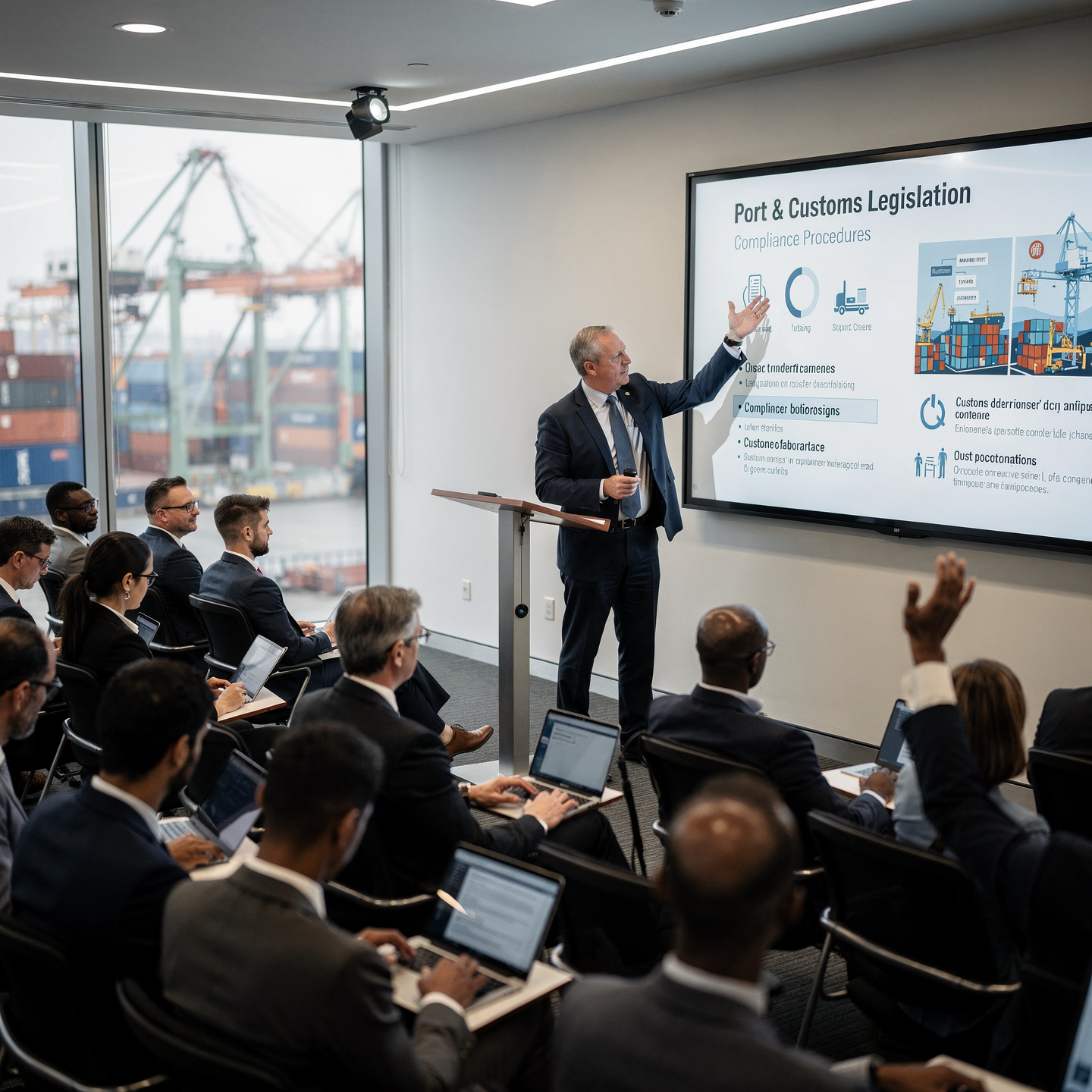
Master’s Degree in Port and Customs Legislation

Why this master’s programme?

The Master’s Degree in Port and Customs Law

This program offers an in-depth immersion in the legal framework governing maritime trade and customs operations. Master national and international regulations, from port management to customs regimes and foreign trade taxation. Learn to mitigate legal risks, optimize processes, and ensure regulatory compliance in a globalized and dynamic environment. This program provides you with the tools to excel as an expert in the sector.

Differential Advantages

  • Real-world case studies: practical application of legislation in complex scenarios.
  • International focus: comparative study of port and customs legislation at a global level.
  • Professional networking: contact with experts and companies in the sector.
  • Continuous updates: access to the latest legislative reforms and trends.
  • Skills development: negotiation, conflict resolution, and legal risk management.
Legislación

Master’s Degree in Port and Customs Legislation

Availability: 1 in stock

Who is it aimed at?

  • Lawyers specializing in maritime law and international trade seeking high-level specialization in port and customs regulations.
  • Port and logistics professionals (operators, freight forwarders, customs agents) who wish to advance to positions of responsibility requiring in-depth knowledge of applicable legislation.
  • Customs and port authority officials who need to update and expand their knowledge of the latest regulations and procedures.
  • Consultants and legal advisors seeking to expand their service portfolio by offering specialized solutions in the port and customs field.
  • Graduates in Law, Business Administration, and Economics aspiring to a professional career in the Maritime-port and customs sector with a solid legal approach.

    Flexibility and Specialization

    Master’s program designed for working professionals: online format, updated content, and a practical approach focused on solving real-world cases.

Legislación

Objectives and skills

Strategically manage customs logistics:

“Optimize import/export processes, minimizing costs and transit times, guaranteeing regulatory compliance and supply chain security.”

Interpreting and applying port regulations:

“To know the national and international legislation applicable to the port area (ISPS, maritime security, environment) and act accordingly.”

Optimize inspection and control processes:

Standardize inspection protocols, document results, and use data for continuous improvement.

Advising on regulatory compliance matters:

“Identify and assess risks of regulatory non-compliance (legal, reputational, operational) and propose preventive/corrective measures.”

Managing efficient port operations:

“Optimize the planning and execution of loading/unloading operations, coordinating resources (personnel, equipment, space) and minimizing downtime, ensuring safety and regulatory compliance.”

Defending the interests of the sector in the legal field:

“To know and apply relevant national and international maritime legislation, actively participating in forums and committees to influence the creation of favorable laws.”

Study plan – Modules

  1. Legal and regulatory framework applicable to port operations: international agreements, national legislation, and specific regulations for port and customs activities
  2. Comprehensive management of maritime terminals: operational planning, intermodal coordination, and optimization of resources and space
  3. Loading and unloading processes and procedures: safe handling of goods, document control, and time management
  4. Multimodal transport: concepts, modalities, associated documentation (CMR, Bill of Lading, Waybill), and its integration into the logistics chain
  5. Interoperability and coordination between modes of transport: maritime, road, rail, and air; Management and Traceability Systems

    Security Regulations and Protocols in Customs Operations: Controls, Inspections, Risks, and Preventive Measures for the Protection of the Logistics Chain

    Risk and Contingency Management in Ports: Emergency Plans, Incident Response, and Industrial and Environmental Safety Protocols

    Implementation of Advanced Technologies in Customs and Ports: Electronic Management Systems, Access Control, Scanners, and Real-Time Monitoring

    Customs Inspection Procedures: Techniques, Rights and Obligations, Use of Risk Profiles, and Technology for the Detection of Illicit Activities

    Legal Responsibilities and Regulatory Compliance: Case Studies, Administrative and Criminal Sanctions in Port and Customs Operations

    Impact of International Legislation on Port and Customs Management: WTO, ICAO, and Bilateral and Regional Agreements

    Optimization Logistics security: integration of ISPS (International Ship and Port Facility Security) systems and controlled access to restricted areas

    Evaluation and auditing of port and customs operations: key indicators, internal and external audits, and continuous improvement

    Training and capacity building in compliance and professional ethics: prevention of fraud and corruption, and facilitation of legitimate trade

    Sustainable development in port management: environmental regulations, waste management, and corporate social responsibility

  1. Fundamentals of international regulations applicable to port areas: MARPOL, SOLAS, and FAL conventions, and ISPS and ISM codes
  2. National regulations: analysis of current port legislation, roles and powers of maritime and customs authorities
  3. Specific customs procedures for import and export in ports: declarations, inspections, and tariff classification
  4. Compliance in maritime trade: design and implementation of regulatory compliance programs in port entities and customs brokers
  5. Special regimes in free trade zones and customs logistics areas: tax benefits, customs control, and legal requirements
  6. Risk control and management in the port logistics chain: tracking systems, vulnerability analysis, and fraud prevention
  7. Application of information technologies in customs control: SISCOMEX, single window, and one-stop-shop systems Unique in port operations
  8. Legal liability of the port operator and customs agent: analysis of contracts, insurance, and administrative and criminal penalties
  9. Inter-institutional coordination for regulatory compliance: customs, port authorities, maritime police, and environmental agencies
  10. Real-world case studies and relevant jurisprudence on port and customs legislation: conflict resolution and best operational practices
  1. International legal framework for port and customs matters: key conventions, agreements, and regulations (UN Convention on the Law of the Sea, Revised Kyoto Agreement, among others)
  2. National legislation applicable to customs management and port operations: comparative analysis and regulatory updates
  3. International and national customs procedures: goods clearance, tariff classification, customs valuation, and import/export regimes
  4. Comprehensive management of port areas: concessions, licenses, responsibilities, and legal obligations
  5. Customs control and inspection systems: audits, physical and documentary inspections, risk analysis techniques, and cargo selection
  6. Port infrastructure security: ISPS Code regulations, port security plans, access control, and threat prevention
  7. Logistics chain management in operations Customs: Coordination between customs agents, logistics operators, and port authorities

    Use of technology in customs and port procedures: Electronic management systems, traceability, and process automation

    Legal and criminal liability for customs and port non-compliance: Sanctions, administrative and judicial proceedings

    Analysis of case studies and relevant jurisprudence for the correct interpretation and application of customs and port regulations

  1. Maritime Law and International Regulations Applicable to Ports: International conventions, treaties, and IMO and WTO regulations, and their impact on port and customs management
  2. National Port Legislation: Comprehensive analysis of current regulations, regulatory bodies, concessions, port contracts, and the sanctions regime
  3. Customs Compliance: Principles, obligations, and legal responsibilities for agents, logistics operators, and tax officials
  4. Customs Control: Inspection procedures, audits, control methods, and the system of infractions and sanctions
  5. Comprehensive Risk Management in Maritime Trade: Identification, assessment, and mitigation of operational, legal, and security risks
  6. Cargo Control: Regulations applicable to the handling, storage, and transport of hazardous and non-hazardous goods in port areas
  7. Technologies for Maritime Trade Security: Electronic control systems, cargo traceability, blockchain, and automation in customs processes
  8. Customs and Port Information Systems: Integration, interoperability, and best practices in data management and reporting to regulatory entities
  9. Legal Aspects of Cybersecurity in Ports: Protection of critical infrastructure, incident response protocols, and data privacy regulations
  10. Case Studies and Relevant Jurisprudence: Analysis of judgments, administrative resolutions, and real-world examples of the application of the legal framework and compliance
  1. International and national regulatory framework for customs and port management: applicable agreements, treaties, and regulations
  2. Technological innovation applied to customs management: automated control systems, blockchain, and document digitization
  3. Advanced customs compliance strategies: risk analysis, predictive audits, and electronic verification protocols
  4. Implementation of emerging technologies for optimizing customs clearance: artificial intelligence, big data, and machine learning
  5. Risk control in port processes: identification, assessment, and mitigation using specialized software and IoT sensors
  6. Technological tools for integrated port management: Port Community Systems, traceability, and real-time monitoring
  7. Innovations in security Customs and Port Authorities: Biometric Controls, Intelligent Surveillance, and Digital Compliance

    Interoperability Protocols between Agencies Involved in International Trade: Customs, Port Authorities, Health, and Security

    Real-World Case Studies: Practical Application of Technology in Reducing Time and Costs in Customs and Port Operations

    Challenges and Future Perspectives in Port and Customs Legislation in the Face of Global Digital Transformation

  1. International legal framework in maritime trade: IMO, UNCITRAL, and UNCITRAL Conventions and their application in port and customs legislation
  2. National port and customs regulations: specific regulations, sovereignty and jurisdiction in exclusive economic zones (EEZs) and port areas
  3. Integrated customs procedures: goods clearance, tariff classification, customs valuation, and special regimes (temporary admission, transit, and export)
  4. Document management in foreign trade: cargo manifests, bills of lading, certificates of origin, and use of electronic logistics information systems
  5. Technologies applied to customs and port management: automated control systems (ASYCUDA, NCTS), blockchain, and cargo traceability
  6. Inspection and physical control procedures: non-intrusive scanning techniques, sampling, verification, and customs audits
  7. Port security and protection in accordance with the ISPS Code: roles, responsibilities, and risk mitigation measures in terminals
  8. Integrated logistics in ports: intermodal coordination, warehousing management, and loading and unloading operations under current regulations
  9. Sanctions regime and dispute resolution: administrative procedures, legal remedies, and arbitration in customs and port matters
  10. Emerging technological innovations: artificial intelligence, big data, and IoT systems applied to process optimization and regulatory compliance in maritime trade
  1. International legal framework for maritime trade: IMO and UNCITRAL conventions and bilateral agreements on customs and port transit
  2. Customs legislation: national and international regulations, goods regime, tariff classification, and customs valuation
  3. Port regulations and security: ISPS Code, control and surveillance protocols, access management, and risk prevention
  4. Customs operating procedures: clearance, physical and documentary control, audits, and electronic cargo tracking
  5. Comprehensive management of the port logistics chain: inter-institutional coordination, commercial documentation, and multimodal logistics coordination processes
  6. Advanced technologies in port and customs management: port information systems (PIS), electronic customs management platforms, and artificial intelligence tools for fraud detection
  7. Control and monitoring of dangerous goods and products subject to Special regulations in ports and customs

    Environmental regulations applicable to port operations and maritime trade: MARPOL compliance, waste management, and good environmental practices

    Cybersecurity in port operations: risk assessment, implementation of security protocols, and response to technological incidents

    Innovations in document management: use of blockchain for traceability, digitization of records, and automation of customs processes

    Professional training and certification in port and customs legislation: international standards and continuous regulatory updates

    Analysis of practical cases and relevant jurisprudence in port and customs law for strategic decision-making

  1. Fundamentals of International Maritime Law: sources, general principles, jurisdiction, and regulatory conflicts in maritime spaces and exclusive economic zones.
  2. Regulatory framework of customs legislation applied to port operations: current regulations, international treaties, and administrative procedures for goods control.
  3. Advanced regulatory compliance strategies: design and implementation of customs and port compliance programs, internal audits, and sanctions management.
  4. Detailed analysis of special customs regimes: free zones, customs warehouses, and customs transit, with a focus on optimizing operations and minimizing risks.
  5. Oversight in the port logistics chain: inspection methodologies, customs intelligence, and technological tools for traceability and real-time control of goods.

    Comprehensive risk management in port operations: identification, assessment, and mitigation of legal, financial, and reputational risks associated with maritime and customs activities.

    Civil and criminal liability in the port sector: analysis of case law and practical application in the prevention of customs offenses and fraud.

    Maritime and customs contracts: specialized clauses, dispute resolution, arbitration, and negotiation in international operations related to port traffic.

    Impact of blockchain technology and digitalization on port and customs regulatory management: mechanisms for automation, transparency, and legal certainty.

    The role of port and customs authorities in inter-institutional coordination and the effective application of legislation. current, with emphasis on oversight and sanctioning processes.

  1. International legal framework applicable to maritime trade: IMO, UNCITRAL, and CMI conventions and bilateral treaties
  2. Customs regulations: national legislation, EU regulations, and clearance procedures
  3. Regulation of port operations: concessions, contracts, and port administrative regimes
  4. Port security in accordance with the ISPS Code: implementation, threat assessment, and security plans
  5. Logistics chain management and customs control in maritime imports and exports
  6. Sanctions regime: infractions, administrative and judicial appeals in port and customs matters
  7. Risk prevention and control in port operations: occupational health, environment, and civil liability
  8. Digitalization and automation in customs: information systems, e-commerce, and secure electronic signatures
  9. Arbitration and dispute resolution in contracts Port and Customs Operations
  10. Legislation on Maritime Transport of Goods: Contracts, Liabilities, and Insurance
  11. Customs Control and Oversight: Inspections, Physical Verification, and Common Customs in the European Union
  12. Free Zone Regimes, Customs Warehouses, and Suspensive Regimes in Maritime Trade
  13. Safety and Control Procedures in the Handling of Dangerous Goods and Regulated Substances
  14. Regulatory Framework for the Protection of the Marine Environment in Port Operations: MARPOL and Complementary Environmental Regulations
  15. National and International Maritime and Customs Security Policies and Strategies: Cooperation and Regulatory Bodies
  1. International and national regulatory framework applicable to compliance in port and customs management: comprehensive analysis of international conventions, bilateral treaties, and relevant domestic legislation.
  2. Fundamental principles of compliance in port and customs environments: definition, scope, and integration of compliance policies based on international standards such as ISO 19600 and ISO 37001.
  3. Assessment of regulatory and operational risks in ports and customs: advanced methodologies for the identification, analysis, and mitigation of legal, financial, and security risks.
  4. Design of a comprehensive regulatory compliance model: organizational structure, operating protocols, codes of conduct, and internal control systems applied to port and customs activities.
  5. Implementation of operational security and customs protection strategies: inspection protocols, physical and technological controls, and coordination with national and international security agencies.
  6. Monitoring and continuous compliance auditing: digital tools, key performance indicators (KPIs), and internal audit plans to ensure regulatory adherence and continuous improvement.

    Incident management and contingency plans in port and customs operations: response protocols for regulatory non-compliance, fraud, smuggling, and other security threats.

    Integration of technology in compliance and security: blockchain for document traceability, artificial intelligence for risk detection, and automated customs control systems.

    Training and compliance culture: development of ongoing training programs for port and customs personnel focused on ethics, responsibility, and risk prevention.

    Final report and executive presentation of the project: development of a detailed plan for the effective implementation of the comprehensive model, with strategic recommendations, success metrics, and an operational timeline.

Career prospects

“`html

  • Legal Advisor for Port and Customs Companies: drafting and analysis of contracts, regulatory compliance, litigation management.
  • Customs Broker: tariff classification, processing of customs clearances, representation before the administration.
  • Port Legislation Consultant: advice on concessions, port fees, and sector regulations.
  • Public Administration Technician: in regulatory bodies of the port and customs sector, control and supervision.
  • Compliance Officer: implementation of policies for the prevention of crime and money laundering in the port and customs sector.
  • Internal Auditor in Companies in the Sector: verification of compliance with current legislation in the area Port and customs law.
  • Researcher and analyst: in research centers and universities, conducting research on port and customs legislation.
  • Lecturer: in educational institutions, providing training on port and customs legislation.

“`

Entry requirements

Academic/professional profile:

Bachelor’s degree in Nautical Science/Maritime Transport, Naval/Marine Engineering or a related qualification; or proven professional experience on the bridge/in operations.

Language proficiency:

Functional Maritime English (SMCP) recommended for simulations and technical materials.

Documentation:

Updated CV, copy of qualification or seaman’s book, national ID/passport, motivation letter.

Technical requirements (for online):

Device with camera/microphone, stable internet connection, monitor ≄ 24ā€ recommended for ECDIS/Radar-ARPA.

Admissions process and dates

Online
application

(form + documents).

Academic review and interview

Admissions decision

Admissions decision

(+ scholarship offer if applicable).

Place reservation

(deposit) and enrolment.

Induction

(access to the virtual campus, calendars, simulator guides).

Scholarships and financial support

  • Comprehensive Regulatory Analysis: Delve into national and international port and customs legislation, crucial for efficient management and legal compliance.
  • Advanced Customs Strategies: Master valuation techniques, tariff classification, and origin of goods, optimizing processes and minimizing risks.
  • Effective Port Management: Learn to plan, organize, and control port operations, considering safety, environmental, and sustainability aspects.
  • Legal Dispute Resolution: Acquire skills to interpret and apply regulations in specific cases, defending your organization’s interests.
  • Professional Networking: Connect with industry experts, port authorities, and colleagues, expanding your network and career opportunities. Boost your career in the port and customs sector with specialized, cutting-edge training.

Testimonials

Frequently asked questions

Yes. The itinerary includes ECDIS/Radar-ARPA/BRM with harbor, ocean, fog, storm, and SAR scenarios.

Online with live sessions; hybrid option for simulator/practical placements through agreements.

Recommended functional SMCP. We offer support materials for standard phraseology.

Yes, with a relevant degree or experience in maritime/port operations. The admissions interview will confirm suitability.

Optional (3–6 months) through Companies & Collaborations and the Alumni Network.

Simulator practice (rubrics), defeat plans, SOPs, checklists, micro-tests and applied TFM.

A degree from Navalis Magna University + operational portfolio (tracks, SOPs, reports and KPIs) useful for audits and employment.

  1. International and national regulatory framework applicable to compliance in port and customs management: comprehensive analysis of international conventions, bilateral treaties, and relevant domestic legislation.
  2. Fundamental principles of compliance in port and customs environments: definition, scope, and integration of compliance policies based on international standards such as ISO 19600 and ISO 37001.
  3. Assessment of regulatory and operational risks in ports and customs: advanced methodologies for the identification, analysis, and mitigation of legal, financial, and security risks.
  4. Design of a comprehensive regulatory compliance model: organizational structure, operating protocols, codes of conduct, and internal control systems applied to port and customs activities.
  5. Implementation of operational security and customs protection strategies: inspection protocols, physical and technological controls, and coordination with national and international security agencies.
  6. Monitoring and continuous compliance auditing: digital tools, key performance indicators (KPIs), and internal audit plans to ensure regulatory adherence and continuous improvement.

    Incident management and contingency plans in port and customs operations: response protocols for regulatory non-compliance, fraud, smuggling, and other security threats.

    Integration of technology in compliance and security: blockchain for document traceability, artificial intelligence for risk detection, and automated customs control systems.

    Training and compliance culture: development of ongoing training programs for port and customs personnel focused on ethics, responsibility, and risk prevention.

    Final report and executive presentation of the project: development of a detailed plan for the effective implementation of the comprehensive model, with strategic recommendations, success metrics, and an operational timeline.

Request information

  1. Complete the Application Form.

  2. Attach your CV/degree certificate (if you have it to hand).

  3. Indicate your preferred cohort (January/May/September) and whether you would like the hybrid option with simulator sessions.

    An academic advisor will contact you within 24–48 hours to guide you through the admission process, scholarships, and compatibility with your professional schedule.

Please enable JavaScript in your browser to complete this form.
Click or drag a file to this area to upload.

Faculty

0
    0
    Tu carrito
    Tu carrito esta vacĆ­oRegresar a la tienda
    Scroll to Top


