Master’s Degree in Nanotechnology for the Naval Industry
Why this master’s programme?
The Master in Nanotechnology for the Naval Industry
This program prepares you to lead innovation in the maritime sector. Learn to apply the unique properties of nanomaterials to optimize the performance, durability, and sustainability of vessels and naval structures. This program explores everything from the development of antifouling and corrosion-resistant coatings to the implementation of nanotechnology sensors for structural monitoring and improved energy efficiency. Master the techniques for characterizing, manipulating, and modeling nanomaterials, and learn to assess their environmental and regulatory impact.
Differential Advantages
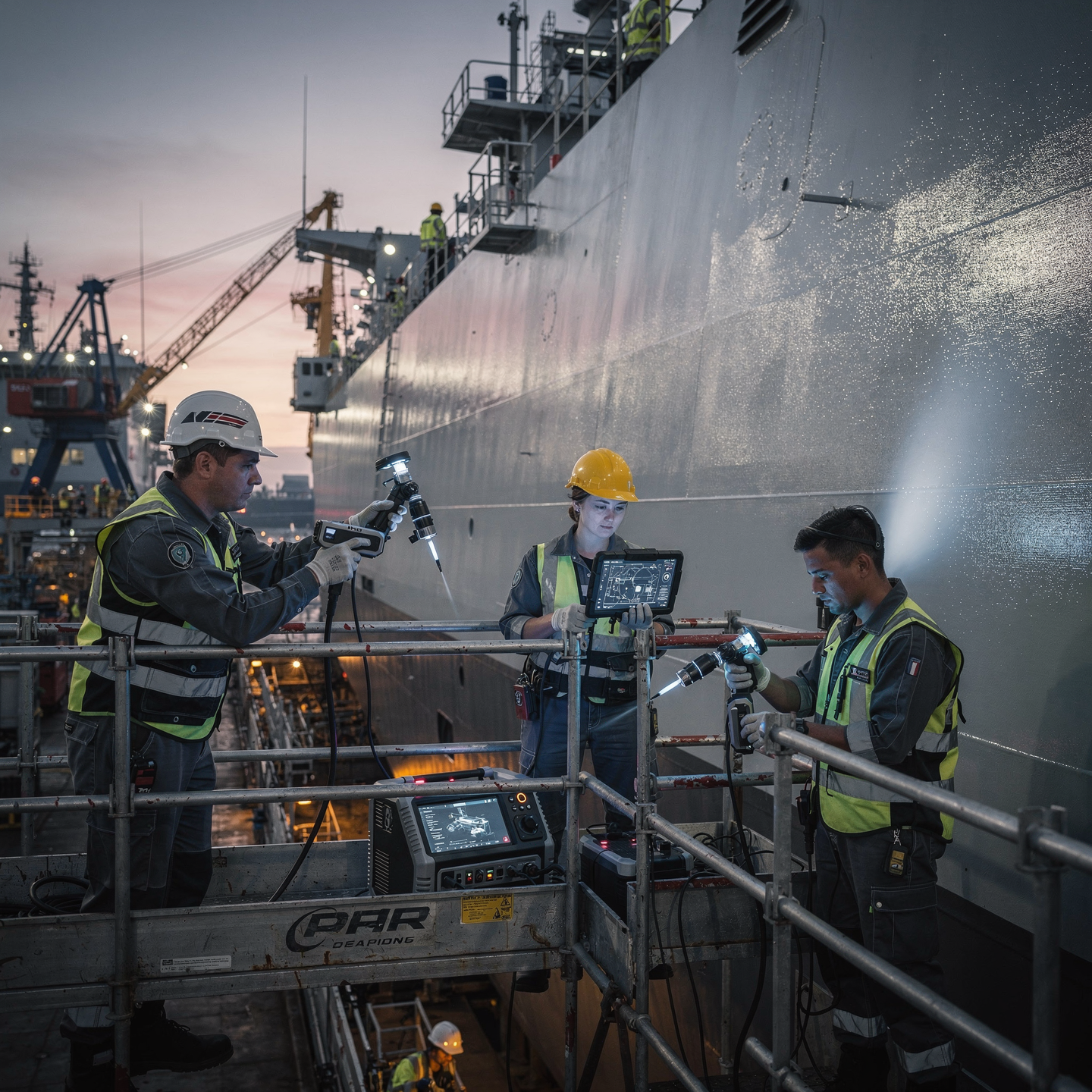
- Practical Approach: Specialized laboratories with state-of-the-art equipment for the synthesis and analysis of nanomaterials.
- Collaboration with Industry: Real-world projects with leading companies in the naval sector and shipyards.
- Development of Innovative Solutions: Design and optimization of nanotechnology materials for specific applications in the naval industry.
- Comprehensive Vision: Consideration of economic, environmental, and safety aspects in the implementation of nanotechnology.
- Expert Faculty: Professors with extensive experience in research and development in nanotechnology and its application in the naval field.
- Modality: Online
- Level: Masters
- Hours: 1600 H
- Start date: 26-04-2026
Availability: 1 in stock
Who is it aimed at?
- Naval engineers and naval architects interested in the application of nanomaterials to improve the efficiency, strength, and sustainability of vessels.
- Materials scientists and chemists seeking to specialize in the development and characterization of nanorecoatings and nanocomposites for the naval industry.
- Naval industry professionals wishing to update their knowledge of the latest innovations in nanotechnology and their impact on shipbuilding and maintenance.
- Researchers and developers seeking to delve deeper into the research and development of new applications of nanotechnology in the maritime sector.
- Graduates in engineering, physics, or chemistry aspiring to a career in the field of nanotechnology applied to industry Naval, with a focus on innovation and sustainability.
Flexibility for your career
Program designed for active professionals: online learning with multimedia resources, discussion forums, and personalized tutoring to adapt to your pace.
Objectives and skills

Developing innovative solutions for corrosion in marine environments:
“Implement advanced coatings and electrochemical techniques, adapting preventive strategies to the specific characteristics of the marine environment.”

Implementing nanotechnology materials to optimize the energy efficiency of vessels:
“Integrating nanotechnology coatings into propellers and hulls to reduce friction and fuel consumption, monitoring their performance using specialized sensors and adjusting navigation parameters in real time.”

Integrating advanced nanosystems to improve the detection and control of contaminants in water:
“Develop nanomaterial-based sensors with high sensitivity and selectivity for specific contaminants, implementing automated control systems that use this data to optimize treatment and remediation processes.”

Applying nanotechnology to improve the strength and durability of naval structures:
“By applying anti-corrosive and self-healing nanotechnology coatings, increasing the lifespan and reducing maintenance costs.”
Create nanostructured coatings that minimize the adhesion of marine organisms (biofouling):
“Synthesizing materials with controlled roughness and low surface energy, incorporating nanoparticles with anti-adhesion properties or releasing biocidal compounds with low environmental impact.”

Designing nanotechnology sensors to monitor the structural health of ships:
“Integrating nanostructured materials with piezoelectric or fiber optic properties to detect deformation, corrosion, and fatigue in real time.”
Study plan – Modules
- Fundamentals of nanomaterials: atomic structure, specific physical and chemical properties for naval applications
- Types of nanomaterials used in the naval industry: carbon nanotubes, metallic nanoparticles, polymer nanocomposites, and nanocoatings
- Optimization of naval materials through nanotechnology: improved mechanical strength, advanced corrosion resistance, and reduction of structural weight
- Advanced manufacturing processes: techniques for incorporating nanomaterials in the manufacture of hulls, propulsion systems, and auxiliary systems
- Nanotechnology in marine coatings: formulation and application of self-cleaning, antifouling, and self-healing nanocoatings
- Nanomaterials for improving energy efficiency: nanostructures for thermal insulation and electrical conductivity in naval systems
- Methodologies for the control and characterization of nanomaterials: spectroscopy, electron microscopy and surface analysis to guarantee quality and performance
Innovation in predictive and restorative maintenance: nanosensors for early detection of corrosion and wear in critical components
Environmental impact and regulations associated with the use of nanomaterials in the naval sector: risks, management, and international regulations
Case studies and real-world applications: detailed analysis of nanotechnology projects and developments applied to commercial and military vessels
- Fundamentals of nanotechnology applied to coatings: physicochemical and mechanical properties at the nanoscale
- Types of nanostructures for industrial coatings: nanoparticles, nanotubes, nanocomposites, and self-assembled layers
- Advanced mechanisms of corrosion protection using nanostructured coatings: electrochemical inhibition and physical barriers
- Synthesis and deposition techniques of nanostructured coatings: sol-gel, chemical vapor deposition (CVD), physical vapor deposition (PVD), and electrodeposition
- Optimization of adhesion and durability of nanometric coatings on naval steel and marine metal alloys
- Evaluation of corrosion resistance in marine environments: accelerated, potentiostatic, and electrochemical tests (EIS, LPR)
- Nanotechnology for improving energy efficiency in ships: coatings with properties Thermal insulation and hydrodynamic friction reducers
Incorporation of functional nanoparticles for multifunctional coatings: self-cleaning, antifouling, and integrated sensors
Environmental impact and sustainability: eco-friendly nanomaterials, recyclability, and applicable regulations in the shipbuilding industry
Case studies and industrial application: analysis of real projects, implementation, costs, and return on investment in nanostructured coatings
- Introduction to nanomaterials: definition, classification, and fundamental physicochemical properties applied in the shipbuilding industry
- Advanced nanomaterials for corrosion: electrochemical mechanisms and inhibition techniques using nanostructured coatings
- Design and synthesis of nanostructured coatings: physical and chemical methods, including sol-gel, chemical vapor deposition (CVD), and electrospinning
- Advanced characterization of coatings: electron microscopy techniques (SEM, TEM), Raman spectroscopy, X-ray diffraction, and surface analysis (AFM and XPS)
- Functional properties of nanostructured coatings: mechanical strength, hydrophobicity, self-cleaning, and antibacterial properties for aggressive marine environments
- Application of nanocoatings for improved energy efficiency: reduction of hydrodynamic drag using superhydrophobic and structural coatings
- Performance and durability evaluation of nanocoatings under real-world conditions: environmental simulations, accelerated testing, and in-service monitoring
- Nanotechnology in intelligent corrosion protection systems: self-healing coatings and controlled release of corrosion inhibitors
- Environmental impact and applicable regulations for nanomaterials in the shipbuilding industry: life cycle assessment, toxicity, and international regulations
- Case studies and real-world industrial applications: optimization of the service life of hulls, structural components, and propulsion systems using nanotechnologies
- Future perspectives and emerging trends in nanotechnology for the shipbuilding sector: multifunctional materials, intelligent coatings, and integrated monitoring systems
- Protocols for industrial implementation: scaling, quality control, and costs associated with integrating nanomaterials into shipbuilding production lines
- Fundamentals of nanomaterials in naval applications: relevant physical, chemical, and mechanical properties
- Design and synthesis of multifunctional nanocomposites: selection of polymeric, metallic, and ceramic matrices; Incorporation of nanoparticles and carbon nanotubes
Advanced computational modeling: molecular simulation, particle dynamics, and multiscale analysis to predict the structural and functional behavior of nanocomposites
Evaluation of mechanical properties: fatigue resistance, hardness, toughness, and corrosion resistance in extreme marine environments
Industrial manufacturing techniques: impregnation, coating, and sintering processes applied to naval structures with nanotechnology
Integration and scalability: challenges and solutions for industrial-scale production while maintaining material functionality and uniformity
International technical standards and certifications: ISO, ASTM, and specific maritime certifications for nanostructured materials
Non-destructive testing and real-time monitoring: methodologies based on ultrasound, advanced spectroscopy, and integrated nanosensors
- Environmental Impact and Sustainability: Life Cycle Analysis, Biodegradability, and Recyclability of Nanocomposites in the Shipbuilding Industry
- Practical Applications and Success Stories: Analysis of Naval Projects that Have Implemented Nanocomposites to Improve Performance, Safety, and Efficiency
- Fundamentals of nanotechnology in naval systems: unique properties of nanomaterials and their impact on marine applications
- Mechanisms for improving naval propulsion through nanometric coatings: reduction of friction, biofouling, and corrosion
- Advanced nanocomposites for the manufacture of propellers and transmission components: improvement of mechanical strength and optimization of hydrodynamic performance
- Design and characterization of nanomaterials for energy storage and conversion systems in vessels: high-performance batteries and supercapacitors
- Energy optimization through thermo-reflective and heat-absorbing nano-coatings in marine engines and auxiliary systems
- Integration of nanostructured sensors for real-time monitoring of critical propulsion system parameters and energy efficiency
- Computational modeling and multiscale simulation of nano-hydrodynamic interactions to improve system design propulsion systems
- Applications of nanotechnology in naval catalysis for fuel optimization and reduction of pollutant emissions
- Predictive maintenance strategies and nanomaterial repairs to extend the service life of naval propulsion systems
- International regulations, certifications, and standards applicable to the implementation of nanotechnology in the naval industry
- Fundamentals of nanotechnology applied to naval materials: physicochemical properties and mechanisms of action at the nanoscale
- Design and synthesis of nanomaterials for advanced coatings: metallic nanoparticles, oxides, and functionalized polymers
- Structural nanocomposites for vessels: improvement of mechanical strength, toughness, and fatigue behavior
- Nanostructured antifouling and anticorrosion coatings: electrochemical mechanisms, controlled release, and self-regeneration
- Deposition technologies and application in the naval industry: plasma techniques, thermal spraying, and molecular self-assembly
- Advanced characterization of nanostructured materials: electron microscopy, Raman spectroscopy, and diffraction analysis
- Impact of nanocoatings on energy efficiency: reduction of hydrodynamic friction and optimization of propulsive performance
- Analysis of Durability and resistance to extreme marine environments: accelerated testing and predictive modeling based on nanotechnologies
International regulations and standards for the application of nanotechnology in the naval industry: safety, sustainability, and certifications
Case studies and industrial applications: real-world implementation and evaluation of results on commercial and military vessels
- Introduction to nanomaterials: physical, chemical, and mechanical properties relevant to their application in the naval industry
- Advanced synthesis of nanomaterials: manufacturing and optimization techniques for nanostructured coatings resistant to aggressive marine environments
- Nanostructural characterization: spectroscopic methods and electron microscopy for the detailed analysis of nanoparticulate surfaces and interfaces
- Engineering of nanostructured coatings: formulation, deposition, and thin-film techniques for corrosion protection and improved naval durability
- Smart nanomaterials: development of coatings with self-healing properties and integrated sensors for real-time monitoring
- Evaluation of corrosion behavior: accelerated protocols and degradation studies in saline and high-pressure underwater environments
- Integration of nanocomposites into naval structural materials: impact on mechanical strength, weight, and energy efficiency of Vessels
- Applications of nanocoatings in hydrodynamics: friction reduction, biofouling resistance, and optimization of propulsion performance
- International standards and certifications for the use of nanotechnology in naval systems: safety, environment, and sustainability
- Case studies and innovative projects: practical implementation of nanomaterials in the construction and advanced maintenance of commercial and military vessels
- Sustainable development and green nanotechnology: environmentally friendly materials and manufacturing processes with low environmental impact for the naval industry
- Future perspectives and emerging trends: nanotechnology and digitalization for the next generation of smart and sustainable vessels
- Fundamentals of Nanomaterials in Naval Engineering: atomic structure, physical and chemical properties, and behavior in marine environments
- Advanced synthesis of functional nanomaterials: physicochemical methods, self-assembly, deposition, and nanoscale manufacturing techniques
- Technical characterization and analysis of nanomaterials: spectroscopy, electron microscopy, X-ray diffraction, and surface techniques for evaluating specific properties
- Nanocomposites for anticorrosive and antifouling coatings: formulations, mechanisms of action, and performance evaluation under extreme marine conditions
- Optimization of nanomaterial design using multiscale computational modeling and molecular dynamics simulations for mechanical and functional properties
- Surface functionalization and chemical modification to improve the adhesion, mechanical strength, and durability of materials in naval structures
- Integration of nanomaterials into metallic alloys
Advanced nanotechnology: impact on wear, fatigue, and corrosion resistance in critical naval components
Nanotechnology for energy efficiency: development of nanomaterials for advanced thermal insulation and energy management systems in ships
Environmental assessment and sustainability of nanomaterials: eco-design, life cycle, toxicity, and strategies to minimize impacts on marine ecosystems
Case studies and practical applications: innovation in naval transport, propulsion systems, and smart sensors based on nanotechnology for real-time structural monitoring
- Fundamentals of nanomaterials in naval engineering: nanoscale physicochemical and mechanical properties, interaction mechanisms, and behavior in marine environments
- Design and synthesis of advanced nanocomposites: bottom-up and top-down manufacturing techniques, surface functionalization, and optimization of polymeric, metallic, and ceramic matrices for naval applications
- Nanostructured coatings for corrosion and antifouling protection: principles of self-healing, controlled release of biocides, and improved adhesion to underwater structures
- Evaluation of the stability, durability, and aging of nanocomposites under extreme marine conditions: accelerated simulations, fracture analysis, and predictive modeling
- Integration of nanocoating technologies into naval industrial processes: application methods, scalability, quality control, and standardization
- Innovations in naval propulsion technologies based on nanomaterials: nanofluids for cooling and Lubrication, nanostructures for friction reduction and energy efficiency improvement
Environmental impact and sustainability analysis: life cycle of nanostructured materials, potential toxicity, waste management, and applicable international regulations
International standards and certifications for nanotechnology materials and technologies in the naval industry: ISO, ASTM, and specific maritime regulations
Practical applications and case studies: successful implementation of nanocomposites and coatings on commercial and military vessels, technological benchmarking, and return on investment
Advanced workshop on nanostructural characterization: transmission electron microscopy (TEM), Raman spectroscopy, X-ray diffraction (XRD), and complementary techniques for quality control
Collaborative development and open innovation: strategic alliances between research centers, the naval industry, and nanotechnology suppliers to accelerate technology transfer
Future perspectives in naval nanotechnology: emerging trends, technological challenges, and opportunities for sustainability competitiveness in the global market
- Advanced principles of nanotechnology applied to the naval industry: physical and chemical properties of materials at the nanoscale and their impact on improving naval performance.
- Design and synthesis of multifunctional nanostructures: manufacturing techniques (CVD, ALD, electrospinning) and their integration into naval components to improve strength, durability, and efficiency.
- Nano-bioenvironmental interaction mechanisms for biofouling reduction: development of smart coatings with nanotechnology for microbial control and prevention of biological deterioration in hulls and propulsion systems.
- Nanomaterials for efficient propulsion systems: application of nanocomposites in the manufacture of turbines, engines, and propellers to optimize energy transfer and reduce losses due to friction and corrosion.
- Computational modeling and simulation of nanostructures in marine environments: numerical methods to predict the mechanical, thermal, and chemical behavior of nanomodified materials under operating conditions.
- Environmental impact assessment and sustainability: life cycle analysis of nanostructures applied in the naval industry and strategies to minimize the ecological footprint and optimize reuse and recycling.
- Advanced characterization protocols: electron microscopy, spectroscopy, and diffraction techniques to validate the properties and functionalities of nanostructures developed for naval propulsion systems.
- Integration of nanostructured sensors for real-time monitoring: development of intelligent systems based on nanotechnology for early fault detection and optimization of predictive maintenance in engines and propellers.
- International regulations and safety standards in the application of naval nanotechnology: compilation and analysis of regulations to ensure certification and regulatory compliance of implemented technologies.
- Preparation and defense of the final project: comprehensive development of a multifunctional nanostructure project aimed at improving efficiency and sustainability in naval propulsion systems, with practical application and documentation detailed technique.
Naval applications.
Career prospects
“`html
- Research and Development (R&D) in the Naval Industry: Development of new materials, coatings, and nanotechnology sensors for maritime applications.
- Materials and Process Engineering: Optimization of corrosion resistance, energy efficiency, and durability of naval structures using nanotechnology.
- Specialized Technical Consulting: Advising naval companies on the implementation of nanotechnology solutions to improve vessel performance and safety.
- Quality Control and Non-Destructive Testing (NDT): Use of nanotechnology techniques for the early detection of failures and defects in naval materials and components.
- Design and Simulation of Advanced Naval Systems: Modeling and simulation of the behavior of materials and nanotechnology devices in marine environments.
- Manufacturing and Production of Nanotechnology components for the naval industry: Development and production of sensors, coatings, and nanostructured materials for specific applications.
Technological innovation project management: Leadership and management of research and development projects in nanotechnology applied to the naval industry.
Technological entrepreneurship: Creation of new companies based on nanotechnology to offer innovative solutions to the naval industry.
“`
Entry requirements

Academic/professional profile:
Bachelor’s degree in Nautical Science/Maritime Transport, Naval/Marine Engineering or a related qualification; or proven professional experience on the bridge/in operations.

Language proficiency:
Functional Maritime English (SMCP) recommended for simulations and technical materials.

Documentation:
Updated CV, copy of qualification or seaman’s book, national ID/passport, motivation letter.

Technical requirements (for online):
Device with camera/microphone, stable internet connection, monitor ≥ 24” recommended for ECDIS/Radar-ARPA.
Admissions process and dates

Online
application
(form + documents).

Academic review and interview
Admissions decision

Admissions decision
(+ scholarship offer if applicable).

Place reservation
(deposit) and enrolment.

Induction
(access to the virtual campus, calendars, simulator guides).
Scholarships and financial support
- Nanomaterials Mastery: Learn to design and apply innovative nanomaterials to optimize the performance and durability of naval structures.
- Corrosion Specialization: Delve into advanced techniques for marine corrosion protection using nanotechnology, a crucial problem in the industry.
- Energy Efficiency: Discover how nanostructures can improve the energy efficiency of vessels and naval systems, reducing costs and emissions.
- Coatings Innovation: Develop nanostructured coatings with self-cleaning, antifouling, and high-strength properties for demanding marine environments.
- Simulation and Modeling: Acquire skills in the simulation and modeling of nanotechnology systems applied to the naval sector, optimizing design and implementation.
Testimonials
This master’s degree provided me with the necessary tools to lead the development of a new nanotechnology-based anti-fouling coating. Its application in our fleet reduced fuel consumption by 12% and maintenance costs by 15%, exceeding company expectations and solidifying our position as leaders in innovation within the sector.
I applied the knowledge gained in the Master’s program in Maritime Robotics and Automation to develop an autonomous navigation system for small vessels. This system, successfully tested in real-world environments, reduced operating costs by 30% and minimized the risk of accidents due to human error, resulting in a significant increase in efficiency and safety for the company.
This master’s degree provided me with the necessary tools to lead the development of a new anti-fouling coating based on nanomaterials. Its application in our fleet significantly reduced fuel consumption and environmental impact, generating considerable savings for the company and positioning us as pioneers in sustainability within the sector.
This master’s degree provided me with the necessary tools to lead the development of a new anti-fouling coating based on nanomaterials. Its application in our fleet reduced fuel consumption by 12% and maintenance costs by 15%, exceeding company expectations and positioning us at the forefront of the sector.

Frequently asked questions
The shipbuilding industry.
Yes. The itinerary includes ECDIS/Radar-ARPA/BRM with harbor, ocean, fog, storm, and SAR scenarios.
Online with live sessions; hybrid option for simulator/practical placements through agreements.
Naval industrial sector.
Recommended functional SMCP. We offer support materials for standard phraseology.
Yes, with a relevant degree or experience in maritime/port operations. The admissions interview will confirm suitability.
Optional (3–6 months) through Companies & Collaborations and the Alumni Network.
Simulator practice (rubrics), defeat plans, SOPs, checklists, micro-tests and applied TFM.
A degree from Navalis Magna University + operational portfolio (tracks, SOPs, reports and KPIs) useful for audits and employment.
- Advanced principles of nanotechnology applied to the naval industry: physical and chemical properties of materials at the nanoscale and their impact on improving naval performance.
- Design and synthesis of multifunctional nanostructures: manufacturing techniques (CVD, ALD, electrospinning) and their integration into naval components to improve strength, durability, and efficiency.
- Nano-bioenvironmental interaction mechanisms for biofouling reduction: development of smart coatings with nanotechnology for microbial control and prevention of biological deterioration in hulls and propulsion systems.
- Nanomaterials for efficient propulsion systems: application of nanocomposites in the manufacture of turbines, engines, and propellers to optimize energy transfer and reduce losses due to friction and corrosion.
- Computational modeling and simulation of nanostructures in marine environments: numerical methods to predict the mechanical, thermal, and chemical behavior of nanomodified materials under operating conditions.
- Environmental impact assessment and sustainability: life cycle analysis of nanostructures applied in the naval industry and strategies to minimize the ecological footprint and optimize reuse and recycling.
- Advanced characterization protocols: electron microscopy, spectroscopy, and diffraction techniques to validate the properties and functionalities of nanostructures developed for naval propulsion systems.
- Integration of nanostructured sensors for real-time monitoring: development of intelligent systems based on nanotechnology for early fault detection and optimization of predictive maintenance in engines and propellers.
- International regulations and safety standards in the application of naval nanotechnology: compilation and analysis of regulations to ensure certification and regulatory compliance of implemented technologies.
- Preparation and defense of the final project: comprehensive development of a multifunctional nanostructure project aimed at improving efficiency and sustainability in naval propulsion systems, with practical application and documentation detailed technique.
Naval applications.
Request information
Complete the Application Form.
Attach your CV/degree certificate (if you have it to hand).
Indicate your preferred cohort (January/May/September) and whether you would like the hybrid option with simulator sessions.
An academic advisor will contact you within 24–48 hours to guide you through the admission process, scholarships, and compatibility with your professional schedule.
Faculty
Eng. Tomás Riera
Full Professor
Eng. Tomás Riera
Full Professor
Eng. Sofía Marquina
Full Professor
Eng. Sofía Marquina
Full Professor
Eng. Javier Bañuls
Full Professor
Eng. Javier Bañuls
Full Professor
Dr. Nuria Llobregat
Full Professor
Dr. Nuria Llobregat
Full Professor
Dr. Pau Ferrer
Full Professor
Dr. Pau Ferrer
Full Professor
Cap. Javier Abaroa (MCA)
Full Professor
Cap. Javier Abaroa (MCA)
Full Professor