Master’s Degree in Virtual Training with Naval Simulators
Why this master’s programme?
The Master in Virtual Training with Naval Simulators
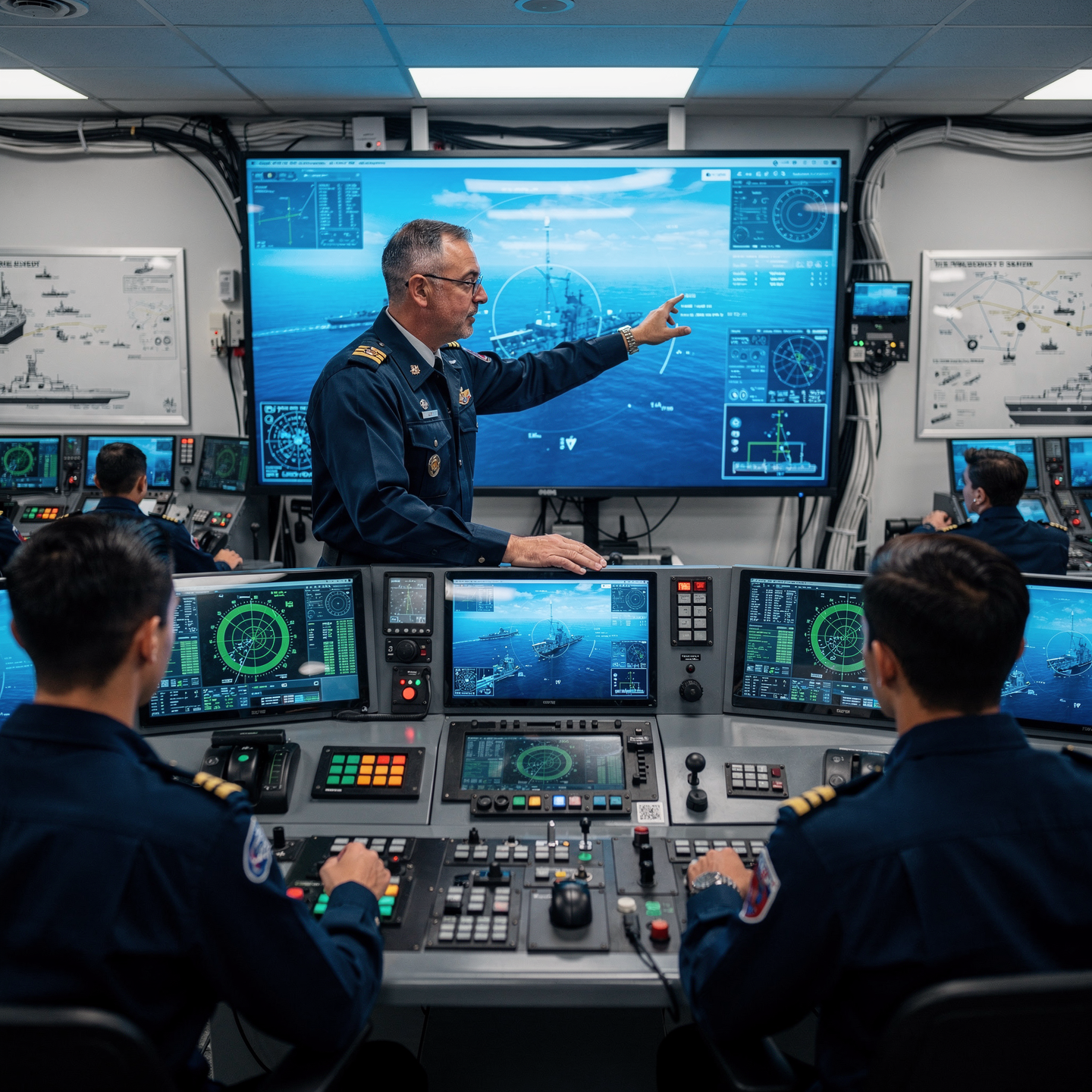
This program offers an in-depth immersion in the most advanced simulation technologies for maritime training. Learn to design, develop, and manage innovative training programs, optimizing efficiency and safety at sea. Master the use of bridge, engine, and communications simulators, integrating realistic scenarios to prepare industry professionals for any challenge. This program empowers you to lead the digital transformation in the naval industry, creating effective learning experiences tailored to the needs of the future.
Differentiating Advantages
- Simulation Design and Development: Create customized scenarios with cutting-edge tools.
- Simulation Center Management: Optimize infrastructure and resources for effective training.
- Integration of Emerging Technologies: Incorporate virtual reality, augmented reality, and artificial intelligence.
- Innovative Learning Methodologies: Apply student-centered and practice-based pedagogical techniques.
- Network of Experts and Professionals: Connect with industry leaders and expand your career opportunities.
- Modality: Online
- Level: Masters
- Hours: 1600 H
- Start date: 26-04-2026
Availability: 1 in stock
Who is it aimed at?
- Merchant Marine Officers and Captains who wish to master the use of naval simulators to hone their skills in navigation, maneuvering, and emergency management.
- Maritime Instructors and Trainers who seek to integrate advanced virtual training methodologies into their educational programs.
- Simulation Engineers and Technicians interested in the development and optimization of naval simulators for more effective training.
- Companies in the maritime and naval sector seeking to implement innovative training programs to improve the safety and efficiency of their operations.
- Graduates in Nautical Studies, Naval Engineering, or related fields who aspire to high-level specialization in the field of simulation Naval.
Flexibility and applicability
Adapted to the demands of the sector: online methodology with practical simulations, real-world case studies and immediate application in professional environments.
Objectives and skills

Assess and manage operational risks:
“Identify, analyze and mitigate risks in key processes, implementing controls and contingency plans to ensure operational continuity.”

Optimize efficiency in navigation and maneuvering:
Anticipate scenarios and adapt the navigation strategy to minimize risks and optimize fuel consumption.

Develop advanced skills in maritime emergency management:
“Leading response teams, optimizing resources and communicating effectively with authorities and those affected, minimizing damage to people, ships and the environment.”

Mastering the operation and configuration of naval simulators:
Plan and execute complex maneuvers, interpreting information from the environment and optimizing available resources.
Design and oversee customized virtual training programs:
“Adapting online learning methodologies and tracking tools to maximize adherence and individual results.”

Implement and evaluate virtual maritime security protocols:
“Manage the cybersecurity of navigation and communication systems, protecting critical information against unauthorized access and malicious attacks.”
Study plan – Modules
- Fundamentals of instructional design applied to naval simulators: learning theories and constructivist methodology
- 3D modeling of maritime environments: specialized software, texturing, and optimization for real-time simulation
- Implementation of environmental dynamics: simulation of waves, wind, currents, and extreme weather conditions
- Integration of realistic navigation systems: GPS, radar, sonar, and ECDIS systems in virtual environments
- Development of tactical and operational scenarios: from basic exercises to complex emergencies and crisis situations
- Advanced artificial intelligence programming for maritime traffic behavior and unmanned vessels
- Configuration of customized training parameters: difficulty levels, learning objectives, and performance metrics
- Application of virtual and augmented reality techniques to enhance immersion and knowledge retention
- Scenario validation and calibration testing: evaluation of technical and pedagogical fidelity with navigation experts
- Technical documentation and development of instructor guides: standardization of processes and evolutionary maintenance of scenarios
- Advanced Naval Simulator Architecture: Hardware, Software, and Integration Protocols for Bridge and Propulsion
- Human-Machine Interfaces (HMIs) in Naval Simulators: Ergonomic Optimization and Panel Design for Maximum Immersion and Realism
- Communication and Interoperability Protocols: NMEA 0183/2000 and IEC 61162 Standards and Their Application in Multisystem Simulators
- Dynamic Modeling of Propulsion and Steering Systems: Implementation of Diesel Engines, Turbines, and Hybrid Systems in Virtual Environments
- Real-Time Simulation of Environmental Conditions: Effect of Currents, Waves, Wind, and Their Impact on Maneuvering and Propeller Performance
- Integration of Virtual Sensors: Echosounders, Anemometers, Gyroscopes, and GNSS Systems to Replicate Reliable Data in the Simulation
- Optimization of algorithms for response and latency: improving feedback in bridge controls and propulsion systems for effective training
- Calibration and verification procedures: methodologies to ensure the fidelity and accuracy of simulated parameters against real data
- Management and synchronization of multiple simulated modules: coordination between bridge, engine room, and auxiliary systems
- Automation and monitoring of training scenarios: advanced techniques for generating adaptive scenarios and performance evaluation
- Implementation of safety and fail-safe protocols in simulators: prevention, detection, and recovery from system failures
- Application of augmented and virtual reality techniques to improve the immersive experience and effective knowledge transfer
- Resource optimization and license management: strategies to maximize simulator use in training and operational environments
- Statistical evaluation and analysis of training data: key metrics to measure progress, skills, and areas of improvement Improvement
- Integration of artificial intelligence and machine learning: personalized training and predictive feedback based on user behavior
- International regulations and certification standards applicable to nautical simulators: compliance, audits, and official registrations
- Preventive maintenance strategies and continuous technological updates to ensure system longevity and relevance
- Case studies and technological integration studies: detailed analysis of real-world implementations in commercial and military fleets
- Continuous improvement methodologies in simulator operating protocols: capturing lessons learned and adapting to technological innovations
- Development of diagnostic and troubleshooting skills in naval simulation for technicians and operators
- Fundamentals of instructional design applied to naval simulators: pedagogical principles, analysis of student profiles, and specific learning objectives for virtual training.
- Definition and conceptualization of high-fidelity scenarios: technical characteristics, elements of realism necessary for operational training and strategic simulation.
- Integration of advanced hydrodynamic models: accurate simulation of ship behavior under varying tidal, current, wave, and wind conditions.
- Implementation of immersive 3D environments and realistic visualization: graphics technologies, real-time rendering, atmospheric and visual effects that replicate real maritime conditions.
- Programming and scripting for dynamic event control: generation of emergency situations, technical failures, adverse conditions, and automated AI responses in naval scenarios.
- Design of multi-user scenarios for collaborative training: network synchronization, tactical roles, simulated communication, and tasks coordinated in real time.
Methodologies for incorporating real-time operational data: integration of AIS sources, maritime meteorology, and virtual sensors for adaptive scenarios.
Evaluation and calibration of simulation fidelity: quantitative and qualitative metrics, validation tests with experts, and parameter adjustment for maximum training effectiveness.
Specialized tools and platforms for scenario creation: comparative analysis, selection based on technical requirements, and application in different types of naval simulators.
Technical documentation for scenario support and updates: user manuals, maintenance protocols, software versions, and configuration management.
- Fundamentals of Bridge Command in Virtual Environments: Organizational Structure, Roles and Responsibilities of the Officer of the Watch and the Commanding Officer
- Advanced Decision-Making Models Under Pressure: Situational Analysis, Heuristics, Detection of Cognitive Biases, and Application of Crew Resource Management (CRM) in Naval Simulators
- Dynamics of Multidisciplinary Leadership: Effective Integration of Technical, Operational, and Command Teams in Highly Complex Virtual Scenarios
- Crisis and Emergency Management Protocols: Activation of the Contingency Plan, Effective Communication, Interdepartmental Coordination, and Real-Time Stress Management
- Marine Risk Assessment and Mitigation: Hazard Identification, Impact Analysis, Use of Risk Matrices, and Decision-Making Based on Simulated Data
- Simulation of Critical Scenarios: Addressing Situations Such as Onboard Fire, Propulsion Failures, Collisions, and Grounding, with Emphasis on Action Prioritization and Restoration of operational capabilities
- Technological tools applied to virtual command: advanced use of HMI interfaces, sensor integration, remote monitoring, and adaptive feedback for continuous improvement
- Communication and reporting procedures: use of standard naval language, negotiation with authorities, and management of sensitive information during simulated crises
- Post-drill analysis: detailed debriefing techniques, quantitative and qualitative performance evaluation, identification of areas for improvement, and application of learning in real-world environments
- International regulations and standards applied to crisis management: interpretation and compliance with SOLAS, STCW, ISM, and ISPS in virtual contexts
- Optimization of human performance and psychosocial factors: management of fatigue, operational stress, and coaching in simulated high-stress situations
- Development of customized improvement plans: design of strategies to strengthen individual and team competencies through continuous training in naval simulators
- Advanced Foundations of Naval Simulation: Mathematical Models Applied to Propulsion and Control Systems
- Parametric Optimization of Naval Operations Using Real-Time Dynamic Simulation Techniques
- Implementation of Predictive Maintenance in Simulators: Use of Sensors, Vibration Monitoring, and Trend Analysis
- Integration of SCADA and Distributed Control Systems (DCS) in Simulators to Replicate Real-World Operating Conditions
- Advanced Diagnostics Using Artificial Intelligence and Machine Learning Algorithms to Anticipate Failures in Simulated Maritime Systems
- Lifecycle Management of Virtual Equipment: Planning, Calibration, and Updating of Propulsion Models
- Development and Implementation of Protocols for Performance Evaluations and Condition-Based Maintenance in Simulated Environments
- Simulation of Complex Operating Scenarios: Emergency maneuvers, redundant system failures, and contingency response.
Application of international standards (ISO 55000, IEC 61850) in the maintenance and management of simulated nautical assets.
Preparation of technical reports and data analysis for strategic decision-making in simulated naval operations.
- Fundamentals of instructional design applied to naval simulators: learning theories, needs analysis, and operational objectives
- Modeling and simulation: development of dynamic models of maritime platforms, environmental conditions, and onboard systems
- Integration of advanced graphics engines and 3D environments in the creation of immersive and realistic scenarios
- Programming and configuration of critical variables: meteorology, hydrodynamics, system failures, and virtual crew responses
- Management of interoperability and communication between different simulator modules: radar, AIS, ECDIS, and ship control systems
- Strategies for customizing scenarios based on user profile and specific training objectives
- Implementation of digital security protocols to prevent manipulation and ensure the integrity of training data
- Real-time monitoring and feedback: Techniques for automatic performance evaluation and progressive mission adaptation
- Training cycle optimization: Design phases, pilot testing, execution, results analysis, and iterative adjustments
- Advanced documentation and reporting: Generation of detailed reports, performance metrics, and behavioral analysis for continuous improvement
- Fundamentals of Naval Simulator Architecture: Modular Design, Scalability, and Interoperability
- Advanced Integration of Graphics Engines and Physics Systems for the Recreation of Hyperrealistic Maritime Environments
- Modeling of Marine Dynamics: Waves, Currents, Winds, and Their Impact on Navigation and Maneuvers
- Configuration and Synchronization of Virtual Sensors: Radar, Sonar, AIS, and Electronic Navigation Systems
- Development of Multisensory Scenarios: Photorealism, 3D Ambient Sounds, and Haptic Response
- Distributed Simulation Platforms: High-Speed Networks, Communication Protocols, and Optimized Latency
- Integration Methodologies for STCW-Compliant Systems for Tactical and Strategic Training
- Implementation of Artificial Intelligence for the Dynamic Behavior of Naval Units and Weather Conditions
- Management of Marine Databases and Cartographic data for real-time support during simulations
Evaluation and validation of training scenarios: performance metrics, post-mission analysis, and automated feedback
- Fundamentals of Advanced Naval Simulation: Physical Principles, Mathematical Modeling, and Digitization of Maritime Environments
- Design and Configuration of Virtual Scenarios for Maritime Emergencies: Selection of Variables, Environmental Parameters, and Operating Conditions
- International Protocols and Applicable Regulations in Emergencies: SOLAS, ISM, ISPS, and IMO Guidelines for Contingency Management
- Emergency Dynamics and Risk Assessment in Simulators: Analysis of Typical Incidents such as Fires, Floods, and Structural Failures
- Development of Simulation-Based Response Tactics: Multidisciplinary Coordination, Critical Roles, and Decision-Making Under Pressure
- Integration of Communication and Command Systems in Virtual Environments: Radio Interoperability, GMDSS, and Satellite Links
- Simulation of Evacuation and Rescue Maneuvers: Use of Virtualized Lifeboats, Rafts, and Ship Abandonment Procedures
- Post-event evaluation and analysis using data analytics: performance metrics, error identification, and improvement recommendations
- AI training for adaptive responses: machine learning applied to the simulation of unpredictable scenarios
- Stress management and human factors in simulated emergencies: Crew Resource Management (CRM) training under high-pressure conditions
- Practical application of safety protocols and virtual drills: planning, execution, and documentation in accordance with international standards
- Advanced real-time feedback techniques during critical simulations
- Optimizing learning through augmented reality and immersive virtual reality in maritime training
- Case studies and simulations of relevant historical incidents for tactical and strategic training
- Implementation of contingency and emergency plans adapted to different types of vessels and maritime zones
- Fundamentals of Naval Simulation: Mathematical Models, Hydrodynamic Dynamics, and Applied Physics
- Virtual Scenario Design: Parameter Selection, Environmental Variables, and Operating Conditions
- Integration of Sensory Systems: Position, Speed, Wind, Wave, and Acoustic Sensors for Immersive Realism
- Optimization of Graphic and Functional Fidelity: Computational Balance Between Visual Detail and Real-Time Performance
- Implementation of Artificial Intelligence and Autonomous Behaviors in Simulated Naval Units
- Usability and Ergonomics Analysis of Interfaces for Operators and Students in Simulated Environments
- Advanced Methodologies for Creating Tactical and Strategic Missions with Multiple Objectives and Dynamic Variables
- Validation and Verification of Virtual Scenarios: Ensuring Representativeness and Accuracy Against Real-World Scenarios
- Real-Time Feedback Techniques and Post-simulation for operational performance evaluation
Implementation of multi-level scenarios for cross-training: interoperability between diverse units and roles
Cybersecurity considerations in naval simulators for the protection of critical data and systems
Adaptation and customization of scenarios based on user profiles and competency levels
Planning for updates and continuous maintenance of scenarios for the inclusion of new doctrines and technologies
Practical applications: case studies and extreme simulations for naval crisis and contingency training
International regulations and technical standards for naval training simulators: compliance and certification
- Conceptualization and architectural design of integrated naval simulation platforms: requirements analysis, selection of graphics engines and simulation frameworks
- Advanced modeling of dynamic maritime environments: hydrodynamic simulation, variable weather conditions, and real-time effects of waves and ocean currents
- Development of algorithms for simulating complex naval systems: propulsion, electrical systems, inertial navigation and GPS, and weapons and defense systems
- Implementation of artificial intelligence for adaptive training: automatic generation of risk scenarios, threat behavior, and tactical responses of virtual crews
- Integration of simulated communication networks for coordinated operations: transmission protocols, latency, interference, and real-time security
- Advanced human-machine interface (HMI) for simulation systems: ergonomic design, haptic feedback, and augmented/mixed reality applied to naval environments
- Validation and verification methodologies for naval simulators: functional testing, parameter calibration, and operational fidelity analysis based on international standards
- Frameworks for performance evaluation and metrics analysis in virtual training: event logging, decision analysis, procedure evaluation, and continuous improvement
- Applicable regulations and technical standards: compliance with SOLAS, STCW, and guidelines from certifying bodies for naval simulation equipment
- Development and presentation of a comprehensive final project: design, development, and demonstration of a functional platform for virtual training in complex naval operations, with an emphasis on interoperability and scalability
Career prospects
“`html
- Naval Simulation Developer: Creation and programming of virtual training scenarios, modeling of maritime environments and vessels.
- Naval Simulation Center Instructor: Delivery of courses and workshops using simulators, design of customized training programs.
- Naval Simulation Technology Consultant: Advising companies in the maritime sector on the implementation and optimization of virtual training systems.
- Naval Simulation Researcher: Development of new methodologies and technologies for maritime training, participation in R&D projects.
- Merchant Marine Officer with Simulation Specialization: Application of knowledge acquired in simulators to improve safety and efficiency in real navigation.
- Naval Simulator Support and Maintenance Technician: Installation, configuration, and repair of simulation equipment, troubleshooting of technical problems.
- Human-Machine Interface (HMI) Designer for Simulators: Creation of intuitive and efficient interfaces for user interaction with simulators.
- Virtual and Augmented Reality Specialist for the Naval Sector: Development of innovative applications for the training and development of maritime personnel.
“`
Entry requirements

Academic/professional profile:
Bachelor’s degree in Nautical Science/Maritime Transport, Naval/Marine Engineering or a related qualification; or proven professional experience on the bridge/in operations.

Language proficiency:
Functional Maritime English (SMCP) recommended for simulations and technical materials.

Documentation:
Updated CV, copy of qualification or seaman’s book, national ID/passport, motivation letter.

Technical requirements (for online):
Device with camera/microphone, stable internet connection, monitor ≥ 24” recommended for ECDIS/Radar-ARPA.
Admissions process and dates

Online
application
(form + documents).

Academic review and interview
Admissions decision

Admissions decision
(+ scholarship offer if applicable).

Place reservation
(deposit) and enrolment.

Induction
(access to the virtual campus, calendars, simulator guides).
Scholarships and financial support
- Master Naval Simulation: Learn to design and manage immersive and realistic virtual training.
- Develop Key Skills: Hone your abilities in scenario creation, data analysis, and performance evaluation.
- Cutting-Edge Technology: Familiarize yourself with the most advanced naval simulators and the latest development tools.
- Immediate Practical Application: Gain applicable knowledge for crew training, operational optimization, and safety enhancement.
- Industry Experts: Learn from professionals with extensive experience in naval training and virtual simulation.
Testimonials
This Master’s degree provided me with the tools and knowledge necessary to design and implement highly effective virtual training programs using naval simulators. Thanks to the hands-on training and focus on the latest technologies, I secured a position as an instructor at a leading maritime training center, where I apply the principles I learned daily and contribute to the training of professionals in the sector.
“The Master’s in Naval Education & Training provided me with the tools and knowledge necessary to design and implement an innovative training program for Navy officers, which increased operational efficiency by 15% and reduced onboard incidents by 12% during the first year of its implementation.”
“This Master’s degree provided me with the tools and knowledge necessary to implement state-of-the-art naval simulators in my work. Thanks to the practical training and focus on new technologies, I was able to optimize crew training processes, reducing costs and significantly improving safety in maritime operations.”
I applied the knowledge I gained from my Master’s in Virtual Training with Naval Simulators to develop a training program at my company that reduced accidents by 30% and increased staff efficiency by 15% in just six months. The integration of virtual reality and simulation, as I learned in the Master’s program, allowed for more immersive and practical training, resulting in a significant improvement in the skills and safety of our operators.

Frequently asked questions
Yes. The itinerary includes ECDIS/Radar-ARPA/BRM with harbor, ocean, fog, storm, and SAR scenarios.
Online with live sessions; hybrid option for simulator/practical placements through agreements.
It focuses on simulator training for all types of naval vehicles, not just boats.
Recommended functional SMCP. We offer support materials for standard phraseology.
Yes, with a relevant degree or experience in maritime/port operations. The admissions interview will confirm suitability.
Optional (3–6 months) through Companies & Collaborations and the Alumni Network.
Simulator practice (rubrics), defeat plans, SOPs, checklists, micro-tests and applied TFM.
A degree from Navalis Magna University + operational portfolio (tracks, SOPs, reports and KPIs) useful for audits and employment.
- Conceptualization and architectural design of integrated naval simulation platforms: requirements analysis, selection of graphics engines and simulation frameworks
- Advanced modeling of dynamic maritime environments: hydrodynamic simulation, variable weather conditions, and real-time effects of waves and ocean currents
- Development of algorithms for simulating complex naval systems: propulsion, electrical systems, inertial navigation and GPS, and weapons and defense systems
- Implementation of artificial intelligence for adaptive training: automatic generation of risk scenarios, threat behavior, and tactical responses of virtual crews
- Integration of simulated communication networks for coordinated operations: transmission protocols, latency, interference, and real-time security
- Advanced human-machine interface (HMI) for simulation systems: ergonomic design, haptic feedback, and augmented/mixed reality applied to naval environments
- Validation and verification methodologies for naval simulators: functional testing, parameter calibration, and operational fidelity analysis based on international standards
- Frameworks for performance evaluation and metrics analysis in virtual training: event logging, decision analysis, procedure evaluation, and continuous improvement
- Applicable regulations and technical standards: compliance with SOLAS, STCW, and guidelines from certifying bodies for naval simulation equipment
- Development and presentation of a comprehensive final project: design, development, and demonstration of a functional platform for virtual training in complex naval operations, with an emphasis on interoperability and scalability
Request information
Complete the Application Form.
Attach your CV/degree certificate (if you have it to hand).
Indicate your preferred cohort (January/May/September) and whether you would like the hybrid option with simulator sessions.
An academic advisor will contact you within 24–48 hours to guide you through the admission process, scholarships, and compatibility with your professional schedule.
Faculty
Eng. Tomás Riera
Full Professor
Eng. Tomás Riera
Full Professor
Eng. Sofía Marquina
Full Professor
Eng. Sofía Marquina
Full Professor
Eng. Javier Bañuls
Full Professor
Eng. Javier Bañuls
Full Professor
Dr. Nuria Llobregat
Full Professor
Dr. Nuria Llobregat
Full Professor
Dr. Pau Ferrer
Full Professor
Dr. Pau Ferrer
Full Professor
Cap. Javier Abaroa (MCA)
Full Professor
Cap. Javier Abaroa (MCA)
Full Professor