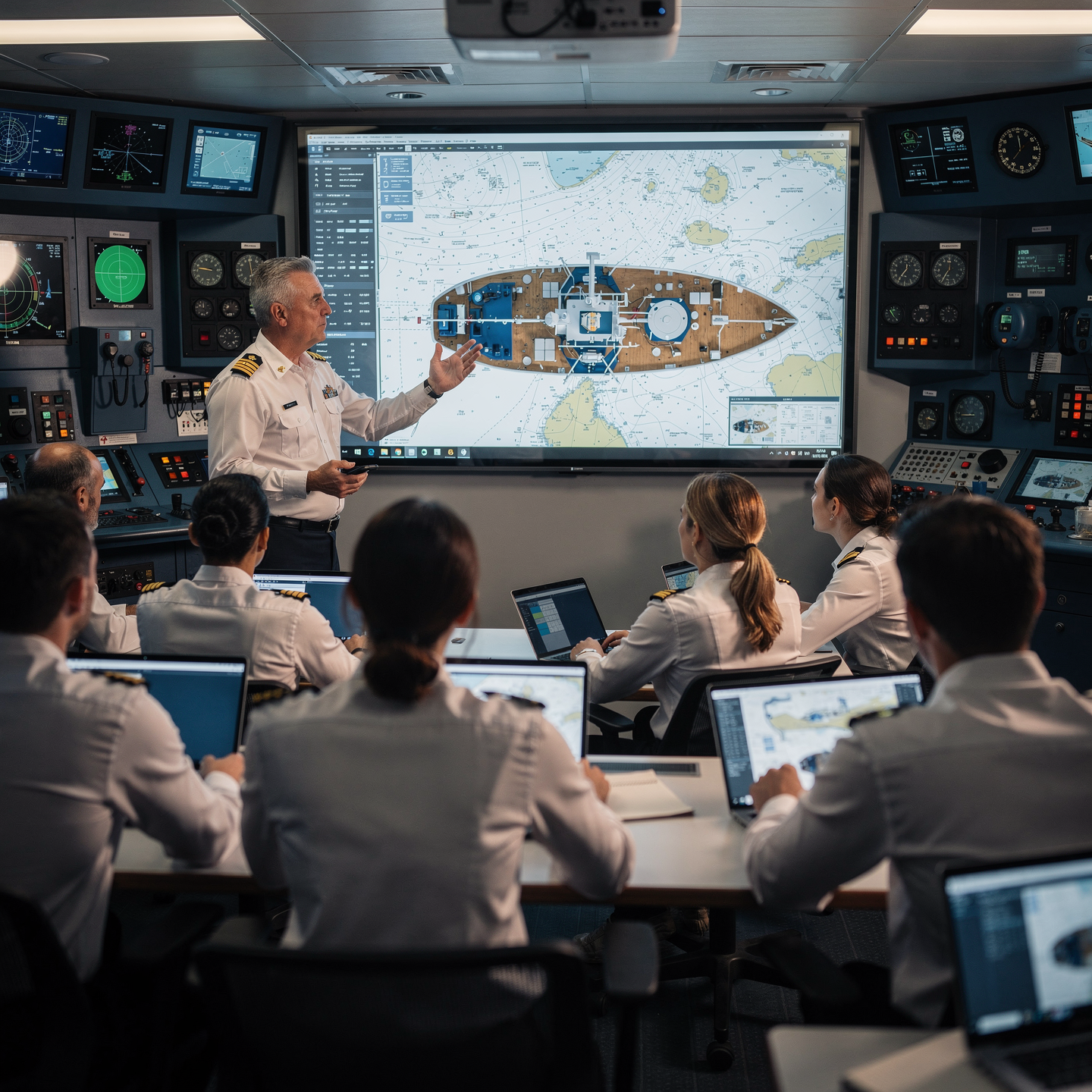
Master’s Degree in E-learning for Nautical Schools

Why this master’s programme?

The Master’s in E-learning for Nautical Schools

This program is designed to train professionals in the creation, management, and implementation of online training programs, tailored to the specific needs of the maritime sector. Learn to design interactive and engaging courses, using the latest technologies and pedagogical methodologies to optimize distance learning. Master Learning Management System (LMS) tools and platforms, create high-quality multimedia content, and learn to effectively assess your students’ progress.

Differentiating Advantages

  • Specific Instructional Design: Adapted to STCW regulations and the needs of the maritime sector.
  • Advanced Authoring Tools: Create interactive and engaging content with Articulate Storyline, Adobe Captivate, etc.
  • LMS Platform Management: Master Moodle, Totara Learn, and other leading platforms.
  • Multimedia Content Production: Create videos, animations, and simulations to enrich the learning experience.
  • Effective Online Assessment: Design quizzes, exams, and assignments that measure student progress.
  • Networking with Experts: Connect with e-learning and industry professionals maritime.
Escuelas

Master’s Degree in E-learning for Nautical Schools

Availability: 1 in stock

Who is it aimed at?

  • Instructors and teachers at nautical schools who want to transform their methodology and create interactive and effective online courses.
  • Academic directors and training coordinators who are looking to implement e-learning platforms and optimize the digital learning experience.
  • Maritime professionals with teaching experience who aspire to design and develop specialized e-learning content.
  • HR and training managers in shipping companies interested in digitizing their training programs and improving access to continuing education.
  • Graduates in Nautical Studies and related fields with a passion for teaching and the development of new technologies in the field Maritime.

Flexibility and specialization
 Tailored to your needs: updated content, practical projects and personalized support for success in nautical e-learning.

Escuelas

Objectives and skills

Design and promote online nautical courses:

Adapt content to different formats (video, interactive, text) and platforms (LMS, social networks).

Evaluate and optimize the online learning experience:

Analyze metrics of participation, satisfaction and learning outcomes, identifying areas for improvement in design, content and technology.

Implement innovative teaching methodologies in the nautical field:

Promote learning based on realistic simulations, integrating virtual and augmented reality technologies to improve decision-making and emergency management on board.

Manage e-learning platforms specializing in nautical training:

“Configure and maintain the platform, adapting it to the specific needs of each course and ensuring accessibility and usability for students with different levels of experience.”
Developing attractive and effective e-learning content for the nautical sector:

“Design interactive navigation simulations that replicate real-life situations and allow for practicing decision-making.”

Leading digitization projects in nautical schools:

“Define the scope, resources, and timeline of the project, ensuring the active participation of the teaching staff and alignment with the school’s pedagogical objectives.”

Study plan – Modules

  1. Fundamentals of instructional design applied to virtual environments for nautical training: needs analysis, definition of objectives, and selection of specific pedagogical strategies.
  2. LMS platforms and emerging technologies in nautical e-learning: system comparison, integration with navigation simulators, and advanced management of interactive multimedia content.
  3. Simulation models for maritime maneuvers: design, programming, and validation of virtual scenarios based on fluid physics, vessel dynamics, and real-world weather conditions.
  4. Implementation of virtual navigation exercises: use of augmented reality (AR) and virtual reality (VR) for total immersion in practical learning processes and critical operational situations.
  5. Methodologies for real-time evaluation and monitoring during simulation activities: learning analytics, performance indicators, and automated feedback.
  6. Integration of devices and sensors in virtual environments: simulation of real nautical instruments such as compasses Magnetic resonance imaging, GPS, echo sounder, and radar to increase training reliability.

    Design of optimized user interfaces for pilots and navigation students, considering usability, accessibility, and ergonomics on digital nautical platforms.

    Management of digital data and resources in nautical training: secure storage, content updates, and intellectual property protection in e-learning environments.

    Simulation of emergencies and crisis management on board: creation of risk scenarios and corrective maneuvers with technological support for preventive and reactive training.

    International regulations and standards applied to virtual training in maritime navigation: compliance with STCW, IMO, and regulations for secure and certified electronic training.

  1. Fundamentals of Educational Innovation in E-learning: Learning Theories Applied to Nautical Training
  2. Architecture and Instructional Design in E-learning Platforms for Nautical Schools: Adaptation to Technical and Operational Profiles
  3. Integration of Emerging Technologies: Augmented Reality (AR), Virtual Simulators, and Immersive 3D Environments for Maritime Training
  4. Specialized LMS Platforms for Nautical Training: Comparative Analysis, Advanced Functionalities, and Content Customization
  5. Use of Artificial Intelligence and Learning Analytics for Personalized Tracking and Optimization of Training Progress
  6. Automation of Assessments and Dynamic Feedback: Development of Diagnostic Tests, Formative Assessments, and Digital Nautical Certifications
  7. Information Security and Digital Identity Management in Maritime E-learning Environments: Data Protection, Secure Access, and International Regulations
  8. Strategies for the Creation and Management of Technical multimedia content: interactive video, animated infographics, and maneuver simulations

    Collaborative and synchronous/asynchronous methodologies: forums, webinars, and specialized tutorials for crew members and officers

    Implementation and management of hybrid courses combining face-to-face training and e-learning in nautical schools

    Monitoring and continuous improvement of the digital learning experience: usability, accessibility, and performance metrics on nautical platforms

    Regulatory standards and certification of e-learning programs for professional training in the maritime sector

    Success stories and future trends in technological innovation applied to advanced nautical training

  1. Fundamentals of Instructional Design for Virtual Environments in Nautical Training: Applied Learning Theories and Adaptive Pedagogical Models
  2. Development of Maritime Simulation Engines: Integration of Realistic Physics, Hydrodynamic Modeling, and Vessel Behavior Algorithms
  3. Implementation of Advanced Interactive Interfaces: Usability, Accessibility, and Optimization for Multiple Devices (Desktop, Tablet, Mobile)
  4. Creation and Management of Specialized Multimedia Content: 360° Videos, Augmented Reality, and 3D Visualization of Nautical Maneuvers and Scenarios
  5. Configuration of LMS Platforms for Nautical Training: Integration of SCORM, xAPI, and Emerging Standards for Detailed Performance Monitoring and Analysis
  6. Simulations of Nautical Maneuvers in E-learning Environments: Parameterization, Dynamic Scenarios, Handling of Climatic Variables, and Real-Time Responses
  7. Module Development Interactive tools for formative and summative assessment: adaptive quizzes, competency analysis, and automated feedback.

    Security protocols and data management in nautical e-learning platforms: encryption, multi-factor authentication, and GDPR compliance.

    Implementation of collaborative learning in virtual environments: specialized forums, real-time chat, teamwork, and peer assessment.

    Methodologies for the maintenance and continuous updating of virtual environments: version control, usability testing, and adaptation to emerging technologies.

  1. Fundamentals and advanced architecture of Learning Management Systems (LMS) specialized in nautical training: modular structure, interoperability, and scalability for maritime environments
  2. Configuration and customization of LMS platforms for nautical schools: SCORM and xAPI content management, integration of simulators and multimedia resources specific to navigation
  3. Advanced learning analytics: educational data modeling, KPIs for monitoring progress and performance, dynamic dashboards geared towards marine profiles
  4. Implementation of predictive algorithms and adaptive learning to personalize the training experience for cadets and maritime professionals
  5. Immersive virtual reality (VR) in nautical training: design, development, and deployment of simulation scenarios for maneuvers, emergencies, and deck operations
  6. Augmented reality (AR) applications for real-time support during onboard nautical training: integration with wearable devices and systems Navigation
  7. Strategies for maritime regulatory compliance through e-learning: adapting to SOLAS, STCW, ISM, and ISPS regulations through interactive content and competency-based training

    Procedures and best practices for the digital certification and auditing of nautical training, ensuring traceability and documentary evidence in LMS environments

    Change management and technological adoption in nautical schools: teacher training and technical support for the transition to advanced digital platforms

    Case studies and examples of successful LMS implementation with augmented and virtual reality in international maritime training institutions

  1. Fundamentals of active methodologies in digital nautical training: pedagogical principles, contextualized learning, and development of key competencies
  2. Instructional design based on adaptive models: needs analysis, content personalization, and flexible learning paths for nautical students
  3. Gamification applied to maritime training: game mechanics, motivational dynamics, digital incentives, and their integration into e-learning platforms
  4. Technological tools and platforms for gamification in nautical schools: selection, implementation, and evaluation of interactive multimedia resources and virtual simulators
  5. Adaptive assessment in digital environments: personalization algorithms, real-time performance analysis, and automated feedback for continuous improvement
  6. Implementation of formative and summative tests adapted to the profile of nautical students: item types, difficulty calibration, and statistical validation
  7. Training in
  8. Digital maritime safety: Integration of international regulations (SOLAS, ISM), emergency protocols, and virtual simulations in online training
  9. Strategies for developing skills in risk management and decision-making in high-pressure scenarios using immersive technologies and augmented reality
  10. Monitoring and analyzing participation and engagement in digital nautical courses: Key indicators, dashboards, and reports for instructors and academic managers
  11. Best practices in change management and technology adoption in nautical schools: Teacher training, technical support, and impact assessment on learning
  12. International regulations and standards for e-learning in the maritime sector: Compliance, accreditation, and digital certification
  13. Success stories and emerging trends in innovative teaching methodologies for digital nautical training: Applied research and future perspectives
  1. Fundamentals and theories of instructional design applied to nautical training: ADDIE and SAM models, and user-centered design
  2. Analysis of specific training needs for nautical schools: identification of key competencies and learning profiles
  3. Development of multimedia technical content: interactive simulations, augmented reality, and audiovisual resources for advanced navigation
  4. Specialized LMS platforms for nautical training: selection, configuration, and customization for immersive virtual environments
  5. Integration of collaborative tools and asynchronous/synchronous communication: forums, videoconferences, chats, and real-time virtual laboratories
  6. Design of formative and summative assessments adapted to maritime competencies: digital practical tests, electronic portfolios, and automated feedback
  7. Advanced management of users and roles in virtual environments: administration of instructors, students, and tutors with a focus on security and privacy
  8. Implementation of emerging technologies in nautical e-learning: artificial intelligence, learning analytics, and applied gamification
  9. International standards and certifications for online maritime training: compliance with STCW, ISO 21001, and IMO regulations
  10. Monitoring and continuous improvement of nautical e-learning programs: performance indicators, data analysis, and pedagogical optimization strategies
  1. Fundamentals of virtual platforms in the nautical environment: architecture, systems integration, and scalability
  2. Instructional design adapted to nautical e-learning: teaching strategies, collaborative learning, and advanced gamification
  3. Development of 3D and augmented reality maritime simulations: hydrodynamic modeling and interactive environment
  4. Implementation of immersive VR environments for practicing maneuvers, emergencies, and advanced navigation
  5. Integration of telemetry and real-time telemetry tracking systems for formative and summative assessment
  6. Use of artificial intelligence and big data analytics on platforms for adaptability and personalization of training routes
  7. International regulations and standards applied to nautical e-learning platforms: compliance with SOLAS, STCW, and IMO regulations
  8. System interoperability: compatibility with ECDIS, AIS and maritime management systems for virtual simulators

    Competency-based assessment through realistic simulation: metrics, automatic feedback, and digitized performance recording

    Information security and data protection on offshore e-learning platforms: cybersecurity, authentication, and data backup

    Implementation of Learning Management Systems (LMS) specialized in nautical training: functionalities, analysis, and reporting

    Case studies and development of final projects with integrated multidisciplinary simulators for professional certification

    Updating and maintenance of dynamic content on nautical platforms: document management and simulation versioning

    Emerging technological innovation: blockchain for accreditation, use of IoT for monitoring real-world conditions in virtual training

    Hybrid pedagogical models combining face-to-face, virtual, and remote simulation training: design, implementation, and optimization

  1. Extended Reality (XR) Fundamentals: Technological architecture, immersive devices (VR, AR, MR), and integration protocols for nautical training
  2. 3D Modeling and Virtual Scenario Creation: Advanced techniques for simulating maritime environments and accurately recreating naval structures and weather conditions
  3. Big Data Applied to Navigation: Collection, storage, and processing of large volumes of naval data in real time and predictive analytics for decision-making
  4. Integration of IoT sensors and telemetry in XR simulators for capturing navigational and biometric telemetry during practical training
  5. Development of machine learning algorithms for personalized adaptive learning in nautical e-learning environments based on student performance and behavior
  6. Advanced Assessment: Quantifiable metrics in XR using Big Data analysis to measure competence, pattern recognition, and continuous optimization of training plans
  7. Management platforms for Virtual training: architecture analysis, interoperability with LMS, content management, and security in extended maritime environments.

    Regulatory aspects and cybersecurity in virtual training: compliance with international standards (STCW, SOLAS) and comprehensive protection of sensitive data on XR platforms.

    Case studies and project development: design and implementation of immersive simulations for complex maneuvers, emergencies, and critical decision-making with Big Data analytics support.

    The future of nautical e-learning: technological trends, the evolution of Extended Reality and Big Data, and their impact on the professionalization of officers and captains.

  1. Fundamentals of Interactive Virtual Environments applied to nautical training: system architectures, graphics engines, and development platforms
  2. Instructional design for e-learning in nautical training: principles of usability, user experience (UX), and adaptability in virtual environments
  3. Advanced implementation of Augmented Reality (AR) in navigation simulators: integration of sensors, geolocation, and interactive 3D models in real time
  4. Development of immersive scenarios for training in complex maritime maneuvers: simulation of weather conditions, emergency response, and safety procedures
  5. Tools and techniques for data capture and analysis in nautical e-learning platforms: telemetry, learner behavior analysis, and automated assessments
  6. Use of Big Data and Machine Learning for personalization and optimization of learning in nautical training: performance prediction and adaptive recommendations
  7. Integration of Real-Time Monitoring Systems for Supervision and Feedback in Nautical Training Processes
  8. Interoperability Protocols and Technical Standards for Connecting Virtual Simulators, AR Devices, and LMS Systems in the Nautical Sector
  9. Cybersecurity and Data Protection Considerations in Advanced E-learning Platforms for Nautical Schools
  10. Case Studies and Practical Applications: Implementation of Interactive and AR Environments in State-of-the-Art Maritime Academies and Training Centers
  1. Foundations of the final project: definition of the scope, objectives, and delimitation of the multidisciplinary project applied to virtual nautical training.
  2. Advanced instructional design: pedagogical principles and methodologies adapted for e-learning environments in nautical schools, focusing on augmented reality and data analytics.
  3. Integrated systems architecture: conceptualization and deployment of LMS platforms with integration of augmented reality and Big Data modules for training monitoring.
  4. Development and modeling of interactive content: techniques for creating simulators and immersive scenarios that replicate real-life navigation situations and complex nautical maneuvers.
  5. Augmented Reality (AR) implementation: selection of the most suitable hardware, software, and frameworks for the accurate simulation of processes and maneuvers in virtual training.
  6. Application of Big Data in nautical training: collection, processing, and analysis of large volumes of data to optimize performance.
  7. Personalize learning paths and anticipate training needs.
  8. Integration of automated monitoring and evaluation systems: design of KPIs, dashboards, and continuous assessment algorithms based on quantitative and qualitative metrics.
  9. Management of technology projects in education: planning, execution, and control of projects applied to the virtualization of nautical training, with an emphasis on agile methodologies and risk management.
  10. Applicable regulations and standards: compliance with international and national regulations on nautical training, technical standards for augmented reality, and data protection in educational environments.
  11. Implementation and scalability strategies: design of progressive deployment plans, training of trainers, technical support, and ongoing maintenance of the comprehensive virtual nautical training system.

Career prospects

“`html

  • E-learning Instructional Designer: Creation of interactive and engaging online courses for nautical schools.
  • Online Tutor/Facilitator: Delivery of virtual classes, monitoring of learning, and answering student questions.
  • E-learning Content Developer: Development of multimedia teaching materials (videos, animations, simulations) specifically for nautical training.
  • LMS (Learning Management System) Platform Administrator: Management and maintenance of the nautical school’s virtual learning platform.
  • E-learning Consultant for the Nautical Sector: Advising nautical schools on the implementation of online training strategies.
  • E-learning Project Coordinator: Planning and management and monitoring of online training projects in the nautical field.
  • E-learning Assessment Specialist: Design and implementation of online assessment systems to measure student learning.
  • E-learning Researcher for Nautical Studies: Development of new methodologies and technologies for online training in the nautical sector.

“`

Entry requirements

Academic/professional profile:

Bachelor’s degree in Nautical Science/Maritime Transport, Naval/Marine Engineering or a related qualification; or proven professional experience on the bridge/in operations.

Language proficiency:

Functional Maritime English (SMCP) recommended for simulations and technical materials.

Documentation:

Updated CV, copy of qualification or seaman’s book, national ID/passport, motivation letter.

Technical requirements (for online):

Device with camera/microphone, stable internet connection, monitor ≥ 24” recommended for ECDIS/Radar-ARPA.

Admissions process and dates

Online
application

(form + documents).

Academic review and interview

Admissions decision

Admissions decision

(+ scholarship offer if applicable).

Place reservation

(deposit) and enrolment.

Induction

(access to the virtual campus, calendars, simulator guides).

Scholarships and financial support

  • Design effective online learning experiences: Master the tools and methodologies to create innovative and engaging nautical e-learning courses.
  • Turn your expertise into a high-impact online course: Learn to structure content, record professional video lessons, and assess your students’ learning.
  • Increase your nautical school’s reach: Take your courses to a global audience and generate new revenue streams.
  • Nautical e-learning expert certification: Earn a recognized qualification that will set you apart in the industry.
  • Networking with leading professionals: Connect with other instructors and e-learning experts to share knowledge and opportunities.
Boost your career and transform nautical education with our Master’s in E-learning.

Testimonials

Frequently asked questions

Yes. The itinerary includes ECDIS/Radar-ARPA/BRM with harbor, ocean, fog, storm, and SAR scenarios.

Online with live sessions; hybrid option for simulator/practical placements through agreements.

It is aimed at both professionals who already work in nautical schools and people interested in online teaching in the nautical field.

Recommended functional SMCP. We offer support materials for standard phraseology.

Yes, with a relevant degree or experience in maritime/port operations. The admissions interview will confirm suitability.

Optional (3–6 months) through Companies & Collaborations and the Alumni Network.

Simulator practice (rubrics), defeat plans, SOPs, checklists, micro-tests and applied TFM.

A degree from Navalis Magna University + operational portfolio (tracks, SOPs, reports and KPIs) useful for audits and employment.

  1. Foundations of the final project: definition of the scope, objectives, and delimitation of the multidisciplinary project applied to virtual nautical training.
  2. Advanced instructional design: pedagogical principles and methodologies adapted for e-learning environments in nautical schools, focusing on augmented reality and data analytics.
  3. Integrated systems architecture: conceptualization and deployment of LMS platforms with integration of augmented reality and Big Data modules for training monitoring.
  4. Development and modeling of interactive content: techniques for creating simulators and immersive scenarios that replicate real-life navigation situations and complex nautical maneuvers.
  5. Augmented Reality (AR) implementation: selection of the most suitable hardware, software, and frameworks for the accurate simulation of processes and maneuvers in virtual training.
  6. Application of Big Data in nautical training: collection, processing, and analysis of large volumes of data to optimize performance.
  7. Personalize learning paths and anticipate training needs.
  8. Integration of automated monitoring and evaluation systems: design of KPIs, dashboards, and continuous assessment algorithms based on quantitative and qualitative metrics.
  9. Management of technology projects in education: planning, execution, and control of projects applied to the virtualization of nautical training, with an emphasis on agile methodologies and risk management.
  10. Applicable regulations and standards: compliance with international and national regulations on nautical training, technical standards for augmented reality, and data protection in educational environments.
  11. Implementation and scalability strategies: design of progressive deployment plans, training of trainers, technical support, and ongoing maintenance of the comprehensive virtual nautical training system.

Request information

  1. Complete the Application Form.

  2. Attach your CV/degree certificate (if you have it to hand).

  3. Indicate your preferred cohort (January/May/September) and whether you would like the hybrid option with simulator sessions.

    An academic advisor will contact you within 24–48 hours to guide you through the admission process, scholarships, and compatibility with your professional schedule.

Please enable JavaScript in your browser to complete this form.
Click or drag a file to this area to upload.

Faculty

0
    0
    Tu carrito
    Tu carrito esta vacíoRegresar a la tienda
    Scroll to Top