Master’s Degree in Naval Educational Innovation

Why this master’s programme?

The Master in Naval Educational Innovation

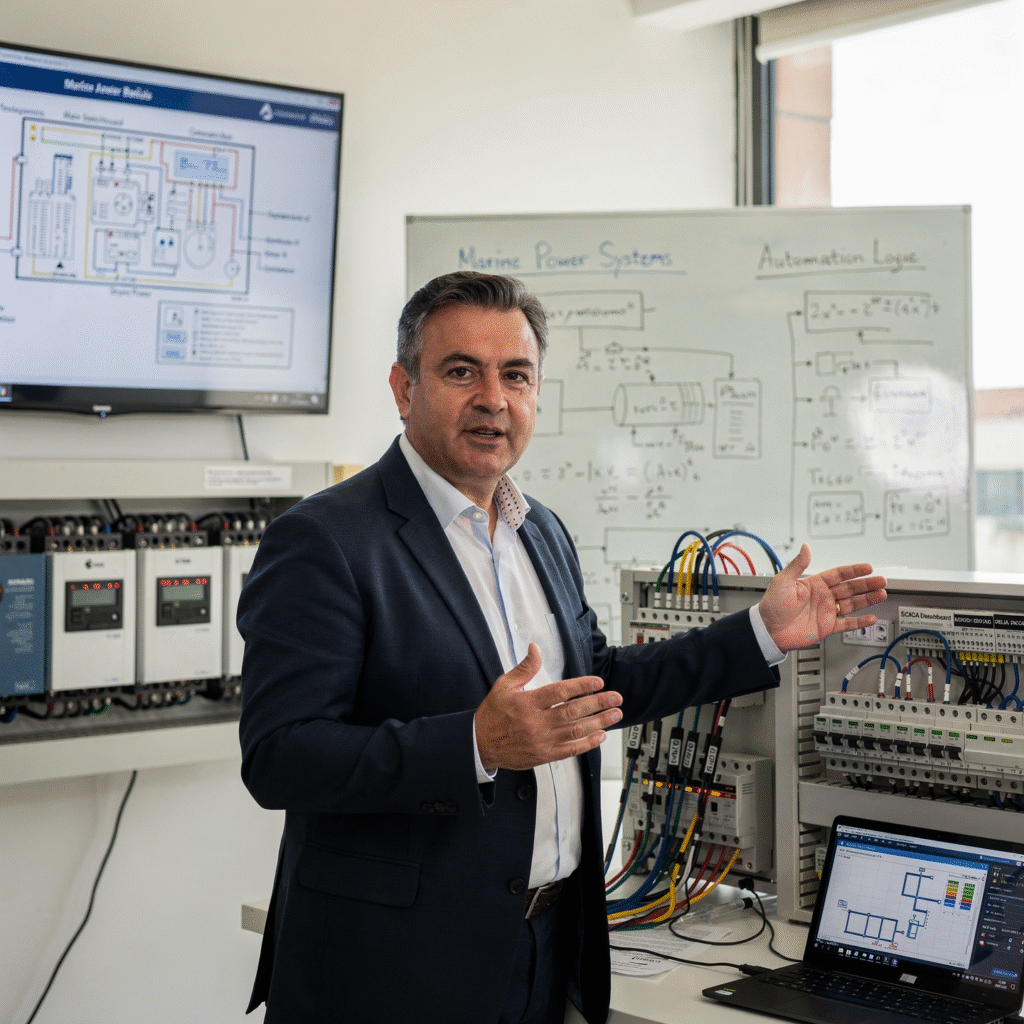
Is designed to transform maritime education, adapting it to the challenges of the 21st century. This program will provide you with the tools and strategies to design effective learning experiences, integrate emerging technologies, and foster collaboration and critical thinking among students. You will learn to create innovative teaching materials and to evaluate the impact of your educational interventions on the training of highly skilled maritime professionals.

Differential Advantages

  • Active Methodologies: project design, problem-based learning, and gamification.
  • Educational Technology: virtual/augmented reality, simulators, and online learning platforms.
  • Instructional Design: creation of courses and materials adapted to students’ needs.
  • Learning Assessment: design of valid and reliable assessment instruments.
  • Expert Network: access to professionals and leaders in naval educational innovation.
Innovación

Master’s Degree in Naval Educational Innovation

Availability: 1 in stock

Who is it aimed at?

  • Naval academies and maritime training schools instructors seeking to update methodologies, integrate emerging technologies, and design innovative curricula.
  • Naval officers and non-commissioned officers with a vocation for pedagogical leadership, interested in optimizing the instruction and performance of the personnel under their command.
  • Instructional designers and e-learning developers who wish to specialize in simulators and virtual environments for naval training.
  • Researchers and experts in education who aspire to contribute creative solutions to the challenges of teaching in the maritime and naval fields.
  • Graduates in Pedagogy, Psychology, or related fields seeking a professional career path differentiated in the naval and maritime training sector.

    Flexibility and applicability

    Adapted to active professionals: online format with asynchronous resources, direct application projects, and personalized guidance.

Innovación

Objectives and skills

Promoting naval pedagogical transformation:

To foster a culture of innovation and experimentation in the classroom, integrating emerging technologies and active learning methodologies.

Integrating emerging technologies into naval training:

“Implementing digital twins for advanced simulation of operational scenarios and predictive maintenance of naval systems.”

Promote naval educational research and development:

Promote R&D&I projects in simulation and modeling of naval scenarios to optimize real-time decision making.

Developing innovative educational leaders in the naval field:

“Implement cutting-edge pedagogical strategies, fostering a culture of innovation and adaptability in naval education.”
Optimizing naval teaching and learning processes:

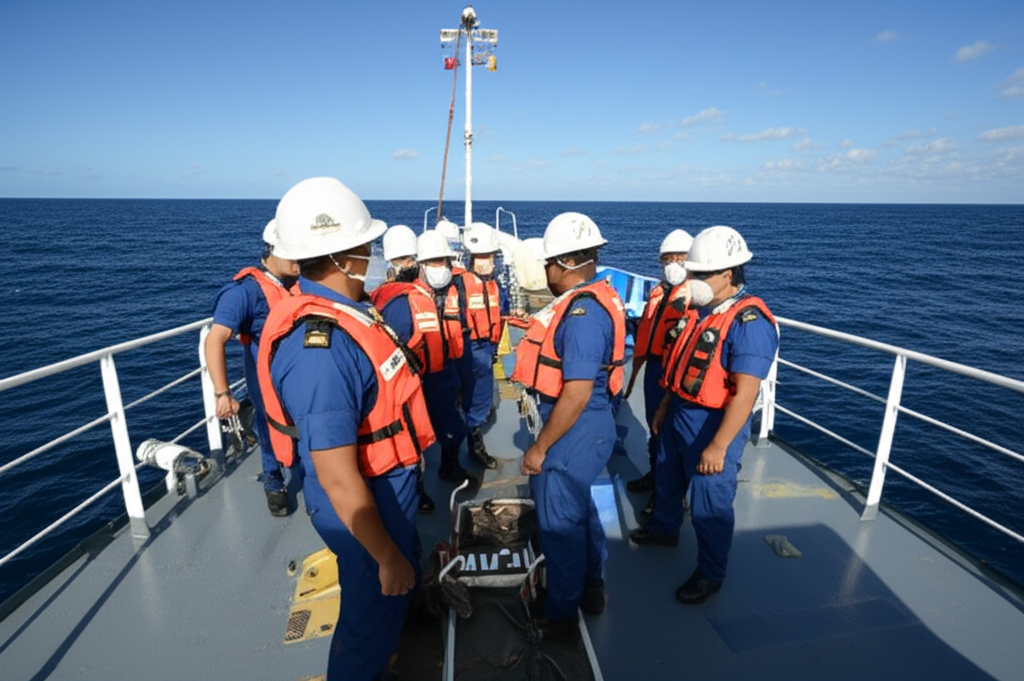
Implement high-fidelity simulations and virtual reality to recreate complex scenarios and evaluate decision-making under pressure.

Design and implement cutting-edge naval educational programs:

Integrate state-of-the-art simulators for training in complex scenarios and decision making under pressure.

Study plan – Modules

  1. Fundamentals of curriculum design in naval contexts: needs analysis, competency definition, and professional profile development.
  2. Advanced pedagogical models for naval educational innovation: competency-based learning, flipped classroom, and adaptive learning.
  3. Integration of emerging naval technologies into the curriculum: bridge simulators, augmented and virtual reality systems applied to maritime training.
  4. Digital tools for learning management and assessment: LMS platforms specific to maritime environments and progress tracking systems.
  5. Teaching strategies for officer and crew training: use of case studies, practical sessions in simulated environments, and online collaborative learning.
  6. Design of specialized multimedia content: audiovisual resources, 3D models of naval structures, and interactive systems for understanding maritime operations.
  7. complex.

  8. Innovation in assessment: multidimensional rubrics, evaluative simulations, and continuous feedback through learning analytics.
  9. Application of STEM and STEAM methodologies in naval education: integration of science, technology, engineering, arts, and mathematics to solve contemporary maritime challenges.
  10. Change management and educational leadership in naval institutions: instructor training, design of refresher programs, and promotion of a culture of pedagogical innovation.
  11. Global trends and international regulations impacting naval curriculum design: compliance with IMO and STCW standards and IMO recommendations for maritime training.
  1. Technological Foundations of Advanced Naval Simulators: Hardware, Software, and Integrated Architectures
  2. Augmented Reality (AR) Applied to Training: Principles, Devices, and Compatible Platforms in Maritime Environments
  3. Modeling Complex Naval Scenarios: Dynamic Simulation of Maritime, Meteorological, and Traffic Conditions
  4. Multisensory Integration: Fusion of Radar, AIS, ECDIS, and Motion Sensor Data to Replicate Real-World Situations
  5. Interactivity and Immediate Feedback: Haptic Technologies and 3D Visualization to Enhance Spatial Perception and Decision-Making
  6. Design of Simulator- and AR-Based Training Programs: Pedagogical Objectives, Continuous Assessment, and Adaptive Adjustment
  7. Implementation of Virtual Collaborative Environments for Team Training and Coordinated Bridge Maneuvers
  8. Use of Artificial Intelligence Algorithms for Performance Analysis and Personalization of Training
  9. Safety protocols and validation of advanced simulators for certification according to international regulations and naval standards
  10. Analysis of success stories and future trends: immersive simulation, mixed reality, and their impact on reducing operational risks
  1. Current overview of disruptive technologies: artificial intelligence, augmented reality, blockchain, and big data applied to naval education
  2. Technological architecture for training environments: integration of LMS platforms, advanced simulators, and real-time data analysis systems
  3. Design and implementation of pedagogical strategies based on adaptive learning and personalization of naval training
  4. Immersive virtual reality and tactical simulation: development of complex maritime scenarios for situational training and decision-making
  5. Blockchain for certification and traceability of skills: structure, protocols, and use cases in safe maritime training
  6. Learning analytics and continuous assessment using Big Data: predictive performance models and optimization of training plans
  7. Agile and innovative methodologies in naval education: design thinking, flipped classroom, and project-based learning
  8. Integration of the Internet of Things (IoT) for real-time monitoring of naval systems and improvement of the educational experience
  9. Development and management of enriched digital content: SCORM and xAPI standards applied to advanced naval training

    Digital skills training for naval trainers: technical and pedagogical skills and management of emerging tools

    Ethical and cybersecurity aspects in the implementation of disruptive technologies in naval education

    International case studies and benchmarking of leading institutions in maritime educational innovation

    Strategic planning for the sustainable integration of technologies that enhance the training of future naval personnel

    Evaluation and scalability of technological projects in naval environments: key indicators and educational impact metrics

    Continuous training and technological updating as an essential element for maintaining excellence and competitiveness in modern naval education

  1. Fundamentals of Naval Immersive Simulation: Types of Simulators, VR/AR/MR Technology, and Their Applicability in Advanced Maritime Training
  2. Design and Development of Integrated Training Systems: Modular Architecture, Interoperability, and Standardization Based on International Standards
  3. Artificial Intelligence Applied to Naval Education: Adaptive Algorithms, Intelligent Tutoring Systems, and Personalized Learning
  4. Competency-Based Assessment in Simulated Environments: Definition, Parameterization, and Validation of Criteria Based on Real Operational Performance
  5. Advanced Analytics for Training Data Analysis: Data Mining, Machine Learning, and Generation of Predictive Performance Reports
  6. Methodologies for Incorporating Real-Time Feedback and Self-Assessment in Immersive Systems
  7. Implementation of Collaborative and Multisensory Environments: Integration of Haptic Devices, 3D Auditory Systems, and Dynamic Scenario Transfer
  8. Cybersecurity standards and protocols in naval simulation platforms: risk management, protection of sensitive data, and incident response
  9. Technological innovations for naval pedagogical modernization: augmented reality in maneuvers, bridge simulators, and virtual ports
  10. Practical application and evaluation case studies: international benchmarking, effectiveness analysis, and continuous improvement in training programs
  1. Fundamentals of Strategic Leadership in Naval Educational Environments: Contemporary Theories, Adaptive Models, and Key Competencies in Maritime Contexts
  2. Organizational Diagnosis for Innovation: Analysis of Institutional Culture, Power Structures, and Responsiveness to Digital Transformation
  3. Change Management Methodologies Applied to the Naval Education Sector: Kotter’s Frameworks, ADKAR, and Lean Change Management
  4. Design and Implementation of Collaborative Strategies in Digital Environments: Platforms, Tools, and Protocols for Synergistic Interaction Among Students, Teachers, and Naval Commands
  5. Integration of Disruptive Technologies in Naval Education: Augmented Reality, Advanced Simulators, Artificial Intelligence, and Adaptive Learning
  6. Management of Transformative Educational Projects: Advanced Planning, Resource Management, Implementation Timelines, and Impact Evaluation
  7. Digital Competencies for Naval Educational Leaders: Technological Literacy, Cybersecurity, Data Management, and Privacy in Digital Environments Military training
  8. Governance and decision-making models in naval educational institutions: transparency, ethical leadership, and risk management
  9. Fostering an innovative and resilient culture: strategies for motivation, team empowerment, and continuous professional development in multicultural and multidisciplinary environments
  10. Evaluation and feedback in change processes: key indicators, performance analysis, and strategic adjustments based on quantitative and qualitative evidence
  11. Strategic communication and stakeholder management in naval education: conflict management, negotiation, and building inter-institutional alliances
  12. Advanced case studies: successes and challenges in implementing leadership and change management in digital naval academies globally
  1. Fundamentals of disruptive technologies applied to naval education: AI, augmented reality (AR), virtual reality (VR), and immersive simulation
  2. Models of technological integration in naval training programs: design, implementation, and evaluation
  3. Development of hybrid learning environments: combining face-to-face, virtual, and advanced simulator training
  4. Innovative pedagogical strategies: project-based learning, gamification, and agile methodologies applied to maritime training
  5. Big Data and educational analytics: performance monitoring, personalized learning, and continuous improvement
  6. Digital platforms and learning management systems (LMS) specialized in naval competencies
  7. Implementation of artificial intelligence for adaptive assessment and real-time feedback
  8. Optimizing training through advanced communication technologies: 5G networks, maritime IoT, and educational telemetry
  9. Change Management and Leadership in Naval Educational Innovation Processes: Instructor Training and Organizational Culture
  10. International Regulations and Technical Standards Applicable to Technological Integration in Naval Training Centers
  11. Case Studies and Pilot Projects: Impact Analysis on the Efficiency and Quality of Future Naval Training
  12. Sustainable Development and Ethics in the Use of Disruptive Technologies in Maritime Education
  13. Tools and Resources for Creating Interactive and Multimedia Content Specialized in Naval Skills
  14. Evaluation and Quality Assurance in Technology Training Programs: Metrics, Audits, and Certifications
  15. Prospects and Emerging Trends: Autonomous Navigation, Digital Interoperability, and the Future of Innovation-Driven Naval Training
  1. Fundamentals of Technological Innovation Applied to Naval Training: Historical Evolution and Disruptive Trends
  2. Design and Development of Immersive Virtual Environments (VR/AR) for Simulation and Advanced Training in Naval Skills
  3. Implementation of Adaptive Learning Platforms Based on Artificial Intelligence to Personalize the Educational Experience
  4. Active and Collaborative Pedagogical Strategies: Project-Based Learning (PBL) and Gamification in Naval Contexts
  5. Integration of Augmented Reality Systems for Teaching Maneuvers, Maintenance, and Tactical Operations
  6. Big Data and Educational Analytics in Optimizing Performance and Monitoring Naval Cadets’ Competencies
  7. Hybrid Training Models: Effective Combination of Face-to-Face Teaching, E-learning, and Remote Simulation
  8. Development of Soft Skills and Leadership through Experiential Learning Methodologies and Personalized Coaching
  9. Formative and Summative assessment with digital tools: rubrics, e-portfolios, and real-time feedback

    International regulations and standards in naval training: alignment with STCW, SOLAS, and digital certifications

    Management of naval educational projects with agile methodologies (Scrum, Kanban) for continuous innovation

    Cybersecurity in naval educational platforms: data protection and operational continuity

    Case studies of technological implementation in leading naval academies

    Ethical and legal challenges in incorporating emerging technologies into naval military education

    The future of naval training: perspectives on augmented intelligence and automation in crew training

  1. Fundamentals of comprehensive management of educational projects in naval environments: approaches, agile and traditional methodologies
  2. Strategic design of innovative projects: needs analysis, definition of specific objectives and outcomes in maritime contexts
  3. Advanced planning: development of schedules, allocation of human and material resources, budgeting, and risk management in naval educational projects
  4. Technological tools for project management: collaborative platforms, monitoring and evaluation software, and their integration into digital naval education
  5. Key metrics and KPIs for evaluating the performance of educational projects: quantitative and qualitative analysis oriented towards continuous improvement in naval training
  6. Digital transformation applied to naval education: implementation of disruptive technologies such as augmented reality, advanced simulators, and artificial intelligence systems
  7. Impact assessment of naval digital transformation: design of change indicators, measurement of learning, and evaluation of social and economic returns
  8. operational
  9. Mixed assessment models: formative and summative methodologies for measuring effectiveness, efficiency, and relevance in digital educational projects
  10. Organizational change management in naval environments: strategies for technology adoption, resilience, motivation, and continuous training of human capital
  11. Case studies and success stories: in-depth analysis of innovative projects implemented in naval institutions and their contribution to competitiveness and sustainability
  1. Fundamentals of curriculum design in naval contexts: applied pedagogical theories and specific learning models for maritime training
  2. Analysis of competencies and professional profiles in modern naval education: identification of technical, strategic, and leadership skills
  3. Integration of active methodologies and problem-based learning (PBL) in the structuring of naval curricula
  4. Advanced application of educational technologies: LMS platforms, navigation simulators, augmented reality, and virtual reality in naval instruction
  5. Design of teaching units and specific materials for training in navigation, maritime safety, and naval operations
  6. Strategies for formative and summative assessment in hybrid and virtual learning environments in the naval sector
  7. Optimization of collaborative learning through the use of digital tools and specialized knowledge networks in naval training
  8. Management of pedagogical change: implementation of Technological innovations in naval training institutions and teacher talent management

    International regulations and educational quality standards applied to curriculum design in naval training

    Monitoring and continuous feedback models to guarantee the updating and effectiveness of the curriculum in the naval digital age

  1. Theoretical and technological foundations of Artificial Intelligence applied to naval training: machine learning, neural networks, deep learning, and adaptive algorithms
  2. Design and implementation of immersive simulations in maritime environments: augmented and mixed virtual reality for tactical and operational training
  3. Modeling and simulation of complex naval scenarios: combat events, navigation in adverse conditions, and crisis management
  4. Integration of intelligent systems with simulation platforms for learning optimization: real-time feedback and adaptive evaluation
  5. Development of systems based on digital twins to replicate real-world naval environment conditions and ship operability
  6. Secure communication architecture and protocols in naval training systems: introduction to applied cybersecurity and protection against cyber threats
  7. Implementation of cyber defense strategies in training infrastructure: firewalls, intrusion detection systems, and data encryption
  8. Automation in resource management for naval operations: logistics optimization and planning through artificial intelligence
  9. Big data analytics tools in naval strategic decision-making: data mining, predictive analytics, and advanced visualization
  10. Methodologies for the validation and verification of AI-based training systems and immersive simulation: quality assurance and performance evaluation
  11. Case studies and real-time simulations for decision-making under pressure in critical naval contexts
  12. Development and presentation of the final integrative project: creation of a prototype system that combines AI, immersive simulation, and cybersecurity for specialized training in naval management

Career prospects

“`html

  • Pedagogical Advisor in Naval Institutions: Design and implementation of innovative educational programs adapted to the needs of the Navy.
  • Naval Educational Project Manager: Leadership and coordination of projects that incorporate new technologies and methodologies in naval training.
  • Designer of Digital Educational Content for the Navy: Creation of interactive and multimedia teaching materials for naval e-learning platforms.
  • Researcher in Naval Educational Innovation: Analysis of trends and development of proposals to improve the effectiveness of teaching in the naval field.
  • Trainer of Trainers in the Naval Field: Training of Navy instructors and professors in innovative pedagogical methodologies.
  • Consultant in Educational Innovation for Maritime Institutions: Advising organizations in the maritime sector on Implementation of educational innovation strategies.

    Responsible for the implementation of educational technologies in naval training centers: Integration of digital tools and platforms to improve the learning experience.

    Evaluator of naval educational programs: Analysis of the quality and effectiveness of Navy training programs, proposing evidence-based improvements.

    “`

Entry requirements

Academic/professional profile:

Bachelor’s degree in Nautical Science/Maritime Transport, Naval/Marine Engineering or a related qualification; or proven professional experience on the bridge/in operations.

Language proficiency:

Functional Maritime English (SMCP) recommended for simulations and technical materials.

Documentation:

Updated CV, copy of qualification or seaman’s book, national ID/passport, motivation letter.

Technical requirements (for online):

Device with camera/microphone, stable internet connection, monitor ≄ 24ā€ recommended for ECDIS/Radar-ARPA.

Admissions process and dates

Online
application

(form + documents).

Academic review and interview

Admissions decision

Admissions decision

(+ scholarship offer if applicable).

Place reservation

(deposit) and enrolment.

Induction

(access to the virtual campus, calendars, simulator guides).

Scholarships and financial support

  • Transform Education: Learn to integrate innovative methodologies and emerging technologies in the naval field.
  • Advanced Curriculum Design: Develop skills to create cutting-edge educational programs tailored to the sector’s needs.
  • Educational Leadership: Enhance your ability to lead teams and innovation projects in naval institutions.
  • Applied Research: Participate in educational research projects that directly impact naval training.
  • Strategic Networking: Connect with experts and professionals in the sector to expand your network. Contacts.
Drive innovation in naval education and become a leader of change.

Testimonials

Frequently asked questions

Yes. The itinerary includes ECDIS/Radar-ARPA/BRM with harbor, ocean, fog, storm, and SAR scenarios.

Online with live sessions; hybrid option for simulator/practical placements through agreements.

Recommended functional SMCP. We offer support materials for standard phraseology.

Yes, with a relevant degree or experience in maritime/port operations. The admissions interview will confirm suitability.

Optional (3–6 months) through Companies & Collaborations and the Alumni Network.

Simulator practice (rubrics), defeat plans, SOPs, checklists, micro-tests and applied TFM.

A degree from Navalis Magna University + operational portfolio (tracks, SOPs, reports and KPIs) useful for audits and employment.

  1. Theoretical and technological foundations of Artificial Intelligence applied to naval training: machine learning, neural networks, deep learning, and adaptive algorithms
  2. Design and implementation of immersive simulations in maritime environments: augmented and mixed virtual reality for tactical and operational training
  3. Modeling and simulation of complex naval scenarios: combat events, navigation in adverse conditions, and crisis management
  4. Integration of intelligent systems with simulation platforms for learning optimization: real-time feedback and adaptive evaluation
  5. Development of systems based on digital twins to replicate real-world naval environment conditions and ship operability
  6. Secure communication architecture and protocols in naval training systems: introduction to applied cybersecurity and protection against cyber threats
  7. Implementation of cyber defense strategies in training infrastructure: firewalls, intrusion detection systems, and data encryption
  8. Automation in resource management for naval operations: logistics optimization and planning through artificial intelligence
  9. Big data analytics tools in naval strategic decision-making: data mining, predictive analytics, and advanced visualization
  10. Methodologies for the validation and verification of AI-based training systems and immersive simulation: quality assurance and performance evaluation
  11. Case studies and real-time simulations for decision-making under pressure in critical naval contexts
  12. Development and presentation of the final integrative project: creation of a prototype system that combines AI, immersive simulation, and cybersecurity for specialized training in naval management

Request information

  1. Complete the Application Form.

  2. Attach your CV/degree certificate (if you have it to hand).

  3. Indicate your preferred cohort (January/May/September) and whether you would like the hybrid option with simulator sessions.

    An academic advisor will contact you within 24–48 hours to guide you through the admission process, scholarships, and compatibility with your professional schedule.

Please enable JavaScript in your browser to complete this form.
Click or drag a file to this area to upload.

Faculty

0
    0
    Tu carrito
    Tu carrito esta vacĆ­oRegresar a la tienda
    Scroll to Top