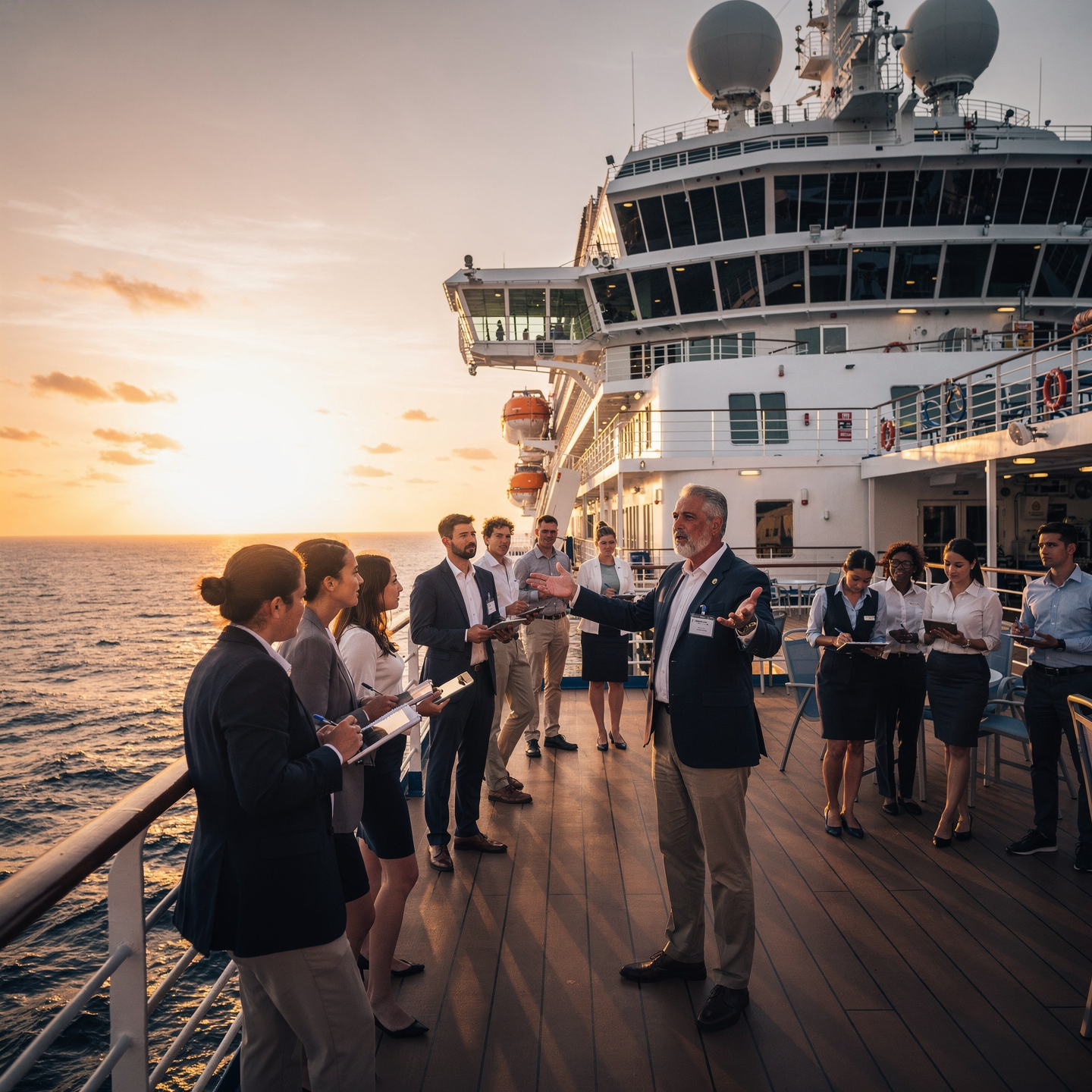
Master’s Degree in International Cruise Management

Why this master’s programme?

The Master in International Cruise Management

This program provides you with the essential skills and knowledge to successfully lead and manage in the cruise industry. Immerse yourself in the end operation of cruise ships, from strategic planning and financial management to optimizing the passenger experience and managing a multicultural crew. Master the latest trends in cruise tourism, including sustainability, technological innovation, and emerging markets. This program prepares you to assume leadership roles in shipping companies, specialist travel agencies, and onboard service providers.

Differentiating Advantages

  • Practical Approach: real-world case studies, management simulations, and applied projects.
  • Networking: expert industry professors and networking opportunities with sector professionals.
  • Leadership Development: communication, negotiation, and global team management skills.
  • Global Perspective: analysis of international markets and expansion strategies.
  • Flexibility: online learning option with interactive resources and personalized tutoring.

Dirección

Master’s Degree in International Cruise Management

Availability: 1 in stock

Who is it aimed at?

  • Tourism, hospitality, and event management professionals who aspire to lead the cruise industry.
  • Graduates in Tourism, Business Administration, or related fields seeking high-level specialization and international exposure.
  • Executives and middle managers who wish to update their knowledge and acquire new skills in cruise management.
  • Entrepreneurs seeking to develop innovative projects in the cruise sector.
  • Marketing, sales, and customer service professionals who wish to specialize in cruise promotion and sales.

Flexibility and international networking: Designed for active professionals, with a flexible online format, real-world case studies, and connections with global industry leaders.

Dirección

Objectives and skills

Efficiently manage hotel operations on board:

“Optimize coordination between departments (deck, engines, passenger) to guarantee guest safety and comfort.”

Leading multicultural and multidisciplinary teams on board:

Promote effective communication and conflict resolution, taking into account cultural and professional differences, to optimize team performance and operational safety.

Maximize profitability and customer satisfaction:

Optimize planning, execution, and post-trip analysis to reduce costs and improve the customer experience.

Master maritime regulations and international safety standards:

Interpret and apply the SOLAS Convention and the ISM Code to ensure the comprehensive safety of the vessel, crew and cargo, adapting to different types of ships and operations.
Develop innovative marketing and sales strategies for cruise ships:

“Implement hyper-personalized segmentation based on predictive data and gamification of the booking experience.”

Designing unique and memorable cruise experiences:

“Develop innovative themed itineraries, incorporating onboard and onshore activities that reflect local culture and the specific interests of passengers.”

Study plan – Modules

  1. Competitive Environment Assessment in the Cruise Industry: PESTEL Analysis and its Impact on International Operations
  2. Advanced Strategic Analysis Models: Use of SWOT Analysis, Porter’s Five Forces, and Value Chain Applied to Cruise Operations
  3. Comprehensive Customer Experience Management: Design and Optimization of Onboard Services to Maximize Satisfaction and Loyalty
  4. Operational Planning and Control: Lean Management and Six Sigma Methodologies Applied to Efficiency in Resource and Process Management
  5. Route and Schedule Optimization: Analysis of Demand, Seasonality, and Logistical Variables for the Selection of Profitable International Itineraries
  6. Technological Innovation in Operations: Implementation of IoT Systems, Big Data, and Automation for Continuous Service Improvement and Predictive Maintenance
  7. Operational Risk Management: Identification, Assessment, and Mitigation of Contingencies Related to Safety, Weather, and International Regulations
  8. Coordination protocol between key departments: customer service, maritime operations, maintenance, and security, to guarantee operational excellence
  9. Key performance indicators (KPIs) and their application in monitoring the quality and efficiency of onboard and shore services
  10. Sustainability and corporate social responsibility strategies in the cruise industry: regulatory compliance and practices to minimize environmental impact
  1. Fundamentals of the Onboard Experience: definition, strategic importance, and its impact on customer loyalty in luxury cruises
  2. Design and Management of Personalized Services: passenger segmentation, profiles of high-spending customers, and adaptation of services to specific needs
  3. Customer Psychology in Luxury Cruises: analysis of behaviors, expectations, and guest satisfaction in exclusive nautical environments
  4. Innovation and Technology Applied to the Onboard Experience: use of CRM systems, artificial intelligence, and big data analytics to optimize personalized attention and anticipate demands
  5. Comprehensive Human Resources Management in High-End Services: training, motivation, and leadership of multidisciplinary teams to ensure exceptional and consistent service
  6. Service Marketing in Luxury Cruises: advanced strategies for customer acquisition and retention, including branding, experiential storytelling, and sensory marketing
  7. Effective Communication Channels: Implementation of digital and traditional channels to promote exclusive offers and maintain contact after the cruise experience
  8. Quality Management of Onboard Services: Measurement, control, and continuous improvement through performance evaluation systems and internal audits
  9. Crisis Management and Online Reputation: Protocols for handling and resolving incidents, and managing public image on social media platforms and specialized media outlets
  10. Optimization of Entertainment and Activities: Planning and evaluation of recreational and cultural programs that enhance exclusivity and the level of satisfaction
  11. Strategic Alliances and Co-Branding: Development of partnerships with luxury brands and designers to enrich the experience and increase perceived value
  12. Regulatory and Ethical Aspects in Service Management: Compliance with international regulations, sustainability, and corporate social responsibility on high-end cruises
  13. Evaluation and Analysis of Onboard Experience Data: Interpretation of KPIs, satisfaction indices, and the use of feedback for operational and strategic decision-making

    Case studies and benchmarking: a detailed study of successful management and marketing models in leading international luxury cruise lines

  1. Fundamentals of Innovation Applied to Operations Management in Luxury Cruises: Concepts, Models, and Disruptive Trends
  2. Advanced Leadership Strategies for Optimizing Onboard Experiences: Designing Personalized Services and Building Loyalty for Exclusive Guests
  3. Implementation of Smart Technologies in Operational Management: IoT, Big Data, and AI for Continuous Improvement and Real-Time Decision-Making
  4. Methodologies for Sustainable Integration in High-End Cruises: Energy Efficiency, Emissions Reduction, and Responsible Resource Management
  5. Development and Application of Predictive Models for Itinerary Planning and Efficient Management of Human and Material Resources
  6. Global Supply Chain Management and Advanced Logistics for International Cruises: Coordination, Optimization, and Rapid Response to Contingencies
  7. Designing Multimodal and Cultural Experiences: Incorporating Exclusive Activities and Collaborations with Destinations to Enrich the Passenger’s Perceived Value
  8. Comprehensive management of operational safety and international regulations: protocols, audits, and compliance within the framework of maritime and hotel certifications
  9. Communication and experiential marketing strategies geared towards industry leaders: brand positioning and reputation management in luxury markets
  10. Evaluation and continuous improvement through key performance indicators (KPIs) and digital feedback: qualitative and quantitative analysis for operational and customer excellence
  1. Fundamentals of Revenue Management in the Luxury Cruise Industry: Key Concepts, Objectives, and Historical Evolution
  2. Dynamic Pricing: Advanced Algorithms, Market Segmentation, Demand Elasticity, and Real-Time Application
  3. Predictive Models for Fare Optimization: Use of Big Data, Machine Learning, and Prescriptive Analytics
  4. Inventory and Capacity Management: Overbooking Strategies, Cabin Differentiation, and Availability Control
  5. Multichannel Distribution: Integration of Global Distribution Systems (GDS), Specialized OTAs, and Direct Sales
  6. Optimizing the Channel Mix: Analysis of Costs, Commissions, Geographic Reach, and Consumer Behavior
  7. Monetizing Onboard Services: Designing Premium Experiences, Bundling, Upselling, and Cross-selling
  8. Advanced Management of Ancillary Revenues: Spa, Gastronomy Exclusive excursions and themed entertainment.

    Use of IoT and CRM technologies for personalization and maximizing onboard spending.

    Financial analysis and critical KPIs: RevPAR, TrevPAR, gross margin, ADR, and their impact on the cruise’s overall profitability.

    Communication and digital marketing strategies for promoting exclusive fares and services.

    Real-time monitoring and adjustment: dashboards, forecasting, and response to external events (weather, geopolitics, health crises).

    Case studies and benchmarks from leading luxury cruise companies worldwide.

    Ethics and sustainability in pricing and distribution, ensuring transparency and value for the customer.

  1. Fundamentals of Operational Leadership in the Cruise Industry: Theories, Styles, and Their Practical Application in Multicultural Maritime Environments
  2. Design and Implementation of Integrated Safety Management Systems (ISMS): Structure, Policies, and Protocols Adapted to International Fleets
  3. International Regulations and Key Standards: Compliance with SOLAS, ISM, ISPS, and MSC Codes in Cruise Operations
  4. Assessment and Mitigation of Operational Risks: Hazard Analysis, Risk Matrices, and Development of Cruise-Specific Contingency Plans
  5. Crisis and Emergency Management on Board: Leadership in Critical Situations, Coordination with Multidisciplinary Teams, and Effective Real-Time Communication
  6. Optimization of Operations in Global Fleets: Strategic Planning, Resource Allocation, and KPI Monitoring to Ensure Efficiency and Safety
  7. Development and Training of Work Teams: Advanced Motivation Techniques, Performance Evaluation, and Building an Organizational Culture Oriented Towards… Security
  8. Implementation of cutting-edge technologies in operational management and security: monitoring systems, automation, and predictive analytics

    Internal and external audits in comprehensive security: preparation, execution, and follow-up of findings for continuous improvement

    Corporate social responsibility and sustainability in fleet management: environmental impact, maritime security protocols, and commitment to port communities

  1. Fundamentals of the Luxury Cruise Customer Experience: Guest Psychology, Expectations, and International Standards
  2. Advanced Personalization and Market Segmentation Strategies for Loyalty to Exclusive Passengers
  3. Design and Management of Innovative Itineraries: Route Optimization, Port Selection, and Authentic Experiences in Premium Destinations
  4. Incorporation of Smart Technologies to Enhance Guest-Ship Interaction: AI, IoT, and Real-Time Big Data Analytics
  5. Comprehensive Management of Onboard Services: High-End Gastronomy, Personalized Entertainment, and Tailored Wellness
  6. Implementation of Sustainable Practices and Corporate Social Responsibility on High-Prestige Cruises
  7. Disruptive Innovation Strategies in the Sector: New Trends, Collaboration with Startups, and Development of Immersive Experiences
  8. Effective Monetization Through Non-Traditional Channels: Upselling, Cross-selling, Exclusive Experiences, and Premium Programs
  9. Advanced financial analysis for revenue management and cost-benefit optimization in luxury services
  10. Digital marketing and strategic communication to attract and retain the international luxury traveler segment
  11. Crisis and online reputation management in the digital age: prevention, response, and image recovery
  12. Performance evaluation and KPI measurement in customer experience and operational profitability
  13. Training and leadership in multidisciplinary teams to ensure operational and emotional excellence on board
  14. Legal and regulatory framework in the management of international luxury cruises: compliance and best practices
  15. Case studies of successful luxury cruises: analysis of business models, innovation, and differentiated experience
  1. Strategic Framework in the Luxury Cruise Industry: PESTEL Analysis, Porter’s Five Forces, and Global Competitive Positioning
  2. Supply Chain Design and Optimization: Inventory Management, Logistics Flows, and Synchronization Between Ports, Suppliers, and Fleets
  3. Advanced Operational Management Models: Lean Operations, Six Sigma, and Agile Methodologies Applied to Cruise Operations
  4. Comprehensive Itinerary Planning: Algorithms to Maximize Efficiency, Tourist Appeal, and Energy Savings
  5. Continuous Improvement Strategies in Onboard Services: Personalization, Customer Experience, and the Use of IoT and Big Data Technologies
  6. Optimizing Financial Performance: Cost Analysis, Dynamic Pricing, and Advanced Revenue Management Models in Luxury Cruises
  7. Innovation in Complementary Monetization: Development of Premium Packages, Strategic Alliances, and Cross-Selling of Exclusive Experiences
  8. Systems Integrated control and monitoring systems: Use of KPIs, real-time dashboards, and business intelligence for operational decision-making

    Environmental impact and sustainability: Implementation of green policies, international certifications, and competitive advantages

    Risk and contingency management: Crisis protocols, business continuity, and adaptation to international regulations

  1. Fundamental concepts of digital transformation: definition, scope, and relevance in the luxury cruise industry
  2. Advanced technological tools for comprehensive fleet management: real-time tracking systems, maritime IoT, and predictive analytics platforms
  3. Big Data and advanced analytics: application for performance optimization, preventive maintenance, and personalization of onboard experiences
  4. Integration of disruptive technologies: artificial intelligence, blockchain, and digital twins in cruise operations and logistics
  5. Sustainability strategies: international regulations, voluntary standards, and specific certifications for the luxury maritime industry
  6. Design and implementation of effective environmental policies: emissions management, resource consumption, and waste treatment in international fleets
  7. Circular economy models adapted to the management of services and operations in luxury cruises
  8. Implementation of alternative energies and clean technologies: propulsion Hybrid power, LNG use, hydrogen, and energy efficiency systems

    Strategic planning for sustainable digital transformation: risk assessment, change management, and alignment with corporate objectives

    Impact of digital transformation on the passenger experience: personalization, automation, and immersive onboard realities

    Cybersecurity applied to digital fleet management: protocols, threat prevention, and incident response

    Governance and compliance in technological integration: legal, regulatory, and ethical implications

    Training and development of human talent for the digital and sustainable operation of cruise ships: digital skills, organizational culture, and leadership

    International case studies: analysis of successful implementations of digital transformation and sustainable practices in luxury cruises

    Key performance indicators (KPIs) for comprehensive digitalized and sustainable management: monitoring, reporting, and continuous improvement

    Open innovation and collaboration Multisectoral: Strategic alliances for technological and environmental development in the cruise industry

    Future perspectives and emerging trends in digital transformation and sustainability for international cruise fleets

    Developing a comprehensive digital transformation and sustainability plan: steps, resources, and tools for its effective implementation

  1. Advanced Operational Management Models: Integration of planning systems, logistics optimization, and workflows in luxury cruise operations
  2. Strategic Itinerary Design: Analysis of target markets, evaluation of emerging ports, and route calibration to maximize customer experience and profitability
  3. Optimization of Onboard Human Resources: Organizational structures, leadership in multicultural teams, and management of specialized talent in the cruise sector
  4. Quality Management Protocols and international standards applied to sector operations (ISO, ISO 9001, CLIA standards)
  5. Strategies for Maximizing the Onboard Experience: Design of personalized services, innovation in recreational activities, and luxury hospitality geared toward exclusive market niches
  6. Consumer behavior analysis and advanced segmentation for high-end cruise passengers, focused on designing differentiated offerings and
  7. Real-time adaptive technologies
  8. Implementation of smart technologies in navigation and onboard services: IoT, Big Data, and artificial intelligence to optimize operations and personalize the passenger experience
  9. Advanced financial management: monetization models for complementary services, revenue optimization by segment, and cost-benefit analysis in the operation of luxury amenities
  10. Sensory and emotional marketing for the luxury cruise industry: engagement, storytelling, and loyalty techniques through digital platforms and omnichannel channels
  11. Sustainable development and eco-efficient practices in the operation of international cruises, complying with IMO regulations and promoting corporate social responsibility
  1. Conceptualization and Structure of the Comprehensive Master’s Project: definition of objectives, scope, applied research methodology, and evaluation criteria for projects in the luxury cruise industry
  2. Analysis of the Global Cruise Industry Environment: evaluation of economic trends, international regulations, market dynamics, and strategic competition in the international cruise sector
  3. Product and Service Innovation: design of disruptive proposals for onboard experiences, emerging technologies, comprehensive digitalization, and advanced personalization for luxury cruise passengers
  4. Advanced Sustainability Strategies: implementation of eco-efficient practices, waste management, reduction of polluting gas emissions, renewable energy onboard, and international environmental certifications
  5. Strategic Leadership and Governance for Cruise Management: development of managerial skills, situational leadership, change management, organizational culture, and corporate sustainability at the senior management level
  6. Project Planning and Management Complexities: analytical tools, integrated timelines, human and financial resource management, operational risks, and quality control systems applied to cruise projects.

    International Legal and Regulatory Framework: compliance with SOLAS, MARPOL, ISM, ISPS, and specific regulations for luxury cruises; legal impact and legal risk mitigation strategies.

    Technological Innovation in Operations and Logistics: integration of artificial intelligence, big data, process automation, and supply chain optimization in international cruise operations.

    Socioeconomic and Cultural Impact Assessment: analysis of the project’s effect on host communities, sustainable development, and strategic corporate social responsibility.

    Presentation, Defense, and Documentation of the Final Project: preparation of technical reports, executive presentations, and defense before an evaluation panel, ensuring coherence, scientific rigor, and immediate practical application in the industry.

Career prospects

“`html

  • Cruise Director: Strategic planning, budget management, staff supervision, and onboard operations.
  • Cruise Operations Manager: Logistics coordination, supplier management, itinerary optimization, and regulatory compliance.
  • Entertainment Director: Design and supervision of entertainment programs, artist management, and creation of memorable passenger experiences.
  • Food and Beverage Manager: Management of onboard restaurants, bars, and kitchens; quality control; cost optimization; and customer satisfaction.
  • Human Resources Director: Recruitment, selection, training, and management of onboard staff; resolution of labor disputes; and compliance with company policies.
  • Shore Excursions Manager: Design and marketing of shore excursions, coordination of local suppliers, and ensuring the safety and satisfaction of the Passengers.
  • Marketing and Sales Director: Development of marketing strategies, cruise promotion, sales channel management, and customer loyalty.
  • Cruise Industry Consultant: Strategic advice, market analysis, and development of new products and services for cruise companies.

“`

Entry requirements

Academic/professional profile:

Bachelor’s degree in Nautical Science/Maritime Transport, Naval/Marine Engineering or a related qualification; or proven professional experience on the bridge/in operations.

Language proficiency:

Functional Maritime English (SMCP) recommended for simulations and technical materials.

Documentation:

Updated CV, copy of qualification or seaman’s book, national ID/passport, motivation letter.

Technical requirements (for online):

Device with camera/microphone, stable internet connection, monitor ≥ 24” recommended for ECDIS/Radar-ARPA.

Admissions process and dates

Online
application

(form + documents).

Academic review and interview

Admissions decision

Admissions decision

(+ scholarship offer if applicable).

Place reservation

(deposit) and enrolment.

Induction

(access to the virtual campus, calendars, simulator guides).

Scholarships and financial support

  • Strategic Management: Master the keys to profitability and positioning in the global cruise market.
  • Maritime Operations: Delve into safety, logistics, and operational efficiency onboard and ashore.
  • Customer Experience: Learn to design innovative and personalized experiences that exceed the expectations of the modern traveler.
  • Sustainability and CSR: Integrate responsible and sustainable practices into cruise management, contributing to a greener future.
  • Leadership and Negotiation: Develop your leadership and negotiation skills to manage multicultural teams and reach mutually beneficial agreements. Prepare to lead the cruise industry of the future with a global, innovative, and sustainable vision.

Testimonials

Frequently asked questions

Management and direction of international cruises.

Yes. The itinerary includes ECDIS/Radar-ARPA/BRM with harbor, ocean, fog, storm, and SAR scenarios.

Online with live sessions; hybrid option for simulator/practical placements through agreements.

Recommended functional SMCP. We offer support materials for standard phraseology.

Yes, with a relevant degree or experience in maritime/port operations. The admissions interview will confirm suitability.

Optional (3–6 months) through Companies & Collaborations and the Alumni Network.

Simulator practice (rubrics), defeat plans, SOPs, checklists, micro-tests and applied TFM.

A degree from Navalis Magna University + operational portfolio (tracks, SOPs, reports and KPIs) useful for audits and employment.

  1. Conceptualization and Structure of the Comprehensive Master’s Project: definition of objectives, scope, applied research methodology, and evaluation criteria for projects in the luxury cruise industry
  2. Analysis of the Global Cruise Industry Environment: evaluation of economic trends, international regulations, market dynamics, and strategic competition in the international cruise sector
  3. Product and Service Innovation: design of disruptive proposals for onboard experiences, emerging technologies, comprehensive digitalization, and advanced personalization for luxury cruise passengers
  4. Advanced Sustainability Strategies: implementation of eco-efficient practices, waste management, reduction of polluting gas emissions, renewable energy onboard, and international environmental certifications
  5. Strategic Leadership and Governance for Cruise Management: development of managerial skills, situational leadership, change management, organizational culture, and corporate sustainability at the senior management level
  6. Project Planning and Management Complexities: analytical tools, integrated timelines, human and financial resource management, operational risks, and quality control systems applied to cruise projects.

    International Legal and Regulatory Framework: compliance with SOLAS, MARPOL, ISM, ISPS, and specific regulations for luxury cruises; legal impact and legal risk mitigation strategies.

    Technological Innovation in Operations and Logistics: integration of artificial intelligence, big data, process automation, and supply chain optimization in international cruise operations.

    Socioeconomic and Cultural Impact Assessment: analysis of the project’s effect on host communities, sustainable development, and strategic corporate social responsibility.

    Presentation, Defense, and Documentation of the Final Project: preparation of technical reports, executive presentations, and defense before an evaluation panel, ensuring coherence, scientific rigor, and immediate practical application in the industry.

Request information

  1. Complete the Application Form.

  2. Attach your CV/degree certificate (if you have it to hand).

  3. Indicate your preferred cohort (January/May/September) and whether you would like the hybrid option with simulator sessions.

    An academic advisor will contact you within 24–48 hours to guide you through the admission process, scholarships, and compatibility with your professional schedule.

Please enable JavaScript in your browser to complete this form.
Click or drag a file to this area to upload.

Faculty

0
    0
    Tu carrito
    Tu carrito esta vacíoRegresar a la tienda
    Scroll to Top