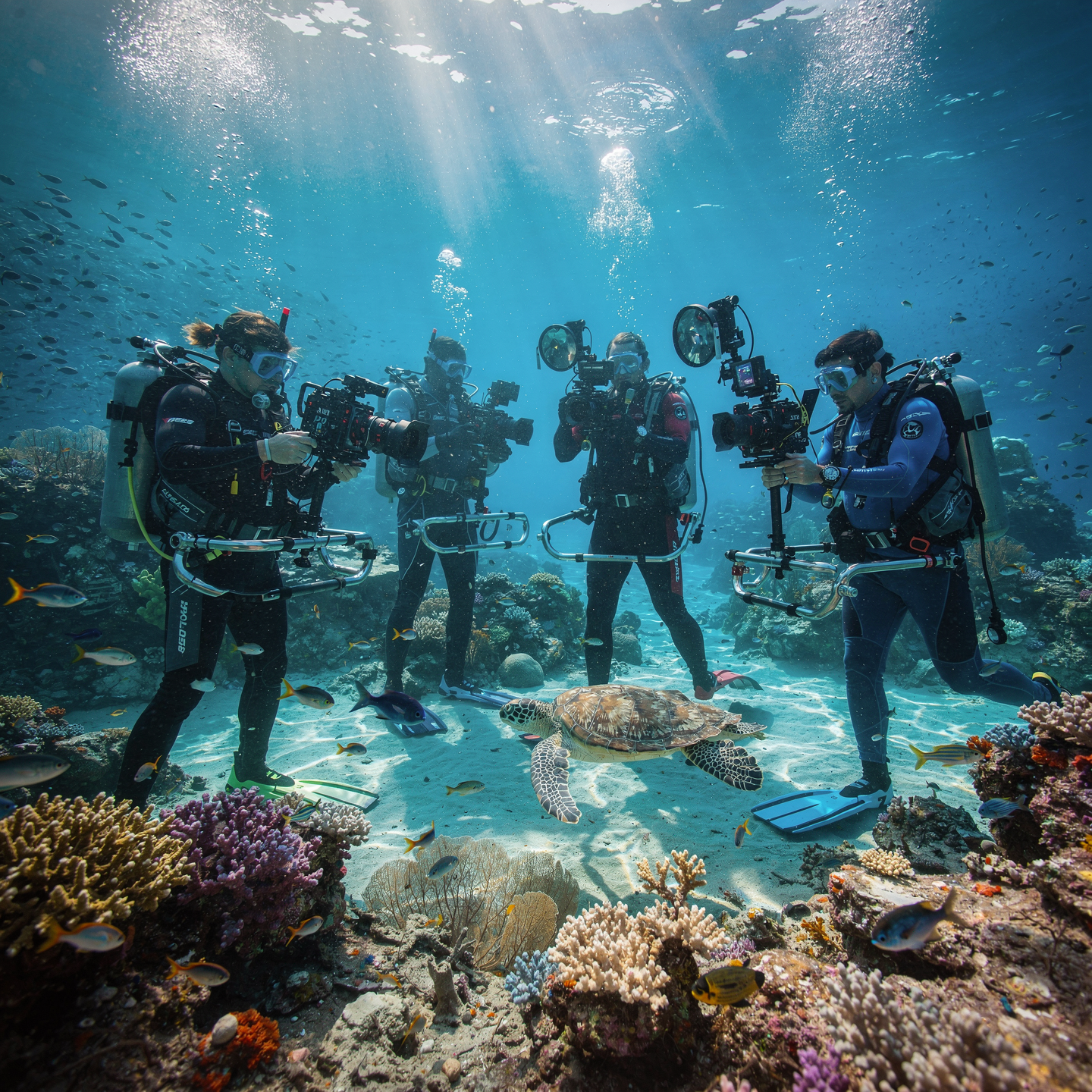
Master’s Degree in Underwater Photography and Ocean Documentary
Why this master’s programme?
The Master in Underwater Photography and Ocean Documentary
Immerse yourself in the fascinating world of underwater photography, combining advanced photographic techniques with a deep understanding of the marine ecosystem. Learn to capture the beauty and fragility of the ocean, mastering lighting, composition, and specialized equipment. This program prepares you to create impactful documentaries that raise awareness about marine conservation.
Differentiating Advantages
- Practical Dives: Hone your skills in real and diverse environments.
- Professional Equipment: Access to state-of-the-art underwater photography and video equipment.
- Expert Mentors: Learn from internationally renowned photographers and documentary filmmakers.
- Visual Storytelling: Master the art of telling stories through impactful images.
- Networking Opportunities: Connect with industry professionals and conservation organizations.
- Modality: Online
- Level: Masters
- Hours: 1600 H
- Start date: 25-08-2026
Availability: 1 in stock
Who is it aimed at?
- Photographers and videographers looking to specialize in the fascinating underwater world and ocean visual storytelling.
- Marine biologists, oceanographers, and conservationists who want to communicate their research and projects in a powerful way through images.
- Professional and recreational divers with a passion for photography and video who want to enhance their technical and creative skills underwater.
- Audiovisual producers and documentary filmmakers who aspire to create high-quality content about marine life, conservation, and ocean exploration.
- Journalists and environmental communicators interested in deepening their knowledge of ocean issues and telling their stories through images powerful.
Learning Flexibility
 Adapted for professionals and students: online classes and field practice, personalized projects and specialized tutoring.
Objectives and skills

Mastering advanced underwater lighting techniques:
“Use specialized light sources (LED, HID) and modifiers (diffusers, reflectors) to enhance colors, textures and create specific environments, minimizing backscatter and maximizing visual range.”

Create impactful visual narratives about marine life:
To use composition, color, and light to evoke emotions and convey clear messages about the beauty and fragility of marine ecosystems.

Leading oceanographic documentation projects with scientific and artistic rigor:
“Integrating complex oceanographic data (temperature, salinity, currents) with striking artistic visualizations, ensuring scientific accuracy and accessibility for diverse audiences.”

Managing logistics and security in challenging underwater environments:
“Assess operational risks (currents, tides, weather) and apply safety protocols, including contingency plans and effective communication with the team.”

Applying marine conservation methodologies through photography:
Documenting the state of marine ecosystems and pollution, using photographic techniques that minimize environmental impact and maximize the scientific value of the images.

Assess the environmental impact of human activities on marine ecosystems:
“Identify sources of pollution (spills, plastics, noise) and analyze their effects on biodiversity and ecosystem health.”
Study plan – Modules
- Fundamentals of underwater optics: interaction of light with water, scattering, spectral absorption, and the impact on image quality
- Specialized equipment: advanced selection of cameras, watertight housings, stroboscopic lighting systems, and optical filters for marine environments
- Advanced focusing and exposure techniques in low visibility and turbulent water conditions
- Underwater light modulation: strategic use of artificial light sources, white balance, and color correction in post-production
- Studying marine animal behavior to anticipate and capture natural interactions without disturbing the habitat
- Oceanic visual storytelling: constructing scientific and artistic audiovisual narratives based on ethnography and marine biology
- Safe diving methodologies for technical photographers: safety protocols, decompression management, and Emergency management
Advanced post-production: professional workflow for underwater image editing, dynamic retouching, and multi-layered composition creation
Storytelling techniques applied to the underwater environment: scriptwriting, theme selection, and editing for documentary and multimedia formats
Integrated practical projects combining technical and narrative skills for the creation of a professional portfolio in underwater and ocean documentary photography
- Fundamentals of Light in Aquatic Environments: Absorption, Scattering, and Propagation in Fresh and Salt Water
- Underwater Light Spectrum: Changes in Color Temperature at Different Depths and Their Impact on Photography
- Advanced Principles of Applied Optics: Specialized Lenses, Chromatic Aberrations, and Distortions in Compact and SLR Systems
- Design and Selection of Artificial Lighting Sources: Strobe Lights, High-Power LEDs, and Continuous Lighting Systems for Deep-Sea Environments
- Configuration and Strategic Positioning of Lighting Equipment to Avoid Backscatter Effects and Maximize the Illuminated Volume
- Underwater White Balance Techniques: Advanced Manual Adjustments and Post-Production Correction Software to Restore Natural Colors
- Use of Specialized Optical Filters: Color Filters, Polarizers, and Diffusers in Underwater Photography
- Camera Synchronization Methodologies and lighting to capture moving subjects without sacrificing sharpness or exposure
Study of visual hydrodynamics: how turbidity, suspended particles, and microbubbles affect image quality
Assembly and maintenance practices for optical and lighting systems under extreme conditions: corrosion, pressure, and temperature
Comparative evaluation of lighting configurations based on types of underwater ecosystems (corals, caves, abysses)
Safety protocols and technical handling during deep dives with sophisticated electronic equipment
Analysis of real-world cases and documentary projects highlighting the use of advanced lighting and optics to capture high-quality ocean images
- Advanced Fundamentals of Underwater Optics: Light Interaction with Water, Absorption, Scattering, and Refraction for Optimized Capture
- Underwater Lighting Techniques: Use of Strobes, Continuous Video Lights, Diffusers, and Reflectors to Preserve the Natural Environment and Emphasize Details
- Selection and Configuration of Specialized Equipment: Professional Cameras, Waterproof Housings, Macro Lenses, Wide-Angle Lenses, and Autofocus Systems in Marine Conditions
- Underwater Color Control and Compensation: Advanced White Balance, Optical Filters, and Digital Correction to Restore Color Fidelity at Different Depths
- Underwater Visual Composition Methodologies: Application of Classical and Contemporary Rules, Sequence Shots, Dynamic Framing, and Impactful Visual Storytelling to Tell Oceanic Stories
- Dynamics and Behavior of Marine Fauna: Species Recognition, Movement Patterns, and Strategies for Ethical and Non-Invasive Image Capture
- Advanced technical diving techniques for photography: gas mixing, decompression, and buoyancy management to maximize time and stability during the shoot
- Scientific and ethnographic documentation through photography: visual recording protocols, metadata, standardization, and techniques for rigorous documentary reporting
- Professional post-production for underwater photography: workflow, specialized software, and image retouching to preserve realism and highlight relevant information
- Legal and ethical aspects of ocean documentary photography: image rights, international regulations, environmental protection, and the social responsibility of the underwater photographer
- Advanced design of underwater rigs: material selection, ergonomics, and modularity to adapt to different ocean environments
- Engineering and operation of watertight housings: pressure analysis, structural strength, sealing systems, and preventive maintenance for professional cameras
- Image stabilization in dynamic environments: physical principles of underwater motion, use of gimbals, mechanical and digital stabilizers to minimize vibrations and currents
- Integration of ROV (Remotely Operated Vehicles) and AUV (Autonomous Underwater Vehicles) platforms in filming operations: configuration of sensors, navigation systems, and real-time remote control
- Calibration and synchronization of optical and electronic systems: white balance, ISO management, and exposure in varying aquatic environments
- Underwater real-time communication and data transfer protocols: fiber optic, acoustic, and radio frequency solutions adapted to different depths Significant
- Underwater Lighting Optimization: Design and adjustment of LED sources, use of color filters, and angles of incidence to avoid backscatter and enhance natural contrast
- Advanced Lens and Accessory Configuration: Dome ports, specific macro and zoom lenses to minimize optical aberrations and distortion in aquatic environments
- Safe Assembly and Disassembly Processes: Pre-inspection checklist, immersion procedures, and technical contingencies to minimize operational risks
- Practical Applications and Case Studies: Analysis of professional filming in reefs, deep water, and high-turbulence zones to maximize quality and safety
- Fundamentals of Color Management in Underwater Environments: Specific Optical and Chromatic Challenges of the Aquatic Medium
- Advanced Color Model Theory: RGB, CMYK, and LAB Color Spaces, and Their Application in Professional Underwater Photography
- Calibration and Profiling of Monitors and Cameras: Using Hardware Devices to Ensure Color Fidelity from Capture to Final Editing
- RAW Capture Processes in Underwater Photography: Optimizing Parameters to Maximize Color Information and Dynamic Range in Varying Lighting Conditions
- Developing Non-Destructive Workflows in Adobe Lightroom and Capture One for Editing Technically Demanding Ocean Images
- Selective Color Correction and White Balance Specific to Waters of Different Depths and Lighting Conditions
- Advanced Use of Masks, Channels, and Frequency Separation Techniques to Enhance Detail Without Compromising the Natural Color of the Environment
- Integration of HDR and bracketing techniques to expand dynamic range in complex underwater shots
- Application of custom LUTs for ocean documentaries: creation, adjustment, and export for professional audiovisual platforms
- Color management in multi-platform workflows: from capture, through post-production, to output in different digital and physical formats
- Correction of chromatic aberrations and elimination of color casts caused by water filtration and suspended particles
- Preparation of files for different distribution channels: cinema, TV, online platforms, and exhibition in museums or marine interpretation centers
- Optimization of compression and export format to preserve visual quality in high-impact documentaries
- Practical case studies: analysis and advanced retouching of real images and sequences captured on underwater documentary expeditions
- Process automation
- Repetitive processes and preset creation to improve efficiency in large-volume underwater visual projects
- Ethical and artistic considerations in post-production: balancing technical accuracy and documentary fidelity to the marine environment
- Integration of specialized software and advanced plugins to enhance the quality of the final image
- Backup, archiving, and digital management of large volumes of RAW files and renders to ensure security and accessibility in professional projects
- Collaborative work and color management in multidisciplinary teams for ocean audiovisual production
- Emerging trends in underwater post-production: artificial intelligence, machine learning, and new technologies applied to marine documentary photography
- Advanced Fundamentals of Underwater Lighting: Physical properties of light underwater, selective absorption and scattering, light spectrum and its impact on the color reproduction of underwater images
- Design and use of artificial lighting systems: Strobe lights, high-power LED spotlights, reflectors, and beam modifiers for optimizing contrast and texture in hyperbaric environments
- Underwater optics: Principles of refraction and distortion, selection of macro, wide-angle, and telephoto lenses to capture details in variable visibility conditions
- Integration of specific optical filters and digital color correction to compensate for blue and green casts present in deep ocean environments
- Innovations in autonomous cameras and unmanned underwater vehicles (ROVs/AUVs): Configuration, programming, and deployment for image capture in inaccessible or difficult-to-reach areas
- Advanced stabilization techniques and
- Autofocus while moving, taking into account currents and marine dynamics that affect sharpness and composition
- Professional protocols for on-site calibration: adjustments to white balance, ISO, aperture, and shutter speed specific to changing underwater conditions
- Lighting planning and synchronization methodologies for technical diving: temporal coordination between photographic equipment and light sources to avoid shadows and capture bioluminescence
- Technical processes for RAW capture and high-fidelity formats for maximum detail retention and flexibility in post-production
- Advanced editing and post-production software: adaptive color correction, noise reduction, texture enhancement, and HDR techniques applied to underwater images to generate professional and documentary-quality results
- Implementation of standardized workflows for archiving, cataloging, and digital preservation of ocean images, ensuring long-term integrity and accessibility
- Real-world case studies and practical projects with analysis of Successes and failures in image capture and processing, applying essential scientific and aesthetic criteria for a professional ocean documentary photographer.
“`
- Fundamentals of Underwater Photography: Optical Geometry, Refractive Index, and Aberrations in Aquatic Environments
- Specialized Equipment: Waterproof Cameras, Housings, Macro and Wide-Angle Lenses for Underwater Photography
- Focusing and Exposure Techniques in Variable Underwater Light and Visibility Conditions
- Advanced Lighting: Control of Flashes, Strobes, Filters, White Balance, and Their Impact on Image Quality
- Design and Execution of Lighting Schemes to Highlight Textures, Colors, and Shapes in Oceanic Environments
- Capturing Animal Movement and Behavior: Shutter Speed, Burst Mode, and Time Sync
- Composition Methodologies in Underwater and Documentary Photography, Applying Rules of Visual Narrative and Storytelling
- Transfer and Backup Workflow: Secure Handling of RAW Files and Systems Underwater storage
Advanced post-production: digital development, color correction specifically for marine tones, and removal of suspended particles
Non-linear editing and audiovisual montage focused on ocean documentaries: integration of image, ambient sound, and music
Professional monitor calibration techniques and color profiles for accurate preservation of the original image
Specialized software: Adobe Lightroom, Photoshop, DaVinci Resolve, and specific plugins for underwater retouching and restoration
Optimization for multiple distribution formats: large-format printing, web, 4K video, and social media
Advanced metadata management and tagging for digital catalogs and ocean documentary databases
Ethics in capture and editing: respect for the marine environment, responsible representation, and image rights in documentary photography
Professional case studies: critical analysis of projects Award winners in underwater photography and oceanographic documentaries
- Design and configuration of underwater multicamera systems: selection of optics, CMOS/CCD sensors, and geometric arrangement for stereoscopic and 360° capture
- Principles of radiometric and geometric calibration in underwater environments: white balance adjustment, correction of chromatic aberrations and optical distortions
- Integration of advanced sensors: photometric, spectral, depth, and motion sensors to improve image quality and contextualization
- Protocols for temporal and spatial synchronization between cameras in multicamera networks, ensuring consistent high-resolution recording
- Optimization of LED lighting configurations and pulsed light sources to preserve biodiversity and minimize the scattering of suspended particles
- Implementation of stabilization and remote control systems for operation in turbulent waters and at different depths
- Advanced processing of captured data: color correction, physiological noise reduction, and Three-dimensional reconstruction of marine scenes
Methodologies for designing underwater shooting plans with a focus on scientific cinematography and oceanographic documentaries
International regulations and standards applicable to the operation of audiovisual equipment in protected environments and sensitive marine ecosystems
Case studies and analyses of real projects to understand challenges and solutions in capturing high-definition and 4K/8K multi-camera underwater images
- Technical Fundamentals of Underwater Capture: Analysis of specialized sensors and cameras (DSLRs, mirrorless cameras, compact cameras with waterproof housings), configurations for different depths and light conditions, selection of macro and wide-angle lenses for marine environments
- Lighting in Extreme Oceanic Environments: Advanced design and operation of underwater lighting systems (LEDs, strobes, fiber optics), color and light temperature control techniques to compensate for absorption and scattering at different depths
- Stabilization and Movement: Professional use of gimbals, neutral floats, and stabilization systems for underwater photography and video in current and turbulence conditions
- Advanced Focusing and Exposure Techniques: Implementation of manual modes, custom white balance, depth of field calculation in liquid media, use of histograms and multiple exposures for capturing Sharp and detailed images
Photographic composition and visual storytelling methodologies: Adapting classic rules (rule of thirds, golden thirds) to underwater environments, integrating dynamic marine elements for impactful storytelling in ocean documentaries
Specialized post-production for underwater photography: Professional workflow from RAW file management, advanced color and contrast correction, noise reduction in images captured in low light and murky waters, use of specific LUTs for ocean environments
Professional software and digital tools: Proficiency in programs such as Adobe Lightroom, advanced Photoshop, Capture One, and specialized plugins for underwater retouching (particle removal, enhancement of marine textures, selective tone adjustment)
ICC profile management and monitor calibration: To ensure color fidelity in final images intended for publications and exhibitions professionals
- Safety and environmental care protocols during capture: techniques that minimize disturbance to marine fauna and flora, ethical considerations, and international regulations applicable to oceanographic documentation projects
- Advanced technological integration: use of underwater drones, ROVs, and 360° cameras for multiple and multi-plane capture, multisensory synchronization for immersive documentaries
- Planning photographic and documentary projects in critical periods: analysis of oceanographic, meteorological, and biological variables for time optimization and effective results in field campaigns
- Development of a professional portfolio and project presentation: digital and physical curation techniques, coherent visual narrative for presentation to scientific entities, media outlets, and international festivals
- Design and development of autonomous underwater vehicles (AUVs) for visual exploration: platforms, propulsion, and inertial navigation systems (INS)
- Advanced integration of image capture systems: multispectral cameras, underwater LIDAR, and hyperspectral sensors for scientific documentation
- Synchronization and communication protocols in extreme underwater environments: acoustics, optics, and tethered networks
- Real-time processing algorithms for image stabilization and enhancement in low-visibility and high-turbidity environments
- Design and application of artificial intelligence for automatic species classification and habitat detection in deep-sea ecosystems
- Optimization of autonomous routes using adaptive reinforcement learning to minimize environmental impact and maximize visual coverage
- Integration of environmental sensors to correlate oceanographic data (temperature, salinity, pressure) with documentary images
- Advanced post-processing and audiovisual editing methods for immersive and scientifically rigorous documentary narratives
- Safety protocols and mitigation of technical risks during autonomous operations at extreme depths (>1000 m)
- Legal, ethical, and conservation aspects of using autonomous technologies for visual research in protected marine areas
Career prospects
“`html
- Professional Underwater Photographer: Production of images and videos for media outlets, agencies, and independent projects.
- Ocean Documentarian: Creation of documentaries about marine life, conservation, and exploration.
- Diving and Underwater Photography Guide: Leading photographic expeditions and diving workshops.
- Scientist and Researcher: Collaboration on marine research projects through visual documentation.
- Educator and Communicator: Teaching courses, workshops, and lectures on underwater photography and ocean conservation.
- Conservationist and Activist: Using photography to raise awareness about marine environmental issues.
- ROV and AUV Camera Operator: Operation of remote equipment for underwater exploration and filming.
- Underwater Imaging Consultant: Advising companies and organizations on the production of underwater visual content.
“`
Entry requirements

Academic/professional profile:
Bachelor’s degree in Nautical Science/Maritime Transport, Naval/Marine Engineering or a related qualification; or proven professional experience on the bridge/in operations.

Language proficiency:
Functional Maritime English (SMCP) recommended for simulations and technical materials.

Documentation:
Updated CV, copy of qualification or seaman’s book, national ID/passport, motivation letter.

Technical requirements (for online):
Device with camera/microphone, stable internet connection, monitor ≥ 24” recommended for ECDIS/Radar-ARPA.
Admissions process and dates

Online
application
(form + documents).

Academic review and interview
Admissions decision

Admissions decision
(+ scholarship offer if applicable).

Place reservation
(deposit) and enrolment.

Induction
(access to the virtual campus, calendars, simulator guides).
Scholarships and financial support
- Master Underwater Photography: Learn advanced lighting, composition, and editing techniques in marine environments.
- Create Impactful Documentaries: Develop narrative skills to tell powerful visual stories about the ocean.
- Explore Unique Ecosystems: Immerse yourself in marine diversity and capture the beauty of reefs, shipwrecks, and wildlife.
- Become a Visual Conservationist: Use photography to raise awareness about protecting the marine environment.
- Boost Your Career: Open doors to opportunities in the world of documentary filmmaking, conservation, and the tourism industry.
Testimonials
This master’s program provided me with the tools and confidence to turn my passion for the ocean into a career. I learned not only advanced underwater photography and videography techniques, but also visual storytelling and the importance of conservation. Thanks to the program’s training and practical experience, I was able to publish my first photo essay on Mediterranean biodiversity in a prestigious nature magazine, which opened doors to exciting new opportunities in the world of ocean documentation.
The Master’s in Naval Art & Literature provided me with the critical tools and specialized knowledge to publish my study on the representation of the Battle of Trafalgar in Romantic painting, which was awarded the Maritime Historical Society prize.
This master’s program provided me with the tools and confidence to turn my passion for the ocean into a career. I learned not only advanced underwater photography and videography techniques, but also the importance of visual storytelling for conservation. Thanks to this training, I was able to publish my first photo essay on Mediterranean biodiversity in a prestigious international magazine, which opened doors to exciting new opportunities in the world of ocean documentation.
This master’s program provided me with the tools and confidence to turn my passion for the ocean into a career. I learned not only advanced underwater photography and videography techniques, but also documentary storytelling and the importance of conservation. Thanks to this training, I was able to publish my first photo essay on Mediterranean biodiversity in a prestigious nature magazine, which launched my career as a marine photojournalist.

Frequently asked questions
Underwater/oceanic environment.
Yes. The itinerary includes ECDIS/Radar-ARPA/BRM with harbor, ocean, fog, storm, and SAR scenarios.
Online with live sessions; hybrid option for simulator/practical placements through agreements.
It combines both, delving into underwater photography as a tool for scientific documentation and visual storytelling of the ocean.
Recommended functional SMCP. We offer support materials for standard phraseology.
Yes, with a relevant degree or experience in maritime/port operations. The admissions interview will confirm suitability.
Optional (3–6 months) through Companies & Collaborations and the Alumni Network.
Simulator practice (rubrics), defeat plans, SOPs, checklists, micro-tests and applied TFM.
A degree from Navalis Magna University + operational portfolio (tracks, SOPs, reports and KPIs) useful for audits and employment.
- Design and development of autonomous underwater vehicles (AUVs) for visual exploration: platforms, propulsion, and inertial navigation systems (INS)
- Advanced integration of image capture systems: multispectral cameras, underwater LIDAR, and hyperspectral sensors for scientific documentation
- Synchronization and communication protocols in extreme underwater environments: acoustics, optics, and tethered networks
- Real-time processing algorithms for image stabilization and enhancement in low-visibility and high-turbidity environments
- Design and application of artificial intelligence for automatic species classification and habitat detection in deep-sea ecosystems
- Optimization of autonomous routes using adaptive reinforcement learning to minimize environmental impact and maximize visual coverage
- Integration of environmental sensors to correlate oceanographic data (temperature, salinity, pressure) with documentary images
- Advanced post-processing and audiovisual editing methods for immersive and scientifically rigorous documentary narratives
- Safety protocols and mitigation of technical risks during autonomous operations at extreme depths (>1000 m)
- Legal, ethical, and conservation aspects of using autonomous technologies for visual research in protected marine areas
Request information
Complete the Application Form.
Attach your CV/degree certificate (if you have it to hand).
Indicate your preferred cohort (January/May/September) and whether you would like the hybrid option with simulator sessions.
An academic advisor will contact you within 24–48 hours to guide you through the admission process, scholarships, and compatibility with your professional schedule.
Faculty
Eng. Tomás Riera
Full Professor
Eng. Tomás Riera
Full Professor
Eng. SofĂa Marquina
Full Professor
Eng. SofĂa Marquina
Full Professor
Eng. Javier Bañuls
Full Professor
Eng. Javier Bañuls
Full Professor
Dr. Nuria Llobregat
Full Professor
Dr. Nuria Llobregat
Full Professor
Dr. Pau Ferrer
Full Professor
Dr. Pau Ferrer
Full Professor
Cap. Javier Abaroa (MCA)
Full Professor
Cap. Javier Abaroa (MCA)
Full Professor

