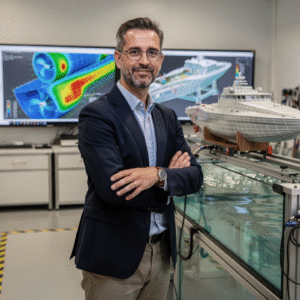
Master’s Degree in Offshore Oil and Gas Platforms
Why this master’s programme?
The Master in Offshore Oil and Gas Platforms
This program provides you with comprehensive training in the design, operation, and maintenance of these complex installations. You will learn about the extraction and processing processes, as well as safety and environmental management in an offshore environment. This program covers everything from subsurface engineering to logistics and transportation, with a focus on the most advanced technologies. Gain a complete overview of the industry and become an expert in offshore energy.
Differentiating Advantages
- Advanced Simulations: Hands-on training with cutting-edge software for platform design and analysis.
- Industry Experts: Classes taught by professionals with real-world experience on offshore platforms.
- Risk Management and Safety: Training in the latest regulations and procedures for accident prevention.
- Energy Efficiency and Sustainability: Focus on clean technologies and reducing environmental impact.
- Professional Networking: Opportunities to connect with leading companies in the sector.
- Modality: Online
- Level: Masters
- Hours: 1600 H
- Start date: 11-06-2026
Availability: 1 in stock
Who is it aimed at?
- Civil, mechanical, electrical, and chemical engineers seeking to specialize in the design, construction, and operation of offshore platforms.
- Energy sector professionals wishing to delve deeper into the exploration, production, and transportation of offshore oil and gas.
- Project managers and executives needing a comprehensive view of the offshore industry, including risks, costs, and regulations.
- Consultants and technical advisors aspiring to offer innovative and efficient solutions for offshore project development.
- Engineering and science graduates seeking advanced training to access leadership positions in the oil and gas platform industry.
Flexibility and specialization
Adapted for working professionals: online methodology with live classes, downloadable content, and tutoring personalized for learning at your own pace.
Objectives and skills

Optimize hydrocarbon production:
“Implement production optimization techniques (gas lift, electric submersible pumping) and monitor key variables (pressure, temperature, flow rate) to maximize extraction and minimize operating costs.”

Efficiently managing security in offshore operations:
Implement and monitor emergency response plans, including drills and coordination with maritime rescue teams.

Designing and maintaining complex underwater infrastructures:
“Managing risks, safety protocols, and contingency plans in underwater operations.”

Leading engineering and construction projects in offshore environments:
“Manage critical HSE risks (height, lifting, confined spaces, hot work) according to international and local regulations, prioritizing the safety of personnel and the integrity of assets.”

Mastering comprehensive risk management on offshore platforms:
“Implement and monitor emergency response plans, mitigating incidents and ensuring the safety of personnel and facilities.”

Develop and implement predictive maintenance strategies:
“Implement vibration analysis, thermography, and oil analysis techniques to anticipate failures in critical equipment, optimizing maintenance plans and reducing downtime.”
Study plan – Modules
- Fundamentals of Deepwater Extraction System Design: Analysis of Geological, Geotechnical, and Environmental Factors
- Advanced Technologies for Well Design: Selection of Equipment, Piping, and Materials Resistant to Extreme Conditions (High Pressure, Temperature, and Corrosion)
- Optimization of Operations Using Multiphase Dynamic Flow Models in Wells and Risers: Simulation and Real-Time Monitoring
- Control and Automation Systems on Offshore Platforms: SCADA, DCS, and Their Integration for Efficient and Safe Process Management
- Evaluation and Mitigation of Operational Risks: Identification, Qualitative and Quantitative Analysis, and Contingency Planning
- International Regulations and Technical Standards Applied to Deepwater Extraction: API, ISO, NORSOK, and Their Practical Implementation
- Integrated Fluid Management: Selection and Optimization of Systems Pumping, separation, and treatment to maximize production and minimize environmental impact.
Predictive models for structural integrity and condition-based maintenance: preventing failures and extending equipment lifecycle.
Risk management in offshore conditions: emergency response strategies, evacuation plans, and operational drills.
Application of emerging digital technologies: artificial intelligence, big data analytics, and digital twins to optimize processes and make data-driven decisions.
Case studies and field studies: detailed analysis of successful global deepwater extraction projects and lessons learned.
- Offshore Drilling Fundamentals: Well Design, Platform Types, and Extreme Environmental Conditions
- Directed and Horizontal Drilling Technologies: Downhole Tools, Downhole Motors, Navigation, and Well Control
- Advanced Well Pressure Control Systems: Drilling Fluid Management, Pressure-Controlled Wells (Managed Pressure Drilling – MPD)
- Automated Drilling Rigs: Smart Sensors, Real-Time Monitoring, and Applied SCADA Systems
- Innovations in Extraction Methods: Enhanced Secondary and Tertiary Recovery Techniques in Offshore Environments
- Subsea Production Systems: Subsea Christmas Trees (SSAs), Manifolds, and Remote Control
- Integrating Digital Technology for Operational Optimization: 3D Modeling, Reservoir Simulation, and Predictive Analytics
- Regulations and international standards in offshore safety: API, ISO, and OGP guidelines applied to platforms
Comprehensive risk management: HAZOP analysis, LOPA, and contingency plans for drilling and production incidents
Environmental impact and sustainability: techniques for emissions mitigation, effluent treatment, and waste management on platforms
Application of renewable energy and green technologies to reduce the environmental footprint in offshore operations
Emergency response systems: evacuation protocols, fire control, and marine oil spill response
Training and continuing education of technical personnel: virtual reality, advanced simulators, and competency assessment
Innovations in structural integrity: non-destructive monitoring, use of drones, and predictive maintenance techniques
Case studies and failure analysis: lessons learned Lessons learned from offshore accidents and best practices for prevention.
- Advanced analysis of structural materials: selection, mechanical properties, and corrosion resistance in extreme offshore environments
- Design and optimization of fixed and floating oil platforms: fundamentals, computational methods, and experimental validation
- Integration of subsea systems: architecture, hydraulic, electrical, and control interfaces for efficient and safe extraction
- Structural dynamics in deep water: modeling of hydrodynamic, seismic, and operational loads to ensure structural integrity
- Application of real-time structural monitoring technologies: smart sensors, non-destructive monitoring techniques, and predictive analysis
- Optimization of submarine anchors and cables: analysis of stress, fatigue, and behavior under currents and seabed movements
- Systems for the prevention and mitigation of structural failures: inspection protocols, predictive maintenance, and emergency repairs
- Design and operation of subsea production systems: integration of Manifolds, Christmas trees, and umbilicals to maximize efficiency and safety
International regulations and technical standards applied to offshore platforms and subsea systems: compliance and best practices
Innovations in subsea process automation and control: artificial intelligence, remote monitoring, and contingency response in hostile environments
- Fundamentals of structural integrity in offshore platforms: types of materials, corrosion, fatigue, and failure mechanisms
- Advanced integrity assessment: non-destructive testing (NDT) techniques applied to metallic and composite structures
- Real-time monitoring systems: smart sensors, data acquisition and analysis techniques for early damage detection
- Predictive maintenance strategies: trend analysis, modeling, and simulation for intervention optimization
- Asset lifecycle management: planning, execution, and control using CMMS and EAM systems
- Current international standards and regulations: API, ISO, NORSOK, and their application in offshore asset management
- Planning and execution of inspections: criticality criteria, frequency, advanced techniques, and technical reports
- Integration of digital technologies: digital twins, artificial intelligence for failure prediction and continuous improvement
- Risk management in integrity: quantitative analysis, consequence assessment, and mitigation strategies
- Compliance and integrity audits: preparation, documentation, regulatory compliance, and nonconformity management
- International regulatory framework applicable to offshore operations: IOM, API, ISO, OSHA, and specific regulations for offshore oil and gas platforms
- Structure and operation of integrated emergency management systems in offshore facilities: roles, responsibilities, and chain of command
- Operational risk assessment and critical hazard analysis (HAZID/HAZOP) oriented to offshore emergency scenarios
- Design and application of safety and immediate response protocols for incidents such as fires, explosions, spills, and structural failures
- Advanced air/sea evacuation and rescue techniques in adverse conditions and high operational complexity
- Implementation and monitoring of continuous monitoring systems for the early detection of anomalous conditions and imminent hazards
- Inter-institutional communication and coordination management during emergencies: integration with maritime response teams, port authorities, and emergency services Land-based strategies
Specialized strategies for minimizing and controlling environmental impacts resulting from critical events: hydrocarbon containment, marine pollution control, and environmental restoration
Planning and execution of drills and response exercises, including results evaluation and continuous improvement of action plans
Technological innovations in offshore emergency management: use of drones, IoT sensors, and SCADA systems to optimize response and minimize damage
Analysis of real-world emergency cases on offshore oil and gas platforms: lessons learned, best practices, and development of preventive protocols
Psychological control and stress management for operational teams during critical incidents to ensure effective decision-making under pressure
Procedures for integrating industrial safety, occupational health, and environmental protection within a preventive and reactive framework
Development and continuous updating of emergency manuals and safety protocols in accordance with internal audits and regulations current
- Resource and logistics optimization in emergency response: management of equipment, materials, and specialized offshore technical support
- Current overview and trends in technological innovation applied to offshore oil and gas platforms: digitalization, automation, and intelligent systems
- SCADA system integration: architecture, real-time monitoring, fault response, and predictive analytics for safe operation
- Advanced models for comprehensive management of predictive, preventive, and corrective maintenance: application of IoT and Big Data in critical equipment
- Operational risk management: identification, assessment, and mitigation in offshore environments with advanced simulation and probabilistic analysis tools
- Implementation of Safety and Environmental Management Systems (ISO 45001, ISO 14001) on offshore platforms: protocols, audits, and certifications
- Applications of artificial intelligence and machine learning for process optimization and increased energy efficiency in processing plants
- Safety Cybersecurity in critical offshore infrastructure: network architecture, data protection, intrusion detection, and contingency plans
Advanced automation using robotics and drones: inspection, maintenance, and reduction of human risks in hard-to-reach areas
Emergency assessment and management: virtual simulators, integrated response plans, and multi-departmental coordination
Innovations in offshore communication systems: satellite networks, submarine fiber optics, and protocols for coordinated and safe operations
Design and application of KPIs (Key Performance Indicators) for continuous improvement in operational and security management
International regulations and compliance: regulatory compliance in offshore operations, technical documentation, and regulatory reports
Strategies for sustainability and reduction of environmental impact through clean technologies and advanced environmental monitoring
Training and development of human talent: continuous training, Technical skills and competencies for the management of offshore oil and gas platforms
Case studies and analysis of successful technological innovation projects applied to the comprehensive management of offshore platforms
- Fundamentals of Offshore Engineering: Structural design of platforms, environmental load analysis, and applicable international standards (API, ISO, NORSOK)
- Advanced Drilling Technologies: Directional drilling systems, well control in deep-sea environments, and blowout prevention techniques
- Implementation of smart production systems: Distributed sensors, remote control, and integrated automation to optimize extraction and minimize operational risks
- Operational Risk Monitoring and Management: use of digital twins, predictive analytics, and condition-based maintenance (CBM) protocols applied to subsea and topside systems
- Strategies for environmental management on offshore platforms: Effluent treatment and disposal, atmospheric emissions management, and marine biodiversity
- Integration of renewable energy and hybrid systems in offshore operations for Promoting energy sustainability and reducing the carbon footprint
- Advanced industrial safety protocols: management of explosive atmospheres, fire detection and suppression systems, personnel training, and emergency response simulators
- Logistics and offshore supply chain optimization: supply planning, fleet management, and heavy cargo handling technologies at sea
- Application of navigation and dynamic positioning (DP) systems: operating principles, redundancy, and mitigation of critical failures in positioning maneuvers
- International regulations and compliance: detailed analysis of legal frameworks, certifications, and audits to ensure legality and efficiency in offshore oil and gas operations
- Fundamentals of predictive monitoring in offshore environments: concepts, objectives, and benefits for the oil and gas industry
- Principles and technologies of advanced sensing: vibration, temperature, pressure, ultrasound, and acoustic emission sensors for early fault detection
- SCADA and DCS system architecture applied to oil platforms: integration, communication protocols, and redundant architecture for maximum reliability
- Mathematical models and prediction algorithms: Machine learning, neural networks, and statistical algorithms to anticipate failures in critical equipment such as pumps, compressors, and valves
- Implementation of automated control systems: advanced PID control, fuzzy logic, and model-based predictive control for continuous optimization of production processes
- Real-time diagnostics and predictive maintenance: trend analysis, establishment of critical thresholds, automatic alert generation, and proactive intervention planning
- Integration of predictive monitoring with management strategies Offshore safety: mitigation of operational risks, reduction of unplanned shutdowns, and compliance with international regulations (API, IEC 61508)
Optimizing energy efficiency through automated control: consumption analysis, load balancing, and dynamic adjustments to maximize production while minimizing costs
Advanced visualization and reporting platforms: HMI interfaces, big data analysis, dashboards, and report generation for strategic decision-making
Case studies and applied simulations: real-world failure and recovery scenarios, best practices in predictive monitoring and automated control in offshore production
Cybersecurity and data protection considerations in SCADA/DCS systems: strategies to prevent intrusions and ensure the integrity and availability of critical information
International regulations and standards applied to the monitoring and control of offshore oil platforms: compliance, audits, and essential certifications
- Fundamentals of extraction system design in offshore environments: analysis of geological, geo-mechanical, and thermodynamic variables in deep water
- Advanced methodologies for well optimization: selection of directional drilling techniques, pressure control, and drilling fluid management
- Artificial lift system engineering: electric submersible pumps (ESP), gas lift, and hydraulic systems adapted to high-pressure and high-temperature (HPHT) conditions
- Integration of real-time monitoring technologies for control and improvement of operational efficiency: smart sensors, telemetry, and predictive analytics
- Design and application of operational risk management strategies to prevent blowout events, gas leaks, and mechanical failures in offshore installations
- Technical and regulatory criteria for the implementation of passive and active safety systems: automatic shutdown systems, safety valves, and evacuation systems
- Innovation in materials and coatings resistant to corrosion and erosion in aggressive marine conditions: special alloys, polymer coatings, and cathodic protection
- Computational modeling and fluid dynamics simulation in wells and production systems to maximize recovery and minimize environmental impacts
- Environmental sustainability strategies in the design and operation of extraction systems: effluent management, emissions minimization, and environmental impact assessment
- Environmental compliance protocols and international legislation: MARPOL, ISO 14001, and IMO conventions applied to the offshore industry
- Integrated management of offshore engineering projects: planning, multidisciplinary coordination, and time and cost control
- Case studies and practical experiences in optimization and safety of extraction systems on deep and ultra-deepwater oil platforms
- Definition and scope of the final project: objectives, methodology, and evaluation criteria
- Fundamentals of digitalization on offshore platforms: IoT sensors, real-time data collection, and industrial network architectures
- Advanced integration of SCADA and DCS systems in the management and control of oil and gas facilities
- Automation of critical processes: production control, well monitoring, and automated safety systems
- Implementation of Digital Twins: simulation, prediction, and optimization of operational performance
- Big Data and predictive analytics: application in predictive maintenance, early fault detection, and downtime reduction
- Offshore communication networks: protocols, cybersecurity, and risk mitigation in remote and hostile environments
- Machine Learning and AI applied to energy optimization and intelligent management of Resources
- International regulations and technical standards for the integration of digital technologies on offshore oil and gas platforms
- Development and implementation of the final project: planning, design, technological integration, pilot tests, and presentation of results
Career prospects
“`html
- Offshore Operations Engineer: Supervision and optimization of oil and gas production on platforms.
- Offshore Maintenance Engineer: Management and execution of preventive and corrective maintenance of equipment and facilities.
- Offshore Safety Engineer: Implementation and supervision of safety and occupational risk prevention systems on platforms.
- Offshore Project Engineer: Design, planning, and execution of projects for the expansion or improvement of offshore facilities.
- Offshore Drilling Supervisor: Coordination and supervision of oil and gas well drilling operations.
- Offshore Geosciences Specialist: Analysis and interpretation of geological and geophysical data for hydrocarbon exploration and production.
- Consultant
- Offshore Energy: Technical and strategic consulting for companies in the oil and gas sector on offshore projects.
- Offshore Technologies Researcher: Development and innovation of new technologies for the exploration, production, and transportation of hydrocarbons in marine environments.
“`
Entry requirements

Academic/professional profile:
Bachelor’s degree in Nautical Science/Maritime Transport, Naval/Marine Engineering or a related qualification; or proven professional experience on the bridge/in operations.

Language proficiency:
Functional Maritime English (SMCP) recommended for simulations and technical materials.

Documentation:
Updated CV, copy of qualification or seaman’s book, national ID/passport, motivation letter.

Technical requirements (for online):
Device with camera/microphone, stable internet connection, monitor ≥ 24” recommended for ECDIS/Radar-ARPA.
Admissions process and dates

Online
application
(form + documents).

Academic review and interview
Admissions decision

Admissions decision
(+ scholarship offer if applicable).

Place reservation
(deposit) and enrolment.

Induction
(access to the virtual campus, calendars, simulator guides).
Scholarships and financial support
- Offshore Domain: Delve into the engineering, operation, and maintenance of oil and gas platforms.
- Advanced Technology: Explore the latest technologies in drilling, production, and transportation of hydrocarbons offshore.
- Risk Management: Learn to identify and mitigate environmental, safety, and operational risks inherent in the industry.
- Simulation and Modeling: Use specialized software to simulate scenarios and optimize platform performance.
- Professional Certification: Obtain a recognized certification to boost your career in the offshore energy sector.
Testimonials
After completing the Master’s in Offshore Oil and Gas Platforms, I secured a position as a Drilling Engineer at a leading company in the sector. I applied the knowledge I gained in platform design, operation, and maintenance, optimizing drilling efficiency and reducing downtime by 15% during my first year. The practical training provided by the Master’s program was crucial to my rapid adaptation to the offshore environment and my success in this role.
During the Master’s in Energy & Offshore, I exceeded my expectations by designing a wave energy storage system that was later recognized with the program’s innovation award. The hands-on training and focus on emerging technologies allowed me to acquire the skills necessary to address the challenges of the sector and develop viable solutions.
After completing a Master’s degree in Offshore Oil and Gas Platforms, I secured a position as a Drilling Engineer at a major multinational company in the sector. I successfully led the optimization of several drilling operations, resulting in a 15% reduction in production costs and an 8% increase in extraction efficiency.
“This master’s degree provided me with the tools and technical knowledge necessary to advance to Operations Supervisor on the platform. I mastered safety management, process control, and production optimization, resulting in a 15% increase in our platform’s efficiency in the last quarter.”
Frequently asked questions
Offshore oil and gas platforms.
Yes. The itinerary includes ECDIS/Radar-ARPA/BRM with harbor, ocean, fog, storm, and SAR scenarios.
Online with live sessions; hybrid option for simulator/practical placements through agreements.
Recommended functional SMCP. We offer support materials for standard phraseology.
Yes, with a relevant degree or experience in maritime/port operations. The admissions interview will confirm suitability.
Optional (3–6 months) through Companies & Collaborations and the Alumni Network.
Simulator practice (rubrics), defeat plans, SOPs, checklists, micro-tests and applied TFM.
A degree from Navalis Magna University + operational portfolio (tracks, SOPs, reports and KPIs) useful for audits and employment.
- Definition and scope of the final project: objectives, methodology, and evaluation criteria
- Fundamentals of digitalization on offshore platforms: IoT sensors, real-time data collection, and industrial network architectures
- Advanced integration of SCADA and DCS systems in the management and control of oil and gas facilities
- Automation of critical processes: production control, well monitoring, and automated safety systems
- Implementation of Digital Twins: simulation, prediction, and optimization of operational performance
- Big Data and predictive analytics: application in predictive maintenance, early fault detection, and downtime reduction
- Offshore communication networks: protocols, cybersecurity, and risk mitigation in remote and hostile environments
- Machine Learning and AI applied to energy optimization and intelligent management of Resources
- International regulations and technical standards for the integration of digital technologies on offshore oil and gas platforms
- Development and implementation of the final project: planning, design, technological integration, pilot tests, and presentation of results
Request information
Complete the Application Form.
Attach your CV/degree certificate (if you have it to hand).
Indicate your preferred cohort (January/May/September) and whether you would like the hybrid option with simulator sessions.
An academic advisor will contact you within 24–48 hours to guide you through the admission process, scholarships, and compatibility with your professional schedule.
Faculty
Eng. Tomás Riera
Full Professor
Eng. Tomás Riera
Full Professor
Eng. Sofía Marquina
Full Professor
Eng. Sofía Marquina
Full Professor
Eng. Javier Bañuls
Full Professor
Eng. Javier Bañuls
Full Professor
Dr. Nuria Llobregat
Full Professor
Dr. Nuria Llobregat
Full Professor
Dr. Pau Ferrer
Full Professor
Dr. Pau Ferrer
Full Professor
Cap. Javier Abaroa (MCA)
Full Professor
Cap. Javier Abaroa (MCA)
Full Professor